



Abstract
The research aims at assessing the level of interest towards and adoption of Radio Frequency IDentification (RFID) technology among a sample of manufacturers, retailers, logistic service providers, solution providers and vertically integrated fashion retailers belonging to the Fashion, Consumer Goods and Healthcare sectors in Italy. A survey was created in collaboration with GS1 Italy, a no-profit organization that develops standards for enhancing collaboration between companies, associations, institutions and consumers and enrols more than 40,000 companies.
Overall, 58 useful responses were collected. Statistical analyses were carried out with the support of Statistical Package for the Social Sciences (SPSS) for Windows and MS Excel. Results show that RFID solutions are implemented by 31% of the interviewees and tested by 21% of them, mainly thanks to the favourable ROI and the possibility of gaining a competitive advantage over competitors through the automation of logistics processes, visibility of inventory and production progress, and avoided stock out. The RFID users often achieved results above expectations regarding the order picking errors reduction, the increase of operational efficiency and inventory accuracy. The few obstacles encountered are the read failures or the over-performing reading, but they are not perceived as relevant. Overall, most experimenters and non-users currently adopt barcode solutions, but showed their intention to implement RFID systems in the future, underlying a strong interest towards this identification technology.
Introduction
Radio frequency identification technology (RFID) has been and is currently taken as an important application in logistics and supply chain management areas (Lin, 2009). Historically, RFID principles were first employed during War World II to identify aircrafts, but its widespread diffusion began decades later, when three major organizations (Wal-Mart, Tesco, and the US Department of Defense) pioneered a large-scale adoption of the technology (Want, 2006). In technical terms, RFID is an automatic identification and data capturing technology that makes use of radio waves for identifying objects. The key element of the technology, namely the RFID tag, consists of an antenna and a chip, which stores the object’s data in the form of an electronic product code (EPC). As such, RFID can enable object identification up to the item level, which is useful for monitoring the flow of elements in the whole supply chain (Davis & Luehlfing, 2004). Moreover, RFID tags can store much more information than traditional barcodes: manufacturing site, expiry date or manufacturing lot are among the pieces of information that can be stored into a tag chip (Jones et al., 2004). However, these pieces of information are usually stored as static attributes in the manufacturer’s data warehouse at the point of tag encoding, while the tag is encoded with a unique serial, pointing to those very attributes. Also, as the communication makes use of radio frequencies, line of sight scanning of items is not necessary, which enables full automation of the process and avoids problems related to the readability of barcodes (Karkkainen, 2003). These advantages are among the reasons for the diffusion of RFID technology in many applications, including internal logistics, manufacturing, distribution and retailing of physical goods (Prater et al., 2005). In recent times, RFID has been used in conjunction with the Internet of Things (IoT) and other appropriate Information and Communication Technologies (ICT) solutions as an enabler of the so-called “smart logistics”, whose aims include increased end-to-end visibility, enhanced real time communication, automatic tracking of objects, efficient route distribution, effective warehousing, and favorable environmental aspects (Li et al., 2020).
At present, various examples of implementation of RFID technology have been reported in retailing of consumer goods items (Jones et al., 2005; Waters & Rahman, 2007; Bottani & Rizzi, 2008) and fashion items (Moon & Ngai, 2008), as well as in the logistics (Khan et al., 2017; Mahdaly & Adeinat, 2022), healthcare (Cangialosi et al., 2007) and construction industries (Bansal et al., 2022). Nonetheless, at global level, statistics relating to Europe report that the level of implementation of RFID-based solutions is still scarce (Zoroja et al., 2015), reaching, in some countries, less than 3% of the companies. By the way, barriers to the implementation of RFID technology exist, including the cost of the technological solution itself (especially the tag costs for large scale applications) or the limited customer’s awareness of the technology potentials (Huber et al., 2007). The tag cost, in particular, although decreased from the initial period, is still perceived as too high for item-level implementations (Trebilcock, 2007). Unclear (or uncertain) return on investment (ROI) is another barrier, strictly related to the technology cost (Li et al., 2010). Moreover, despite the potentials of the technology, benefits as well are sometimes perceived as unclear (Li et al., 2010), probably because of the lack of real case examples in the targeted context. Various authors have argued that the majority of problems related to RFID implementation are of technical nature, e.g., hardware issues (Albano & Engels 2002) or lack of standards (Curtin et al., 2007; Attaran, 2012). In addition, the adoption of (any) new technology requires flexibility, as changes could be necessary in the company’s organizational structure, managerial strategies and protocols (Gunasekaran et al., 2006). Challenges could also arise when integrating the RFID technology with the existing information systems (Attaran, 2007).
At the same time, various drivers could affect the intention of a company to adopt RFID technology: according to Huber et al. (2007), external factors (e.g., pressure from the marker, customers or partners) could affect the level of implementation of RFID among logistics companies. The willingness to gain competitive advantage is another determinant for the implementation of the technology (Li et al., 2010). The expected benefits of the technology are another driver for deciding about its implementation (Attaran, 2007). At supply chain level, these benefits primarily refer to process improvement, enhanced labour efficiency and better inventory visibility; ultimately, all these aspects lead to potentials for cost reduction (Lin et al., 2006). Obviously, there are also factors that drive a successful implementation of the RFID technology. In the logistics sector, Khan et al. (2017) have found that diffusion of innovation is the main determinant for the successful adoption of RFID technology. Similarly, top management support has proved to be positively linked to the successful adoption of RFID technology (Mabad et al., 2021).
Gathering the set of considerations above, this work aims to analyze the state of the art of RFID adoption in different sectors and operating fields, investigating the level of implementation, its characteristics, the benefits achieved, and the obstacles to the technology deployment. With this purpose, a survey was conducted, with a questionnaire built ad hoc and disseminated among companies operating in various industry fields. Most of these companies were affiliated with GS1 Italy, a no-profit organization that develops standards for enhancing collaboration between companies, associations, institutions and consumers and which supported this research (Bottani & Stefanini 2022).
The paper is organized as follows. Section 2 reviews the studies most strictly related to the present paper, i.e., reporting empirical outcomes about the implementation of RFID technology in industry. Next, Section 3 presents the research questions that guided the analysis and the questionnaire developed to this end. Then, the main results are presented and discussed in Section 4; conclusions and future research directions are finally outlined in Section 5.
Literature analysis
Empirical research on RFID technologies has been carried out in literature in the last 15 years approximately, and various aspects have been analyzed, including the potentials benefits of RFID technology, the barriers/challenges to its implementation, the drivers for adoption decision, and the advantages observed in real case applications (cf. Table 1).
Summary of the empirical research on RFID technology (in chronological order)
Summary of the empirical research on RFID technology (in chronological order)
One of the first papers, to the best of the authors’ knowledge, has been by Huber et al. (2007), who have analyzed the barriers to the adoption of RFID solutions in supply chains, focusing on the Australian context. By interviewing both RFID vendors and prospective users (mainly retailers), the authors found three main barriers, namely the cost of RFID technology, the lack of customer’s awareness/education, and the fact that the technology was (at the time of writing) relatively new, with few experiences in supply chain deployment. White et al. (2008) have instead tried to conceptualize the factors influencing the success of RFID adoption. Their analysis grounds on a survey targeting 612 European supply chain managers, with 128 (≈21%) of them who have begun RFID trials. They found that the presence of mandates from customers, requiring the technology usage, is a main determinant for RFID adoption and has potentials to also affect the benefits from RFID implementation, alongside organizational innovativeness. In the same year, Chang et al. (2008) have attempted to identify the determinants for RFID implementation among logistics companies in Taiwan, collecting data from 84 enterprises. The rationale behind this study is that RFID was a relatively new technology to the logistics context, and thus companies needed to understand and critically evaluate the factors that could affect the adoption of RFID prior to any implementation. They found that market competition, pressure from partners, industry environment, economic aspects, supply chain integration, and technical aspects (e.g., complexity of the RFID solution or diffusion of standards) were among the most critical factors for pondering RFID decisions.
Lin (2009) has empirically derived the factors affecting the adoption of RFID in the logistics context in Taiwan. Findings of the study have shown that organizational support for innovation, quality of human capital, organizational knowledge, and company’s size are positively associated with the willingness of companies to adopt RFID technology. A similar study was carried out by Wen et al. (2009), who have again investigated the determinants of RFID adoption among Chinese manufacturing companies; they conclude that factors relating to technology, organization, and environment (TOE), as well as to product characteristics, have a significant impact on the decision whether to adopt the RFID technology. Tsai et al. (2010) have instead grouped the factors affecting industrial RFID adoption intention into four categories, namely competitive advantage, complexity, supply chain integration and organizational readiness, and found that all of them significantly affected the RFID adoption intention among Chinese retailers. In the same sector, Alqahtani & Wamba (2012) have carried out a case-study based research, targeting 7 Saudi Arabian retailing companies. Their qualitative findings have once again highlighted the importance of innovation diffusion and thus technology competence, but at the same time showed that the relative advantage or top management support do not seem to be crucial discriminants of the adoption intention. RFID adoption determinants in the retail context have been analyzed also by Paydar et al. (2013), with a specific focus on “environmental” determinants, namely social uncertainty, technology availability, external support, competitive pressure and trading partner pressure. Two determinants were found to have a significant impact on adoption decision, such as social uncertainty (with negative effect) and competitive pressure (with positive effect). In a subsequent study, grounding on the same sample of companies, Paydar & Endut (2013) have categorized the determinants for RFID adoption among technology-, organization- and environment-based, with all dimensions having a significant impact on the adoption decision.
Li et al. (2010) have carried out a more complete study, by analyzing the barriers, motivations and issues in RFID implementation, as well as the key processes in which the technology is used or the level of RFID deployment. The study involved a limited sample of 49 companies from various industry fields; the responses obtained showed that most of the respondents were not pondering the implementation of RFID technology, while only few companies were already using or testing it. Lack of a business case, lack of understanding, financial issues, and technology issues emerged instead as the most common barriers to the adoption of the technology. As far as the motivations for RFID usage, both internal (e.g., inventory management or cost reduction) and external factors (customer pressure or competitive decision) emerged. Surprisingly, despite the cost of the technology, item-level applications appeared as the preferred implementation procedures. Internal logistic applications (e.g., inventory, shipping, order check...), finally, were the most frequently mentioned as a suitable scene for RFID deployment. The following studies by Ramanathan et al. (2014) and Li et al. (2014) are quite structured as well. The former authors tried to find relationships between some characteristics of RFID technology (primarily usability) and its level of adoption. A strong positive correlation between these aspects was demonstrated. Other factors, e.g., government support or company’s size (which were suggested in previous studies), were evaluated in terms of their moderating effect, revealing an impact for the former factor, and a lack of impact for the latter. Using statistical methods, Li et al. (2014) have instead found that the factors having the most significant effect on RFID adoption are government support and pressure from outside competition; senior leadership organization also plays an important role in this respect.
Questionnaire surveys intended to determine the factors affecting RFID adoption decision were also carried out by Khazaei Pool et al. (2015), Reyes et al. (2016), Mabad et al. (2021), and Mahdaly & Adeinat (2022). The former authors have made a cross-sectorial study among Iranian companies and found that all aspects relating to the TOE model have a significant impact on adoption decision. Another cross-sectorial survey, targeting US companies, was instead carried out by Reyes et al. (2016), with the aim to investigate also the benefits perceived or resulting from RFID implementation. The authors found that internal drivers, top management leadership, cost barrier and firm size all are significant determinants of RFID adoption, and that the adoption stage has a significant (positive) impact on the perceived benefit, in terms of customer’s service and productivity. Mabad et al. (2021) have targeted the specific context of the construction industry, a key industrial sector of Australia, to evaluate the influence of TOE factors on RFID adoption. The research outcomes have shown that some factors exhibited a significant effect on the implementation of RFID solutions in that sector, namely competitive advantage, compatibility, cost, expected benefits, management support, external support and organization size. The construction industry was also analyzed by Yuan Shien et al. (2021) for evaluating the effectiveness of materials tracking at construction site in Malaysia, in case of usage of the RFID technology. The empirical outcomes of the study suggest that RFID has the potential to provide effective materials tracking and to reduce the cost of materials waste; however, the main challenge for its implementation is the technology cost. In a different context, i.e., Saudi Arabia, Mahdaly & Adeinat (2022) observed that approx. 70% of the logistics companies surveyed in their study had not adopted RFID technology, primarily because of economic issues, as well as for technical ones, namely the lack of industry standards. At the same time, top management support, quality of human capital, firm size and trading partner pressure were found to be the main drivers that influence companies in adoption decisions.
Bach et al. (2016) have instead evaluated the degree of adoption of RFID technology in the European context, using available data, to provide evidence of a possible relationship between countries’ competitiveness and the levels of RFID adoption. Outcomes of the study showed significant differences in the level of implementation of RFID technology among European companies, and that, in the same country, the usage of the technology is often limited to some industry fields only. In addition, countries with a high level of RFID usage are in general associated with higher technological readiness and innovation. Some studies have also tried to evaluate the benefits resulting from RFID implementation; this is the case for the recent works by Voipio et al. (2023) and Al-Shboul (2023). The former paper grounds on a single case study of a Finnish company that implemented an RFID-based digital twin (DT) model in its spare parts unit. Significant economic benefits were estimated based on the decrease in cost or revenue improvement potential in various processes. The latter study was instead based on 26 interviews with as many Jordanian manufacturing companies, for estimating the benefits of RFID implementation in warehouse processes. Focusing on these activities, the most interesting benefits turned out to be the non-line of sight functionality of RFID technology, and the capability of tracking individual units and/or assets in the warehouse.
Other studies have addressed ancillary topics relating to RFID technology, and thus are less relevant to the present paper. For instance, Tu (2017), Bangani & Jokonya (2022), and Aljabhan (2022) have all carried out empirical studies on the more general theme of IoT implementation in supply chains, and thus, RFID is not the primary focus of their research. Instead, Waters & Rahman (2007) have developed a theoretical framework for RFID implementation, mainly based on the available literature, but with little empirical analyses.
From the review above various considerations can be formulated. First, it is easy to observe that studies that have evaluated the benefits of RFID usage, as well as the challenges of RFID adoption, on the basis of real implementations, are few; most of the literature, indeed, has instead analyzed the drivers affecting the adoption decision or the implementation barriers. These themes were of certain interest some years ago, when the technology was at the beginning of its life cycle, while at present can be regarded as quite well-known topics, sometimes even outdated; this is, for instance, the case for the lack of standards as a barrier to RFID implementation. A second aspect is the presence of very little empirical research relating to the European context, with most of the studies carried out in other continents, and the complete lack of studies relating to Italy. Also, a couple of studies only have evaluated the degree of adoption of RFID technology among companies. Finally, most of the studies have analyzed just one single aspect of RIFD implementation (either the barriers/challenges, or the benefits, or the drivers for implementation decision), while more comprehensive studies are very limited. In this research we start from these gaps and try to close them, by proposing a questionnaire-based study whose general aim is to depict the current degree of implementation of RFID solutions (vs. other technologies) among Italian companies operating in different industry fields; the research covers several complementary aspects, from the barriers/challenges experienced by non-adopters, to the benefits achieved by adopters or experimenters, as well as to the various characteristics of the implementation.
Research goals
In line with the considerations in the previous sections and the evidence from the literature, this research aimed to answer three main research questions (RQ):
RQ1: Who is experimenting, is willing to adopt, or has already implemented the RFID technology?
RQ2: What are the main reasons and drivers of the implementation?
RQ3: What are the issues preventing RFID diffusion?
Questionnaire structure
The authors of the paper designed the questionnaire presented in this study in close collaboration with GS1 Italy representatives, leveraging their experience in RFID and other automatic identification technologies and standards. In its final form, it consists of 15 sections, according to the scheme provided in Fig. 1; for the sake of completeness, the full questionnaire, together with the measurement scale and options of each question, is reported in Appendix. As can be seen from Fig. 1, specific paths were delineated on the basis of the respondent’s RFID experience, as well as of their role in the supply chain, meaning that not all sections must be answered by a respondent company, as explained below. Also, as a general rule, close-ended questions were privileged, which favours the subsequent elaborations of the answers collected. Overall, for answering all the sections, the expected completion time ranges from 1 up to a maximum of 5 minutes.
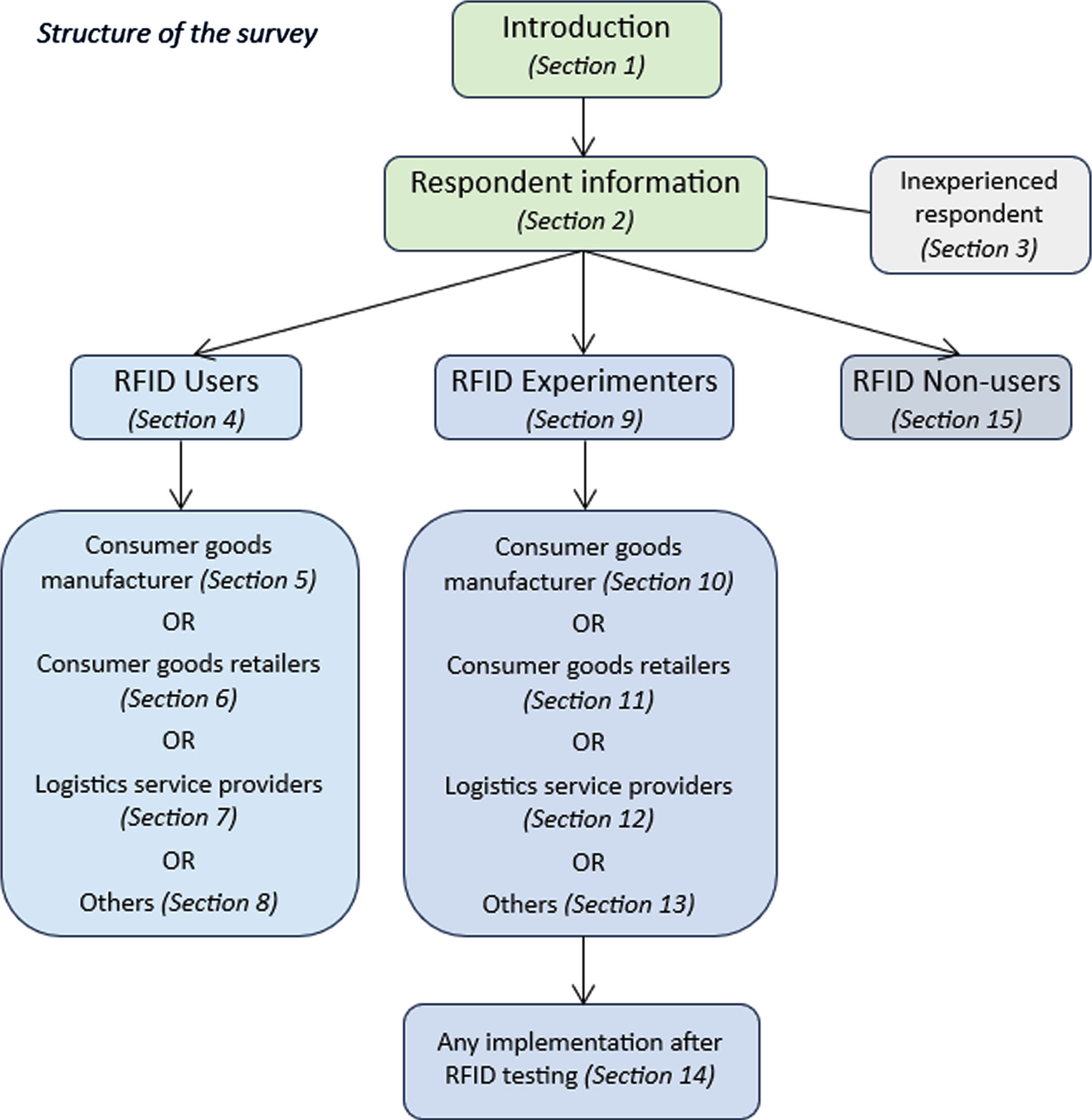
Structure of the questionnaire.
Section 1 is a presentation of the questionnaire and of the survey aim. Section 2 instead includes questions whose aim is to map the respondent company, in terms of name, size, geographical location and fields/markets of activity, as well as the respondent’s role in the company and the level of knowledge of RFID or other automatic identification technologies. A specific question in this section investigates the company’s RFID adoption level. If the respondent replies that he/she is not in charge of any RFID implementation in his/her company, he/she is labelled as “unexpert” respondent, which means that the recipient of the questionnaire is not the right person to be targeted in the survey. Therefore, the respondent was taken to the end of the questionnaire, asking to forward it internally to colleagues that he/she knew were testing/using the technology. Conversely, on the basis of the remaining answers provided about the level of RFID adoption, respondents were classified into: RFID users (Section 4): these respondents are actively using RFID technologies to manage one or more of their processes. For this category of respondents, we asked several questions ranging from the characteristics and the use case of RFID deployment, the main benefits achieved with the deployment, and issues/challenges faced during the implementation. Since these aspects could somehow differ depending on the company’s role in the supply chain, questions were tailored for consumer goods manufacturers (Section 5), consumer goods retailers (Section 6), logistics service providers (Section 7) or other players (Section 8). Each respondent was then taken to the respective section to fill in the questionnaire. RFID experimenters (Section 9): these companies have either tested the technology in the past or are currently testing it but have not (yet) fully deployed RFID solutions. For these respondents, again, use cases of Proof of Concepts (PoCs) or pilots were investigated, while obviously, no questions were asked about the implementation phase. Again, specific questions were tailored for consumer goods manufacturers (Section 10), consumer goods retailers (Section 11), logistics service providers (Section 12) or other players (Section 13), with one section only to be filled per respondent. Experimenters were also asked about their willingness to implement the technology in the near future, and in case of a negative answer, they were asked to indicate the main reason(s) behind this choice (Section 14). RFID non-users (Section 15): these respondents never tested nor implemented RFID technologies. In this case, again the reasons why are investigated, as well as the willingness to consider RFID solutions in future –either testing or implementing.
As previously mentioned, therefore, the survey differs depending on the level of RFID adoption, as well as on the company’s role in the supply chain. As far as this latter point is concerned, respondents were classified as manufacturer, distributor (or both in the case of closed loop supply chains), and logistics service providers.
The questionnaire was made available online via Google Forms, for facilitating distribution as well as feedbacks from respondents. The link to the questionnaire was sent to some companies affiliated with GS1 Italy who managed the survey it through its own channels; the authors of this study distributed the questionnaire as well, mainly via email (to personal contacts) or social media. Having used multiple channels for submitting the questionnaire, and social networks in particular, the exact number of recipients cannot be determined.
We collected 80 full responses between April and May 2022, and we performed a preliminary screening to check the correctness of the answers provided. More specifically, 3 respondents declared to be inexperienced with RFID technology (“unexpert” respondents) and therefore they could not answer the questionnaire. Ideally, as mentioned, the inexperienced respondent was asked (and expected) to forward the questionnaire to a person in charge for RFID testing/implementation in the company: unfortunately, however, the responses collected do not allow deducing whether this was really made. Anyway, the answers of the inexperienced respondents were almost useless; hence, they were merely eliminated and not taken into account in further analyses. Moreover, 10 duplicated responses were found, meaning that for some companies more than one respondent filled in the questionnaire. In this case, if the answers provided referred to different projects, we retained both questionnaires. On the contrary, when multiple questionnaires referred to the same project, we retained the most complete, accurate and detailed one. Finally, we classified 9 respondents as “unsuitable” to be analysed, when relevant pieces of information were either missing or vague.
Eventually, at the end of the preliminary screening phase, we had 58 suitable filled in questionnaires, which was taken as our final sample of the study.
Statistical analyses
We carried out some preliminary analyses on our final sample to check that the removal of the above-mentioned answers did not compromise the representativeness of the respondent sample. Then, various descriptive statistics were carried out on the main items of the questionnaire, coupled with several cross-analyses by which some specific characteristics of the respondent company, such as the industry and the role within the supply chain, were correlated with other variables investigated. The analyses were carried out with the support of Statistical Package for the Social Sciences (SPSS) software package, version 28 for Windows, and of MS ExcelTM. The main results are presented and discussed in the section that follows.
Results from the survey
Comparison between selected and eliminated responses
To check whether the final sample of 58 selected respondents could efficiently represent the original set of 80 responses, we compared some selected items of the questionnaire for the two groups of “suitable” and “eliminated” responses. The rationale for this analysis is that if no significant differences are found between the two groups, the retained answers can be considered as representative of the whole sample of respondents as the original one (Armstrong and Overton, 1977). We did the comparison on items such as the geographical area of the head office (Fig. 2), operational footprint (Fig. 3), company size (Fig. 4), and industrial sector (Fig. 5). The graphs in Figs. 2–5 show that the companies excluded from the analysis are sufficiently represented by the companies retained within the sample.
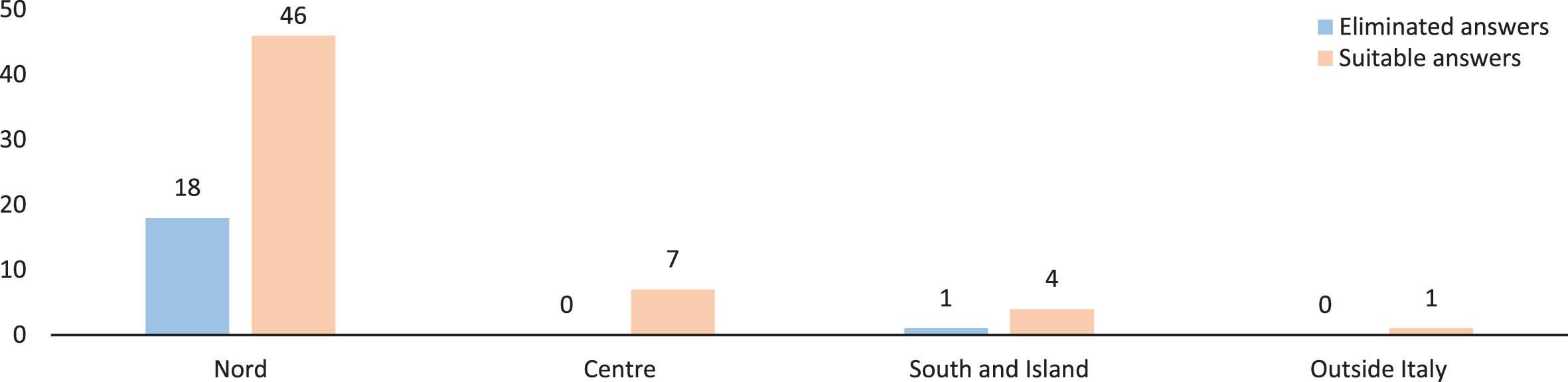
Headquarters location of the respondent companies: eliminated VS suitable answers.

The operational footprint of the respondent companies: eliminated VS suitable answers.
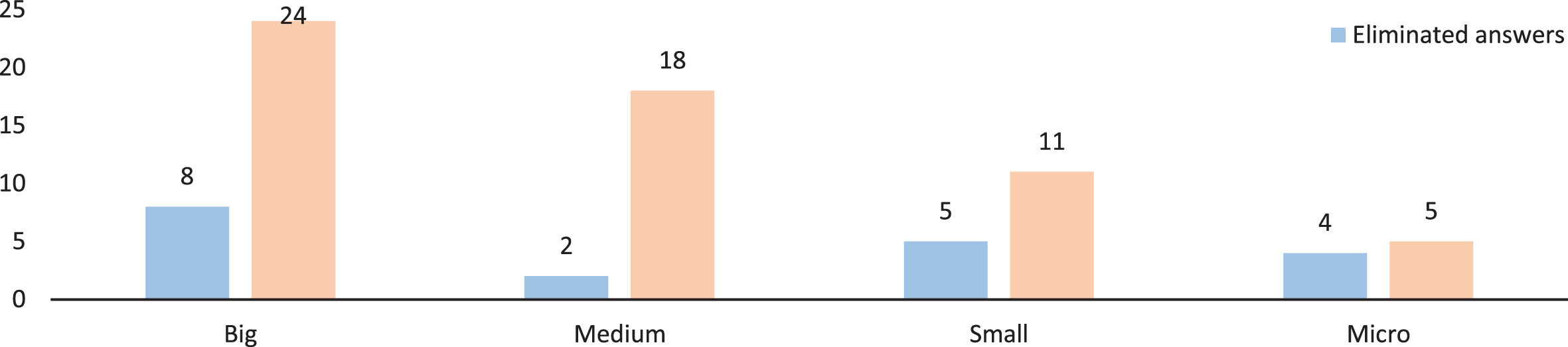
Size of the respondent companies: eliminated vs. retained answers.
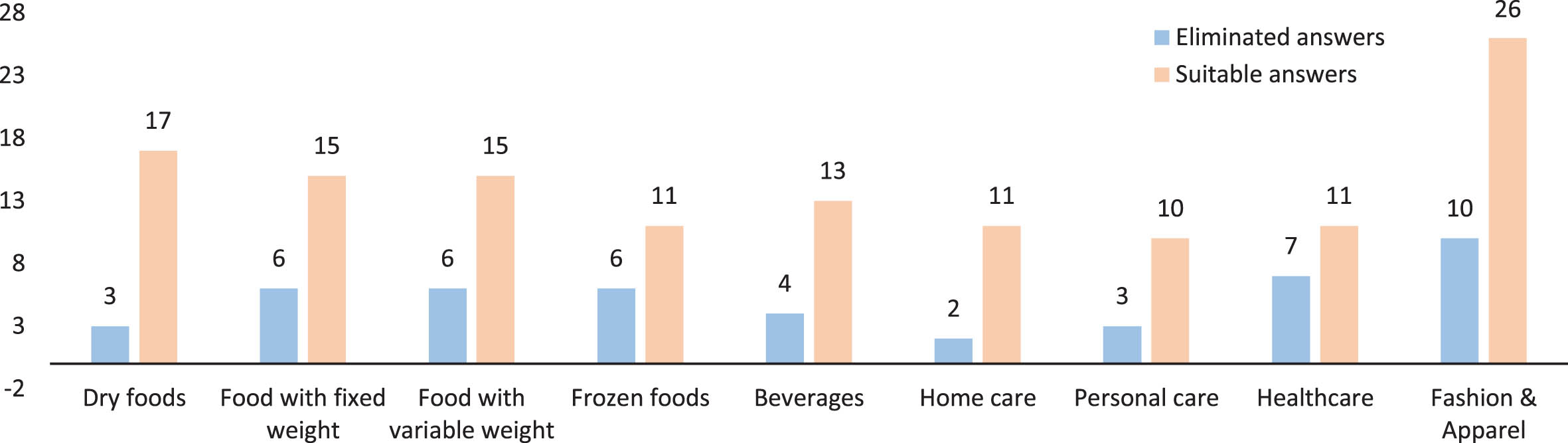
Sectors of the respondent companies: eliminated VS suitable answers.
Headquarter location, operational footprint and size
According to the classification suggested by the European Commission (2003), the sample of 58 respondents largely consists of big companies located in northern Italy and operating nationwide (Fig. 6). A comparison of company size and operational footprint showed that companies operating worldwide are large, and the one enterprise based abroad is a large-sized company.
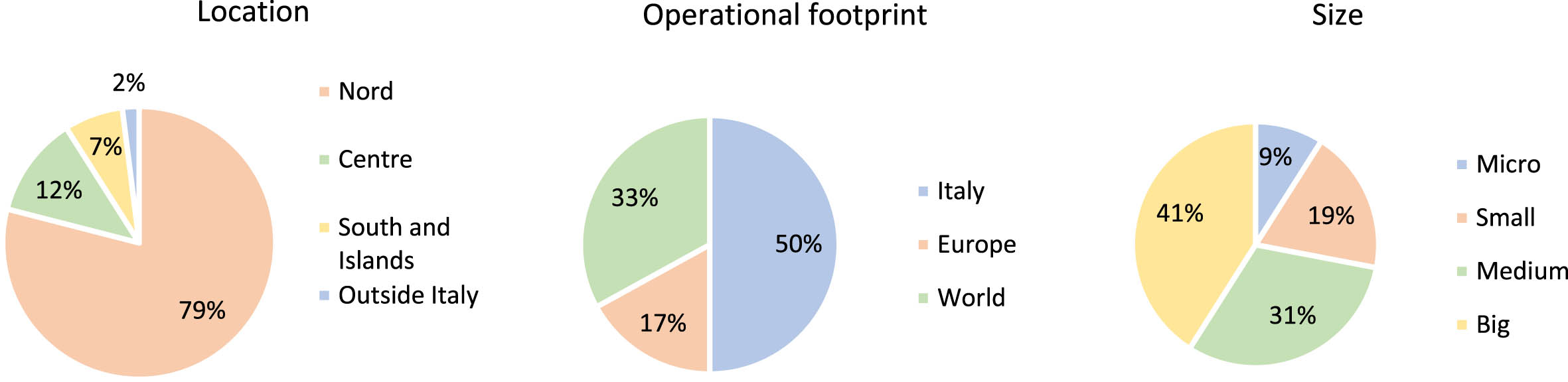
Headquarters location, operational footprint and company’s size.
In the profile section, respondents were asked to indicate up to 9 industries in which the company primarily operates: Fig. 7 illustrates the selected answers. Given the multiple response, the total number of responses collected (129) is well above the number of respondents. It can also be noticed that the vast majority of respondents operate in the Apparel and Fashion sector. To define the macro-areas of interest, some of the listed industries were grouped, while the Healthcare and Apparel and Fashion sectors were kept as single entries; grouping led to final set of three sectors, as follows: Consumer Goods: dry foods, fixed weight food, variable weight food, frozen foods, beverages, home care, personal care; Healthcare; Apparel & Fashion
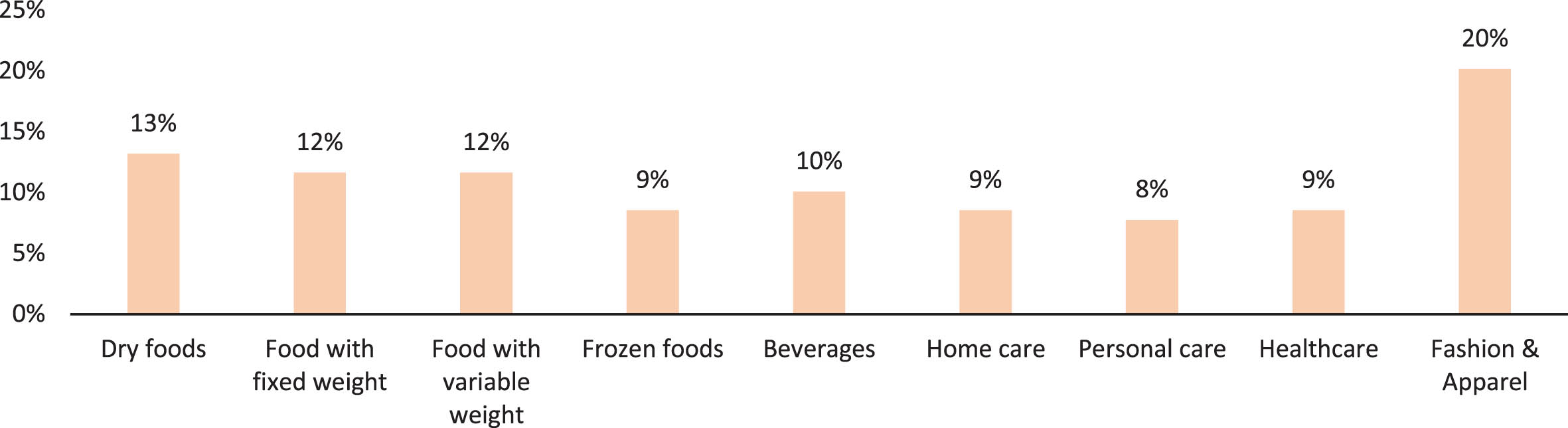
Industrial sectors of the respondent companies.
Based on gathered responses, the role of the respondent company in the supply chain is as follows: Consumer goods manufacturers (35% of respondents); Consumer goods retailers (17%); Logistics service providers (5%); Solution providers (19%); Vertically integrated fashion retailer (24%).
The last two categories were introduced while analysing the responses obtained and added to the list of three options originally proposed, after a detailed examination of the filled in questionnaires.
Solution providers encompass questionnaires submitted by system integrators, hardware vendors, tag vendors, on behalf of their customers. If the questionnaire was properly filled in and fit the scope of the analysis, we decided to keep it. Vertically integrated fashion retailers manufacture their own product and distribute them through their own retail chain.
Figure 8 illustrates the comparison between the operating field and the sector of the companies. Since companies acting as solution providers or logistics service providers usually did not specify the industries, we labelled them as “not applicable". The Consumer Goods sector is, correctly, represented by entities operating as manufacturers or retailers, while the Fashion & Apparel sector is largely represented by vertically integrated fashion retailers. The only company in the Healthcare sector is a manufacturer.
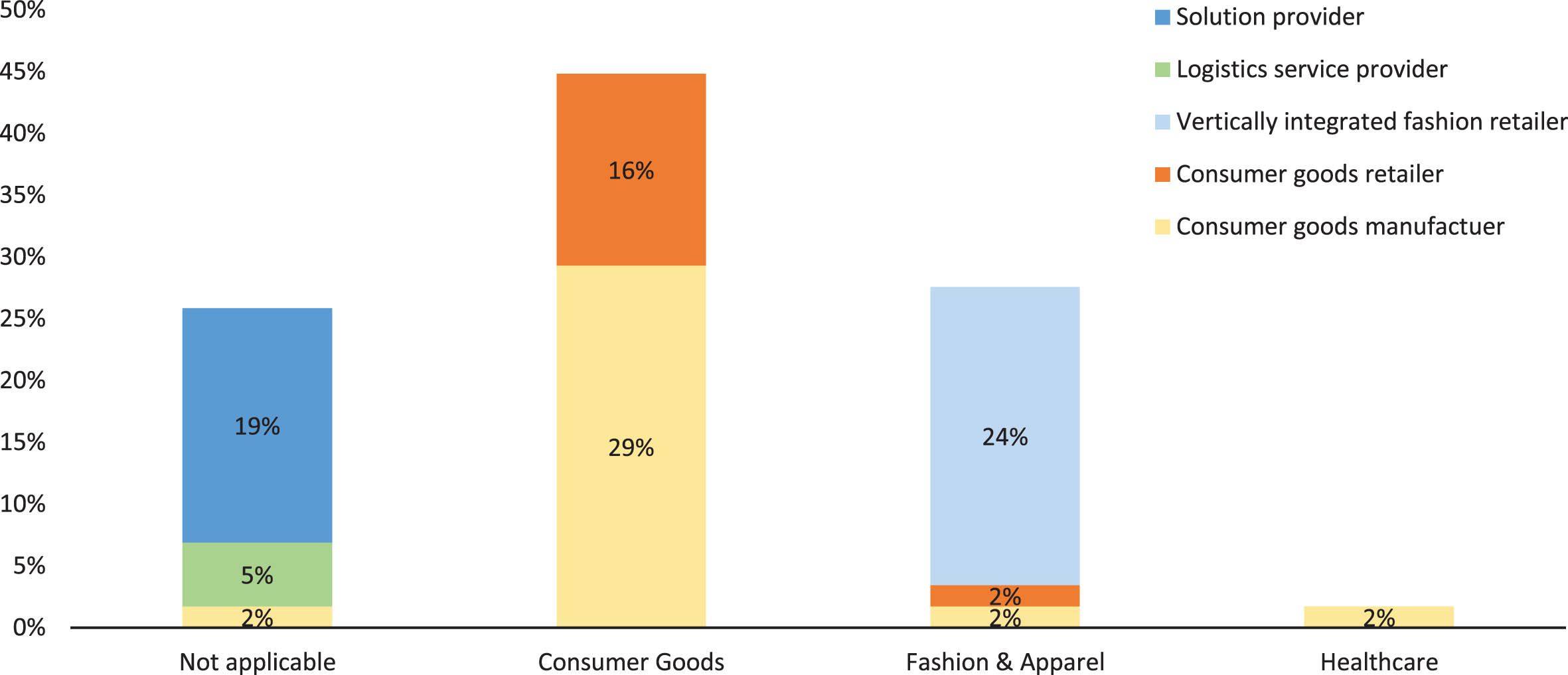
Classification of respondents by field of operation and sector.
Identification technologies
Most of the respondents (84%) claim to use automatic identification technologies in their company for managing supply chain processes (Fig. 9); however, only some of them have already implemented the RFID technology. In particular, identification technologies implemented by the companies surveyed are as follows: 1D Barcodes (88% of the respondents) High Frequency (HF) passive RFID tags (34%) Ultra-High Frequency (UHF) passive RFID tags (33%) 2D Barcodes (QR) codes (28%) Active RFID tags (9%).
Figure 9 depicts the usage of these technologies as a function of to the operational field of the company: RFID solutions turned out to be particularly used by vertically integrated retailers, mainly in the Fashion & Apparel sector, while 1D barcode technology is particularly widespread among Consumer Goods manufacturers and retailers. Overall, automatic identification technologies, whatever they may be, are in general more popular among large companies.
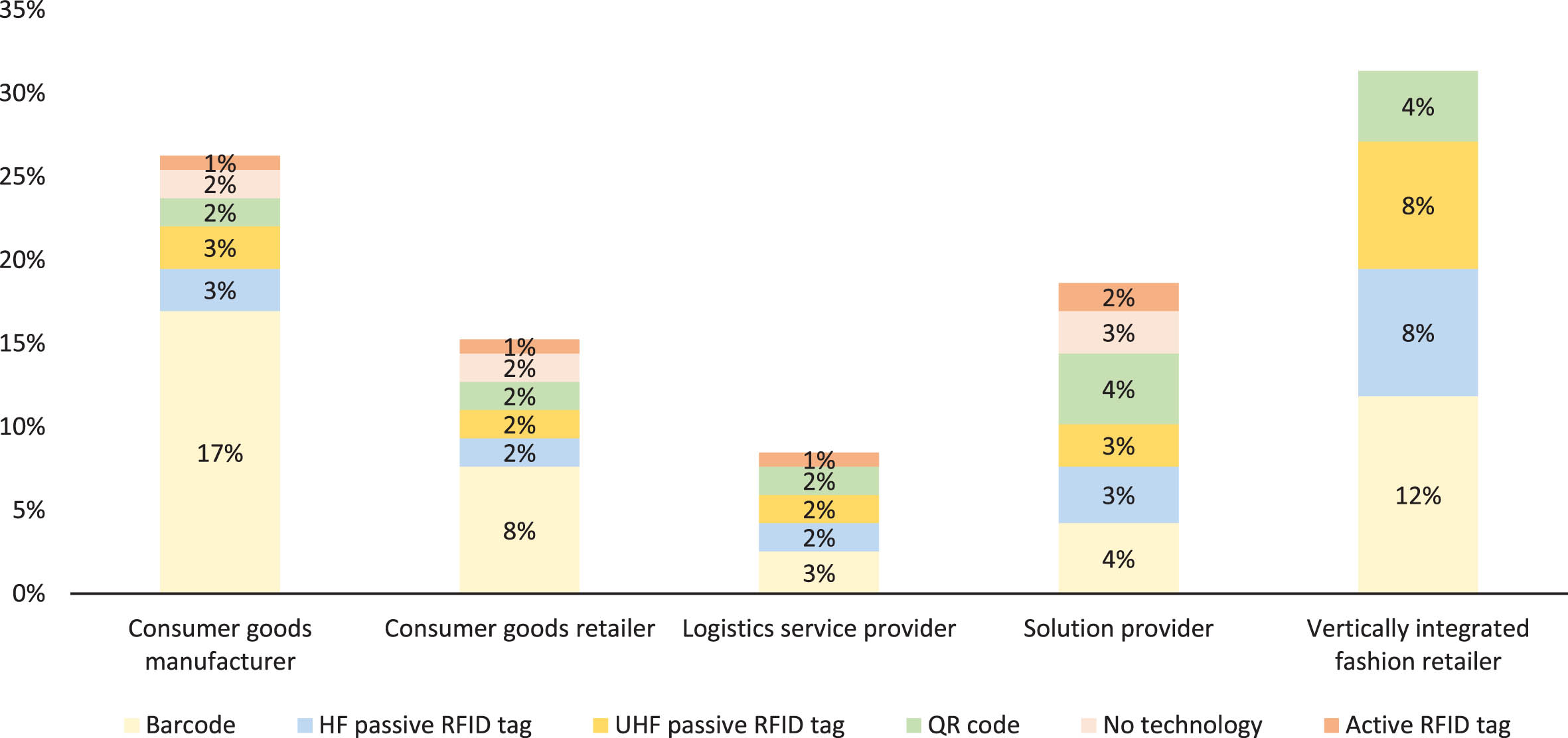
Cross-analysis: identification technologies implemented vs. operational field.
As mentioned earlier in the paper, GS1 has developed the world’s most widely used standards for B2B communication, in the form of barcodes in particular, and is working in this field since more than 45 years. In Italy, where the questionnaire was disseminated, there are as many as 40 thousand companies affiliated to GS1 Italy (previously known as Indicod-Ecr). Also, GS1 is recognised as an historical reference point for the consumer goods sector, but its standards can be applied also to other sectors, including healthcare, banking, logistics, as well as foodservice and construction. In line with this consideration, the questionnaire results showed that GS1 standards for the identification of items, cases and pallets as well as the exchange of information with supply chain partners emerged as well-known to the vast majority (84%) of respondents. In particular, all logistics service providers and almost all manufacturers and retailers make use of them. A classification of the respondents according to the company size showed that almost all large- and medium-sized companies adopts the GS1 standards. On the contrary, non-users of the GS1 standard are mainly users of the RFID technology; this is particularly the case for implementations detailed from solution providers and vertically integrated retailers in the Apparel and Fashion context.
As can be seen from Fig. 10, RFID technology is already adopted by 31% of the respondents, while 22% of respondents are experimenters; non-users represent the majority of the respondents (47%). Users and experimenters of RFID technology are predominantly large companies and consist of vertically integrated retailers in Apparel and Fashion; on the other hand, the majority of non-users belong to Consumer Goods manufacturers. In the Fashion field, 50% of the respondents adopted RFID and 31% experimented it, while in the Consumer Good sector 70% has never adopted nor experimented RFID, 17% has experimented and only 13% adopts it.
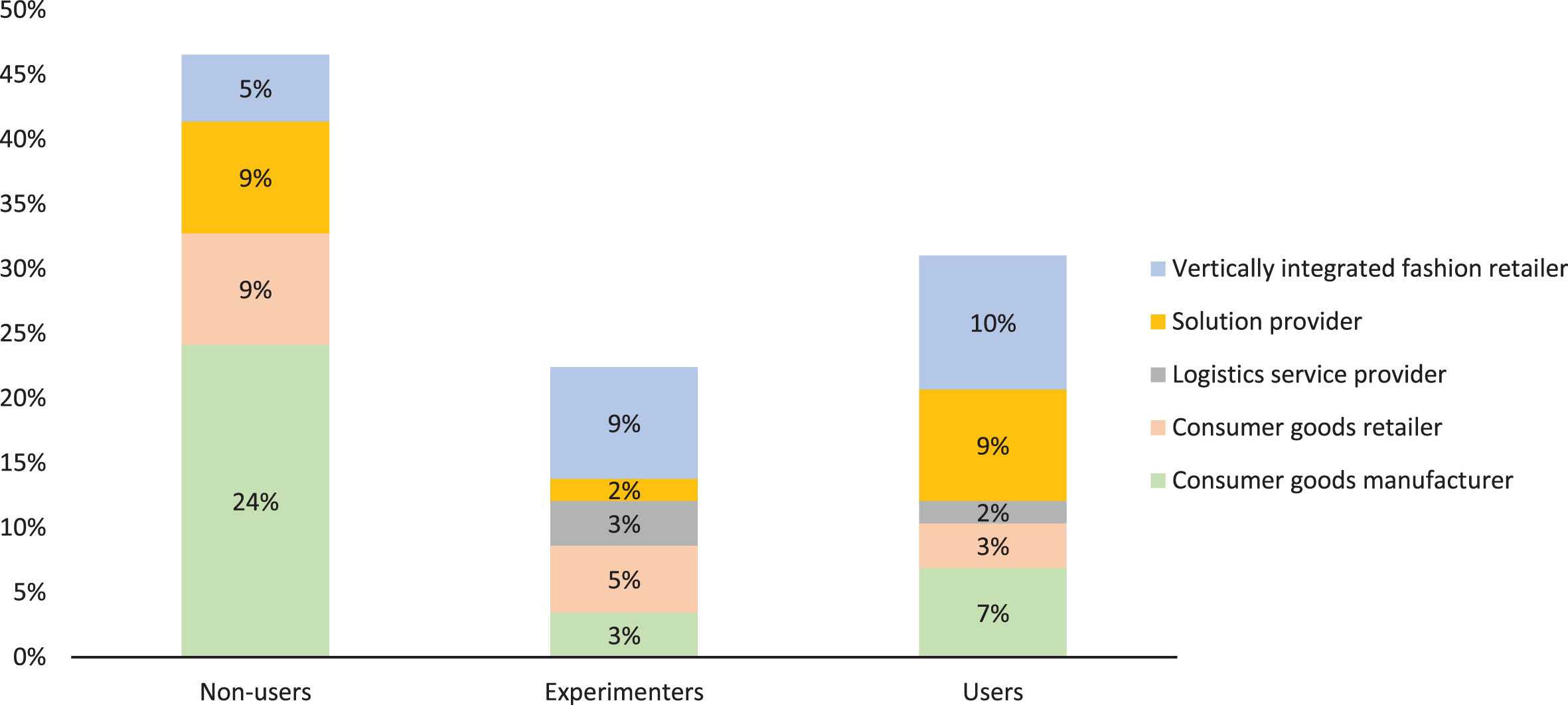
Level of RFID implementation vs. operating field of respondents.
A cross-analysis between the level of RFID usage and the identification technology shows that the majority of the respondents (36%) who declared to be non-users of RFID solutions, adopts barcodes as the main identification technology; by the way, the wide usage of barcodes is also quite common among experimenters (18%) and users (22%) of RFID technology. On the contrary, the 2D barcodes such as QR codes are sometimes implemented by users of RFID (16%) - probably in association with this latter technology, but also by experimenters (4%) and non-users (4%).
As far as the technologies are concerned, UHF passive tags emerged from our survey as the most tested and used technology among the respondent companies. At the same time, semi-passive tags with temperature sensors, UHF or NFC passive recirculating tags for asset tracking are not emerging as a priority for testing (Fig. 11). RTLS technologies are rarely adopted by respondents.
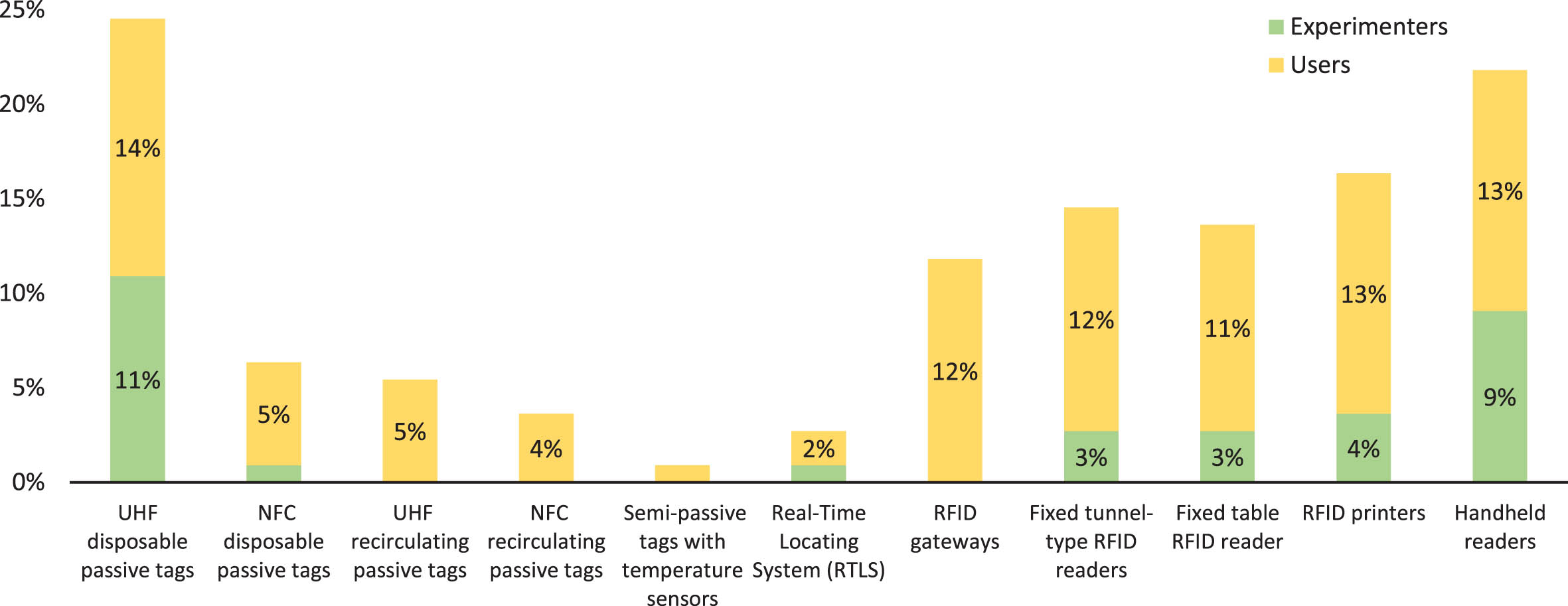
RFID technologies adopted by Experimenters and Users.
Among read points, users adopt a wide range of read points. Printers, RFID tunnels for logistics applications, fixed table readers, and gateways are largely leveraged in both user’s and experimenters RFID deployments.
In the RFID adoption path, experimenters did not seem to be interested in carrying out feasibility studies, which are instead frequent among users. Both experimenters and users seem to have carried out both proof-of-concepts and pilots. Obviously, users only reached the roll-out phase.
Experimenters and users mainly deployed RFID solutions for item level tagging (54%); some applications can be found at case level (17%) and pallet level (11%), as well as for asset tracking (13%).
Most users adopt passive tags, in volumes ranging from 100,000 tag/year to 1,000,000 items/year, while recirculating tags are used to a lower extent.
As far as the CAPEX for RFID deployments are concerned, most of the projects are in between 50,000 and 250,000 euros, while some rollout exceeds 250,000 euros in CAPEX; RFID deployments by users often involve supply chain partners (55%). Also, many users have been using RFID technology for more than 5 years (61%): among them, several companies belong to the Fashion industry.
As far as the experimenters are concerned, most of them have started RFID pilots in the last 3 years, and someone is still running the experimental activity. On average, longer pilots were observed in the Fashion industry, compared to the Consumer Goods one. Also, pilots appear more frequent in large companies than in medium-sized companies, but last less. The outcomes of the survey show that logistics service providers and solution providers also carried out long pilots (more than 6 years), whereas for manufacturers, retailers and vertically integrated fashion retailers, the pilots were significantly shorter in time (less than 2.5 years).
Both the RFID experimenters and users rated the driver of having a positive ROI from the RFID implementation as “fairly” or “absolutely” influential in their decision to deploy. Similarly, many of the companies that are testing or have implemented the technology have identified RFID systems as a source of competitive advantage over competitors. Instead, few respondents claimed to have acted for closing a competitive gap.
According to the outcomes obtained, public tenders and Industry 4.0 incentives can give a boost to RFID implementation, but do not appear to be the main drivers for companies for starting an RFID project. Similar considerations can be made for the “influence of supply chain partners”, which does not appear to be a main driver for implementation decisions. As regards the use of RFID technology to enable smart products creation, the main use cases for the RFID implementation were consumer interaction, usability and anti-counterfeiting.
Looking at the outcomes globally, it was observed that the users’ perception of uses cases importance as well as the benefits is always higher than those of experimenters: indeed, the users technology deployment seems to disclose further benefits compared to a mere field test as that made by the experimenters.
A section of the questionnaire was intended for measuring the benefits achieved by companies that deployed RFID technologies. Outcomes are presented in Fig. 12: the majority of the respondents indicated that the results achieved were equal or above the expectations, with particular regard to reduction of errors in order fulfilment, enhanced operational efficiency (labour reduction) and improved inventory accuracy. For few respondents only the results achieved were below the expectations. Furthermore, a particularly relevant outcome is the fact that, in line with the previous consideration, most of the companies who implemented the technology to reduce out-of-stock and increase sales obtained higher than what originally expected.
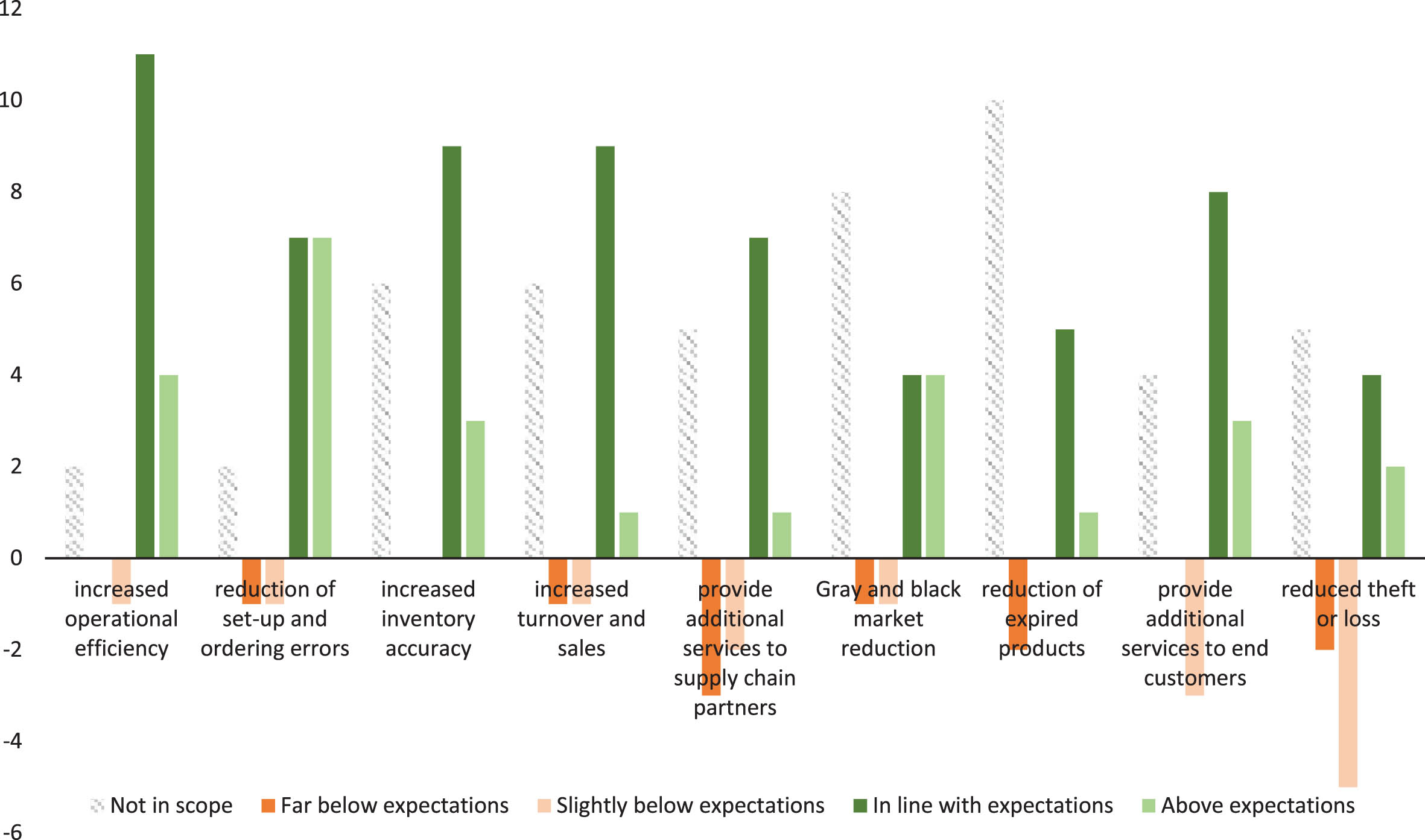
Benefits from the use of RFID technology.
According to some interviewees, some technical issues and challenges still affect the implementation of the RFID technology, such as the presence of liquids and metals, which can result in poor reading performances. On the contrary, in different circumstances, over-performance has been claimed to be a major issue, requiring physical shielding to avoid ghost reads. However, both issues have been fixed through, respectively, preliminary testing and proper product tagging (tag choice and placement) coupled with careful design of read points. Moreover, the critical issues related to privacy, as well as lack of willingness to innovate or disagreements between corporate functions, are perceived as almost irrelevant barriers to deploy.
Looking at the non-users, 13% only do not have RFID adoption in the midterm plan (even if without specifying a deadline for the implementation): the main reasons are poor ROI, insufficient resources to manage a RFID rollout, limitations in the supply chain context and security or privacy issues. However, most of the current experimenters and non-users showed a strong interest towards the topic and in general seem to be prone to implement RFID technology in the near future (Fig. 13).
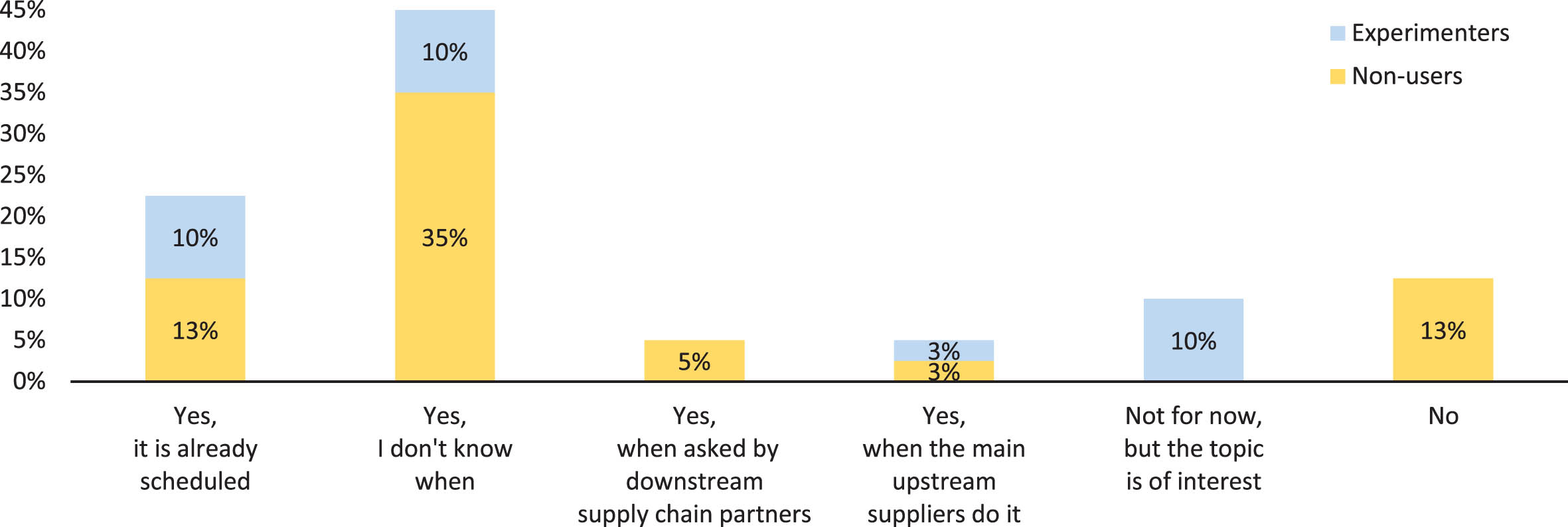
Non-users and experimenters of RFID technology - intentions for future adoption.
The outcomes presented in the previous section allowed us to formulate the following answers to the RQs introduced in section 3.1.
RQ1: Who is experimenting, is willing to adopt, or has already implemented the RFID technology?
While the automatic identification technologies are well diffused among Italian companies, RFID technology seems to be at a lower level of adoption, Nonetheless, an encouraging outcome is that approximately 30% of the companies surveyed turned out to be users of the technology, and an additional quota of 22% turned out to have at least tested the technology. Zoroja et al. (2015) have estimated that approx. 11% of companies in Italy made use of RFID technology in 2014, with an increase of 8% compared to 2009; this study thus confirms a positive trend towards RFID implementation in Italy. About 10 years passed since then, and the measured increase is in line with the trends argued by Zoroja et. Al. (2015).
In general, users and experimenters are large companies and thus our outcomes support the conclusion reached in previous studies (Lin, 2009; Reyes et al., 2016; Mabad et al., 2021; Mahdaly & Adeinat, 2022), about the fact that firm’s size can somehow influence the decision to adopt RFID technology.
In terms of the industries involved, approx. half the RFID users belong to the fashion and apparel retail, while the quota of users is significantly lower in the consumer goods sector. In early 2000, both the fashion (Moon & Ngai, 2008) and the consumer goods sectors (Jones et al., 2005; Waters & Rahman, 2007) have been suggested as interesting application areas for the RFID technology.
However, it is also true that at the beginning RFID was thought to be a technology for streamlining distribution and logistics, and thus intended for case and pallet level tagging. This trend lead to the peak of expectations and the drop to disillusionment in the late 2000, primarily due to the cost of the technology, especially for large scale applications (which is exactly the case for the consumer goods industry), that worked as a deterrent to large scale deployments (Huber et al., 2007; Bottani & Rizzi, 2008). Moreover, the FMCG “many to many” supply chain put some additional problems. Who was going to tag the products? How to take on board thousands of suppliers to tag? Who was having the vast majority of the benefits? How to balance the benefits between the actors involved, such as manufactures, retailers and 3PLs? These issues have largely been tackled from 2005 to 2012 by RFID Lab researchers, together with Italian FMCG stakeholders belonging to the RFID Lab Board of advisors (cf. Bertolini et al., 2012, 2013a, 2013b), but had never been solved, since Italian FMCG retailers, 3PLs and manufacturers rarely tried to adopt a collaborative approach necessary for implementing the technology.
Then apparel retailers (especially the vertically integrated ones) found higher values in RFID use cases in their stores enabled by item level tagging. Inventory accuracy, replenishment from the backroom, visual merchandising first helped retailers to increase brick and mortar sales thanks to a better visibility of which models, colours, sizes they have in their stores or that are located in the backroom. Then omnichanneling models like “Buy online, pickup in stress”, or “Buy online, ship from store”, etc., based on RFID inventory accuracy made it possible to boost online sales (Cilloni et al., 2019; Bertolini et al., 2017a, 2017b).
Lately, RFID point-of sale (POS) applications for faster transactions (as those by Decathlon 1 , Uniqlo 2 , Zara 3 , Amazon 4 ) made the stores frictionless, again increasing sales, customer experience and reducing labour. Overall, today, about 3/4 of the UHF tags sold worldwide are for item level tagging applications in the apparel and fashion retail. This industry, according to Roger’s curve, in its early majority phase, where 20 25% of the industry has adopted (Chang, 2023).
A further consideration from our study is that barcode technologies are widely adopted among Italian companies, regardless of their level of adoption of RFID technologies. GS1 standards played a pivotal role in the diffusion of the technology. The same should be with RFID, where the lack of technical/industry standards has been advocated as a barrier to the implementation (Chang et al., 2008), even in recent studies (Mahdaly & Adeinat, 2022). Bodies such as GS1 and RAIN Alliance play a crucial role and should continue in their effort to develop standards and remove barriers to technology adoption.
Typically, the technology most frequently used or tested consists of passive UFH tags, which is not surprising. It is, instead, interesting to note that other technologies, although used, have never been subject to prior testing; probably, these technologies are quite known and likely to lend themselves to a direct use. Also, experimenters sometimes do not need to carry out preliminary studies (feasibility studies in particular), which seems to contradict the fact that testing or implementing the technology involves cost, often high (>250,000 euros); probably, economic aspects relating to the implementation of the RFID technology are sufficiently known to the prospective users or are expected to be balanced by the savings generated by the RFID usage.
RQ2: What are the main reasons and drivers of the implementation?
The cost of RFID technology or the uncertain ROI from the implementation has been frequently seen as a barrier to technology deployment (Li et al., 2010). In line with this consideration, outcomes of this study indicate that having a positive ROI is a main driver for deciding whether to implement the RFID technology or not. The second most important driver for implementation decisions is the enhanced competitiveness of the company, which confirms the findings of Bach et al. (2016) and Mabad et al. (2021). Instead, the willingness of implementing RFID technology does not appear to be driven by the need for closing a competitive gap; probably, this result is affected by the still limited number of users of the RFID technology in Italy, and by the fact that there is still a lot of room for adoption today. Also, our results do not support the conclusion that government/public support has an important role in driving RFID implementation decisions (as instead suggested by Li et al., 2014); on the contrary, the relevance of these aspects emerged from our study as limited. As far as the role of supply chain partners, similarly, their relevance to implementation decisions in our sample is low, contrarily to what highlighted by Chang et al. (2008), who suggested a key role of “pressure from partners” in driving the implementation of RFID technology. By the way, it is to be mentioned that in Italy (as opposed to other countries) there are still no significant cases of mandates issued by actors in the distribution/retail chain requesting their suppliers to provide RFID-tagged packages or items. This is the possible reason why the “influence of supply chain partners” is still perceived as a driver for RFID implementation.
The benefits from the implementation or testing of the technology confirm the evidence available in literature, and in particular, the capability of RFID to enhance process efficiency and reduce errors, as well as to increase inventory accuracy and sales (Bottani & Rizzi, 2008). Most importantly, however, outcomes of this study highlight that the perception of the benefits achieved is always higher for companies that have implemented the RFID technology than for the mere experimenters. This seems to suggest that most of the benefits can be appreciated only if the technology is fully deployed, and that, more in general, the deployment of the technology enables further benefits compared to the experimental testing. Similar considerations can be made for the degree of achievement of the benefits, which, for users, is often above the expectations (probably compared to a preliminary study or a pilot testing). In literature there are few examples of studies describing the benefits from RFID implementation in real settings and there are almost no studies comparing the benefits achieved in an experimental phase and in a deployment phase; hence, the previous consideration opens the way to interesting future research activities.
RQ3: What are the issues preventing RFID diffusion?
Technical aspects (e.g., hardware issues or lack of standards - Albano & Engels 2002; Curtin et al. 2007; Attaran, 2012) have been frequently advocated as barriers to the RFID implementation. Although the technology is no longer new and new devices have been developed in time, outcomes of this study indicate that some technical issues remain and could affect the diffusion of the technology. Companies fear, in particular, for missed reads, because of the presence of metal/water, or ghost reads, while being aware that these issues could be effectively overcome via some preliminary RFID tests. Other barriers to the implementation of RFID technology, such as the low willingness to innovate or privacy issues, appear to be almost irrelevant. Hence, our outcomes somehow controvert the evidence available in literature, which has suggested a relationship between readiness to innovation and the implementation of RFID solutions (Bach et al., 2016). Future research activities are therefore recommended, for shedding additional light on the relationship between these aspects.
We have previously mentioned that the presence of a good quota of users is encouraging, and compared to previous evaluations (Zoroja et al., 2015) suggests a positive trend of RFID usage in Italy. Nonetheless, this encouraging outcome must be considered along with the fact that a non-irrelevant quota of non-users is not willing to implement the technology (neither now nor ever); experimenters are more positive in this respect, with a good quota of them interested in adopting RFID technology in the near future. Once again, this could suggest that approaching the usage of RFID solutions (even if in a testing phase) allows for better capturing the potentials of the technology; some future research activities could be directed towards a more precise evaluation of this aspect.
Conclusions
This study has provided an empirical analysis of 58 Italian companies, with the general aim of evaluating the current implementation level of RFID solutions in different industrial fields. Along with this general scope, the study has expressively tried to answer three research questions, relating to the profile of users, experimenters and non-users of the technology (RQ1), the key drivers for deciding whether to implement or test the technology (and in case, the perceived benefits - RQ2), and the barriers/challenges that prevent a full deployment of the technology (RQ3).
From an analysis of the outcomes presented and their comparison with the previous studies, it is evident that this paper contributes to the literature in various ways. From a general perspective, this study is probably the first example of a survey about RFID technology in Italy, and as such, it provides evidence of the current scenario of RFID adoption in that country. Looking at the specific results, some outcomes support the findings available in literature, which can, therefore, be considered as valid also for the Italian context. Other outcomes, instead, seem to somehow contradict the findings from previous studies, and thus the relating aspects are recommended for future investigations. To be more precise, future research could address the relationship between the willingness to innovate and the implementation/testing of RFID technology, or the comparison between the benefits perceived by users and experimenters of the technology.
From a practical point of view, outcomes of this study are expected to be useful to companies which are pondering the usage or testing of the RFID technology; the trend towards an increase in RFID adoption, by the way, is to be expected in the next years as our results themselves show that companies are interested in adopting RFID technology in the near future. In this respect, a key message from this study is that, for sure, obstacles can be encountered in the adoption of RFID solutions, regardless of the context; nonetheless, the responses obtained highlight that implementation outcomes are almost always successful, meaning that implementation issues are in general solvable.
Again from a practical perspective, most RFID non-users belong to the Consumer Goods sector, while in terms of their role within the supply chain, they are either manufacturers or retailers of Consumer Goods. It is therefore reasonable to focus on these groups of companies to structure dedicated actions to promote the adoption of RFID in the coming years. In the Fashion and apparel retail industry, on the other hand, the technology seems to be more mature, with more experimenters and users, and probably does not require to be further promoted. The experience of the fashion and apparel retail sector, on the other hand, could be investigated in more detail through case studies or direct testimonies, to bring out the strengths of the technology itself and extend them to other industries, including the Consumer Goods one. As far as the pharmaceutical sector is concerned, the low number of respondents prevents the possibility of drawing conclusions from the survey; however, it is worth noting that in the pharmaceutical sector, the use cases that technology enables are manifold, from traceability to anti-counterfeiting, from the automation of logistics flows to stock visibility and chain of custody management. Moreover, there are well-known cases of major pharmaceutical companies that have already implemented and use RFID technology on a daily basis to manage at least the flow of pallets and packages, even if they did not answer the questionnaire. It would be interesting to analyse these use cases in future research activities.
