



Abstract
To clarify the experimental background of characteristics of fracture life of the investment-cast polycrystalline Nickel-base superalloy IN738LC (typical gas turbine blade’s materials), in-situ observational tests under creep–fatigue conditions were carried out, and the effects of both the cycle- and the time-dependent mechanisms on the fracture life were investigated. Creep ductility, stress holding time and temperature were combined with the relationship between the inverse value of fracture life and applied load frequency as a promoting factor of the time-dependent mechanism. Then a three-dimensional curved surface representation of fracture life under arbitrary creep–fatigue conditions has been proposed theoretically according to the non-equilibrium science. As the load frequency decreases or stress holding time and temperature increases, the time dependent mechanism begins to play a role in the manner of creep–fatigue interaction. In this region, the characteristics of the Relative Notch Opening Displacement (RNOD) and crack growth behavior change from a cycle-dependent mechanism caused by fatigue to a time-dependent mechanism caused by creep through an unstable equilibrium transition region. In this paper, comparison of the three-dimensional curved surface representation of fracture life which has unique characteristics and the actual damage behavior measured by the Electron Back Scattered Diffraction (EBSD) method was carried out. As a result, misorientation analysis based on the EBSD method has clarified that the unstable equilibrium transition region in the three-dimensional curved surface was the result of creep damage concentration in the vicinity of notches by a load frequency which has the effect of limiting the damage region.
Introduction
Heat-resistant materials need to be highly reliable and are used for important parts in high temperature components [1]. However, these materials are subject to complex thermal and mechanical histories during a typical cycle of operation [2,3]: consisting of startup, steady-state operation and shutdown. Gas turbines are also used under a wide range of conditions from base load to peak load depending on energy demand. In other words, heat-resistant materials, like nickel-base superalloys, are used under the complex conditions of high-temperature creep and fatigue interaction. Accordingly, the life-limiting factors of heat-resistant materials are predictable as they change from high-temperature creep to periodical thermal and mechanical fatigue. In maintaining operational safety and minimizing maintenance costs, it is necessary to clarify the characteristics of fracture life and improve life-assessment techniques on a unit-specific basis taking into account the effect of both creep and fatigue interaction on fracture life [4]. Meanwhile, intelligent scheduling of inspections also requires proper techniques for assessing the life expenditure of components. The correct choice of inspection schedules and methods can prevent accidents. From the viewpoint of performing reasonable inspections, it is important to predict both the damage site and crack initiation mechanism of the components [5].
The authors have proposed the method of separate estimation of the effect of creep and fatigue, namely whether the fracture life,
On the other hand, in contrast to the above theoretical analysis, the authors have investigated usability of the EBSD (Electron Back Scattered Diffraction) method [16–20] which is becoming established as a damage evaluation method of material in order to evaluate creep damage of Nickel-base superalloy [21,22] focusing on the effect of test temperatures, fatigue interaction [23,24] and geometrical influence at stress concentrated regions [25,26]. In this study, using the polycrystalline Nickel-base superalloy, microscopic analysis of damage behavior based on the EBSD method was carried out to clarify characteristics of creep–fatigue interaction represented in the three-dimensional curved surface of fracture life derived from experiments and theoretical analysis.
Representation of curved surface characteristic of load frequency of fatigue life based on the non-equilibrium science [10]
The schematic illustration of the separate estimation method for the cycle-dependent and the time-dependent mechanism is shown in Fig. 1 [7]. When the fracture life,

Separate estimation method for the cycle-dependent mechanism and the time-dependent mechanism.

Three-dimensional curved surface representation of load frequency characteristics for creep–fatigue crack growth life. (Colors are visible in the online version of the article; https://dx-doi-org.web.bisu.edu.cn/10.3233/SFC-150182.)
From the results mentioned in Section 1, creep ductility, stress-holding time and temperature have a similar effect which promotes the occurrence of the time-dependent mechanism of the fracture life,

A curved surface obtained by a catastrophic function.
The transition characteristic of fracture life from the cycle-dependent mechanism to the time-dependent mechanism shows a discontinuous characteristic with an inflexion point, which is similar to the transition characteristic of a catastrophic function, as shown in Fig. 3. The authors proposed a theoretical foundation to represent this curved surface characteristic of fracture life under the creep–fatigue conditions, where the function
Using Eqs (1)–(5), the characteristics of fracture life under the creep–fatigue condition were derived and were compared with experimental characteristics. Based on this foundation, we also derived the lower limit of temperature at which the creep crack growth appears and the predicting law of fracture life under the creep–fatigue condition. In detail, the characteristic of load frequency of fracture life and the degree of involvement of the time-dependent mechanism can be quantified by the value of P given by Eq. (1). That is, the value of P is considered as a representative parameter of the degree of involvement of the time-dependent mechanism of fracture life. Therefore, in the case of

Effects of time-dependent and cycle-dependent mechanisms on the stress wave form of load frequency.
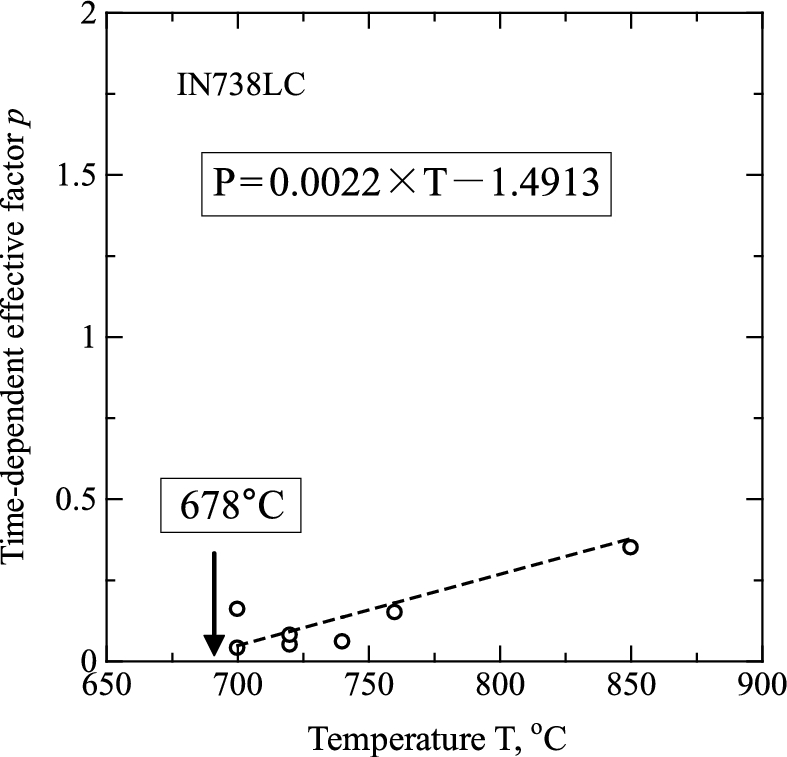
Relationship between P parameter and temperature.
Initially, the above curved surface of fracture life was obtained by theoretical analysis to represent the experimental results of some materials, however, it was reported that many materials show similar characteristics [11–15,27,28]. Therefore it is considered that these characteristics of the curved surface represent the basic properties of the material on creep fatigue interaction. Furthermore, by the microscopic damage analysis using the EBSD method, the relationship between the actual creep–fatigue damage behavior and the characteristic shape of the curved surface will be clarified in this study.
The material used is the investment-cast polycrystalline nickel-base superalloy IN738LC, commonly used as a heat-resistant material of gas turbines. The chemical composition and the mechanical properties of IN738LC are shown in Tables 1 and 2, respectively. The specimen used is a double edge notched (DEN) specimen to observe crack growth behavior as shown in Fig. 6.
Chemical composition of IN738LC (Ni base, mass%)
Mechanical properties of IN738LC
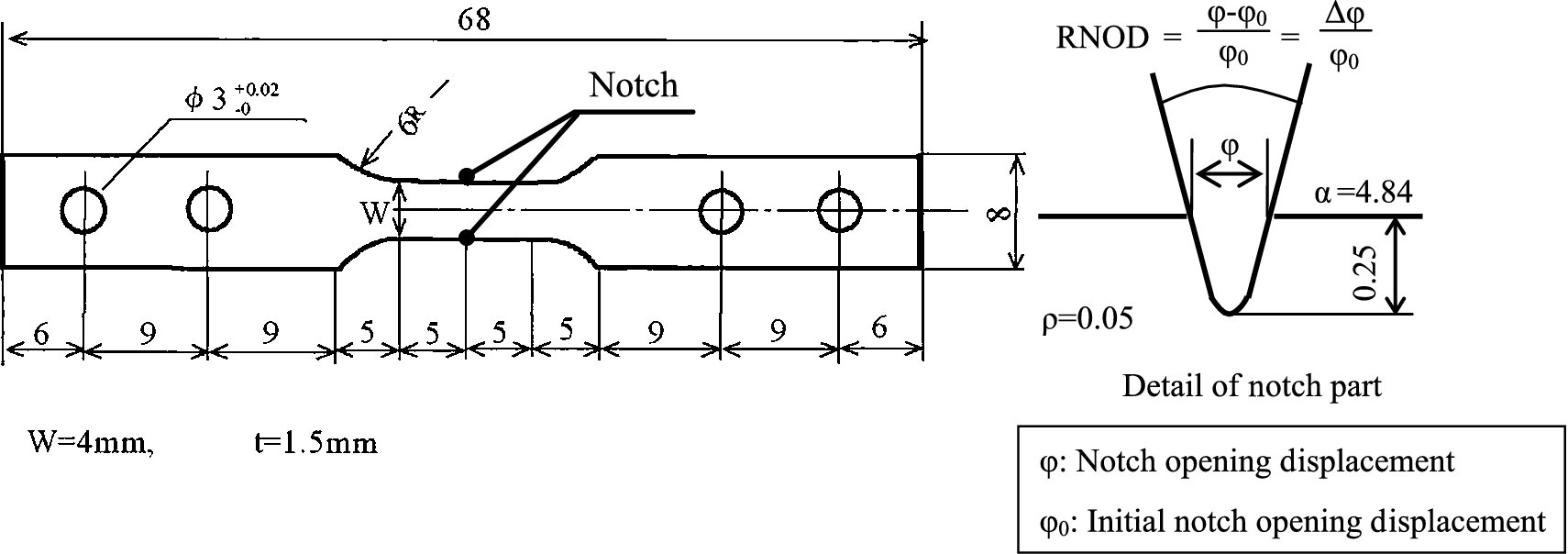
Geometry and size of a DEN (Double Edge Notched) specimen. (Colors are visible in the online version of the article; https://dx-doi-org.web.bisu.edu.cn/10.3233/SFC-150182.)
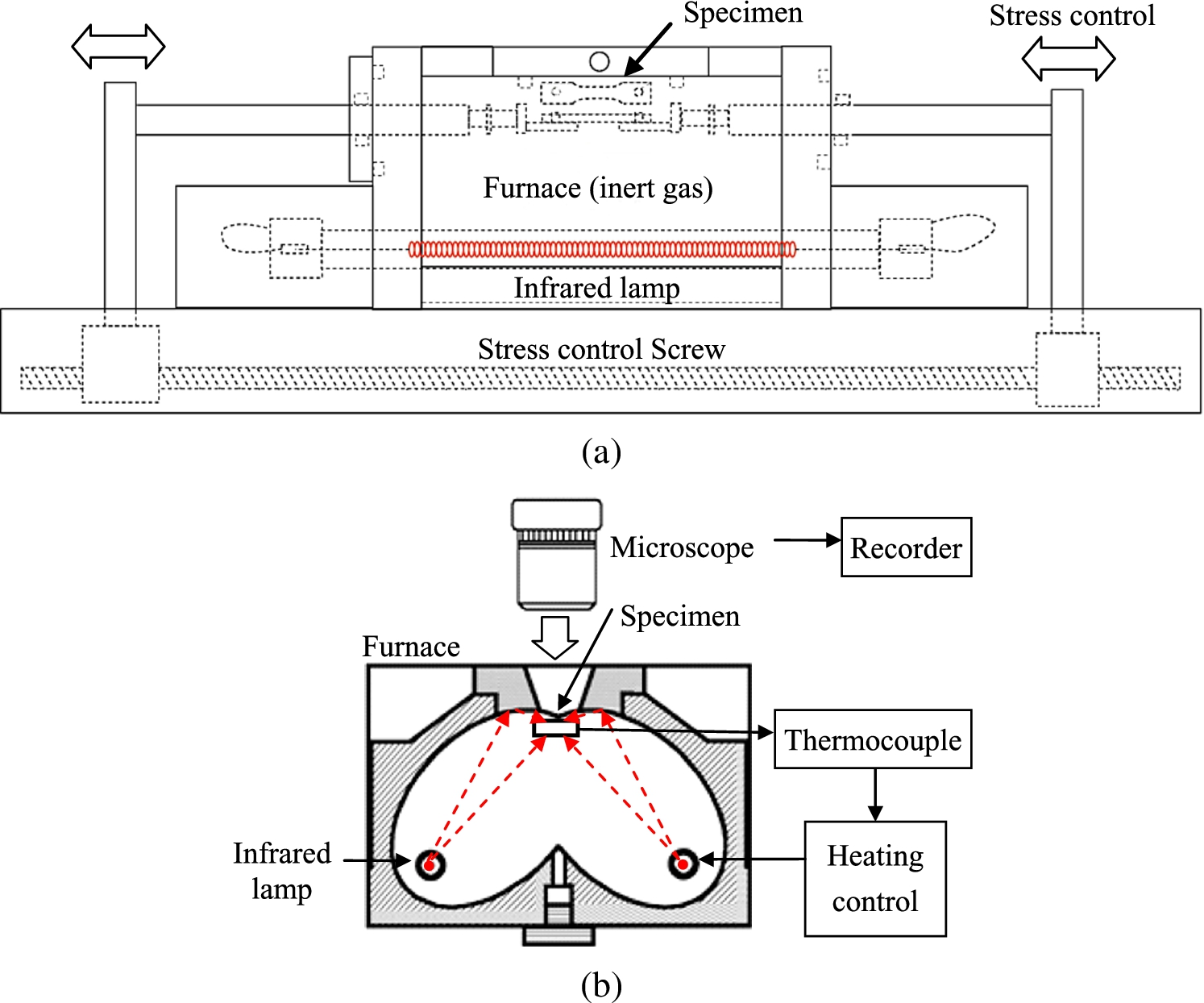
Schematic illustration of in-situ observational machine. (a) Whole structures, (b) surrounds of the furnace. (Colors are visible in the online version of the article; https://dx-doi-org.web.bisu.edu.cn/10.3233/SFC-150182.)
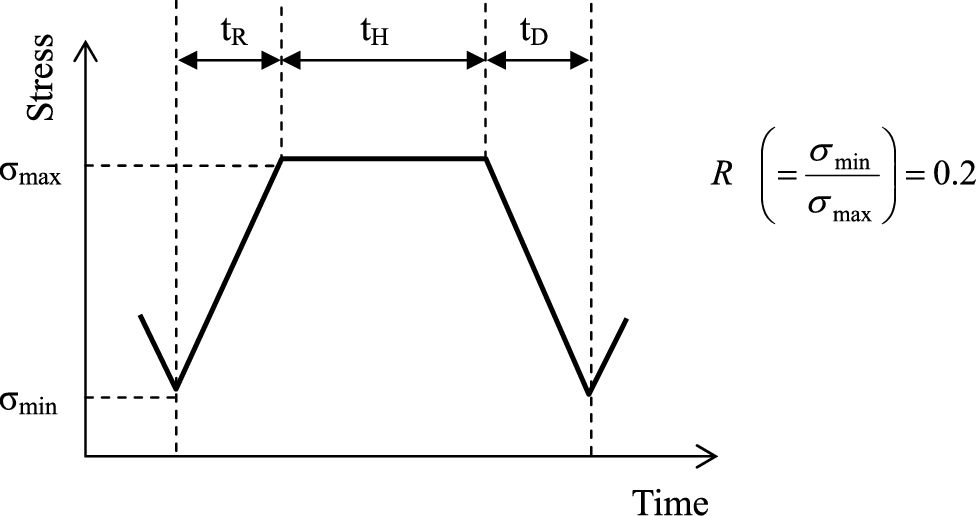
Applied stress waveform.
Crystal orientation measurements were made with an EBSD-SEM system, comprising a TSL EBSD system using an orientation imaging microscopy (OIM Version 5) interfaced to a JEOL JSM-7001F with a field emission electron gun. This system can obtain a crystal orientation map automatically by digitally scanning the electron probe over a rectangular area of the specimen surface which is tilted at 70° from the horizontal.
In the case of smooth specimens, samples were sectioned parallel to the stress axis and first polished to a mirror surface with 0.05 µm colloidal silica solution to remove the worked layer before EBSD measurements. Orientation imaging maps were taken over a rectangular area of about 4 mm square. The step size of the scanning was 5 µm at an accelerating voltage of 25 kV in the axial and transverse directions.
Test conditions, fracture lives and symbols
Note:
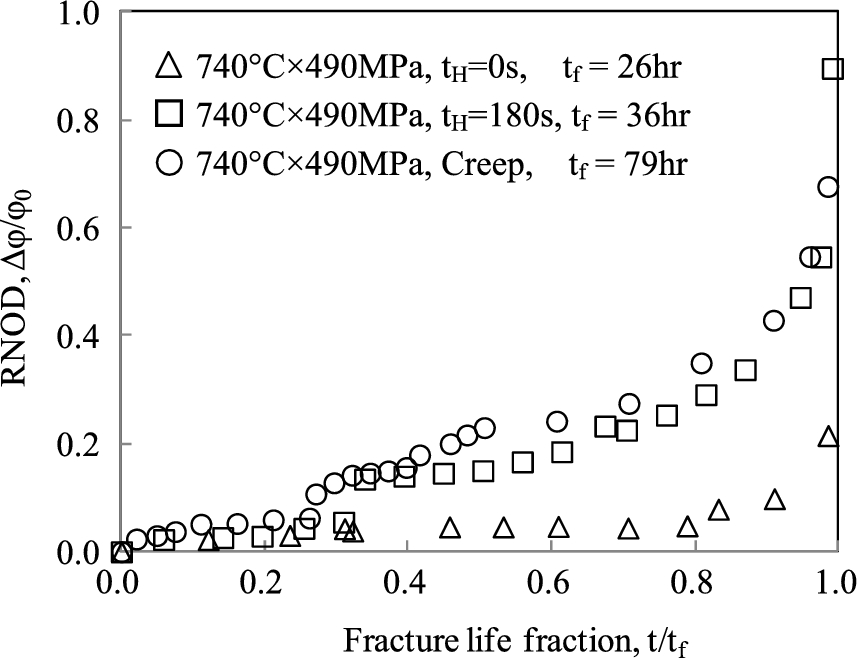
Characteristics of the RNOD at 740°C under the creep–fatigue condition.

Characteristics of the RNOD at 830°C under the creep–fatigue condition.
The RNOD curves at 740°C and 830°C are shown in Figs 9 and 10, respectively. For either condition, the displacement in the case of triangular net fatigue conditions is small, however a displacement trend is equivalent to the creep in cases of creep–fatigue condition (
In conjunction with past results [11], the relationship between the inverse value of the fracture life (
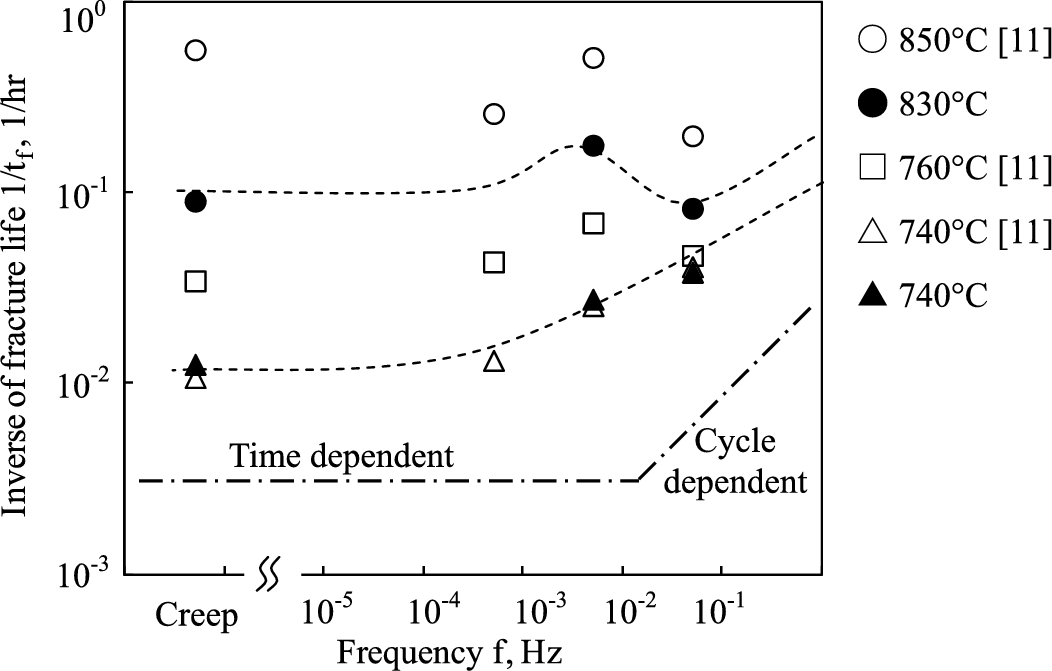
Relationship between inverse value of fracture life and applied load frequency focused in the characteristics of creep–fatigue interaction (830°C) and the cycle dependent (740°C). (Colors are visible in the online version of the article; https://dx-doi-org.web.bisu.edu.cn/10.3233/SFC-150182.)
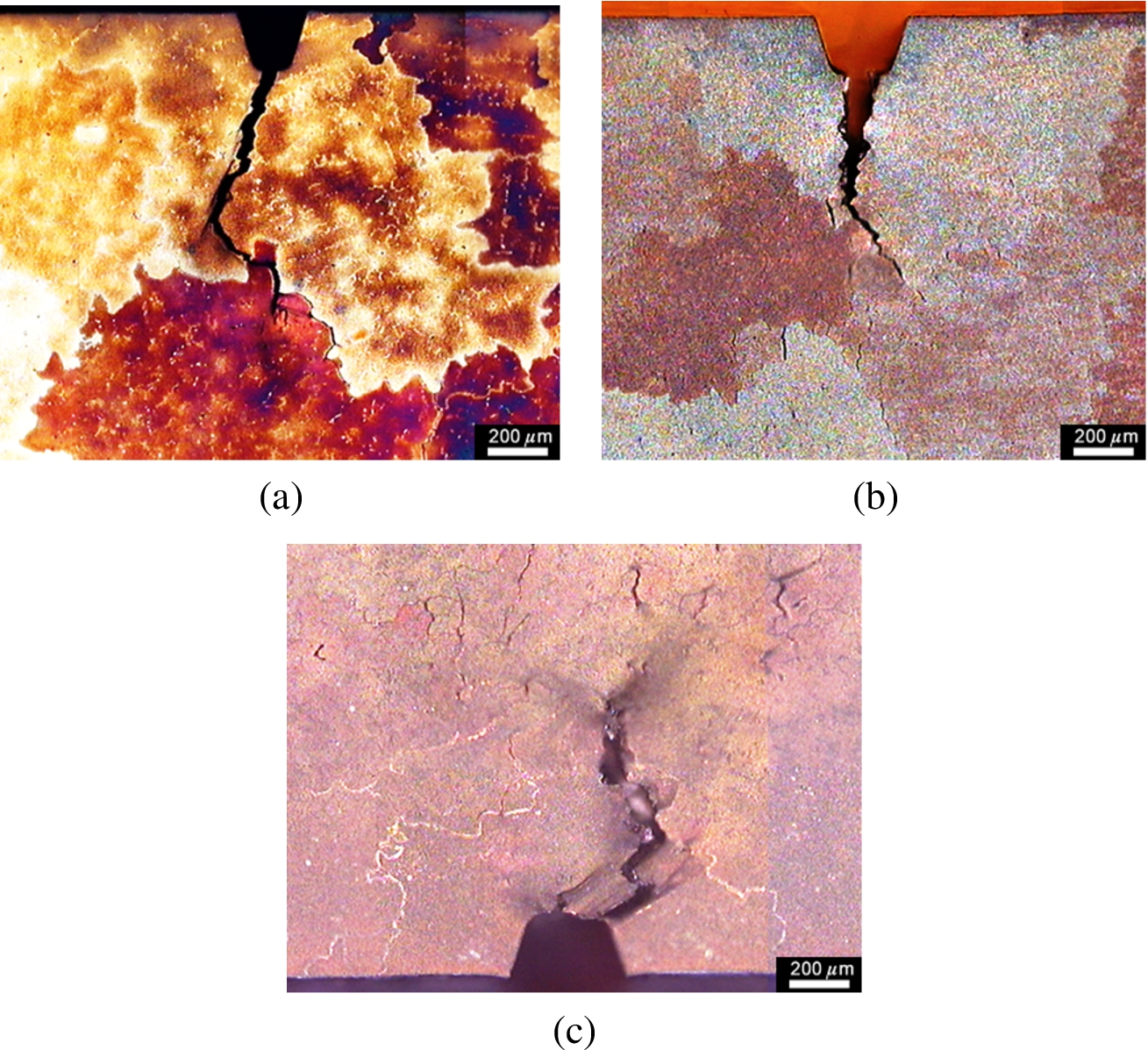
Crack growth behavior at
In the case of 740°C, load frequency shows the cycle-dependent characteristics in the range of 10−1 to 10−3 Hz, however, as load frequency decreases at 830°C, transition behavior to the time-dependent characteristics with the maximum point was observed. It is considered that the creep–fatigue interaction region, in other words, the nonlinear interacted area means the competition of dislocation motion increased by repeated loading and vacancy diffusion due to constant stress. It is an interesting fact that the degree of interaction of dislocation motion and vacancy diffusion shows both short life and long life of crack growth.
Next, Fig. 12 shows the observation results of crack growth morphology of end-of-life by optical microscope at 740°C and in Fig. 13 the results at 830°C. In the case of 830°C, since it was not able to interrupt the test immediately before rupture under the 294 MPa creep condition, the observation result of the 230 MPa which was equivalent to that of 294 MPa was employed. (The result of the 230 MPa was also employed in Fig. 14(a) on the same reason.) The creep and creep–fatigue conditions at 830°C show multiple cracks at grain boundaries, whereas one main crack dominated the damage behavior in either condition in the case of 740°C. Therefore, it was confirmed that the influence of the stress wave on crack growth behavior varies depending on temperatures and elevating temperature promotes intergranular damage.

Crack growth behavior at

KAM maps at
The EBSD observations at the-end-of-life corresponding to the results of the load frequency characteristics as shown in Fig. 11 are shown in Fig. 14. In the case of 830°C where change occurred to the time-dependent mechanism from the cycle-dependent mechanism in a transition region due to a decrease in load frequency, the crack growth manifested changes to intergranular cracking from transgranular cracking perpendicular to the stress and expansion of the damaged area. On the other hand, in the case of 740°C, where the transition region did not manifest due to decreasing load frequency, the damaged area is limited relatively closely to notches, and intragranular damage due to stress concentration (slip deformation) is also observed in creep conditions.
In other words, the degree of creep damage due to the grain boundary diffusion of vacancies differs under the conditions of 740°C and 830°C, where the effect is of course greater at higher temperature conditions, and damage is promoted over a wide area. On the other hand, the cyclic effect probably has an effect of limiting the damaged area [8] and damage only occurred at the notch or crack tip under pure fatigue conditions. However, the effect is restricted to a limited area of intergranular damage under creep–fatigue conditions (
Finally, using Fig. 15, the relationship between the three-dimensional curved surface of fracture life and environments where actual gas turbines are used is investigated. The back side of the curved surface represents a high-temperature region which is the time-dependent mechanism, the front side is a low-temperature region which is the cycle-dependent mechanism. In addition, the right side is a high-cycle region, the left side is a low cycle range, and the intermediate region between them depicts a three-dimensional curved surface characteristic resulting from creep–fatigue interaction. Stress holding time is short in the high cycle area on the right side and the cycle-dependent mechanism dominates crack growth behavior. Since the effect of vacancy diffusion in the grain boundaries is not significant, anticipating actual environments in which gas turbines are used, it is important to understand the four areas delineated by the dashed red line in the figure.
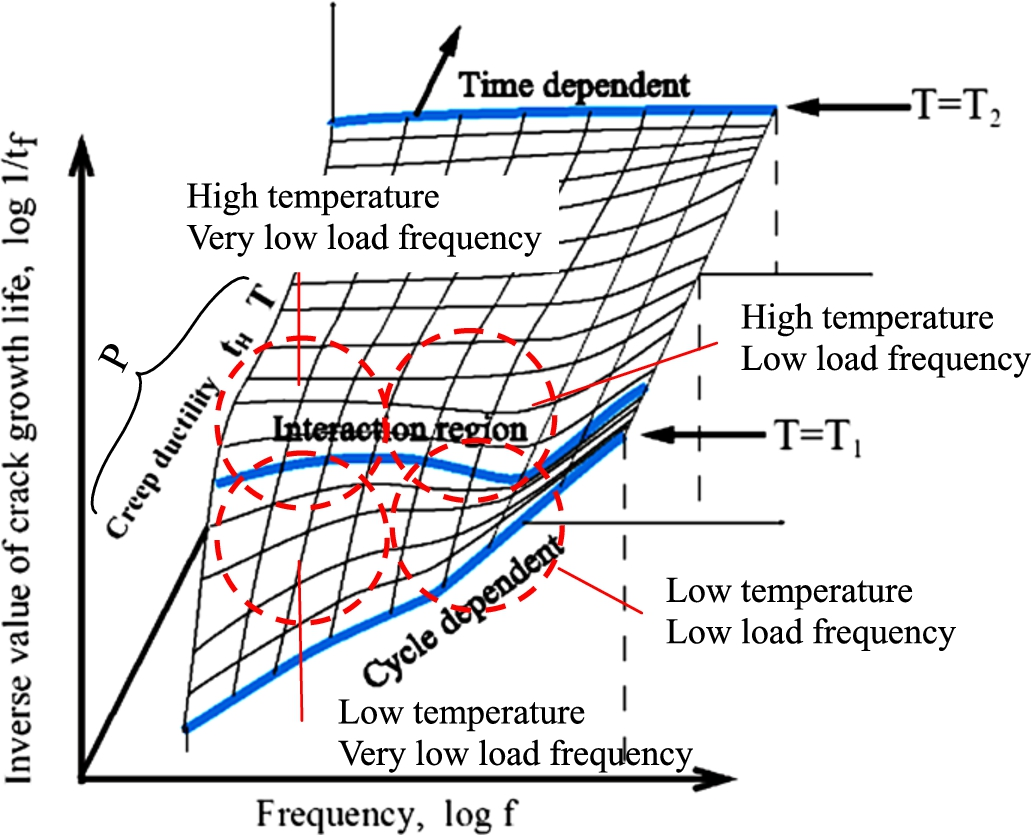
Mechanisms of creep–fatigue interaction regarding the three-dimensional curved surface representation of load frequency characteristic of IN738LC. (Colors are visible in the online version of the article; https://dx-doi-org.web.bisu.edu.cn/10.3233/SFC-150182.)
The upper right area (high temperature and low-cycle) is the environment corresponding to the high temperature section of the gas turbine to be used at middle to peak load. In this area, the influence of creep–fatigue interaction is significant. The transition region with a short life appears at a certain load frequency… It shows the cycle-dependent mechanism above a certain level of load frequency, and in contrast, shows the time-dependent mechanism below a certain level of load frequency. Therefore, further investigation is required to clarify which damage mechanism will dominate the vulnerable region of an actual component. As a result, while obtaining life characteristics, it is possible to discern the morphology of the actual damage whether that be fatigue cracks or creep voids and cracks.
The upper left area (high temperature and very low cycle) is the environment corresponding to the high temperature section of the gas turbine used at the base load. This region shows the time-dependent mechanism where the effect of stress concentration is relatively small and damage is widely distributed over a region of high, uniform stress.
The lower right area (low temperature and low cycle) is the environment corresponding to the low temperature portion of the gas turbine used at middle load to peak load. This region shows the cycle-dependent mechanism and in some cases deformation can be observed in the region of relatively high temperature and concentrated stress but basically the fatigue crack grows linearly in the direction perpendicular to the stress.
The lower left area (low temperature and very low cycle) is the environment corresponding to the low temperature section of the gas turbine used at the base load. In the low temperature range, vacancies were immovable and the time-dependent mechanism had difficulty manifesting. Instead, brittle fracture properties manifested due to the stress level of the stress concentrated region. There are cases where excessive stress leads to inelastic deformation within grains, however, it can also lead to fracture without visible damage or deformation in the case of low deformability material.
As described above, many materials exhibit a complex creep–fatigue damage behavior according to stress holding time or temperatures. Damage behavior analysis based on the EBSD method and three-dimensional curved surface characteristics of fracture life enabling the characterization of creep–fatigue interactions is highly significant for engineering.
Using polycrystalline Nickel-base superalloy, microscopic damage behavior was analyzed based on the EBSD method and the creep–fatigue properties expressed as a three-dimensional curved surface of fracture life derived from the theoretical analysis and experiment. This study has clarified the following:
(1) Depending on the load frequency or test temperature, when the cycle-dependent mechanism transforms to the time-dependent mechanism due to a decrease in load frequency, a shorter life transition region can be observed in some cases. However, it is concluded that based on damage behavior analysis using the EBSD method, intergranular damage due to vacancy diffusion which is a time-dependent mechanism and usually distributed over a broader region, became limited to notch areas due to the effect of load frequency, concentrating the intergranular damage in a relatively narrow range resulting in shorter life.
(2) The characteristics of the three-dimensional curved surface represent the basic properties of the material on creep fatigue interaction. The damage behavior analysis based on the EBSD method and three-dimensional curved surface characteristics of fracture life facilitate the characterization of creep–fatigue interaction. Damage morphology (creep crack and void or fatigue crack) at stress concentrated region can be effectively predicted depending on blade shape or operating conditions of actual gas turbines.