



Abstract
The brittleness is widely used as the key parameter to evaluate the potential effectiveness of hydraulic fracture in tight oil reservoirs. In this study, the main purpose is to evaluate and reveal the brittleness and influence factors for tight gas reservoirs. Therefore, porosity, X-ray diffraction (XRD) and triaxial compress experiments are carried out for 35 specimens in Song Liao basin, and the value of porosity, mineral composition, mechanics parameters and brittleness index are obtained in the same pressure and temperature environment. The relation between the brittleness and minerals content, porosity is analyzed by the single factor and multiple factors analysis method. The predicted model of the brittleness index with porosity and minerals content is proposed and verified by experiment. It is robust and effective for predicting brittleness index. The research result supply the basis for development plan design of tight oil reservoirs.
Introduction
The large-scale hydraulic fracturing is needed for the tight oil reservoir development. The rock brittleness is particularly important for optimizing wells, layers and designing fracturing program in tight oil reservoir. In order to characterize rock brittleness, dozens of methods have been proposed in the past decades. At present, there is still no agreement among different authors whether as to definition, or as to measure brittleness. Different researchers mean, express and use it differently. The methods can be classified as the rock compressive, tensile or shear strength and elastic parameters (Bishop [1]; Hucka and Das [2]; Kahramana and Altindag [3]; Liu and Shen [4]; Rickman [5]; Goodway [6]; Li et al. [7]; Zhang, Liu and Jiang [8]), the rock stain and deformation (Hucka and Das [2]; Andreev [9]; Zheng, Ge and Lee [10]; Vahid and Peter (2003); Yang, Xu and Su [11]; Tarasov and Potvin [12]; Zuo et al. [13]; Yun, Yan and Mian [14]), the mineral composition (Jarvie et al. [15]; Wang and Gale [16]; Guo, Chapman and Li [17]; Li and Chen (2013)) and so on. The factors that influence the rock brittleness can be divided into the material factors and environmental factors. The material factors include the rock mineralogical composition and porosity. The environmental factors include stress state, stress path, loading rate, temperature. Revealing the influence factors of the brittleness has great significance. For achieving the purpose, the cores of Song Liao basin are selected as an object. The porosity, X-ray diffraction (XRD) and triaxial compress experiments are carried out. The experimental results of the porosity, mineral composition and mechanical parameters are obtained. The relation between the brittleness and the minerals content, porosity is analyzed by the single factor and multiple factors analysis method. The prediction model and the classification standard of the brittleness are proposed.
The selection of experimental cores and the mineral composition
The experiment purpose is to reveal the relation between the brittleness and the minerals content, porosity. Therefore, the principles of the cores selection are made as following. (1) The mineral types should be more covered. (2) The mineral content should be more different with each other. (3) The porosity should be more different with each other too. So the test results with those characters can be more easily counted, and the relation between brittleness and rock mineral composition, porosity is more easily founded. Following these principles, the dry samples of sandstone, sandy mudstone, sandy limestone and sandy argillaceous limestone of the tight oil reservoirs are cored with air cooling. The porosity and X-ray diffraction (XRD) experiments are carried out. The porosity, mineral composition and content are acquired. The results are shown in Fig. 1.
In Fig. 1, the specimens number is shown in horizontal axis. Porosity is represented by histogram and the value is displayed on the primary vertical axis (left side). The mineral content is represented by lines with markers and is displayed on the secondary vertical axis (right side). The porosity mainly distributes in the range of 3.31∼27.51%. Figure 1 show that the minerals are mainly calcite, quartz, anorthose, orthoclase and clay. The content of the calcite, quartz, anorthose, orthoclase and lay are 0.00%–46.26%, 11.91%–45.40%, 9.41%–53.87%, 1.66%–32.45%, 0.32%–15.75% respectively. The content of calcite has a great influence on the porosity distribution, and with the decrease of calcite content, the porosity increasing obviously.

The minerals content of different porosity.
The samples description and experimental procedure
All cylindrical specimens with the height to diameter ratio of 2 (±0.03) are prepared by cutting and polishing. All shrinkable-tube-jacketed specimens are sealed with rubber belt, avoiding the infiltration of hydraulic oil by accident when applying confining pressure. Then, the axial and radial deformation sensors are installed. The experimental apparatus is shown in Fig. 2.
The average depth of coring is 1100 m. The formation pressure gradient is about 1.02 MPa/100 m. The overburden pressure gradient is about 2.26 MPa/100 m. The effective stress is about 13.25 MPa. The 13.25 MPa is set up as uniform confining pressure. The load control pattern is used. The rate of loading is 300 N/s.
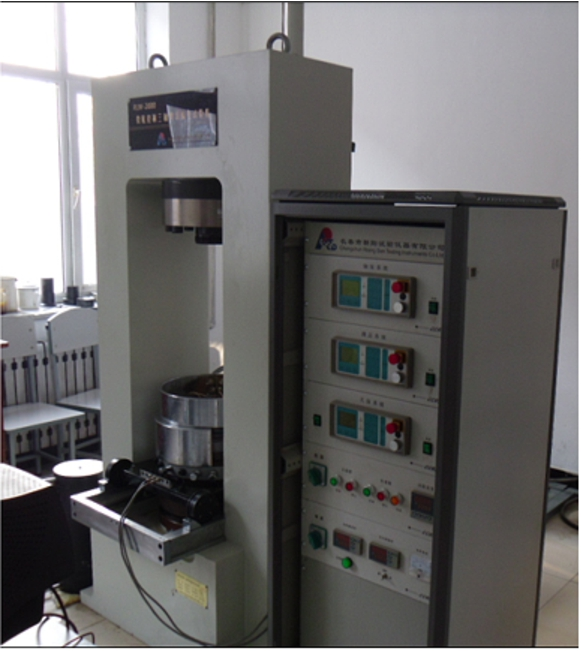
The experimental apparatus.
The full axial stress-strain curves are shown in Fig. 3.

The stress-strain curve.
According to the stress-strain curve shape, two types are classified. Firstly, the four stages including the compaction, elasticity, yield and failure are obviously presented for high porosity cores. The pre-peak curve is gentle, and the amplitude is small. Secondly, the last three stages of elasticity yield and failure often presented for low porosity cores. Based on the full stress-strain curve, the mechanical parameters can be obtained, such as elastic modulus, Poisson’s ratio, compressive strength and residual strength.
The typical fracture morphology of rocks broken is shown in Fig. 4.
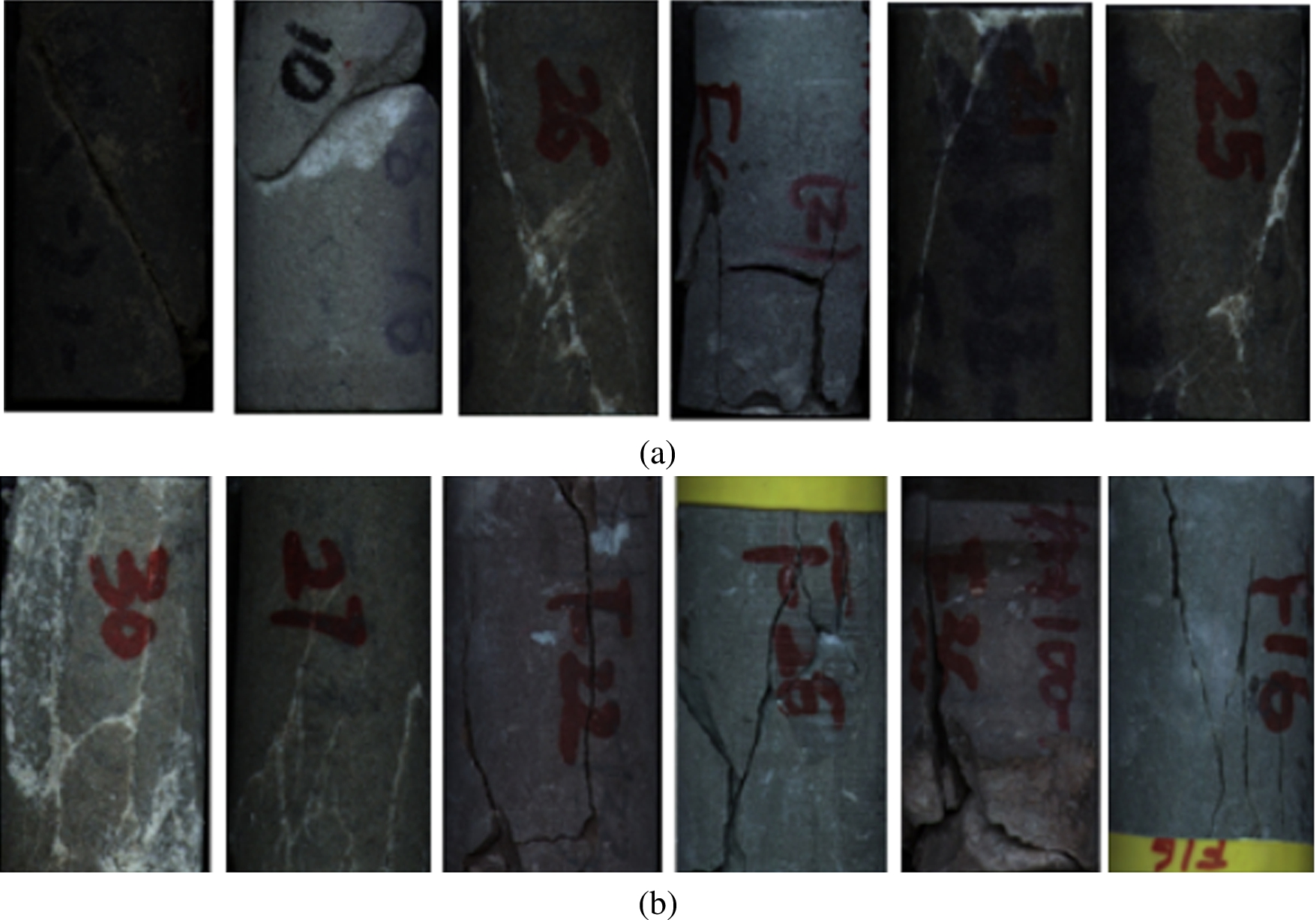
The failure form of rock.
The patterns of the rock macro failure mainly demonstrate shear failure (as shown in Fig. 4(a)) and split failure (as shown in Fig. 4(b)). For shear failure, the quantity of fractures is few, while the fractures will be not easy closure. For split failure, the quantity of the fractures is more than shear failure, their shapes are more complexity, and the direction of main fracture is usually coincidence or with a certain angle to the main stress direction.
The morphologies of the microscopic fractures are shown in Fig. 5.
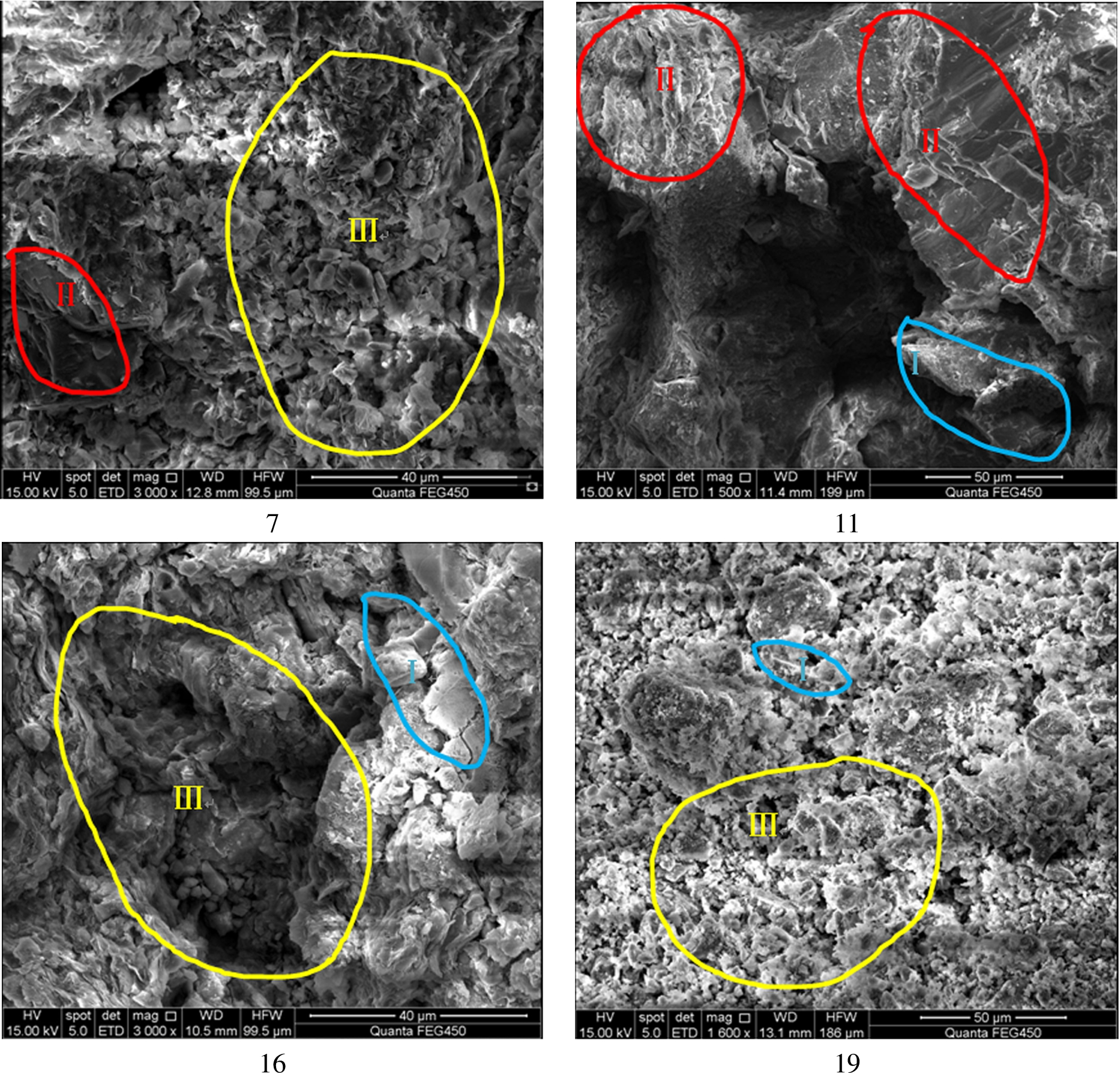
The electron microscope image of fractograph.
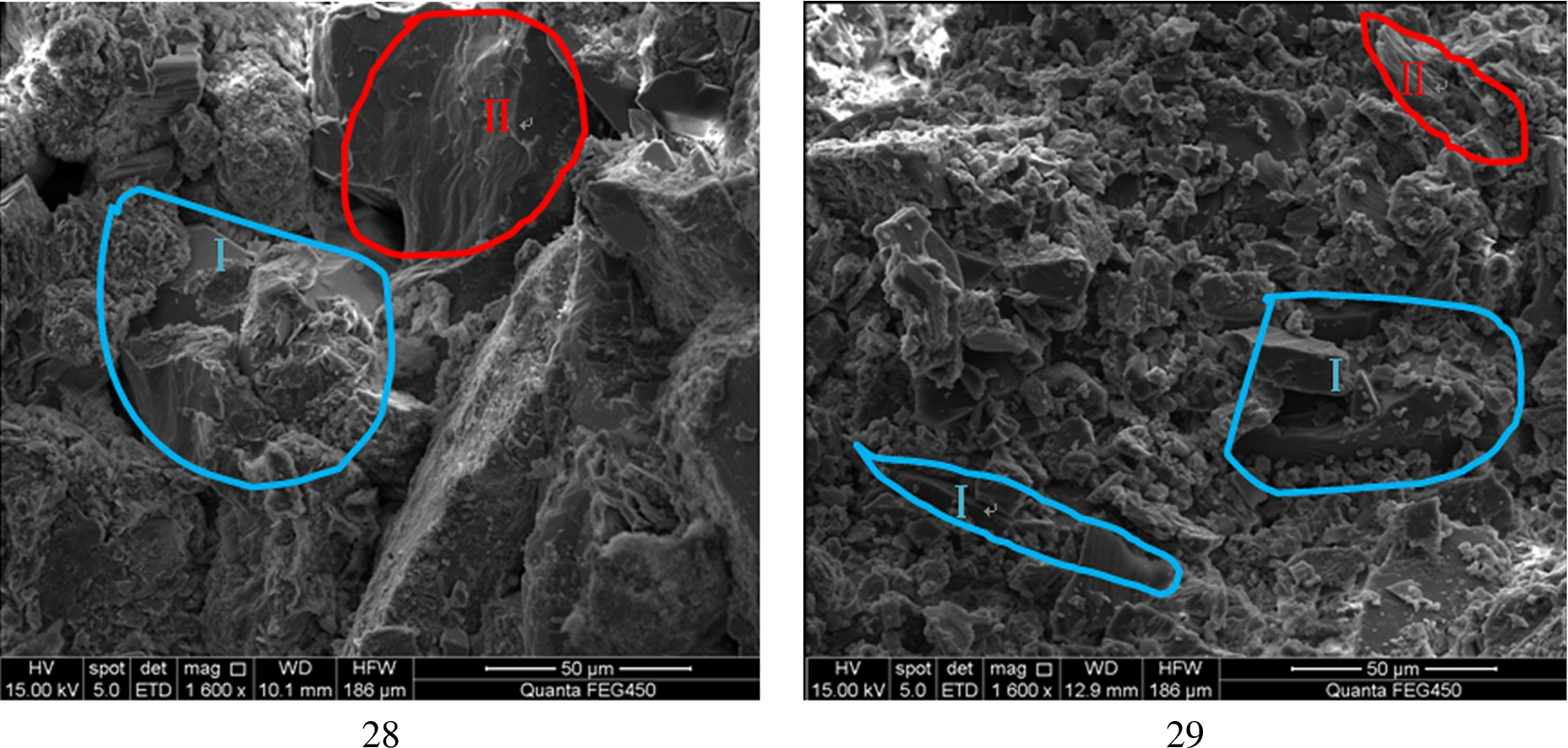
(Continued.)
The morphology of the microscopic fracture mainly presented the intergranular fracture I type, transgranular fracture II type, micro porous polymer fracture III type and the coupling form. For intergranular fracture I type, the fractures formed on the grain boundary and extended along the grain boundary. The main reason is that the strength of the grain boundary is less than the mineral crystals, such as quartz mineral, as shown in blue circle part. For transgranular fracture II type, the cleavage fracture is the main form, fractures show river, irregular grain or steps figure, and the fractograph is smooth and brightness, such as calcite, as shown in red circle part. For micro porous polymer fracture III type, it mainly causes by the micro pore nucleation, development and aggregation, the fractographs presented ductile nest pattern, such as clay minerals, as shown in yellow circle part. Because the rock is symbiotic of variety mineral and pore defects, the coupling of the several morphologies often appeared.
The brittleness index choice
The brittleness index is chosen which expressed by elastic modulus and Poisson’s ratio, as shown in equation (1).
The single factor analysis
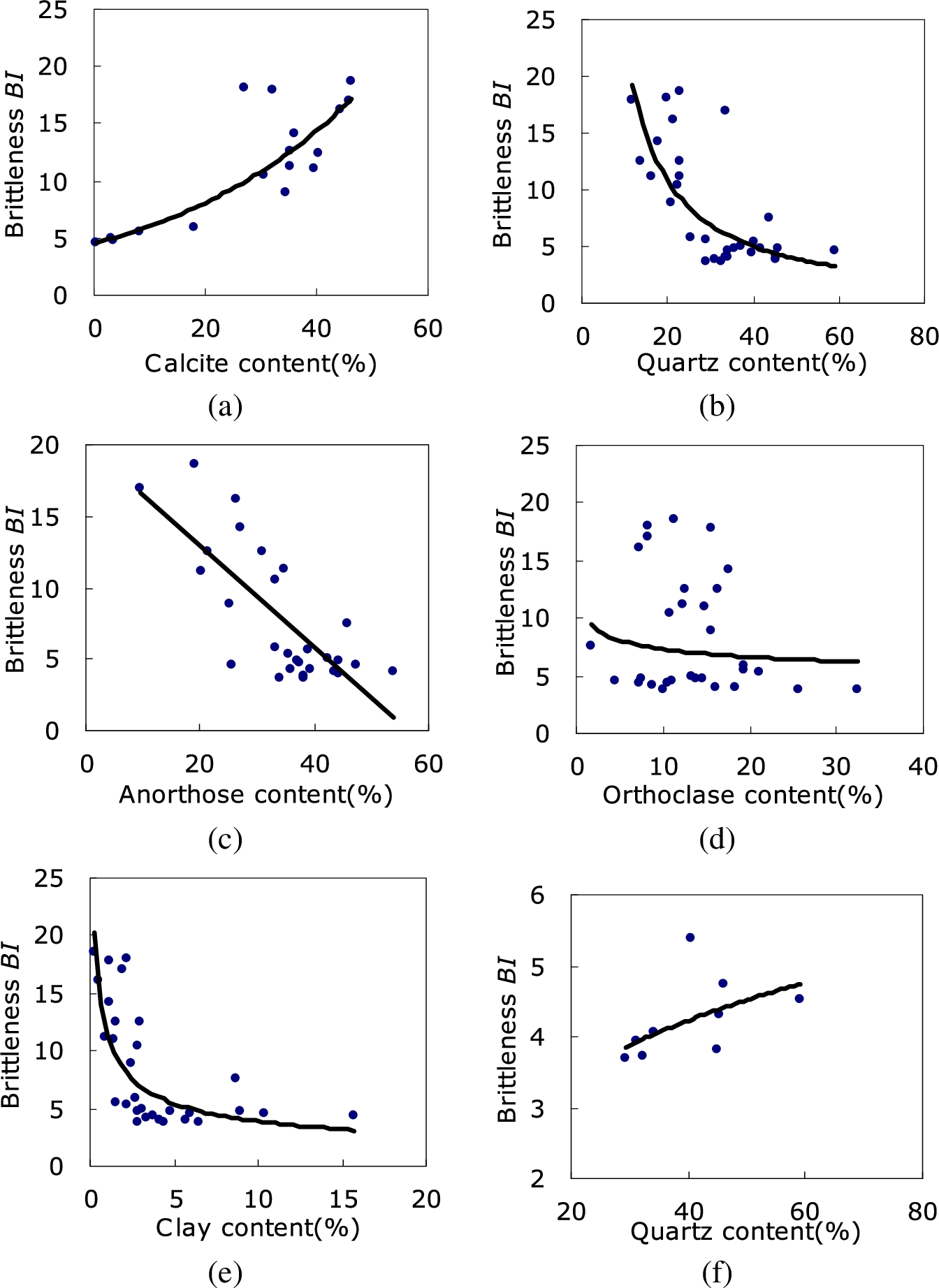
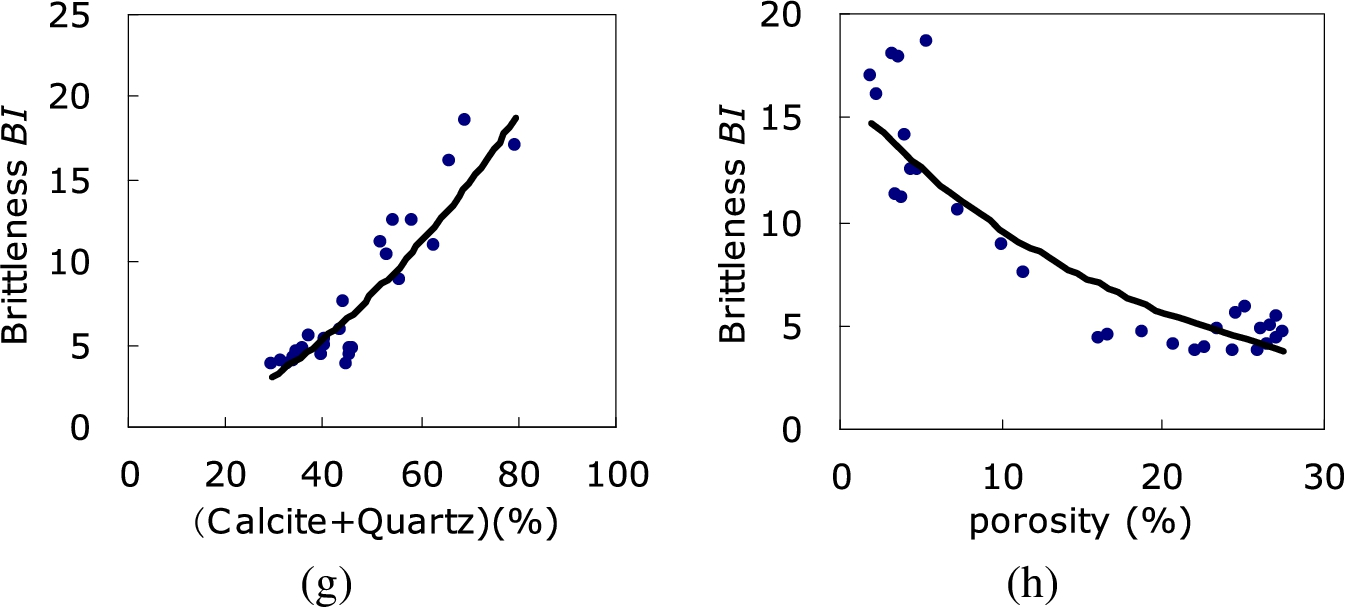
The mineralogical composition and pore structure are essential material factors which determine the physical, mechanical properties and the brittleness. The full stress-strain characteristics are the response of these factors to the external load. Different minerals have different brittleness. The brittleness index is higher with more brittle minerals. At present, there are many methods to calculate the brittleness according to mineralogical composition. The quartz or quartz and calcite are used as brittle minerals. For determining the effects of various minerals content on the rock brittleness index in tight oil reservoir, the relationship between minerals content and brittleness (
The relation between
(Continued.)
With the increase of the calcite content, the
The relation equations between
The correlation between
According to the results of single factor analysis, the relation model is established for
Taking the logarithm on both sides of the equation (2), it is changed into a linear regression equation.
Analysis of variance for the significance of regressions
Analysis of variance for the significance of regressions
Taking
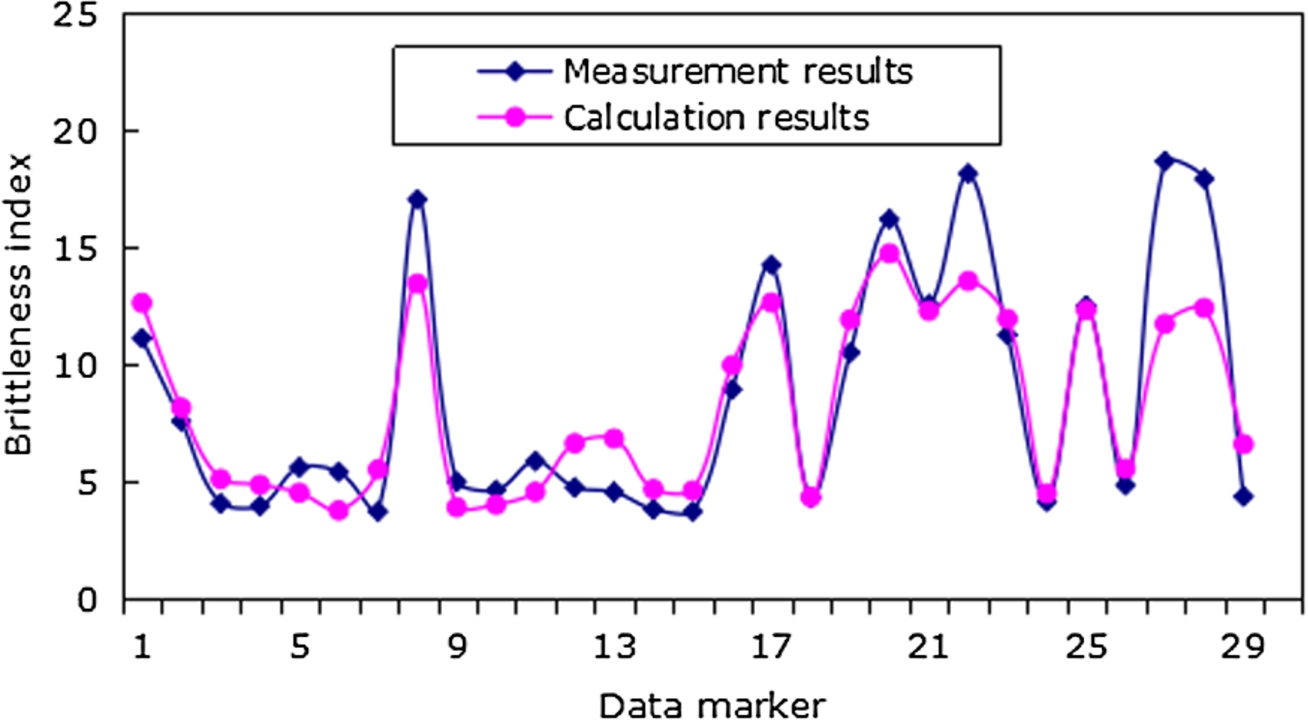
The contrast between calculation results and measurement results.
The calculation results by the equation (3) are very similar with the laboratory measurement. It validates that our proposed model is robust and effective for predicting brittleness index.
The reasonable classification of brittleness index has a great significance for the engineering application. Until now, there is no relevant classification standard. In this paper, the brittleness index (
Conclusion
The porosity, mineral composition and mechanical characteristics of the tight oil reservoir are tested in Song Liao basin of China. The brittleness index (
The brittle minerals are mainly calcite and quartz, and the calcite was the master factor. The plastic minerals are mainly anorthose and clay.
The predicted model of the brittleness index with porosity and minerals content is proposed and verified by experiment, and it is robust and effective for predicting brittleness index.
Footnotes
Acknowledgements
The research is mainly supported by NSFC (Natural Science Foundation of China, No. 51490650 and No. 51504067), Postdoctoral foundation of Hei Long Jiang province (No. LBH-Z15031) and Young innovative talents of Hei Long Jiang province (UNPYSCT-2016123) in the context of northeast petroleum university.
Conflict of interest
The authors have no conflict of interest to report.