



Abstract
The Hellenic Statistical Authority (ELSTAT) worked towards the introduction of a designated Law governing the 2021 General Censuses in Greece. It was the first time that the General Censuses were conducted by virtue of a legal act which underwent extensive deliberations and legal scrutiny.
This kind of strengthening of the statistical legislation demonstrates the wide recognition of the professional independence ELSTAT has established and it provided a solid basis for the Hellenic Statistical System (ELSS) to be able to adequately respond to both current and future challenges. These straightforward institutional arrangements ensured ELSTAT’s ability to effectively conduct the Censuses in accordance with the International Recommendations and Standards, while, at the same time, strengthened its capacity to an immediate response to arising needs and challenges.
It was then no mystery how ELSTAT was able to immediately adapt to the developing operational conditions by creating a plan for a hybrid census system for all households. At the same time the legal instruments used laid the foundations for the establishment and maintenance of Statistical Registers for Population and Buildings, introducing two unique identifiers (“keys”) in the Census variables and creating the institutional infrastructure for linkage to other administrative registers.
Introduction
The Population-Housing Census is the most complex and large-scale statistical work for every country. Its results reflect each conducting period’s demographic, political, and socio-economic conditions. The first Population Census in modern Greece was held in 1828, seven years after the Greek Revolution for the Independence within the borders of the first, not yet fully independent, Greek State (Table 1). During the 1828 Census, there was also an estimation of the population of 1821 [1]. The 2021 Population-Housing Census, the first digital Census in Greece, was conducted by the Hellenic Statistical Authority (ELSTAT) in the period November 10, 2021, until February 21, 2022, with reference date of the data the 22
Population Census results in Greece (1821–2021)
Population Census results in Greece (1821–2021)
1821–2001: De Facto population, 2011–2021: Resident population.
The 2021 Population and Housing Census was set to be conducted by traditional method, based on the direct count of all individuals and the collection of information on their characteristics, with the use of paper questionnaire through interview with the respondent. Introducing a different method, such as the combined census model, was not a straightforward choice mainly because of the lack of suitable registers at national level and the lack of a unique ID for both citizens and dwellings, that renders any effort towards the linkage between registers almost impossible. At the same time, strict data protection rules amongst different administrations presented an extra challenge.
In the present paper, we are dealing with the scope and the methodology of the 2021 Population-Housing Census in Greece, and the institutional framework that safeguarded the whole project in compliance with the United Nations’ Fundamental Principles of Official Statistics and the principles stipulated in the European Statistics Code of Practice (CoP) [2, 3]. For the first time, ELSTAT worked towards the introduction of a designated law regarding the 2021 General Censuses (Agricultural-Livestock, Building and Population-Housing) which would be voted by the members of the Hellenic Parliament in order to gain broad support across the political spectrum, strengthening the statistical legislation and professional independence1 of ELSTAT and of the Hellenic Statistical System (ELSS).
With that strategic decision, ELSTAT and the members of the ELSS could rely upon a solid basis to meet both current and future challenges regarding the provision of statistical information. The institutional provisions in the Census Law ensured the smooth conduct of the censuses in accordance with the international recommendations and standards while ensuring the immediate response of the system to any future challenges. In this context, and after thorough public consultation with citizens and users and through the parliamentary committees, the 2021 Census questionnaire introduced two key-variables (identifiers) that allowed for the verification and direct interconnection of the collected data.
Additionally, the democratic strengthening of the Census2 and the fact that the Census Law was written purely by scientific criteria points to a mature institutional environment for the Census and the post-Census obligations of ELSS.
In Greece, beginning from the year 1951, the Population-Housing Census along with a Building Census, takes place every ten years [1].
The purpose of the Population-Housing Census is to collect up-to-date and valid data on the demographic, economic and social characteristics of the population and its housing conditions, in order to meet the statistical information needs at national, European and international level. This information is essential for drawing the economic, social and environmental policies of each State and for fulfilling the Country’s obligations toward the European Union and international organizations.
As a result of the Population-Housing Census ELSTAT has updated data regarding:
The Resident Population of Greece, i.e., the inhabitants who reside permanently in each Region, Regional Unit, Municipality, Municipal Unit, Community and autonomous settlement, regardless of citizenship and residence status, The Registered (De Jure) Population of Greece, i.e., the citizens registered in each Municipality and Municipal Unit, on the basis of which the parliamentary seats are allocated to the individual constituencies during the parliamentary elections, The number of dwellings, by type (regular or non-regular dwellings), and data on their main characteristics and amenities, The number and composition of households and nuclear families, The demographic, social, educational and economic characteristics of the resident population of Greece.
Within the scope of the 2021 Censuses also fell the compilation of Statistical Registers for Buildings and Population, in accordance with the new European methodological framework, which provides for the transmission of census demographic data on an annual basis.
The initial proposal regarding the 2021 Census was to be conducted following the traditional, door-to-door, method based on the direct count of all individuals and the collection of information on their characteristics with a paper questionnaire (the same as in 2011) through an interview.
ELSTAT organized an impact assessment evaluation and a stakeholder consultation in order to prepare a draft legislative proposal for the General Censuses and their design and overall organization in order to ensure the smooth conduct of the Census and to meet the needs of users for statistical information. A number of participants took part in the relevant consultation such as the Advisory Committee of the Hellenic Statistical System (SYEPELSS), the Statistics Users Conferences organized by ELSTAT, the Ministries, the Hellenic Data Protection Authority, the Independent Authority for Public Revenue (AADE), the e-Government Center for Social Security (IDIKA SA), the Earthquake Planning and Protection Organization (OASP), the National Confederation of Disabled People of Greece, the Municipalities, etc.
The consultation revealed that even though ELSS has achieved significant improvements as regards population and social statistics, more detailed and frequent datasets were needed for topics, characteristics and breakdowns that have become politically and societally important. At the same time, the 2021 General Censuses ought to provide the basis for a more flexible statistical system that will be able to adapt to evolving user needs.
Acknowledging that the traditional census has several disadvantages, such as the complexity of the operation and the high cost involved, and facing increasing difficulties in enumerating certain population groups, particularly those characterized by high mobility and multiple residences as well as an increasing reluctance of the respondents to be enumerated, the introduction of another method such as the combined census model in Greece was not a straightforward choice for several reasons. The main reasons were the lack of suitable registers at national level and the lack of a unique ID for both citizens and dwellings that made any linkage between administrative and statistical registers a burdensome undertaking, while the strict data protection regulations among different administrations presented an extra challenge.
Given the circumstances resulting from the coronavirus pandemic, the data collection was modified by redefining the census procedure, with a view to the protection of the population’s health. The new approach was based on the exploitation of modern technology. In particular, the population was enumerated electronically via a specially designed web application (electronic self-enumeration). If the enumerated persons had any questions, they could contact an ELSTAT Enumerator for further guidance. In the cases where self-enumeration was not possible, the Census was conducted through a face-to-face or telephone interview.
The results of the impact assessment and the fact that the 2021 Census had to be conducted through the traditional method (door-to-door), where the whole population would be approached, led to the decision to collect variables which would serve as unique IDs and would be used as “keys” for linking the census data with the appropriate administrative registers. These variables were the Tax Identification Number (TIN Number or
The necessary condition for these “key” variables to be useful for the current and future production of official statistics is ELSTAT’s access to the respective administrative sources to which these unique IDs refer. Due to previous experience in which insufficient legal framework and lack of trust created difficulty in accessing administrative data, it was decided that a complete and effective legal and institutional framework was necessary to insure the smooth conduct of the Census in both organizational and legal matters.
Legal and institutional framework
In the year 2010, ELSTAT was set up as an independent administrative Authority with no legal connection to the Government and from the year 2016, the President of ELSTAT is elected by an ad-hoc independent five-member committee of experts3 through an international competition and appointed for a 5-year fixed term as stipulated in the Greek Statistical Law [11]. The Hellenic Statistical System (ELSS) was also formed in 2010 as the set of rules, tasks and bodies responsible for the execution of statistical operations, with the aim of developing, producing and disseminating the official statistics of Greece. ELSTAT, of course, as the Statistical Office in Greece, has a crucial role in the function of the ELSS and is obligated to lead and safeguard the quality in the production of official statistics taking into account present and future challenges.
The most important aspect of the 2021 Population-Housing Census was its strong legal statistical framework with a solid democratic legitimization4 in line with the best chosen scientific statistical practices This feature indicates the recognition of the professional independence of ELSTAT and provides a solid basis for the ELSS to be able to meet both current and future challenges.
These institutional arrangements ensured the smooth conduct of the Censuses in accordance with the international recommendations and standards.
The General Censuses of 2021 were carried out on the basis of the following legal framework:
European Union Legislation
Regulation (EC) No. 763/2008 of the European Parliament and of the Council [4]. Implementing Regulations (EC) No. 543/2017 and No. 881/2017 [5, 6]. Regulation (EC) No. 712/2017 of the European Parliament and of the Council [7]. Regulation (EC) No. 223/2009 of the European Parliament and of the Council [8]. General Data Protection Regulation (GDPR) Regulation (EU) 679/2016 of the European Parliament and of the Council [9].
National Legislation
United Nations Recommendations
United Nations Recommendations for the Population Housing Censuses of 2020 round [13].
The census law
For the first time, following preparation and consultation by ELSTAT, a designated draft bill was submitted to Parliament, which was voted into law by the vast majority of its members, gaining broad support from both government and opposition parties. It was the first time that the General Censuses in Greece were conducted by virtue of a legal act that enjoys democratic legitimization to that extent. Up until the 2021 Census, the Censuses were governed by a Presidential (or Royal) Decree and Ministerial Acts.
Since ELSTAT has no legislative initiative, the bill was submitted to the Parliament by the Greek Ministry of Finance. The Census Law was offered for public consultation, as all proposed laws in Greece, for more than a month and ELSTAT was able to explain the scope and answer all the questions arising within the parliamentary committees. ELSTAT also had the opportunity to discuss questions arising from the citizens regarding the necessity of the Census, the variables and their justified agony regarding the pandemic and how this might affect the Census. The President of ELSTAT had the opportunity to answer questions to members of the Parliament regarding the scope of the Census, the methodology and the variables.
The aim of the bill was to provide a long-term and comprehensive legal basis for the population statistics, in Greece, to meet evolving user needs and exploit the opportunities provided by the growing usage of administrative data sources and new methods. The legislative proposal was put forth after a thorough impact assessment evaluation based on ELSTAT experience from previous Censuses or best practices and stakeholder consultation.
The Census Law specified the purpose of the Censuses, the subject the statistical definitions and the variables, the budget, the methodology, data collection matters and all aspects regarding the post-census activities and the creation of the statistical registers. Special clauses allowed for the President of ELSTAT to be able to make all the appropriate adaptations regarding the data collection period, the variables and the people working for the Censuses. At the same time, adequate provisions were included to ensure the best use of the Census data in the future regarding the establishment of the statistical registers and the appropriate administrative sources for their update5 (all the articles of the Census Law can be found in Table 2).
Law 4772/2021: Conducting General Censuses for the year 2021 from the Hellenic Statistical Authority
Law 4772/2021: Conducting General Censuses for the year 2021 from the Hellenic Statistical Authority
The bill was written aspiring to prevent any kind of problems that arose in previous Censuses in Greece or abroad and to prepare the ELSS for future obligations regarding statistical information and data provision. Regarding future obligations, the creation, for the first time in Greece, of the Building and Population Registers6 and the clear provisions that all the Authorities/Bodies in Greece are obliged to provide administrative data to ELSTAT for their update is considered crucial.7 At the same time, the Census Law clearly stipulated that the ministries, and the local government ought to provide any assistance necessary for a successful Census.8
The bill was also in line with the “Digital Transformation Bible” in Greece (Law 4727/2020) [14] regarding the interconnection of administrative registers. In this way, ELSTAT ensured the smooth provision of administrative data and their effective use for statistical purposes.
Voting results of the Census Law.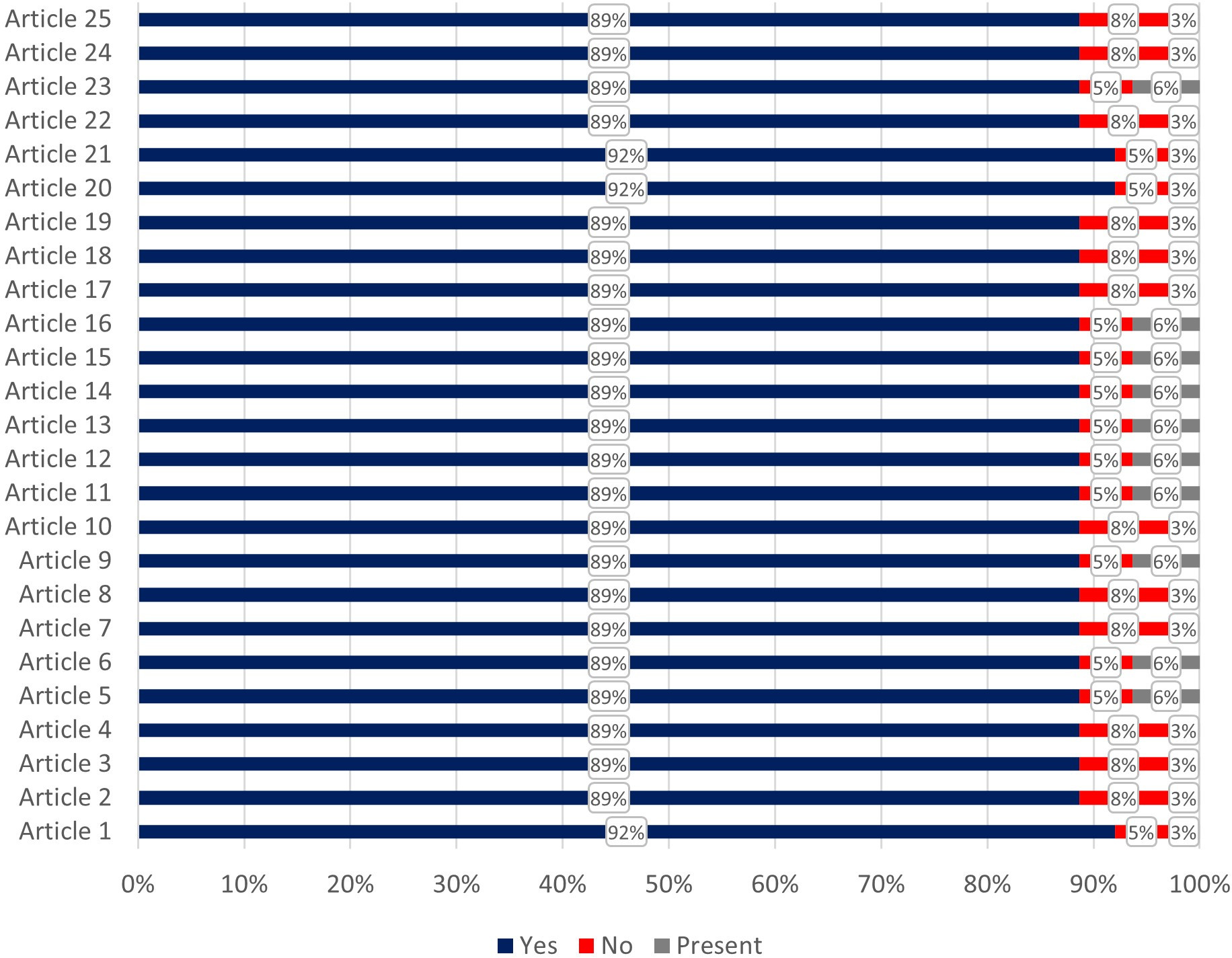
Overall, ELSTAT enjoyed full independence regarding the Census as the President of ELSTAT was the sole decision-maker regarding the timetables, the procedures, the variables etc.
After the Parliamentary Elections of 2019, the party of Nea Dimokratia (ND) is in power with the majority of the Seats (158 out of 300) in the Parliament. The previous incumbent party (SYRIZA) took 86 Seats while the party which was in power in the previous Census, in 2011, (KINAL or PASOK) took 22 Seats.
The bill regarding the General Censuses of 2021 was put forward with the view to address the needs for statistical information, the smooth conduct of a successful Population Census during the COVID-19 pandemic and the importance of statistical data for each country. The bill needed to be voted by 151 Members of the Parliament to become state law.
The Census Law was voted by the incumbent party of Nea Dimokratia, and the opposition parties of SYRIZA and KINAL. Additionally, the opposition party of “Elliniki Lysi” also voted in favor of the 3 out of the 25 articles of the law (Article 1, regarding the purpose of the Censuses, and Articles 20 and 21, regarding the security of data storage and the future registers for the Building and Population-Housing Census respectively). So, the lower bound of democratic legitimization from the Hellenic Parliament was the 89% of the Members of Parliament (see Fig. 1).
The Population-Housing Census 2021
Until March 2020 the Population-Housing Census was set to be conducted, in the Spring of 2021, through the traditional, door-to-door, method based on the direct count of all individuals and the collection of information on their characteristics with a paper questionnaire (the same as in 2011) through a face-to-face interview. The circumstances arising from the COVID-19 pandemic such as the government health protection measures (e.g., mobility restrictions) in Greece and the uncertainty regarding the evolution of the pandemic led to the adoption of new data collection techniques (e.g., electronic self-enumeration) and a new data collection period (end of 2021).
The initial plan was in line with the conditions prevailing until the COVID-19 pandemic, such as the absence of a Statistical Population Register, the unfamiliarity of many households with new technologies and the international experience regarding the first attempts at electronic self-enumeration, which prevented any thoughts and suggestions for a more digital Census. The adjustment of the 2021 Census to the pandemic had to be quick and effective and ELSTAT changed the original design of the Census process with the aim of reducing face-to-face interaction and the possibility of the non-response due to fear. Teleworking and distance learning for students were issues that had to be addressed.
Procedure of the 2021 Population-Housing Census in Greece.
The new approach, which was included in detail in the Census Law, was based on the electronic self-enumeration of the households via a specially designed (in-house) web application For the households that would not be able to participate in the electronic self-enumeration, as well as people in reception facilities, nursing homes, hospitals, camps etc., the Census would be conducted through a face-to-face or phone interview in compliance with the applicable public health protection measures. The obstacle of the absence of an (administrative or statistical) population register was overcome using Enumerators who distributed unique (geospatially) residence codes to each household in their area of responsibility. The Enumerators were responsible for helping, via phone, the representatives of the, around 120–150 households that were assigned to them with their questions and visit again the households that didn’t self-enumerate to arrange a physical or telephone interview (see Fig. 2).
It would not be an exaggeration to say that, due to the pandemic, people were forced to use, for the first time, many digital services of the public sector and, at the same time, the General Government bodies were forced to accelerate the creation of appropriate infrastructure to serve citizens remotely. ELSTAT hastened to take advantage of this new situation as it would help in the electronic self-enumeration. Citizens wouldn’t need to visit ELSTAT’s website (
According to the new planning the implementation of the Building (preparatory activity of the Population Census) and PopulationHousing Censuses were scheduled for the Autumn and Winter of 2021 respectively.
Every traditional Census that has to approach the whole population is a very complex and multidimensional project that employs a large number of people. The responsibilities of the bodies of the Census were described in detail in the Census Law. For the effective distribution of responsibilities, the country was divided, based on the population from the previous Census, into 96 supervisions with an equal number of Supervisors. Each supervision was divided in sectors and sectors in census sections.
The task of the Supervisors was to organize and carry out the preparatory works within their supervision, referring to the conduction of the census itself as well as to the post-Census activities. Six hundred and twenty (620) Assistant Supervisors were also involved who assisted the work of the Supervisors and monitored the work of the Heads of Sectors. On their part, the Heads of Sectors were acting as Enumerators and they carried out all the activities of the Building Census in the sector of their responsibility. They had to coordinate the data collection process of the Population-Housing Census in the census sections of their sector that was carried out by the Enumerators.
An important innovation of the 2021 Population-Housing Census was the development (in-house) and implementation of an electronic Management and Monitoring System. The management of the entire Census project was done electronically, so it was possible to monitor, in real-time, the course of data collection by level of responsibility of the Census bodies, as well as to check the completeness and correctness of the collected data.
More precisely, the Enumerators had to monitor in real time the progress of the self e-enumeration in the area (census section) of their responsibility as well as the completeness and correctness of the submitted questionnaires. According to this process the Enumerators could identify both the households that needed help in order to complete and submit the census e-questionnaire and the households that were not enumerated electronically in order to contact them at a later time and to enumerate them either by telephone or through an interview.
At the same time the Heads of Sectors, who were acting as coordinators of the Enumerators’ work, could monitor the progress and the quality of the work of the census sections of their sector through all the phases (electronic self-enumeration, completion and submission of the questionnaires obtained through an interview in the census data base). The Assistant Supervisors and the Supervisors could monitor the entire progress on the area of their responsibility, while the Supervisors and Senior Supervisors could additionally monitor the quality of the registered data in terms of the number of the dwellings (occupied/non occupied), the number and the size of households and the persons that were enumerated on a detailed geographical level.
This organizational schema allowed for all the competent bodies involved to undertake all appropriate actions required for the timely completion of the Census by collecting qualitative data, by region. ELSTAT’s hierarchy (see Fig. 3) oversaw the process in all areas of the country, having access to all levels, in order to monitor the progress of the data collection work and to identify areas where there were delays or problems.
Hierarchical structure of the 2021 Population-Housing Census in Greece.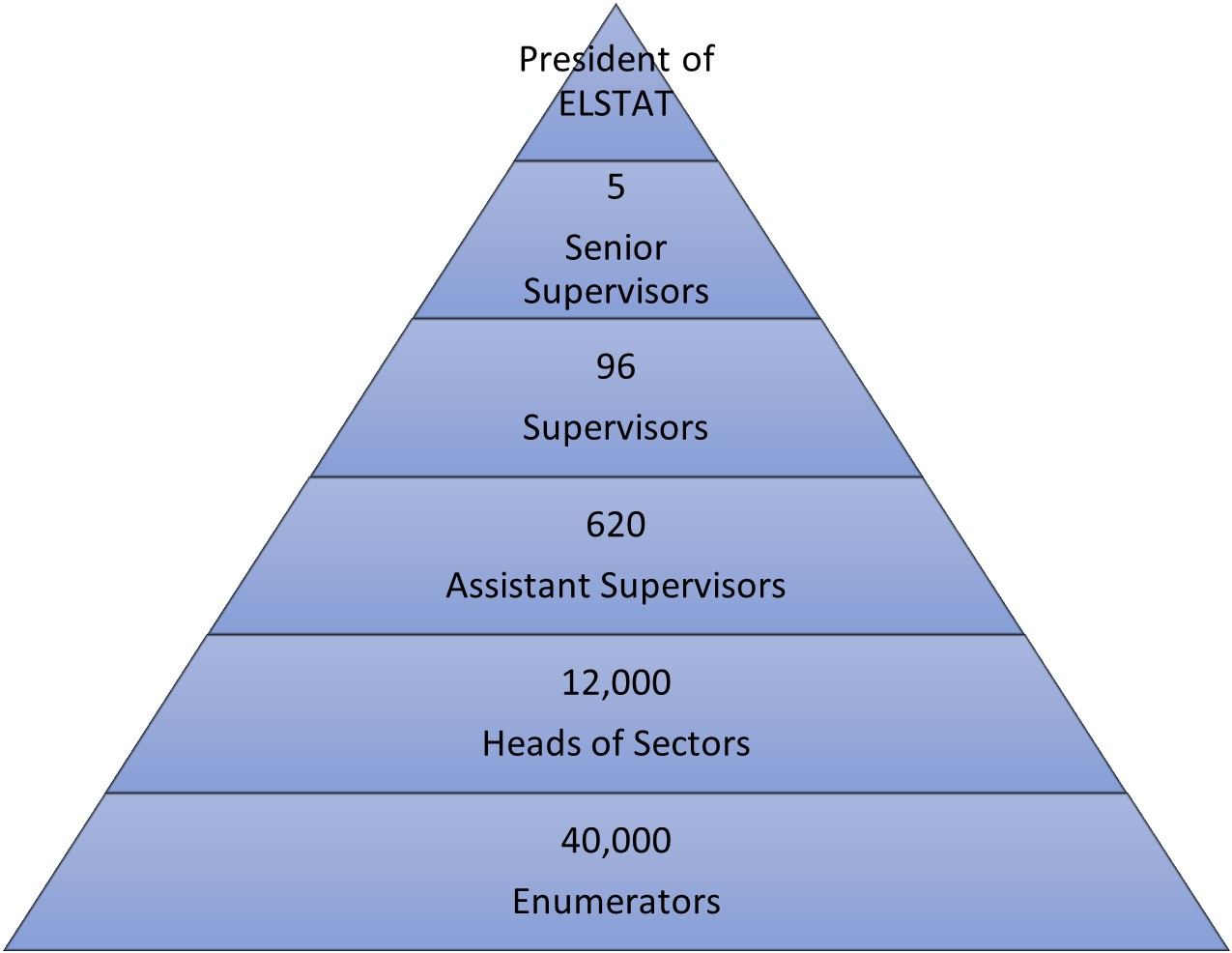
For the first time, the competent bodies of ELSTAT had the opportunity to perform quality controls during the data collection period and not after the end of it. This feature allowed immediate action to be taken to address any issues/problems that arose (non-response, false statements, etc.). Thanks to that innovative electronic Management and Monitoring System, few days after the end of the data collection, ELSTAT knew that 99.5% of houses in Greece had taken part in the Census. In previous Censuses, that information was available months after the end of the data collection, after the data entry phase.
Preparatory phase: The Building Census
The Building Census is conducted every 10 years before the Population-Housing Census in order to collect information as regards the number of buildings, their use and their characteristics with the aim to meet national requirements in statistical information. Apart from the building characteristics the Buildings Census 2021 allowed for the collection of information for building coordinates and the compilation of lists of buildings with identification of the dwelling type (residential and non-residential) for each Census Sector. The information from these lists was necessary for the implementation of the Population Census as it was to be used to locate the dwellings and the corresponding households that would be recorded during the Population-Housing Census.
The Building Census was carried out by the Heads of Sectors of the Census using tablets. The data of each building were introduced through a specially designed electronic application in a cloud database. The sector managers visited each building block with the appropriate cartographic material (provided by ELSTAT) and registered the buildings of each building block. This process allowed, apart from recording the buildings’ characteristics, to locate them geospatially.
Phase A: Population and Housing Census – electronic self-enumeration
In November of 2021, the approximately 40,000 ELSTAT Enumerators distributed a sealed envelope in each house, apartment, or accommodation with a unique (geospatially) residence code that corresponded to the specific residence. A representative of the household was then able to use the special app of the Census, through the digital portal of the Greek public sector (
Throughout this procedure, the Enumerators had to provide help and answer questions over the telephone. The Enumerators could monitor their assigned households and identify those who were self-enumerated and those who were not.
The initial deadline for phase A was the 26
Phase B: Population and Housing Census – data collection via interview
Since the Enumerators could identify the residents who were not self-enumerated in Phase A, they had to visit them again to arrange a phone or face-to-face interview. At this stage Enumerators would use paper questionnaires and were obligated to do the data entry in ELSTAT’s dataset via a web application.
During that period the web application for self-enumeration was still in use for the households that would choose to use it. It should be noted that, in order to avoid distorted incentives, each Enumerator received the same compensation per questionnaire, both for the questionnaires they completed during the interview process and for the questionnaires that the citizens completed and finalized themselves through the self-enumeration procedure. Phase B lasted from December 14, 2021, until February 14, 2022, to help the Enumerators, especially outside big cities or on the islands, to reach and count every single person.
Phase C: Population and Housing Census – electronic self-enumeration for those who didn’t manage to contact their Enumerator
Phase C was organized for the few residents that the Enumerator didn’t manage to find or communicate with as most of the citizens and residents of the country had already been counted using the electronic self-enumeration procedure (phase A). During the period from February 15 to February 21, 2022, those who, for any reason, didn’t self-enumerate or were not interviewed by an Enumerator were able to visit ELSTAT’s website (
Receive a new “unique residence code” corresponding to their residence and follow the procedure of phase A (electronic self-enumeration), or Receive the contact details (address and telephone) of the Supervision of the area of their residence and arrange an interview.
The questionnaire
The Census questionnaires have been designed according to the UNECE Recommendations having taken into consideration ELSTAT’s accumulated experience as well as the suggestions of other public agencies and stakeholders who took part in the relevant consultation such as the Advisory Committee of the Hellenic Statistical System (SYEPELSS), the Ministries, the e-Government Center for Social Security (IDIKA SA), the Independent Authority for Public Revenue (AADE), the Earthquake Planning and Protection Organization (OASP), the National Confederation of Disabled People of Greece, the users’ conferences of ELSTAT, the Municipalities, etc.
The Census questionnaire included all the variables in accordance with the European Regulation (EU) 763/2008 [4] on Population and Housing Censuses, as well as variables that met national requirements in statistical information (see Table 3). For the first time, the Population Census included the collection of the tax identification number (TIN Number) and the Social Security Number (AMKA) of each person. The aim was to introduce a unique identification number for each person that would be used as a “Key” to link the statistical data from the Population Census to data from administrative registers, in line with the “Digital Transformation Bible” in Greece [14] regarding the interoperability of the administrative registers.
Collected data only for National Purposes (2021 General Censuses)
Collected data only for National Purposes (2021 General Censuses)
The purpose was dual; firstly to link the variables gathered in the Census with data from administrative registers with the aim to verify their quality (for errors/uniqueness) and to ensure full coverage of the entire population in order to safeguard the results of the Census and secondly to help build a solid basis (together with the results of the 2021 Census) for the establishment of the first Statistical Population Register subject to a continuous updating with the use of administrative data.
It is worth noticing that in the Population-Housing Census, ELSTAT chose not to collect any sensitive personal data (e.g., data regarding health status, sexual orientation etc.).
All the raw data of the 2021 Population-Housing Census were inserted in the database of ELSTAT a few days after the end of the data collection period and were subject to all the logical and completeness checks. For the first time, immediately after the end of the data collection period, almost the entirety of the Census data were in ELSTAT’s secure database and ready for processing, in contrast to previous Censuses where there was a period of several months between the data collection period and the data entry period.
Collected data
The data obtained from the Population Census had been inserted in the database of ELSTAT during the data collection period and were subject to processing right after the end of the Census. The quality of the collected data in terms of completeness and correctness is of a high level due to the integrated automatic controls in the electronic questionnaire.
The data were checked in terms of quality and completeness and were subjected to a “data cleaning” procedure. More precisely the collected data were checked for duplications, missing values/variables while automatic corrections were applied.
Furthermore, quality controls as regards the full coverage of the total population were performed. In this context, and since no post-enumeration was planned, the data from the administrative sources were used as means to control and supplement the missing values of the main demographic characteristics of the population, such as place of permanent residence, sex, age, missing records, etc.
Administrative sources
The use of administrative sources was part of ELSTAT’s Strategy for the 2021 General Censuses. Administrative data can be used for quality controls of the census data (missing values, non-response, etc.) and, at the same time, for the maintenance of corresponding statistical registers.
The establishment of the appropriate legal and institutional framework to govern the National Statistical System is of a crucial nature to NSOs’ ability to access administrative data. That legal framework is set upon Regulation 223/2009 [8] on European level, while at national level the Greek Statistical Law 3832/2010 [11], as well as the Census Law 4772/2021 [10] ensures the access of ELSTAT to relevant administrative sources.
ELSTAT asked for and used administrative data from the Tax Authorities (key: TIN Number), Social Security (key: AMKA), the Ministry of Labor and Social Affairs as regards special groups of the population (e.g., Roma and homeless people), the Hellenic Electricity Distribution Network Operator S.A (HEDNO SA) and the under creation Register of Citizens. Regarding institutional arrangements, specific agreements had been reached in the form of memoranda of cooperation with the administrative data holders, while good cooperation/working relations have been established with them, which is a precondition for ensuring the regular use of this data in the context of official statistics.
As administrative data sources are not normally set up for statistical purposes, a transformation process was performed in order to create a reliable statistical data set. The first step was to identify the variables that could derive from each data source. The administrative characteristics were then analyzed in terms of their content and the population and housing characteristics were compared to the characteristics from the administrative sources to identify differences in the definitions.
The files received from the administrative sources were integrated into ELSTAT’s secure database. The data were decrypted and transformed into a readable and manageable form and then checked in terms of quality and completeness following “data cleaning”, “standardization” procedures and establishment of relations between the files. The quality controls and the cleaning procedures of the data were performed automatically, according to standard rules.
After the procedure of clearing the census files as well as the administrative files, the records of these files were linked and matched using as a key the TIN Number and the Social Security number (AMKA) of each person.
Setting-up of statistical registers
Following the completion of the processing of the census data with the use of the administrative data, ELSTAT will proceed with the setup of the Statistical Registers of Buildings and Population in order to comply with the European and international obligations regarding the provision of census data on an annual basis. Furthermore, the above Registers will serve as sampling frameworks for the conduct of ELSTAT’s statistical surveys with the statistical unit being a person or a household.
The above Statistical Registers will be updated with information derived from administrative sources such as IDIKA AE (Electronic Government of Social Insurance SA), AADE (Independent Authority for Public Revenue), Citizen Register, Hellenic Cadastre, as well as statistical surveys conducted by ELSTAT. When all the necessary checks are completed and the appropriate corrections are made, all the Statistical Registers will be considered final for a specific reference year and their records will be kept as historical records for 30 years from the reference year.
For the protection of the identities of individuals, ELSTAT considers the use of pseudonymization techniques, by which the personally identifiable data of the individuals will be replaced by a unique artificial identifier (code) for each record (individual), while the actual personal data fields (those replaced) and their connection to the unique code will be stored in a secure environment, outside of the internal domain and with restricted access to authorized personnel only.
Dissemination process
The provisional results regarding the Resident Population were announced in July 2022 [15], while the time of publication of the final results regarding the Resident and Registered population is determined in the Census Law.
Specifically, ELSTAT will announce:
The results concerning the Registered (De Jure) Population, twelve months after the end of the reference year of the Census, i.e., the end of December 2022. The final data regarding the Resident Population, at the beginning of 2023 and detailed tables, gradually, until the beginning of 2024.
Next steps
One of the most important factors that contributed to the successful conduct of the 2021 General Census in Greece, was the comprehensive and effective legal and institutional framework. ELSTAT had the institutional and democratic legitimization to effectively respond to the conditions arising from the COVID-19 pandemic, adapting the original design to a new approach regarding data collection and laying the foundations for the establishment and maintenance of Statistical Registers for Population and Dwellings by introducing, for the first time, two unique variables as keys (identifiers) to administrative data sources. ELSTAT also had the opportunity to present the significance of the Census and underline the importance of official statistics.
The introduction and adoption of the Census Law ensured ELSTAT’s sole responsibility and unhindered independence to organize and conduct the Census in compliance with the United Nations’ Fundamental Principles of Official Statistics and the principles stipulated in the European Statistics Code of Practice. At the same time, clear democratic procedures ensured that the Census questionnaire could include, for the first time, variables that would help both with the controls and the interconnection with other data sources for the creation of the necessary statistical registers.
This legal framework and the trust that ELSTAT has been enjoying in recent years, that allows administrative data to be provided, sets the required institutional environment that will help the whole ELSS to respond to the increasing needs for statistical information.
Footnotes
Official Statistics are produced in an impartial and independent manner, free from any political or other external influence as in Principle 1 of the Fundamental Principles of National Official Statistics [2] and the European Statistics Code of Practice for the National Statistical Authorities and Eurostat [ ].
].
Democratic strengthening of the Census: The fact that the mandate to conduct the Census as well as the procedures, instruments, scope, questionnaire structure and generally the content of the Census was introduced and voted by the Parliament following all the required stages of consultation strengthened the legitimization of the Census, adding democratic safeguards to the procedures followed in the previous censuses.
The members of this committee were nominated by the Hellenic Parliament, the Greek Ministry of Finance, the European Statistical System Committee (ESSC), the European Statistical Governance Advisory Board (ESGAB) and Eurostat.
Democratic legitimization: The fact that the mandate to conduct the Census was introduced and voted by the Parliament following all the required stages of consultation.
“By decision of the President of ELSTAT the procedures for the creation of the registers of articles 21 and 22 (Register from the Building and Population-Housing Censuses and the Agricultural Register), the variables and the way of their updating, as well as the administrative and other sources used by ELSTAT are defined”.
“A joint decision of the President of ELSTAT and the Minister of Digital Governance shall determine the required interoperability of the registers of Articles 21 and 22 and any other necessary technical details”.
“The Ministries, the Administration of Mount Athos, the Decentralized Administrations, the Local Authorities as well as the first and second degree of the Country must assist and provide facilities to the bodies of the General Censuses within the framework of their responsibilities”.