



Abstract
BACKGROUND:
In the tourism industry, people with disabilities (PwD) are frequently excluded from certain activities. The Internet is one of the most used information sources for planning tourism trips. However, the level of accessibility of information disseminated by the tourism industry through websites is still very low.
OBJECTIVE:
This study aims to explore the existence of diversity in Web accessibility in the tourism industry.
METHODS:
A systematic literature review method was used for the identification, selection, and evaluation of the published research on Web accessibility in the tourism industry. A set of 40 papers obtained from relevant scientific databases, and complemented with a snowballing effect, was synthesized and analyzed.
RESULTS:
Low levels of diversity of Web accessibility were found in the different tourism activities analyzed. The majority of studies published in this field are relatively recent and both manual and automated methods were employed. Web accessibility failures were mainly related to lack of connectivity with assistive technologies, complex layout, and navigation difficulties.
CONCLUSION:
The results obtained in this systematic literature review provide important contributions to increase knowledge of Web accessibility in the tourism industry. Moreover, practical and theoretical contributions can help Web developers creating more accessible tourism websites.
Introduction
The Internet represents a universal communication channel, enabling companies to provide information and services efficiently and effectively. Tourism nowadays is one of the most important economic activities, with a large part of its business transactions (e.g., transactions related to marketing, reservation, purchase, and payment) done through the Internet [1, 2, 3]. Moreover, tourism is an activity that should contribute to a more inclusive society and which motivates the development of strategies to promote accessibility in all its components, giving to people with disabilities (PwD) the chance to participate in these activities. Generally speaking, accessible tourism can be defined as “a form of tourism that involves collaborative processes between stakeholders that enables people with access requirements, including mobility, vision, hearing and cognitive dimensions of access, to function independently and with equity and dignity through the delivery of universally designed tourism products, services, and environments” [4, pp. 10–11]. Therefore, this concept has major implications for the social inclusion of PwD. Also, to accomplish more accessible conditions for tourism, it is crucial to encourage the active involvement of all stakeholders in the creation of accessible and adapted tourism products in all tourism activities [4].
The subject of promoting accessibility to PwD is very relevant, as the World Health Organization (WHO) has estimated that 15% to 19% of the world’s population live with some type of disability, with a tendency to increase as the population ages [5]. For the tourism industry, the accessible tourism market is a very important growth market, due to concerns of social responsibility, and also because of the excellent business opportunity, representing about 30% to 40% of the total market in European countries [6, 7]. Moreover, there are advantages in promoting tourism conditions for PwD, as they usually travel with company and in low season [8, 9, 10, 11]. Despite this, in the tourism sector, there are a great number of PwD that are excluded from some activities due to the travel constraints caused by the lack of accessible information [12, 13].
Since information is one of the most important resources for tourism to operate, it is crucial to ensure the accessibility of the channels that carry it – the Web – thus addressing the needs of an important market: PwD. For these people, lack of information can create significant travel constraints and often even prevent travel. Particularly at the planning stage, information is crucial [4] for PwD to identify accessible routes, accessible accommodation, accessible food beverage services and accessible physical spaces [14]. However, for communication to be effective, it is important to ensure that the information content reaches everyone and is understood by all. The criterion that allows these conditions is the accessibility of the systems. Any system that involves human-computer interaction requires quality conditions that can be met with accessibility criteria [15, 16]. Tim Berners-Lee, the inventor of the World Wide Web defines accessibility thus: “The power of the Web is in its universality. Access by everyone regardless of disability is an essential aspect” [17, p. 1]. In this regard, Web accessibility has been a topic explored by different authors, as “accessibility” can be a difficult concept to define [18]. In an attempt to better clarify this concept, Harper and Chen [19, p. 63] defined web accessibility as the way to help PwD “perceive, understand, navigate, interact, and contribute to the Web”. This definition was also used in a study by Yesilada et al. [20], which explored different points of view on Web accessibility. Recently, the World Wide Web Consortium (W3C) [17] extended the definition provided by Harper and Chen [19] to support social inclusion of not only PwD but also older people and those from sub-developed counties. The expansion of this concept intended to recognize the access to the Web as a basic human right. Essentially, Web accessibility aims at maximize inclusion for people who use websites, regardless of their requirements and technology used during the interaction process [17, 18].
The concept of Web accessibility has become very relevant and in 2014, it was particularly highlighted in the European Standard-EN 301 549 [21], a set of guidelines designed by the European Telecommunications Standards Institute (ETSI), in response to a request from the European Commission, to ensure accessibility in information-related technology. Moreover, the European Union has defined a Directive [22] aimed exclusively at promoting the accessibility of the websites and mobile applications of public sector bodies. In this regard, Web platforms should allow access to the broadest range of people, including those who suffer from any type of disability. The function of websites is to efficiently supply the right information at the right time to the right people. However, information on the Web only has value if individuals have access to it [23]. Consequently, website accessibility can have a significant impact on the quality of service available on the Web. In this scope, assistive technologies play an important role. Considering that most information is provided by visual or audio formats [24], tourism information access requirements are essential for people with sensory disabilities [25]. Bearing this in mind, deaf people need visual support (e.g., sign language and/or visual alarms systems) so they are able to access information and communicate. Blind and low-sighted people need audio (e.g. screen readers) and tactile support (e.g. braille) to be able to access information [26]. In accessible tourism, assistive technologies have a crucial role. However, the lack of Web accessibility may hinder the use of these technologies. Therefore, it is of utmost relevance examine the accessibility level of the websites.
Essentially, there are two main methods to perform Web accessibility evaluations in Web platforms: (i) manual evaluation using potential users or experts; and (ii) automatic evaluation using online Web diagnostic tools [27, 28]. A manual evaluation does not necessarily exclude the use of technology, as it can be supported by computer programs, but the main evaluation tasks are performed by a human [29]. Techniques like interviews, questionnaires, task analysis, and task performance management are the most applied in this kind of evaluation. Usually, it is performed by experts or users, with the aid of mechanisms like screen readers and accessibility toolbars [27]. On the other hand, in automatic evaluations, an automated tool performs the entire evaluation by analyzing the code of a website or performing simulation tests [30]. The most popular Web accessibility evaluation tools are software programs which are often available online and are capable of determining if the content of a website meets the Web Content Accessibility Guidelines (WCAG) [31].
The WCAG were developed by the W3C [32] and have been a cornerstone of assuring that websites are accessible. There are currently three versions: WCAG 1.0, WCAG 2.0, and WCAG 2.1. WCAG 1.0 was first introduced in 1999 and is composed of 14 guidelines [33]. Accessible website transformation is addressed by guidelines 1 to 11 and making content understandable and the navigable factor is presented in guidelines 12 to 14. Each guideline is composed of checkpoints, which explain how the guideline applies in typical content development scenarios. Every checkpoint definition includes a number, a statement and a priority level: (i) Priority 1 – The developer must satisfy the checkpoint, (ii) Priority 2 – The developer should satisfy the checkpoint, and (iii) Priority 3 – The developer may address the checkpoint [33].
WCAG 2.0 was launched in 2008 and it was approved as an ISO/IEC international accessibility standard in 2012 [34]. WCAG 2.0 is divided into four general principles, structured into 12 guidelines [35]. The principles of WCAG 2.0 are: (i) Perceivable – the criteria allow the product to be perceivable by people, regardless of their disabilities; (ii) Operable – the user interface components and navigation must be operable; (iii) Understandable – the information and the operation of user interface must be understandable; and (iv) Robust – the content must be robust, so that it can be interpreted reliably by a wide variety of user agents, including assistive technologies [35]. Every principle has different guidelines which can be evaluated using success criteria based on three available conformance levels: (i) A – basic accessibility (representing the minimum level); (ii) AA – intermediate accessibility (when the website meets all criteria under levels A and AA); and (iii) AAA – high accessibility (a set of requirements are added to level AA) [36]. Very recently, WCAG 2.1 improved its former version by incorporating more success criteria in the perceivable, operable and robust principles, but no major change in format was registered [32].
Despite the fact that Web platforms are an important source of information for PwD [37] and that technological development has led more tourists to search for information on Web platforms to plan holidays [38], the level of accessibility of information disseminated by the industry through the Internet (e.g. websites) is still very low [39, 40, 41, 42, 43, 44, 45]. For Web platforms to be truly accessible, the focus should be on both promoting information, but also ensuring that the navigation and content are accessible. However, there is a limited number of studies regarding the level of Web accessibility of the tourism industry and concerning the changes that should be implemented to increase the level of Web accessibility in tourism supply. In this vein, it is of utmost relevance to carry out literature review studies to extended knowledge in this field. Although some studies report systematic literature reviews on website evaluation in the hospitality and tourism industry [45, 46], the topic of Web accessibility is not the main focus. Given the importance of evaluating Web accessibility for the creation of accessible tourism conditions [47], it is crucial to understand how this matter has been addressed in the scientific literature.
To overcome above mentioned gap, this research aims to explore the existence of diversity in Web accessibility studies in the tourism sector. To achieve this goal, a systematic literature review [48] was carried out, which allowed a clear picture to be gained of research in recent years on the accessibility of tourism websites. Essentially, a systematic literature review facilitates an understanding of the field in which the research is situated, pointing out research strategies and methods used [49]. In a well-performed literature review, it is relevant to examine the theoretical background and to identify the different methodological approaches and theoretical paradigms that exist within a research area [50]. Evaluation of already conducted research allows the importance of the studied topic to be emphasized through critical analysis and the identification of key issues and gaps that still require investigation [48, 51].
Flow diagram for paper selection.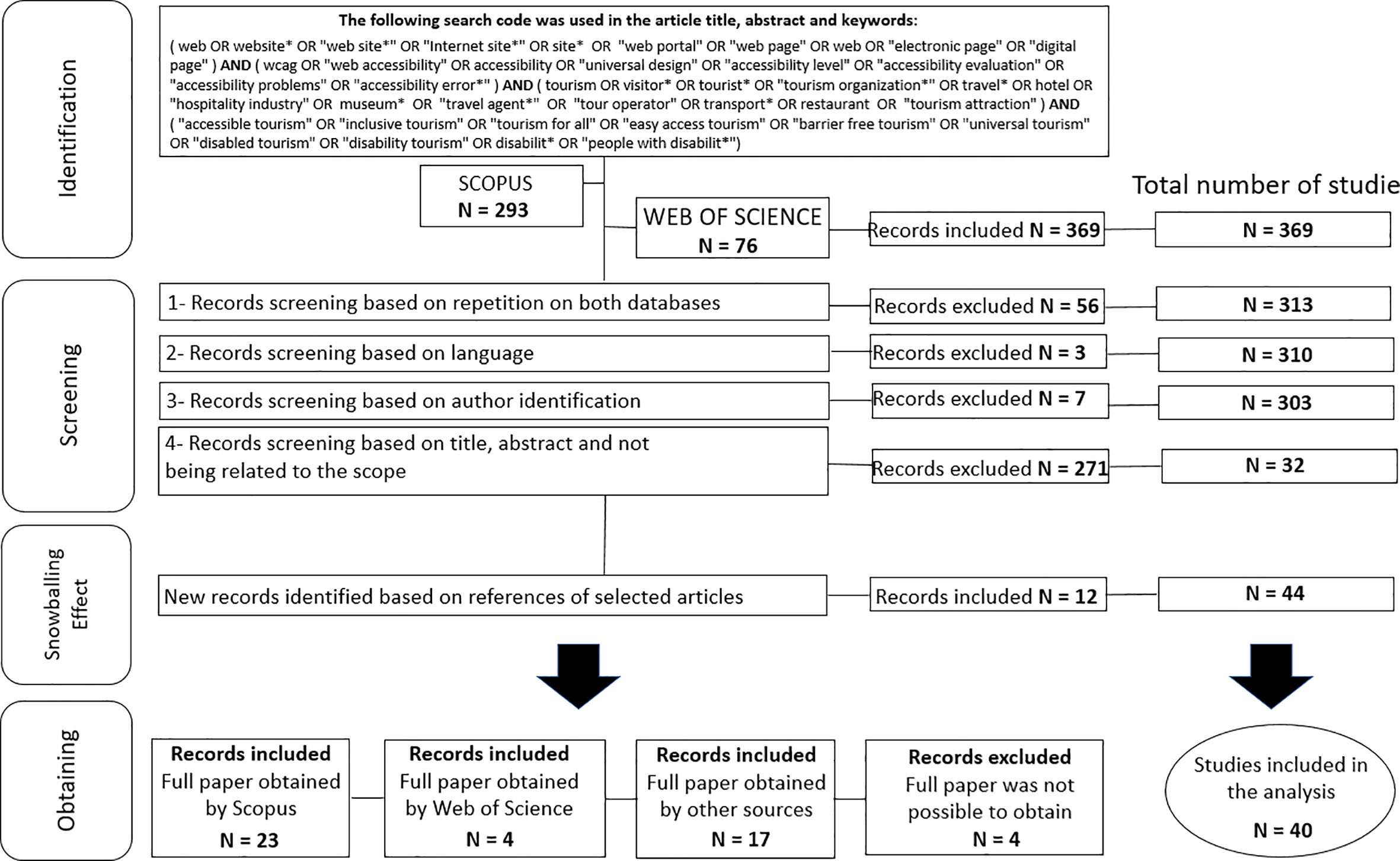
The study is divided into four parts. The first part presented an introduction, analyzing the importance of Web accessibility for accessible tourism and stating the objective and research questions. The second section describes the methodology used, explaining the steps taken during the literature review process, including a description of how the studies were selected and analyzed. In the third part, the findings of this study are depicted, and the research questions are scrutinized. The main tourism activities with Web accessibility studies are identified, alongside authors and journals in the area. In addition, the number of publications over time is explored, as are locations where the studies were performed, and what groups of people with disabilities are targeted in Web accessibility studies. Likewise, the main methodologies applied in tourism Web accessibility studies are pinpointed and problems in accessibility, by tourism activity, are indicated, providing a clear review of the state of Web accessibility in tourism. In the last section, the main conclusions, limitations, and some suggestions for future research, based on gaps identified in the literature, are pointed out.
A systematic literature review was used to examine the Web accessibility of tourism supply agents based on the literature published. The research methodology is divided into two phases. First, the process of selecting the papers in four different stages is explained. Secondly, a description is presented of how the selected papers were analyzed. This review intends to identify the main constraints that PwD face when accessing information on the websites of tourism supply agents. Different research questions were defined to accomplish this goal, as shown in Table 1.
Research Questions
Research Questions
To identify the documents (e.g., papers published in journals, papers published in proceedings, and book chapters) to be analyzed in this systematic literature review, the methodology described in Fig. 1 was used. Two of the most important databases in the field of tourism were used to identify the studies: SCOPUS and Web of Science. The research was performed in April 2020, using the string presented in Table 2.
Research string
Research string
This query was applied to the title, abstract, and keywords, with no restriction of time. Based on this search, a total of 293 records were obtained in the SCOPUS database and 76 in the Web of Science database (Fig. 1). The 369 studies obtained were then subjected to four careful screenings. First, 56 repetitions (articles belonging to both databases) were detected and classified as redundant. Due mainly to translation constraints, only papers in English, Portuguese, and Spanish were included in this literature review. Based on the second screening, three papers (two in French and one in Italian) were excluded. For the third screening, studies without author identification were removed, based on scientific coherence.
The fourth screening was performed to eliminate studies not related to the scope of this research, which intends to analyze studies of Web accessibility on tourism. This screening was based on the reading of the abstracts of the remaining 303 studies. When the abstract was unclear about the inclusion of the paper, the full document was read and analyzed. For a paper to be included, two criteria needed to be fulfilled:
The paper must contain Web accessibility analysis; The websites analyzed must contain tourism-related information (websites can belong to public and/or private organizations).
This analysis was pertinent to distinguish physical accessibility from accessibility in terms of communication, including Web accessibility. Many of the excluded papers performed an analysis regarding on-site physical accessibility, disregarding aspects related to accessibility in communication, such as the case of Web accessibility. In addition, many papers performed Web accessibility studies in education and governmental institutes, which were not related directly to tourism. Consequently, after this fourth screening, 271 documents were excluded.
Additional searches were done to ensure an exhaustive literature review and new articles were identified by means of the snowballing effect [52]. Thus, 12 new documents were added by cross-referencing and snowballing. However, of the 44 studies that fulfilled all the criteria, it was only possible to obtain 40 full papers. These 40 papers were included in the systematic literature review carried out in this study.
The articles included in the analysis were scrutinized using two steps. First, a description of several factors was conducted: (i) distribution by type of tourism activity under analysis; (ii) distribution by authorship and source (journals and proceedings); (iii) distribution over time; (iv) distribution by the geographical context where the studies were conducted; and (v) distribution by accessible market segments. Second, a deep content analysis of the papers was conducted to identify: (i) methodologies used and (ii) results obtained concerning the level of accessibility in tourism activities websites and the main failures identified.
Number of papers by tourism activity. Note: Some studies performed web accessibility evaluations in more than one type of tourism activity. For this reason, the same paper can be accounted for in different tourism activities.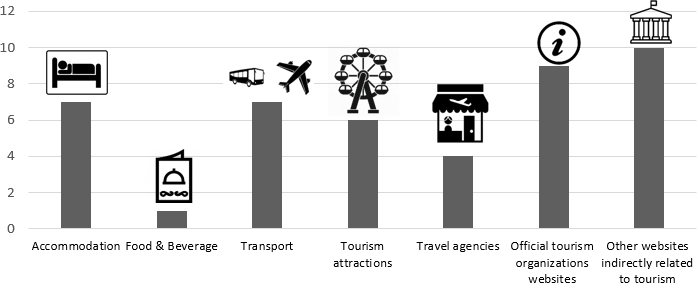
Categorization of the studies according to the type of tourism activity under analysis
The objective of this review is to understand Web accessibility levels across the different types of tourism activities. The review of the articles in this study showed that they could be categorized into seven types of tourism activity websites: (i) transport websites (e.g. airline and railway companies, car rentals, and bus companies); (ii) tourism accommodation websites (e.g. hotels and hostels); (iii) tourism attraction websites (e.g. natural parks, monuments, and fun parks); (iv) tour operator and travel agency websites; (v) food and beverage websites (e.g. restaurants and other food and drink establishments); (vi) official tourism websites (e.g. visitor information centers and websites promoting journeys and itineraries); and (vii) other websites indirectly related to tourism activities (e.g. websites belonging to government entities such as municipality websites). Moreover, in some studies more than one type of tourism-activity website was evaluated (Fig. 2).
The number of websites analyzed for each category demonstrates a greater predominance of studies that examine the accessibility level of public organization websites (official tourism bodies and tourism information offices), but also the importance of websites indirectly related to tourism (municipality websites). Information in tourism is very widespread, and this is especially reflected in municipalities’ websites which, despite not being directly tourism-centered, may represent a good source of information for tourists. Hence, the significance of incorporating a category of websites indirectly related to tourism.
The types of websites representing the greater percentage of analyzed papers (Fig. 2) may also be connected to the fact that there is already legislation related to Web accessibility that must be complied with within the public sector, as official tourism organizations and other websites related to tourism are mainly run by public entities. Fundamentally, it may be of utmost importance to understand if these websites are accessibly built, according to the respective law. In that regard, the European Union has published a set of policies that should be followed by its members [22]. Also, in some countries, such as Portugal, policies and guidelines were created [53] for help in designing more accessible websites. Furthermore, there are also law decrees [54] stating Web accessibility criteria that must be complied with.
Studies reviewed by tourism activity website evaluated
Studies reviewed by tourism activity website evaluated
Note: Some studies performed web accessibility evaluations in more than one type of tourism activity. For this reason, the same paper can be accounted for in different tourism activities.
Sources of the published studies and subject areas
On the other hand, food and beverage, travel agencies, and tourism accommodation are the least studied types of tourism activities in terms of Web accessibility. However, various studies highlight the relevance of travel agencies as an information source for PwD to plan their trips [55] and the relevance for PwD of obtaining information concerning the accessibility level of the accommodation and food and beverage establishments to reduce risk in travel planning [56, 57]. Therefore, if the websites of these tourism supply agents are not accessible, PwD face strong constraints on planning their tourism trips.
Number of papers published by year.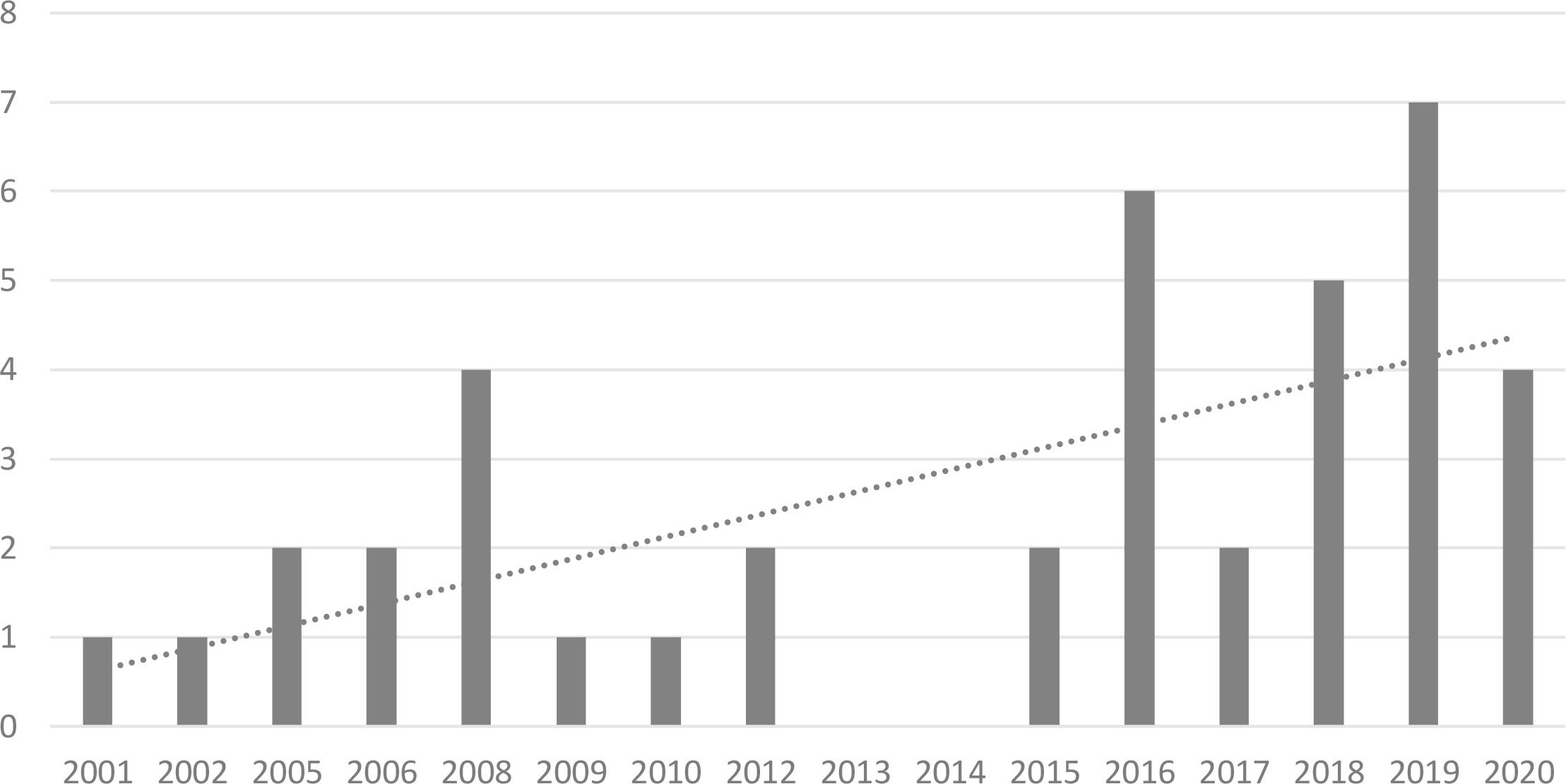
Table 3 shows a more detailed description of the type of tourism websites that have been most examined in the literature. This table contains all 40 reviewed studies, aggregated by the type of tourism activity website evaluated. The results highlight that there is great heterogeneity in terms of tourism activities that have been analyzed, reinforcing the results presented in Fig. 2. Once again, is important to highlight the fact that some studies performed evaluations in more than one tourism activity website, namely the studies of Gonçalves et al. [58], who examine Web accessibility in four different tourism activities (accommodation, airlines, attractions, and travel agencies) and Calvo et al. [59], who perform studies in two different tourism activities websites (airlines and attractions). Moreover, Table 3 confirms the idea that municipalities’ websites are a crucial part of the group of websites indirectly related to tourism.
As can be observed in Table 4, the majority of the studies examined in this paper were published in journals (70% of the total). Journals in the field of tourism are the most identified (e.g., Tourism Management, Cornell Hospitality Quarterly, Scandinavian Journal of Hospitality and Tourism), as well as in journals of computer science (e.g., Computer Standards and Interfaces, International Journal of Human-Computer Studies).
In fact, the topic researched is on the borderline of two areas of knowledge, namely computer science, with the more technical aspects related to the development of websites and tourism as an area of application. In addition, a considerable number of studies (30% of the total) were published in conference proceedings, mainly related to computer sciences, information systems, and technology. The high number of papers published in proceedings on this topic may be related to the fact that the studies in these areas are first presented and discussed at conferences.
Number of published studies by the author
Number of published studies by the author
The different subject areas, which both journals and conferences pointed out, may indicate that the topic of Web accessibility evaluation is highly multidisciplinary. This matter seems relevant for both tourism and computational areas, but it also has some potential for marketing, management, environmental, and of course, social sciences-related studies focused on the area of disability and rehabilitation. Due to the role of information in tourism, information systems also appear as an important subject as expected. Web accessibility studies in tourism can have different approaches or objectives and can be inserted in very different subject areas. Table 5 shows the authors that published more than one reviewed paper. Domínguez Vila, T. is the author with most papers published in this field (4 of the 40 papers analyzed), corresponding to 10% of the total of the papers. Six authors wrote three of the papers selected. Many authors published only one paper, which may indicate that the subject of Web accessibility in tourism is transversal to their area of study. Once again, the variety found in Table 5 supports the variety of Table 4, indicating the diversity involving Web accessibility and accessible tourism, showing that this topic is multidisciplinary.
The findings presented in Fig. 3 show that the topic of Web accessibility level in tourism has gained more focus recently, while the first detected published study is from 2005. Between 2005 and 2013, the number of publications underwent some variation, with no studies detected between 2013 and 2014. However, after 2016, the number of studies published increased, with 2019 being the year with the greatest number of publications (seven papers). These results are in accordance with the increase in research in the field of accessible tourism, as a consequence of the increasing attention of international communities on the promotion of equal opportunities for all (people with disabilities and people without disabilities). Also, is important to point out that in recent years more attention has been given to the promotion of accessible tourism conditions for all, as verified by the realization of the first United Nations World Tourism Organization (UNWTO) Conference on Accessible Tourism in Europe in 2014 [60]. Moreover, the Internet has intensified its relevance as a source of information in the field of tourism. In recent years, the number of conferences, meetings, and seminars on accessibility in tourism has increased.
Number of papers addressing each accessible market segment. Note: Some studies performed web accessibility evaluations in more than one type of market segment. For this reason, the same paper can be accounted for in different market segments.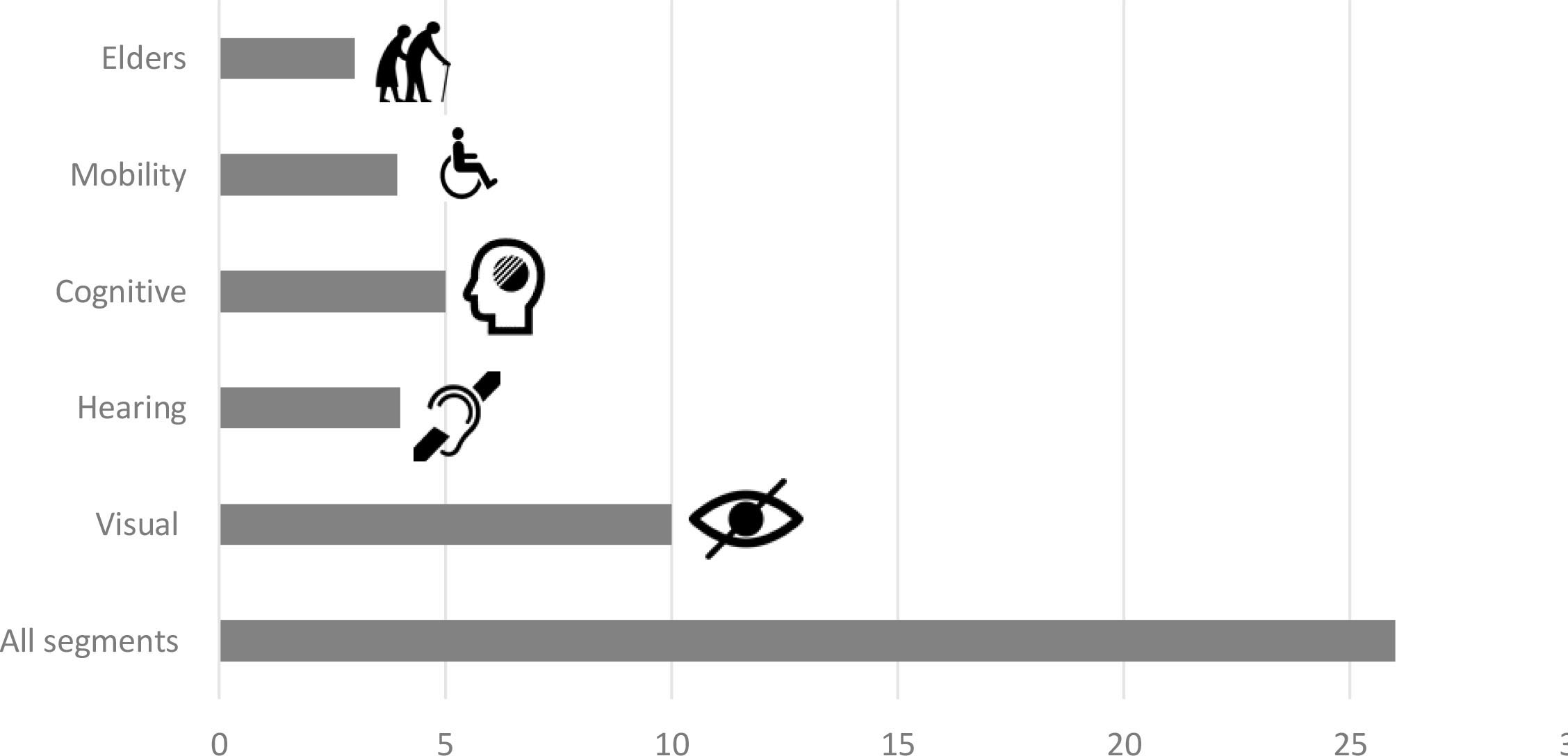
Tourism websites accessibility studies have been performed around the world (Table 6). However, some studies investigated websites from more than one country and others that did not specify the country where the Web accessibility study took place. Most studies are from European countries, followed by North America and Asia.
Geographical location of the websites in which a Web accessibility evaluation was performed
Geographical location of the websites in which a Web accessibility evaluation was performed
Recently, there have been many accessible tourism associations working to develop accessible tourism conditions for PwD, especially in Europe (e.g., European Network for Accessible Tourism) and the United States of America (e.g., Society for Accessible Travel & Hospitality). Despite it being more difficult for some countries to develop measures to promote accessibility, this is a global challenge, so as in Brazil, it is probable that other countries in South America and will Africa follow this tendency.
As the accessible tourism market is very diversified [61], different disabilities can give rise to different information needs. For that reason, it is important for websites to follow the principles of universal design [62, 63] to ensure that information is accessible for all regardless of their characteristics and functional conditions. When Web designers apply universal design principles, the communication problems between tourism supply agents and website users are overcome [64]. The lack of accessibility in websites tends to negatively affect their use, especially by people with visual, hearing, or cognitive difficulties, and also people with some specific mobility disabilities [65]. In Fig. 4 the accessible market segments that have been specifically analyzed are shown. A total of 14 studies analyzed specific group segments. Visual disabilities are the most studied individual group, examined in 10 studies, followed by people with cognitive disabilities, analyzed in five studies. Mobility and hearing disabilities were targeted in four studies. The elders segment was only individually examined in three studies. The special concern with people with visual disabilities is likely related to the requirements of these users, as providing Web accessibility conditions to blind people can be a challenging and complex matter.
On the other hand, 26 of the 40 selected papers focused on obtaining a general idea of Web accessibility in tourism websites based on the disabilities by WCAG [36], but not specifying a precise group of users. This result may be related to the types of evaluations performed, or the fact that the authors may be interested in understanding if accessibility issues affect various groups of PwD. Also, most of these 26 studies performed a general evaluation, involving automatic tools, which may explain why papers did not focus on a specific segment of the accessible tourism market.
Methods used to evaluate tourism websites accessibility
Three distinctive methods were used to evaluate tourism website accessibility: (i) an automated method using online assessment tools (e.g. AccessMonitor; Test de Accesibilidad Web (TAW); Wave), (ii) manual methods with experts, potential users, or researches performing assessment tasks (e.g. questionnaires; expriments (task completion); content analysis; interviews), and (iii) mixed-methods (combination of both manual and automatic methods). These methodologies are in line with what is applied in other related investigations [28], namely in a specific area of Web accessibility [27]. A detailed analysis of the methodology used in the reviewed papers is described in Appendix 1 and Appendix 2. Appendix 1 encompasses the studies that applied an automatic evaluation (using online automatic tools), and Appendix 2 provides an overview of papers that applied a manual evaluation (using human reviewers). It should be noted that since three studies used a mixed methodology [66, 67, 68], the respective papers appear in both tables.
The number of selected papers are grouped by the three evaluation methods in Fig. 5.
Number of types of methodologies used to evaluate Web accessibility.
The choice of a manual over an automatic Web accessibility evaluation approach, or vice versa, has advantages and disadvantages. As Law et al. [46] described, a manual evaluation-centered method gives a fairly good idea of user-perceived accessibility but the overall portrait of accessibility levels on a website may be difficult to obtain. On the other hand, automated evaluation approaches are prominent in assessing technological accessibility performances of particular features of a website, but this approach neglects the user/human point of view [69]. A combined approach could merge the advantages of these different methodologies. However, this type of approach can create slight problems due to difficulties in combining the results accessibility and the high workloads needed.
In the scope of Web accessibility in tourism, manual evaluation still represents a large part (Fig. 5), which is in contrast with Web accessibility studies in other areas, such as education [70], where the number of studies that apply manual approaches is relatively low. The fact that manual evaluations are the preferred method in the selected studies can indicate the need to examine the perception of people who experience some disability while interacting with different tourism Web platforms, or that problem detection is more reliable when accessibility experts perform the evaluation.
After ascertaining the type of methodology, which was most often applied, it is important to investigate the techniques used to perform both manual and automatic evaluations. Figures 6 and 7 intend to examine the different types of techniques used by authors to evaluate tourism website accessibility.
Tools, norms and conformance levels in automatic evaluation studies. Note: Some automatic evaluation studies performed web accessibility assessments using more than one tool.
Evaluation performers and methods in manual evaluation studies. Note: Some manual evaluation studies performed web accessibility investigations using more than one assessment method and/or involved different people in performing the evaluations.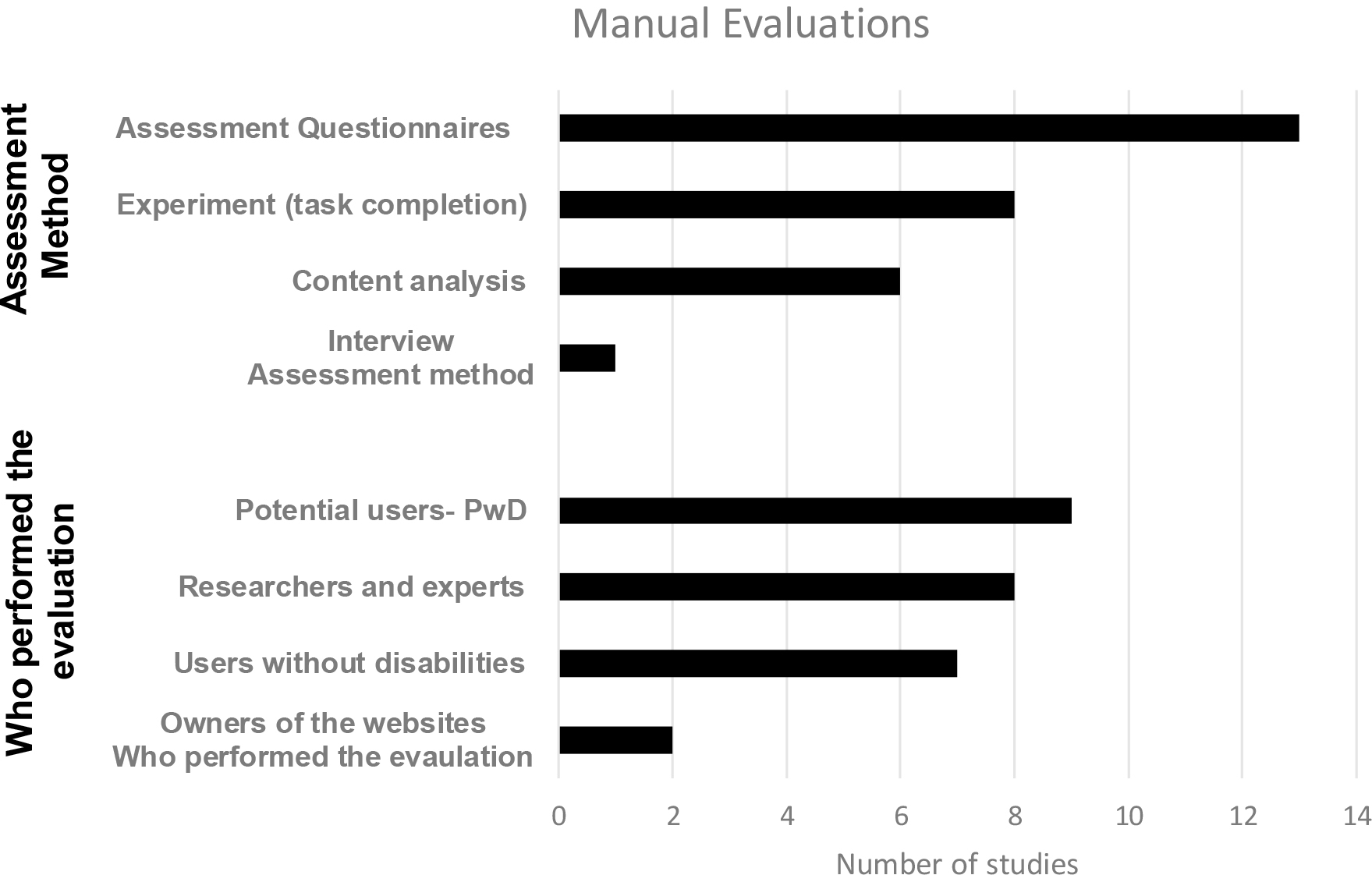
As automatic validation relies on technological assets, it is imperative to select adequate tools. W3C specifies a list of 162 possible tools (W3C, 2019), and other tools can be identified in the literature related to the topic of Web accessibility [71]. Figure 6 describes the papers that used an automatic evaluation method, and eight tools can be pointed out (Siteimprove Accessibility Checker; HERA-FFX; Booby Online Free Portal; EvalAccess; Acheker; Wave; AccessMonitor; TAW). Moreover, it should be noted that in some papers, more than one automatic tool was used to perform the evaluation.
The automatic tool most often used is TAW, which was used in 10 automated studies. This tool is available online and evaluates Web accessibility according to the WCAG 2.0 success criteria. It verifies the level of accessibility of websites taking into account the WCAG 2.0 guidelines, with the results presented on three levels, namely, “problems”, “warnings” and “not reviewed” [72]. Since this tool was developed in Spain, most of the studies using TAW evaluated Spanish websites and were used by Spanish authors [37]. AccessMonitor [73]represents the second most used tool (5 studies), and works as an automatic validator that verifies the application of the accessibility guidelines to the contents of a website, according to the three WCAG 2.0 conformance levels (A/AA/AAA). It is a Portuguese tool, developed by the Foundation for Science and Technology, and therefore applied in most studies from Portugal [55, 74, 75, 76, 77]. AccessMonitor also provides a global index for each website, ranging from 1 (very poor web accessibility practices) to 10 (excellent web accessibility practices). This global index is very important to establish the level of accessibility of a website, as reported by the several articles that used AccessMonitor. Wave is another of the most used tools, also employed in five papers. This tool represents an online service, facilitating Web accessibility evaluation by providing a visual representation of accessibility issues [78]. Acheker was applied in three different papers. Introduced in 2005, it allows users to create their own accessibility guidelines and author their own accessibility checks, based on WCAG 2.0 [79]. Booby Online Free Portal was one of the first evaluation tools, introduced in 1996, and indicated if websites could successfully pass the Bobby online test, but this free tool was discontinued in 2008 [80]. The tool was only used twice, both times in studies before 2008 [65, 81] and based on WCAG 1.0 guidelines. This tool also allowed websites to be evaluated according to users’ own guidelines (instead of priority or conformance levels). EvalAccess displays the Web accessibility results in a report, describing every error detected. The first version EvalAccess 1.0 only supported WCAG 1.0, so EvalAccess 2.0 was released to support WCAG 2.0, which was the version used by the two papers that relied on this tool. Finally, two more tools were identified: HERA-FFX and Siteimprove Accessibility Checker. Hera-FTX performs an accessibility analysis of websites displayed in the Mozilla Firefox Web browser [82]. With the help of this tool, different Web accessibility measures, including quantitative metrics, can be applied [83]. Different types of metrics including the A3 [84], the Web Accessibility Quantitative Metric (WAQM) [85], the Unified Web Evaluation Methodology (UWEM) [86] and the Web Accessibility Barrier (WAB) [87] can help to analyze Web accessibility issues [88]. The application of Hera-FFX, taking into consideration Web accessibility quantitative metrics, is illustrated in the study performed by Freire et al. [89]. Siteimprove Accessibility Checker is a Google Chrome extension that scans individual Web pages for accessibility issues [90]. Both Hera FFX and Siteimprove Accessibility Checker were used only once.
Since automatic evaluations are based on WCAG [27], it is important to define which norms and guidelines a study is based on. Essentially, there were two applied norms – WCAG 1.0 and WCAG 2.0 – with no studies applying the most recent WCAG 2.1, which may indicate that tools still do not support this recent level. As stated before, WCAG 2.0 was only introduced in 2008. Thus five of the studies reviewed used WCAG 1.0 version [65, 68, 81, 89, 91]. As most selected papers were published after 2012, there is a clear tendency for using WCAG 2.0 when assessing tourism website accessibility.
Regarding conformance criteria (Fig. 6), when WCAG 2.0 was the employed norm, most papers evaluated the websites according to the three conformance levels (A/AA/AAA). However, in the study by Domínguez Vila et al. [37], level A was discarded; the authors justify its removal because it is the lowest and it is met by most websites. Conversely, in the studies by Akgül [92] and Youngblood and MacKiewicz [93], only level A was used because according to the authors, failure to comply would mean that users would not be able to access the information on the website, and the website would no longer be accessible. There are also papers [66, 67] where the level AAA was discarded, since it was not relevant to understand if websites fulfil the maximum success criteria of WCAG 2.0. For evaluations that used WCAG 1.0, most studies took into consideration the three groups of priority levels (Priority 1, 2, and 3), reporting errors in these three degrees. There was also one paper [65] that only evaluated websites according to Priority level 1 and one particular study [81] that used a conformance level based on the Section 508 of the Rehabilitation Act of 1973 (USA).
Concerning manual evaluations, it was important to investigate who performed the evaluation and what types of assessment methods were used, as illustrated in Fig. 7. Concerning the people who performed the evaluation, the papers described four different evaluators: owners of the websites, potential users (PwD), users without disabilities, researchers, and experts. User evaluation is the most frequently used method, as a more human perspective of the interaction between the user and the tourism website can be explored [27]. In fact, the users (especially PwD) are the direct beneficiaries of better Web accessibility conditions, and their specific access difficulties are addressed as crucial conclusions for Web accessibility assessment studies. Since Web accessibility evaluations can be a rather complex task [70], the second most applied Web accessibility assessment was made by researchers or experts, as they can provide more thorough knowledge about potential errors and obstacles regarding Web accessibility levels [27]. Three studies were part of a smaller group that decided to verify Web accessibility levels with the entity that owned the website, aiming to understand the managers’ perceptions of Web accessibility.
Manual evaluations can also be performed with different methods (Fig. 7), including content analysis, questionnaires, experiments (task completion/performance) and interviews. Task completion (8 papers) and questionnaires (13 papers) are the most applied techniques, while interviews were only used in one paper. In most papers that performed a manual evaluation, there are no details concerning the Web accessibility norms and conformance levels used. Interestingly, the methods seem to vary according to who performed the Web accessibility study. In the case of the studies incorporating the owners of the websites, questionnaires for the entities that managed the tourism activity seemed to be the preferred method to obtain the views of management about Web accessibility aspects. Concerning evaluations including users, task completion and questionnaires were the most applied methods. Because these techniques involve PwD, this may justify their preference for these manual assessments, since simple methods that compile user requirements are preferable [94]. Finally, in the evaluations performed by the researchers and experts, content analysis of the websites is applied to get a clear picture of barriers hindering Web accessibility. In some cases [59, 95], screen-readers like Job Access with Speech (JAWS) and VoiceOver were used to assist the evaluators. JAWS is a screen reader program for Microsoft Windows that helps people with visual disabilities to read the screen, either with a text-to-speech output or by displaying the content in Braille. VoiceOver is a screen reader program that comes on IOS devices (Mac computers, iPhones, iPads, and iPod touches), and allows reading and navigation through websites. Screen readers can be an important item in evaluating Web accessibility [96], but can be rather difficult to use [70], which can explain why they only appear in evaluations performed by experts and researchers, and not by users, as expected.
Only three studies combined both automatic and manual methodologies. Moreno et al. [66] analyzed a sample of Spanish government e-Services, introducing Siteimprove Accessibility Checker, a Google Chrome extension that scans individual Web pages for accessibility issues. For the manual part, the authors resorted to two experts with experience in accessibility standards and technological know-how in using the Web Accessibility Toolbar, which was developed to identify components of a Web page, aiding manual examinations of websites. Likewise, Aizpurua et al. [67] first performed an automatic analysis and the two worst and two best-classified websites were submitted to a manual review by legally blind users who were asked to perform some tasks on a restaurant website (e.g. find information about the gastronomy and make an online reservation). Lastly, Domínguez Vila and Brea [68] evaluated Web accessibility levels of official Spanish tourism organizations’ websites using TAW. In the manual part, the researchers carried out a check on the contents on the Web accessibility, placing greater emphasis on the specific needs which PwD have when planning and enjoying their leisure time, and assessing compliance levels.
A better understanding of the level of Web accessibility across tourism websites allows the identification of the main constraints that PwD face when accessing information to plan their tourism trips. WCAG 2.0 success criteria are the key to assessing the levels of conformance of a website and identifying possible barriers to Web accessibility [97]. Appendices 1 and 2 portray the results obtained in the 40 papers analyzed, showing the different level of Web accessibility of the tourism supply agents. Based on the information presented in these two Appendices, Tables 7 and 8 were created. Table 7 presents a summary of the main failures detected with automatic evaluation tools, using WCAG 2.0 as a reference. It should be noted that although some analyses used WCAG 1.0, the errors detected could be analyzed from a WCAG 2.0 perspective, since WCAG 2.0 was developed based on its previous versions of accessibility guidelines. On the other hand, Table 8 illustrates the main Web accessibility failures detected in analyzed papers that performed manual evaluations.
According to Table 7, all the tourism website categories seem to have more problems of the perceivable type, especially in guidelines (1.3) Adaptable and (1.1) Text Alternatives, which may indicate that the content of the websites is too complex and text alternatives are not included for any non-text content (e.g., braille, speech, symbols). Moreover, failures in (1.2) Time-based media are mostly related to websites that usually have a high level of audiovisual content, as is the case of attractions websites. The operable principle ensures easy and operable navigation between the different components of the interface, and also reveals some issues, especially in (2.4) Navigable, which is re-
WCAG 2.0 failures in tourism activities websites
WCAG 2.0 failures in tourism activities websites
Major Web accessibility failures identified in papers that applied a manual evaluation method
sponsible for providing ways to help users find content, navigate and control their position on the website. One important remark is that none of the websites analyzed seems to present flashing lights or any other type of content that could trigger seizures for people with epilepsy, since failures regarding guideline (2.3) Seizures were not identified. The understandable principle ensures easy and operable navigation between the different components of the website’s interface, and problems regarding (3.3) Input Assistance were especially detected. This may cause problems for tourists with disabilities when trying to correct some kind of input (e.g., inserting personal data). Finally, in the robust principle, represented by guideline (4.1) Compatible, at least one website in every category registered a failure.
The results present in Table 8 are in line with the findings present in Table 7, which reveal that tourism websites have failures in several aspects regarding Web accessibility. The lack of information related to accessibility seems to be a major drawback in promoting more accessible tourism. Although a website may provide the right information, confusing or less intuitive navigation systems prevent people with disabilities from accessing this information. Additionally, information can be hard to find or reflect outdated content. Moreover, websites do not display alternatives to non-textual content, such as sound, images, and videos. This may indicate that the content of the websites is too complex and inadaptable. Tourism websites seem also to fail in providing ways to help users navigate and correctly insert inputs. Another major Web accessibility issue regarding the websites of tourism supply agents is the incompatibility with user agents, including assistive technologies. Since many PwD depend on these tools to access the Web, incompatibility issues may hinder tourists with disabilities in accessing the information available on the websites. Finally, some general issues were detected such as poor color contrast and non-identification of elements like tables or images. As mentioned, many of the Web accessibility issues detected in manual evaluations are directly connected to the failures of WCAG 2.0, as illustrated in Table 7. One final note concerning web accessibility in tourism websites is that more accessible websites can also bring improvements for people without disabilities, as shown in the studies [98, 99, 100, 101, 102].
Findings presented in the Tables 7 and 8 highlight that the level of Web accessibility in websites of official tourism organizations and institutions indirectly related to tourism is higher than travel agencies, accommodation, transportation, and attractions, as fewer failures were detected in general. This may be related to the fact that most websites of official tourism organizations and those indirectly related to tourism are owned by public organizations. Therefore, it is mandatory to follow the legislation in this area, and W3C specifies a list of government policies related to Web accessibility [103]. For example, in Portugal, Decree-Law no. 83/2018 of 19 October 2019 [54] makes it mandatory for public sector websites. Furthermore, the Portuguese government has developed practical guides and policies that explain how the websites can fulfill legal requirements [53]. In the United Kingdom, the Equality Act 2010 [104] also shed some light on providing frameworks for designing or procuring accessible Web products. Furthermore, in a European context, the European Union published Directive (EU) 2016/2102 [22] aimed at promoting Web accessibility in public sector bodies. Another example is the USA, with the 21st Century Communications and Video Accessibility Act [105] updating federal communications law to increase the access of PwD to modern communications. In summary, the laws and policies described by W3C [103] are mostly connected to following WCAG 2.0 guidelines, but the majority is only mandatory to the public sector, which can justify the diversity in Web accessibility of tourism websites.
A systematic literature review was applied to gain insights into the accessibility of tourism activity websites. This study presented some empirical results and addressed crucial factors concerning Web accessibility evaluation methodologies, application of WCAG principles guidelines, automatic and manual evaluation tools, and errors that represent barriers to website accessibility. The review proved very useful to an understanding of how the academic community studied Web accessibility in tourism between 2001 and 2020, revealing an increasing tendency towards researching this issue, especially since 2015. A total of six research questions were elaborated and answered, with some analyzing bibliometric factors and the others providing a general idea of the state of Web accessibility diversity in tourism. The systematic literature review applied a comprehensive research string in two scientific databases (Scopus and Web of Science), and after applying inclusion and exclusion criteria, 40 papers were obtained and analyzed.
The results showed that the Web accessibility of tourism websites is low, but there is diversity according to the type of tourism activity. In this area, the studies published mainly used manual evaluations or automatic evaluations. The number of studies that used mixed approaches (both manual and automatic) is very limited. In most cases, WCAG 2.0 guidelines served as the leading principle to perform an evaluation of Web accessibility. Regarding the results, public entities’ websites such as official tourism organizations and websites of institutions indirectly related to tourism (e.g., municipalities) registered superior levels of Web accessibility when compared to websites of other tourism activities like attractions, accommodation, travel agencies, transportation, and food and beverages. The biggest failures were related to lack of compatibility with assistive technologies, presentation of websites with a complex layout, and difficulties in navigation by PwD.
The results arising from this literature review enable a better perception of the level of Web accessibility in tourism activities websites. Regarding theoretical contributions, this review can further support authors in their Web accessibility evaluations by expanding the knowledge on practices and strategies used to perform assessment studies. Concerning practical contributions, this study can help Web developers and designers understand potential constraints to Web accessibility and help them create more accessible tourism websites. Moreover, it has the potential to raise awareness among those in charge of tourism organizations of the need to provide accessible websites. This is pivotal, not only for moral reasons but also because the accessible tourism market can constitute an excellent business opportunity [106]. Tourism organizations can increase their market potential and improve their image by increasing the accessibility level of their tourism products [107], starting by making their communication channels (websites) more accessible.
The systematic literature review also provided the identification of some gaps in the literature in this area. Firstly, the research revealed low numbers of Web accessibility evaluations that use a mixed methodology. More studies combining manual and automated methodologies can provide more comparative standards. Another gap identified in the literature is the lack of Web accessibility studies regarding food and beverage websites and attractions websites. To obtain more comparable principles, special attention should be given to the Web accessibility evaluation of these two tourism activities. The last gap identified is related to the lack of studies using WCAG 2.1. As automatic tools tend to be updated, more evaluations regarding WCAG 2.1 will probably be possible, so future works that use this new standard can provide major contributions to Web accessibility evaluations in tourism.
Even though the systematic literature review provided a comprehensive analysis of the scope of Web accessibility in tourism, some limitations can be pointed out: the use of only two scientific databases to identify the papers, and the fact that the keywords used in the research formula can prevent the appearance of some other articles, also potentially related to the topic. With this limitation in mind, the research methodology was complemented with the snowballing effect, allowing the identification of more papers related to the topic, which minimized the fact of only using two databases. Finally, it is noteworthy that the number of studies evaluating each category of tourism activity website heavily influences the conclusions related to the diversity in Web accessibility, as well as the failures identified. Being mindful that tourism should be accessible to all, much work is still needed in the field of Web accessibility to ensure visitors with disabilities can access information presented on websites. Improving Web accessibility conditions on tourism websites is necessary to move towards the goal of accomplishing accessible tourism for everyone.
Author contributions
CONCEPTION: Pedro Teixeira
PERFORMANCE OF WORK: Pedro Teixeira, Celeste Eusébio and Leonor Teixeira
INTERPRETATION OR ANALYSIS OF DATA: Pedro Teixeira, Celeste Eusébio and Leonor Teixeira
PREPARATION OF THE MANUSCRIPT: Pedro Teixeira, Celeste Eusébio and Leonor Teixeira
REVISION FOR IMPORTANT INTELLECTUAL CONTENT: Celeste Eusébio and Leonor Teixeira
SUPERVISION: Celeste Eusébio and Leonor Teixeira
Ethical Considerations
This study, as a literature review, is exempt from Institutional Review Board approval.
Supplementary data
The supplementary files are available to download from http://dx.doi.org/10.3233/TAD-210341.
Footnotes
Acknowledgments
This work was financially supported by the project POCI-01-0145-FEDER-030376, funded by FEDER, through COMPETE2020 – PROGRAMA OPERACIONAL COMPETITIVIDADE E INTERNACIONALIZAÇÃO (POCI), and by national funds, through FCT/MCTES.
Conflict of interest
The authors have no conflicts of interest to report.