



Abstract
BACKGROUND:
The presence of students with hearing impairment in the university context has increased in recent years.
OBJETIVE:
The aim of this study is to provide the academic community with an overview of research on ICT as a support for students with hearing impairment in higher education settings.
METHOD:
The data were obtained through a systematic literature review, covering the period from 2010 to 2020, in three leading scientific databases in the world of education (Web of Science, Scopus and ERIC). The sample consisted of 17 studies out of an initial 190. Through a descriptive and quantitative methodology, the most significant bibliometric data are presented, and by means of bibliometric maps, a methodology based on co-word analysis, clustering techniques and visualisation techniques is applied in order to determine the fields of study and research.
RESULTS:
The findings show a lack of research that addresses the use of ICT for students with hearing impairment, as well as the effectiveness of these tools.
CONCLUSIONS:
It is necessary to approach research from a systemic and holistic perspective in order to improve the education of these students.
Keywords
Introduction
Today’s society is fundamentally characterised by two factors: on the one hand, its great diversity, both in terms of cultures, contexts and individuals that are articulated in a social, political, and economic framework, which means that people share a series of characteristics that make them similar and others that make them unique. Ensuring that these differences are not elements that generate exclusion is one of the challenges facing today’s education systems. An education where all people have a place and at the same time progress to the maximum of their potential. This presupposes the presence of three fundamental indicators: quality, equity and inclusion. Quality and equity are crucial to ensure inclusive education. This educational model has been internationally endorsed [1]. Sustainable Development Goal (SDG) 4 on education in the European 2030 Agenda calls for ensuring inclusive and equitable quality education and promoting lifelong learning opportunities for all, emphasising the importance of inclusion and equity as the foundation for quality education and learning. On the other hand, the continuous and accelerating transformation by technology, which is bringing about a radical change in the ways of doing, acting and training. This technological revolution has affected all sectors of our society, including education.
This new scenario requires higher education institutions, as guarantors of a country’s economic, cultural and social development, to adapt immediately, where the use of technology and its potential benefits for all students is undoubtedly one of the basic principles of this way of training and educating future citizens within the framework of advanced and inclusive training systems. This is even more necessary in the case of hearing impaired students, since the use of technology can support and stimulate with greater objectivity, the analysers available to the student, and thus, make up for the deficit of the analyser with low or no functioning, in the case of deaf students, using technologies that stimulate the visual analyser, which is decisive in their learning [2].
The auditory and communicative development of the population with hearing and communicative impairment, users of aids with the support of interactive environments mediated by Information and Communication Technologies (ICT), has meant thinking of digital technology as a possibility of inclusion for people with hearing and communicative difficulties through the creation of innovations and technological developments as a contribution to the solution of these problems.
In this sense, the work we present aims to evaluate, through different variables, both bibliometric and thematic, the scientific production on educational attention to students with hearing impairment in higher education, with the support of technology, indexed in the selected electronic databases, in order to detect the limitations and project new challenges.
In other words, the research will be carried out taking into account the following basic questions in terms of: what we know, what we need to know and what we can do, in educating hearing impaired students with ICT support. In essence, these questions are part of the research process: (a) literature review: what we know, (b) research findings: what we need to know, and (c) implications: what we can do.
We believe that this work is necessary for several reasons. Firstly, it contributes to increasing the field of knowledge in relation to ICT and hearing impairment. Secondly, the information obtained contributes to a better understanding of the knowledge structure of the scientific domain of ICT and hearing impairment by analysing research articles published in high impact journals. In this way, by identifying the lines of research and their interconnections, based on the information contained in the databases analysed, the understanding of this knowledge structure will be promoted. And, finally, knowledge of the scientific production analysed will provide insight into the development and evolution of technologies in these people with special educational needs, making an effective contribution to the reduction of the possible digital divide due to disability.
ICT and hearing impairment in higher education
What we know
Hearing impairment is defined as the loss or abnormality of the anatomical and/or physiological function of the auditory system, and has its immediate consequence in a hearing impairment, which implies a deficit in access to oral language. Given that hearing is the main channel through which language and speech are developed, we must bear in mind that any disorder in auditory perception, at an early age, will affect their linguistic and communicative development, their cognitive processes and, consequently, their subsequent school, social and occupational integration [3]. Although the term deafness implies a certain degree of hearing loss, it has been and is traditionally used to refer to both mild and profound hearing loss, generalising its use in the designation of any hearing impairment. The World Health Organisation (WHO) defines hearing impairment as hearing loss of more than 25 dB, which also includes hypoacusis, deafness and occupational deafness.
In the global context, data from the World Health Organisation (WHO) describe that 60% of hearing loss is preventable; “8% of other causes encompass congenital, non-genetic malformations and other prenatal causes of maternal origin, 4% due to ototoxic drugs, 1% due to infectious diseases, mumps, rubella, meningitis, measles and ear infections, and 17% due to birth-related causes, birth complications, prematurity and low birth weight” [4].
Hearing and communication impairment and hearing loss are hearing impairments whose impact is often underestimated due to the fact that they are not very visible, but not being able to hear is a serious communication difficulty, which is based on spoken language. Any communication impairment leads to social isolation as the hearing impaired person does not easily understand those who speak to him/her, but the person with hearing loss is also unable to make him/herself understood by his/her interlocutor.
In the context of higher education, a growing presence of hearing impaired students in university classrooms has been observed in recent years. This indicates the need for these institutions to articulate new proposals to respond to the variability of profiles and situations, in order to make them more effective and satisfactory, without losing sight of their priority objective, which is to train technicians, professionals, academics and scientists who are sufficiently prepared and capable of promoting collective well-being and social transformation. In this sense, we can say that studies have mainly focused on two main lines, on the one hand, those that refer to exogenous factors and those that refer to endogenous factors. With regard to the former, they focus on the institution itself and its capacity to respond to this group of students [5, 6]. In this vein, studies reveal that the institution is not yet prepared, as such preparation includes not only academic and cognitive strategies, but also working with and negotiating one’s own identity within a complex institutional context.
With regard to the second group of studies, studies have been carried out in relation to personal factors (motivation, attitude and study habits) that influence the academic performance of deaf people at university [7], as well as their academic and social integration [8]. Others have addressed early university leaving for reasons such as limited personal resources and lack of socialisation [9], strategies for inclusion (Salazar, 2018), pedagogical adaptations [10], etc.
However, studies on ICT and hearing impairment in higher education, although they have increased in recent years, are still very scarce. In this line, work has been carried out in relation to overcoming communication barriers for these students through the Internet [11]. Creation of online software to improve performance by means of playful and interactive activities that facilitate their integration [12]. Sign language translators have been developed [13], as well as programmes to promote speech training, stimulation, and development of language and labiofacial reading [14, 15]. Experiments have also been carried out to test the benefits of mobile technologies for the improvement of augmentative communication [17], development of mobile Apps [18], among others.
In short, we know that for hearing impaired students, ICT has become an important means through which they can learn and access learning materials at different levels of education. Despite this, we still do not know many factors that influence and can favour research between technologies and this type of students in higher education. Therefore, our research questions are the following:
RQ1. How do studies address the use of ICT for hearing impaired students in Higher Education? RQ2. What challenges influence the use of technologies with hearing impaired students in university classrooms? RQ3. What possible trends exist for future research in this field?
Method
Objetive
For this review, the aim is to (1) get an overview of the general state of research in the field of ICT for hearing impaired learners in Higher Education over the last decade. Based on the results of the review, this article also aims to (2) shed light on the challenges and possible future trends in research on the use of technologies with hearing impaired students. The intention is to advance the field, uncovering new areas for future research.
Search strategy
The answers to the research questions posed required the use of the systematic literature review (SLR) method, which aims to collect and analyse multiple research papers on the chosen topic through a systematic process [18]. To achieve this, the present systematic review was developed according to the guidelines recommended in the PRISMA (Preferred Reporting Items for Systematic Reviews and Meta-Analyses) statement [19].
A comprehensive search was conducted in the Web of Science (hereafter WoS), Scopus and ERIC databases, which contain the main research in the academic world. As this study aimed to identify the main trends in the use of ICT with hearing impaired learners, the following search terms were used: (Hearing impairment OR Hearing disability) AND (Higher Education OR University) AND (Technology OR ICT OR Assistive Technology) in order to answer the proposed research questions.
Inclusion and exclusion criteria
Inclusion and exclusion criteria
The included studies had to meet the inclusion and exclusion criteria listed in Table 1. The eligibility criteria used to meet the proposed objectives, and which allowed us to access the sample, were related to: time period, language, type of study, study focus and context.
Literature search
The initial search, conducted in October 2021, yielded 190 studies, as we can see in Fig. 1. The evidence suggests that technological advances are attracting the interest of researchers with an exponential increase in research publications related to this topic in recent years.
Trends in research.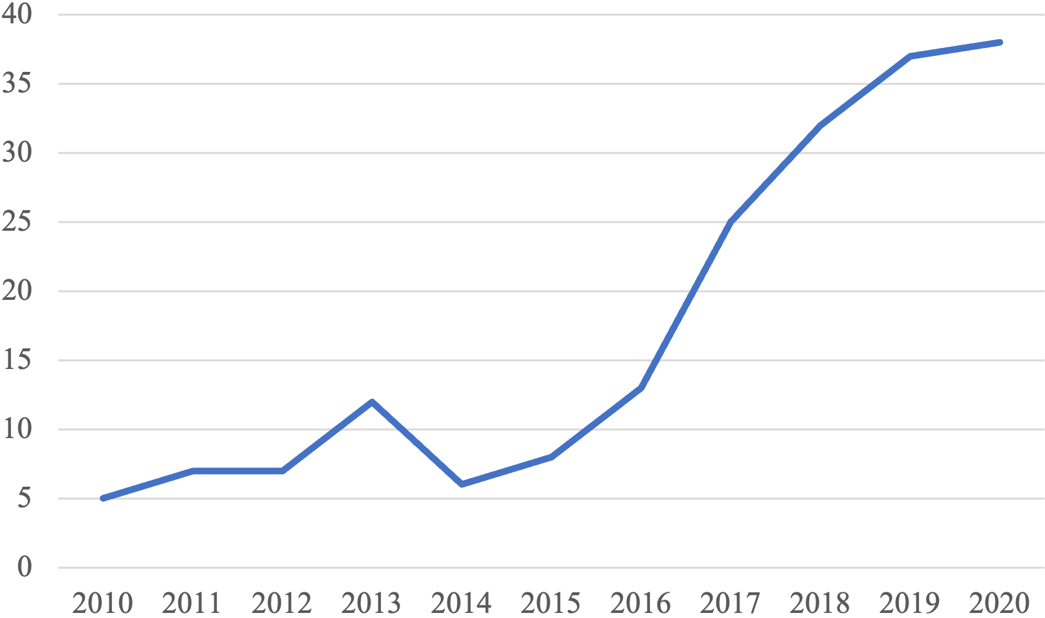
After the filtering process, in order to identify the most relevant and current articles, 17 studies were selected, as shown in the PRISMA flow chart in Fig. 2.
Finally, for the analysis and extraction of the data, all the information obtained was synthesised in order to achieve the current study. To this end, a template was drawn up with the data on which the results were to be extracted, focusing on the following characteristics of each study for comparison and synthesis: (1) author/s, (2) year of publication, (3) methodologies, (4) country and (5) problem studied/objective.
Descripción de los estudios analizados
Descripción de los estudios analizados
PRISMA flow chart of the selection process.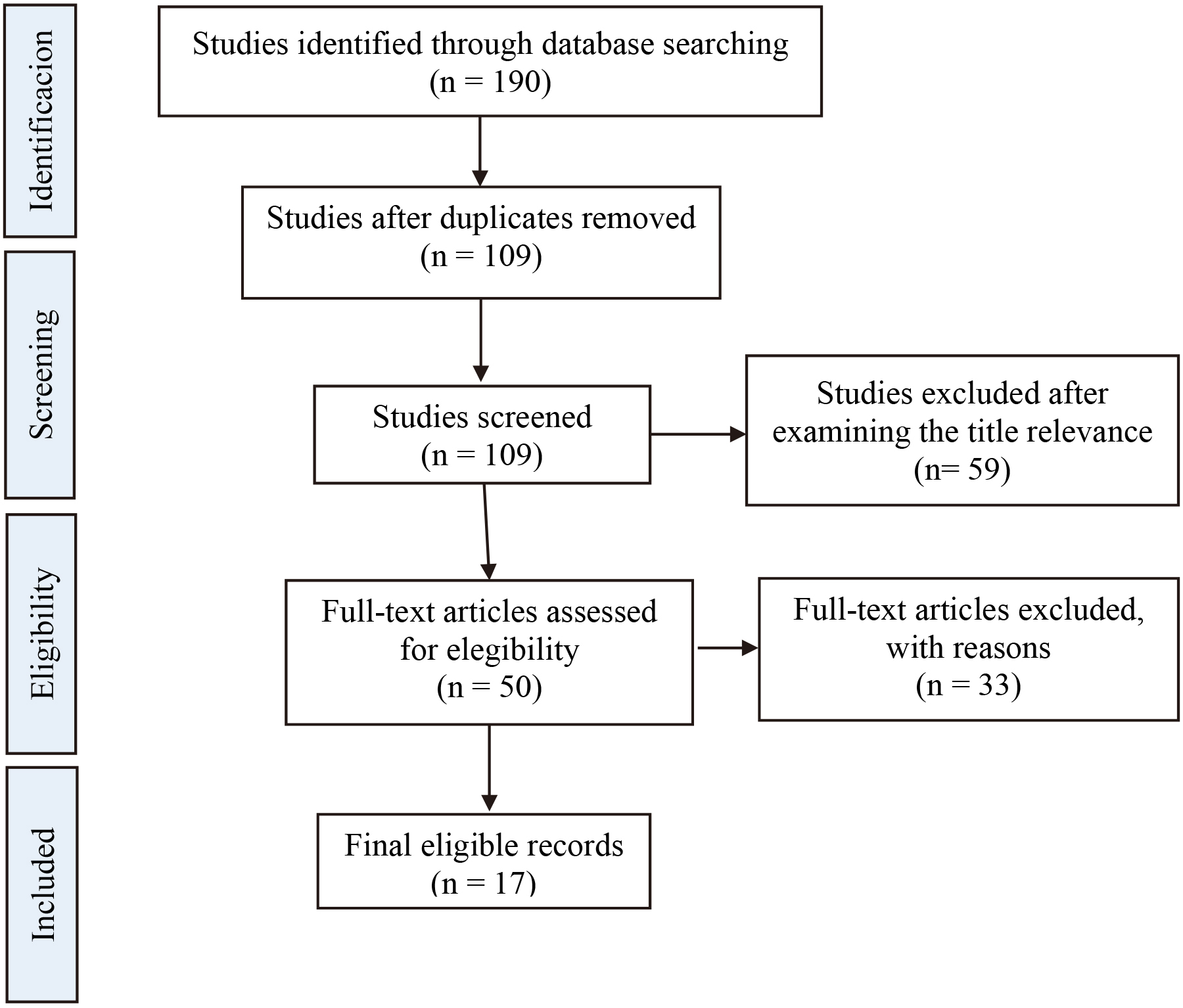
What we need to know
Seventeen studies related to the use of technologies for hearing impaired students in higher education were included in the review.
Characteristics of the studies
This section presents the results of the analysis of the studies (Table 2), which included the year of publication, country of origin, study design and study objective.
Based on the year of publication, one study was published in 2010, one in 2011, four in 2013, one in 2016, two in 2017, three in 2018, two in 2019 and three in 2020. In total, 17 studies were potentially relevant for inclusion in the review. There is an upward progression of scientific output on ICT for hearing impaired learners during 2010–2020.
These results, which derive from the current trend in research on the use of technologies with hearing impaired learners in Higher Education, are generally positive, and it is expected that these publications will continue to increase in the future.
The studies analysed were published by different researchers from university institutions in 14 countries around the world. The United States and Saudi Arabia stand out as the countries with the highest contributions according to the established inclusion/exclusion criteria, as can be seen in Fig. 3.
Country of origin of the publications analysed.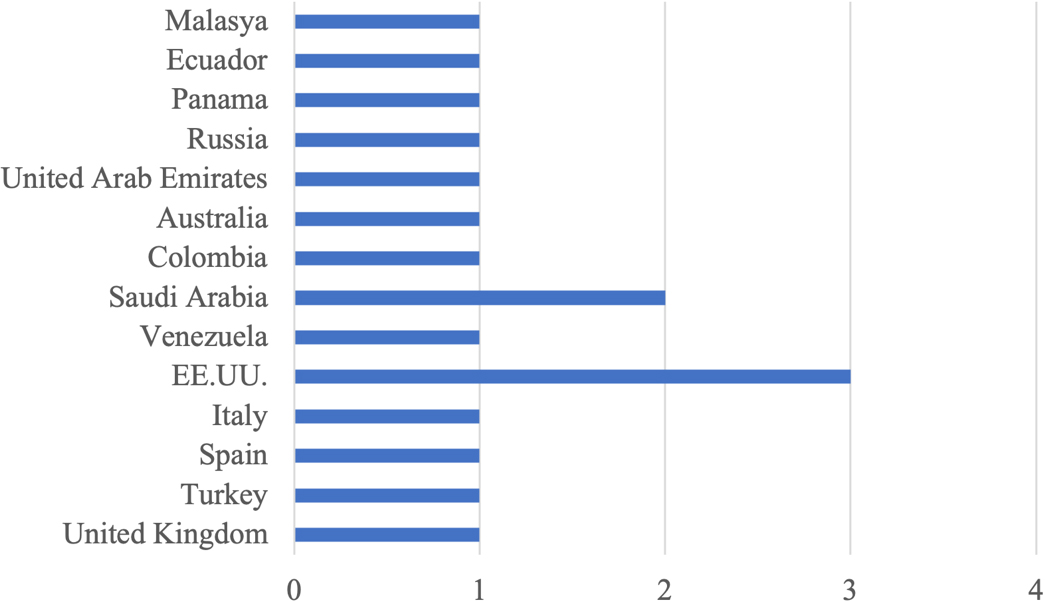
Keyword co-occurrence network.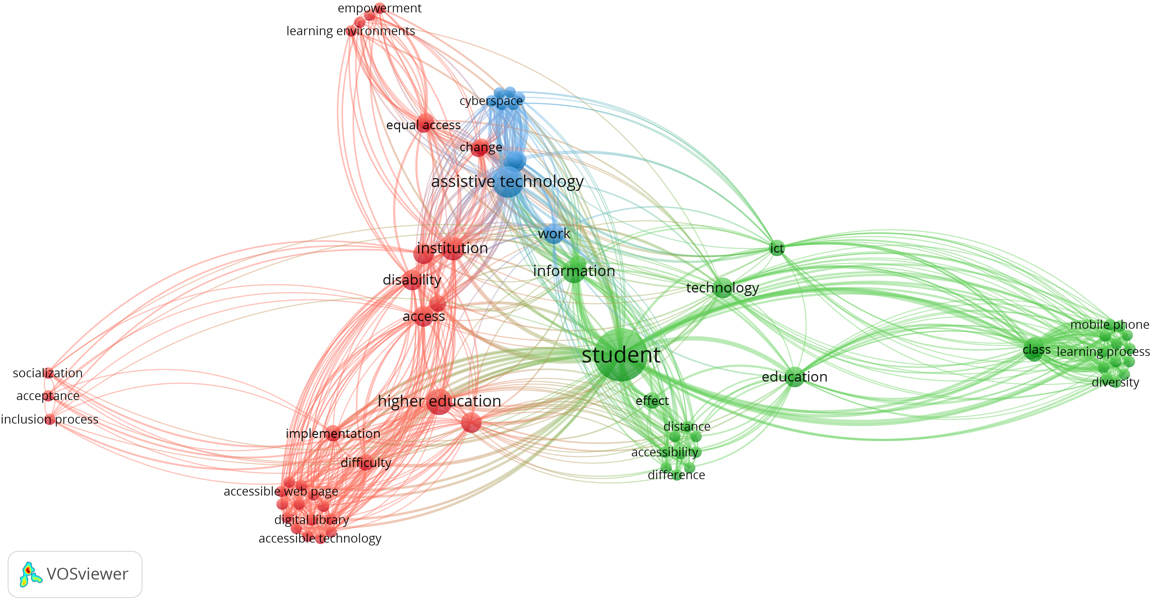
Keyword density map.
The articles that make up the sample of this review are mainly characterised by being based on qualitative methods (52.94%), followed by quantitative methods (35.29%). To a lesser extent, studies based on mixed methods stand out (11.76%).
The objectives of the studies analysed are mainly based on the limitations of ICT use (4/17), the benefits of ICT use (6/17) and the use of ICT as an innovative and didactic strategy (7/17) with hearing impaired students in Higher Education.
In order to respond to the challenges and possible future research trends in this field, the frequency of occurrence of keywords has been analysed using the VOSviewer software. The programme found 523 descriptors in total, which was reduced to 80 after applying the minimum occurrence rate of 10, as we can see in Fig. 4.
The most frequent keywords are also the ones with the highest link strength. This value is reflected by a higher number of links to another descriptor. It is worth noting the link strength of the keywords: student (171), assistive technology (112) and higher education (73).
The network of co-occurrence of the keywords allows us to identify the distribution and relationship of the main themes and trends being discussed in the research. These keywords are associated through clusters/groups that reflect the central themes that have been addressed in the scientific production of the field of study. Consequently, three clusters can be highlighted as dominant in the field of study.
The first cluster (red) is made up of 34 keywords. This is the cluster with the highest number of keywords, which means that it has received preferential attention in the scientific production. This cluster is related to the benefits and opportunities offered by the use of technologies with hearing impaired learners. The five most frequent keywords are: higher education (47), access (44), disability (41), institution (40), equal access (37).
The second cluster (green) is made up of 32 keywords. This cluster relates to the different uses and effects of ICT with hearing impairment in higher education classrooms. The five most frequent keywords are: student (76), technology (65), education (39), class (32), learning process (22).
The third cluster (blue) is made up of 14 keywords. This cluster is related to the limitations and obstacles of using ICT with hearing impairment in Higher Education. The five most frequent keywords are: assistive technology (54), barrier (39), limitation (31), disabled person (29), technological resource (21).
To complete the process of identifying the central research themes, a density analysis was carried out (Fig. 5). Depending on the density of the colour (yellow higher density and green lower density) reflects their relationship to other keywords. This means that those in yellow are characterised by their maturity and high development in the research field. On the other hand, those in green reflect less development, i.e. they are emerging topics in the research field.
Thus, in Table 3, we can see a very specific concentration of the 10 emerging keywords in the interval 2010 and 2020, related to research in the field of ICT for hearing impaired students in Higher Education.
Top 10 emerging keywords
Top 10 emerging keywords
In this study we conducted research on ICT for students with hearing impairment in Higher Education in the period 2010–2020 through a systematic review of the literature. Information was collected from 17 scientific studies from the WoS, Scopus and ERIC databases to find out the status and evolution of research based on the analysis of the most relevant characteristics (authors, year of publication, geographical location, and objectives) and the identification of the central and emerging themes in this field of research. The results have made it possible to answer the research questions, showing the findings detailed below.
RQ1. How do studies address the use of ICT for hearing impaired students in Higher Education?
During the period analysed (2010–2020), there is a significant growth in the publication on the use of ICT with hearing impaired learners in Higher Education. This growth is more accentuated from 2017 onwards. This increase and interest in scientific production on the use of technology for students with hearing impairment can be explained by the progress in the implementation of technologies in education in recent years [37]. With regard to the countries of origin with the greatest progress and dissemination in this field of knowledge, the research identifies a total of 14 countries, of which the most prominent country is the United States, coinciding with previous studies [37].
In terms of the type of methodology used to analyse the field of study, studies based on qualitative methods stand out, followed by those that use quantitative methods.
RQ2. What challenges influence the use of technologies with these students in university classrooms?
The study objective of the research analysed is mainly based on three aspects: the limitations of ICT use, the benefits of ICT use and the use of ICT as an innovative and didactic strategy with hearing impaired students in Higher Education.
Analysing each of the objectives we can highlight the following findings:
ICT as innovative and didactic strategies: ICT are very varied in the market, but in the field of hearing impairment in Higher Education, the following tools stand out: wireless hearing aids, visual or tactile aids, mobile sound amplifier devices, or speech-to-text systems [34]. Real-time speech recognition technologies is one of the innovative didactic strategies in this field, which can be used to generate the live text of the teacher’s presentation in the classroom. This text will be available in an application for the students. The idea of real-time captioning of lectures can be one of the didactic and inclusive tools for hearing impaired students. Previous studies show that the use of real-time captioning increased the comprehension of content in lectures in higher education [38]. Technological developments and innovative teaching practices favour the process of inclusion of students with hearing impairment in the university context, highlighting the importance of sign language, accessibility and the use of mobile applications as tools that favour the educational development of these students. Findings that coincide with those made by McNaughton & Light [16] and Truscott [17].
Benefits of using ICT: technologies can reduce and minimise communication barriers for students with hearing impairment. In addition to breaking down language and communication barriers, these tools allow for greater inclusion of students with hearing impairment in the university environment [26]. Among the main benefits and factors that influence the use of technologies with hearing impaired students are increased motivation, memory, access to class materials and fostering interaction and participation with peers [21, 24, 33]. Evidence based on ICT has been shown to improve the academic performance of these students, specifically reading comprehension skills [29], as well as the oral expression of these students [35]. Thus, through the study we can observe the relevance of ICT as a teaching strategy in the educational process of students with hearing impairment, and how these tools favour the university inclusion of these students [22].
Limitations of ICT use: Among the limitations are the digital training of teachers. Teachers are not necessarily trained and prepared to attend to students with hearing impairment [23, 39]. This leads to a rethinking of teacher training in order to improve pedagogical teaching practices. The learning of future teachers should be based on learning knowledge and skills to improve the inclusion of university students with disabilities in our classrooms.
Another challenge for the inclusion of students with hearing impairment in higher education is the availability of ICT resources, i.e. many of the resources and electronic media do not meet accessibility guidelines, limiting access to information and communication, as well as the quality of learning for students with hearing impairment.
Voice clarity is one of the main barriers affecting students with disabilities. In fact, distance education for deaf students during the pandemic situation has been evaluated by different experts, who speak of a complete failure [40] due to different problems with audio.
RQ3. What possible trends are there for future research in this field?
Analysing the emerging keywords, we can firstly talk about technological empowerment, i.e. it is a new terminology assigned to technologies that are used to support the active and social participation of a specific group of people [41], in this case students with hearing impairment. Thanks to the use of these technological tools, these students will be able to actively participate in education and improve the quality of life of these people. Their use will therefore facilitate the socialisation and inclusion process of these students, key aspects in future research.
Another key aspect of future research is the creation of new learning environments through technologies to improve the teaching-learning process of these students. In this way, real-time speech-to-text subtitling systems are highlighted. This real-time technology is still in its infancy, but it is a promising solution for upcoming courses in higher education [34].
The presence of students with hearing impairment in the university context has increased in recent years, however, these students still face significant barriers to access information and to the development of the teaching-learning process in the university classroom.
There is a lack of authors addressing the use of ICT for students with hearing impairment [30], as well as the effectiveness of these tools and services available to students [36]. The scarcity of research on the use of these technological tools to support the education of these students means that teachers and students themselves are unaware of the possible solutions and support services for these problems. Among them are the possibility of interpreters, note-taking tools or real-time captioning (an interpretation of live spoken dialogue) whose use has a direct impact on the academic performance and motivation of these students [25, 28, 31].
Thus, the lack of training, mainly for teachers, stands out as one of the main barriers to the inclusion of these tools. Studies suggest that if the right digital tools were provided these students could be more successful in their university career [26, 27]. Teachers are the main individuals who interact with these students [36], therefore, the study raises the need to rethink teaching practice, by proposing new challenges that allow us to generate our pedagogical strategies with technologies, as well as the implementation of training courses in order to improve their digital literacy in ICT for students with hearing impairment in Higher Education.
Limitations
Finally, we would like to point out some limitations of this study that are inherent to decision-making. Our review is not entirely panoramic, because by deciding to exclude publications focused exclusively on scientific articles, we left out a significant number of studies. The limitations of length do not make it possible to extend either the discussion of results on the different topics of study or the necessary integration of the various constructs proposed from the different disciplines. Also, the generalisation of these results could be problematic due to the possibility that there is more unpublished information.
Implications
What we can do
There is an urgent need to:
Implement digital literacy and training programmes for both teachers and students, develop accessible platforms and websites in accordance with international standards, provide available material in digital format adapted to the guidelines set out in the Sustainable Development Goals, Universal Design for Learning and W3C standards, as well as provide adequate funding to ensure that students with hearing impairment benefit from these resources. Engage all ratifying countries of the Convention on the Rights of Persons with Disabilities to collect adequate information, including statistical and research data, to formulate and implement policies that will enable the implementation of special governmental and international programmes for the hearing-impaired population. To approach research from a systemic and holistic perspective, whose analysis revolves around the combination of three major dimensions: technical, pedagogical, and organisational, intertwined with socio-cultural factors [42]. Strengthening the care units for students with disabilities in the different higher education institutions and universities, in order to guarantee support for access and permanence during the period of studies in the different institutions. In order to achieve this, networks of services and resources must be created to meet the needs of these students [43].
Author contributions
CONCEPTION: José María Fernández Batanero, Marta Montenegro Rueda, José Fernández Cerero and Santiago Alonso García.
INTERPRETATION OR ANALYSIS OF DATA: José María Fernández Batanero, Marta Montenegro Rueda, José Fernández Cerero and Santiago Alonso García.
PREPARATION OF THE MANUSCRIPT: José María Fernández Batanero, Marta Montenegro Rueda, José Fernández Cerero and Santiago Alonso García.
REVISION FOR IMPORTANT INTELLECTUAL CONTENT: José María Fernández Batanero, Marta Montenegro Rueda, José Fernández Cerero and Santiago Alonso García.
SUPERVISION: José María Fernández Batanero, Marta Montenegro Rueda, José Fernández Cerero and Santiago Alonso García.
Ethical considerations
This study, as a literature review, is exempt from Institutional Review Board approval.
Footnotes
Acknowledgments
This publication is part of the project I+D+i, PID2019-108230RB-I00, funded by MCIN/AEI/10.13039/501100011033.
Conflict of interest
The authors have no conflicts of interest to report.