



Abstract
AIM:
To design and develop a low-cost device to measure foot parameters in children with disability.
METHOD:
Designing of the device was done using Solidworks software, after finalization of design, Phase 2 which involved the development of footmeter, materials used were, a rectangular wooden frame, an aluminum slider, goniometers, metal sheet with markings of 1 cm over an entire sheet in vertical as well as horizontal direction forming small grids.
RESULT:
An early version of “Footmeter” device was developed by assembling all the parts together. The Footmeter evaluates: foot length, width of forefoot, midfoot and hindfoot, height of Medial Longitudinal Arch(MLA) , abduction of 1
CONCLUSION:
The groundbreaking Footmeter device is meticulously designed for measuring foot parameters in children with disabilities. It offers an unparalleled blend of precision, efficiency, and simplicity. With its objective outcomes, minimal training requirements, decreased manual errors, and a streamlined assessment process, “Footmeter” device stands as the ultimate all-in-one tool for the meticulous measurement of foot parameters in children with disabilities.
Introduction
Locomotor disability is Disability of the bones, joint or muscles leading to substantial restriction of the movement of the limbs or a usual form of cerebral palsy [1]. In addition to the other musculoskeletal issues, Pediatric foot deformity is one of the major barriers for activity limitation and participation restriction in these children [2]. Prevailing foot deformities include cavus foot, clubfoot, Congenital talipus equino varus and pes planus [3]. Early detection brings added value in preventing these conditions to progress to its more severe and debilitating forms [2]. In present scenario, the available standard methods for foot assessment include, foot print methods and radiological methods [4]. The foot print method is very intricate and time consuming requires multiple attempts and very tedious procedure in children with disabilities. On the contrary the radiological methods are standard reference but are expensive and creates dependency on radiologist [5].
By far there is dearth of literature regarding instruments that will give us an objective way to assess all the parameters of foot at once. Therefore, to fill the knowledge gap we are developing a cost-effective device which will measure foot parameters like foot length, height of medial longitudinal arch, width of fore/mid/ hind foot, procedure will be swift and non-tedious with reduced chances of errors.
Methodology
Phase 1: Design of footmeter
The designing phase of footmeter, was initiated with the collection of information through through review of literature regarding the available instruments and methods to assess foot parameter in children, the market trends and user preferences and the potential challenges and opportunities. A rough design of the footmeter was designed included: brainstorming the ideas with the experts (physical therapist, orthotist, bio medical engineer and gait analysist), Generating multiple design concepts and Considering the aesthetics, ergonomics, and functionality. Further each concept was evaluated against requirements. Waterfall design Model was incorporated which incorporated Sequential and linear design process. The Progression was through defined phases: requirements, design, implementation, testing. Further to enhance and complete the design of the footmeter device we utilized SolidWorks, a 3D computer-aided design (CAD) software [6]. Here’s a breakdown of what the process involved:
Improving the Design:
Iterative Refinement: we used SolidWorks to iterate on the existing design and made improvements based on feedback, testing, or new requirements. Detail Enhancement: was used to add intricate details to the 3D model to ensure a comprehensive representation of the product, including fine features and surfaces. Finalizing the Design:
Detailed Modeling: A detailed 3D model of all components was developed, considering manufacturing processes and assembly requirements. Technical Drawings: A 2D drawings with precise dimensions, tolerances, and other specifications necessary for manufacturing was generated. Materials: The details of the materials used for the development are as follows:
A Wooden Frame- a frame made of teak wood, which is also used to build boats and boat decks and to make furniture. The unusual quality of teak makes it a superior structural wood for framing or planking. It is durable because it is impervious to termite damage and harm from other insects [7].
Footmeter device.
Assessment of length of the foot using footmeter.
Assessment of width of the foot using footmeter. Aluminum sliders were a good choice because they are made of a non-corrosive material. Aluminum is also known as the “green metal” because it is much more environmentally friendly than other metals. Although it is lightweight and very malleable, it is just as strong as steel. Another corrosion-resistant metal is aluminium. Since all of the metal can be recycled, 95% less energy is needed to create aluminium from scratch [8]. It was the greatest material to utilise for footmeter because of its small weight, capacity to support enormous weights, and affordability. Goniometer– The choice of stainless-steel goniometers, which weigh about 150 g, was made with portability, durability, and cost-effectiveness in mind. Since goniometers are used in the medical field to precisely measure joint range of motion [9], we decided to incorporate them into the footmeter in order to measure hallux valgus and metatarsus adductus. Metal sheet composed of stainless steel with 1 cm lines across the entire sheet in both the vertical and horizontal directions. The markings were created using SS laser cutting [10]. Documentation:
Documentation: A comprehensive design documentation, including bills of materials (BOMs) and assembly instructions was created. Prototyping Support:
Biomedical engineer and carpenter aided in the creation of physical prototypes for testing based on the 2D drawings.
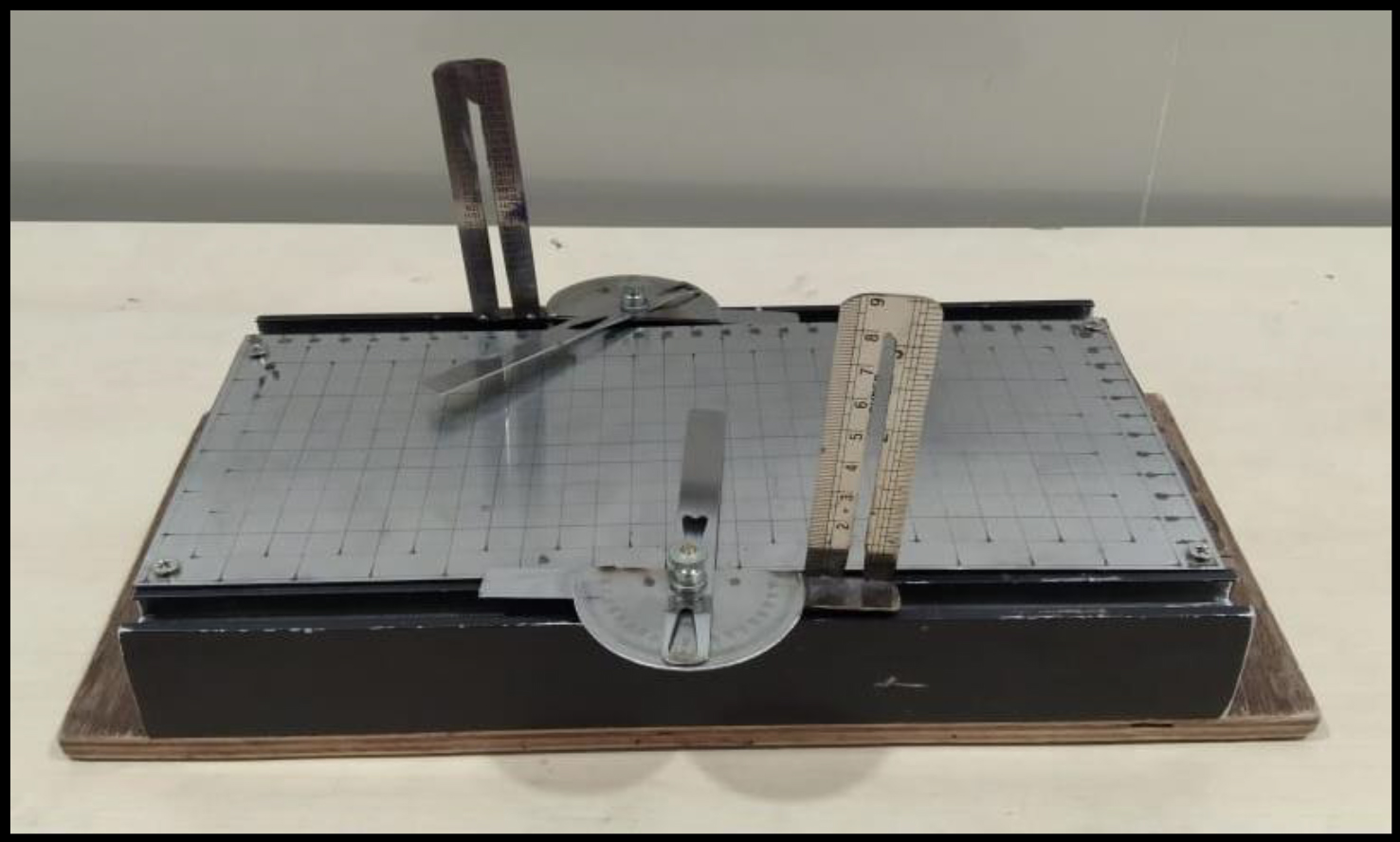
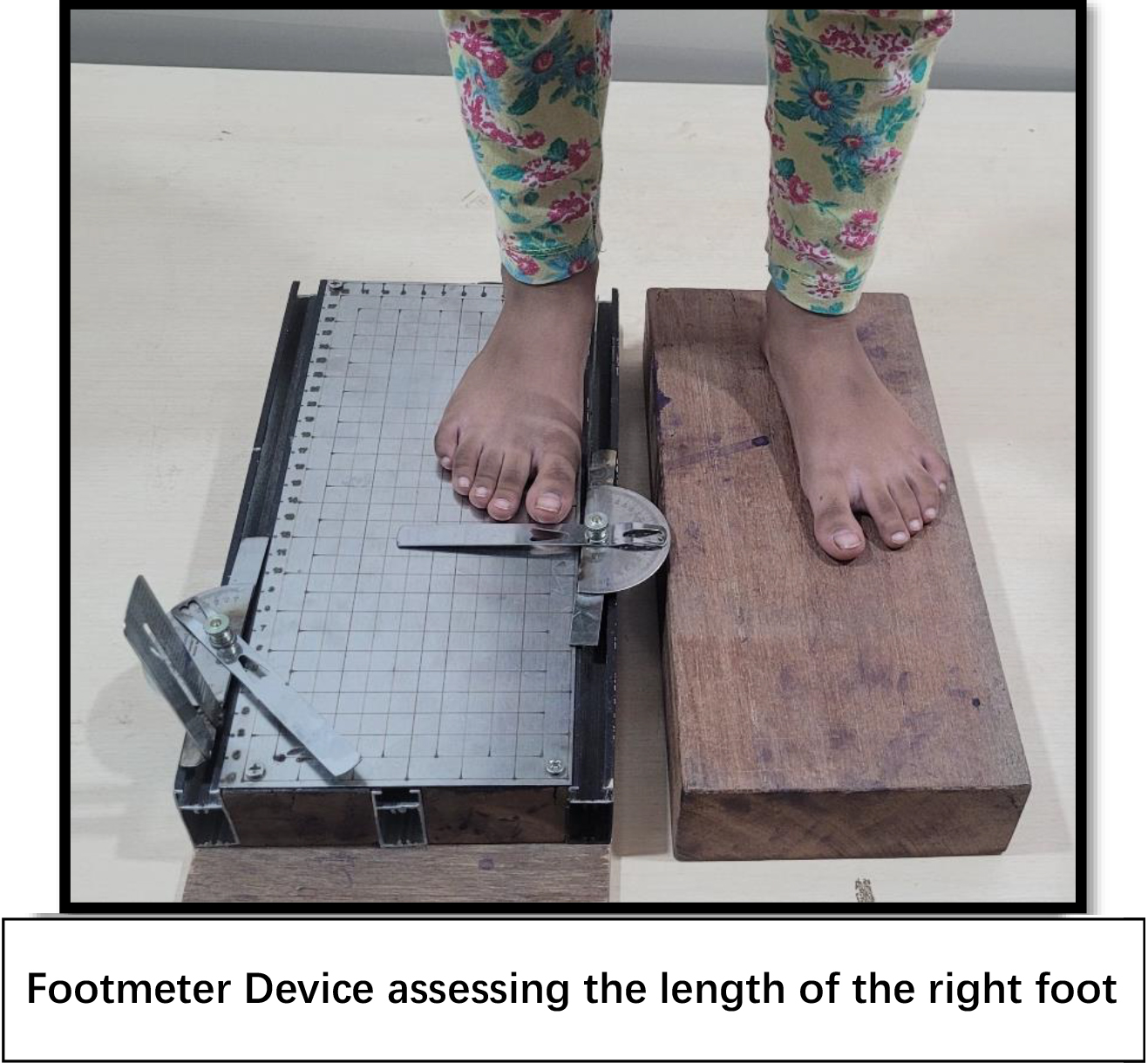
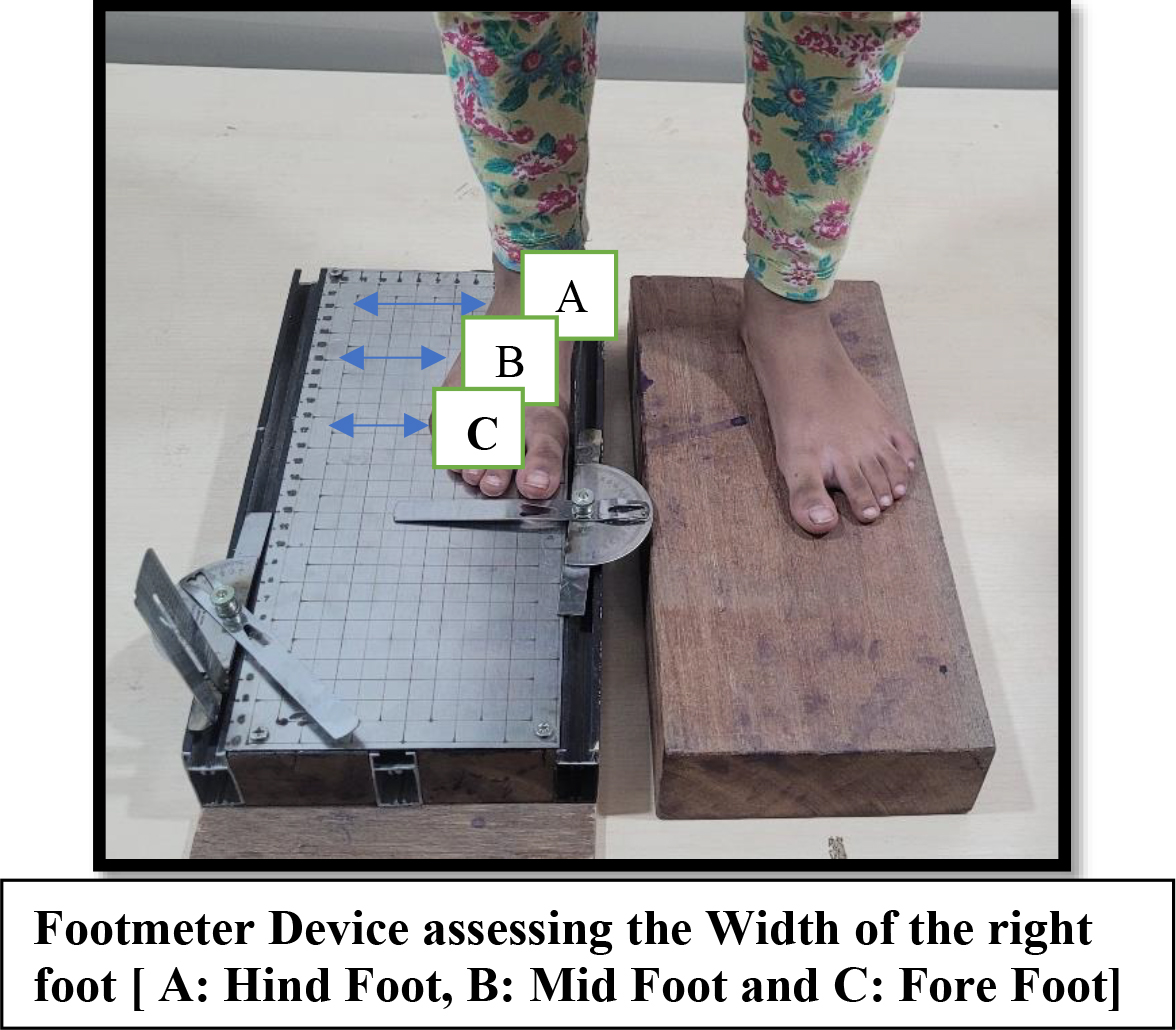
An early version of Footmeter device was developed. Below mentioned is the assembly and working of the footmeter device: Footmeter has a wooden base, the length of the frame is 30 cm and the width of the frame is 16 cm, and the height of the frame is 5 cm. The wooden frame has a graphic sheet on its base made of metal, and has markings of 1cm in vertical as well as horizontal direction. 2 Aluminum sliders are placed on both sides of a wooden frame, the length and width of the aluminum sliders are 30 cm and 1 cm respectively. On the sliders there is a unit placed that moves over the slider in forward and backward directions. The unit consists of a goniometer in the transverse plane and a vertical transparent scale attached to it in the Y-axis. At one end of the wooden frame, a pane to mark the ends and another at a right angle, so that subject’s foot is to be placed within it. The movable arm of the goniometer helps in measuring the angle of hallux valgus and the meta-tarsus adductus and helps in measuring the foot length, when placed at 90 degrees abgle and also paralled to the pane present at the end of the frame. The vertical scale measures the arch height of the foot. The prototype was tested in a controlled clinical setting in physiotherapy OPD in tertiary care hospital, Belagavi, Karnataka, India. Before commencement of the study Ethical clearance was obtained from KAHER Institute of Physiotherapy, Ethical Committee. The sample 10 children with locomotor disabilities were identified and a written informed consent was obtained from the parents of children. Refining the prototype, based on the important information from stakeholders. Final device was be developed as depicted in the figure.
In conclusion, the revolutionary Footmeter device emerges as a transformative tool in the realm of healthcare, specifically tailored for the precise measurement of foot parameters in children with disabilities. Its meticulous design, characterized by a fusion of precision, efficiency, and simplicity, marks a significant leap forward in pediatric orthopedics. The comprehensive advantages offered by the Footmeter, ranging from objective outcomes to reduced training requirements, and a streamlined assessment process, position it as the ultimate all-encompassing solution for clinicians, researchers, and caregivers alike.
One of the standout features of the Footmeter is its ability to minimize manual errors, a critical aspect in ensuring accurate measurements, especially in a population with unique physical characteristics. The device’s efficiency in providing objective outcomes not only enhances the reliability of foot parameter assessments but also contributes to expediting the decision-making process for healthcare professionals.
Moreover, the ease of use associated with the Footmeter is a key factor in its potential widespread adoption. The minimal training requirements pave the way for seamless integration into clinical practices, allowing healthcare providers to focus more on patient care and less on mastering complex measurement techniques. This user-friendly aspect is particularly crucial in pediatric settings where time and precision are of the essence.
As we look to the future, it is imperative to emphasize the importance of continued research and validation efforts. While the Footmeter has demonstrated its prowess in providing accurate foot parameter measurements, further studies should be undertaken to validate its performance against other established and standardized methods. This will not only enhance the credibility of the device but also contribute to a more comprehensive understanding of its capabilities across diverse populations and clinical scenarios.
In essence, the Footmeter device has not only set a new standard in pediatric orthopedics but has also opened doors for advancements in the measurement and assessment of foot parameters in children with disabilities. Its impact extends beyond the realm of healthcare professionals, reaching caregivers and, most importantly, the children themselves, by offering a tool that not only measures but also contributes to optimizing their mobility and overall well-being. The Footmeter device stands as a testament to the potential of innovative technologies in transforming healthcare practices, with the promise of a brighter and more accessible future for children with disabilities.
Author contributions
Both the authors have equally contributed in Conception, Performance Of Work, Interpretation Or Analysis Of Data, Preparation Of The Manuscript, Revision For Important Intellectual Content also Supervision of the work was majorly done by Dr.Vinuta Deshpande.
Funding
Financial assistance was received by KLE Academy of Higher Education and Research, Belagavi, Karnataka, Grant number was KAHER/AA/22-23/D-06102237. The Funding source had no influence in the study design, implementation or analysis.
Patency
The device has been published under The Patent Office Journal No. 37/2022. and the Patency is under process with application number 202241051652.
Footnotes
Acknowledgments
Thankful to KLE Academy of Higher Education for supporting us financially for the development of device, participants and the stakeholders for providing valuable inputs. The biomedical engineers and the carpenter for helping us develop the device.
Conflict of interest
None.