



Abstract
BACKGROUND:
We aimed to evaluate the antimicrobial effect of the Nelumbo nucifera leaf extract. There have been no studies related to dental caries inducing bacteria up to now.
OBJECTIVE:
This study reviewed the inhibitory effect of glucose transferase (GTase) activation and acid production to confirm the anticariogenic activity of Nelumbo nucifera leaf extract.
METHODS:
This study used 100 g Nelumbo nucifera leaves cultivated in Yeongcheon-si, Gyeongbuk, after adding 70% methanol tenfold. The leaves were then concentrated (Gotary vacuum evaporator; N-Nseries, EYELA Co., Japan) and were placed under an aspirator (A-3S, EYELA Co., Japan) and a freeze dryer (Ilshin Lab Co., Korea). The anticariogenic effect of Nelumbo nucifera leaves extract was investigated using the growth inhibitory effect, as well as GTase activation.
RESULTS:
Among the nine kinds of oral-disease-causing bacteria, the Nelumbo nucifera leaf extract most effectively inhibited the growth of Streptococcus anginosus (S. anginosus), but it was difficult to inhibit the growth of Streptococcus oralis (S. oralis). For the anticariogenic effect of Nelumbo nucifera leaf extract, GTase activation was inhibited by at least 50% in all the nine types of bacteria, including Streptococcus mutans (S. mutans). It was shown that Nelumbo nucifera leaf extract had the strongest GTase activation inhibitory effect (85%) in S. anginosus. In addition, Nelumbo nucifera leaf extract showed an acid production inhibitory effect in the nine types of strains by maintaining almost pH 6.2 even after being cultured for 24 hours in the Nelumbo-nucifera-leaf-extract-added culture, while the control culture without Nelumbo nucifera leaf extract showed only about pH 5.0 after 4 hours.
CONCLUSIONS:
In conclusion, Nelumbo nucifera leaf extract showed the strongest GTase activation inhibitory effect in S. anginosus. Based on this, it was confirmed that Nelumbo nucifera leaf extract showed anticariogenic activity against oral cavity disease microorganisms.
Introduction
The definition of health given by the World Health Organization (WHO) was derived from the concept of complete physical, mental, and social well-being, not merely the absence of disease or infirmity; thus, health is a “state of complete physical, mental, and social well-being beyond the disease-free state” [1]. Oral health touches every aspect of our lives but is often taken for granted. Ensuring that people these days are healthy requires the prevention of oral diseases through the oral healthcare. Due to the increased interest in oral health, which is an essential element of systemic health, the prevention of oral diseases is more prevalent than that of other diseases, but people in developed and developing countries still suffer from oral diseases [2]. Oral cavity diseases have been presented as continuous health problems worldwide, because it impacts on other areas of health and quality of life [3]. Oral health is a window into the health of your body.
Oral cavity disease refers all the diseases occurring in the mouth. In other words, all the various diseases occurring inside the mouth, such as cavity, periodontal disease, and stomatitis, are oral cavity diseases. In particular, dental caries and periodontal disease are serious oral cavity diseases threatening the oral health of the Koreans [4, 5]. Dental caries is the most representative disease accompanying tooth destruction, which is caused by the interaction among the bacteria, food, and saliva in dental plaque. Among the bacteria in dental plaque, it is known that Streptococcus mutans (S. mutans) is the main causative bacteria [6]. There are, however, many more bacteria of the Streptococcus genus other than S. mutans that cause dental caries in the oral cavity. Thus, antimicrobial substances can inhibit oral microorganisms growth to prevent dental caries
Most of these bacteria secrete an enzyme called “glucose transferase (GTase)” outside the bacteria, and form the high-molecular glucose glucan, which causes plaque. In other words, GTase degrades the sucrose in food and forms insoluble glucan on the tooth surface, and this insoluble glucan attaches to the tooth surface with the other microorganisms in the oral cavity and forms a bacterial film. In addition GTase promotes the adherence of oral microorganisms to the surface of the tooth. The organic acids (e.g., lactic acid) produced by the growth of anaerobic bacteria in this bacterial film decalcify the tooth enamel and cause dental caries, which progresses into oral cavity diseases [7, 8]. Dental caries in the oral cavity is caused by acids produced by oral microbacteria known as plaque [9].
Alkali production, acid-utilization and acid production by bacteria is influenced by environmental pH [10], with more acidic environments favouring development of caries. Previous research examining the relationship between caries, microbiota and pH, has focused on the use of chemostat-controlled conditions [11]. Most of sticky bacteria is started acid-producing ability. A plaque pH of higher than 6 is considered to be the safe area, a plaque pH of 6.0 to 5.5 is the potentially cariogenic area, and pH of lower than 5.5 is the cariogenic area. The results obtained from pH drop showed demineralization process [12]. Dental caries has been found to occur in the low environmental pH. Low pH represent potentially important bacteria in disease progression from initial to more advanced caries. Oral healthcare by bacterial growth inhibitory have been studied. Therefore, in a recent study, approaches to inhibit various factors governing the virulence properties of Streptococcus genus, could be an alternative to prevent dental caries.
There has been an increasing interest in oral healthcare by inhibiting bacterial growth using natural substances. For the natural products, it has been reported that Asiatic knotweed extract inhibits the growth of the bacteria related to dental caries, as well as the GTase activation by S. mutans (serotype c) and S. mutans (serotype c) attachment [13]. It has been reported that methyl gallate and gallic acid, the major compounds of gallnut, can prevent the formation of a bacterial film on the tooth surface by inhibiting the growth of S. mutans thereon [14]. In addition, it has been reported that flavonoids are composite materials including narigenin, phloretin, and taxifolin that have an antibacterial effect against various dental caries causative bacteria [15], and that funoran, an extract from seaweed, also has a superior antibacterial effect against the same bacteria [16].
Although Nelumbo nucifera leaf extract has been reported to have a limited antibacterial effect against food-related microorganisms [8], no review has been conducted on the bacteria related to dental caries. Therefore, this study evaluated the GTase activation and acid production inhibition of different bacteria to confirm the anticariogenic effect of Nelumbo nucifera leaf extract in nine types of Streptococcus strains, including Fusobacterium nucleatum, which is greatly associated with oral disease.
Methods
Extraction
A dried Nelumbo nucifera leaf grown in Yeongcheon, Gyeongbuk, Korea was purchased from Busan Hyundai Pharm Co., Ltd. After adding 70% methanol 10 times to 100 g crushed Nelumbo nucifera leaf, the extraction was done in a heating mantle at 65
Experimental strains and culture
The strains that were used in this experiment were purchased from the Department of Biology of Yonsei University. Nine types of strains were used: S. mutans KCTC 3065, Streptococcus gordonii (S. gordonii) KCTC 3286, Streptococcus sanguinis (S. sanguinis) ATCC 10556, Streptococcus sobrinus (S. sobrinus) KCTC 3288, Streptococcus ratti (S. ratti) KCTC 3294, Streptococcus anginosus (S. anginosus) KCTC 3327, Streptococcus criceti (S. criceti) KCTC 3292, Streptococcus oralis (S. oralis) ATCC 55229, and Fusobacterium nucleatum (F. nucleatum) KCTC 2640. They were used for the experiment after the subculture in brain-heart infusion (BHI) broth, and were incubated in BHI broth at 37
Measurement of growth inhibitory effect by Nelumbo nucifera leaf extract concentration
One loop of each sample strain was inoculated into 10 ml BHI broth and then incubated anaerobically for 24 hours at 37
Measurement of the GTase activation inhibitory effect
GTase was separated using the method described by Namba et al. [19]. Each strain was cultured in BHI broth at a 37
Acid production inhibition (pH measurement)
The acid production of each strain was measured using the method described by Jeon [20]. One loop of each strain was inoculated into 10 ml BHI broth and was cultured anaerobically at 37
Relative growth ratio of (a) Streptococcus mutans, (b) Streptococcus gordoni, (c) Streptococcus criceti, (d) Streptococcus oralis, (e) Streptococcus ratti, (f) Streptococcus sanginosis, (g) Streptococcus sobrinus, (h) Fusobacterium nucleatum,(i) Streptococcus anginosus cultured at different concentrations of methanol extract of Nelumbo nucifera.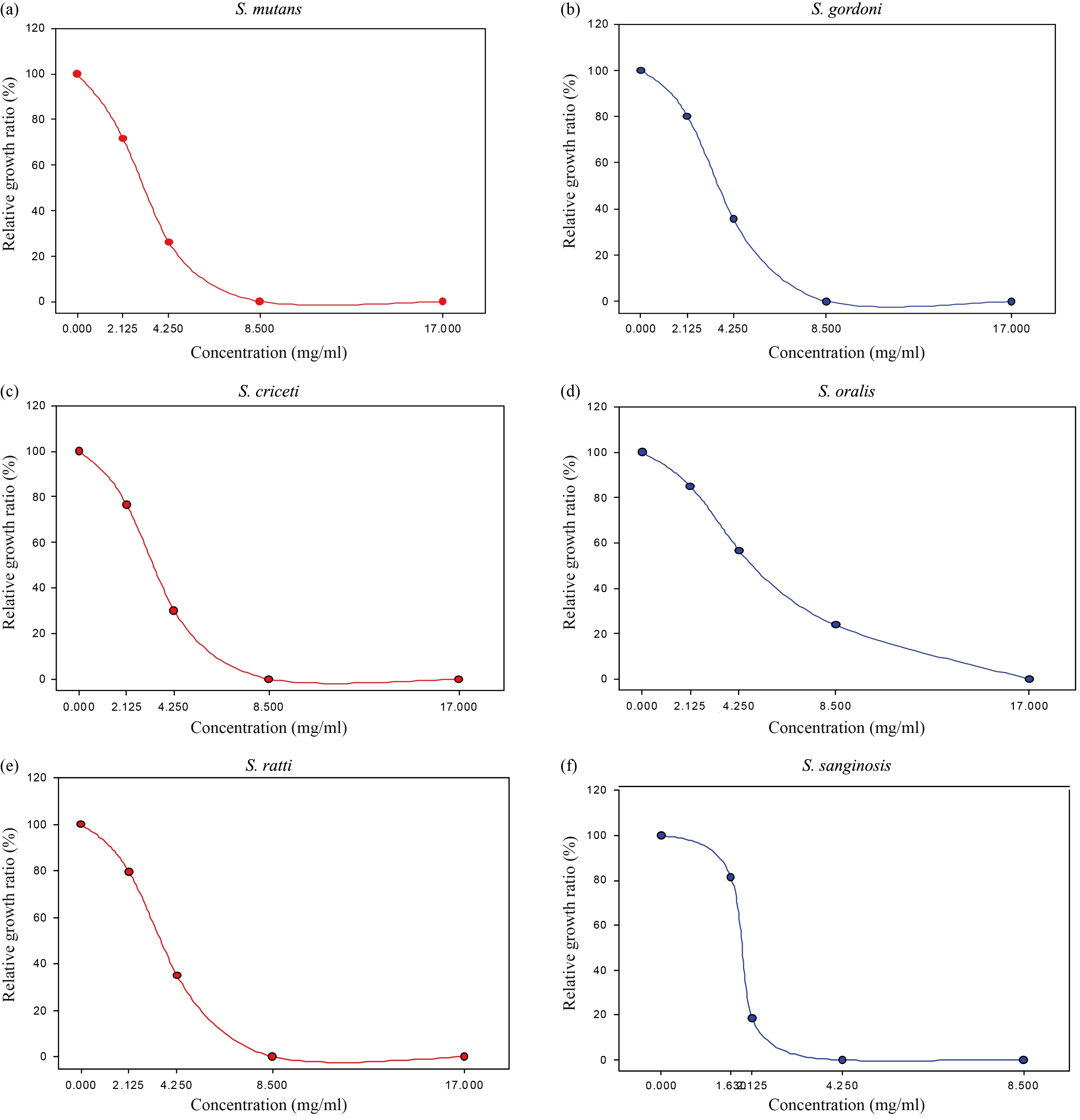
continued.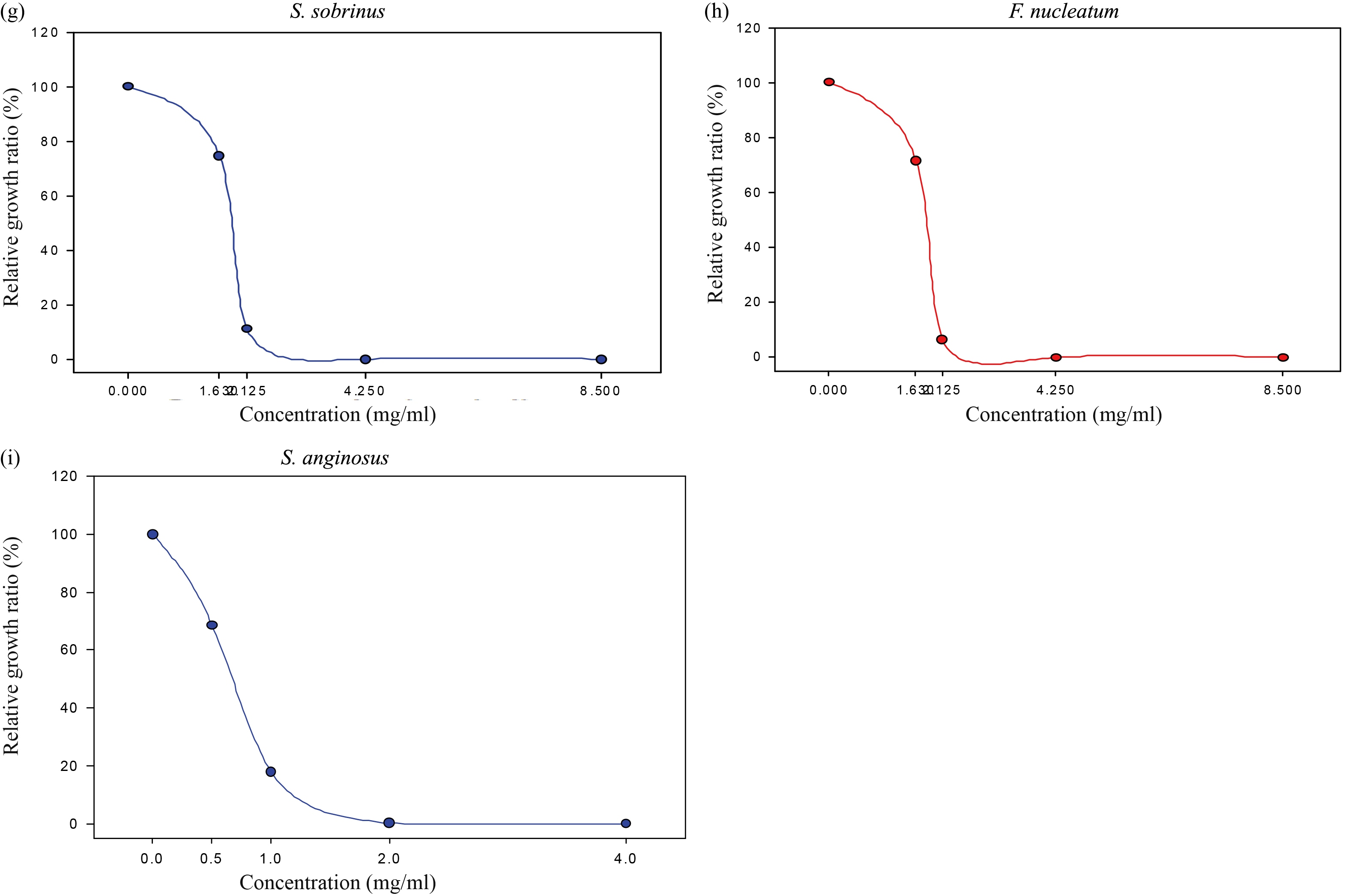
Growth inhibitory effect by Nelumbo nucifera leaf extract concentration
The results of the measurement of the growth inhibitory effect on the oral bacteria according to the Nelumbo nucifera leaf extract concentration are shown in Fig. 1. Among the nine kinds of strain used in the experiment, almost 98% of S. anginosus died even at 2 mg/ml. S. sanguinis, S. sobrinus, and F. nucleatum completely died at 4.25 mg/ml. S. mutans, S. gordoni, S. criceti, and S. ratti completely died at 8.5 mg/ml, but 20–40% survived at 4.3 mg/ml. Meanwhile, S. oralis completely died at 17 mg/ml, but more than 25% grew even at 8.5 mg/ml. Therefore, among the nine kinds of oral-disease-causing bacteria, the Nelumbo nucifera leaf extract most effectively inhibited the growth of S. anginosus, but it was difficult to inhibit the growth of S. oralis. In conclusion, in terms of bacterial growth inhibition by extract concentration, Nelumbo nucifera leaf extract is thought to be the most effective in inhibiting the growth of S. anginosus.
GTase activation inhibitory effect for measuring the anticariogenic activity
Table 1 shows the results of the GTase activation inhibitory effect of each strain after processing Nelumbo nucifera leaf extract by concentration (16–0 mg/ml) then culturing it for 24 hours. The GTase activation inhibition ratios of S. mutans, S. gordoni, S. ratti, S. criceti, and S. oralis were 49.5, 44.6, 49.5, 52.4, and 50.0% at the 8 mg/ml Nelumbo nucifera leaf extract concentration and 60.8, 53.0, 55.7, 63.1, and 58.1% at the 16 mg/ml concentration.
The GTase activation inhibition ratios of S. sanginosus, S. sobrinus, and F. nucleatum were 50.5, 42.0, and 49.6% at the 4 mg/ml Nelumbo nucifera leaf extract concentration; 63.4, 56.0, and 61.7% at the 8 mg/ml concentration; and 75.2, 68.2, and 76.5% at the 16 mg/ml concentration. The GTase inhibition ratios of S. anginosus were 46.4, 55.1, 62.2, and 82.5% at the 2, 4, 8, and 16 mg/ml Nelumbo nucifera leaf extract concentrations.
Inhibitory effects of the 70%-methanol-added Nelumbo nucifera leaf extract on the GTase secreted by nine strains
Inhibitory effects of the 70%-methanol-added Nelumbo nucifera leaf extract on the GTase secreted by nine strains
Figure 2 show the measurement results of the acid production inhibitory effect of each strain. Although the control group showed rapid changes in pH among the nine strains, the Nelumbo-nucifera-leaf-extract-added medium showed relatively gradual changes in pH and almost no changes in pH compared to the control group. The strains with a higher GTase activation inhibitory effect showed a relatively higher acid production inhibitory effect. Furthermore, it has been reported by Kim (2005) that tooth erosion and dental caries occur when the pH is lower than pH 5.0–5.5 [15]. Therefore, the results of this study show that Nelumbo nucifera leaf extract has an anticariogenic effect.
pH change in the cultured broth of nine strains (a) Streptococcus mutans, (b) Streptococcus gordoni, (c) Streptococcus sanginosis, (d) Streptococcus sobrinus, (e) Streptococcus ratti, (f) Streptococcus anginosus, (g) Streptococcus criceti,(h) Streptococcus oralis, (i) Fusobacterium nucleatum and methanol-added Nelumbo nucifera leaf extract.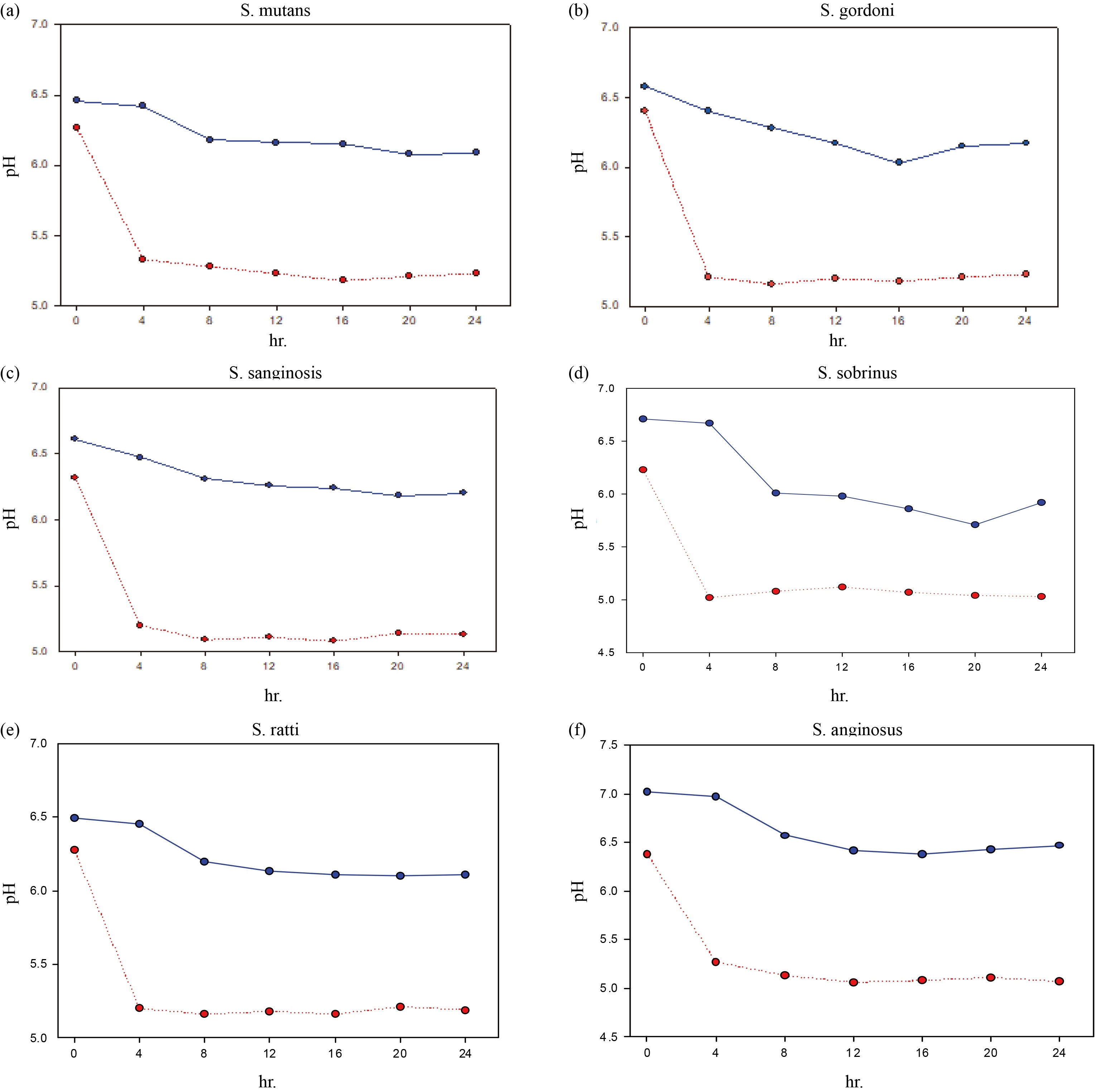
continued.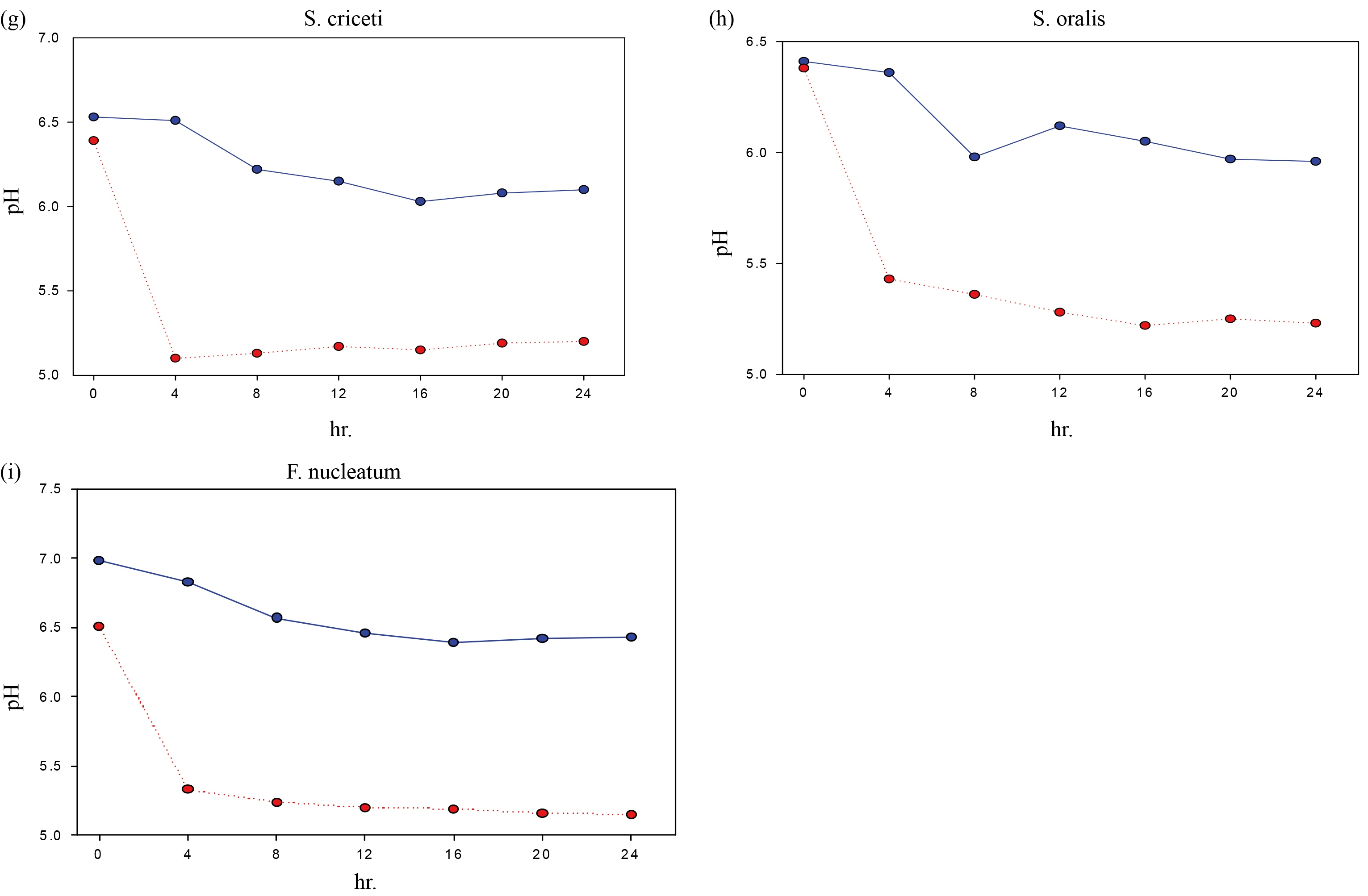
The disorder caused by oral disease affects daily life, causing not only serious dysfunction but also difficulty in nutrition supply due to mastication discomfort. Moreover, oral pain and difficulties in mastication and speaking adversely affect systemic health [17]. Oral health problems are associated with various factors, such as overall health status, sociality, self-confidence, and life satisfaction, and eventually adversely affect systemic health if oral health is not maintained [18]. Therefore, oral health generally plays a key role in maintaining systemic health, and it is necessary to constantly maintain oral health to improve the quality of life by preventing oral diseases.
Lactic acid is produced from the fermentation of the resident bacteria in the oral cavity, and causes hard-tissue erosion of the tooth, which in turn causes dental caries [19]. Dental caries begins when the bacteria in the dental plaque attaches to the tooth surface. Therefore, it is important to inhibit GTase, which causes the attachment of S. mutans to the tooth surface and produces insoluble glucan [20].
There are physiological and chemical methods of removing dental plaque. For the chemical method, compound chemicals like chlorhexidine are representative, but while they have excellent antibacterial effects, they can also show side effects, such as tooth discoloration, plaque formation, bacterial colonization promotion, and oral mucosa desquamation [21].
The interest in oral treatments that can solve the aforementioned problems and that are free from side effects has been rising, and studies on and the development of the next-generation antibacterial materials with selective effects on oral bacteria are much needed. As such, the interest in natural products that can prevent dental caries related to dental plaque or periodontal diseases is rising, especially natural antibacterial products as the next-generation antibacterial materials, due to the increased antibiotic resistance [22].
It has been reported that the perilla seed and mugwort hexane extracts have excellent antibacterial effects against oral disease causative bacteria, as well as a KB cell growth inhibitory effect [23], and it has been reported that tangerine peel extract also has an antibacterial effect, suppressing the growth of S. mutans and significantly inhibiting GTase activation [24]. Furthermore, it has been reported that Aralia cordata methanol extract inhibits S. mutans growth, organic acid production, and the attachment to the S-HA and synthesis of insoluble glucan [25], and that cocoa polyphenol inhibits the growth of S. mutans and S. sanguis, reduces dental plaque, and effectively inhibits acid production by S. mutans [26].
This study investigated the anticariogenic activity of Nelumbo nucifera leaf extract against nine types of Streptococcus strains, including F. nucleatum, which is closely related to oral disease. As a limitation of this study, we did not verify the antimicrobial effect of other microorganisms causing oral diseases. Therefore, future studies will be conducted to confirm the antimicrobial effect against various oral diseases.
In this study, it was confirmed that Nelumbo nucifera leaf extract has a superior anticariogenic effect by showing its growth inhibitory effect for each strain. The inhibitory role of the Nelumbo nucifera leaf against nine types of Streptococcus strains showed the reduction in the glucan synthesis, as well as its GTase activation and acid production inhibitory effects, which also confirmed the developmental possibility of Nelumbo nucifera leaf extract as a natural anticavity product with a high safety profile.
Conclusion
In the present study, the antibacterial activity of natural products extract based on their inhibition of the growth of oral bacteria. These findings suggest that Nelumbo nucifera leaf extract is effective against nine oral bacteria, and that growth inhibitory effect against the dental caries causative bacteria in the oral cavity.
The results of the growth inhibitory effect on the nine oral bacteria according to the Nelumbo nucifera leaf extract concentration are showed that S. anginosus (2 mg/ml) were showed as the strong growth inhibitory effect. The results of the GTase activation inhibitory effect showed that the Nelumbo nucifera leaf extract of exhibited GTase activation inhibitory effect all oral bacteria tested in Table 1. Especially, S. anginosus (2 mg/ml to 46.4%, 4 mg/ml to 55.1%, 8 mg/ml to 62.2%,16 mg/ml to 82.5%) were showed as the strong GTase activation inhibitory effect activity. The results of the acid production inhibitory effect of each strain. Although the control group showed rapid changes in pH among the nine strains, the Nelumbo-nucifera-leaf-extract-added medium showed relatively gradual changes in pH and almost no changes in pH compared to the control group. Therefore, the results of this study show that Nelumbo nucifera leaf extract concentration are showed that S. anginosus were showed as the strong growth inhibitory effect, GTase activation inhibitory effect and acid production inhibitory effect activity.
The results of this study showed that Nelumbo nucifera leaf extract has an anticariogenic effect against the dental caries causative bacteria in the oral cavity. This new discovery has significance as it presents the inhibitory effect of Nelumbo nucifera leaf extract against the microorganisms in the oral cavity, other than its already known effects. Nelumbo nucifera leaf extract can thus be utilized as an anticariogenic product after the conduct of further studies in the near future.
Footnotes
Acknowledgments
This study was supported by the Basic Science Research Program through a National Research Foundation of Korea (NRF) grant funded by the Ministry of Science, ICT, and Future Planning (2017R1C1B5074410).
Conflict of interest
None to report.