



Abstract
BACKGROUND:
Hospitals employ many social workers, whose tasks are complicated and arduous. Quality of life assessments by healthcare professionals (HCWs) are essential for better healthcare and skillful health service delivery. HCWs have been under tremendous mental and psychological strain and at high risk of virus acquisition since the COVID-19 pandemic outbreak.
OBJECTIVE:
This study evaluated public hospital efficiency issues and remedies in the Kingdom of Saudi Arabia.
METHODS:
The study examined leadership styles and job satisfaction among Saudi Arabian healthcare workers (HCWs). Between September 1 and December 31, 2021, a descriptive cross-sectional investigation was conducted. During the COVID-19 pandemic, a verified web-based survey reached the appropriate sample and data was collected. A web-based self-administered survey collected demographic data, leadership style using Multifactor Leadership Questionnaire Form 6-S (MLQ-6S), and health care employee satisfaction (SEHC) from HCWs.
RESULTS:
Leadership styles affected HCW job satisfaction, according to this study. Individual concern, idealized influence, contingent compensation, and inspiring motivation were negatively correlated with work satisfaction ratings.
CONCLUSION:
Creating a special training programme for new leaders should cover leadership styles and approaches, the skills needed to foster a productive workplace with high-quality care, and the creation of motivated work opportunities that can boost worker engagement and satisfaction.
Keywords
Introduction
Healthcare facilities components are varied and complicated, requiring an erudite leadership approach because of global economic competitiveness as leaders face unpredictable challenges. Therefore, healthcare sectors require distinct leadership management skills to overcome ongoing health issues [1]. Effective management of healthcare workers (HCWs) is thought to be possible through leadership behaviour, which encourages their productivity and commitment. Numerous psychological problems have become more common as a result of the pandemic, including fear, worry, stigma, prejudice, and marginalization on the way to the illness and its effects on everyone from healthy people to vulnerable individuals to care professionals. Widespread isolation may cause terror, dread, and anxiety among HCWs who operate in hospitals and isolation facilities. The term “frontline HCWs” refers to medical staff who work with patients who have been diagnosed with or are suspected of having a coronavirus. They are more susceptible to a heavier workload, an elevated risk of infection, and mental health problems. Moreover, several studies mentioned that leaders’ approaches and leadership styles effectively affect staff satisfaction, functioning, and quality of provided services [2, 3]. The ability to inspire people to reach their full potential and accomplish goals is described as leadership [2, 4]. A competent leader can give the organization direction and guide the personnel to accomplish the desired results [5]. The leadership research area has been widely studied worldwide in different sectors. Leadership has various styles, most typical leadership styles include: bureaucratic, autocratic, charismatic, democratic, laissez-faire, situational, transactional, participative and transformational [6]. Transactional and transformational leadership styles were first seen before the 1970s [7]. Leadership phenomenologists have evolved, and current leadership philosophies that incorporate several traits of their forebears might be a key driver of change in the future [8]. The longevity, population size, and prevalence of lifestyle problems in the Kingdom of Saudi Arabia (KSA) have all increased significantly. Infection outbreaks and cardiovascular diseases have also increased the need for healthcare services and their associated costs. In 2016, public healthcare spending accounted for 3.9% of GDP, or 67.8% of all healthcare costs in the nation [9]. In the five years from 2013 to 2017, this spending grew by a startling 24.7% [10]. The availability of services was substantially reduced in Saudi Arabia, despite the country’s high health spending relative to other high-income countries, which revealed inefficiencies in the delivery of health services. Figure 1 displays the efficiency and resource utilization barriers in public hospitals.
An overview of the difficulties of using health resources effectively and efficiently in public hospitals.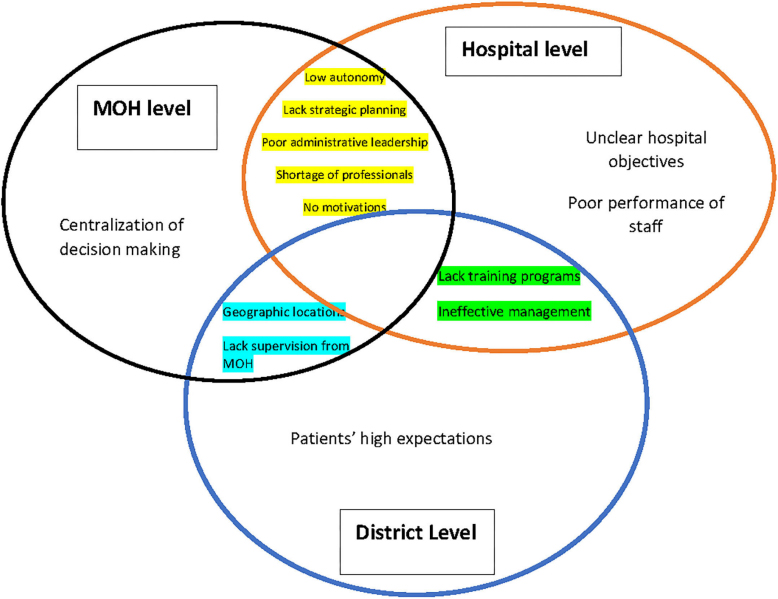
Laissez-faire leadership can be characterized as passive, non-directive, and inert. This kind of leader thinks that followers are motivated to act by personal desires and convictions. In this leadership style, the boss establishes a few guidelines for handling organizational problems before handing them off to the staff.
Burns acknowledged that transformational leadership is perceived when leaders motivate the staff’s morals, beliefs, coalitions, and perceptions to achieve the objective of the organization [11, 12]. Previous research stated that transformational leadership engages and inspires the leaders’ and employees’ relationships to study the current presumption remarkably, motivates them to think across novel directions, and earns their loyalty and obedience to their assigned tasks without arguing. In addition, transformational leaders can influence their employees’ behavior to achieve more work fulfillment and positive organizational results [13]. Additionally, they try to secure expectations of work-related difficulties [15] and support their workers’ ability to be inventive, creative, productive, and adaptable in a variety of organizational work contexts [14]. The ability to inspire and encourage colleagues is a crucial aspect of transformative leadership. The workers may be involved, and the transformational leader may utilize inspiring motivation by showcasing knowledge and skills. By modeling open communication and ideas of honesty and integrity, a leader may inspire others. Employee responsibilities are determined by the leader’s goals and aspirations, which help them accomplish their goals. By employing motivational inspiration, a leader may encourage their team to go above and beyond what is required of them. Transformational leaders who display Idealized Influence set an example for their followers by upholding the highest ethical standards. Such leaders are those that the following can identify with and admire. The level to which a lea statistical approach and interpretation der gives each follower individual focus and acts as their mentor, coach, or ally depends on the follower’s needs and incentives. The person in this position shows empathy for each follower’s particular circumstance while also taking the time to hear what they want and worry about. The primary users of healthcare resources are hospitals, and the effectiveness of these institutions is essential to the effectiveness of healthcare systems as a whole. Therefore, to implement the important policies and procedures that will ensure the effective use of public resources, governments must conduct an efficiency evaluation of their healthcare industries and identify the primary causes of inefficiencies. It is vital to identify the inefficiencies in the healthcare system and appreciate the factors that affect how well public hospital function.
Transaction leadership is built on leader-follower exchanges, where the leader and follower trade rewards or penalties for tasks completed and anticipated productivity, efforts, and loyalty [16, 17]. When transacting with employees, more transactional Leaders become less engaging and appealing by focusing on the completed work, concentrating on their faults, delaying choices, or keeping away from meddling until something happens. As an outcome, transactional leadership relates to a higher rate of employee turnover than transformational leadership. As a result, according to a prior study, various situations necessitate different leadership styles at times. Consequently, leaders might consider merging diverse leadership styles and managerial skills to improve staff motivation and satisfaction [3, 7].
Job satisfaction is crucial since it is seen as a major aspect that may influence individual performance as well as organizational standards [5]. Job satisfaction refers to how much an employee enjoys their work or the task at hand. Job satisfaction isn’t only about how well work is done or how much effort is put in; it’s also about being more productive, inventive, and committed to providing high-quality services to patients [18]. Job satisfaction and effective leadership are two significant elements that positively affect an organization’s goal. For survey respondents, hypertension poses the biggest possible future risk among the main chronic illness risk factors. Based on the prediction equation in the RapidHRA tool that is taken on the Framingham research, more than three in four employees (78%) have a substantial risk of getting hypertension in the future. In addition to genetics and age profiles, bad lifestyle choices have a significant impact. The risk can be significantly reduced by upping physical activity levels, cutting back on smoking, and lowering BMI levels. Figure 2 shows the risk of developing a chronic disease.
Risk of developing a chronic disease.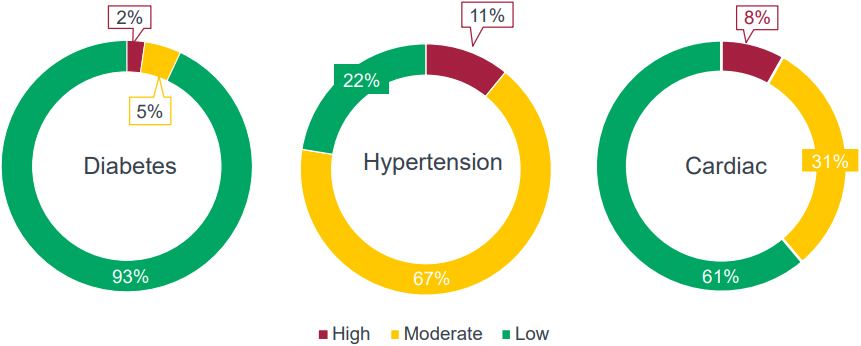
The sector is seeing changing trends in the risk of occupational risks and accidents, particularly as more workers choose desk-based positions. For many computer users, the risks are moving to repeated strain and postural issues. While 15% of individuals said they frequently experienced chronic discomfort, 69% said they had good safety behaviors. One-fourth of survey respondents said they were at moderate risk and may benefit from assistance with enhanced safety knowledge and ergonomic guidance.
According to clinically relevant criteria, less than one-third of participants appear to be receiving enough sleep, which may have an impact on alertness and productivity, raise the risk of acquiring chronic disorders, and lower immunity levels. Figure 3 demonstrates the workplace risks. This closely conforms to a typical poll finding in the Kingdom where 81% of respondents from rural areas and those who are not Saudis said they had no difficulties.
Workplace risks.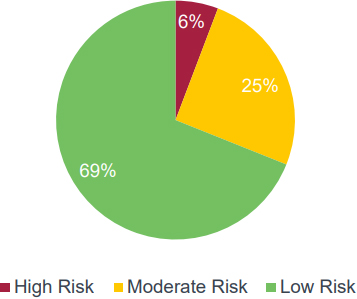
The main purpose is to identify the relationship between leadership styles and overall HCW’s job satisfaction. The research reveals a statistically significant negative correlation between certain leadership styles such as individual consideration, idealized influence, contingent reward and inspirational motivation and work satisfaction ratings. As a significant suggestion, the study suggests the implementation of specialized training for new leaders. This program would cover an all-inclusive overview of leadership styles and practices that leaders need to know in order to promote a conducive working environment. The end goal is to raise the level of care provided while promoting work cultures that drive employee engagement and satisfaction in the health sector. In essence, this study is aimed at providing valuable insights to critically respond to challenges facing HCWs and ensure optimal hospital efficiency as well as promote positive leadership practices in the best interest of healthcare professionals and overall provision of quality healthcare services in Saudi Arabia. The major contributions of this study can be summarized as follows:
The study provides an insight into the difficulties that arise for health workers, especially social workers, in the COVID-19 pandemic. It brings attention to the increased complexity and laborious nature of their work, indicating the mental and psychological weariness caused in HCWs by his or her front-line position and heightened risk of virus acquisition. The research explores the issues of inefficiency within public hospitals in the KSA. Through the identification and analysis of these issues, this study offers insights that may be vital in the development of potential solutions to improve healthcare service provision in the region. Exploration of the Link Between Leadership Styles and HCW Job Satisfaction: The study focuses on the correlation between leadership styles and job satisfaction among Saudi Arabian health professionals. It links the leadership behaviors (individual consideration, idealized influence, contingent reward and inspiring motivation) to its effect on job satisfaction in general. The implementation of a descriptive cross-sectional study design during this period (1st September to 31st December, 2021) clarifies the temporal nature of a study. The procurement of a validated web-based survey as a data collection tool shows one of the strategic approaches to collecting information efficiently and safely, considering limitations that COVID 19 pandemic brought along. The use of the MLQ-6S as a widely used instrument for measuring leadership styles strengthens the quantitative study’s reliability. The SEHC survey, which utilizes Likert scale ratings, presents a comprehensive structure by which employee job satisfaction in health care can be measured.
According to previous research, satisfied employees are more devoted to their work and organizations, and the leadership idea postulates that leadership philosophies are only tied to job happiness [19]. This study is being conducted in SA to evaluate the association between leadership styles and the work satisfaction of HCWs.
Study strategy
This expressive study was performed between 1st September and 31st December 2021. A validated self-administered web-based survey was used to reach the needed sample and gather the needed information faster and safer due to the COVID-19 pandemic.
Study tools
Data were gathered from HCWs with the help of a self-administered web-based survey that consisted of different sections: demographic information, work happiness, and leadership style as measured by the MLQ-6S.
The MLQ-6S, a condensed form of Northouse’s MLQ-6S, was used for the quantitative evaluation [20]. This tool is believed to be the most widely used, well-studied, and independently confirmed leadership tool in the world [21], and leaders from a variety of organizations and cultural backgrounds use it [22]. The 21 items on the MLQ-S6 research tool’s 5-point Likert scale range from never, sporadically, somewhat frequently, and frequently if not permanently. Each item was given a score between 1 (not at all) and 5 (very well), often but not always. The MLQ-S6 comprises 21 questions with 7 leadership variables on a 5-point Likert scale, with answers ranging from “not at all,” “once in a while,” “occasionally,” “quite often,” and at last “often if not always” [23]. These questions examine transformational, transactional, and laissez-faire leadership behavior. Responses to the first 18 questions on the SEHC are graded on a Likert scale of 1 to 4, with 1 denoting “Strongly Disagree” and 4 denoting “Strongly Agree.” The participants were asked to appraise a healthcare institution as a place where they worked (item 20) and if they would recommend it to others (item 19). A Likert scale with four points was used for item 19, with one representing “Definitely No” and four representing “Definitely Yes.” Item 20 was rated [24, 25] on a scale of 1 to 10, with 1 being the worst and 10 being the best.
Three factors were used by the key informants (KIs) to support their decision to choose the services: Priority should be given to the hospital goals, health management plans, and MOH health strategy plans. The MOH and hospital objectives are taken into consideration while choosing the services, which are also dependent on the clinical capacity, service scope, and scale of the hospitals. Second, depending on hospital specialization, an HM said: “This categorization takes hospitals’ range of services and specialties into account.” Third, a DHA mentioned: “the demands of the neighborhood and its surroundings, which guided the establishment of the facility’s service offering,” noting community demands for certain services.
Study sample
All HCWs working at tertiary medical institutions in Saudi Arabia (SA) were asked to take part in this descriptive cross-sectional survey by completing a validated web-based survey during the study period. A total of 127 HCWs from various areas across SA and various specializations, such as pharmacists, nurses, physicians, and others, participated in this survey. Participants were made aware of the objectives and rationale behind the study as well as their freedom to discontinue participation at any time. Additionally, they were told that all comments would be kept private and anonymous. The fact that they would automatically sign the permission if they answered the survey was also emphasized.
Inpatient and outpatient services were cited by the majority of key informants (KIs) and medical experts as the treatments offered by public hospitals most often. Hospitals were frequently asked for emergency assistance. Additionally, the majority of KIs indicated that hospitals offered a variety of surgical treatments to promote patient outcomes. Nearly all participants agreed that hospitals needed to provide supportive therapeutic and diagnostic medical services. Numerous KIs shown the importance of preventative measures in enhancing health outcomes.
Data analysis plan
Statistical Package for Social Sciences (SPSS) version 26 was used to code and assess the data. Descriptive statistics including average, percentage, frequency, and variance were used to assess the acquired data. To check the dependability of the job satisfaction survey Cronbach’s alpha reliability analysis was conducted. An independent sample
Research methods
The purpose of this study is to examine the relationship between job satisfaction and leadership styles among HCWs at public hospitals in the KSA. It uses a descriptive cross-sectional research methodology. The research will be place between September 1st and December 31st, 2021. A validated web-based survey is used to gather data amongst the continuing COVID-19 epidemic, taking into account the distinct problems that HCWs encounter at this time.
Participants in the research are healthcare professionals, including a sizable number of social workers, who work in public hospitals across the KSA. Professionals who provide services to patients and customers in hospital settings meet the inclusion requirements.
Statistical approach and interpretation
To provide a concise overview of the demographic attributes of the participants, descriptive statistics are utilized. Analyzing the scores of the MLQ-6S, the prevailing leadership styles among healthcare executives are determined. The relationship between leadership styles and job satisfaction is investigated through the application of inferential statistical analyses, including correlation and regression. The significance of the negative correlation identified between work satisfaction ratings and four MLQ components (i.e., individual consideration, idealized influence, contingent recompense, and inspiring motivation) is determined through the application of statistical tests. There is a statistically significant negative correlation between particular leadership styles and overall job satisfaction among healthcare workers, according to the study’s findings. The influential factors that impact job satisfaction ratings are identified as individual consideration, idealized influence, contingent reward, and inspiring motivation, as indicated by the MLQ. As suggested by the interpretation, incorporating these elements into leadership styles may increase the engagement and contentment of healthcare personnel.
Results
The description of each research participant is listed in Table 1. As demonstrated, the majority of HCWs were between the ages of 36 and 45, with the great majority being female (91.3%). Most of the participants were from other occupations (37%), followed by nurses (27.6%), physicians (25.2%), and pharmacists (10.2%). Most participants (51.2%) reported having more than 17 years of experience. Furthermore, most of the HCWs (71.7%) work in governmental hospitals. A vast majority of participants (66.1%) have worked in their organization for over 12 years.
Participants’ demographic study,
127
Participants’ demographic study,
Leadership style questionnaire (MQL),
Note: reported values are frequency (%); SD
The MLQ questionnaire contains 21 items with descriptive information in Table 2. Average responses to questions vary between 1.35 and 3.67. A score between 3 and 4 corresponds to the “fairly often” and “frequently if not always” response categories respectively. A large mean value suggests more frequent behavior described in the question.
Responses to individual questions in the MLQ instrument were further consolidated into 7 dimensions corresponding to 3 leadership styles (transactional, laissez-faire, and transformational). The composite scores and survey items used in the aggregation are presented in Table 3. We can observe higher mean values for life-changing leadership and low scores for the laissez-faire leadership style. The highest dimension score is inspirational motivation (M
Composite scores for MLQ-S6 Questionnaire,
Note: SD
Job satisfaction questionnaire,
Table 4 shows 20 individual items used to assess job satisfaction. For many items, the participants chose “strongly agree” and “agree” responses resulting in mean scores being below 3. A score close to 3 corresponds to the “neutral” category. On the last question, participants showed an average rating of 7.95 on a 10-point scale corresponding to a good overall assessment of health facilities as a workplace.
Cronbach’s alpha reliability study was carried out to examine the validity of the job satisfaction survey. The work satisfaction questionnaire’s Cronbach’s alpha score was 0.937. A composite score was calculated using the job satisfaction questionnaire. Items 1–18 were reverse coded for a larger score to represent the strongly agree category. A total score was calculated from the replies and ranged from 0 to 84, with a higher number indicating more work satisfaction. With a mean of 51.94 and a standard deviation of 15.60, the study’s total work satisfaction score runs from 30 to 77. Considering the theoretical range for composite scores 0–84, respondents with job satisfaction scores
Table 5 shows that correlation analysis is utilized to look at the connection between work satisfaction and leadership style (MLQ composite scores) (composite score generated based on a job satisfaction questionnaire). A comparison between two groups of participants (those who are satisfied and those who are not) has been performed using an independent samples
Job satisfaction variable correlations shown graphically.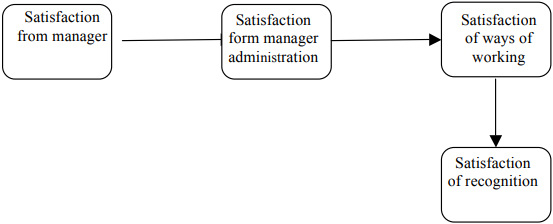
Relationship between job satisfaction and leadership style,
Note: M
Four MLQ dimensions – idealized influence, inspiring motivation, individual concern, and contingent reward – were shown to be negatively correlated with work satisfaction ratings, and this link was statistically significant. Other correlations between MLQ dimension scores and job satisfaction were not statistically significant. A negative correlation suggests that a higher MLQ score is associated with a lower job satisfaction score. This suggests participants perceive transformational and transactional leadership styles to hurt job satisfaction.
Further comparison between two subgroups of study participants (not satisfied vs satisfied with the job) using an independent
Job satisfaction varies by demography,
127
Job satisfaction varies by demography,
Note: ABC different letters indicate a significant difference between categories.
Significant differences in work satisfaction between age groups were identified in Table 6. HCWs aged 25–25, 41–45, and 56–60 are significantly more satisfied with jobs compared to other age categories. When compared to female HCWs, male HCWs reported considerably greater levels of work satisfaction. Compared to doctors, chemists, and other professions, nurses scored much worse on work satisfaction. HCWs with experience of fewer than 12 years reported significantly higher job satisfaction than those with over 17 long years of experience especially those with 12–17 years of experience (least satisfied). HCWs in private settings are more satisfied with their job than those working in government healthcare. Years of working in the organization have a significant association with job satisfaction. HCWs working for less than 12 years are significantly more satisfied than those working for more than 17 years or between 12 and 17 years (least satisfied).
In this study, the dataset utilized is collected from various groups of healthcare employees in SA; a cross-sectional survey enrolled 127 respondents from different healthcare specialties. This research also explores the association between HCW work satisfaction and leadership style. It was indicated that the main causes of inefficiency were healthcare personnel’s substandard performance and the lack of training programs on the optimum use of health assets because they are the foundation of hospital performance and the chief supplier of healthcare facilities. Thus, to enhance the efficiency of healthcare professionals and the standard of the services they offer, it is important to organize training programs and manage hospital employees. This can be achieved, for example, by the implementation of KPIs for healthcare professionals in every hospital and through the observation of hospital staff behavior.
Studies on hospital performance frequently point to operational efficiency as being significantly impacted by performance monitoring, training initiatives, and staff rewards and recognition (44–46).
The bulk of the research that has been conducted on the topic of leadership styles and job satisfaction has concluded that these styles have a positive effect on HCWs’ job satisfaction [28, 29]. Laissez-faire leadership is most common, followed by transformational and transactional leadership, according to the findings of the present study. Figure 5 shows the depression grades among healthcare professionals. Perceived stress, anxiety, and depression were all shown to be significantly more common than expected in this study, with prevalence rates of 98.5%, 90.5%, and 94%, respectively. These results were in line with research that was done right before ours in April, which similarly found that stress, anxiety, and depression were highly prevalent among HCWs at 80.9%, 76.4%, and 77.2%, respectively. In addition, medical professionals from various specialties, including dentists and pharmacists, were reassigned from their respective hospitals to actively engage in diagnosing, treating suspected or confirmed cases, and monitoring the contacts of confirmed cases in response to the shortage of healthcare workers (HCWs), which the World Bank reported to be 0.5 doctors per 1000 people and 1.9 nurses per 1000 people.
Depression grades among healthcare professionals.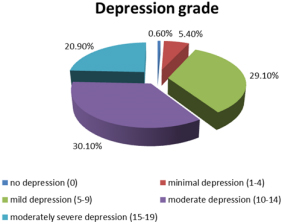
Within the healthcare field, transformational leadership is intensively explored. Unlike previous works that have revealed that leadership styles positively affect HCWs’ job satisfaction, this evaluation showed that transformational leadership negatively affects job satisfaction. This indicates that transformational leaders cannot instill corporate vision in terms of employee pleasure through their inspirational and motivating actions. However, it goes against the results of a previous study [30], which demonstrated a link between transformational leadership style and enhanced organizational perceptions and increased work satisfaction among healthcare professionals. Another study from Malaysia found that the happiness of the nurses was positively impacted by transformational leadership [31]. The beneficial impact of transformational style on employee satisfaction was also shown by research carried out in the Aseer Region of South Africa [5]. This study’s result could be due to the priority of a transformational healthcare leader, which aims to provide a sense of honesty and fairness that seeks the perfection of achieving the organization’s goal of providing high-quality care much more than creating a positive working environment or increasing staff satisfaction [32]. The prevalence of stress, anxiety, and depression among medical professionals during COVID-19 is shown in Fig. 6. Healthcare professionals are hence susceptible to experiencing psychological and mental health problems. The mental health of healthcare providers is thus seen as a key public health problem in this vital scenario. Doctors working in COVID-19 wards were found to have despair and anxiety in Indian research to assess their mental health [33]. It was discovered via subsequent research that medical personnel in India had acute, stress, depression, and severe anxiety, to give assistance when and where it is needed, it is crucial to identify the healthcare workers who are more prone to experience anxiety, depression, and stress during this pandemic [34].
Depression, anxiety, and stress among healthcare professionals.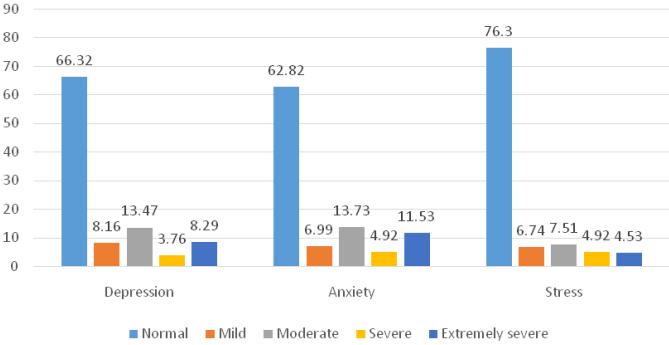
Transactional leadership was demonstrated to have a negative link with job satisfaction in this study [35], which is similar to the current study in that it noted that the happiness of nurse staff was only minimally related to that type of leadership. This means transactional leaders are further focused on accomplishing company objectives through incentives or penalties rather than on employee pleasure. Also, the transactional leadership definition illustrates how followers are rewarded when they go above and beyond to complete tasks [36]. Due to the COVID-19 scenario there at the time, the Saudi Arabian government imposed a curfew from March 23 to June 20, 2020 [37]. During that time, mosques, schools, and businesses were shuttered, and mobility was prohibited. The number of COVID-19 cases documented in Saudi Arabia as of this writing is around 49,176, which is fewer than the number reported in Western nations. Regardless of the severity of their illnesses, all COVID-19 patients were first hospitalized and received free care, including those who had broken the law regarding visas [38]. Medical experts were asked to choose the symptoms that were related to COVID-19 from a list of symptoms. The most frequently selected symptoms, as shown in Fig. 7, were cough or shortness of breath (98.1%) and fever (94.7%). The percentage of a runny nose was lower.
Saudi Arabian healthcare workers’ COVID-19 symptoms.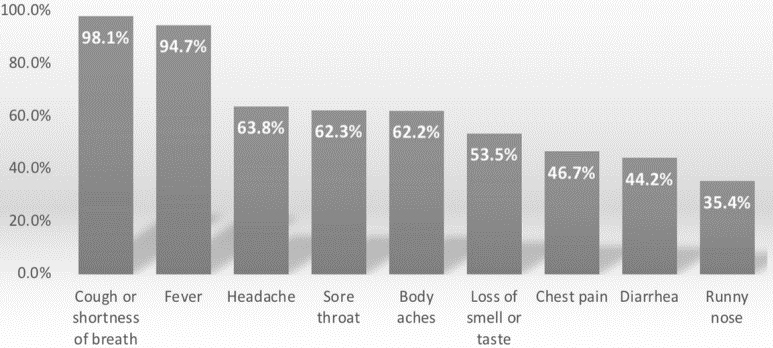
Furthermore, there was no connection found between lax leadership behavior and work happiness. This study was consistent with [2] study, which found a substantial inverse relationship between these leadership styles and staff members’ professional happiness. Laissez-faire leadership is when the leader does not employ leadership techniques, avoids making decisions about the job activities that fall under his supervision, and ignores other duties related to their position [21]. Surprisingly, it found that the participants in this study preferred leaders who were laissez-faire compared with transformational or transactional leaders. Leaders who operate on the laissez-faire model avoid taking accountability for their actions at all costs. They are typically unavailable when their employees want assistance, seldom supply their followers with their own opinions on critical issues, and rarely provide support or aid to their subordinates when they are required. Furthermore, laissez-faire leaders often avoid strong ties with their employees, and it is widely regarded as the best in a different form of leadership, in which leader makes no management efforts toward their people. Meanwhile, research by Alqahtani et al. found that low implementation of laissez-faire leadership (in the Aseer, SA) may give a point that this leadership style does not need significant managerial abilities and is only successful when employees are motivated and trained [5].
Rarely is research on the technical efficiency evaluation of public hospitals and the factors affecting efficiency carried out in Saudi Arabia. Not many studies give adequate evidence regarding public hospital efficacy in the Gulf area, according to a systematic review and meta-analysis. The review only included two KSA-based studies. The first, completed in 2017, evaluated the effectiveness of medical services provided at the district level in KSA in 2014. According to Fig. 8, efficient districts, which made up 45% of the districts, had technical efficiency scores ranging from 0.92 on average to 22. A second investigation of efficiency was conducted in 2013 using data from 20 public hospitals run by the commercial sector, and the results showed that 60% of the research sample did not meet the efficient score. According to the research, the majority of public hospitals (75.6%) were found to be technically inefficient, squandering one-fourth of all the medical resources used in the hospitals.
Responses from Saudi Arabian healthcare professionals on when to request a COVID-19 test.
Regarding job satisfaction, demographic characteristics, and job satisfaction were investigated. Numerous studies have indicated that socio-demographic factors do not significantly affect healthcare practitioners’ work satisfaction [39]. The percentage of HCWs who reported experiencing psychological discomfort was 40.2%. 11% of individuals reported subclinical psychological effects, while 37% of subjects assessed moderate psychological impacts. 22% of them displayed severe psychological discomfort, and 29 of them reported significant psychological suffering (Fig. 9). A score of
Level of psychological distress among HCWs.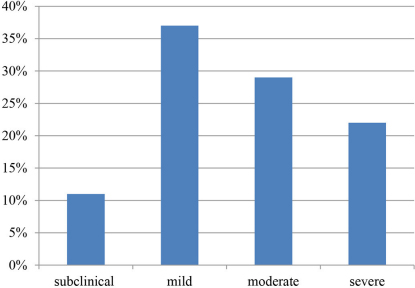
Similar to the current study, prior studies carried out at health facilities in Pakistan and Turkey discovered no appreciable relationship between socio-demographic traits and employee work satisfaction [40]. On the other hand, the current study discovered a considerable variance in job satisfaction depending on factors including age, gender, occupation, location, and length of employment with the company. The results of another study, which found that work satisfaction varied greatly depending on the staff specialty, are also congruent with those of the current study [5]. Additionally, people with a good monthly salary, more years after graduation, and more than five years of professional experience reported higher levels of job satisfaction. By contrast, there were no appreciable differences in job satisfaction scores according to gender, age group, nationality, marital status, or level of education.
In a related research, male German physicians outperformed their female counterparts in terms of job happiness, while male and physician HCWs reported greater levels of job satisfaction than female HCWs [41]. On the other hand, compared to doctors, chemists, and other professions, nurses were shown to have much lower work satisfaction. Personal protective equipment (PPE) was in short supply in Saudi Arabia, as it was everywhere else in the world. The Saudi Centre for Disease Prevention and Control offered advice on how to make use of the PPE that was currently available. The majority of patients at outpatient clinics are now seen remotely, and non-urgent appointments were also rescheduled. The medical workforce in Saudi Arabia is comprised of 36,717 physicians, 83,616 nurses, 3277 chemists, and more than 50,000 allied health workers, according to the Saudi Ministry of Health’s (SMOH) statistics yearbook for 2018. Furthermore, healthcare workers are on the front lines and close to COVID-19 patients. As a result, they are always at risk of getting sick. The main causes of disease transmission among medical workers include congestion, a lack of isolation, and other reasons.
This study found that leadership practices affected HCWs’ overall job satisfaction. To reduce the likelihood of HCW dissatisfaction and increase their sense of job satisfaction and belonging, it is advised that healthcare policymakers and management of medical institutions focus on aspects of employment incentives and the working environment. This will enable them to deliver high-quality care. Additionally, it is advised to create a special training program to teach new leaders the leadership styles, methods, and skills necessary to foster a productive workplace and deliver high-quality healthcare, as well as to create motivated employment opportunities to increase staff engagement and satisfaction [42]. Most Saudi Arabian healthcare professionals have shown adequate levels of broad knowledge about COVID-19, but they lack understanding of several critical elements that may stop the spread of the illness. Assessments of proficiency and challenging coursework are strongly advised. The sole alternative currently is to stop the progression of the illness. In addition, after evaluating the leaders’ performance through a standardized evaluation strategy, additional improvements and additions in healthcare and related services should be developed. However, the findings of this study suggest improvements in healthcare and its services based on the assessment of leaders’ performance through a standardized assessment plan [43]. Moreover, additional research is needed to investigate the elements that influence job satisfaction. The study shows that healthcare inefficiencies continue to be a major problem in KSA’s public hospitals. Improving hospital performance requires extensive resource utilization training and awareness-raising among key players in the health systems. Due to the dearth of information on hospital efficiency in Saudi Arabia and the greater Gulf area, further study is required to deepen our understanding of the subject.
Although this research offers significant contributions, it is critical to recognize its inherent constraints. The cross-sectional design impedes the establishment of causal relationships, while the sample size potentially limits the extent to which findings can be generalized. Possible biases may be introduced by relying on self-reported data, and a comprehensive comprehension may be limited due to the emphasis on specific leadership approaches.
Footnotes
Conflict of interest
None to report.