



Abstract
When deploying network nodes, there are many redundant nodes, low network coverage and high energy consumption of network nodes, the node deployment method of wireless sensor networks(WSN) based on mobile edge computing is studied. WSN nodes are divided into anchor nodes and unknown nodes. Taking the location information of anchor nodes as a reference, the specific location of unknown nodes is obtained by trilateral measurement. Minimizing the node distance error is taken as the objective function, and the cuckoo search algorithm is used to solve it to obtain the final location result of the node. The mobile edge computing method is used to design the node deployment method of WSN to complete the node deployment. Simulation results show that the number of redundant nodes in this method is 3, maximum network coverage is 89%, maximum energy consumption of network nodes is 34.3J.
Keywords
Introduction
Different from wired networks, WSN effectively improves the characteristics of traditional wired networks that are not flexible and scalable. With its advantages, WSN has played a significant role in various fields [10,14]. Although WSN is more flexible, it will inevitably be interfered by other factors in its application. If it is deployed in remote areas, areas with poor environment and high-risk areas, it will lead to the offset of the location of sensor nodes, resulting in problems such as high node energy consumption, network signal attenuation, cost increase and so on [1,9]. And make it adapt to various environments, it is necessary to design a new node deployment method of WSN to improve the performance of network applications [12].
Reference [11] proposes a node redeployment method based on firefly algorithm, takes WSN as the research object, uses k-means algorithm to cluster network nodes, and adds redundant nodes to nodes; Using firefly algorithm to mobilize redundant nodes and reduce the number of redundant nodes; Further, find the target node through the firefly algorithm, so as to realize the node redeployment. According to the comparative experimental results, the algorithm effectively reduces the complexity of node deployment, has the advantages of high node deployment efficiency and high operation efficiency, but there are many redundant nodes. Reference [7] proposed a network optimization node deployment algorithm based on genetic algorithm, analyzed the network node deployment environment, set it as a fixed-scale network, and deploy nodes within this range; At the same time, in order to maximize the space coverage and node connectivity, genetic algorithm is used to obtain the optimal solution to realize the optimal deployment of network nodes. The algorithm can improve the network life cycle, improve the network hole problem existing in traditional methods, and improve the node deployment effect, but it has the problem of low network coverage. Reference [15] proposed a node redeployment method for WSN based on leapfrog algorithm. Firstly, the WSN node is initialized, and then the leapfrog algorithm is used to process the initialization results, and the network range is obtained according to the processing results; The area is solved by calculus method, and the optimal solution of nodes is obtained according to the solution results to realize the optimal deployment of network nodes. This method has the advantages of good node connectivity, but it has the problem of low node coverage.
In the process of node deployment, the traditional method does not accurately locate the node location, and the node perception ability is low, which leads to many problems such as more redundant nodes and low network coverage. Aiming at the problems of too many redundant nodes and low node coverage in network node deployment, in order to optimize the effect of wireless sensor network nodes, this paper proposes node deployment method of wireless sensor networks based on mobile edge computing. The overall design scheme of this method is as follows:
WSN nodes are divided into anchor nodes and unknown nodes. Taking the location information of anchor nodes as a reference, the specific location of unknown nodes is preliminarily measured by trilateral measurement method. Minimizing the node distance error is taken as the objective function, and the cuckoo search algorithm is used to solve it to obtain the final location result of the node. According to the location results, the perceptual ability of nodes is optimized On this basis, the mobile edge computing party provides users with network initial services through initial decisions, adjusts the location of network nodes and completes node deployment, so as to avoid the impact of node load changes on network services and improve the effect of node deployment. Taking the number of redundant nodes, high network coverage and energy consumption of network nodes as experimental indicators, the application effects of different methods are tested.
Design of node deployment method in WSN
Node location based on trilateral measurement
In each link of WSN node deployment, in order to achieve the optimal deployment of nodes, we must first locate the nodes. At present, the commonly used node positioning methods can generally use the ranging method for positioning processing. At the same time, considering the environment of WSN, in practical application, the traditional node positioning methods are vulnerable to interference factors and have certain positioning errors [6,16].
The location of unknown nodes is determined by trilateral measurement method. The principle of this method is shown in Fig. 1.
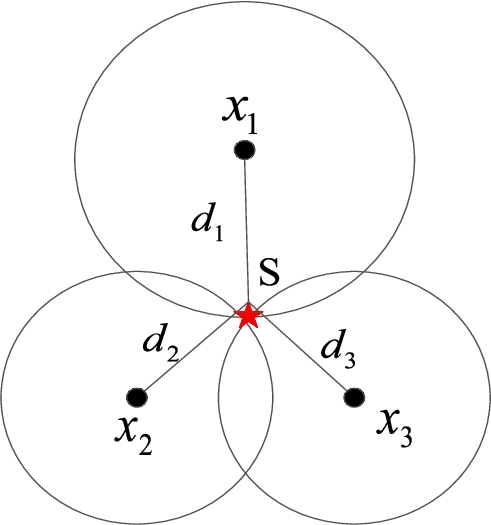
Schematic diagram.
In Fig. 1, S is an unknown node,
Assuming that the coordinates of S are
In the formula,
Due to the uncertainty of the environment and the influence of redundant nodes, when the error is large, the traditional method can not achieve good constraint effect. Therefore, the distance error is minimized as the objective function to optimize the node location results.
If the actual distance between two nodes is
Among them, the expression of ranging error
The node positioning objective function is designed as follows:
For the objective function given by formula (5), take formula (3) as the constraint condition, and solve the feasible solution space of formula (5) under its constraint, represented by W, and obtain the optimal solution in this space. At this time, cuckoo algorithm is used to solve it. Cuckoo algorithm is a minimization algorithm based on global error function. The algorithm can effectively reduce the feasible solution space, and the calculation steps are simple, which can reduce the amount of calculation to the greatest extent.
Using this algorithm to solve the objective function,
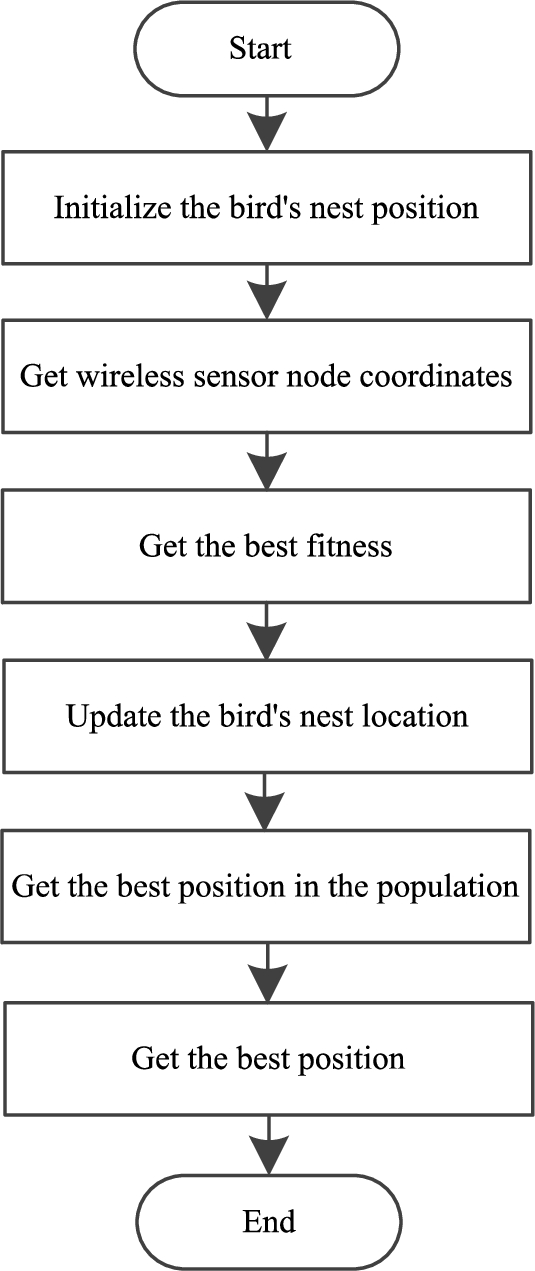
WSN node positioning flow chart.
Through the above steps, the WSN nodes are obtained, which provides the basis for node deployment.
There are differences in the perception ability of different nodes to the target object in wireless sensor, which is related to the physical characteristics, distance and relative position of nodes, which leads to different perception ability of different nodes to the same target. Therefore, in order to obtain a node deployment scheme suitable for WSN, it is necessary to optimize the perception ability of nodes. This paper achieves this goal by establishing the node model of WSN [3].
Through quintuple (
Set a monitoring area
When the condition given by formula (6) is satisfied, it indicates that the target is within the sensing range of node
Where,
Although the probability that the target is perceived by the node can be obtained through the above steps, due to the influence of many factors, such as distance, environment, weather and so on, the perception range of the node is usually smaller than the actual range of the target, which brings uncertainty to the perception of the node. To solve this problem, this paper will use the mobile edge computing method to design the node deployment method of WSN in order to improve the effect of node deployment.
Node deployment based on mobile edge computing
Based on the localization results of WSN nodes, combined with the node perception results, the mobile edge computing method is used to design the deployment scheme of WSN nodes. Mobile edge computing [2,18] can provide IT service environment and cloud computing capability for the edge of mobile network. The application of this method to the deployment of wireless sensor network nodes can reduce the number of redundant nodes and improve the efficiency and effect of wireless sensor network node deployment.
Mobile edge computing method can integrate Internet technology with WSN and improve the application effect of WSN. On this basis, mobile edge computing method is adopted to reduce the monitoring pressure of nodes and improve the monitoring quality [8,17]. Figure 3 shows the working principle of moving edge calculation method.
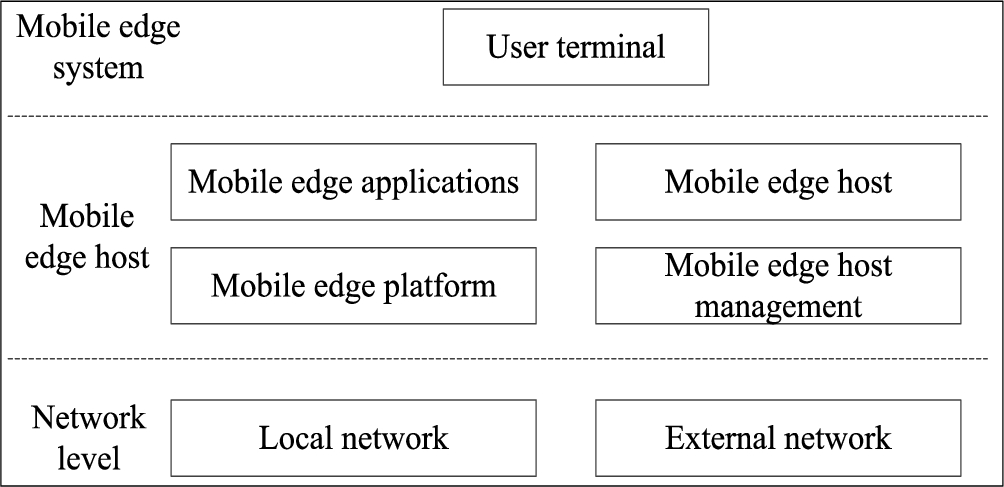
Working principle of moving edge calculation method.
According to Fig. 3, the mobile edge computing method first provides users with initial network services through initial decision-making, and then adjusts the location of network nodes to avoid the impact of node load changes on network services. The mobile edge computing method can effectively suppress the negative impact of network load and improve the node deployment effect. According to this theory, the node
Taking
In the formula,
According to formula (8), the force is directed from node
In the formula,
Substitute formula (9) and formula (10) into formula (8) to obtain the WSN node deployment model:
In the formula,
Experimental scheme
Set up the WSN using MATLAB simulation software platform as shown in Fig. 4.
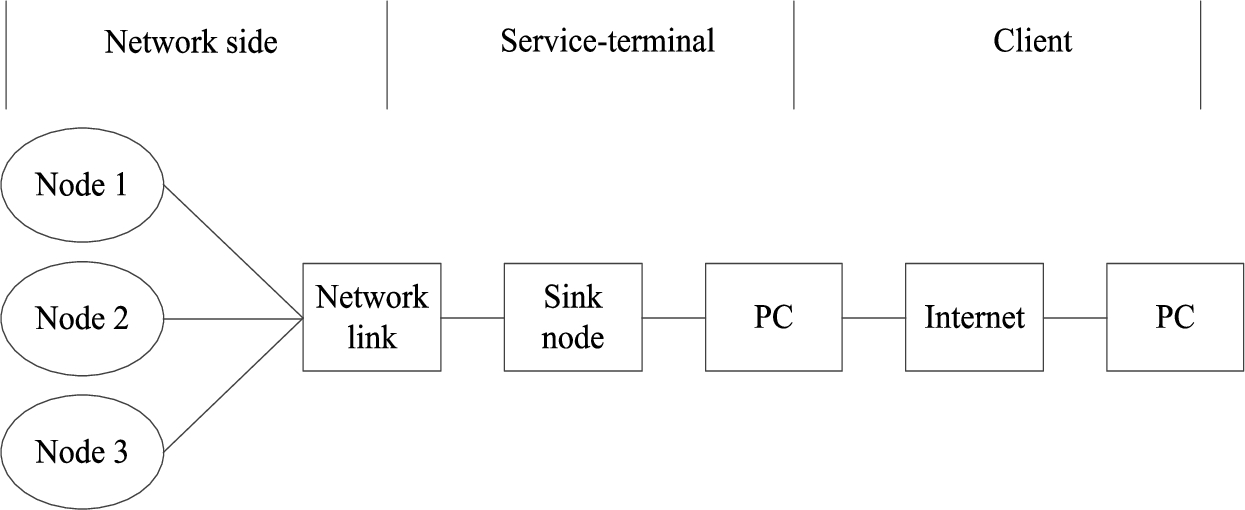
Structure of WSN.
Set the sampling period to 3 months, collect all the operation data of wireless sensor networks, integrate and de reprocess the data, and take the processed data as the experimental sample data. Take part of the data as test data and part as experimental data. Input the test data to the simulation platform, obtain the optimal operation parameters of MATLAB simulation software platform after many experiments, and take them as the initial simulation parameters, so as to improve the accuracy of simulation experiments.
The method of this paper, reference [11] method and reference [7] method are used to deploy the nodes of the network respectively. In order to verify the deployment effect of WSN nodes, the number of redundant nodes is taken as the evaluation index. The smaller the number of redundant nodes, the better the node deployment effect. The higher the network coverage, the better the node deployment effect; The lower the energy consumption of network nodes, the better the deployment effect of nodes.
Number of redundant nodes
The comparison results of the number of redundant nodes are shown in Fig. 5.
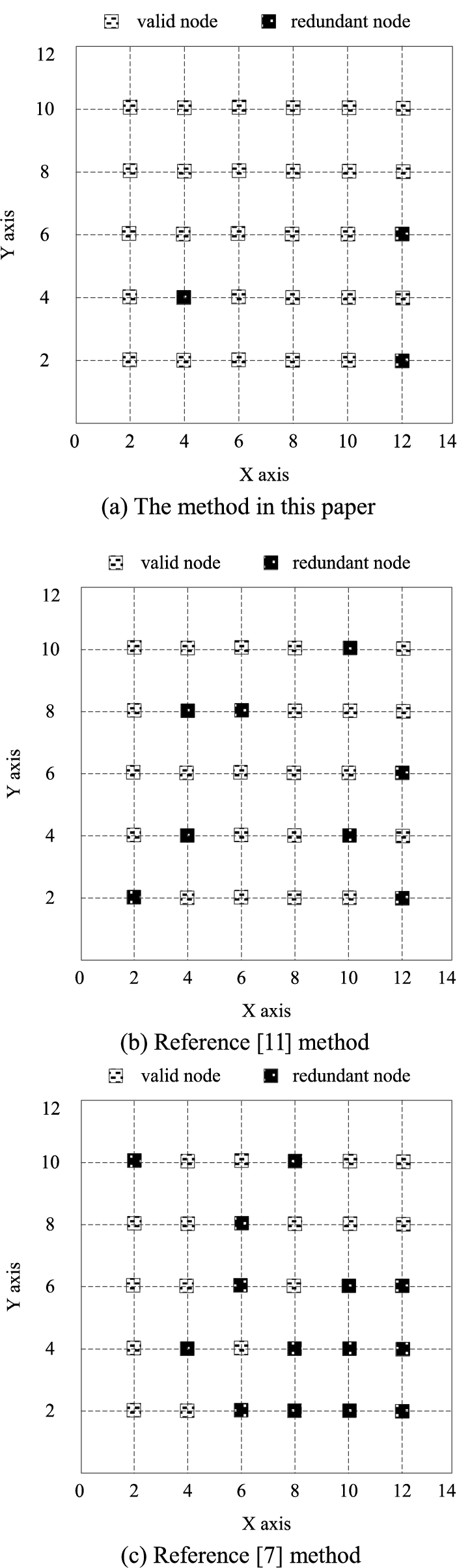
Comparison of the number of redundant nodes.
According to the experimental results in Fig. 5, the number of redundant nodes in this method is 3, the number of redundant nodes in reference [11] method is 8, and the number of redundant nodes in reference [7] method is 14. Through the comparison, the number of redundant nodes generated when using this method to deploy wireless network nodes is small, which indicates that the node efficiency is high.
The comparison results of the network coverage are shown in Fig. 6.
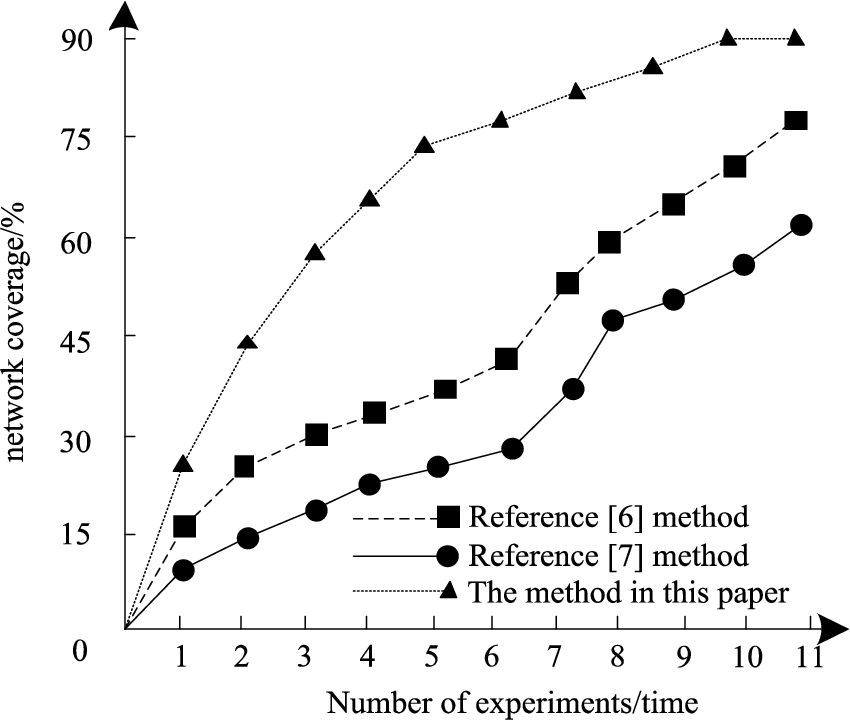
Network coverage comparison results.
According to the experimental results in Fig. 6, when the number of experiments is 5, the network coverage of reference [11] method is 38%, reference [7] method is 27%, and method in this paper is 74%; When the number of experiments is 10, the network coverage of reference [11] method is 71%, reference [7] method is 52%, and method in this pape is 89%. The network coverage of reference [11] method is up to 75%, the network coverage of reference [7] method is up to 60%, and the maximum coverage of this method is up to 89%. The WSN coverage of this method is high, indicating that the wireless sensor network node deployment effect of this method is good. It can be seen that the WSN coverage of this method is high, which shows that the WSN node deployment effect of this method is good.
Set the initial energy of the node as 0.1J. The comparison results of network node energy consumption are shown in Table 1.
Comparison results of energy consumption of network nodes
Comparison results of energy consumption of network nodes
Through comparison, the maximum energy consumption of network nodes in this method is 34.3J, the reference [11] method is 60.3J, and the reference [7] method is 55.2J. It shows that compared with the experimental comparison method, method in this paper is the lowest, which shows that after the network node is deployed by this method, the energy consumed by the node in the communication transmission process is lower, which shows that the node deployment effect is better.
A node deployment method of WSN based on mobile edge computing is designed. Mainly by dividing the WSN node types, setting the node positioning objective function, and solving the objective function through the cuckoo search algorithm to obtain the network node positioning results. Build a WSN node model, use the model to optimize the perception ability of nodes, and use the mobile edge computing method to realize the deployment of WSN nodes. The number of redundant nodes in this method is 3, the maximum network coverage is 89%, and the maximum energy consumption of network nodes is 34.3J. It shows that this method has high network coverage and low energy consumption of network nodes, which shows that it can improve the performance of wireless sensor networks and can be widely used in wireless sensor networks.