



Abstract
To ensure the continuous supply of power in remote areas utilizing renewable energy resources is significant. Hence, in this research, an effective energy management method for a small-scale hybrid wind-solar-battery-Ultra-capacitor-based microgrid is proposed. Hybrid Energy Storage System (HESS) has been presented in conjunction with wind and solar energy conversion technologies characterized by coupling of power electronic converters, neural networks, optimization, battery, controllers, and ultra-capacitor storage systems to attain the intended performance. The power balance is regulated via an energy management system by considering the fluctuation in load demand and renewable energy power generation. Further, the voltage controller utilizes the deep Siamese neural network (deep SNN) that effectively carries out energy management among the hybrid renewable energy sources. The smelling-based hunting optimization assists in optimal parameter tuning and training of the deep SNN for enhancing the HESS’s efficiency. In addition, the microgrid operates independently and offers a testing area for different energy management systems and testing scenarios. The proposed small-scale microgrid, which is based on renewable energy, can serve as a significant testing area for methods utilized in smart grid applications. The proposed SBHO model’s efficiency is determined by varying the voltage, current, and power of the wind, solar, battery, and ultra-capacitor measurements. The current capacity of the battery reaches −11.06A and the battery voltage reaches 259.831 V in 0.82 s. The DC load measurement utilizing the SBHO approach obtained a DC bus voltage of 357.11V, a load current of 3.348 A within 0.82 s, and in DC power load attained the 1195.58 W within 0.82 s. The battery’s SOC by applying the smelling-based hunting optimization is gradually increased to 50.008% in 0.82s.In terms of the PV measurement, the PV current, PV voltage, and PV power are obtained as 4.238A,241.08V, and 1021.64W for the SBHO approach which surpasses other competent techniques. The ultra-capacitor current ranges from 35A to 40A with reduced heavy discharge of SOC from 98% obtained on evaluating the performance. The output power of wind using a boost convert remains 3000 W with few harmonics.
Introduction
With the rapid and intensive development of human activities and industrialization, the world has seen a surge in environmental pollution and the depletion of traditional energy resources has emerged the need for efficient and eco-friendly energy resources throughout the whole world in the last few decades [1,26]. The energy consumption revolution is currently being carried out to promote future sustainable societal development to eliminate these detrimental impacts. Renewable energy (REs) in this content, such as renewable energy sources such as solar, wind, hydro, biomass, and tidal have gained increased interest from the academic and business communities [15,18]. Since conventional energy sources, such as fossil fuels, are the main cause of global warming, renewable energy has received a lot of attention. In addition, renewable energy has the advantage of being able to be generated in an eco-friendly manner, like solar and wind power. Electric vehicles (EVs) and smart home energy systems require storage components like batteries and supercapacitors (SC). Such applications primarily depend on electric energy storage devices, so developing an efficient strategy for regulating the battery, SC energy management, and State of charge (SOC) control is essential [7,9,13]. Because of the hybrid renewable sources supplied by the microgrid, there is less power fluctuation, better power quality, energy, and lower imbalance in Electrical Energy Storage Systems (EESSs). Appropriate EESSs may offer a vital strategy to get over the RESs generations’ uncertainty and erratic nature [23].
In addition, a unique system of energy storage that can rely on the mountain is the gravity energy storage system (GESS), which is advantageous in hilly environments. GESS takes advantage of the mountain’s summit to store energy. Nonetheless, the GESS approach just takes into account the solar and wind power generation on a specific day, without taking the location into account [8]. Further, the cascade hydropower systems are excellent options for addressing the frequency issue brought on by variations in solar and wind power since they offer regulation reserve for the hybrid power system due to their superior performance in regulation. Since cascade hydropower provides both spinning reserve and regulatory reserve, the question of how to best coordinate their design remains challenging and requires investigation on wind-solar-hydro hybrid generation. In addition, research should be done on hybrid generating systems scheduling models with various time scales to lessen the more noticeable prediction errors [27].To keep the microgrid’s power balance stable, an energy management system is suggested that offers flexible and adjustable control for various situations involving variations in load demand and renewable energy source variability [6,16]. However, the load is maintained constant so that the battery storage system and renewable energy conversion systems may be observed for variations in the power produced by renewable energy sources, which will be challenging to monitor if the load fluctuates all the time [13]. In [12], a synchronous compensator is suggested as a reactive power source, with the wind turbine generator only required to generate active power. This compensator is costly and adds another layer of control complexity. With verified performance and efficiency, the authors of [28] suggested that micro-grid-based hybrid power sources consist of a fuel cell (FC) and an electrolyzer connected to a battery bank energy storage system (BBESS). However, the three-level inverter is an essential component utilized for optimal efficiency and power optimization/stability since it produces output voltages with extremely low distortion and fewer dv/dt stresses [17,23].
Moreover, standalone ESS, which is the majority of conventional microgrid energy storage technologies, has several drawbacks, including a limited capacity for energy storage, a rapid regulation time, and long-term demand and supply mismatches [31]. The photovoltaic (PV) and wind turbine subsystems are combined in the wind-solar hybrid power system (WSHPS) to boost efficiency, minimize the amount of energy storage needed, and enhance the power supply stability [2]. The WSHPS is more advantageous than using a single PV or wind turbine system in a weak utility because it can correct the undesirable intermittent changes with a particular renewable energy source [22]. To achieve a consistent, demand-driven power output profile, various energy storage methods are chosen. The DEG is occasionally used as backup power. Batteries, including single batteries and hybrid batteries, are the most often utilized kind of energy storage [30]. In addition to significantly enhancing the size of solar and wind energy generation to be consumed, establishing a specific capacity of ESS in a hybrid renewable transmission system can also increase its dependability and economic viability [3,19,20]. Moreover, the dependability and economy of the hybrid renewable transmission system are impacted by its capacity [8]. Despite having good optimization effects, intelligent metaheuristic algorithms have drawbacks, including the inability to efficiently discover the optimal solution and the tendency to fall into local optimal solutions [31].
Nevertheless, stochastic programming takes a longer time and requires more space because it does multiple calculations related to different scenarios to define and formulate the expected results and it results in prolonged time and space along with requiring a bigger processing unit [21]. Additionally, a method for coordinating power flows across segments was created, providing strong system management and optimizing the use of wind power. Nevertheless, the effect of wind energy’s intermittent nature and RER on the stress level of the battery was overlooked, which reduced the battery life [24]. High levels of variable renewable sources’ deep penetration into the utility encounter many difficulties, including the control of voltage as well as the frequency, the imbalance among generated energy and load demands, economical grid operation, and the development of producing units. As a result, grid operators must take extra steps to preserve the potential of a system [22]. Since neutral resources are complimentary in time and space, the system is more susceptible to large power swings if it experiences a prolonged period of low wind or low light energy [16]. This creates additional hurdles for the system’s safe operation.
The demand to produce energy from renewable sources is growing as a result of climate change, nuclear disasters, energy loss, and maximizing energy prices. Smart grid systems, smart communities, and smart institutions are all gaining popularity. Since the majority of these smart grid technologies rely on hybrid power sources, managing energy can be difficult. Therefore, it is essential to design a sophisticated energy management controller. A large-scale system for integrating renewable energy lowers the idle time and manages frequency. Allowing enough frequency sources to maintain bandwidth stability is the most difficult task. Thus, in this research, an ideal control strategy for the development of dynamic stability of microgrid-integrated HESS to address the aforementioned issues is developed. Further, the Smelling-based hunting optimization for battery–Super/Ultracapacitor hybrid energy storage is developed in which the voltage controller is regulated with the deep SNN. Additionally, the smelling-based hunting optimization strategy optimally tunes the parameters of the deep SNN to enhance the efficiency of the energy storage. The following are the main contributions of the optimal control scheme:
The optimal hybrid renewable source system with the configuration of solar, wind, battery, and ultra-capacitor battery systems is proposed. The renewable energy output with peak load requirements utilized for battery power storage is maintained. Connecting the super-capacitor with the battery provides the merits of high energy density, power density, and stability to the system.
Siamese neural network incorporated in the voltage regulator assesses the similarities in the voltage profile comprising features such as PV generations, charging station loads, active loads, and reactive loads, and classifies the data by determining the distance between the feature vectors. Further, the smelling-based hunting optimization assists the optimal tuning of deep SNN to minimize the error and provides robust classification.
The smelling-based hunting optimization strategy is utilized for integrated hybrid renewable energy systems, in which the standard hybrid characteristics of the Selachii and skink are utilized for enhancing the efficiency of voltage controllers. The functioning velocity is low for selachii which is overcome by integrating the hunting strategies of skink with selachii that accelerates the velocity, minimizes the time requirement with high convergence, and improves the efficiency of voltage controllers by the deep SNN technique.
Following is the organization for the remaining sections of the manuscript: Section 2 comprises the literature review and challenges. Section 3 describes the proposed hybrid energy storage system with the optimization technique. Section 4 illustrates the experimental results, and finally, Section 5 portrays the conclusion.
Literature review
The investigation of the various existing methods is briefly deliberated here it deals with the methodology, advantages, and disadvantages are also provided in this section. A standalone PV/wind turbine/adiabatic intermittent renewable storage-based hybrid system for remote portable base stations was presented by Pan Zhao et al. [30]. A useful option for developing broadband connectivity is the suggested HESS for remote portable base stations powered by renewables, which are rather naturally available resources in these places. With the rising lower storage pressure, the probability of a power outage first dropped and then climbed. An effective energy storage approach that combines wind, sun, and gravity energy storage was introduced by Hui Hou et al. [8] and a model for the ideal capacity combination to maximize the on-grid wind, PV, and hybrid power storage system’s capacity is also developed. In the meantime, the mountain-based GESS has a unique improvement in hilly regions and might be encouraged in the utilization of renewable energy. An effective energy management approach for a small-scale hybrid power system microgrid was presented by TP. Satish Kumar et al. [13]. However, the energy storage system affected the power balance to account for fluctuations in peak load and renewable power generation. For research on hybrid renewable power microgrid systems, diverse case studies and control algorithms are needed. For a wind-solar-hydro hybrid system of power generation with cascade hydropower, Jun Xie et al. [27] designed a short-term optimal scheduling technique, where hydroelectric power delivers backup power and regulation recharge, to save resources while assuring the system’s safe and secure operation. The provided scheduling model does not take into account the banned operation zones (POZs) of hydropower units, which needs to be addressed soon. Using pumped hydro storage-thermal energy storage (PHS-TES) double energy storages, Su Guo et al. [6] built a solar-wind-hybrid energy system and investigated the best-coordinated undertaking approach and multi-objective scaling. Depending on the sequence of events analysis, the temporary fluctuations of solar energy and wind speed are taken into account, and multi-objective robust size optimization is examined to increase the suggested system’s reliability. A hydrogen energy storage-based all-weather power generation system was used by Zheng Li et al. [16] for an island DC microgrid. Utilizing a quasi-proportional resonance (QPR), a systematic analysis of a large-scale wind-solar hybrid system was designed. The effect of severe storms on the hybrid power generation system’s effectiveness in producing electricity and hydrogen is not taken into account in the research. To maximize the financial opportunities and environmental responsibility of microgrids, Xianjing Zhong et al. [31] developed a capacity optimization distribution approach depending on the augmented constraint method for a grid-connected wind, photovoltaic, and fuel microgrid system with hybrid energy storage. The approach for allocating microgrid resource optimization that is described in the work has good efficacy and can easily generate the microgrid’s desired economic and low-carbon design. The ideal microgrid storage setup must be determined by combining device enhancement models. To accomplish the most efficient production schedules of the distributed energy resources with the ideal BESS capacity and rated power, Abdul Rauf et al. [21] developed an optimum size of a BESS utilizing the ambiguity-based modeling approach of distributional robust optimization with a sequential selection method for grid-connected distributed energy resources along with ambiguous wind as well as the solar PV farm. Here, the lack of a complicated system makes it more difficult to comprehend the model, and it is necessary to broaden the various energy storage technologies to assess their cost-effectiveness.
Younes Sahri et al. [23] contributed to designing a microgrid-integrated wind power system utilizing the fuzzy control and coupled Direct Reactive Power Control (DRPC) approaches to raise the voltages and current supplied to the grid. Further, the approach prevented the batteries depletion, overcharging, and eliminated the fluctuations caused by changes in wind speed, and met load profile requirements. Mohamed S. Soliman et al. [25] developed a smart DC-microgrid energy management controller that utilized the high order sliding mode (HSMC) with fuzzy controller. In addition, intelligent control was adopted to regulate source-side converters (SSCs) that captured the maximum energy from renewable energy sources as well as enhanced the quality of power in the microgrid. The method offered the merits of cost-effectiveness, feasibility, and prioritized renewable energy sources. However, the method required the load to be kept constant to monitor the energy conversion systems and the battery storage system for power fluctuations, which remains a complex problem.
Prashant Singh and Jagdeep Singh [24] designed a power management strategy for power-sharing between SC energy storage systems and battery that eliminated the problems associated with demand-generation difference and DC bus voltage regulation. The PI controller compensation regulated the HESSs to enhance the voltage regulation with minimal battery stress levels in terms of voltage overshoot, settling time, and enhanced the life span of the battery.
Most of the above energy management systems were found with the challenges of power balance issues, longer execution time, increased battery charging time as well as low convergence rate [8,13,18]. However, the proposed HESS overcame the above limitations by integrating the smelling-based hunting optimization that accelerated the velocity, reduced the time requirement with high convergence as well as boosted the efficiency of voltage controllers with the optimized deep SNN technique. Table 1 depicts the overall analysis of the existing approaches for energy storage management.
Overall analysis of the existing energy storage systems.
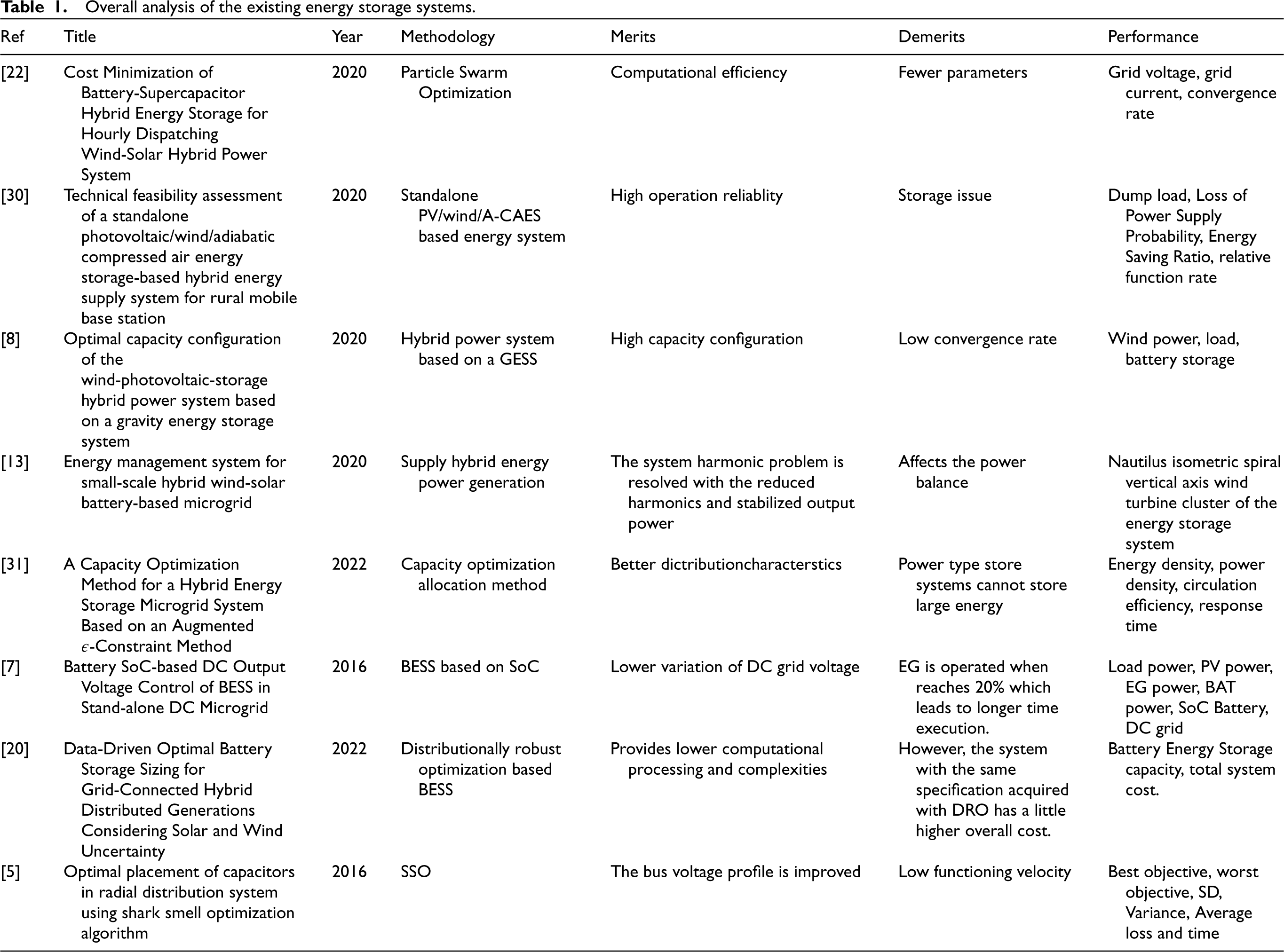
Overall analysis of the existing energy storage systems.
The large absorption of fluctuating sustainable energy into the utility is currently troubled by several difficulties, including voltage and frequency control, the imbalance in generated energy and load demand, grid operation efficiency, and the sequencing of power generation. As a result, grid operators must take extra steps to preserve system stability [19].
Even though solar and wind are relevant in most situations, the distributed nature of these two sources makes it difficult for them to work together to generate reliable electricity. To level out variations, the energy storage device is a necessary component of a wind/solar hybrid system [30].
It is challenging to use alternative sources, in addition, the tendency to forsake solar and wind energy occasionally occurs. One of the key approaches for the widespread use of renewable sources is energy storage technology. The current energy storage solutions, such as BESS and compressed air energy storage systems (CAES), are constrained by scheduling and construction complexity [16].
To monitor the efficient functioning of the wind and solar power conversion systems, as well as the battery storage system for different variants in the generated power from renewable resources, this might be challenging to track if the load is changing rapidly [31]. The load is assumed constant, which would be impossible to occur in the real application.
Although all the available energy sources are applied in time and space if the system is subjected to prolonged periods of inadequate wind or light energy, hydrogen energy alone is vulnerable to extreme voltage fluctuations, which poses larger risks to the system’s safe operation [4].
The energy source from wind and solar energy cannot be obtained at all times so, an efficient energy storage system is needed therefore the supercapacitors are connected either in series or in parallel form with a battery that stores the energy quickly and stores the excess power. The fluctuation of sustainable energy has to maintain voltage and frequency control in the DC-DC controller and is regulated using a voltage controller that can be optimized by deep SNN using a smelling-based hunting optimization strategy.
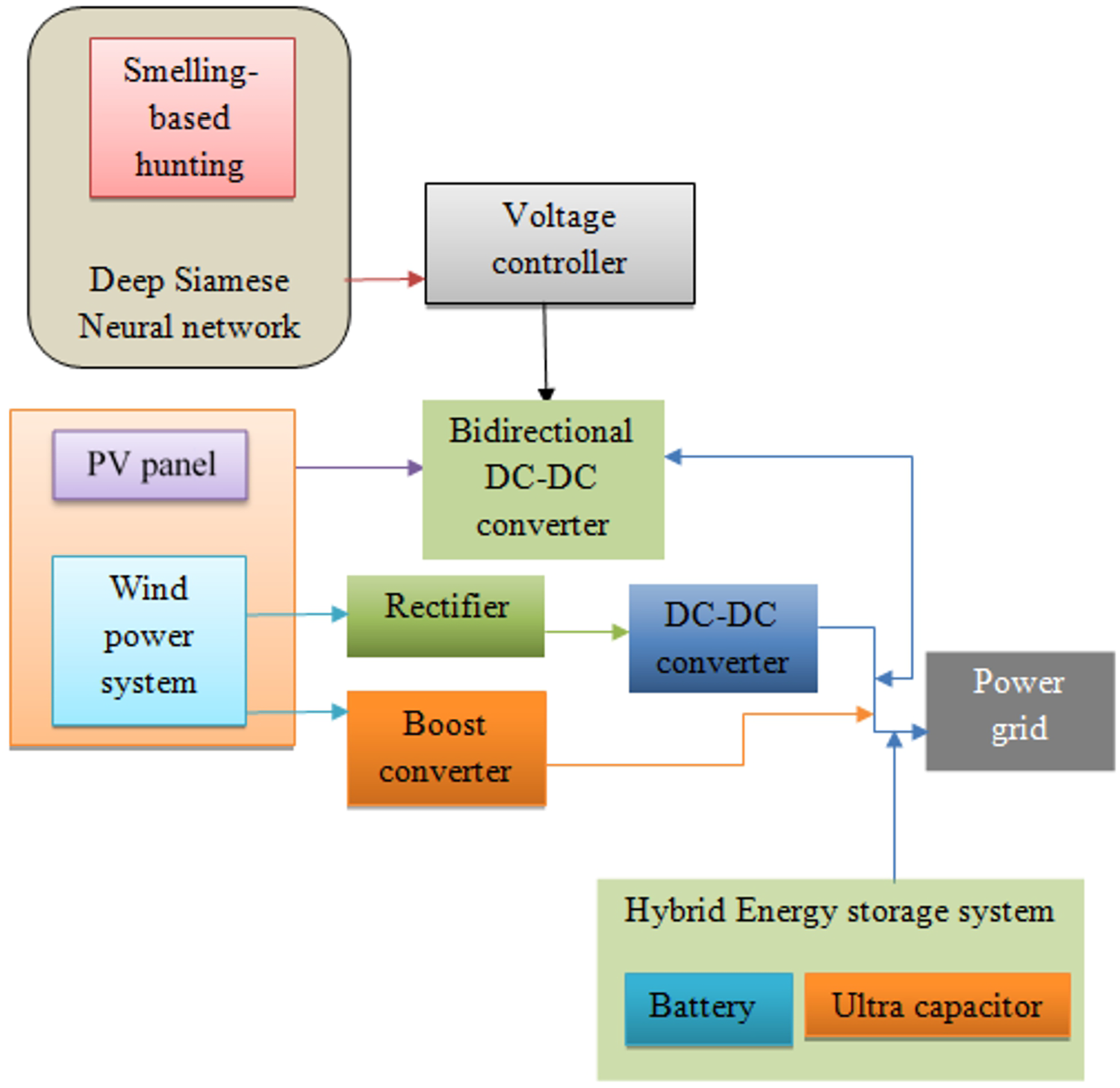
Block diagram representation for hybrid energy storage system.
Most of the microgrids utilizing renewable energy sources are facing issues due to concerns such as intermittent nature, low power quality, instability, frequency management, and unbalanced load. Hence, the HESSs are developed that offer numerous advantages, such as raising overall system performance, cutting system costs, and extending the system’s lifespan. Further, the HESS design process is very intricate, and the design process varies based on the supplementary services and is heavily reliant on the operator target. In addition, HESS design for system stabilization and power quality improvement is not fully addressed. Hence the research proposes an HESS utilizing the voltage regulator facilitated via the deep learning framework considering different factors associated with the energy storage in microgrid. In Figure 1, the HESS for microgrid applications is revealed, in which solar PV panels and wind generators are the utilized renewable energy. The output of the PV panel is direct current (DC), which is transmitted to the power grid by converting the output to DC using a bidirectional DC-DC converter. The bidirectional DC-DC converter is regulated by the voltage controller, which is optimized by deep SNN using a smelling-based hunting optimization strategy. In addition, the voltage profile depends not only on load demand and variable renewable power generation but also on the physical characteristics of the system’s components. However, the deep SNN captures the complex and dynamic nonlinear characteristics of the energy storage system. The output of the wind power system is alternating current (AC), which is converted to DC before being fed into the power grid using the DC-DC converter. The wind power system output is also supplied to the boost converter, in which the power is maximized. The battery as well as the ultra-capacitor are considered as the major component in the ESS, which is used as the backup source during the shortage of renewable energy supply to the power grid. Further, the developed HESS supplies the peak and transient power and fulfills the long-term energy demand.
PV panel modelling
The output power of a PV panel is unknown when climatic conditions have a significant impact on it; in particular, unpredictable environmental impacts will necessarily result in a continuous variation in the output power of PV arrays [32]. The PV power generation process is influenced by several variables, many of which have complex interactions, including solar irradiance, shading, humidity, and module efficiency. However, radiation from the sun, temperature, and module efficiency are the three main crucial variables. Suppose the PV array’s output voltage is V at a specific moment, at which point the current I is,



The mathematical expression for a PV panel under the constraints of randomized radiation intensity 




The presence or absence of partial shading generally has a significant impact on radiation from the sun. The circumstances under which the ground receives solar radiation are more complicated in partial shading [32]. Using a quadratic curve function related to the cloud cover, the solar radiation is adjusted for overcast conditions.



One of the most crucial elements that affect the production of wind power is wind speed. Because wind speed is easily influenced by numerous factors, including climate and weather conditions, it changes over time and contributes to the unpredictability of wind energy production. To address this issue, a probability distribution function is utilized to explain how the wind speed changes over a month or a year. The properties of the distribution of wind speed are described by a variety of probability distribution functions [32]. Here, the two-parameter Weibull distribution is used, and its probability density function is formulated as,





If the battery-rated charging current 

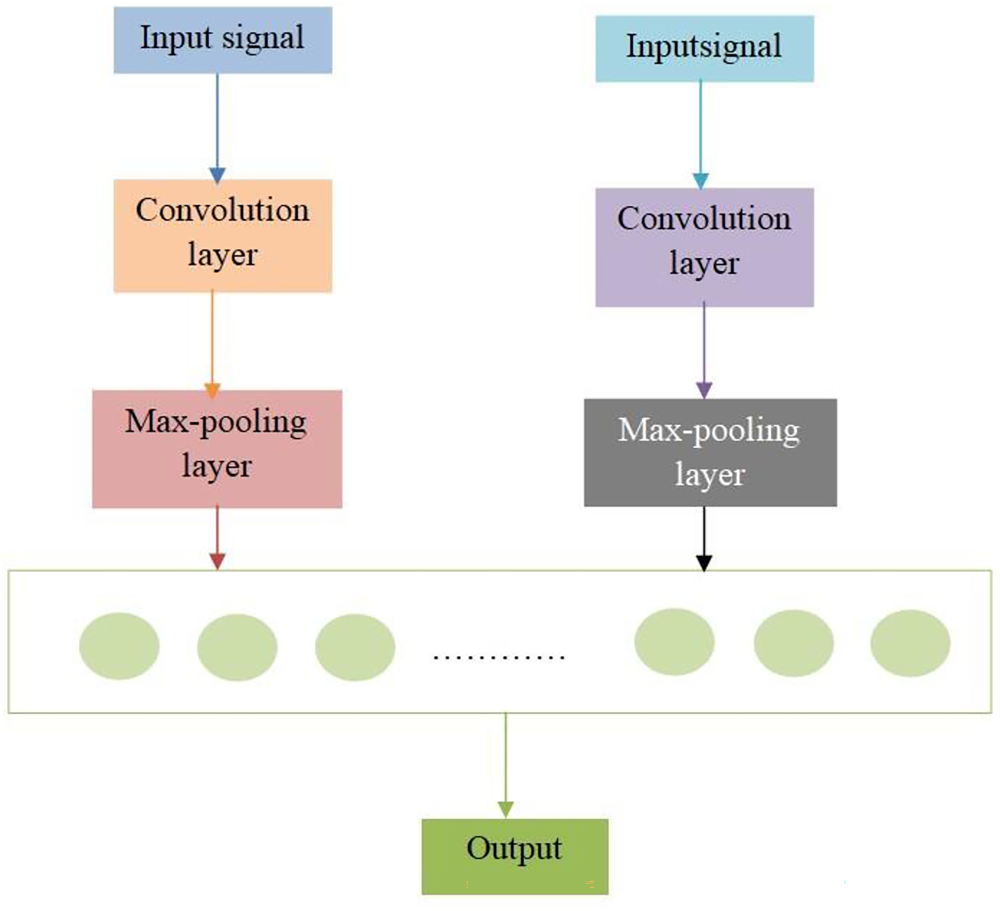
Architecture of deep Siamese neural network.
The use of ultra-capacitors (UC) must typically be increased through series or parallel connections for the reason that a single UC can only hold a finite amount of energy and cannot withstand extremely high voltage [32]. The equivalent capacitance of UC groups occurs when UCs are coupled in series and parallel to a group.

In the group of UC, the minimum and maximum voltages are denoted as 



A Y-shaped network with two branches connected to create a single output is known as a Siamese network, which is revealed in Figure 2. A Siamese network can be viewed as a basis function that assesses the similarities between two inputs, regardless of the structure of the branches. The features comprising the PV generations, charging station loads, reactive loads, and active loads form the input to the Siamese network. The variables such as 
The assembles of nonlinearity, convolutional, max-pooling, and batch normalization layers make up the subnetworks of the general Siamese architecture. The batch normalization as well as the non-linearity revolution layers are placed after every convolutional layer, in which the max-pooling layers facilitate the identification of the maximum possible values. Five convolutional layers serve as the core layers for each subnetwork in the deep SNN, and all possible values trained by the subnet are then closely joined together and fed to the process of classification in the fully connected layers. By convoluting its input with a group of convolutional kernels, which creates a feature map. The generation of a feature map utilizing the convolution layers is expressed as,


Pairs of subsequent layers that have complete connectivity between their units are considered fully connected layers. The output from every subnetwork is concatenated and fed into the first layer that is fully connected. A Softmax activation function is introduced after the final completely connected layer, and its output can be understood as the likelihood that a key variable would be used to manage renewable energy in the storage system.
Further, the parameters such as weight and bias involved in the deep Siamese neural network are optimally tuned and trained by the smelling-based hunting optimization strategy for the effi cient energy storage system in the network.
The proposed approach is dependent on enhancing the performance of deep SNN based on the behavior of Selachii [5] and Skink [4], which is utilized to determine the suitable deep SNN parameters. Initially, by the utilization of the smelling sense of Selachii, random solutions are generated concerning their respective location. In addition, in the smelling-based hunting optimization, the forward, as well as the rotating movements, are also based on the Selachii behavior. In the optimization process, the exploration process begins whenever the Selachiimakes the sense of smell of an odorsubstance and every solution signifies an odorsubstance unlimited by prey which is a probable location of Selachii. The ultimate option is demonstrated by the source of prey, in which the quality of the solution is indicated by the intensity of the local odor. Selachii detects blood odor in the water and moves in the direction with high odor intensity and, subsequently, to the best solution as they approach their victim. In addition to the Selachii’s forward as well as the rotational movement, and velocity, the hunting coordination is integrated, which avoids local optima convergence, and handles the complex problems easily, the gradient-free solutions are provided by the proposed optimization. The optimal energy management problem along with the deep SNN can be solved using the smelling-based hunting optimization in this manner. The application of the Smelling-based hunting optimization accelerated the convergence speed, minimized the errors, and maintained the power balance in response to changes in renewable energy power generation and load demand.
Inspiration
A metaheuristic algorithm named “smelling-based hunting optimization” takes its lead from the outstanding hunting strategies of Selachii, which can detect the odor of their prey even from great distances. Selachii detects the smell of blood and goes toward the prey when the prey is offended and blood is spread into the water. Selachii primarily migrates in the direction of their prey depending on water particles’ absorption and slope of blood odor. The movement is valid if the awareness rises as the Selachii moves. The smelling-based optimization algorithm makes use of this behavior of Selachii and makes the subsequent way of behaving while modeling the movement of Selachii. The prey is initially hurt and bleeds into the sea, which serves as the search area. Therefore, the prey’s mobility is modest and unimportant compared to the Selachii’s movement. As a result, it is roughly believed that the source (prey) is fixed. Second, the sea is frequently infused with blood, and the impact of water movement on odor particle distortion is disregarded. Third, the Selachii’s search habitat only contains one blood source or one damaged prey.
Mathematical modeling of smelling-based hunting optimization The three significant phases involved in the smelling-based hunting optimization are the initialization of random solutions, forward movement of Selachii, rotating movements of Selachii, and position update.
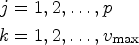
Inside the possible solution space, a population of starting solutions is produced randomly. Each approach symbolizes a single odor particle, which corresponds to a selected location for the Selachii [5]. The following gives the vector’s initial solution:

The position of each Selachii in the exploration space is denoted as 
Selachii at every individual position travels with a speed of “V” against robust odor substances, which makes an effort to approach their prey [5]. As a consequence, the preliminary velocity vector has the following form as regards the initial position vector:




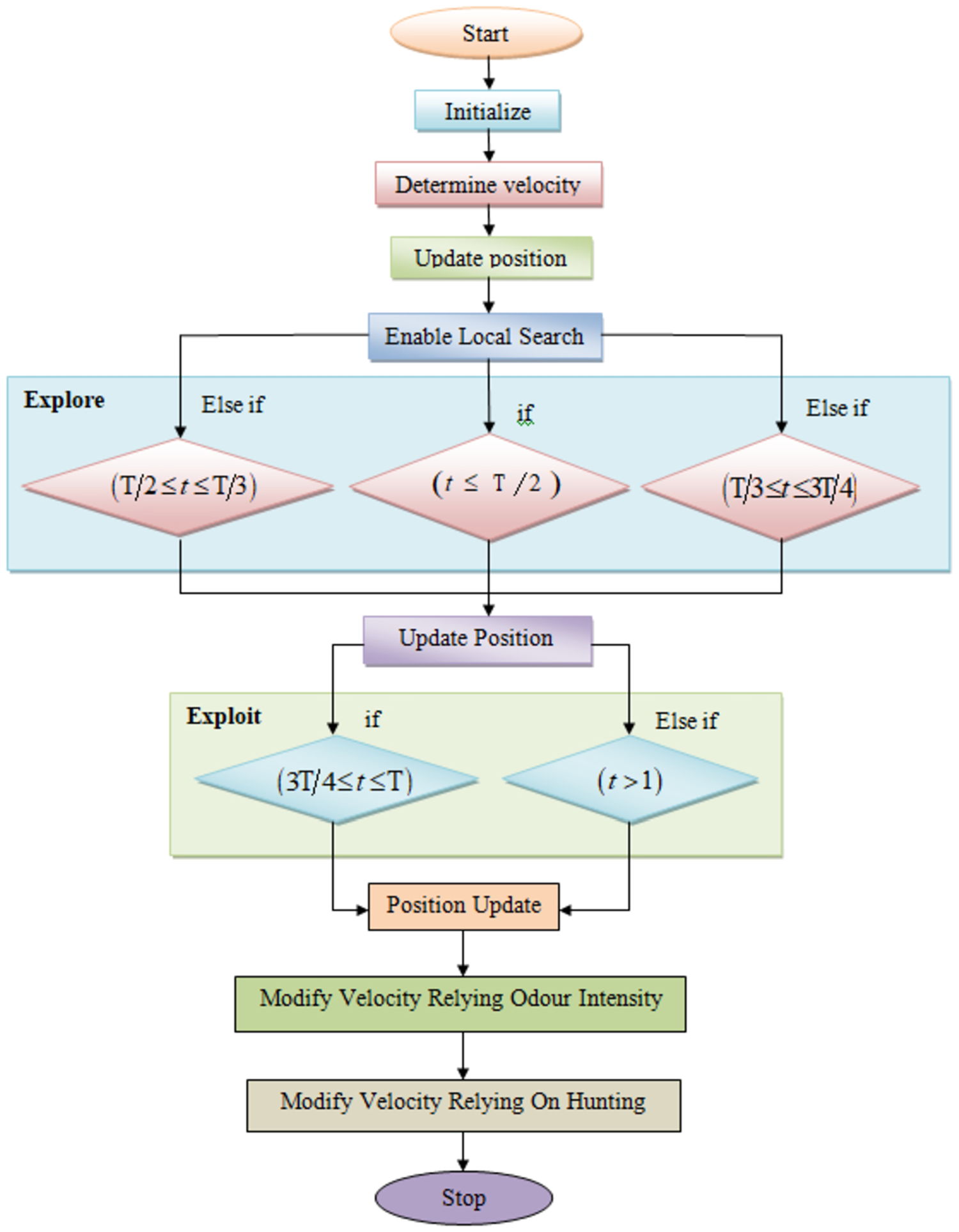
Flow chart of smelling-based hunting optimization algorithm.
where
Selachii rotates their bodies in addition to moving ahead to locate the strongest odor particles. The smelling-based hunting technique models this Selachii behavior as a local search process [5]. The model for local search is expressed as,


The position update of Selachii is dependent on two different phases as well as the search boundary, which includes exploration and exploitation with five different conditions.
Exploration
During an initial phase, the exploration begins within the search space S at the condition of (
For the second condition (
For the third condition (

Exploitation
During the second phase, the exploitation begins beyond the search space at the condition of (

The velocity of Selachii is modified depending on the odor intensity as well as the acceleration coefficient, which is expressed as


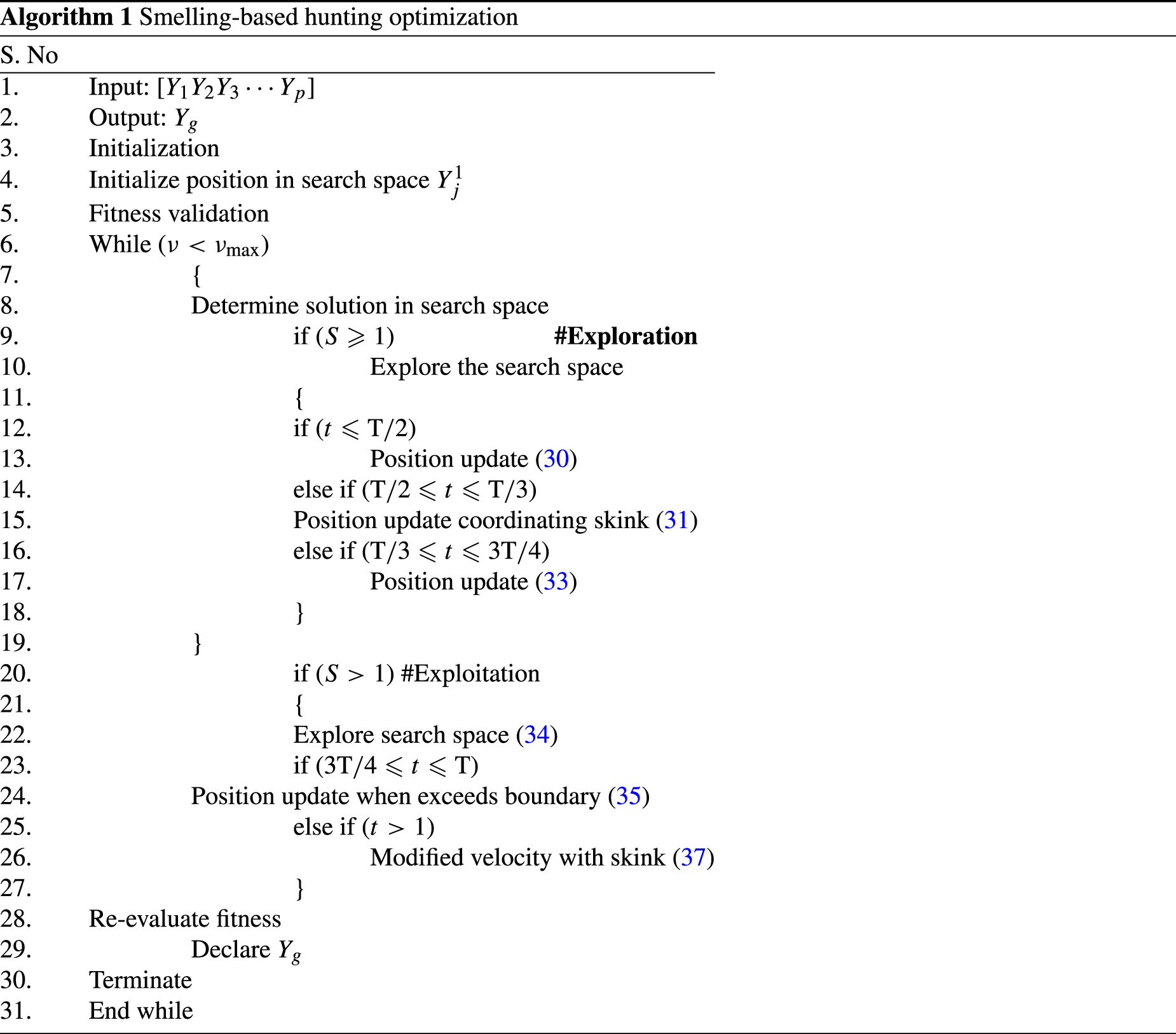
The pseudocode for the SBHO algorithm is described in Algorithm 1. Further, the flowchart for the SBHO algorithm is portrayed in Figure 3.
Thus, the application of a smelling-based hunting optimization strategy utilized for the integrated hybrid renewable energy system in rural electrification is described in this section and the flow chart is given in Figure 2, which assists to compensate the renewable energy output with peak load requirements utilized for battery storage.
In Figure 4, the battery voltage reaches above 250 V at the time instant between 0 s to 0.1 s and the initial voltage rating of the battery is 0 V, which maintains the constant voltage throughout the implementation. The figure shows the current capacity of the battery, initially, the current lag is below −15 A, and the rate of current rises gradually at an instant of 0.2 s. Consequently, the constant current rating of the battery is measured as −15 A.
DC load measurement
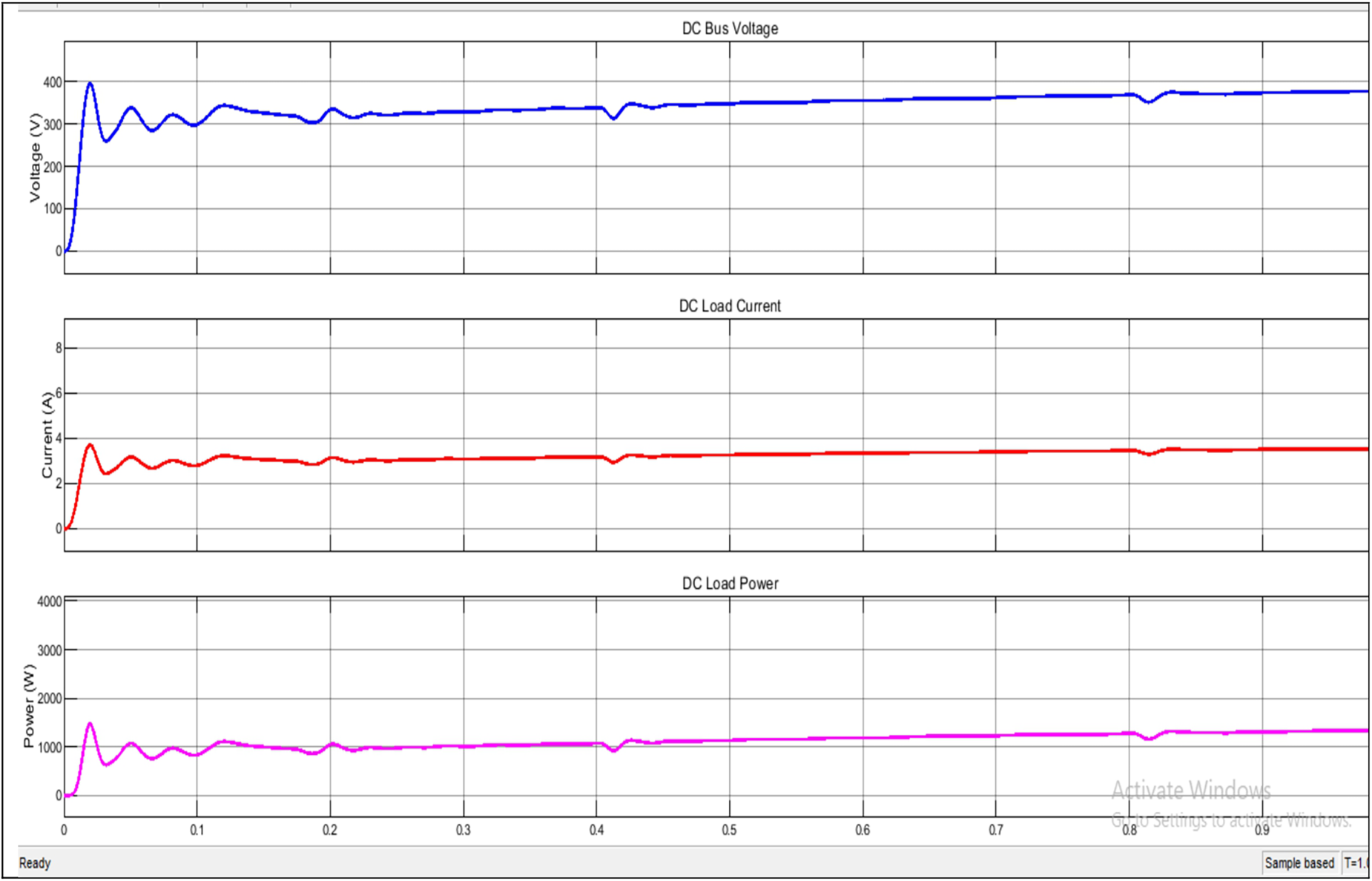
Figure 5 shows the DC load measurement, which includes DC bus voltage, DC load current, and DC load power. Initially, the voltage fluctuates when the load demand increases at an instant of 0 s to 0.5 s, after the implementation of the proposed technique, the DC bus voltage maintains the constant voltage between the ranges of 350 V to 380 V. The attained DC load current depending on the DC load measurement is between 3 A to 4 A, which frequently oscillates initially in the range of 0 s to 0.5 s. The attained power for the DC load in the range of 0.9 s to 1 s is nearly 1300 W, which oscillates frequently from 0 s to 0.1 s with the DC load power as 0 W to 1500 W.
PV measurement
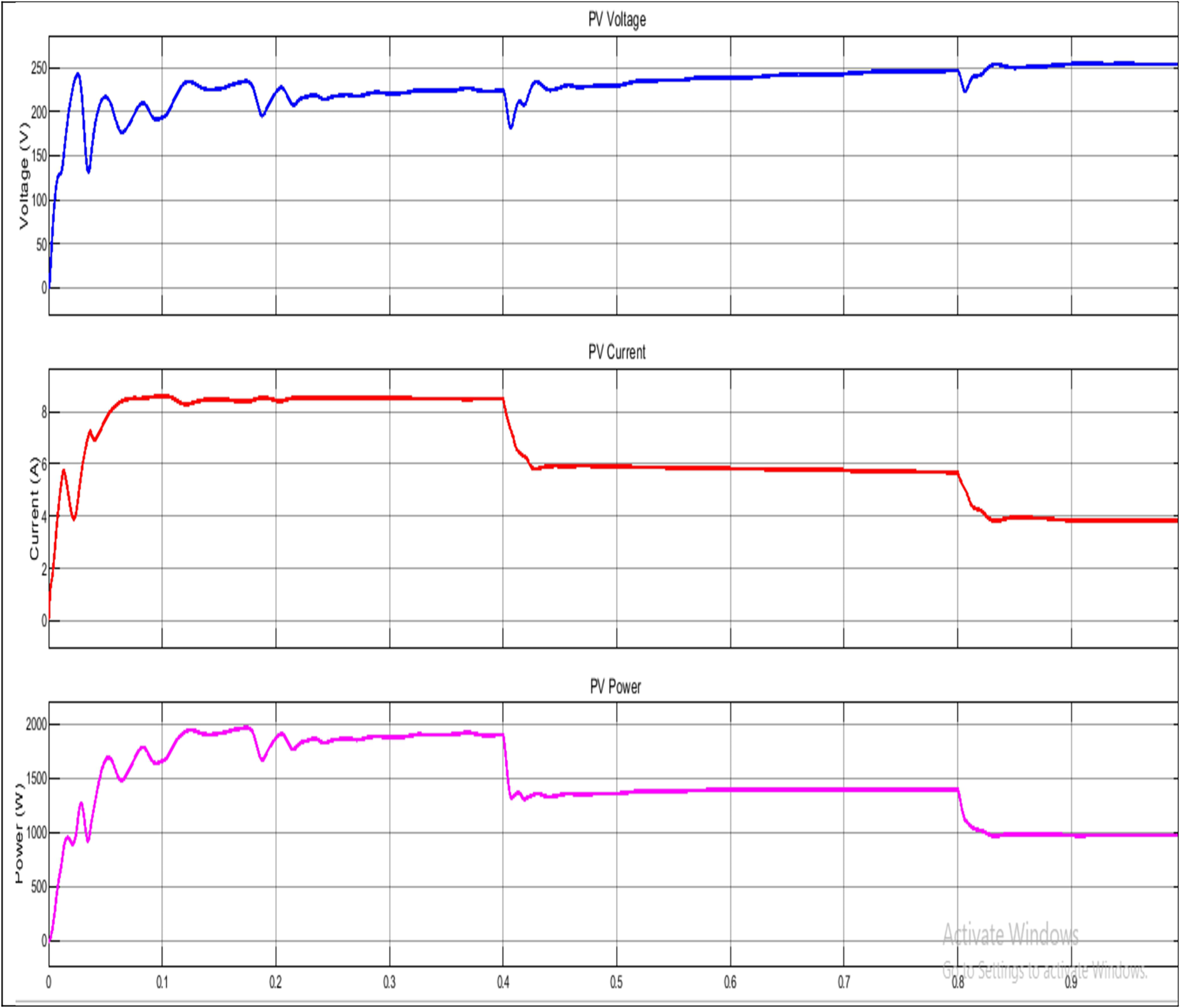
In the PV panel measurement, the respective output voltage, current, and power are revealed in Figure 6. Depending on the PV panel cell variations, the attained voltage, current, and power varied accordingly. Initially, the PV panel measurement has higher order harmonics concerning the temperature, then after the application of an optimized Siamese neural network, which attains the steady state.
State of charge
The capacity that is now accessible in relation to the rated capacity, is indicated by a cell’s state of Charge (SOC). The SOC’s value ranges from 0% to 100%, and the cell is considered fully charged if the SOC is 100%, however, a SOC of 0% means the cell is totally discharged. Generally, the SOC cannot rise above 50% in real-world applications, therefore, by the application of optimization strategy, the proposed model gradually increases the state of charge of a battery in the HESS, which is revealed in Figure 7.
Ultra-capacitor measurement
In Figure 8, the ultra-capacitor current and their respective state of charge are revealed by the performance. Due to the high capacitance rate, which can reach hundreds of farads, very close plate spacing, and large electrode surface areas, ultra-capacitors are effective energy storage devices. From the figure, initially, the ultra-capacitor current ranges from 35A to 40A, which gradually reduces after heavy discharge of SOC from 98%.
Wind measurement
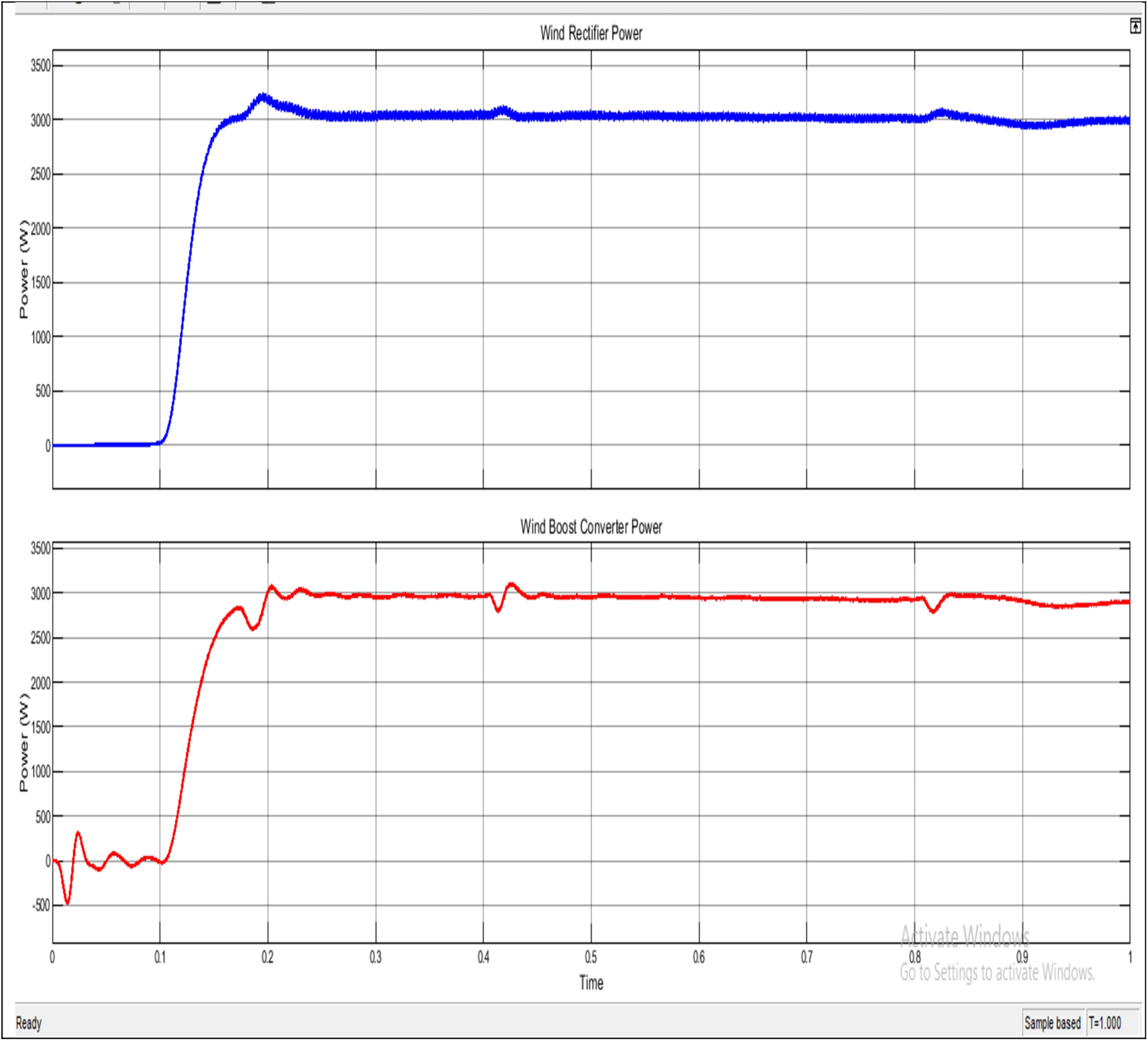
In Figure 9, the power attained for the rectifier and the boost converter is revealed depending on the varying wind speed. The output power of wind using the rectifier gradually reaches 3000 W after the period of 0.2 s, similarly, using the boost converter, the output power is the same as 3000 W with fewer harmonics.
Comparative evaluation
The smelling-based hunting optimization strategy is compared with the other conventional techniques to evaluate the superiority of the model. Techniques such as Particle Swarm Optimization [10], Cat swarm optimization [29], sparrow search algorithm [14], and Capacity optimization allocation [11] are utilized for comparison with the smelling-based hunting optimization.
Comparative evaluation of battery measurement
In Figure 10, the battery voltage values are obtained as 250.24V, 253.49V, 253.95V, 257.15V, and 259.83V in 0.82 s for particle swarm optimization, cat swarm optimization, sparrow search algorithm, capacity optimization allocation, and the SBHO model. Similarly, the battery current values obtained for the particle swarm optimization, cat swarm optimization, sparrow search algorithm, capacity optimization allocation, and the SBHO model are −14.19A, −13.95A, −13.49A, −13.28A, and −11.61A respectively in 0.82s that reveals the superiority of the SBHO model.
Comparative evaluation of DC load measurement
Figure 11 depicts the DC load measurement for the comparative techniques and SBHO model, in which the load current values obtained for the particle swarm optimization, cat swarm optimization, sparrow search algorithm, capacity optimization allocation and the SBHO model are 0.76A, 1.00A, 1.47A, 1.67A, and 3.35A for the time of 0.82s.In terms of the load voltage, the SBHO model attained the maximum voltage value of 357.11V, while the particle swarm optimization, cat swarm optimization, sparrow search algorithm, and capacity optimization allocation technique attained the values of 347.52, 350.77V, 351.23V, and 354.43V respectively. Similarly, the SBHO model attained the highest power value of 1195.58w in 0.82s, meanwhile, the particle swarm optimization, cat swarm optimization, sparrow search algorithm, and capacity optimization allocation techniques reached the 1185.99W, 1189.23W, 1189.70W, and 1192.90W respectively that explicates the efficacy of the model.
Comparative evaluation of PV measurement
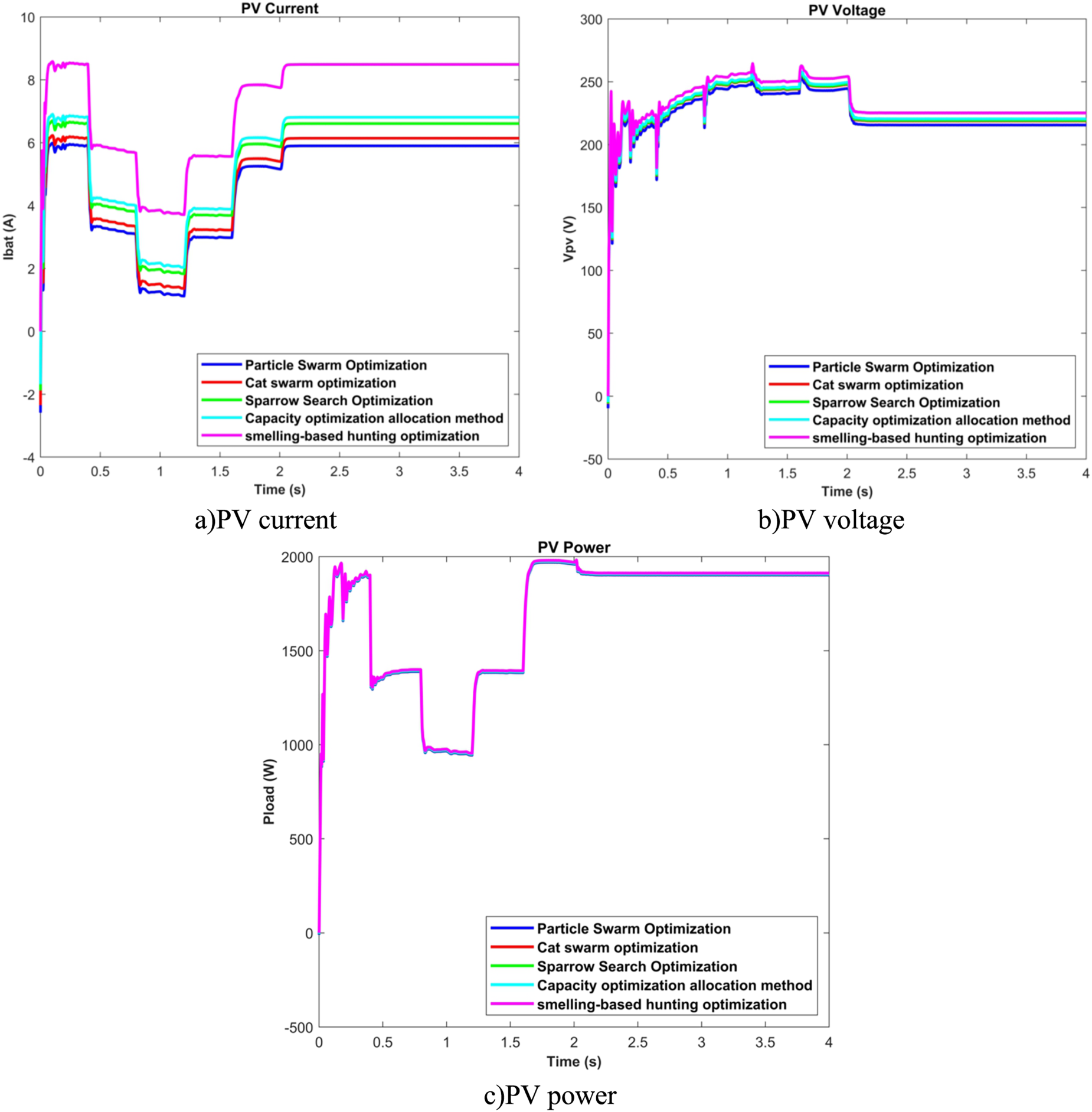
Figure 12 displays the corresponding output current, voltage and power from the PV panel measurement obtained for the comparative techniques. At varying the time of 0.82 s, the SBHO obtained the value of 241.08V in 0.82s and exceeded other techniques in terms of PV voltage. Further, the values of 231.50V, 234.74V, 235.20V, and 238.41V are attained for the particle swarm optimization, cat swarm optimization, sparrow search algorithm, and capacity optimization allocation, respectively. Similarly, the conventional techniques attained the low PV current measures of 1.65A, 1.89A, 2.36A, and 2.56A in 0.82 s respectively. However, the SBHO approach attained a high PV current value of 4.24A and exceeded other conventional techniques. In terms of PV power, the techniques particle swarm optimization, cat swarm optimization, sparrow search algorithm, and capacity optimization allocation obtained the values of 1012.05W, 1015.29W, 1015.76W, and 1018.96W respectively in 0.82 s. Further, the SBHO attained the maximum power value of 1021.64 W and surpassed other baseline approaches.

Performance analysis for battery measurement.
Performance analysis for DC load measurement.
Performance analysis of PV panel measurement.

Performance of battery’s state of charge.

Performance evaluation of ultra-capacitor.
Performance evaluation of wind measurement.

Comparative evaluation for battery measurement.

Comparative evaluation for DC load measurement.
Comparative evaluation of PV panel measurement.
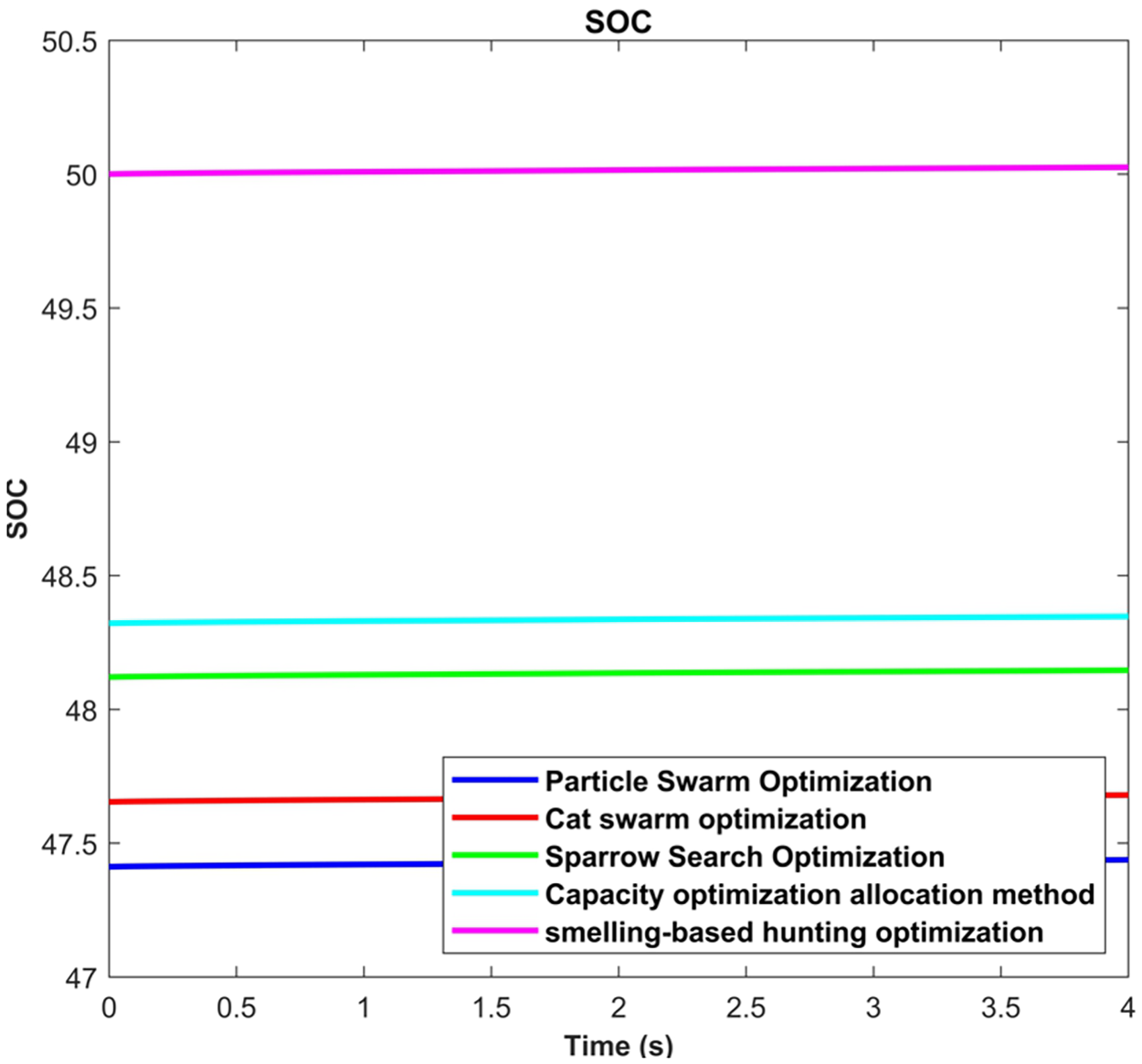
Figure 13 portrays the comparative evaluation of the SBHO and other comparative techniques in terms of the battery’s state of charge, in which the SBHO model obtained the SOC value of 50.01. Further, the comparative techniques particle swarm optimization, cat swarm optimization, sparrow search algorithm, and capacity optimization allocation attained the values of 47.42, 47.66, 48.13, and 48.33 respectively in 0.82s, which reveals the superiority of the SBHO model.
Comparative evaluation of battery’s state of charge.
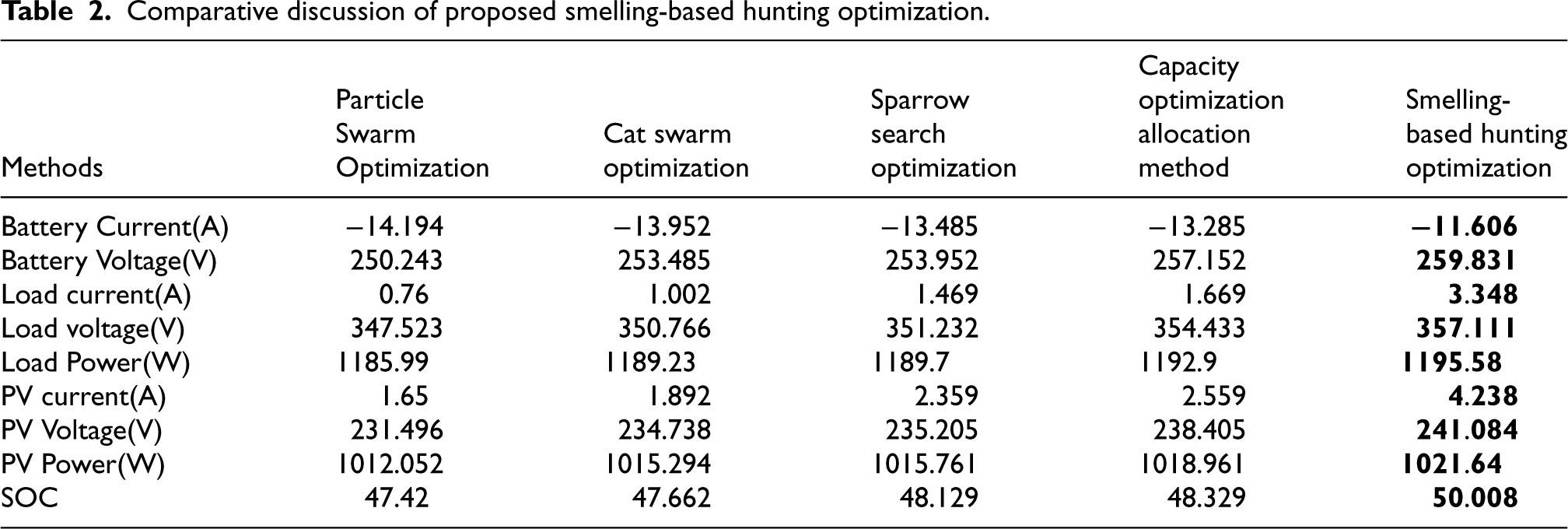
In this section, the existing methods are contrasted and the outcomes are shown to assess the performance of the suggested model. Unfortunately, the majority of baseline approaches attained limited performance and are unable to capture the useful characteristics for optimizing energy storage, which lowers the model’s performance. Investigations reveal that, even though the basic particle swarm algorithm has been used to solve a variety of optimization issues, it is susceptible to a static state in which the global solution is not reached, especially in high-dimensional space [10]. An important consideration that affects not only the economy but also resource usage and power supply reliability is the acceptable configuration of the storage battery’s capacity for the wind-powered power production system [29]. Nevertheless, SSO-optimized voltage regulation may lead to unacceptably long-lasting voltage fluctuations [14]. Central energy storage systems (CESS), require a far larger number of devices, which makes it more difficult to solve the large-scale capacity allocation and placement selection problems [11]. However, the proposed method overcame the above limitations via the smelling-based hunting optimized deep Siamese neural network, which controlled the voltage fluctuation by extracting the features such as PV generations, charging station loads, reactive loads, and active loads and assisted in dispatching the demand power and optimizing the energy storage. Table 2 depicts the comparative discussion of the smelling-based hunting optimization-based energy storage.
Comparative discussion of proposed smelling-based hunting optimization.
Comparative discussion of proposed smelling-based hunting optimization.
This research shows that the passive HESS can function more effectively than the alone performance of the battery system. A small-scale experimental hybrid microgrid powered by renewable energy sources, including solar, wind, batteries, and ultra-capacitors, is developed and arranged for execution. Through trials with varied renewable energy sources and load demand fluctuations, the efficacy of the suggested system for energy management was evaluated. The results of the experiment show how flexible the system is for the variations in load and renewable energy sources. The energy management system’s successful deployment is made possible by the controller. The ultracapacitor is utilized in the hybrid system to provide energy against load fluctuations that occur spontaneously and protect the battery level from being depleted in charge. Additionally, the bidirectional DC-DC converter is regulated by the voltage controller enabled with the deep SNN, which is optimized with the smelling-based hunting optimization strategy. Further, the proposed technique minimizes the time requirement, offers high convergence, and improves the efficacy of voltage controllers. Future tests for different situations and control algorithms for research on hybrid renewable energy microgrid systems can be implemented on this test bench’s platform. The current capacity of the battery reaches −15A in 0.2 s and the voltage reaches 250 V in less than 0.1 s. The DC bus voltage is maintained between 350 to 380V and in DC load current it depends on DC load measurement that ranges between 3 A to 4 A within 0.5 s and in DC power load it attained the 0 W to 1500 W within 0.1 s. In real-time, the SOC is 50% but by applying the smelling-based hunting optimization the SOC of the battery is gradually increased. The ultra-capacitor current ranges from 35A to 40A with reduced heavy discharge of SOC from 98%. The output power of wind using a boost converter remains 3000 W with few harmonics. The experimental results show that both the battery and the ultra-capacitor are crucial components of a successful HESS that uses renewable energy sources. In the future, the developed optimization will be implemented with another neural network for an effective energy management system. Furthermore, different system strategies including hybrid demand response, and energy storage strategies such as energy hydrogen storage can be integrated to enhance the efficiency of the developed model.