



Abstract
Introduction
Stress is simply a reaction to a stimulus that disturbs our physical or mental equilibrium. For students, there are many academic stressors like changes in culture or environment, pressures related to finances and family, conflicts with colleagues and frustrations due to non-performance in class etc. Other stressors could be self-imposed stresses like conflict of interest in studies, non-achievable targets set for oneself etc. As the stressors accumulate in a student’s life, the use of psychological and physical resources is reduced. Stress management involves controlling and reducing the stress that occurs in demanding situations and causes emotional and physical changes. The reason to manage stress was the prime reason inducing the authors to accomplish research in the current area. The strategy was planned on the basis of Psycho-analysis carried out by the researchers [1–5]. Psycho-analysis is both a theory of the human mind and a therapeutic practice. Stress can be monitored through physiological parameters of the body [6]. Anjana et al. [7] recommended that children must be screened regularly for blood pressure to detect the prevalence of Hypertension. Villmann et al. [8] investigated in an exemplary single-case study, the behavior of psycho-physiological variables in psychotherapy sessions. Past decades have witnessed a broad diversity of new methods for learning the functioning of different systems involved in the control of sentiments. Psycho-physiological measures are widely used to appreciate the functioning of internal systems of the body in reply to an emotional and physiological stimulus. In a typical psycho-physiological experiment, some emotional or behavioral or physiological stimulus is applied and psychological changes are observed. Hence, in this study yogic breathing is used as stimulus and its effects are observed on physiological parameter i.e. skin conductivity, measured through GSR Sensor meter. Further, as observed by earlier researchers GSR is a pointer of Stress.
Galvanic Skin Response (GSR)
Galvanic Skin Response (GSR) is a psycho-physiological phenomenon exhibited by skin containing sweat glands [9]. It is a transient change in certain electrical properties of the skin linked with the sweat gland activity and elicited by any stimulus that induces an arousal or orienting response. This change is caused by an interface between ecological events and the individual’s psychological state. It is a technique of capturing the autonomic nerve response as a parameter of the sweat gland function (i.e., measuring the electrical conductance of the skin). GSR varies with its moisture level. Although there are no absolute levels of GSR indicative of high workload or stress, GSR is a relative pointer of stress. GSR Sensor Meter is a non-invasive electronic instrument used to measure Skin conductivity from the fingers. GSR reflects sweat gland activity and changes in the sympathetic nervous system. The activity of the sweat glands in response to sympathetic nervous stimulation (increased sympathetic activation) results in an increase in the level of conductance [10]. Das & Anand [11] revealed a significant effect on GSR values as an effect of meditation. With the practice of meditation, the GSR value or skin conductivity gets reduced and this leads to decrease in the stress level of an individual.
As reported by researchers, GSR is an evaluator of stress [28, 48]. The GSR readings of a person depend on his/her emotional reactions which affect the salt and water in his/her sweat gland ducts. As per the manual, the range of 75 (stressed) to 50 (unstressed) is specified [39]. However it may also vary from person to person due to variation in the physiological parameters [39]. The present study additionally underlines the significance of application of GSR technology in our routine life as a bio feedback sensor, especially for the students [49, 50].
Yogic breathing
It is done by contracting the diaphragm (a muscle located horizontally between the chest cavity and stomach cavity). Air enters the lungs and the belly expands during deep breathing. Yogic breathing, also known as abdominal breathing or deep breathing, is marked by expansion of the abdomen rather than the chest during breathing. It is considered as a healthier way to breathe and is a useful form of complementary and alternative treatment.
Theoretical frame work
College life is a stressful time for many students as they go through the process of adapting to new educational and social environments. Our present educational system has become more mechanical and it fails to nurture an all-round development of the personality of the students. Relationships among life stress, social support and academic stressors were also investigated [12]. Important differences in the perceptions of academic stressors and reactions to stressors amongst student participants were found [13].
Joshi et al. [14] proposed the development of stress management laboratory in Indian educational institutions, using modern electronic instruments. The study proposes some scientifically proven stress relaxation therapies to be used for monitoring of physiological parameters leading to managing mental stress for students. Since the stress or depression in students may force them to hook on to drugs or to commit suicide, due to poor grades or any other reason, Rao [15] focused on the latest suicidal incidents of IIT-Bombay, which lead to setting up of a committee to look into the changes that need to be brought. This includes counseling services to be offered by the institute.
Many researchers studied the applications of psycho-physiological analysis. Brown [16], published a proposal for a standardized terminology that has been widely accepted. The GSR analysis under various stimuli has been used by several researchers. Aberg [17] examined electrical changes in human skin. Kreibig [18] opined that emotion is often associated with expressive behaviour, such as smiling and with peripheral physiological responding such as heart rate changes, sweating and skin resistance changes. These physiological changes are measured to assess the functioning of the autonomic nervous system (ANS) in response to an emotional stimulus. GSR sensor meter is able to detect different states of each user with a success rate of 76.56% [30]. GSR requires the presence of active sweat glands, which are brought into action by the sympathetic nervous system [19]. It is believed that sweat rises in ducts, spreads laterally, hydrating the stratum comeum and reduces its resistance thereby increasing conductance. Montagna [20] found (other than sweat gland activity) the epidermal membranes of the skin becoming permeable in response to neural stimuli, thereby decreasing skin resistance. GSR is used as the physiological measure in this experiment. Wiech & Tracey [21] concluded that the sensory processes in behaviour and emotional experience are a subject matter of psychophysics. The relation between meditative techniques like yogic breathing, Buddhist mindfulness, transcendental meditation and their effect on physiological parameters like GSR (stress) have already been established. Meditation is known to have a remarkable effect on the mental state of practitioners [22–24]. Many scientific studies have been conducted on its ability to reduce stress and anxiety [25]. Jerath et al. [26] and Wallace [27] reported that skin conductance varies during meditation. It yields a continuous measure that is related to activity in the sympathetic branch of the autonomic nervous system [28]. Obrist [29] concluded that the magnitude of the skin resistance difference was significantly reduced in the subjects during stimulation. Brown [16] and Villarejo et al. [30] have reported GSR as a function of stress. It yields a continuous measure that is related to activity in the sympathetic branch of the ANS. Salam [31] described GSR, a well-known somatic marker, useful in monitoring objective bodily response, during music experience.
Bernardi et al. [32] explored how breathing and mental stress affect heart rate variability (HRV). Kaur et al. [33] investigated the effects of yogic exercises with abdominal breathing on physiological parameters in women and found highly encouraging results. Even breathing rate is significantly affected by bathing in the Turkish bath, which is a source of high temperature and moisture [34]. Thus, in the present research, GSR biofeedback with Yogic breathing has been tried to find out whether it can be recommended as an effective stress monitoring and destressing technique. There is ample literature supporting yogic breathing and also other yogic exercises to reduce stress. Chang [35] found that a ten week Tai-Chi and yoga educational training program covering yogic breathing have a positive influence on antioxidant capacity and oxidative stress measures. It is effective for improving health fitness for females. Kumar et al. [36] concluded that practice of yoga helps to improve the immunity of the students. Stress and yogic relaxation techniques have a soothing effect on pain perception [37]. Pranayama breathing exercises were found to improve lung functions in coronary artery disease CAD patients and can be used as a complimentary therapy for their rehabilitation [38].
The present study has been taken with the following objectives
To study the skin conductivity value using GSR Sensor meter, without any treatment (pre and post) To study the skin conductivity value using GSR Sensor meter, undergoing yogic breathing (pre and post)
Methodology
The method adopted for sampling was stratified random sampling. Two strata of state universities of engineering (one private and other government) were chosen The sub strata of four branches from each university were formed and the study was executed in two phases, mentioned as below:
Phase 1
Initial study was conducted on 471 Engineering students (who volunteered), from various four streams i.e. Civil, Computer, Electronics and Communication and Mechanical Engineering in the age group of 18 to 22 years. They were selected from two state universities of engineering (one private and other government as mentioned above). The details are shown through Table 1. These two universities are rated high in both State and rankings.
Detail of the subjects
Detail of the subjects
Then final selection of 400 subjects is shown in Tables 2 and 3. The students were short-listed on the basis of their self-observation reported, as well in the interview about exhibiting stress.
Detail of the subjects for control group studies
Detail of the subjects for control group studies
Detail of the subjects for experimental group studies
The group of 400 students were classified on basis of age {<20 years (84), = 20 years (134) and >20 years (182)}, gender {males (296) and females (104)}, type of family {nuclear (300) and joint (100)}Religion {Hindu (291), Sikh (108) and others (1)}.
They were classified as control group (200 students as shown is Table 2) and experimental group (200 students as shown is Table 3). Both the groups were formed from a similar population. The experimental group had revealed high willingness for yogic breathing exercise and they wished to get their skin conductivity level monitored through GSR sensor meter.
In this experimentation, the authors investigated the effects of undergoing yogic breathing on physiological parameter skin conductivity, which was monitored through digital electronic based GSR sensor meter. As shown in Tables 2 and 3, there were 400 engineering students aged 18–22 years. After gaining permission from ethical committee for conducting this experimental study, the respondents from both the groups were also requested to sign a consent form. For experimental recordings, Galvanic Skin Response (GSR) sensor meter, manufactured by psychometric research, London (UK) was used [39]. This GSR meter (as shown in Figs. 1 and 2) was used to carry out non-destructive testing on the participants.

Digital GSR Sensor Meter to measure Galvanic Skin Response (GSR).

GSR Meter attached to hand fingers.
While undergoing yogic breathing the frequency had to be controlled. The routine frequency of breathing is usually 15 cycles per minute (hertz). But here the participants were trained to undergo at 6 cycles per minute (hz), which means inhaling for 5 seconds and exhaling for 5 seconds (10 seconds in total for one cycle of inhaling and exhaling). Hence, this training was given to experimental group students during March 1 to March 31, 2015. The control group was not exposed to this technique.
The steps followed for experimental group (Table 3) were as below: The subject sat in a comfortable and relaxing chair. The hand portion was made fully moisture free. The meter electrodes were attached to fore-finger and first finger of the hand. The initial reading of the Skin Conductivity (micro siemen) was recorded using GSR meter at t = zero sec. The subject was told to undergo yogic breathing @ 6 Hz. The subject was made to undergo yogic breathing for 300 seconds. Meanwhile, the meter was kept attached to the participant for 300 seconds. Again the reading of the skin conductivity was recorded at t = 300 seconds. The same process was repeated for all 200 students.
The instructions for the use of meter were followed as given in its manual [39].
The same steps were followed for control group (Table 2) except that they did not undergo yogic breathing. Thus, there was absence of step (vi.) for control group.
This above testing was carried out from April 11 to May 24, 2015 (during 44 days for all 400 students in two groups of 200 each). The meter testing was repeated for all 400 students in the way, as shown for few in Figs. 3–7.

GSR Meter with Laptop and stopwatch.
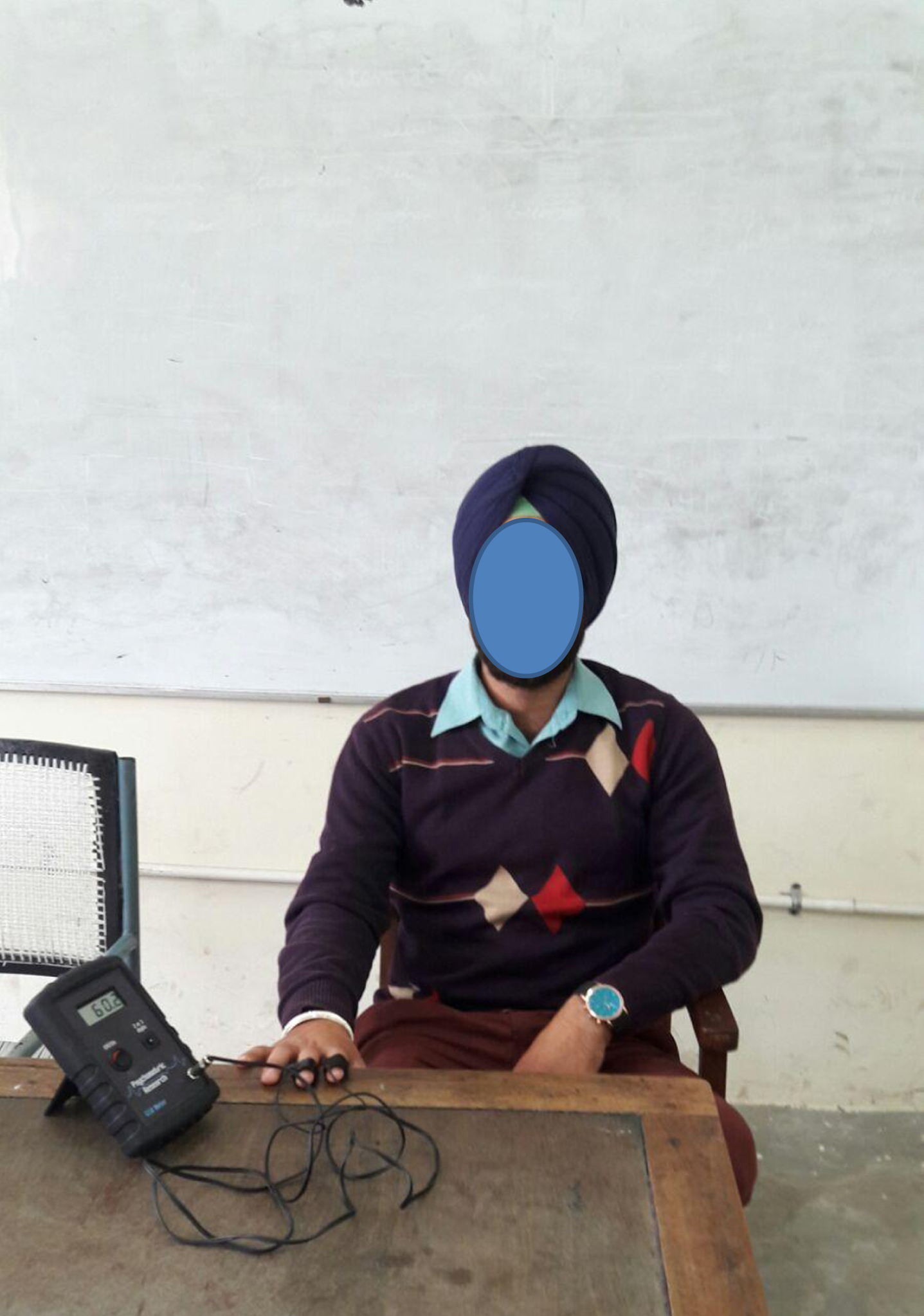
GSR Meter attached to one of the subjects.
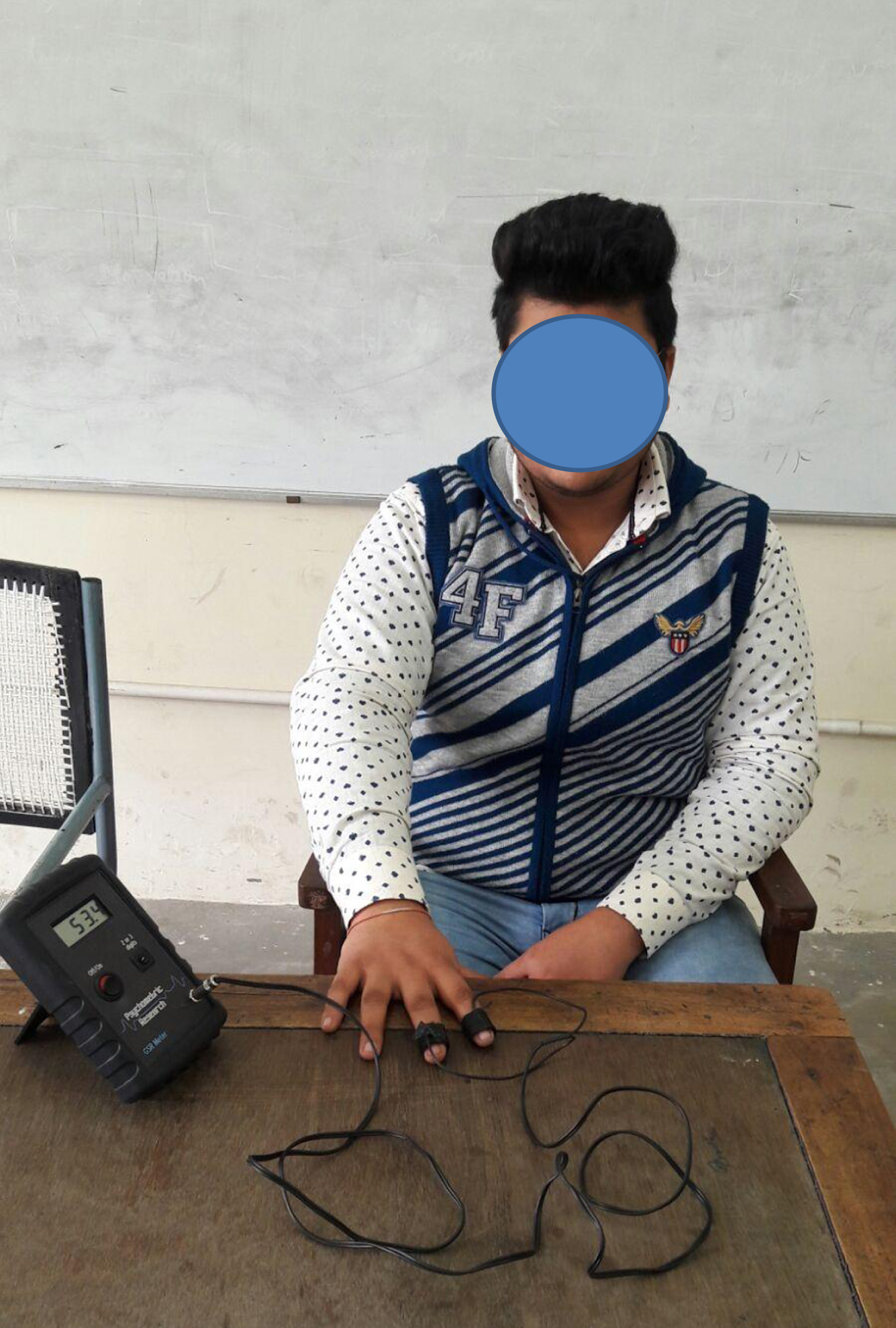
GSR Meter attached to one of the subjects.

GSR Meter attached to one of the subjects.
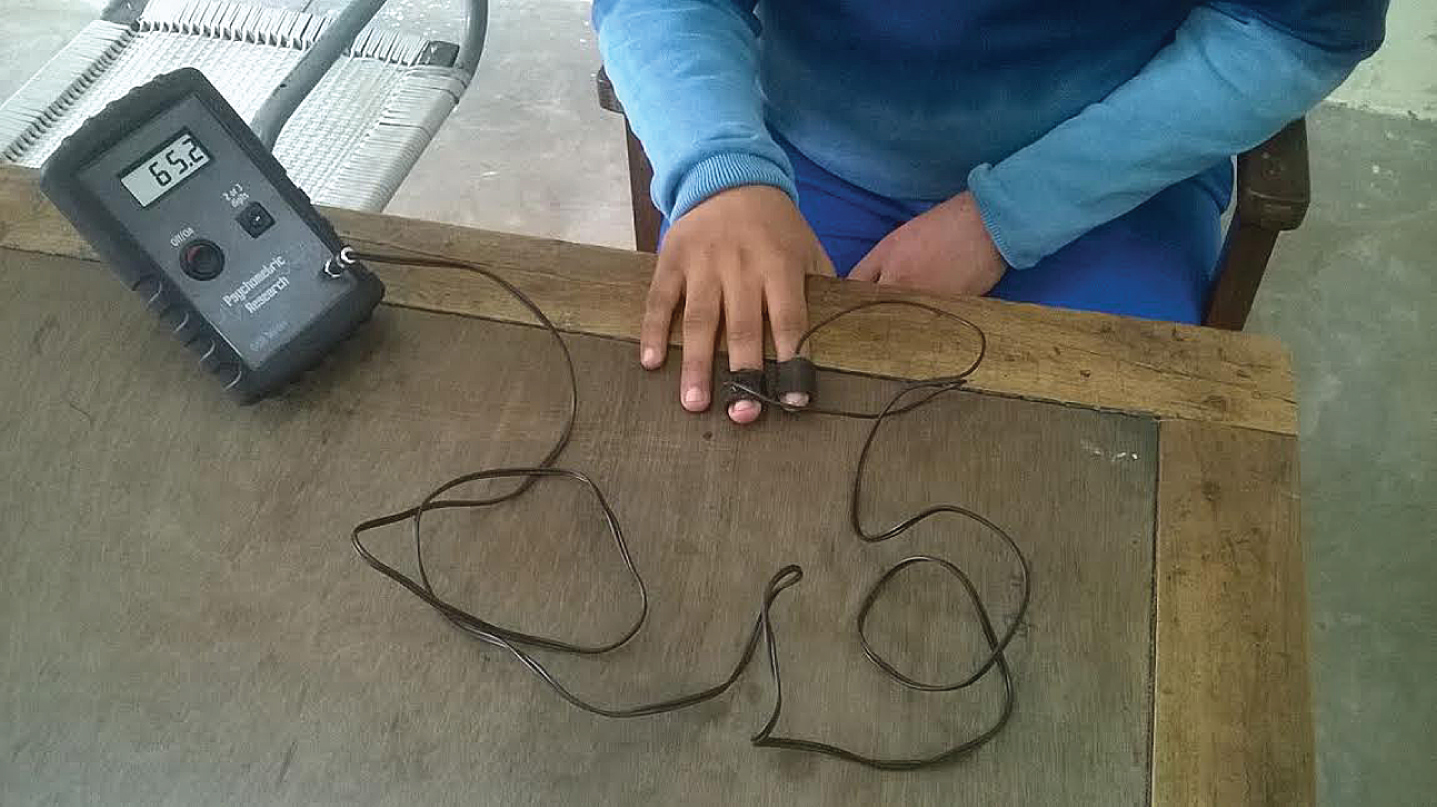
GSR Meter attached to one of the subjects.
There is a significant difference in the skin conductivity value of control group not undergoing yogic breathing for t = zero second (before) and t = 300 seconds (after). There is a significant difference in the skin conductivity value of experimental group undertaking yogic breathing for t = zero second (before) and t = 300 seconds (after). There is a significant difference in the skin conductivity value, of control and experimental group undergoing yogic breathing for t = 300 seconds.
Results and discussion
The results of the study have been discussed in this section for the control and experimental group. Z-tests have been used for studying the differences.
Control group
As reflected from Table 4, the mean value of skin conductivity = 63.58 for t = 0 seconds (pre) and the mean value of Skin Conductivity = 68.69 for t = 300 seconds (post) for control group not exposed to yogic breathing exercise. There is a variance of 198.56 and 208.14 for pre and post session. As z Stat = 3.57, is greater than value of z Critical two-tail (1.95* and 2.57**) and p-value (two tail) is less than significance levels of 0.01 as well as 0.05, thus hypothesis H1 is accepted. Hence, there is a significance difference in the skin conductivity value of control group not exposed to yogic breathing (pre and post). In fact here the mean value increased from 63.58 (t = zero seconds) to 68.69 (t = 300 seconds) which shows increase in skin conductivity (post) for control group.
Statistical analysis for control group (Pre & Post) skin conductivity
Statistical analysis for control group (Pre & Post) skin conductivity
*: 0.05; **: 0.01.
The experimental group undertook yogic breathing following a demonstration of the right technique to be used. It can be noticed from Table 5 that the mean value of skin conductivity was 71.14 before yogic breathing and the mean value of skin conductivity was 63.95 after yogic breathing. The variance of 236.47 and 286.95 respectively was recorded for the experimental group. As shown through statistical analysis in Table 5 the mean value for pre- session was 71.14 and was greater than Mean value for post-session (63.95). Thus, there is a decrease in the value and value of z Stat is 4.43, which is greater than value of z Critical two-tail (1.95* and 2.57**). The p value is also significant. So hypothesis H2 has been accepted. Thus, there is a significant difference in the skin conductivity for pre and post session for the experimental group exposed to yogic breathing. However, importantly, the mean value decreased from 71.14 (t = Zero second) to 63.95 (t = 300 seconds).
As shown through statistical analysis in Table 6, the mean value (68.69) for post-session in control group is greater than mean value (63.95) for the post-session in the experimental group. There is a decrease in the value and value of z Stat is 3.00, which is greater than the value of z Critical two-tail (1.95* and 2.57**). The p value 0.002 (two tail) is less than significance levels of 0.01 as well as 0.05. So the hypothesis H3 has also been accepted. Thus, there is a significant difference in the skin conductivity for post session value in the control and experimental groups.
Statistical analysis experimental group (Pre and Post) skin conductivity
Statistical analysis experimental group (Pre and Post) skin conductivity
*: 0.05; **: 0.01.
Statistical analysis for post values of skin conductivity of control and experimental groups
*: 0.05; **: 0.01.
To go deeper into analysis regression was used with skin conductivity readings after t = 300 seconds as dependent variable and the independent variables include: 1# age, 2# branch, 3 # university, 4 #gender, 5 #religion, 6 #type of family, 7 #group (control or experimental). The results of regression model are shown in Table 8. The related regression equation is:
Mean skin conductivity value pre and post for control and experimental groups
Regression Model
Var.1# age, 2# branch, 3# university, 4# gender, 5# religion, 6# type of family; Var. 7# group (control or experimental); SS = sum of squares; MS = mean square; df = degree of freedom; MSE: Mean Square error.
The findings support the existing literature and there is a potential benefit to both industry and engineering students in adoption of the findings. Deep breathing technique is able to control blood pressure and in turn the level of stress of engineering students [40]. Earlier the low back pain relief was attained using non-invasive devise therapy [41]. Facilitation of stress management programs in the workplace is necessary to have healthier employees [42]. Sutarto investigated the potential application of heart rate variability (HRV) bio-feedback for operator’s performance enhancement and the study demonstrates potential application of HRV bio-feedback for enhancing operator’s performance. The performance is associated with increases in HRV [43]. Stress management interventions are being implemented beyond traditional strategies of routine occupational medical surveillance [44]. Green-exercise at the workplace could be a profitable way to manage stress and induce restoration among employees [45]. A study on graduates indicated that a clinical experience in mental health did contribute significantly to their holistic practice skills [46]. The findings depict students experience as a function of the individual (self) factors, the interpersonal (social) factors and the environmental (school) factors as well as their interrelations. Interventions must be designed to deal with all these three areas and their interactions. The model can be used to guide universities in designing interventions; however, a fourth level that incorporates a university policy that values and supports student mental health, needs to be embraced [47].
In the current study, the results reflected that yogic breathing had a significant effect on skin conductivity (as it was found to be reduced extensively for students who undertook deep breathing exercise). The skin conductivity was recorded through GSR sensor meter, a non-invasive device. In the control group GSR readings were found to be increased, as these students were not exposed to yogic-breathing technique. Table 7 shows the results. The mean basal value was low 63.58 (at t = zero) for control group, where as it was high 71.14 (at t = zero) for experimental group. Then at t = 300 seconds it was found that it decreased (63.95) for experimental group and increased for control group (68.69). This also signifies that stress (in terms of skin conductivity) increased for control group, but decreased for the experimental group. Hence, it proves the significance of application of skin conductivity meter as a bio-feed back sensor in our routine life especially for the students. So during student life, this practice may boost a student’s efficiency and the critical issue of managing stress by using this simple technique of yogic breathing. This practice can help in enhancing productivity and also in reducing stress.
Limitations of the study
Like any research study, the current study also has some limitations.
This study could usefully be extended and repeated experimentation performed. This would help in finding out whether participants’ skin conductivity is usually reduced by undergoing through yogic breathing exercise. This study is an initial effort and the results are encouraging. The study could also be extended to use various other stress management techniques, viz. listening to different kinds of musical instruments and measuring skin conductivity for deeper understanding. Also a few different techniques of stimuli like Indian music or Western music can be applied to observe their effects on skin conductivity values. In addition to skin conductivity, the other physiological parameters like pulse rate and blood pressure could also be included for analysis. It is time to think intensely about managing and controlling, stress as it is leading to depression and tackling it, is an urgent concern.
Recommendations
Based on the above findings, it is proposed that the techniques like yogic breathing may be introduced in universities for improving health of students. Adopting yogic breathing in their routine life may reduce the chances of stress and will also help in reducing stress levels in students suffering from stress. The authors suggest that the bio-feedback practise of GSR meter be routinely adopted in for students who are under stress and that deep breathing exercises be encouraged.
The argument that it could only be entertained in a culturally supportive environment is only partially true, but this study will be applicable to many developing countries having similar culture. In fact the developed world is also moving to adopting yoga and deep breathing techniques as stress reducing activities.
This will facilitate healthy and efficient student life and this practice in educational institutions may result in saving precious lives of the youth who may entertain suicide as an option. The healthy engineering student population can then contribute to their personal growth, and also contribute positively to Industrial growth. Further studies on larger samples will be highly desirable in order to improve the generalizability of the results.
Conflict of interest
None to report.
Footnotes
Acknowledgments
The authors express their sincere gratitude to the authorities of Thapar University and Punjabi University, Patiala (Punjab) for permitting them to execute this experimental research work on students of various branches of engineering. This research was self-financed.