




Abstract
BACKGROUND:
Actual noise reduction of the earmuffs is considered as one of the main challenges for the evaluation of the effectiveness of a hearing conservation program.
OBJECTIVE:
The current study aimed to determine the real world noise attenuation of current hearing protection devices in typical workplaces using a field microphone in real ear (FMIRE) method.
METHODS:
In this cross-sectional study, five common earmuffs were investigated among 50 workers in two industrial factories with different noise characteristics. Noise reduction data was measured with the use of earmuffs based on the ISO 11904 standard, field microphone in real ear method, using noise dosimeter (SVANTEK, model SV 102) equipped with a microphone SV 25 model.
RESULTS:
The actual insertion losses (IL) of the tested earmuffs in octave band were lower than the labeled insertion loss data (p < 0.05). The frequency nature of noise to which workers are exposed has noticeable effects on the actual noise reduction of earmuffs (p < 0.05). The results suggest that the proportion of time using earmuffs has a considerable impact on the effective noise reduction during the workday.
CONCLUSIONS:
Data about the ambient noise characteristics is a key criterion when evaluating the acoustic performance of hearing protectors in any workplaces. Comfort aspects should be considered as one of the most important criteria for long-term use and effective wearing of hearing protection devices. FMIRE could facilitate rapid and simple measurement of the actual performance of the current earmuffs employed by workers during different work activities.
Introduction
Noise induced hearing loss, one of the most common types of sensorineural hearing loss among workers in noisy workplaces, can progress due to long-term exposure to high noise. It is considered as the most prevalent industrial disease worldwide [1]. The objective of an effective hearing conservation program is to prevent noise induced hearing loss. One of the main elements of this program is the provision of suitable hearing protection devices (HPDs) to workers exposed to industrial noise [2, 3]. HPDs are commonly used during the short-term period before the noise is effectively reduced by implementation of engineering controls, or when engineering or administrative controls are not feasible [4, 5]. However, the willingness to use HPDs depends on some important factors like workers’ preference for particular kinds of hearing protectors and HPDs’ acoustic performance and convenience. Unreliable labeled noise reduction presented by HPDs is considered as the main barrier undermining our reliance on hearing protectors as an effective noise control measure. Some studies have shown that the accuracy of the nominal performance of HPDs to estimate the real noise attenuation is quite poor [6].
There are many ways to describe acoustic performance of hearing protectors. The most common methods are the single-number systems such as the Noise Reduction Rating (NRR) recommended by Environmental Protection Agency (EPA; 1979) and the Single Number Rating (SNR), used in Europe. For determining the mentioned ratings, the real-ear attenuation at threshold values of the hearing protectors is used according to relevant standards [7–9]. Real-ear attenuation at threshold (REAT) technique was performed by evaluating audiometric hearing threshold levels on a subject with (occluded) and without (unoccluded) hearing protectors. The difference between the occluded and unoccluded thresholds is equivalent to insertion loss (IL) in dB acquired by the HPDs [10, 11]. However, the accurate REAT measurements require subjects with normal hearing and a very quiet booth so that the open-ear thresholds are not masked and contaminated [12, 13].
Some reasons have been reported to explain the discrepancies between the labeled noise reduction data and the real noise reduction data of HPDs. Lack of comfort, often cited as one of the main factor affecting the attenuation, may lead to the misuse or intermittent use of HPDs in order to increase their comfort or to improve communication [14]. Moreover, lack of workers’ training about correct fitting of HPDs and ergonomic aspects can mainly affect the real noise reduction values. The irregular use of the earmuff can reduce the effective noise attenuation rating of the earmuff during the workday [15, 16]. The National Institute for Occupational Safety and Health (NIOSH) and the Occupational Safety and Health Administration (OSHA) proposed the derating method to compensate for known differences between the laboratory-derived noise attenuation values and the noise protection provided by a hearing protector in the real world [7]. Hence, the noise attenuation data of HPDs based on in situ measurements can help occupational health experts to come up with a better judgment about the performance of hearing conservation programs.
Recent development of measuring equipment that can determine HPDs’ performance under field conditions with reasonable accuracy and speed has facilitated the individual fit testing. The new technique for HPDs’ fit testing, called field Microphone in Real Ear (FMIRE), was developed to make rapid and accurate testing of the HPDs in real conditions of the workrooms [17]. The FMIRE technique presents new advantage of being employed in high industrial noise levels and during normal working conditions. Moreover, it provides the capability to carry out measurements in a continuous manner over time while workers perform their regular work duties [18–20]. Using dual-channel noise dosimeter, two microphones were employed, with one being placed inside the ear canal underneath a hearing protector and the other being simultaneously placed outside the ear. In this mode, the noise attenuation is the difference between the noise levels measured simultaneously by the internal and external microphones. In this regard, FMIRE can be employed for complementary researches about acoustic performance of hearing protectors in real conditions while workers perform their regular work duties [7].
In developing countries like Iran, occupational health experts also reported that unreliable noise reduction data of HPDs is considered as a main challenge to design an efficient hearing conservation program. The current study is an attempt to understand the issues in detail and aims to evaluate the real world noise attenuation of hearing protection devices based on FMIRE method in real conditions of workplace and investigate HPDs’ comfort in relation to hearing conservation.
Methods
Five commercially available earmuff protectors were selected to assess the actual noise attenuation values in noisy workplaces. Based on the ethical and legal considerations, the studied protectors were listed as manufacturer models: A, B, C, D, and E. Fifty workers employed in two industrial factories (located in the west of Iran) participated in the study (age: 25±3.5 years). In both factories, each earmuff sample was tested for 25 subjects and the measurements were repeated three times. It should be noted that, for analyzing the reproducibility of FMIRE method, three samples of each earmuff were tested. Each sample was tested on one subject and the measurements were repeated three times.
Moreover, subjects fit HPDs themselves without assistance. Two factories with different noise pollution characteristics were selected to evaluate the acoustic performance of the HPDs. Due to the nature of equipment operation in the workstations of the first and second factories, the low frequency noise and high frequency noise were dominant, respectively. Each worker was asked to sign an informed consent form prior to the experiments which were performed according to the recommendations of the International Organization for Standardization (ISO 11904-1-2002) [18].
The experimental setup
According to the standard method, ISO 11904-1, measurements were performed using the SVANTEK SV 102+, Class 2 dual-channel dosimeter. An SV 25S microphone, Type 2, has been also designed together with SV 102+ dosimeter that specifies methods for the determination of noise level in the ear canal. SV 25S microphone measured sound level in the ear canal by a probe, which was placed at the entry to the ear canal. The length of the probe was selected 16 mm to ensure the maximum comfort and to protect against contact with the eardrum [18, and 22]. Calibration of the SV 25S microphones was performed with an SV30/SV31 acoustic calibrator. The data was acquired using a dual-channel dosimeter in a short time (about 15 minute for any fit testing on each subject) to obtain data in octave band from 125 Hz to 8 kHz. It should be noted that, each worker worn the HPDs and three time measurements were performed for each worker exposed to noise pollution in the real condition of workstation during the work activities (see Fig. 1). Using dual-channel noise dosimeter, two microphones were employed which one placed inside the ear canal underneath a hearing protector and the other simultaneously placed outside the ear as shown in Fig. 2. In this mode, the noise attenuation which is known as noise reduction or NR (in dB), is the difference between the noise levels measured simultaneously by the internal and external microphones [7].

FMIRE setup for each worker exposed to noise in the real workstation.
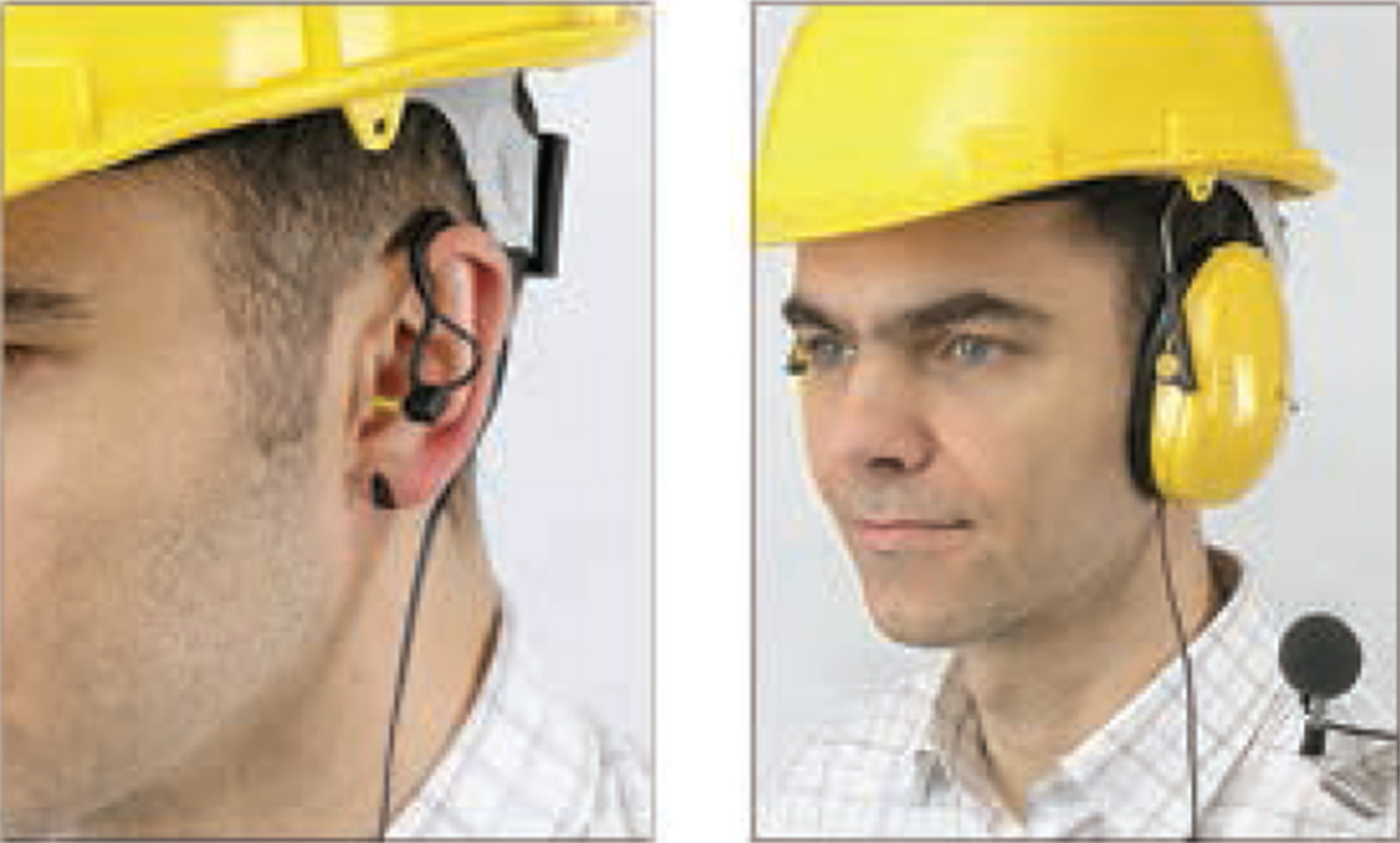
Using dual-channel noise dosimeter with internal and external microphones (Courtesy SVANTEK Manufacture).
As mentioned, the difference between the occluded and unoccluded noise exposure levels for human subjects in one octave band is equivalent to insertion loss (IL) in decibels acquired by the HPDs. However, subjects are often exposed to fluctuating noise in the real workstations during normal working conditions. Therefore, the NR values (in dB) can be determined using the FMIRE method in workrooms. The NR levels (in dB) are different from insertion loss (IL) values by a factor defined as the Transfer Function of the Open Ear (TFOE). Insertion loss (in dB) was determined as given in Equation (1) [7].
TFOE is the amplification relative to the undisturbed sound field caused by ear canal and pinna resonances and the effect of head presence. Individual-specific TFOE factors can be measured with MIRE measurements in the laboratory condition and can also be extracted from the estimated TFOE values for ears mentioned in the international standard method, ISO 11904 [18, 20]. Mean TFOE values in octave band frequency acquired for the typical workers in the laboratory condition is presented in Fig. 3. In the next step, based on the TFOE values, the NR values were used to calculate the insertion loss or IL (in dB) of the hearing protectors in octave band.

Mean of the TFOE values acquired for workers in octave band.
Based on the proposed standard method, the basic formula for using noise attenuation data such as NRR to determine a worker’s protected A-weighted is presented in equation (2) as follows [7].
In the current study, using dual-channel noise dosimeter, two microphones were employed which one placed inside the ear canal underneath a hearing protector and the other simultaneously placed outside the ear. In this regard, protected dB(A) was measured using microphone inside the ear canal underneath a hearing protector and unprotected dB(C) was measured using microphone placed outside the ear. Finally, actual noise attenuation values of the hearing protectors were calculated based on the equation (2). The acquired noise attenuation values are therefore, comparable to the labeled noise reduction rating. It should be noted that, the NRR is usually used to estimate wearer noise exposure by subtracting from the C-weighted noise levels as shown in equation (2). This act may seem questionable; however, it is justified on theoretical and empirical grounds [7].
The effective noise protection of HPDs can substantially decrease when it is removed for even short periods during the workday. In the current study, the effective noise attenuation values of HPDs were determined empirically based on the long-term in-ear dosimetry. Concerning the percentage of time using HPDs during a workday, the equivalent 8-hours noise level (Leq,8 h) received in the worker’s ears was measured objectively using the in-ear dosimeter (SV 102+). The acquired Leq, 8 h was subtracted from the equivalent 8-hours noise level received in the same worker’s ears without using HPDs during another workday and, consequently, it was reported as an effective noise protection value.
enlargethispage *2pt
Evaluation of HPDs’ comfort
Comfort criteria for evaluation of HPDs were established based on the comfort index (CI) developed by Byrne et al. [23]. Subjects were asked to determine their perceived comfort of the employed protectors based on a four-point evaluation scale for 10 questions after using any type of HPDs. The survey was scored by assigning a value of three to the most acceptable item and a value of zero to the opposite or the unacceptable one. The comfort index was obtained by summing the point values for all 10 questions. Thus, the comfort score of each hearing protector can vary from 0 (unacceptable) to 30 (most acceptable) [23, 24]. The items of the comfort index (CI) are illustrated in Table 1. The reliability and validity of the applied questionnaire were determined. Content validity ratio (CVR) and content validity index (CVI) of the questionnaire were 0.8 and 0.94, respectively. Cronbach (alpha), as a criterion of the reliability, was equal to 0.87.
The question items of the comfort index (CI)
The question items of the comfort index (CI)
Noise spectrums in octave band in the studied workstations of two factories are presented in Fig. 4. The actual noise attenuation values of the tested hearing protectors employed by workers who were exposed to low frequency noise were compared with the labeled noise reduction rating (see Table 2). As indicated, the actual noise attenuation values of the earmuffs are lower than those of the labeled noise reduction ratings (p < 0.05). The actual noise attenuation value of the tested hearing protectors employed by workers who were exposed to high frequency noise were compared with the labeled noise reduction rating (Table 3). As observed, the actual noise attenuation values of the earmuffs were higher than those of the labeled noise reduction ratings (p < 0.05).
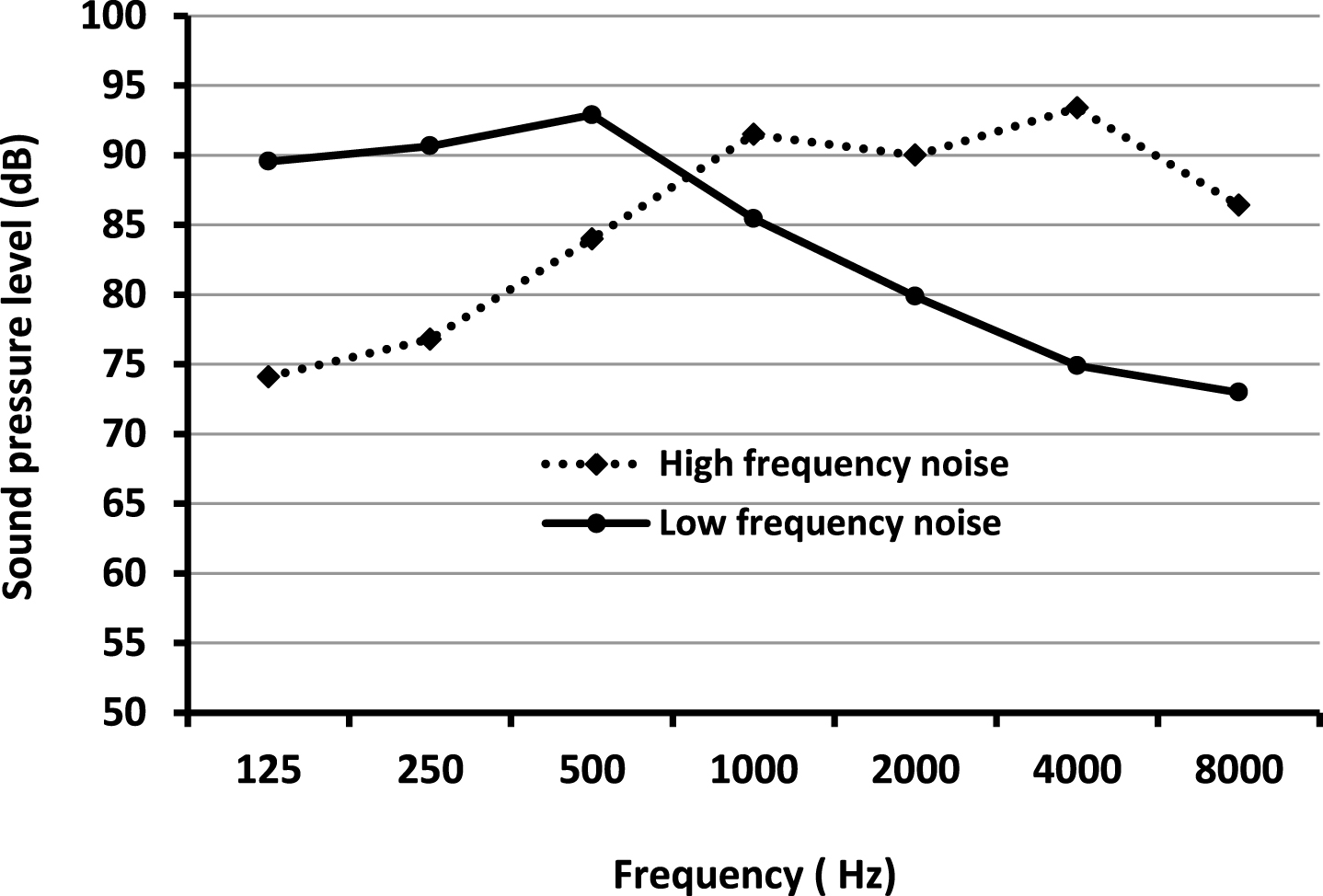
Noise spectrums in octave band in the workstations of the studied factories.
Figures 5 and 6 illustrate the comparison of the actual and labeled insertion losses in octave bands for the tested earmuffs (Manufacture type, C and D). The results showed that, regardless of the characteristics of the noise to which workers’ earmuffs were exposed, actual insertion loss values for earmuffs in octave band frequency was less than the labeled insertion loss values (p < 0.05). The graphs showed very slight insertion loss at low frequencies.
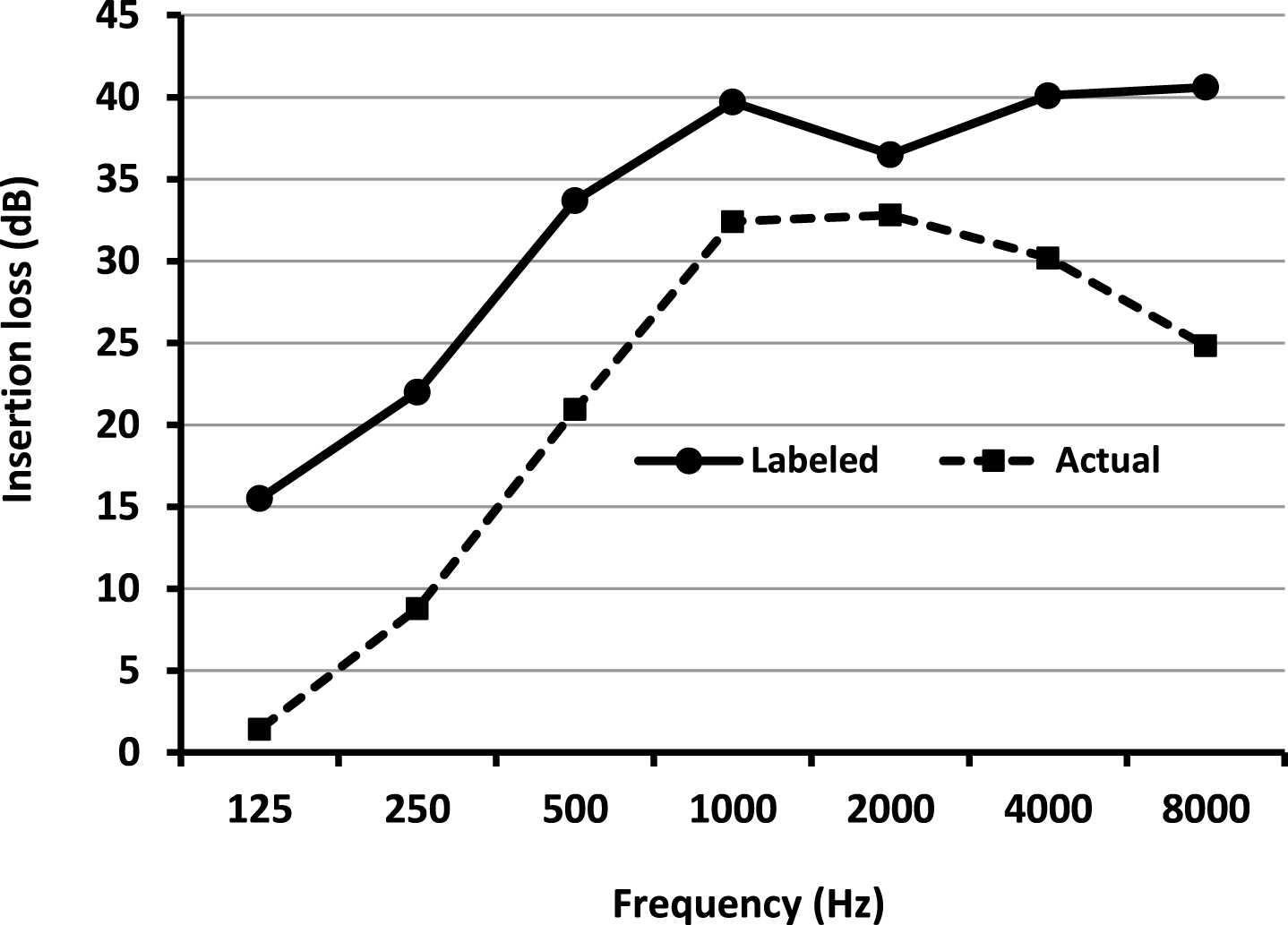
Actual and labeled insertion losses for the tested earmuffs (Manufacturer type, C).

Actual and labeled insertion losses for the tested earmuffs (Manufacturer type, D).
The variability in insertion losses within individuals and within earmuffs were reported based on the standard deviations. The results showed that, for earmuff; model A, the variability within individuals, and within earmuffs are 0.4 dB and 1.1 dB, respectively. The within individual variability shows the difference in IL achieved by each fitting. The within earmuff variability represents the changes in IL achieved by three earmuffs.
One of the main factors in achieving the effective noise attenuation during workday is the wearing time of HPDs. The acquired actual noise reductions are applied under the presumption that the device is continuously being worn during exposure to noise. The results of effective noise attenuation values as a function of percentage time of using earmuffs are presented in Fig. 7. The result indicated when hearing protectors are not worn only for 10% of the time duration of noise exposure, their noise protection drops noticeably compared with the actual noise attenuation value. The results showed that, for example, if a worker wear HPD 75% of the working time, the effective protection value provided by a hearing protector (25 dB) is only 15.3 dB.
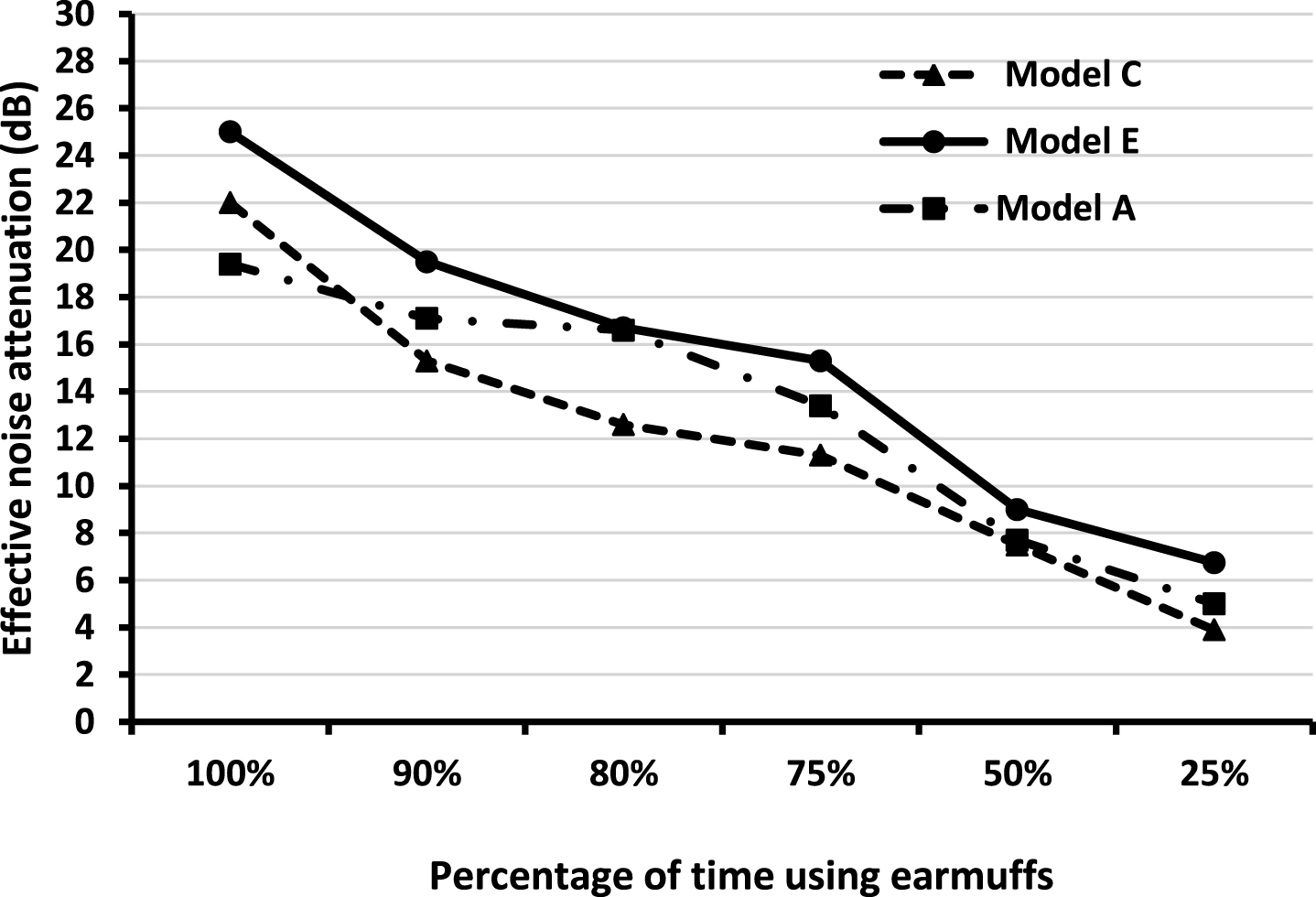
Effective noise attenuation values of HPDs as function of percentage time of using earmuffs.
The score of the comfort index (CI) for various HPDs is presented in Table 4. Based on the given scores, the comfort of the tested earmuffs was within the acceptable level. Moreover, the CI scores of the tested devices were not statistically different (p > 0.05).
The actual noise attenuation values of the earmuffs at low frequency noise dominant
The actual noise attenuation values of the earmuffs at high frequency noise dominant
The comfort index (CI) scores of the studied earmuffs
The noise protection data of the HPDs labeled by manufacturers is considered one of the most challenging issues for employing hearing protection. The results mainly showed that, regardless of the characteristics of the noise to which workers’ earmuffs were exposed, actual insertion loss (IL) values for earmuffs in octave band frequency was less than the labeled insertion loss (IL) values. Ergonomic aspects of the available earmuffs including cup size, foam quality and also lack of proper training for users about individual fitting can be considered as the main factors affecting actual insertion losses compared to the laboratory condition of manufacturers for acquiring the labeled insertion losses data. In the current study, it was observed that the cup size of some earmuffs were slightly smaller than the dimensions of subjects’ auricles. Moreover, a number of subjects have higher skill for earmuff fitting than others.
Other causes can also describe the difference between the results of FMIRE and labeled insertion losses data from REAT especially at lower frequencies. Firstly, because of physiological noise masking, the subjects overestimate noise attenuation rating of HPDs during REAT tests. Moreover, noise leakage due to poor fitting influences underestimating the noise reduction ratings acquired by FMIRE especially in low frequency bands [9].
Henrique et al. reported that noise leakage occurs at frequencies ranging from 125 to 2000 Hz due to the nature of foam lining of the cup [25]. Guidaa et al. (2014) evaluated the hearing protection devices used by police officers in the shooting range. Their results also confirmed the differences between noise protection data (insertion loss in octave band) suggested by manufacturers and the noise insertion losses measured in actual situations were statistically significant [26]. Kotarbinska and Kozlowski (2009) also confirmed that the main causes of low acoustic performance of HPDs in workrooms are bad technical condition of earmuffs (32.2% of the cases) and an incorrect way of wearing them (15.2%) [19].
The actual noise attenuation values (as single number values) of the earmuffs exposed to low frequency noise are lower than the labeled noise reduction ratings. On the other hand, the actual noise attenuation values (as single number values) of the earmuffs exposed to high frequency noise were higher than the labeled noise reduction ratings. It should be noted that, in the REAT method, the labeled noise reduction ratings are measured using reference noise source (pink noise) in laboratory conditions. However, in real condition of workplaces, the nature of noise spectrum can be different. Typical acoustic materials (e.g. foam used in earmuff cup) have high noise insulation characteristics in high frequency noise band. Therefore, the tested earmuffs have high acoustic performance in exposure to high frequency noise compared with the exposure to reference noise sources (pink noise) and low frequency noise.
Wu et al. (2016) also reported that exposure to low frequency noise sources might be one of the most important causes of difference between the labeled noise reduction values and the actual noise reduction data for HPDs [27]. It can be concluded that, the actual noise reduction values acquired from earmuffs in real condition of workplaces are influenced by the frequency nature of noise to which workers are exposed. Knowledge of the ambient noise characteristics is a key criterion when evaluating the performance of hearing protectors in field conditions [16].
The current results confirmed that the effective noise protection of an earmuff is substantially reduced when it is removed for even a short period during workday. Strasser et al. (2015) also showed that the noise protection losses were occurred with minimally reduced wearing time of hearing protection devices [28]. Because of this effect, a device with lower attenuation (and perhaps greater comfort), if worn consistently and correctly, can provide greater protection than a less-regularly applied higher attenuation HPD. In other words, the best hearing protector is the one that is worn consistently and correctly [29, 30]. The results showed that the comfort scores of the tested earmuffs were within the acceptable level. Hence, high comfort scores encouraged workers to effectively use earmuffs. It should be noted that, the lack of speech intelligibility is one of main causes that workers cannot continuously use hearing protection. The results of the current study can be followed by employing speech audiometry method for complementary researches about speech intelligibility of customary passive HPDs. The speech audiometry can determine workers’ ability to recognize speech stimuli during use of any type of passive HPDs [30, 31]. It is recommended that the speech intelligibility criterion should be considered for selection of passive HPDs by occupational health professionals in order to improve the effectiveness of hearing conservation program.
It should be noted that, the main challenges of the current experimental study were limited workers’ participation. Due to workers’ apathy to participate in experiments, the sample size of the current study was restricted. Moreover, some ergonomic aspects, like cup size and the total force of the headband, can effect on individual fitting. In the current study, it was observed that the cup size of some earmuffs were slightly smaller than the dimensions of subjects’ auricles. The effects of head anthropometric characteristics on individual fitting and consequently, the acoustic performance of HPDs can be studied in the future studies. The influence of aging on the noise attenuation of earmuffs can also be other important topic for investigation.
enlargethispage 6pt
Finally, the non-subjective nature of the FMIRE tests led to the results with good reproducibility and a small standard deviation, indicating that the method has high precision. As mentioned, the REAT method requires the subject to hear, listen, and respond to test tones in an active fashion, and thus may be problematic for actual workers with impaired hearing and other confounders in noisy workplaces [32, 33]. One advantage of the FMIRE is that it can be used to test attenuation over a wide range of sound levels in order to explore the potential level-dependent attenuation of certain devices. They are also quick and easy to use, and can contribute to worker training and motivation.
Conclusions
The actual insertion losses of the tested earmuffs in octave band were lower than the labeled insertion losses data. Ergonomic aspects of the available earmuffs including cup size and lack of proper users’ training about the way the device should be fit were determined the main factors affecting actual insertion losses compared to the laboratory condition of manufacturers for acquiring the labeled insertion losses. Moreover, the actual noise reduction values achieved from earmuffs in real condition of workplaces are influenced by the frequency nature of noise to which workers are exposed. Therefore, data about the ambient noise characteristics is a key criterion when evaluating the acoustic performance of hearing protectors in any workplaces. The comfort scores of the tested earmuffs were within the acceptable level. However, lack of speech intelligibility is one of the main factors discouraging workers from continuous use of hearing protection. The results confirmed that the effective noise protection of an HPD is substantially reduced when it is removed for even a short time of the workday. Therefore, the results of the current study can be followed by employing speech audiometry method for complementary researches about speech intelligibility of HPDs. This study proposed the local derating pattern for using the labeled NRR of earmuffs. Occupational health experts can employ this local data to implement effective hearing protections.
Conflict of interest
The authors have no conflict of interest to declare.
Funding
This study was financially supported by Vice President for research in Hamadan University of Medical Sciences (project number: 9403191440).
Footnotes
Acknowledgment
The authors would like to thank the managers of factories and their workers for their cooperation. This study was approved by the Ethical Committee for Research in Hamadan University of Medical Sciences.