



Abstract
BACKGROUND:
Music is an economical, advantageous and reliable means of reducing stress or stress-related problems.
OBJECTIVE:
The present study aims to evaluate the effects of playing music during surgery on the performance of the surgical team through a systematic review of published studies.
METHODS:
The relevant databases of Medline/PubMed, Scopus and Science Direct were searched up to July 2018 to find related articles. The comprehensive literature search was reduced to 19 articles that met inclusion criteria.
RESULTS:
The articles comprised 13 studies and reported on the positive effects of music on the performance of the surgical team. The effects included a more relaxing and pleasant environment, more accurate and precise performance of tasks, a decrease in the mental workload and task completion time, increased situation awareness, a reduction in stress and anxiety and improved memory consolidation. Five studies reported on the negative effects of music during surgery as being a negative impact on task completion, poor auditory performance and increased likelihood of having to repeat requests. The remaining article reported no significant differences between groups compared.
CONCLUSIONS:
Most studies reported positive effects of music on the surgical team during surgery. These results indicate that it may be possible to improve the performance of the surgical team during surgery while playing controlled music.
Introduction
Music is the art of producing sound using the voice or instruments to affect the listener’s mental status [1]. Music has achieved the position of a universal language that motivates people and cheers depressed and bored people [2].
It is common to playback background music in daily living and the workplace. The question that whether human work concentration is affected by background music has been raised in some studies [3]. It has been reported that work attention performance could be improved by music. Music can alter human emotions [4] and workers job-site behavior [5]. A higher satisfaction and productivity have been documented in workplace by background music [6]. Stress-induced anxiety has been reported to decrease with the relaxing effects of music, leading to improved performance on stressful cognitive tasks [7]. Learning that to what extent listening to music affects attention to work and emotions is of priority in human resource management, considering the pervasiveness of background music in the workplace [4].
It has been reported that music can reduce the pain and anxiety in patients during and after surgery [8, 9]. A few studies have shown that music may affect the performance of the surgical team [9]. Listening to music from classical or rock is possible in operating rooms. A survey in the United Kingdom reported that 90% of surgeons, especially plastic surgeons, listen to music during surgery [10]. Studies reported that listening to music improved a surgeon’s performance, especially when tying laparoscopic sutures, mesh alignment, and layered pigskin closures [11, 12]. Listening to their favorite music improved the mental and physical reactivity of surgeons [13]. Therefore, music is an economical, advantageous and reliable means of reducing stress or stress-related problems [14].
Although music helps sooth difficulties, there are moral and pragmatic limitations to its effects on stress reduction and improving surgeon performance [15]. Music supports medical tasks by creating a relaxing and comfortable atmosphere. Surgeons have given different feedback about music during surgery. Some believe that it is a useful tool in operating rooms, but others note that it can have negative and adverse effects [9]. This study is a systematic review of available recent research that shows the effect of playing music during surgery on the performance of the surgical staff.
Methods
Search strategy
This systematic review was designed and conducted in 2018. Only English-language articles were evaluated. An extensive literature search was done in the relevant English databases of Medline/PubMed, Scopus, Cochrane Library and Science Direct. Appropriate medical subject headings (MeSH) were applied to the following search strategy in each database up to July 2018 (music) AND (operating room OR operating room technicians OR operating room personnel OR surgical team OR surgeon).
Study selection and eligibility criteria
All studies that evaluated the effects of playing music on the performance of the surgical team were included in this study.
Data collection process
After the relevant articles were determined, two researchers independently evaluated the quality of the papers. These two researchers were blinded to the names of the authors and their affiliations as well as to the journals in which the articles were published. Any discrepancies between researchers were resolved by a third reviewer. After identifying the eligible articles, previously designed forms were used for data gathering.
Results
Study selection
The comprehensive literature search resulted in 176 potentially related articles. After evaluating the papers, 19 were determined to be eligible and were included in the study. The flowchart of study selection is shown in Fig. 1.
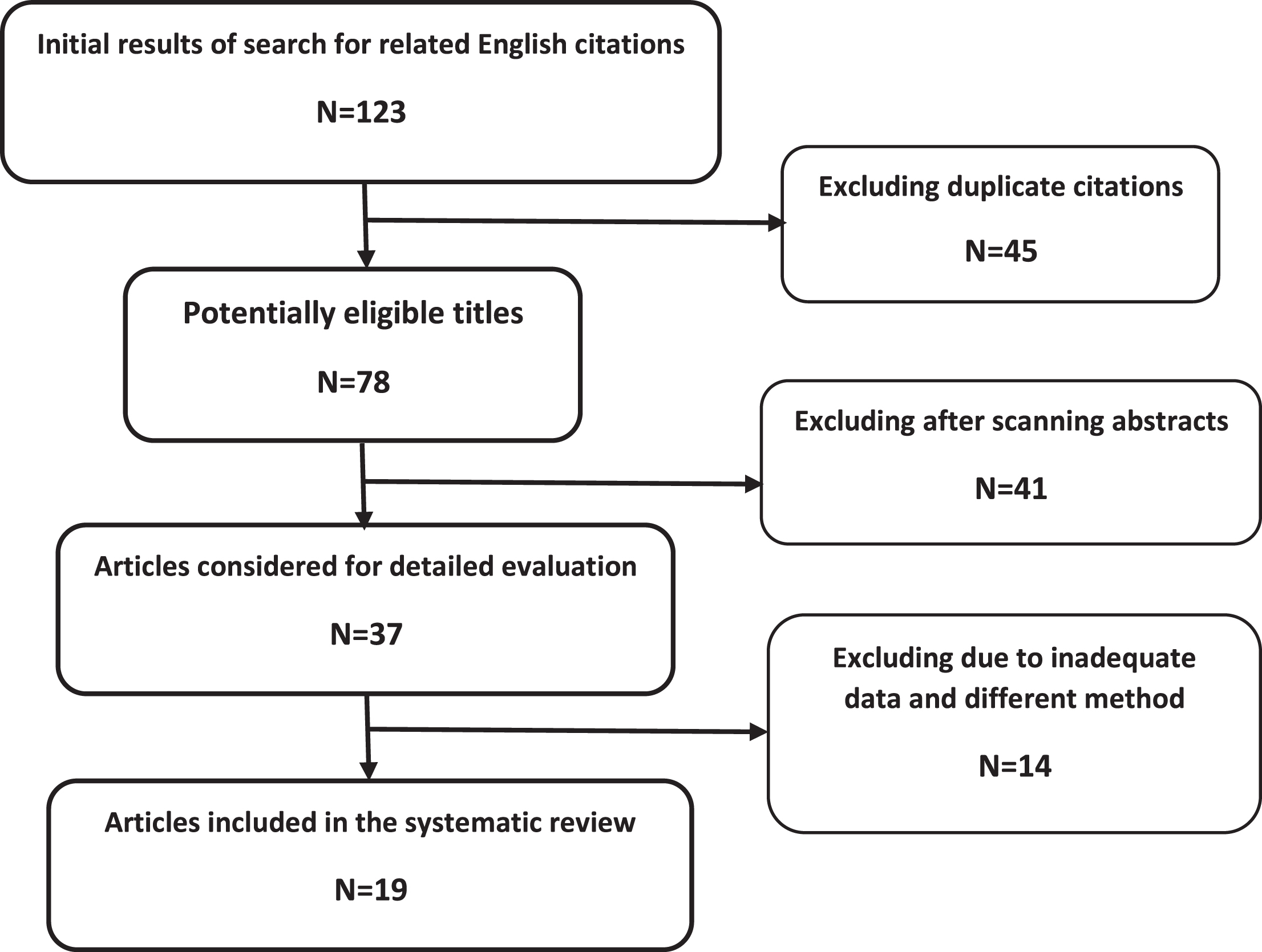
Flowchart for study selection.
Relevant database including Medline/PubMed, Scopus, and Science Direct were searched up from 1994 until the end of July 2018 to identify related articles. In these 19 eligible articles, the effects of playing music during surgery on the performance of the surgical team were evaluated. Among these studies, 13 studies reported positive effects of music on the performance of the surgical team. In contrast, five studies reported negative effects of music during surgery. The last remaining article didn’t report any significant differences between the comparative groups. Because of different scales that were used in the studies, conducting meta-analysis on the data was not possible. Table 1 shows the main characteristics and results of the studies included in this study.
Overview of publications
Overview of publications
Many studies have evaluated various methods to reduce stress and improve surgeon performance in the operating room. These include education [29] and gum chewing [30]. In the current study, ten articles examined the effect of music on the performance of the surgical team. They reported that playing music can improve the performance of the surgical team [15, 31] by decreasing stress and increasing the efficiency of a surgeon [14], providing a warm and satisfactory atmosphere for the patients and medical staff [32], increasing learning, preventing decreased initial functioning, memory consolidation [12], creating pleasure [1], and decreasing autonomic reactivity [2]. Two studies reported that music can increase the speed, precision and concentration of the surgeons and other surgical team members [20, 31] by increasing cardiovascular activity.
The results of four studies suggested that music can reduce stress by improving the mental states of the surgical team members by fostering satisfaction and pleasure in the working environment [11, 31]. Two studies reported that the mental workload and stress levels were lesser by music playback than no music in the operating room among nurses [28] and operating staff [17], respectively. The results of two other research studies suggest that music can enhance peace and calmness in the surgical team [14, 19]. One important issue during surgery is the effectiveness of conversation among the surgical team. The results of one study showed that music can decrease the stress [14] of the team.
Some studies showed that music could mask worrying sounds [31] and increase situation awareness [21], while the results of other studies demonstrated that music might decrease the concentration of anesthetists on alarms [12] and mask the surgeon’s voice increasing the need to repeat requests [18]. The results of the one study suggested that music might enhance relaxation in the working environment and reduce arterial pressure [19].
Limitations
The research methodology of most studies conducted on this issue was subjective and few had objective methodology. Furthermore, the differences between the tools and methods made the results of these studies prevented comparison of the studies. For this reason, it was not possible to perform meta-analysis on the collected data.
Conclusion
Most studies have revealed the positive effects of playing music in the operating room during surgery on the surgical team, although the negative effects should not be neglected. It seems that the use of objective evaluation methods to examine the effect music could provide more tangible and clearer results.
Conflict of interest
None to report.