



Abstract
BACKGROUND:
Finding the best practices for accident prevention is possible by identifying the influential factors affecting accident occurrence and their interactions as well as implementing corrective actions for the root cause factors.
OBJECTIVE:
This study was aimed to determine the cause-effect relationships and the interaction of the influential factors affecting accident occurrence and determine the critical root factors.
METHODS:
This study was carried out based on the opinions of a panel of experts and used the fuzzy DEMATEL method.
RESULTS:
The results showed that “organization safety attitude”, “safety communication”, “work and safety training” and “safe design of systems” are root cause variables. Also, “work and safety knowledge” and “experience in the job” are individual cause variables.
CONCLUSIONS:
Organizational factors and some of individual variables are the critical factors that affect the occurrence of accidents. Therefore, corrective actions for accident prevention should primarily focus on the correction of these variables.
Introduction
According to International Labor Organization (ILO) global estimates, about 337 million fatal and non-fatal occupational accidents occur annually, the annual cost of which is 4% of the global Gross Domestic Products (GPD) [1]. The World Health Organization (WHO) reports also confirm that nearly one hundred million people are victims of work-related accidents and 200,000 of them die each year [2]. These accidents result in serious physical and psychological consequences for accident victims, their colleagues, associated parties and families [3]. Occupational accidents are the most serious social and public health problems in all countries [4] and the reduction of work-related accidents is one of the most important principles of industrial health and safety [5].
Despite the limited resources available, organizations try to take the most effective control measures for cost saving and lowering accident rates [6]. On this basis, it is necessary to identify the most influential accident predictors [7]. The factors affecting the occurrence of accidents must first be identified in order to reduce work-related accidents and injuries [8]. The scientific approach of studying accident causation started in 1930 when the domino theory was developed [9]. According to this theory, accidents result from a chain of sequential unsafe conditions and human errors and most accidents are the result of unsafe behaviors [10]. Subsequently, the sociotechnical system theory became operational in the 1950s and organizational factors were considered as influential factors in the occurrence of accidents since 1970. Then, the term safety climate was coined in the 1980s [9]. The organizational approach, developed after the Chernobyl accident, considers organizational factors as the major causes of accident occurrence. The results of some studies indicate that 30–40 percent of accidents result from organizational factors [11]. As the perspective regarding accident causation changed, various accident causation theories such as domino theory, human factors theory, epidemiological theory and Swiss cheese accident causation model were also developed. Most of these theories attribute accidents to a chain of hardware problems, human errors and inappropriate environmental conditions which ultimately lead to a deleterious accident [12].
In most of the existing accident analysis models, unsafe behaviors are considered to be the most important causes of accident [12]. On the other hand, it should be noted that unsafe behavior is the last ring of the chain and only connects various defects of the organization to the accidents [13]. Indeed, unsafe behavior results from a combination of different factors [14]. Based on the domino model, unsafe conditions and acts can be eliminated using engineering controls and behavioral-based safety approaches, respectively [9]. In the behavior-based safety approach, the determinants of safety behavior including individual and organizational variables should be identified to improve safety behavior [15, 16].
However, unsafe acts have been considered as the major causes of accidents in many organizations, especially in developed countries, there are many variables that directly or indirectly affect behavior and are indeed root causes of accidents [17]. Hence, the identification of variables that cause unsafe behaviors is required for an improvement in employees’ safe behaviors and consequently accident prevention [16]. So far, many studies have examined various variables affecting safety behavior and various classifications of these variables have been provided. According to some studies, organizational factors and individual/psychological factors affect safety behaviors [13]. Some other studies point out that unsafe acts result from individuals’ tendency toward error or from the conditions that induce error. In other words, personality traits and the occupational environment may cause unsafe acts [2]. Also, some studies have classified the variables that affect safety performance into two groups: latent and manifest variables. Latent variables have also been divided into exogenous and endogenous categories [18]. Some other studies have presented other classifications of various variables that affect safety behavior and accident occurrence [3, 19].
What is certain is that previous studies have widely investigated various factors affecting safety behavior and accident occurrence [3, 8]. However, some studies have determined the causal relationship between factors affecting safety behavior and accident occurrence [5, 20–24] but these studies were conducted as cross-sectional and retrospective studies that were conducted in a specific industry or workplace and in some case one type of accident and only a few variables were considered.
Investigating the causal relationship between the variables can contribute to identification of the root causes of accidents. Cause-effect relationship of accident predictor variables is very complex and since the group decision-making is based on a standard method, it is a good solution to complex problems [25]. The present study thus aimed to investigate cause-effect relationships among some of the major factors affecting accident occurrence in industries based on group opinions of safety experts and used a fuzzy multi-criteria decision-making method.
Methods
Group decision-making is a good strategy in which the best decision is made based on the collective wisdom of a group of experts in a field. On the other hand, the individuals who participate in a survey usually evaluate the subject of a survey using ambiguous and uncertain verbal phrases [25]. In these cases, definite ratings (like the Likert scale) do not provide accurate results for fusing opinions and are criticized, accordingly [26]. Therefore, fuzzy numbers can be used instead of crisp numbers to give weight to verbal phrases and to obtain more accurate information and results [27]. Hence, the fuzzy logic and DEMATEL method were combined in this study to identify and analyze causal-effect relationships among the major factors affecting accident occurrence. This is because fuzzy logic is a very useful method for measuring the ambiguity of concepts that are associated with human being’s subjective judgment [25].
Decision making trial and evaluation laboratory (DEMATEL) method
The DEMATEL method was developed by the Battelle Memorial Institute of Geneva Research Center for solving complicated problems through group decision-making [28, 29] and is a sophisticated method for aggregating experts’ opinions and developing a structural model. This method is used to investigate the relationship between factors affecting a phenomenon [30], as well as constructing a map between system components in respect to their type and severity using the cause-effect diagram and thus provides illustrative and visible solutions to problems [31]. Hence, appropriate solutions can be found to complicated problems through analyzing the relationship between factors affecting a phenomenon using the DEMATEL method [32]. In 2007, for the first time, Wu combined this method and fuzzy logic to increase the accuracy of group decision-making results [33]. From then on, this method has been used repeatedly in studies. The roadmap and steps of conducting the study and the procedure of the fuzzy DEMATEL method is presented in Fig. 1.

Roadmap and steps of conducting the study.
Decision makers selection was based on their knowledge, experience and research fields. Some university lecturers and researchers with at least five years of experience in occupational safety and related fields were invited to participate in the study. The backgrounds of the experts participating in the study are presented in Table 1.
Backgrounds of experts that participate in conducting study
Backgrounds of experts that participate in conducting study
X: number of experts participating in the study.
(
u
ij
: Upper numbers of the each fuzzy set in initial direct-relation matrix.
Nl: Non-fuzzy matrix consisting of lower fuzzy numbers of each fuzzy set in normalized initial direct-relation matrix.
Nm: Non-fuzzy matrix consisting of medium fuzzy numbers of each fuzzy set in normalized initial direct-relation matrix.
Nu: Non-fuzzy matrix consisting of upper fuzzy numbers of each fuzzy set in normalized initial direct-relation matrix.
D: Sum of the row values of matrix
R: Sum of the column values of matrix
tij : Values in row i and column j of matrix
This study aimed to determine the relationships among the factors affecting the occurrence of accidents and to investigate the cause-effect relationships of these variables according to a survey of safety experts in the framework of DEMATEL method as one of the sophisticated methods for determining the relationships among the factors affecting a phenomenon. Therefore, at the beginning of this study, the variables were extracted through literature review to select the influential factors in the occurrence of accidents. Then, 13 influential factors affecting the occurrence of accidents were selected by a panel of safety experts using brainstorming (Table 3).
The influential factors affecting the occurrence of accidents
The influential factors affecting the occurrence of accidents
After collecting the experts’ opinion in the form of pairwise comparison matrices, expert opinions were aggregated and initial direct-relation matrix was formed by calculating the mean fuzzy matrix (Table 4). Then, the direct-relation fuzzy matrix was normalized and the total-relation fuzzy matrix was calculated in the next step. The total-relation fuzzy matrix was defuzzified to convert the fuzzy numbers of the total-relation fuzzy matrix into comparable crisp values (Table 5).
Direct-relation fuzzy matrix
The defuzzified total-relation matrix
In the defuzzified matrix, the threshold value was 0.27. Therefore, the scores greater than or equal to 0.27 indicate the significant impact of the variable in the row on the variable in the column [34].
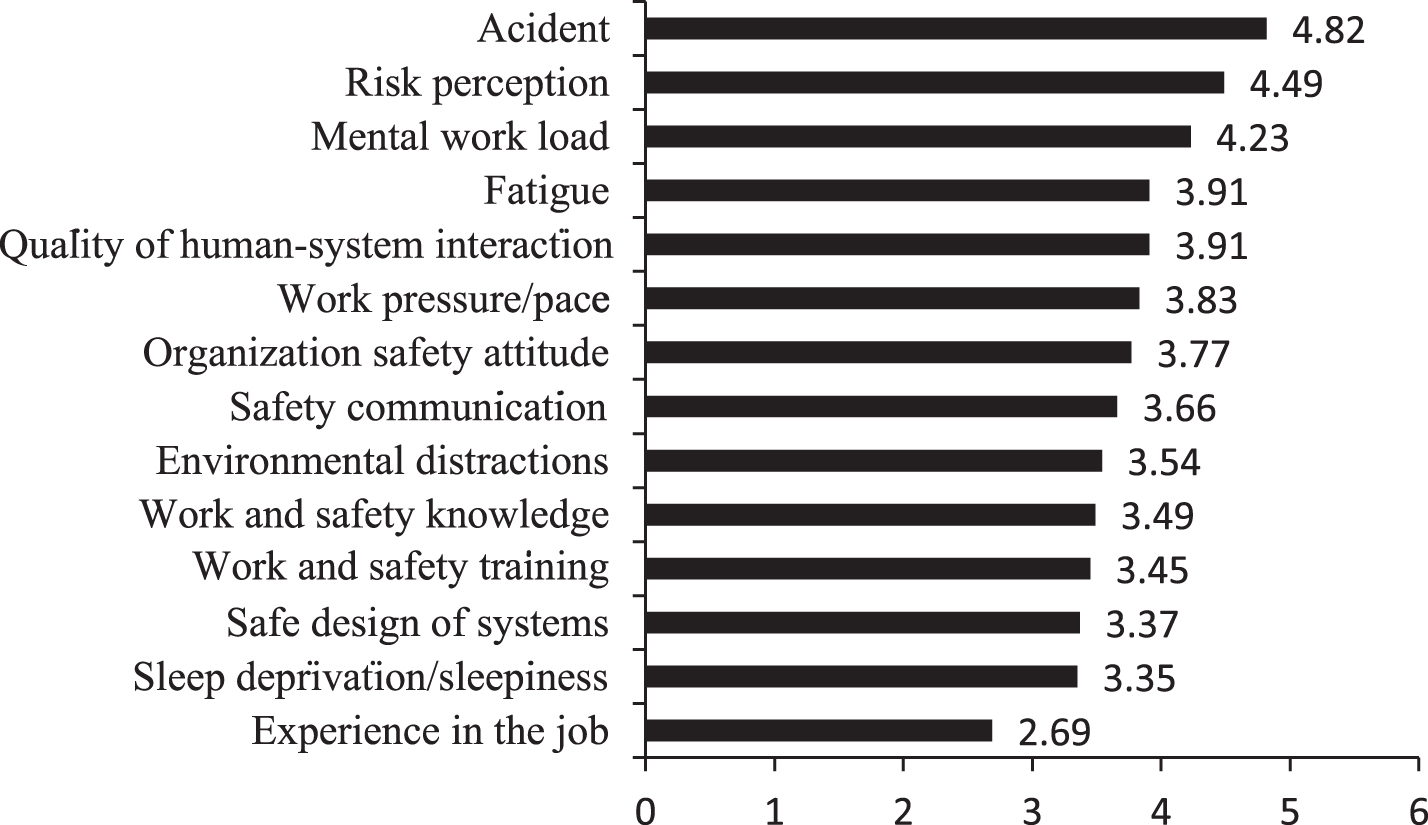
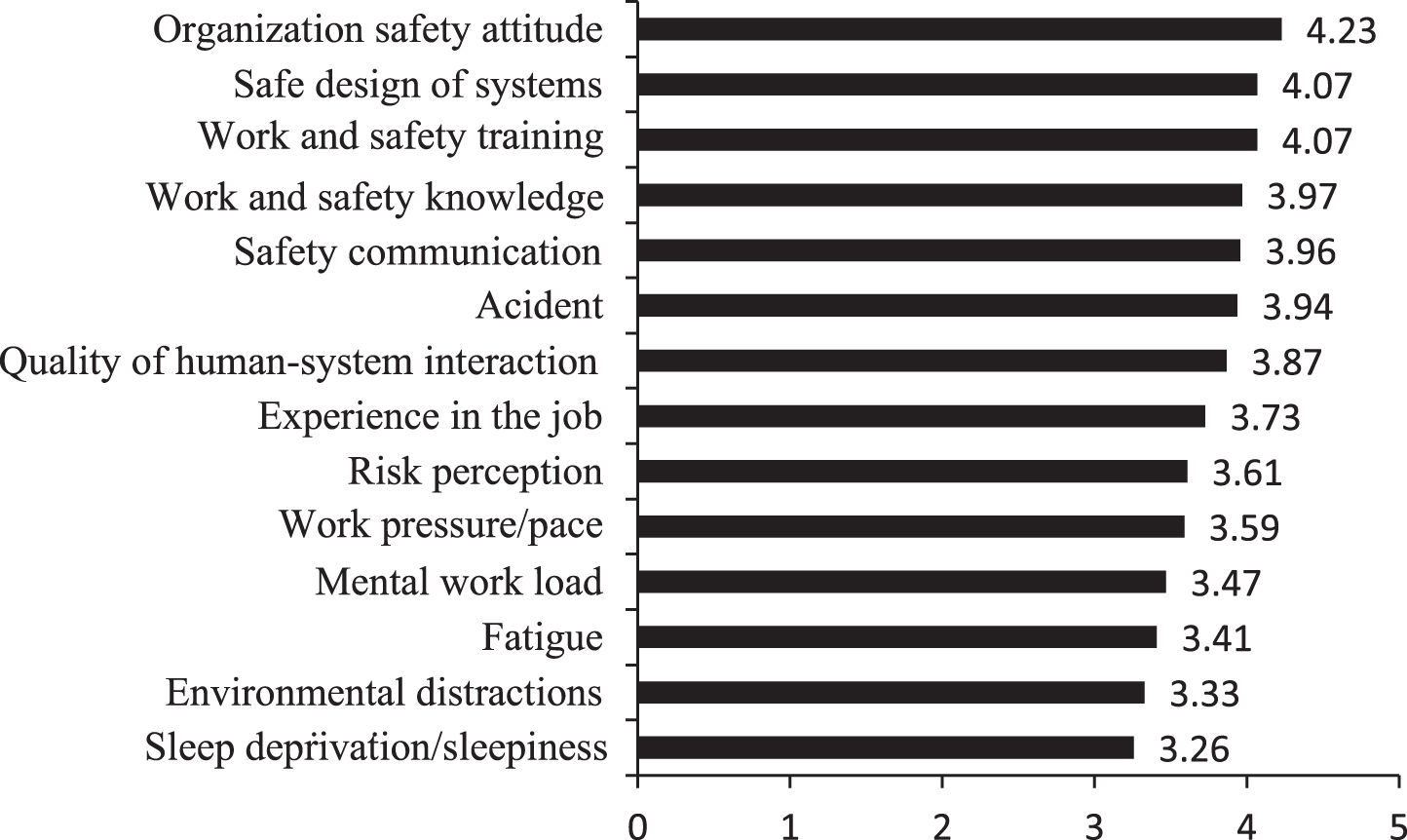
D and R values were calculated to determine the variables’ impact and degree of being impacted; respectively. The sum of each row in Table 5 (D) indicates the degree of the variable’s impact on other variables (Fig. 2) and the sum of each column (R) indicates the degree of being impacted by other variables (Fig. 3).
R values, the degree of being impacted by other variables.
D values, the impact of each variable on other variables.
According to the results and D values, “organization safety attitude” had the most impact on other variables, and “safe design of systems” and “work/safety training”, were the next most influential factors, respectively. According to classifications of accident predictors, these three factors can be considered as the organizational factors having the most impact on other variables and somehow these results confirm the significance of the role of organization in safety development.
“Sleep deprivation/sleepiness”, “environmental distractions” and “fatigue” had the least impact on other variables, respectively. According to the results presented in the last row of Table 5 and considering the threshold value of defuzzified total-relation matrix (0.27), accident occurrence did not have a significant effect on “experience in the job” and “sleep deprivation/sleepiness”, however, it had a significant impact on other variables.
According to R values, “accident” was the most impacted factor in the system, and “risk perception”, “mental workload” and “fatigue” were the next most impacted factors, respectively. On the other hand, “experience in the job” was the least impacted factor and “sleep deprivation/sleepiness” and “safe design of systems” were the next least impacted factors, respectively.
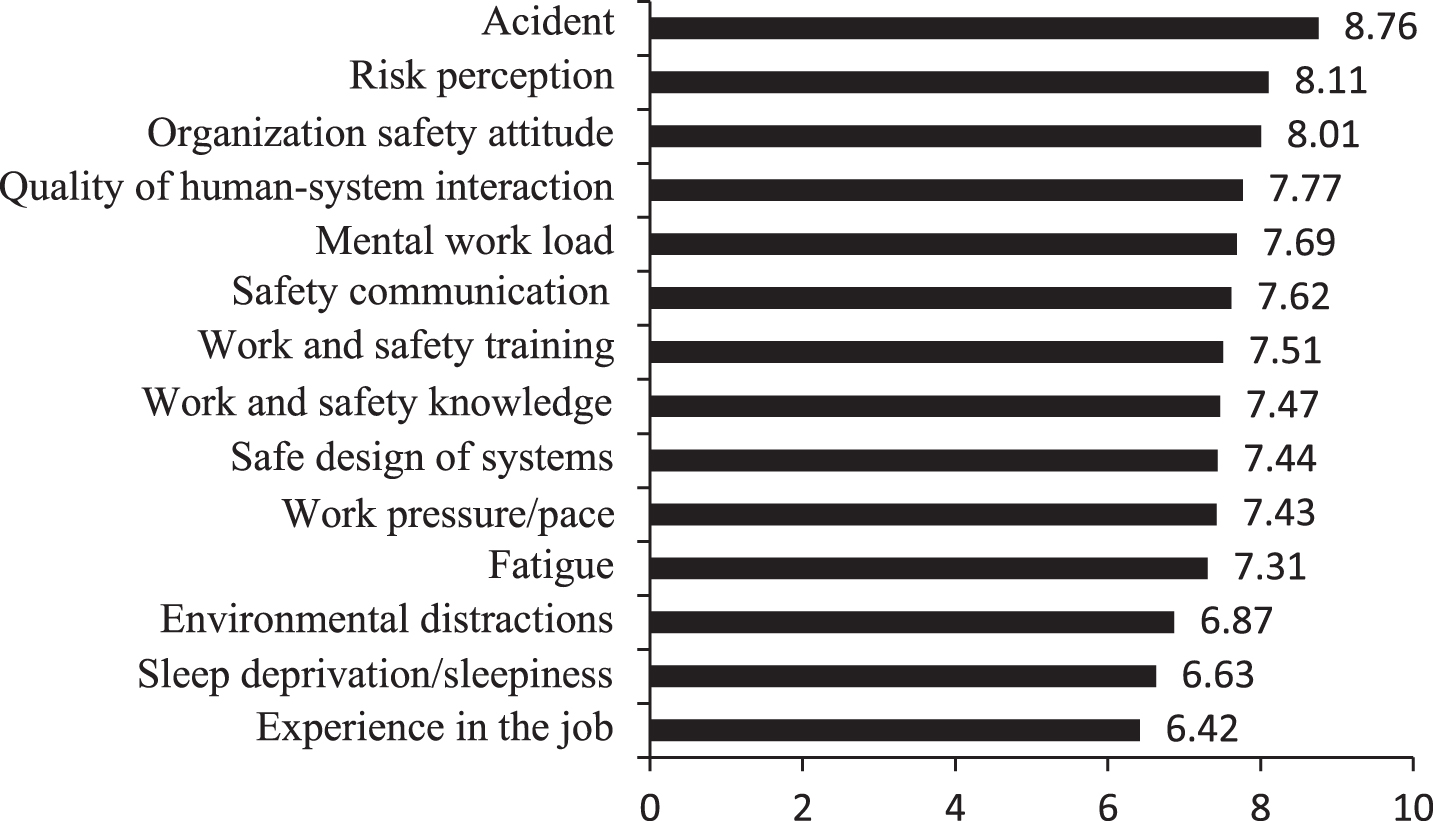
D + R values (Fig. 4) show the interaction between each variable and other variables. According to D + R values, “accident” and “risk perception” and “mental work load” had the most interactions with other variables, respectively. Moreover, “experience in the job “, “sleep deprivation/sleepiness” and “safe design of systems” had the least interactions with other variables, respectively.
D + R values, the extent to which each variable interacted with other variables.
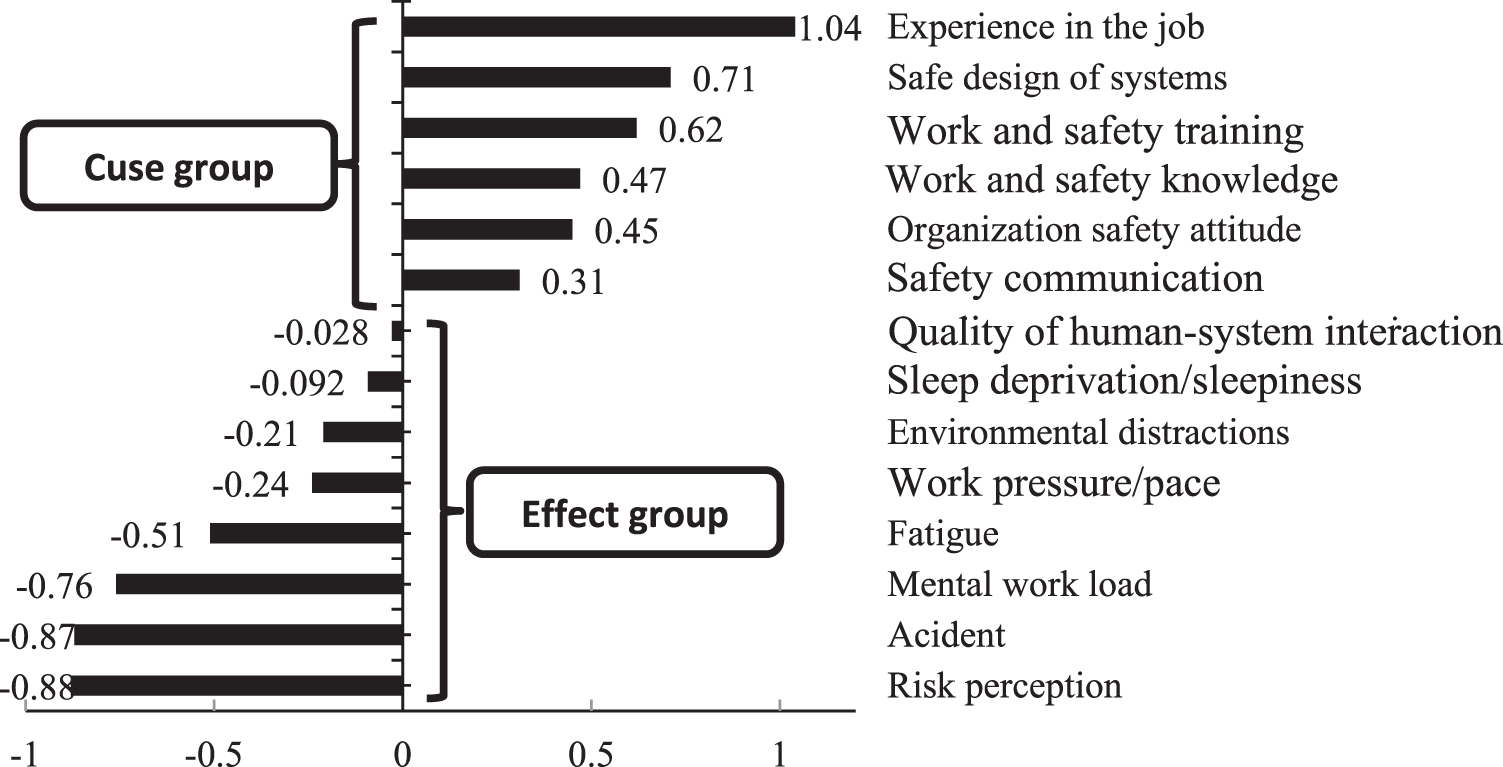
D-R value (Fig. 5) shows the type of variable’s interaction, i.e. if it is the cause or effect variable. According to Fig. 4, the variables are classified into two categories: cause variables and effect variables, so that if D-R was greater than zero, the variable would be a cause variable and if it was a negative number, the variable would be considered as an effect variable. Among the cause variables, “experience in the job”, “safe design of systems” and “work/safety training” had the highest D-R values and were the most significant root causes of accidents. All of the cause variables accept “safety/work training” and “experience in the job” can be considered as the organizational factors that play a fundamental role in safety improvement.
D-R values, the roles of variables.
According to the results, “experience in the job”, had the highest DR value. However, it had the least interaction (D + R) with other variables, it was the least impacted (R) and had a moderate impact (D) on other variables (3.73). Therefore, it can be concluded that “ experience in the job” was relatively independent of the rest of the system and was not much impacted by other existing variables but affected accident occurrence directly or indirectly and had a significant impact on a large number of variables including “risk perception”, “mental workload”, “fatigue”, “quality of human-systems Interaction” and “work pressure/pace”.
It should also be noted that according to the total results, “sleep deprivation/sleepiness”, had the least interaction with other variables (after “experience in the job”) and was the least impacted variable in the system so that none of the variables had a significant impact on “sleep deprivation/sleepiness” (Table 5). Therefore, it can be concluded that sleep deprivation (resulted from lifestyle and individual and social habits) is independent of many other variables in the system and affects accident occurrence directly or through some variables such as “risk perception”, “fatigue” and “mental workload”.
The results of the DEMATEL method can be applied for prioritization of corrective actions for modifying the intended effect variable. Illustrating the results of data analysis via the cause-effect diagram makes prioritization of corrective actions possible. According to the results of the cause-effect diagram (Fig. 6), the variables can be classified into four categories displayed in 4 zones of the diagram. The corrective actions should begin for the variables of a zone 1 of the diagram and include the variables of other zones, respectively. In each zone of the diagram, however, corrective action priority is given to the variables in the upper and right quadrants. On this basis, it can be said that the most influential root causes of accident occurrence including “organization safety attitude” and “safety communication” are in zone 1. Therefore, corrective actions have to be primarily taken for these two variables in order to reduce the occurrence of accidents. “Training” is also in this category.
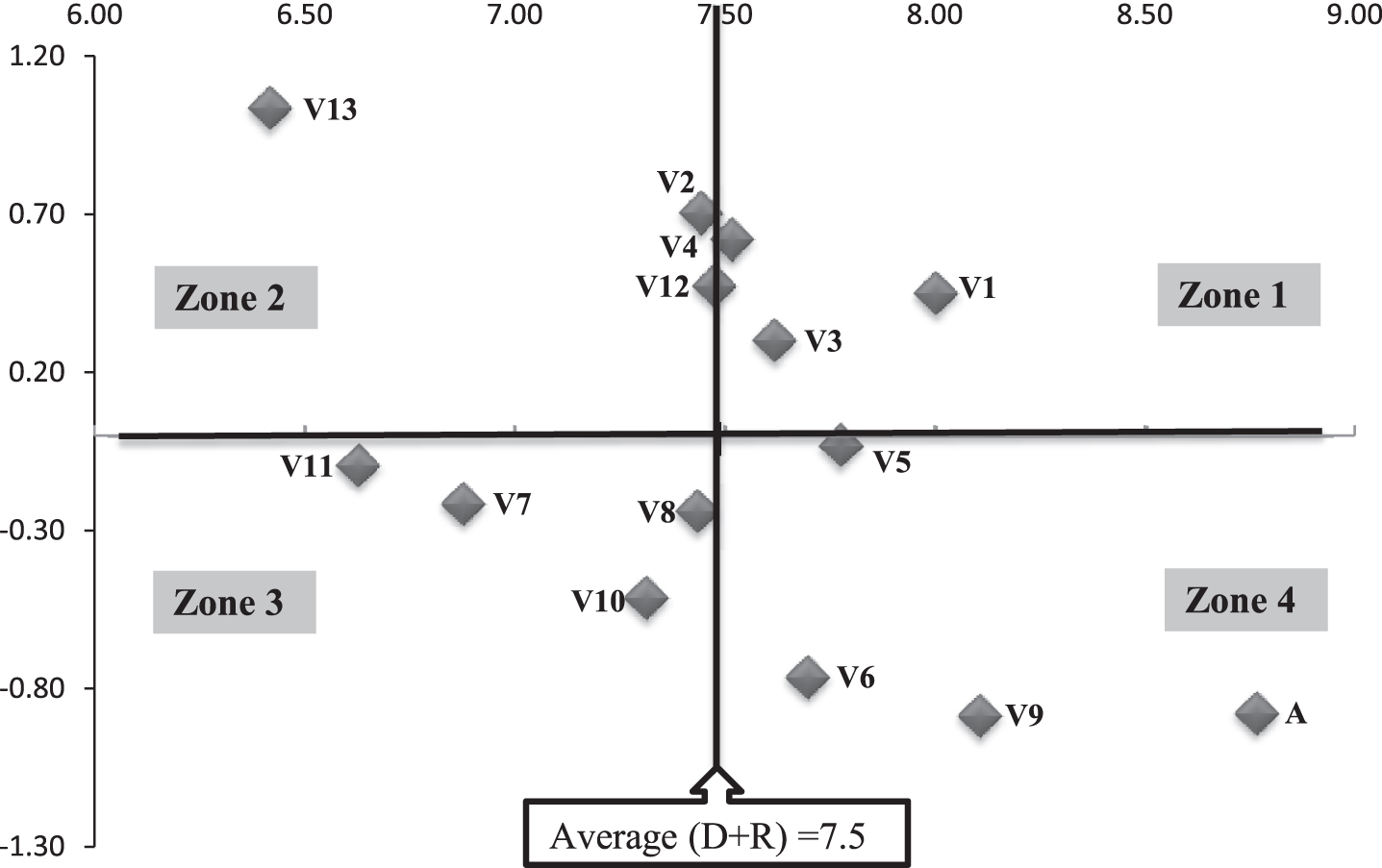
The cause-effects relationships of the variables.
“Safe design of systems” and “work and safety knowledge”, which are almost in zone 2, are the cause variables with less importance than the first category. Therefore, they should be the next top priorities of implementing corrective actions for accident prevention. “Experience in the job” (zone 2), with the least interaction and being the least impacted variable, was recognized as a strong cause variable which independently affects accident occurrence.
The variables of zone 3 are impacted by the variables of zones 1 and 2 and affect the variables of zone 4 including “work pressure/pace”, “fatigue”, “environmental distractions “ and “sleep deprivation/sleepiness”. These variables mediate the impacts of cause variables on variables in zone 4. These variables are the third top priorities in implementing safety improvement programs. However, “risk perception” and “mental workload” (zone 4) affect accident occurrence, they are the last category for corrective actions and they are indirectly improved by implementing corrective actions on preceding variables. In this category, “quality of human-systems interaction” whose D-R value is higher than that of other effect variables can be considered as the cause variable for other variables of zone 4.
Researchers and business owners seek to find the best practices to prevent work-related accidents. On the other hand, it has been proven that it is necessary to identify and rectify the major and the most basic root causes of work-related accidents in order to reduce the accidents and improve safety performance.
On the other hand, multiplicity and diversity of the factors affecting accidents and complexity of the relationships among these variables make it difficult to identify major influential factors and, consequently, to adopt optimal control strategies. The DEMATEL method allows expert decision-making using the knowledge of the panel of experts to find the most influential factors affecting a phenomenon and their interactions. The DEMATEL method and fuzzy logic were combined in this study to increase the accuracy of the results.
To the best of our knowledge, no study has been carried out using this approach to identify the influential factors affecting accident occurrence and their interactions. Hence, doing such a study seemed to be useful. The results showed that organizational factors are the major variables which directly or indirectly affect accident occurrence through other variables related to individuals or workplaces.
In addition to organizational factors, there are some individual factors such as “experience in the job” that are not much impacted by other variables in the system, although they have an impact on accident occurrence. Also, “sleep deprivation/sleepiness” is an individual factor that affects accident occurrence directly or through other variables, however, it is controlled by external variables and is impacted by individual and social habits.
“Work and safety knowledge” is also one of the influential factors affecting accident occurrence that can be categorized in the group of individual factors. One limitation of this study was the limited number of variables. Nevertheless, increasing the number of variables in this method would lead to progressive extension of the pairwise comparison matrix. This would reduce the experts’ willingness to participate in the study; on the other hand, the extension of pairwise comparison matrices would lead to response bias and results bias. It is recommended that the findings of this study are field-tested on the staff of different industries and the interactions between variables are examined using advanced analytical models.
Conflict of interest
None to report.
Footnotes
Acknowledgments
This article is the result of a research project approved by the Hamedan University of Medical Sciences (no. 9704051834). The support received through the Vice Chancellor for Research and Technology, Hamedan University of Medical Sciences is appreciated.