



Abstract
BACKGROUND:
Metabolic syndrome is an increasing disorder, especially in night workers. Drivers are considered to work during 24 hours a day. Because of job characteristics such as stress, low mobility and long working hours, they are at risk of a metabolic syndrome disorder.
OBJECTIVES:
The purpose of this study is a meta-analysis and systematic review of the prevalence of metabolic syndrome in drivers.
METHODS:
In this systematic review, articles were extracted from national and international databases: Scientific Information Database (SID), Iran Medex, Mag Iran, Google Scholar, Science Direct, PubMed, ProQuest, and Scopus. Data analysis was performed using meta-analysis and systematic review (random effect model). The calculation of heterogeneity was carried out using the I2 index and Cochran’s Q test. All statistical analyses were performed using STATA software version 11.
RESULTS:
A total of nine articles related to the prevalence of metabolic syndrome in drivers in different regions of the world from 2008 to 2016 were obtained. The total sample size studied was 26156 with an average of 2906 samples per study. The prevalence of metabolic syndrome in drivers was 34% (95% CI: 30–37)
CONCLUSIONS:
According to the results of this study, the prevalence of metabolic syndrome in drivers is high. Occupational stress, unhealthy diet and physical inactivity cannot be cited as causes of metabolic syndrome prevalence in drivers. Therefore, to maintain and to improve the health of this group, the implementation of preventive, therapeutic and rehabilitation measures for these people as well as training should be considered.
Introduction
Metabolic syndrome (syndrome X) means the simultaneous incidence of cardiovascular risk factors such as abdominal obesity, hypertension, glucose intolerance, or impaired metabolism of insulin and lipid disorders. This disease is also known as insulin resistance syndrome and dysmetabolic syndrome [1].
The metabolic syndrome includes a set of risk factors that increase the risk of cardiovascular disease, type 2 diabetes, and eventually increase cardiovascular mortality in individuals [2]. Several factors are involved in the etiology of metabolic syndrome, inc-luding insulin resistance, obesity (especially abdominal obesity), lipid abnormalities, impaired glucose tolerance, hypertension, pro-inflammatory status, genetic factors, intrauterine growth retardation, rapid urbanization process, nutritional factors, inactivity, social, economic and cultural factors, educational level and psychosocial stress, environment [1]. The syndrome is associated with other disorders including stroke, osteoarthritis, some cancers, non-alcoholic fatty liver, hyperuricemia, polycystic ovary syndrome and obstructive sleep apnea; it also imposes heavy costs on the health system, and, in general, it reduces the quality of life. Regardless of the underlying cause, the total mortality rate in people with this syndrome is more than other people [3–5]. The syndrome has attracted the attention of many researchers due to its association with diabetes and cardiovascular disease, as well as high prevalence among populations, and is one of the issues recently addressed by epidemiologists [6].
The prevalence of metabolic syndrome varies in societies and studies, due to its causes, differences in race, and numerous definitions for this syndrome [7]. The prevalence of this syndrome is high in the Western and Asian countries. A high prevalence of this syndrome has also been reported in other countries of the world [8–11]. The prevalence of this syndrome in the United States has steadily risen, so that it affects 25% of the American adult population and 2.9% of American teenagers [12]. Today, 24-hour operation is an unavoidable component to continue the operating in various industries. Night work is an essential condition for a large part of the workforce. The police forces, firefighters, Hospital staff and drivers are considered as the occupations that have the activity during 24 hours a day [13]. One of the characteristics of a driving job is a long working time that can be tedious. This job is relatively sedentary. Drivers typically have only a short period of activity during the loading and unloading. On the other hand, driving the heavy vehicles is a stressful and high-risk job, and the combination of above factors with unhealthy eating habits often leads to overweight and obesity in this group of workers [14, 15]. Drivers, due to their working conditions, are more susceptible to diseases, especially the components of the metabolic syndrome and its complications.. Although these diseases can damage the driver, but due to the role and responsibility of these people, the health of other individuals can also be compromised. In the previous studies, the occupational stress, lack of mobility, work shift, and changes in food habits have been announced as the major health risks among drivers [16]. Also, these disorders affect the health status of individuals and are led to increasing the risk of road accidents, increasing the absenteeism and even temporary and permanent disabilities in drivers [17]. Due to the high prevalence of metabolic syndrome in the community, and the severe health and economic consequences associated with this problem, its higher risk for drivers compared to other people and lack of precise awareness towards its prevalence rate among the drivers, the purpose of this study is a meta-analysis and systematic review of the prevalence of metabolic syndrome in drivers.
Method
In this meta-analysis and systematic review, the prevalence of metabolic syndrome in drivers was examined based on published articles in internal and external journals without time limitations. All articles in internal and external journals in the national and international information databases (SID), Iran Medex, Mag Iran, Google Scholar, Science Direct, PubMed, Proquest and Scopus, which examined the prevalence of metabolic syndrome in drivers, were collected. The collected articles were searched with appropriate keywords and their combination. Also, the sources of the studied articles were reviewed for access to other articles. At first, all articles in which the prevalence of metabolic syndrome was mentioned in the drivers were collected by the researchers. All articles published in Persian and English, which examined the prevalence of metabolic syndrome in drivers, were included in the study. Data extraction: Based on inclusion and exclusion criteria, the abstracts of the articles were studied by the researchers, and then unrelated articles and related articles were identified to obtain their complete text and to extract the data. A form was used for data extraction which was including the variables, i.e., number of samples, type of studies, age, geographical area, country, prevalence of metabolic syndrome, sample size, authors’ name and year of publication (Fig. 1). In this study, inclusion criteria were the research which had the prevalence of metabolic syndrome in drivers, and the exclusion criteria included the lack of access to full text of articles, inadequate data, and non-relevance of studies with the subject. The current study was conducted on the basis of the meta-analysis and systematic review (PRISMA) reporting system [18]. In addition, based on this, in order to prevent the subversion, the search, selection of studies, qualitative evaluation and data extraction, was independently conducted by three researchers. If there is a disagreement about the eligibility of an article, that article is judged by another author who is expert in the field of meta-analysis and systematic review. Then, the desired data obtained from the selected articles was recorded in a checklist with information such as the title of the article, the first author’s name, the year of publication, the location of the study, the sample size, the target community, and the access database.

Flowchart of the stages of the introduction of systematic and analytical studies.
Meta-analysis and systematic review was performed to estimate the prevalence of metabolic syndrome in drivers with averaged ages between 34.5 and 45.9 years. Heterogeneity was calculated using the τ2 and Cochran’s Q tests, and inconsistency was expressed as Higgins I2. For the Cochran’s Q test, P < 0.10 was considered statistically significant. I2 values of 25% , 50% and 75% correspond to low, moderate and high heterogeneity, respectively. Considering the remarkable heterogeneity among studies, pooled estimates of the prevalence and the corresponding 95% confidence intervals (CI) were calculated using random effects models. The pooled estimate Calculated after Freeman-Tukey Double Arcsine Transformation to stabilize the variances. We conducted sensitivity analyses by excluding each study at a time from the Meta-analysis and systematic review, in order to examine its influence on the pooled estimate. Potential cofactor associated with heterogeneity (i.e. publication year) was also analyzed by a meta-regression. All statistical analyses were performed using STATA version 11.0 (Stata Corp, College Station, TX, USA) and the results were represented as forest, bubble and funnel plots.
Results
Study characteristics
The characteristics of the included studies are presented in Table 1. These studies were published between 2008 (Cavagioni LC and et al.) and 2016 (Ebrahimi and et al. & Prakaschandra R and et al.). The sample size of the included articles varied from 117 (Cárdenas OA and et al.) to 12138 (Mohebbi and et al.), with a total of 26156 cases.
Description of the studies included in the meta-analysis and systematic review
Description of the studies included in the meta-analysis and systematic review
The results of Cochran’s Q test and I2 statistics indicated substantial heterogeneity among the included studies (Q = 165.75, d.f.=8, P < 0.001 and I2 = 95.17). Thus, random effects model was used for all analysis. The pooled prevalence of metabolic syndrome was 34% (95% CI: 30–37). As seen in Fig. 2, the highest and lowest prevalence was reported by Cárdenas OA and et al. in Colombia (49% , 95% CI: 40–58) and Yazdi Z and et al. in Iran (23% , 95% CI: 18–29) respectively.
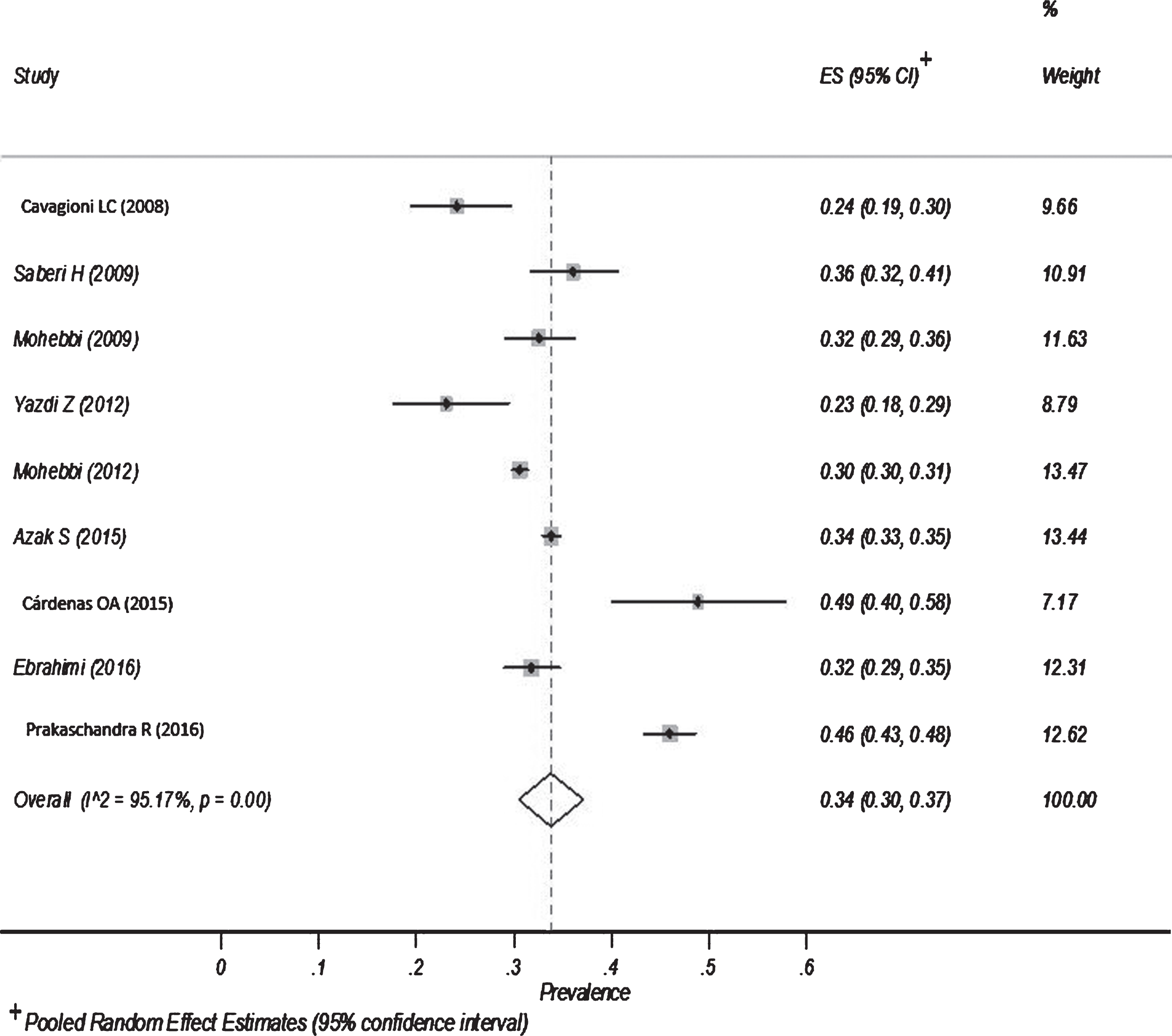
Forest plot showing prevalence of metabolic syndrome in drivers.
Meta regression was used to explore the sources of between-study heterogeneity, including the year of study. According to the results and Fig. 3, although the prevalence of metabolic syndrome increased in years, this amount wasn’t statistically significant. So, the year of study didn’t relate to prevalence (P > 0.05).
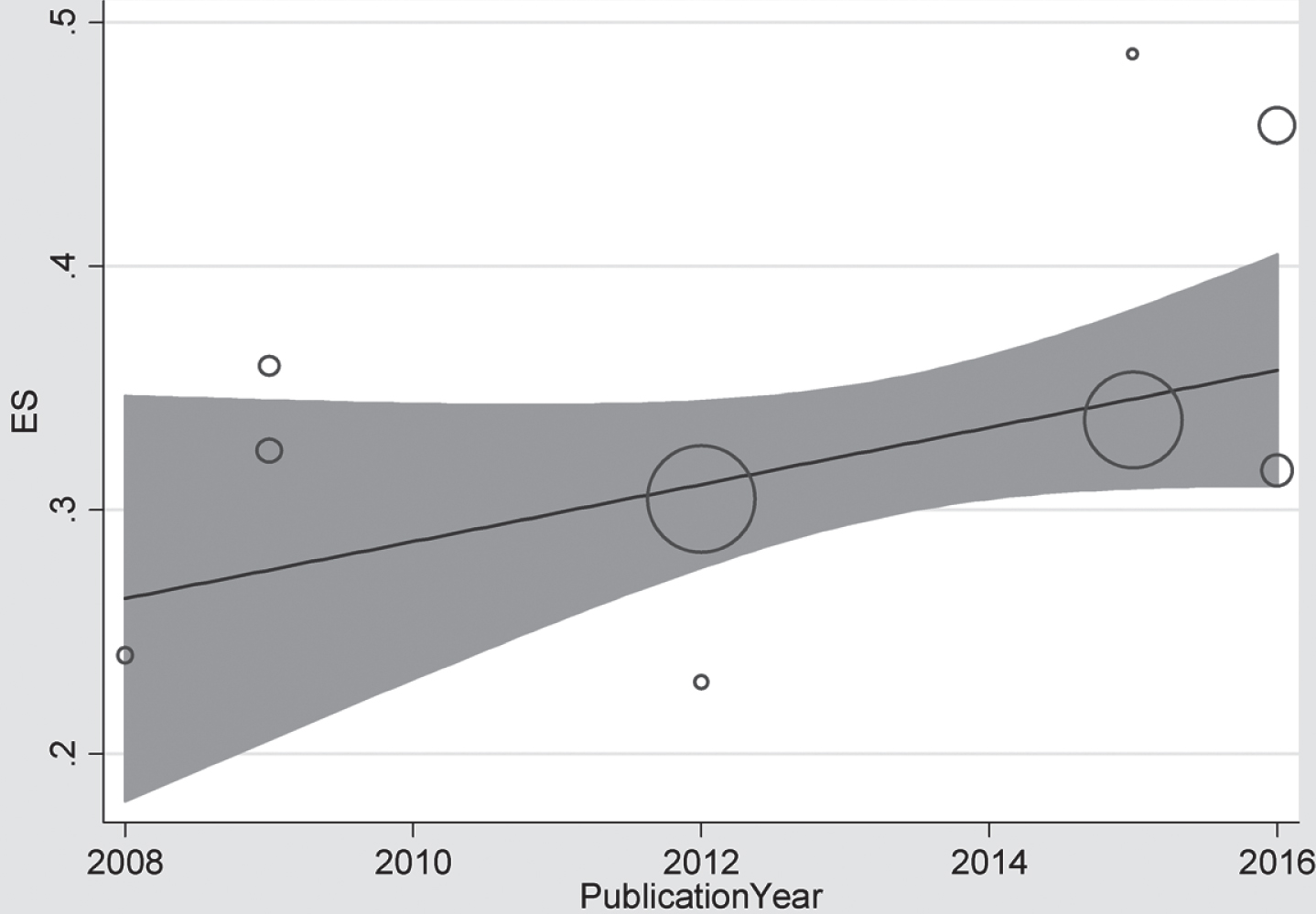
Meta-regression (bubble) plot of metabolic syndrome prevalence based on year of study.
As seen in Fig. 4, the funnel plots showed symmetry, demonstrating the absence of publication bias among the included studies. The Egger’s and Begg’s tests also confirmed the absence of publication bias among the included studies (P = 0.548 and P = 0.835, respectively).

Funnel plot for assessing publication bias in meta-analysis and systematic review for prevalence of metabolic syndrome in drivers.
To evaluate the influence of each individual study, we performed sensitivity analyses by excluding each study from the Meta-analyses and comparing the po-int estimates before and after excluding each specific individual study. Based on the sensitivity analysis, exclusion of individual studies did not change the results substantially, with pooled prevalence.
Discussion
This meta-analysis and systematic review was conducted to determine the prevalence of metabolic syndrome in drivers. In the present study, the total number of subjects was 26,156 in nine papers from different parts of the world and published in the years from 2008 to 2016 were entered into the final meta-analysis and systematic review; the average sample size in these studies was 2906. The prevalence of metabolic syndrome in drivers was calculated to be 34% (95% CI: 30–37). The highest prevalence of metabolic syndrome was related to the study conducted by Cárdenas in Colombia in (49% , 95% CI: 40–58) and the lowest prevalence was observed in Iran in the study of Yazdi (23% , 95% CI: 18–29). Alizadeh et al. examined the prevalence of metabolic syndrome in the general population in Iran. The results of this review showed that the prevalence of metabolic syndrome in adults is relatively high [1]. In the studies, the prevalence rate was obtained to be between 20% and 35.8% . These rates are significantly higher than estimated global prevalence (20–#x2013;25%) [1]. In Italy, the prevalence rate was 22% in men and 18% in women [25]. The prevalence rate in the United States was 22.9% [26]. According to the results of this study, the prevalence rate of metabolic syndrome among the drivers is higher than its rate in the general population and some other occupations. The reason for this may be factors such as unavoidable inactivity, high caloric intake, lack of awareness, lack of health check by these individuals, occupational stress and night work [16]. Drivers have irregular work hours because of their work needs. Long working hours, including night work are the main feature of this job. Night work may lead to chronic sleep deprivation and obesity which are commonly seen among these people [27]. Among the drivers, the high prevalence of wrong inactive lifestyles or sedentary lifestyles, inappropriate food habits, and obesity is observed. They usually smoke and have high blood pressure [27, 28]. These features pose this population at risk for diseases such as cardiovascular, digestive and metabolic diseases [29]. Stoohs et al. stated that the prevalence of hypertension among truck drivers is 16and high percentage of these people was unaware of their illness [30]. High blood pressure in drivers is likely to be due to low mobility and lifestyle, which requires more attention [31]. Irregular working hours are one of the important factors in the development of obesity in drivers, and it also led to lessening the chance for regular physical activity [32]. Moreover, other factors of high weight in drivers can be the use of fatty foods in restaurants and sedentary lifestyle and lack of information on overweight effects [16]. Whitfield-Jacobson et al. suggested that the implementation of health programs for drivers can prevent several diseases such as obesity [33]. These programs can include training and supporting activities and providing nutritional advice to restaurants. The development of such Preventive programs is justified not only for economic reasons but also is important for driver safety [29]. Metabolic syndrome is an important medical, social, and economic concern and its prevalence, in developing countries, is one of the increasing medical problems due to increasing the sedentary lifestyle and obesity. Therefore, the importance of examining the prevalence of this disease through a similar screening and diagnostic guideline, as well as considering the risk factors and different ethnic groups seems to be necessary [1].
Conclusion
According to the results of this study, the prevalence of metabolic syndrome in drivers is high. Occupational stress, unhealthy diet and physical inactivity cannot be attributed to the prevalence of metabolic syndrome in drivers. Therefore, it is suggested that training of these people should be carried out with preventive measures, treatment and disability, in order to maintain and improve the health of this group.
Conflict of interest
None to report.