



Abstract
BACKGROUND:
Individuals married to active duty military members experience a significantly higher rate of un/underemployment than their civilian counterparts; those with advanced degrees are most impacted. Occupation is central to individual identity and adaptation; therefore, individual occupational struggles can impact family systems. Evidence shows military spouse career concerns impact service member retention, making spouse employment related to national security; however there is limited research on active duty spouses, particularly those with advanced degrees.
OBJECTIVE:
This phenomenological study explored the experiences of activity duty military spouses with advanced degrees focusing on maintaining and advancing their careers.
METHODS:
Semi-structured face-to-face interviews were used to explore experiences of military spouses with advanced degrees actively seeking to work in their profession. Inductive content analysis was used to derive overarching themes to respond to the research questions.
RESULTS:
Four major themes emerged: uniqueness of military life impacts; professional adaptation: flexibility, creativity and reinvention of the professional self; enhanced sense of duty/professional integrity; and need for enhanced forms of career support.
CONCLUSIONS:
Military spouses with advanced degrees value and have a right to occupation, including work. Military life presents unique barriers to this. Results have implications for healthcare providers and policy-makers.
Introduction
The benefits and challenges of active duty (AD) military life are well documented. Consistent AD me-mber salary, housing allowances, free healthcare, family readiness services, subsidized childcare, and opportunities to live in unique places represent some of these benefits, which are counterbalanced by fre-quent moves, demanding AD member work schedules, and (the threat of) deployments into high risk areas [1–3]. As with civilian families, military families are intimate systems where each member’s exp-eriences impact all of its members [4]. In AD families, the military and its mission take priority, are embedded in relationships and family expectations, and are felt pervasively by those living within the culture [5–7]. Balancing work-life demands can be challenging for AD members and spouses [8]. Given these circumstances, compounded by recent increases in operations, administration, and policy changes, there has been an increase in military family research. Recent studies examine deployment and redeployment and their impact on the physical and mental health of AD members, spouses, and children [9–13] as well as the impact of military life on typical family and childhood experiences [1, 14]. Remarkably, there is comparatively little research on professional and career experiences of military spouses and only basic survey research on professional spouses with advanced degrees.
The impact of military life on spouses can be so strong that they feel part of a three-person relationship: themselves, their spouse, and the military [15], and that the military takes first priority in their family system [9]. Military life demands can evoke feelings of loneliness and isolation for spouses, affecting marital satisfaction [9, 17]. Compared to female spo-uses, male spouses report even less marital and military life satisfaction and less support from their communities [18]. Moreover, military spouses are of-ten cognizant of rules that comprise military culture; implicit social hierarchies and expectations can hamper spouses’ sense of individuality [16, 19]. These expectations may add to spousal stress as they seek to fulfill personal and professional goals.
Military life complicates job searching for civilian family members. Spouses must explain periods of unemployment on a resume that are due to moves rather than personal choices or work ethic [3, 20–23]. Frequent moves also make it difficult to establish seniority and thus decrease the desirability of a can-didate for employment [20]. The high levels of mobility and change can make spouses reluctant to disclose their military connection [21]. Frequent rel-ocation is also a main cause for spouse employment issues, with 30% of spouses unemployed and 56% underemployed [24]. Spouses highlight their lack of career opportunities as having a critical impact on the family decisions to continue military service [24]. These decreased opportunities can lead to financial need, which also influences military families’ pers-pectives and decisions. The majority of Millennial sp-ouses believed two incomes were critical, while more than half identified spouse un/underemployment as a significant contributor to financial stress [24]. Eighty percent of spouses report that employment-related issues contribute to marital stress [25].
The higher a military spouse’s education level the more likely they are to perceive a negative impact from frequent moves on employment [20]. Spouses with advanced degrees experience more difficulties than those with high school diplomas, associate or bachelor’s degrees in almost every area of employment [24]. Sixty-three percent of spouses with adv-anced degrees feel military life does not support their career pursuits and involvement [25]. Maintaining and advancing a career as a highly educated military spouse requires persistence given the numerous barriers presented by military life.
Humans have an inherent need [26] and right [27] to participate in meaningful occupation. The Occupational Therapy Practice Framework describes work as a primary occupation [28]. Specifically, as a form of occupation, work is an expression of self [29]. It is through occupation that individuals develop competence and fullness of identity [30, 31]. Furthermore, supporting people in occupation creates an equitable society [32] as occupation gives individuals opportunities to develop skills of adaptation and mastery as they respond to changing environments [31]. Occupational success promotes growth and increasing influence in one’s area of expertise [29]. Thus, it fol-lows that lack of the specific occupation of work detracts from wellbeing and negatively impacts people whose occupational environments consistently change. Military life presents numerous barriers to these normative steps and potentialities to achieve mastery, or a sense of success in response to occupational challenges.
Recent DoD efforts address needs of working mi-litary spouses who move frequently and must obtain professional licenses/certifications in new states, a process which is time-consuming and expensive [9, 33]. Many states amended professional laws to support military spouse relocation, however this was beneficial for some spouses (i.e., doctors and nurses) but not for others [22]. The National Defense Authorization Act of 2018 [34] included $500 reimbursement for licensing costs following Permanent Change of Station (PCS), but more substantial cha-nges are needed, especially with the added financial stress of spouse un/underemployment that typically comes with a PCS [35].
The 2007 Spouse Education and Career Opportunities (SECO) program assists military spouses to find employment and further their education [36]. This program includes career counseling, interview training, and resume writing, among other opportunities [36]. Despite these initiatives, many spouses, particularly those with advanced degrees, do not find these services valuable and report being overqualified or unable to find jobs that match their skills where they live.
Lastly, The National Defense Authorization Act of 2019 [37] includes potential changes for military spouse employment and education. The Act expedites hiring of military spouses for federal positions (mainly non-appropriated fund positions), expands small business opportunities, requires the DoD to examine the impact of frequent moves on military families, increases educational opportunities and chi-ldcare affordability, and encourages exploration of military-civilian partnerships. As described, many of these measures represent a bias towards spouses with lower levels of education, as they address development of paraprofessional skills or furthering of education, which is unlikely to benefit those who are already highly educated. Furthermore, many of these measures are not currently actionable.
The DoD has made efforts to help military spouses obtain post-secondary education and work. However, military spouse unemployment and underemployment persist [24]. The situation is most dramatic for those with advanced degrees who do not benefit from many DoD programs [24]. Therefore, there is a need to explore the specific occupational experiences of military spouses with advanced degrees trying to advance their careers because their experiences influence individual and family health, which impacts AD member retention and ultimately, national security. The purpose of this study was to explore the impact of active duty military life on the civilian spouses’ ability to maintain and advance their career. Research questions were: How do active duty military spouses experience military life as it relates to maintaining and advancing their careers? What do active duty military spouses perceive might assist them in maintaining and advancing their careers while they continue living within military life?
Methods
Study design
This study employed a phenomenological app-roach to examine the experiences of military spouses with advanced degrees, as described by Patton [38]. This approach allowed researchers to extract mea-ning and construct realities from subjective, expe-rience-based material gathered through in-depth, first person interviews to ensure accurate understanding of occupational meaning [39].
Sample
AD military spouses who had been married for five or more years, had a master’s degree or higher, had been pursuing work in their profession for at least five years, and had experienced at least one mil-itary-related move, were purposefully recruited thr-ough informal military spouse networks such as base/post/camp military spouse club, Facebook and web pages, and Family Readiness Centers and groups. The researchers aimed for heterogeneity in the sample in terms of service member rank and branch, however only Army and Air Force spouses responded to the invitation to participate. The primary researcher, who is also a military spouse, had no prior relationships to any of the study participants. Nine participants were interviewed, at which point clear themes emerged. Inclusion criteria were: participants shall (a) hold a master’s degree or higher, (b) be employed in (or attempting to find employment in) the same career field for more than five years, (c) have experienced at least one military move, (d) have been married for at least 5 years, and e) be fluent in the English language. Demographic information on the spouses is recorded in Table 1 below.
Participant demographics
Participant demographics
IRB approval and consent to participate and audio record interviews were obtained from Samuel Merritt University. The first author interviewed all participants in person or via video call using open-ended, semi-structured interviews to collect data [40]. Participants were asked about their professions, their perceptions of the ways military life impacts their professional growth, and for suggestions to improve their situations. Examples of questions included, “Can you tell me about your career progression while you have been on active duty?” and “What has been the response of the military community to your work and career goals?” Self and group-reflection were used throughout data collection to ensure that all pertinent questions were asked and to reflect on potential bias [41].
Data analysis
Interviews were digitally recorded, transcribed word-for-word by a transcriptionist, and maintained on a secure computer. The first author read all transcripts multiple times so she was very familiar with all content. Each transcript was read at least three times by two further researchers from those included in the list of authors. Using content analysis, an initial coding framework was developed based on the research questions; additional codes were added as they arose from the data. Similarities and differences in coded data points were considered in context and new categories were created as needed [38].
Agreement between researchers and the outside reviewer (JG, a Ph.D. level researcher who has prior experience in conducting qualitative research) was reached about all categories and sub-categories for coded data. Categories were then integrated into overarching themes and subthemes to respond to the research questions. Member checking was used throughout via telephone calls and emails to enhance credibility [41]. The PI interacted with all participants on at least three occasions, to invite them to participate, for the interview itself, and to clarify and ensure correct understanding of the participant’s meaning in areas that were not completely clear to the researchers. The PI also engaged in self-reflexivity with a mentor/colleague (an experienced qualitative researcher and member of the university’s Institutional Review Board) to decrease the chances of bias in the research design, data collection and analysis as described by Tracy [42]. An example of the coding process is given in Fig .1.
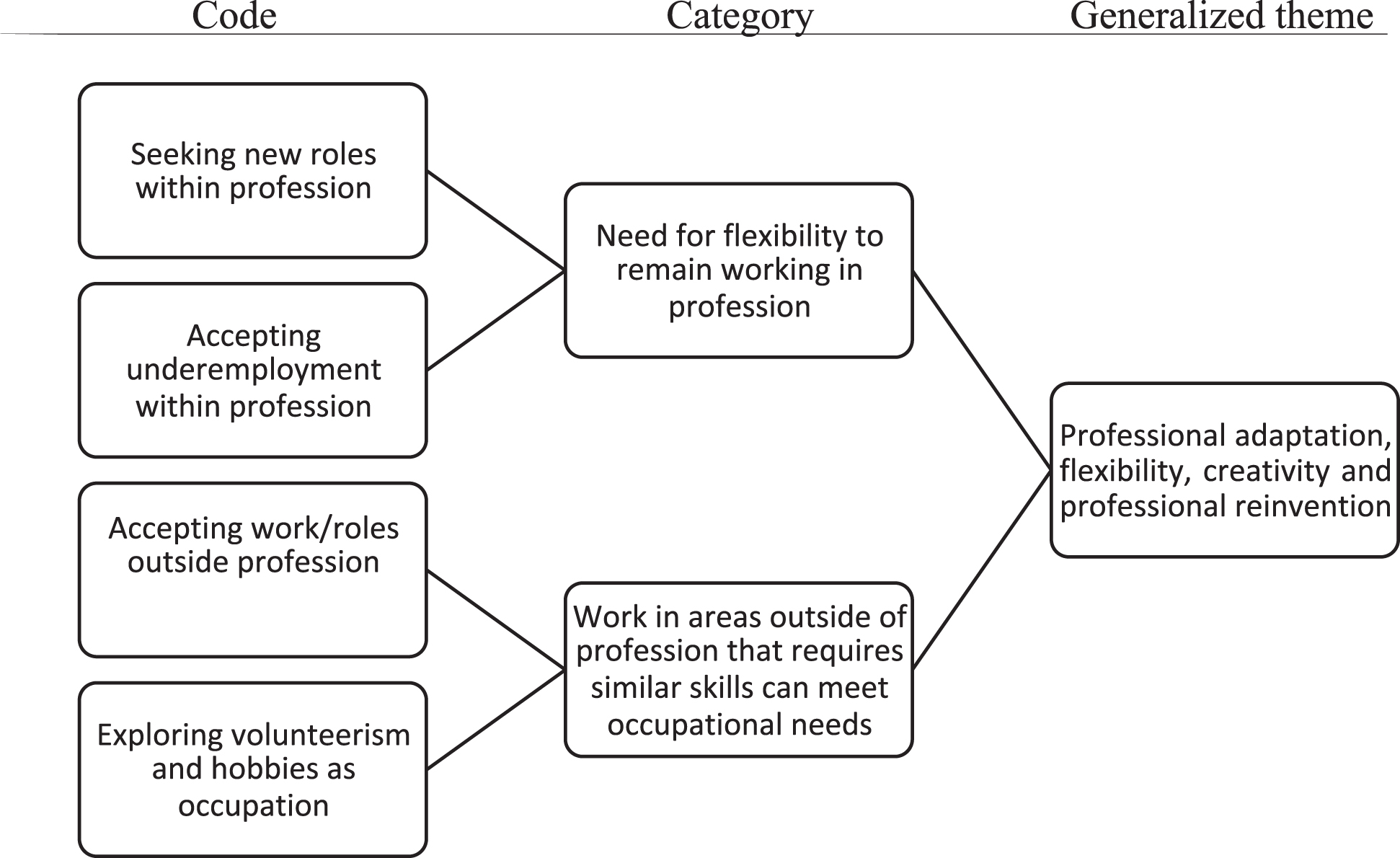
Example of the coding process.
Four themes emerged from the interviews: a) uniqueness of military life impact on career; b) professional adaptation: flexibility, creativity and reinvention of the professional self; (c) sense of duty to others, and (d) need for enhanced forms of career support.
Uniqueness of military life impact on career
Military spouses faced unique barriers that limited their potential for professional growth and involvement. One consistently reported barrier was the impermanence of the lifestyle.
“We started moving—a lot! 2006-2007 we were in Florida, 2007-2008 we were in Kansas, 2008. We moved to New Jersey and we knew in New Jersey we would stay at least 3 years, maybe longer?”
Frequent moves and uncertainty about how long they would live in one place left spouses ambivalent about disclosing their military connection to employers. Spouses put pressure on themselves about how potential employers would perceive them based on their frequency of job changes and resume gaps and felt guilty about using company resources when they knew they might leave soon.
There are definitely spouses I’ve met who try to shame others that don’t reveal this [living temporarily in an area], but I don’t know that you have to in all situations. I think it communicates that you don’t have any idea of where you’ll be in the future. And I get frustrated that I’m supposed to state that up front when the Army changes its mind all the time.
Moving every 2-3 years made it difficult and expensive to attain necessary licensure in different states.
“... licensure is different everywhere as is the role [of school psychologist]. It’s very frustrating. There’s a national certification that only some states recognize. It’s expensive and you have to keep all these records.”
Finding acceptable childcare services was a frequently noted barrier to occupational engagement.
“We’ve been on every base’s CDC [Child Development Center] wait list ... The AF needs to think about what this means for dual-working families if they’re constantly worried about what’s happening with their kid in daycare.”
“(Childcare) became huge problem as a shift nu-rse because daycares close at 6pm, but my shifts didn’t end until 7pm. And clinical work, as I said, has never gone well because of licensure and training, finding new daycare for the kids, and then shift work. No one who’s married to a soldier can take shift work.”
Spouses also perceived a lack of relevant supports on base/post. Supports seemed to be aimed at those who are new to the workforce, or are have high school degrees only, from the spouses’ perspectives. The lack of professional resources, that would effectively help those with higher education, made it necessary for them to be self-reliant in obtaining job market information and developing professional networks.
“... resume writing class is good for those just starting out, but aren’t really relevant to [professional]spouses. I’ve got a long CV and have been at this for years.”
“What does the Family Readiness person know about linguistics education? Probably nothing! No, I’ve never used the services for professional reasons.”
All but one spouse tried to use Priority Placement Programs (PPP) and USAjobs.gov, which are DoD programs created to facilitate job placement. However, they universally found these programs to be unhelpful and cumbersome.
“I have a Master’s of Library Science and PPP matched me to the Child Development Center as an assistant daycare provider! It felt like the jobs that everyone didn’t already want. And you have to jump through a lot of hoops to get on it. You have to interview and fill out all the forms and you have to renew it every 6 months. It’s just too much work for nothing.”
Furthermore, completion of paperwork for these programs required many hours and multiple follow-ups to check their status, yet did not result in a single job placement among the participants.
Spouses described a need for high levels of self-sufficiency at home and work, but felt their AD spouses were supportive of their careers. Pressure from commanders for spouses to volunteer or attend events was mitigated by the AD member’s open support of the spouse’s goals.
“He’s very proud of me and my work. I’m certain he prevented some of what might have been said [by commanders] by making it clear that I work and he supports that.”
All mentioned being aware of Spouse Clubs/Groups and a “push” to volunteer, but most felt disconnected with other members in terms of personal goals.
“... no one else [on the Family Readiness Group] worked. One spouse even asked me, “
Spouses overwhelmingly reported feeling the military community has no interest in their professional goals or needs.
“I joke with them [medical providers] that I’m a “retired” physician...at 41! They laugh, but can’t help me with a job.”
“Her commander has no idea what I do [for work], nor do I imagine he cares ... at all. It’s just different in military settings. The spouse is still not really on the military radar.”
Those who received on-installation healthcare re-port they have never been asked by physicians and other healthcare providers if they work or how work or unemployment impacts their health and wellbeing. Those who received off-installation healthcare noted that queries about work are routine on new intake forms and often in discussions with providers.
Professional adaptation: Flexibility, creativity, and reinvention of the professional self
The barriers inherent to military life seemed to elicit one of two responses: healthy internal and/or external adaptation to the situation or identity change and loss. Demands of military life require the professional spouse to be flexible and creative as they often face limited employment options.
“At that point I accepted surgery was not probably going to happen for me again. I would have to create something for me. If things were different ... I could do my work, but they are not. So, I thought about research that was sort of medical work- blogging and nutrition ... at least I could be a part of something.”
Supporting their AD spouse often required spouses to put their needs second and left them feeling angry in response to the constant uncertainty that makes developing professional goals and plans difficult.
“I realized that if I was going to continue to support my husband in the military, I had to concede to being a single parent, not counting on him for logistical help ... and make decisions from that perspective.”
“... if you’ve been moving all around, following your husband and not taking care of yourself, your career? Those are huge losses, identity destroying losses. You’ve got to find something for yourself!”
“I told him, ‘you know right now you’re booking out your life, our lives, for the next 10-11 years of our marriage. They’ll be centered around your career and obligation. I have to put who I want to be on hold for that. And I don’t want you to forget that because if I spend all my life orbiting you and your plans that’s probably going to make me pretty grumpy at the end of it all’.”
However, the spouses also noted that challenges were often the impetus for growth and positive change.
“In the universe of the military spouse, having multiple streams of income and of joy and fulfillment is critical to survival. That’s something I’ve adapted to ... this lifestyle was the catalyst for all that I’m doing now.”
“I would like to at least get one promotion before I retire. The lifestyle and time won’t allow for more unfortunately, but just one, to associate professor would be- I’d be good with that.”
“I didn’t plan on being here. I’ve had to sort of paste my career together, but I’m totally adapting.
Hobbies and volunteer outlets provided meaningful ways to engage when paid work was not feasible or not perceived to be worthwhile. Most did not report feeling financial pressure to work as the AD member’s salary was often sufficient for their family without this.
“Once I accepted that my career can’t be one way all the time that’s when I started beekeeping. Military life allowed me that ... to not work and to think about what I wanted to do.”
“I have the opportunity to work more but I’m choosing to do other things to develop myself. I’m painting, I have an Etsy shop. I wouldn’t give up working children’s library time, but now I’m finding that I want these other things too.”
Another adaptation is the way spouses transform their career and develop new skills to find work in the face of environmental limitations.
“It’s been different degrees of engineering work, you could say. I had a job as a Systems Engineer, but then I was a Project Manager for [national grocery chain]. Now I have my own IT company. It was all the skills I had developed over the years and it works from where I am now.”
Several spouses reported engaging in these kinds of “career-adjacent” roles to maintain connection to their professional community in some manner.
Sense of duty to others
Most of the spouses reported feeling a sense of duty towards their spouse, other spouses and AD personnel, and professional colleagues. In fact, most identified with the importance of the military mission and felt they support the mission by supporting their AD spouse and other AD personnel.
“I do [feel part of the mission]. The mission to protect and defend. [In Korea] I could be a part of that then. So much so that it really didn’t bother me to not be nursing.... I support him so he can support the mission.”
More experienced military spouses felt a duty to help those who are new to the military:
“I’ve considered doing a lot to help others survive in the Army world because I think it’s important and we need them [basic trainees] as part of the future of our protection and our country. I do feel a part of things. At first, I was pretty much trying to do the, ‘this is what an Army wife does,’ but now I do it because it’s the right thing to do.”
The sense of duty extends beyond mission, spouse, and military personnel to fellow professionals and employers. The spouses described a strong sense of responsibility to do what is right for colleagues, to use employer resources with careful consideration, and leave a positive impression of military-connected individuals.
“I have a conscience. I’m not going to let you spend money orienting and training me when I know I’m going to be leaving.”
“I think we need to be loyal and thorough employees so they’ll take the chance and hire other military people ... We can represent the positive side of change. We’re a totally different culture, if workplaces will see it that way.”
Need for enhanced forms of career support
Suggestions to improve perceived challenges to professional growth pertain to person, organization and population-level recommendations. Person level recommendations included appointing a professional spouse liaison who is familiar with the local area to help newly relocated spouses find positions for their specific skill and degree areas, and having routine “meet and greets” with unit/squadron commanders for professional/employment development purposes, particularly in overseas assignments.
“I think this would force commanders to establish a human connection with spouses so they know the impact of the (duty) assignment on the whole family.”
Organization level recommendations included revising USAJobs.gov/PPP to make their websites and programs clearer, streamlining application processes, and onboarding processes for spouses to work on military installations.
“Do I really need to do all that paperwork? The government knows where I’ve been, what doctors I’ve seen-everything really, for last 11 years.”
Working with employers to establish partnerships with installations to promote hiring military spouses was also suggested as was lengthening assignments to allow for enhanced employment opportunities, seniority, and tenure.
Population level recommendations included reviewing current Status of Forces Agreements to determine if their parameters remain relevant and current such as for online employment of OCONUS (Outside of the Continental United States) spouses.
“It makes no sense that I cannot take an online te-aching position while living here [Europe]. There are more and more educated spouses who could probably be working overseas where our opportunities are very limited, if not non-existent.”
Unanimous recommendations were for continued work on state licensure processes and reciprocity, and recruiting spouses as liaisons within these professions to facilitate process changes.
Discussion
Participants in this study were military spouses with advanced degrees, a group that has received minimal research attention to date. The study explored how spouses experience and adapt to military life and its ever-changing personal and professional environments to engage in meaningful occupations. The find-ings have significance for all clinicians and military-connected personnel concerned with the wellbeing of military spouses. Importantly, spouse satisfaction and wellbeing have an impact on AD member retention, a contributing factor to national security [24]. Furthermore, the satisfaction and wellbeing of these spouses may have even more bearing on national security considering all participant spouses are married to and so influence AD members who are comparably highly educated.
Challenges to professional aspirations found in this study are: impermanence that confounds professional planning, stress regarding gaps in employment, professional licensure, and childcare. These barriers support previous research findings [3, 23]. This study also yields novel findings. Regarding perspectives on employers and hiring, prior literature indicates military spouses feel they are perceived as transient, decreasing their employment opportunities [20]. Spouses in this study did not highlight this as a concern, but reported feelings of guilt around using employer resources for training, given they were likely short-term employees.
The spouses’ experiences confirm previous, but limited research that those with higher education are more negatively impacted by frequent moves [20] as this prevents establishing and deepening professional experience. They reported ongoing difficulties with job availability, licensure, pay, and underemployment, also noted by others [25]. While licensure and certification issues are being addressed by congress, the efforts do not extend to all professions represented in this study. Contrary to others’ findings [23, 25] the spouses in this study did not identify financial strain as the main impetus for seeking employment but felt their AD spouse’s salary was often adequate to allow time to find the right job or seek other forms of occupational engagement.
The desire to remain professionally active inspired adaptation and creativity, something not reported in prior literature concerning military spouses. Spouses were creative in finding work and adapted themselves and their environments in pursuit of meaningful occupations (i.e. working as a consultant in a related area), engaging in hobbies (i.e. bee-keeping), or volunteering when the environment did not support paid employment. Spouses adjusted goals to engage in purposeful activity versus accepting a lack of occupation, under-employment, or unemployment. This supports others’ findings that military spouses will often settle for underemployment to remain engaged in work [23, 25]. Likewise, it resonates with developing research on occupational adaptation as both a process and outcome [43]. For example, occupational adaptation has been found to emerge in response to altered life situations to expand opportunities [44] and reclaim occupational roles [45]. Lastly there are ample connections between work and emotional wellbeing/health and between job insecurity and poorer health [46, 47] which may help to explain the spouses’ drive to find meaningful occupations, sometimes beyond paid employment in their professions. The military spouse role may in fact represent its own unique category of work and occupational insecurity due to its unusual demands and chronicity of employment challenges.
The spouses felt DoD programs are not designed to meet the unique needs of individuals with advanced degrees but only for those in need of basic employment skills. Again, these results are thought to be novel findings since this subgroup of military spouses has not been a specific focus of research to date.
Most spouses in this study shared a deep sense of duty to others that extends to other AD families and colleagues. Through support activities, spouses felt they can both further the mission and engage in meaningful work. They further reported a strong sense of responsibility to those coming after them, even foregoing jobs when they knew their time in place was limited. While the concept of duty was reported by Aducci et al. [15] as a feeling of being married to spouse and mission, this study finds sense of duty extends far beyond this, and actually provides occupational purpose when spouses are unable to work in their specific fields.
Implications
As with all qualitative research the results of this study are limited to the contexts and experiences of the participants, however they do lend support to prior literature as noted prior. The results further sug-gest military and civilian healthcare providers can provide enhanced client-centered care to military spouses by being aware of and inquiring about work and employment stressors and their impact on identity and wellbeing. Further, there is a lack of appli-cable support from government and civilian agencies for highly educated AD spouses. Thus, service provi-ders may wish to address self-advocacy with regards to professional work with AD spouses, particularly if they are knowledgeable about the local area and its resources, a consistent barrier to individuals with highly mobile lives. The DoD can include the unique experiences of AD spouses with advanced degrees in policy and programming discussions and planning as military spouse wellbeing influences AD member retention, continuity, and ultimately national security. Further research should include interviews with enlisted, Navy and Marine, as well as same-sex spo-uses. Research into the development and implementation of programs tailored to support the specific needs of spouses with advanced degrees is also indicated.
Strengths and limitations
Strengths of this study include the variety of advanced degrees/professions and experiences represented by the spouses. Data gained through in-depth personal interviews provided rich descriptions of their experiences that cannot be gained through quantitative or survey research on this topic. Limitations of this study include that only Army and Air Force spouses’ experiences were represented. No Navy or Marine spouses responded to invitations to participate. All the spouses were married to officers; no enlisted spouses responded to invitations to participate. Qualitative research is intended to expand knowledge of a particular phenomenon and therefore the results may not be generalizable.
Conclusions
AD military spouses with advanced degrees value work and career, a rightful part of the human experience. Military life can present barriers to these normative steps in pursuit of successful professional engagement. This study finds that while spouses with advanced degrees adapt and show creativity in meeting occupational challenges, be it through paid work, volunteerism, development of hobbies etc., these adaptations are often born out of stress and identity loss. Without meaningful work, individual and family wellbeing can suffer, potentially leading AD member decisions to leave military service. With meaningful work and occupations, individual and family wellbeing may be enhanced, potentially contributing to force stability.
Conflict of interest
None to report.
Funding
This study was partially funded by a Faculty Seed Grant from Samuel Merritt University.
Footnotes
Appendix: Interview protocol
The experiences of highly educated active duty military spouses in maintaining and advancing their careers interview protocol
1. General information about the interviewee
Can you please share your name and affiliation with the military (branch of service, length of time affiliated with military)?
How long have you been married to your military member, and how would you describe your overall family, marital and personal quality of life?
How many military related moves have you gone through and how do you perceive these moves have impacted your overall individual, marital and family quality of life?
Can you describe the various locations you have lived and your experiences with these (perceived sense of community and community supports, type of community, access to services etc.)?
2. Career choice
Please describe your decision and journey to pursue higher education?
Can you decsribe the meaning your career has to your life and personal goals?
Can you disucss your achievements within your career?
Can you describe jobs you have had during your military-affiliated time and what meaning did these have for you in terms of your overall career/professional hopes or expectations?
Can you describe what your hopes are for future achievements/goals within the career?
3. Perceptions of aspects of military lifestyle that have impacted career goals
How do you perceive that living within the military community/culture has impacted or impacts your career expectations?
How have military-related moves, deployments, and other military-related separations impacted your professional life and development? (Finding work, advancement, promotions?)
How have military programs (Family Readiness, GI Bill, career counseling etc.) impacted your professional life and development?
4. Perceived specific needs of highly educated spouses who desire to maintain and advance in their careers
What strategies do you use to find work in your new duty stations?
What do you do when you cannot find paid employment?
For those in licensed professions—What have you done if your licensure was delayed or time on station did not permit obtaining a license?
Which aspects of military life and culture are beneficial to achiveing your professional goals?
Which aspects of military life and culture hamper movement towards your professional goals?
What suggestions about (what do you see as the areas of need) do you have to enhance military programs for you, and other professional spouses to reach professional goals?
What personal strategies do you use, or personal qualities do you have, that have helped or not been helpful in meeting career/professional goals?
What suggestions or advice do you have for spouses thinking about advancing their education, and trying to maintain and advance their careers while living within military culture?
Acknowledgments
The authors wish to thank the spouses who con-tributed significant time and energy to answer their questions about military lifestyle with great candor. They further wish to thank Dr. Noralyn Pickens, Pro-fessor and Associate Director of Occupational Therapy at Texas Woman’s University, for her generous methodological, editing and formatting suggestions, Dr. Chi-Kwan Shea, Professor of Occupational Therapy at Samuel Merritt University, for her guidance on self-reflexivity, and qualitative interviewing and methodology, and Dr. Mady Segal, Professor Emirita of Sociology at the Unverisity of Chicago, for her suggestions on strategies to approach the research and exisiting literature on military families.