



Abstract
BACKGROUND:
Plogging, an environment friendly trash workout is a combination of jogging with litter collection. People who are involved in the plogging carry a baggage for collecting the litter. Walking with a weight on one side causes the opposite side of the body to engage for stability and are also exposed to repetitive bending during the activity.
OBJECTIVES:
The purpose of this study is to evaluate the postural and physiological aspects of plogging activity.
METHODS:
Thirty six subjects performed the litter collection in stoop, semi-squat, full squat and lunge postures respectively. Postures were analyzed using Rapid Entire Body Assessment (REBA). Physiological aspects of plogging, as well as a comparison of physical activity assessment during jogging and plogging, were investigated using a Polar M430 optical heart rate monitor. Statistical analysis were performed using SPSS version 23.
RESULTS:
Mean±SD of full squat (5.13±0.59) and lunge (6.64±1.15) posture was found to have lesser risk score in comparison with the other two postures such as stoop (10.31±0.88) and semi-squat (8.11±1.40). Analysis from the Kruskal-Wallis and post hoc test showed that there is no significant interaction between the postures (p < 0.05). Paired Sample t-test showed that the energy expenditure for plogging and jogging are found to be similar (p > 0.05), but the fat percentages of calories burned is more in plogging (p < 0.05). Howerver plogging can be considered as a strenous activity as the % Cardiovascular strain of the activity had a mean value of (99.261%).
CONCLUSIONS:
Ergonomic interventions are needed to play a vital role in minimizing the musculoskeletal related injuries and the physical strain of the task.
Keywords
Introduction
Waste generation is one of the topics that have been in the headlines across the globe for a time. While various policies and strategies have diminished the amount of waste in society, plastic waste remains a global issue. The use of plastic in our everyday lives has culminated in the manufacture of a synthetic substance on a large scale worldwide. Plastics stayed in the landscape and have never aged for years. As a result, they finally end up in the oceans. It is reported that about 8 million tons of plastic waste is reaching the ocean per year, causing a significant challenge to the aquatic ecology. Improper storage and sorting of waste is a significant problem for the management of plastic waste. Waste collection is an area fraught with various types of hazards. The increasing production of garbage has become a problem in large urban centres, leading to increased demand for public garbage collection services. In such a system, the garbage collector is an important actor, and his body is turned into a tool used to carry garbage. As a result, injury levels are higher for those participating in these activities [1–3].
Ergonomics has a significant role to play in designing the task in a better way to identify the incompatibility between the actions of the worker and the activity. Further, it tries to prevent musculoskeletal problems in the future. The study carried out by Wang et al. [4], found the prevalence of musculoskeletal symptoms to be very high for sanitation workers, especially in the shoulders, elbows, and lower back. There is a strong correlation between musculoskeletal disorders (MSDs) and work-related physical factors when there are high levels of exposure and especially in combination with exposure to more than one physical factor [5]. Nourollahi et al. [6] have reported that awkward postures and frequent heavy lifting have a particularly significant effect on workers’ low back pain. Sharp cuts, skin exposures to dangerous chemicals are also a concern for the people working in this sector; therefore, protective strategies require an understanding of the operating practices to ensure a good job design. These unhealthy postures have led to work-related musculoskeletal pain in citrus Sinensis workers [7]. Sustainability principles, along with ergonomic intervention, can determine the mismatch between the capacity of the people and system demand [8]. As a result, ergonomically designed environments are considered to be helpful in the avoidance of occupational hazards. Emmatty and Panicker [9] have reported that a piece of adequate safety equipment and exposure to work can minimize the effects on the work environment.
This growing anxiety over plastic contamination lay the groundwork for a new driven by a waste collection technique known as plogging. Plogging is a mix of jogging and litter gathering. This environment friendly trash workout began as an orchestrated trend in Sweden during 2016. This was later spread to different nations across the globe. Social media is one of the trending platforms for this practise; Day by day, hashtags like #Plogging, #PlogRun, and #trashworkout grew in popularity. The impact it has had is indescribable, as it is an eco-friendly exercise that the entire community can organize. Recently India has responded most optimistically towards plogging through cities to keep the country pollution-free. Plogging event, #FitIndiaMovement, was organized in many parts of India to commemorate the 150th anniversary of the birth of the Father of the Nation, Mahatma Gandhi. The two-fold goals of this initiative are ‘Swasth’ meaning healthy, and ‘Swachta’ meaning cleanliness, which states that staying healthy while keeping the city clean. This helps not only the citizens but also makes the garbage collectors work with ease.
Similarly, the individuals doing plogging are subject to repeated bending. Furthermore, people involved in plogging carry baggage for collecting the litter. Walking with a weight on one side causes the opposite side of the body to engage for stability. They are exposed to repetitive bending tasks during the activity. Therefore it is necessary to examine the postures involved in plogging activity, preventing them from musculoskeletal related problems in the future as well as to evaluate the cardiovascular strain in plogging. To the best knowledge of the authors, there are no studies reported in the literature on ergonomic assessment of plogging.
In essence, the purpose of this research is formulated to contribute to the literature with the following outcomes: Assessment of working postures during plogging Evaluation of physiologic cardiovascular strain in plogging Comparison of energy expenditure and fat percentage of calories burned during jogging and plogging
Related literature
To date, no research has been done in the field of plogging, which makes this study unique. Therefore, the literature review has been conducted across various databases such as Scopus, Web of Science, Google Scholar and has been categorised as shown in Fig. 1.
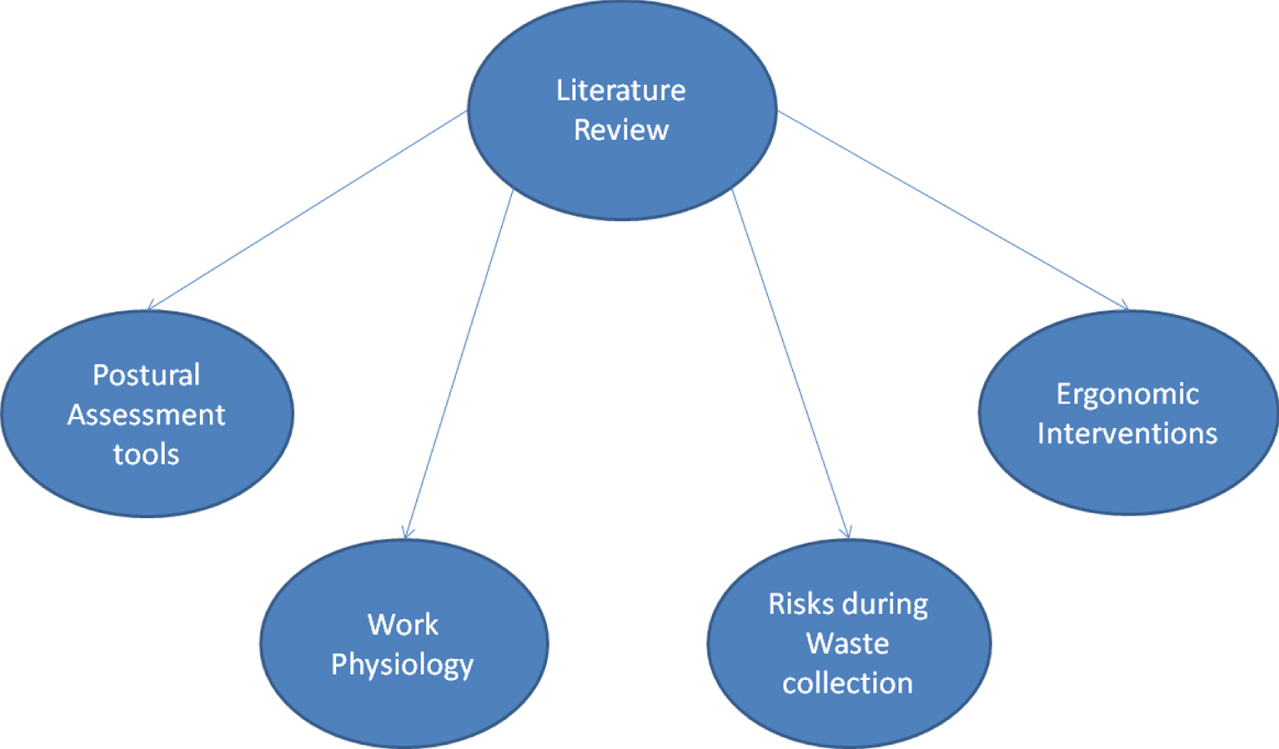
Classification of the literature review.
Batteni et al. [10] performed an analysis of the factors impacting the waste collection process. This research measured the risk involved in bending and lifting activities using the National Institute for Occupational Safety and Health lifting equation. Trunk twisting and poor coupling resulted in the risk of loads being raised and lowered. Gumasing and Sasot [2] evaluated the workplace hazards involved with the work of garbage collectors in the Philippines. The questionnaire study found that inadequate use of personal protective equipment led to a substantial amount of risk involved in the operation.
In an ergonomic study, postural analysis is an imperative technique to assess the reasons behind occupational disorders. There are many ways in which a posture evaluation may be carried out. This includes methods such as direct observation, plumbline, goniometry, optical, radiographic, Flexi ruler, photogrammetric, and electromagnetic tracking systems. Singla and Veqar [11] presented a comprehensive study of the techniques of posture assessment for sportspersons. All traditional and modern forms of posture assessment have been considered. This research established the effectiveness of photogrammetric and radiographic methods of posture assessment.
In the photogrammetric method, the images are taken from the frontal and sagittal plane by placing the camera in the tripod stand. The positions of the head, neck, and leg are measured using electronic or posture assessment tools that vary according to the research. Tools are developed to access exposure to risk-related factors. The tools associated with the postural assessment, as reported in the literature are as follows:
Hignett and McAtamney [13] have developed a posture assessment method known as Rapid Entire Body Assessment (REBA). The tool gave priority to the upper and lower extremities. In Kee and Karwowski [12], the three posture based techniques such as OWAS, REBA, and RULA to determine the posture load are compared. Surprisingly, the comparative findings found that OWAS and REBA had significantly underestimated working postures relative to RULA. It is to be worth mentioning that, in OWAS, the postures are divided into four groups based on postural-load combinations indicating how the task or the workspace can be revamped. However, RULA reports the postural differences in the upper extremity, while REBA systematically measures the upper and lower extremities of the subjects [18].
Recently, Joshi and Deshpande [17] conducted a comparative analysis of various posture assessment tools. This report identified the research gaps in terms of the fields where the tools have not been implemented.
In the study by Qu et al. [20], the camera location on observation-based posture estimation has been studied. The study proved that camera locations of 0°, 45°, 90°, and 135° had fewer estimation errors than other camera locations statistically. Ismalia et al. [21] examined the cardiovascular strain of sawmill workers in Nigeria, where the assessment was carried out on, the basis of changes in the heart rate. The study showed that work is strenuous, so it had to be redesigned to reduce strain and improve efficiency. Scott and Christie [22] have identified a less invasive way of determining the physiological responses of manual labourers working in the field. The research is performed using an ergo spirometer to measure the reaction rate of the heart.
Engström et al. [23] compared the validity of the Electrocardiography (ECG) and polar RS400 to check the validity and repeatability of the device. The result showed a strong positive correlation between ECG and the heart rate measured using Polar RS400. Hence this makes the device a valuable tool for measuring heart rate responses during the physical activity. Moreover, Crouter et al. [24] tested the precision of polar S410 for the calculation of energy expenditure. The system is compared with “indirect calorimetry”, the gold standard method for measuring energy expenditure. Brugniaux et al. [25] validate the energy expenditure measurement by the Polar AW200 device. It is compared with indirect calorimetry to assess its reproducibility. Linear regression is performed to find out whether there is any relation between energy expenditure drawn from the two methods. From the results obtained, it is clear that Polar AW200 is an accurate device to keep tracking of the energy expen-diture.
With the findings of the related literature, the objectives of the present research are formulated as follows: Conduct a posture analysis of different working postures during plogging activity using REBA. Assessment of physiologic cardiovascular strain in plogging using optical heart rate monitor. Compare the plogging activity with that of jogging in terms of energy expenditure and Percentage of fat burned.
The methodology adopted for the present research is comprised of the following three phases. Phase I –Postural assessment of plogging activity Phase II –Cardiovascular strain assessment based on the heart rate changes during plogging Phase III –Comparison of physical activity assessment during jogging and plogging
This study is conducted on thirty-six subjects in an educational institution in Kerala, the southern state of India with a mean (SD) stature of 1.68(0.08) m and a weight of 74 (9) kg. Informed consent was obtained from all individual participants included in the study.
Phase I –Postural Assessment of working postures of plogging
Postural issues are the root causes of many severe injuries; thus, it is essential to examine how a task is done. Mostly the work-related musculoskeletal problems are because of repeated loading and uncomfortable body postures when executing the task. Similarly, ploggers are also exposed to repetitive bending tasks during the activity. Therefore it is necessary to evaluate the working postures involved in plogging to prevent work-related musculoskeletal problems.
The important requirement of postural assessment is to obtain the right posture for evaluation. Findings have shown that observations can be correlated with the camera angle uncertainty and poor lighting [20]. Capturing the picking behaviour is a challenging activity in roadside areas due to a variety of obstructions, which has culminated in the development of a controlled environment on level ground. The layout of environment prepared for the present experimental study is depicted in Fig. 2.

Layout of the environment used for experimental study.
In order to mimic people’s behaviour of grabing an object, plastic balls and plastic bottles are placed in the ground. With an objective to minimize the parallax error, the front and side view of the activity is obtained. As shown in the layout, two digital single-lens reflex cameras (DSLRs) are mounted in the tripod at right angles. The DSLR cameras are placed 200 cm apart in the front and sagittal plane to get a good view of the adopted posture. Subjects are told to grab the object from the ground in a stooping posture, in which the neck and shoulder are bowed down, followed by a semi-squat, full squat, and lunge posture. Straker [27] points out that there is no adequate proof to support the lifting technique. They are provided with garbage bags and gloves. The position taken during picking is taken into consideration as excessive loading in the L5/S1 area is a known risk factor for MSDs.
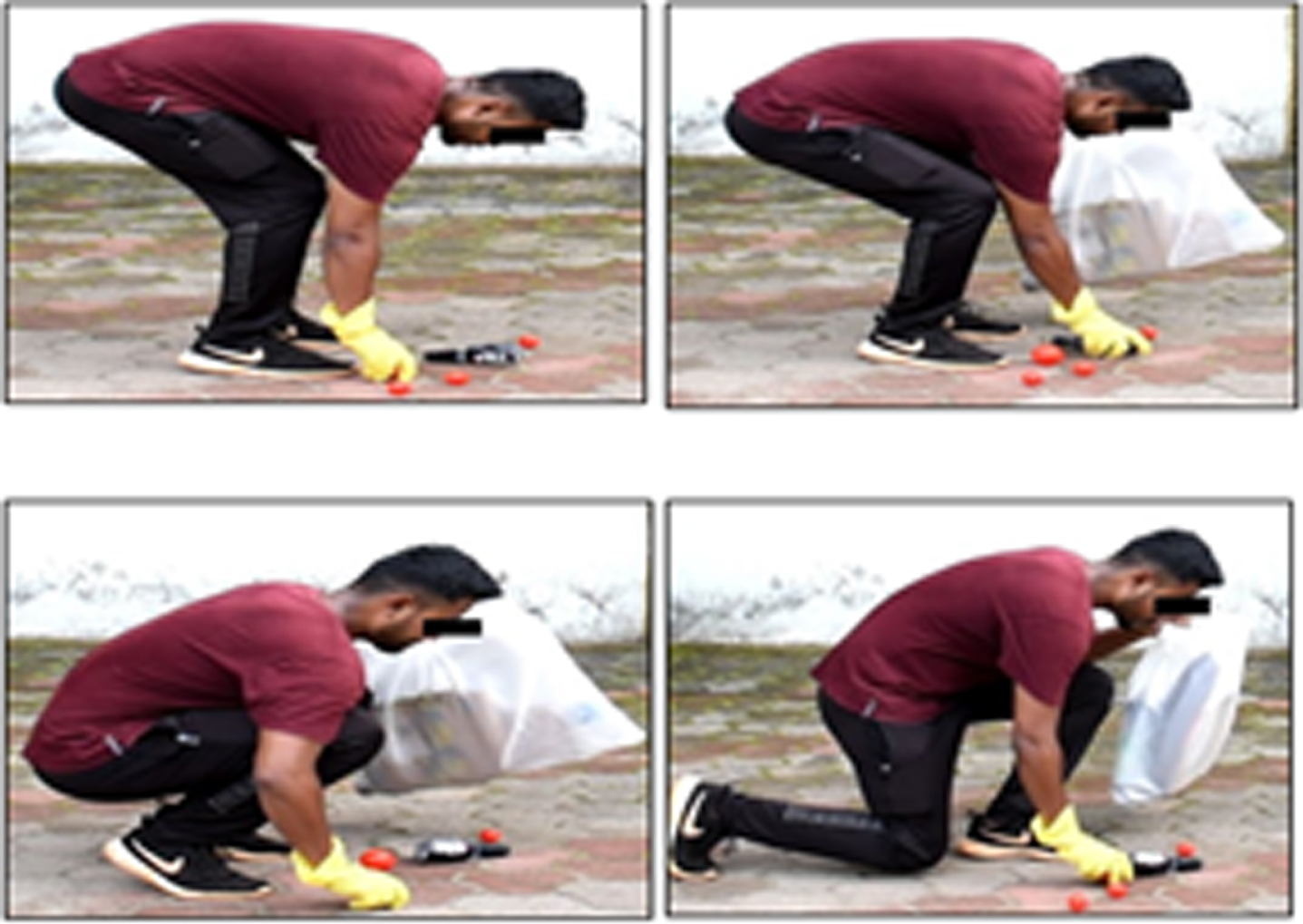
There are a few blogs that report the pros of plogging and have stated that doing squats and lunges while picking helps you develop your lower muscle strength as well as reduce the load in the lumbar area [28, 29]. Therefore in this research, the following four working postures are adopted while plogging and are shown in Fig. 3.
Postures adopted during plogging. (1) Full squat, (2) Semi squat, (3) Lunge, (4) Stoop.
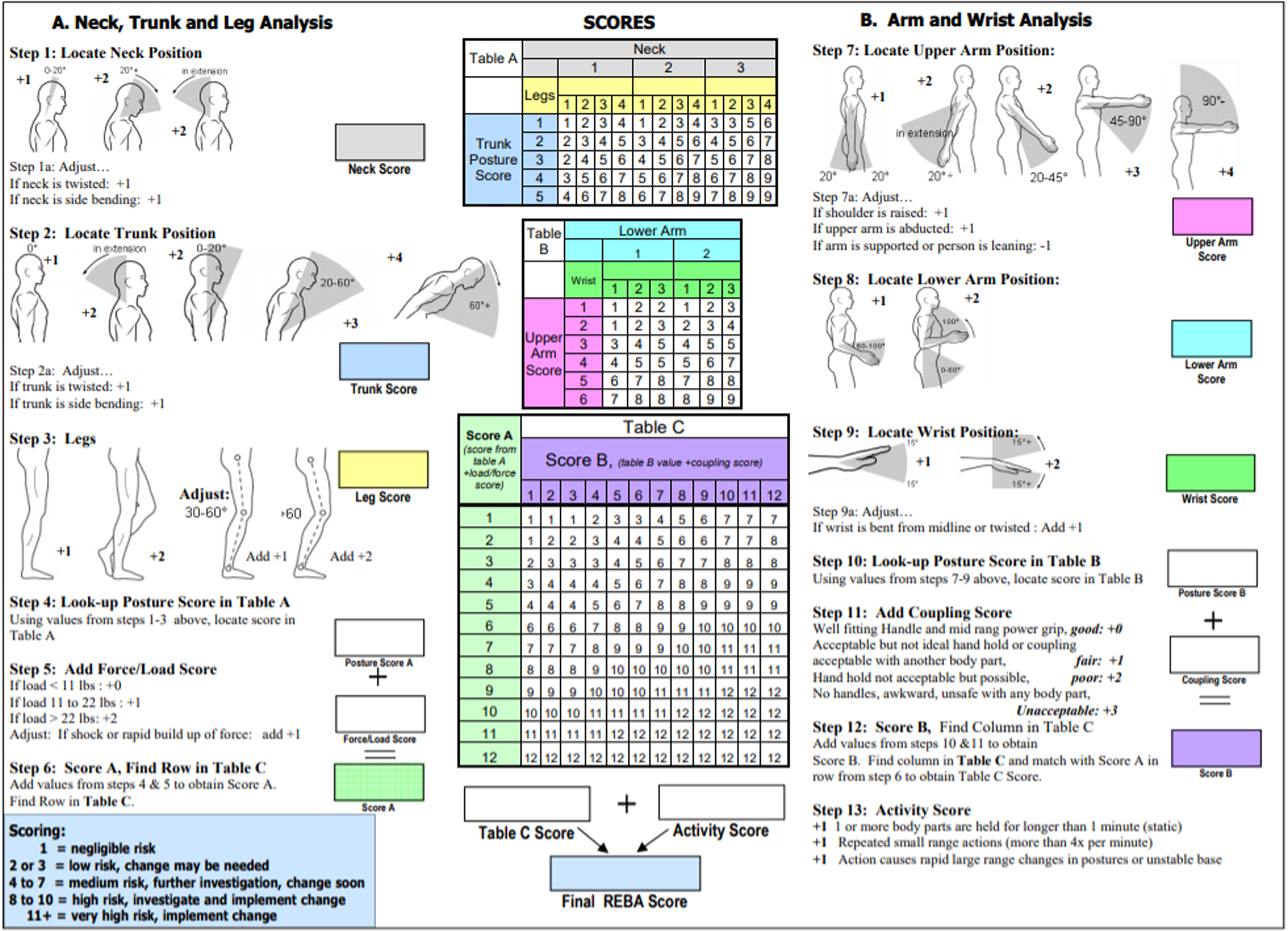
The above-stated postures are evaluated using the REBA worksheet, readily accessible in the form of a computerized checklist and tables. According to Madani and Dababneh [19] REBA has been an ideal tool for whole-body assessment and better suited for static and dynamic research. In addition, this method is used to evaluate the postures as it tends to distinguish the leg posture into four different types, while RULA only classifies the leg posture into two classes, i.e., either balanced or unbalanced. It offers a fast and simple way to evaluate the likelihood of work-related musculoskeletal disorders in a number of working postures (WMSDs). It divides the body into parts that can be coded independently based on movement planes and provides a scoring system for muscle activity across the entire body, whether static, active, fast changing, or unsteady, and where manual handling can occur which is referred to as a coupling score as it is significant in the loads handling but may not always be using the hands. A total of 144 postures of thirty-six subjects are evaluated from both viewpoints to assess the risk level of each posture. The scores are measured with the aid of REBA worksheet as shown in the Fig. 4 [13].
Worksheet version of the REBA [13].
It is split into two classes Group A and Group B. The former regulates the position of the trunk, head, and leg while the latter consists of the upper arm, lower arm, and wrist analysis [13]. For eg. neck position needs to be located in the posture and will be given a score according to the position of the subject. If the neck position is greater than 20°, neck score of two will be given and the examiner also checks if the neck is twisted or having a side bend and gives the score accordingly. Similar procedure is followed for other body parts such as trunk, leg, upper arm, lower arm, and wrist. The posture score of neck, trunk, and leg is located in the table A as shown in the Fig. 4. This look-up posture score in table A is added with the force /load score to obtain the final score of Table A. The load score here is given as zero since the baggage used for plogging was having a weight of 3.5 kg. The posture score of upper arm, lower arm, and wrist score is located in the table B as shown in Fig. 4. This look-up posture score in table B is added with the coupling score to obtain the final score of Table B. The coupling score of the activity is taken as fair. The table C score is added with the activity score in order to get the final REBA score. The key performance metrics, such as coupling score, load score, and activity score, must be given according to the type of task. The categorization of the risk level in a task is done with the help of the REBA score. The REBA scores for the risk level are classified as follows: score 1 = negligible, action not necessary; score 2–3 = low, action may be necessary; score 4–7 = medium, action necessary; score 8–10 = high, action necessary soon; score 11–15 = very high, action necessary now.
Angles of the body parts are measured using open source software called Kinovea. An easy-to-use, compact, and free tool that can be used in the analysis for the field activities, no pre-requisites of any software are required to obtain precise and consistent measurements. It allows for the study of distances, angles, coordinates, and spatial-temporal parameters from a video recording frame by frame [30]. The markers needs to be attached at the end points of the joint which is going to be measured. Using the ‘angle function’ a goniometer is displayed showing the flexion/extension of the respective joint as shown in Fig. 5 [31]. The video analysis software developed by John Charmant has a wide variety of uses in the field of sports, clinical research and as a method for evaluating the reliability of other emerging technology. The beta edition of the program has different modules for assessing technological efficiency.
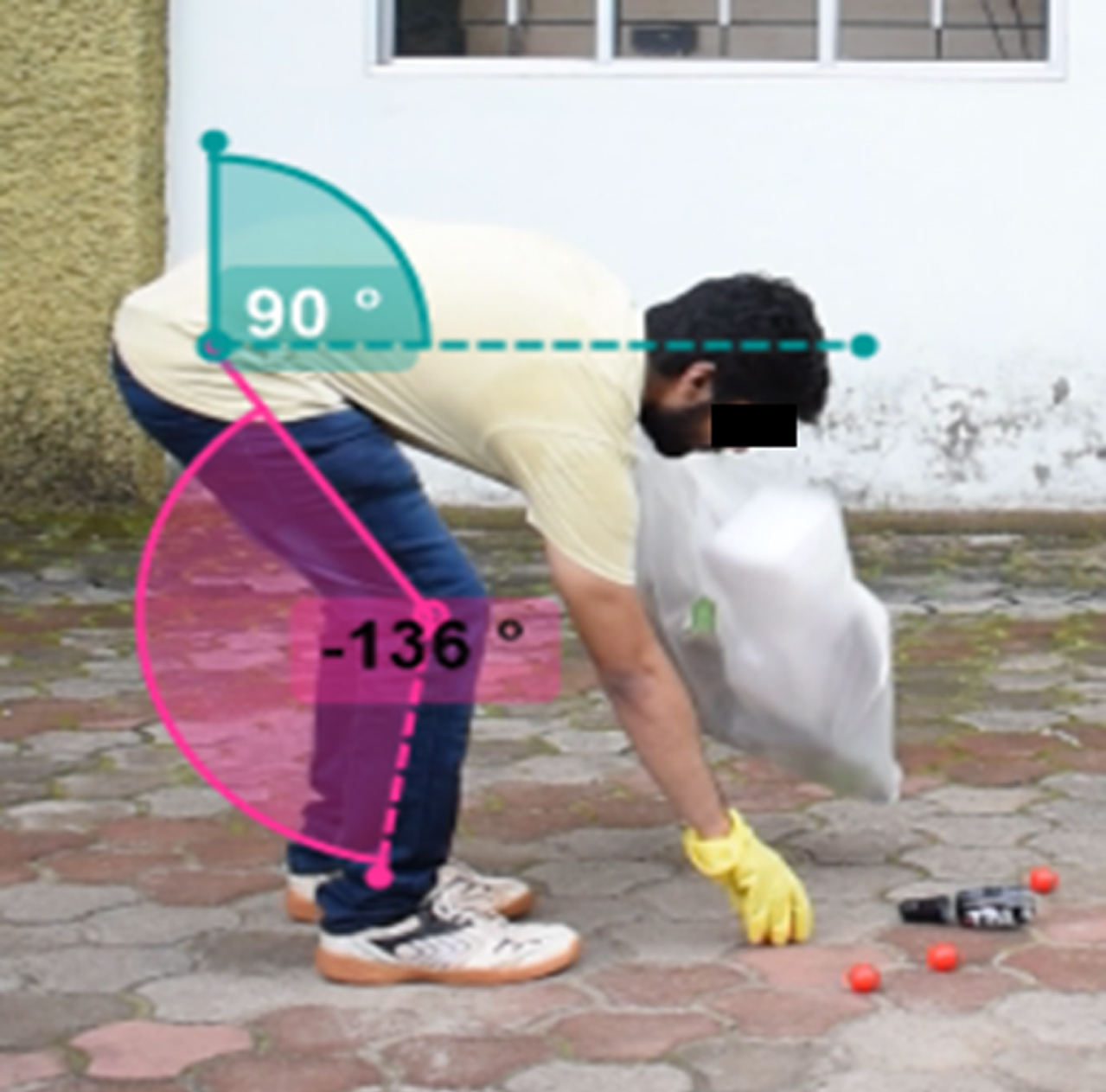
Angle measurements of the subject.
Kruskal-Wallis test is performed in order to determine whether there exists a significant difference between the risk score of the postures. The hypotheses formulated for the Kruskal-Wallis test are as follows:
According to Ismalia et al. [21], cardiovascular/ physical strain can be calculated based on the heart rate changes. The cardiovascular strain (% CVS) during the activity can be estimated based on the heart rate using the Equation 1.
HRwork represents mean working heart rate,
HRrest represents resting heart rate.
The cardiovascular strain is categorized based on the intensity of work. According to Ismalia et al. [21], the % CVS is classified as follows: 0–50% = acceptable, no actions required; 51–80% = moderate, action required within a few months; 81–120% = high, action required within a few weeks; 121–150% = very high, action required within a few days; 151–180% = intolerable, action required immediately.
Another critical aspect of the present research is about monitoring the heart rate. Heart Rate (HR) monitoring works on various principles such as electrocardiography, photoplethysmography, oscillometry, phonocardiography. Technology had come a long way from its early inception 40 years ago. What started as a widely useful strap-on-the-chest device has developed into precise optical heart rate monitoring that monitors the heart rate directly from the wrist. While the chest band is now, in many situations, the most precise way to calculate HR, optical heart rate measurement is conquering new grounds. This is a valuable tool for researchers looking to measure the intensity of workouts. The use of HR may have drawbacks due to the impact of certain variables that can impair the exercise of HR, which include heat, hydration, environmental factors such as temperature and humidity, mode of exercise (upper vs lower body), size, and training status. Laboratory setups are impossible to monitor the heart rate of outdoor activity. Therefore brands like Polar have introduced digital heart rate monitors to overcome the difficulty of monitoring the heart rate as well as the energy expenditure during the physical activity.
As per Engström et al. [23], Polar devices have produced significant results in comparison to that of the electrocardiogram. This makes the device a valuable tool for monitoring the heart rate response during physical activity. Subjects anthropometric dimensions such as stature and weight are taken before performing the activity. Resting (HRrest) is measured in the morning, just as soon as the subject has wakened and is in a relaxed position without any movements in a supine position. The pulse is taken at a count of one minute. Each subject is given ten minutes to perform the activity. Polar M430 optical heart rate monitor has built in heart rate sensor which is used to track the working heart rate(HRwork) of the subjects continuously from the wrist. Stature, weight, age, and physical activity level are provided as an input to the heart rate monitor. Plastic balls and bottles are used as part of the study. Balls are spread in random spots to reduce the biases of the study. The study is performed in a controlled environment. Garbage bags are carried by the subjects to pick up the plastic balls and bottles, as shown in Fig. 6.
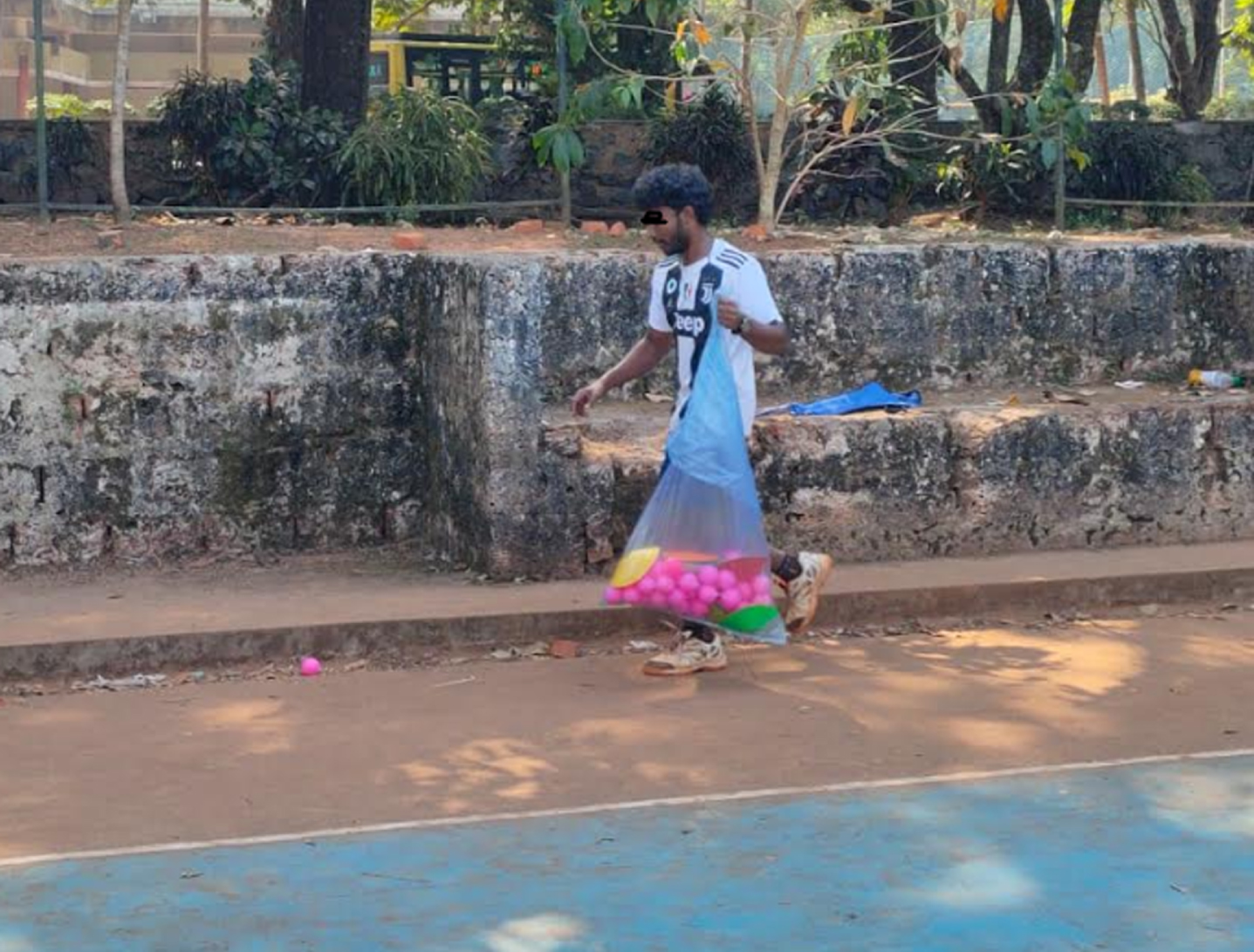
Snapshot of the plogging activity performed.
Physical activity assessment methods are widely used to determine the level and form of movement of people in various circumstances. In certain situations, techniques for measuring objective physical activity (PA) are often used to estimate energy expenditure (EE). It is necessary to note that PA and EE are different constructs. According to Hills et al. [32], terms are often considered related but are inherently distinct and can be examined using different approaches.
Total energy expenditure (TEE) is basically divided into three components, such as activity energy expenditure, resting energy expenditure, and the thermic effect of food. Numerous approaches exist for measuring PA and EE, each of which has its own positives and negatives. It includes the following methods such as Direct Calorimetry, Indirect Calorimetry, Doubly labelled water, Accelerometry, Heart Rate Monitor and Pedometry [33]. Extensive ergonomic research has been performed in the regulated environment in lab premises across the world, but only a limited number of studies have been undertaken outdoor. Recently, Henriksen et al. [26] carried out a validation study of Polar M430 Optical based activity monitor in the free-living conditions. It has been compared with two research-grade instruments (ActiGraph and Actiheart). Therefore the Polar M430 can potentially be used as an addition to the established research-grade instruments to collect some physical activity (PA) variables over a prolonged period. As a result, heart rate monitors and accelerometers are introduced into the on-field activities to extend the scope of research.
In the present study, the subjects were made to do both plogging and jogging in a controlled environment for ten minutes. The activities were carried out not on the same day. Adequate rest is given before they are about to do the next activity. Subjects are not allowed to consume alcohol, smoke and also not to drink caffeine-related products because it may produce variations in their heart rates and cause problems in the study. Variables such as fat percentage of calories burned, mean working heart rate, distance, speed, energy expenditure during the study are estimated by wearing the Polar M430 optical heart rate monitor. The smart calorie algorithm in the device helps us to obtain these variables during the activity.
Paired-Sample t-test is performed to inspect whether there is any significant difference between the two activities of jogging and plogging. This test is performed to check whether there is any statistically significant difference between the energy expenditure and the fat percentage of calories burned of the subjects.
The hypotheses for the paired-sample t-test in terms of energy expenditure are as follows:-
Furthermore, the hypotheses for the paired-sample t-test in terms of fat percentage of calories burned are as follows:-
Results
Postural assessment of four working postures in plogging
The study includes participants with a mean (SD) age of 25.083 (3.093) years and a range of 21–34 years. The body mass index (BMI) has a mean (SD) of 23.116 (2.884), with a range of 18.513–33.961, and anything over 25 is considered obese. Posture analysis is done by measuring the REBA score in which positions of different body parts are calculated using kinovea. The front and side view of the four postures is obtained with the aid of the DSLR camera. About 144 postures from both views have been carefully examined. Boxplots of REBA scores for the subjects in different working postures during plogging is shown in Fig. 7. It is found that the risk score is estimated to be low in the full squat and lunge posture, since the score lies within the range of 4 and 7. However, the REBA scores for the stoop and semi-squat posture are between 8 and 11 and is rated to be in the high risk category.

Boxplot of REBA scores of subjects in different working postures in plogging activity.
There is a considerable difference between the various postures as the significance value (p-value) is less than 0.05 (level of significance is 5%). Table 1 and Table 2 reports the summary of the Kruskal-Wallis test conducted followed by the multiple comparison or post-hoc test. The multiple comparison test reveals that the distribution of REBA scores is significantly different among all the four working postures.
Summary of Kruskal-Wallis Test
Summary of Multiple Comparison Test
Table 3 gives the summary of the cardiovascular strain estimation based on the heart rate changes during plogging. Heart rate responses, such as the mean working heart rate (HRwork) of thirty-six subjects participated in the study are obtained using the Polar M430 optical heart rate monitor. The resting heart rate (HRrest) of the subject is measured just after they woke up from their bed in the morning by checking their pulse for one minute. Heart rate recorded during the activity fluctuated substantially depending on the nature of the task performed by the subjects. HRwork and HRrest was calculated for each subject; mean resting heart rate was 74.56 bpm with a range from 60 bpm to 92 bpm. Mean working heart rate was 147.56 bpm with a range from 114 bpm to 176 bpm. % CVS shows a mean value of 99.261% with a range from 51.190% and 144.44%, which indicates the intensity of the work.
Summary of Descriptive Statistics
Summary of Descriptive Statistics
Subjects were made to do plogging and jogging for ten minutes in order to check whether the multiple movements in plogging is effective while compared with that of jogging. The activity energy expenditure of both the activities are monitored using the Polar M430 optical heart rate monitor. The fat percentage of calories burned and the energy expenditure of all the thirty-six subjects were noted. Figures 8 9 show the results of the activity energy expenditure and fat percentage of calories burned by different subjects. The fat percentage of calories burned function in the device provides an estimate of the calories burned from fat during the exercise and is expressed as a percentage of the total calories burnt.
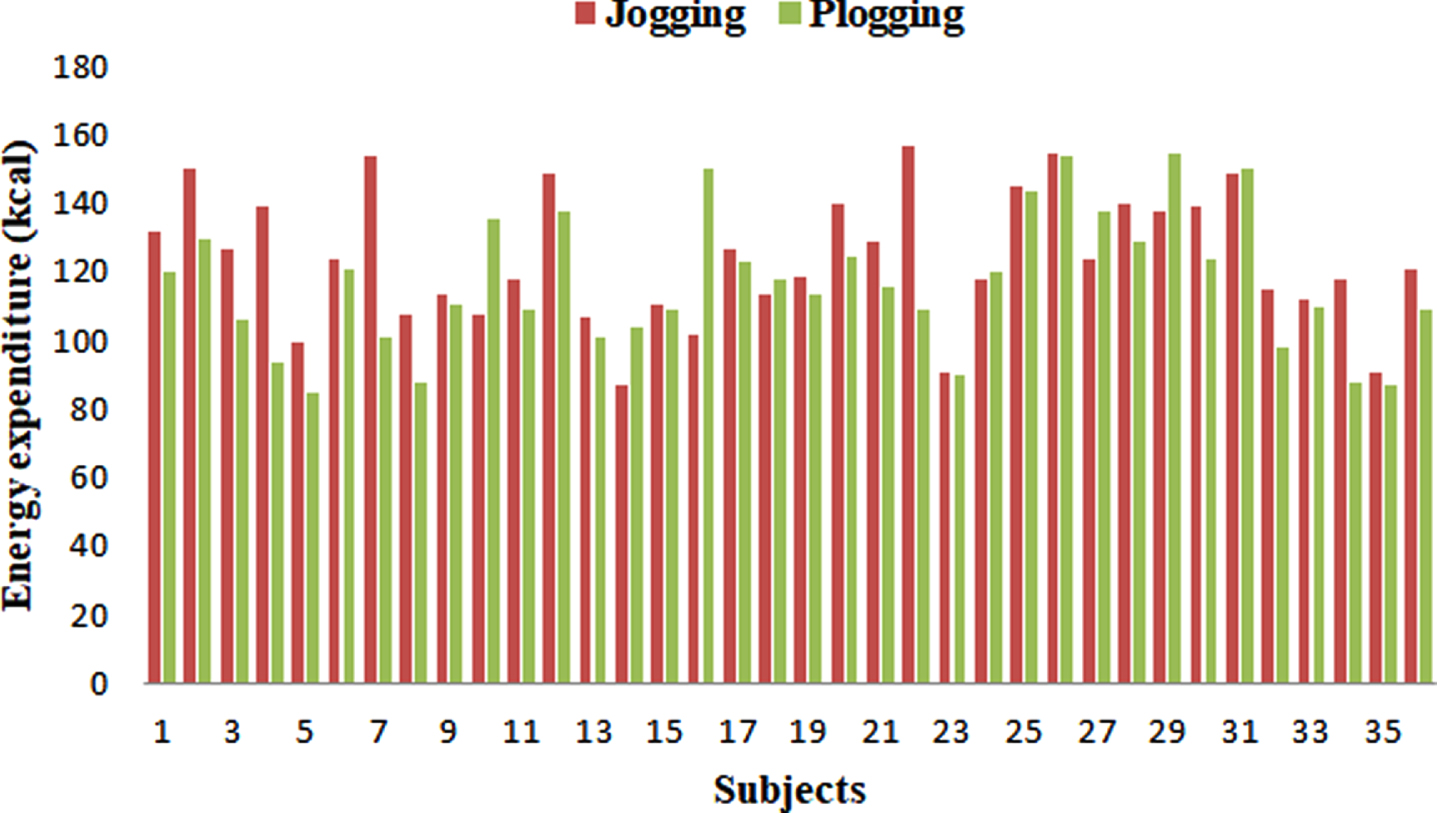
Energy expenditure of different subjects.

Fat percentage of calories burned for different subjects.
Paired-Sample t-test was performed to check whether there is any statistically significant difference between the energy expenditure and the fat percentage of calories burned of the subjects. Table 4 shows a summary of the paired-sample t-test in terms of energy expenditure.
Summary of Statistical Analysis –Result of Paired Sample t test in terms of Energy Expenditure
Result reveals that there is no considerable difference between the energy expenditure of the activities while jogging and plogging since the significance value (p-value) is greater than 0.05 (level of significance is 5%). Hence according to the data collected for the study, we fail to reject the null hypothesis. Table 5 shows a summary of the paired-sample t-test in terms of Fat Percentage of calories burned.
Summary of Statistical Analysis –Result of the Paired Sample t test in terms of Fat Percentage of Calories Burned
According to the data collected, the results show that the significance value (p-value) is less than 0.05 (level of significance is 5%). Hence the null hypothesis is rejected. Therefore the fat percentage of calories burned is found to be high in plogging than that in jogging activity.
Posture evaluation methods have been examined in a variety of fields, but this is the first time that they have been investigated in plogging, confirming the study’s novelty. Impact of WMSDs can be reduced during plogging by adopting full squat and lunge posture as the risk level is low when compared to the other postures. It helps in strengthening the lower body muscles as well as reduce the load in the lumbar area [34, 35]. Variation in the overall score is due to the positioning of the trunk, neck, and legs of the subjects during the activity. Angle obtained in the trunk and leg followed a decreasing trend in the postures when compared to the other body parts. Variation in the trunk and leg angle between the subjects are shown in Figs. 10 11. The highlighted line (in Red) indicates the angle obtained by the subject with the median REBA score while performing the four working postures.
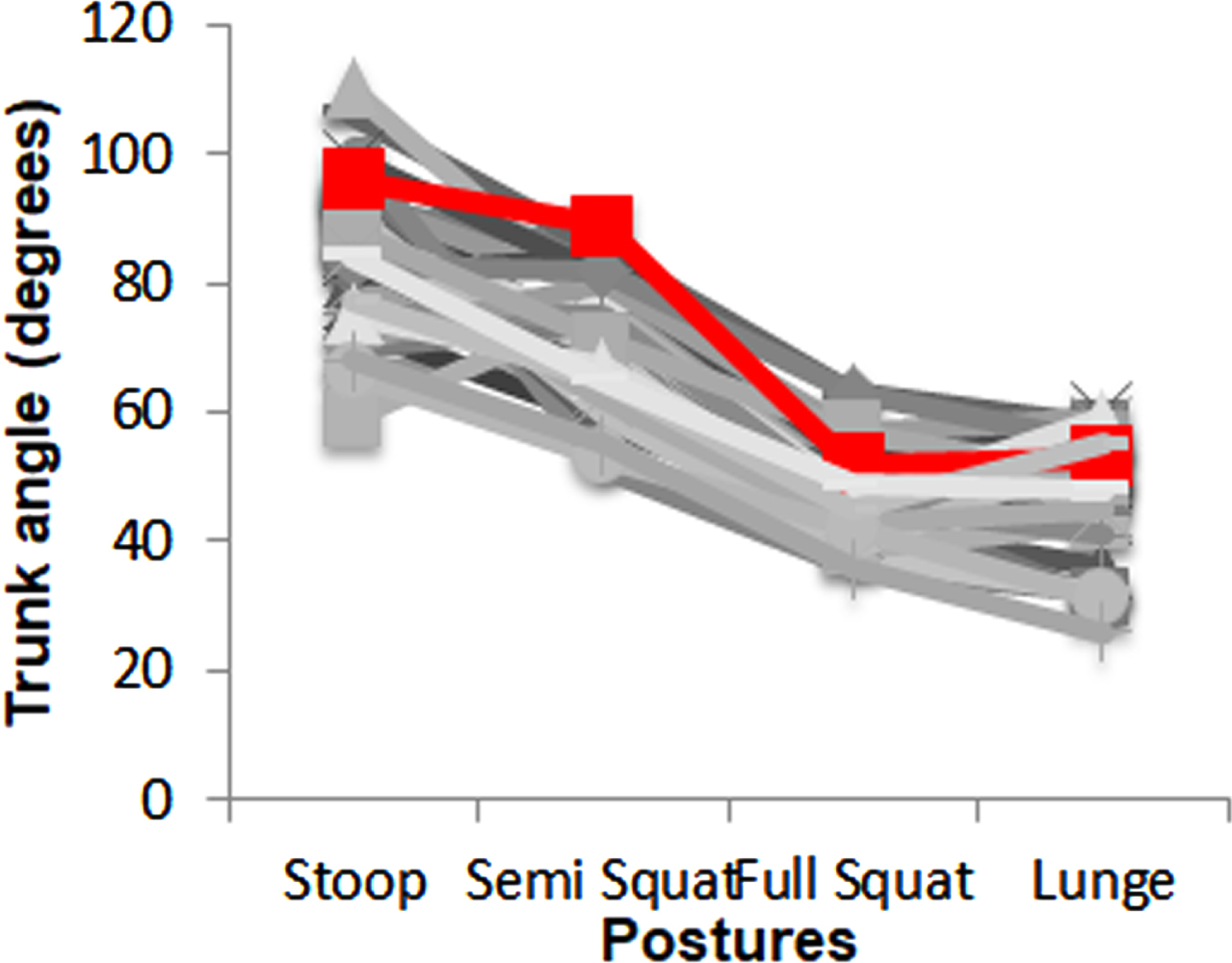
Trunk angle of different postures adopted by the subjects.
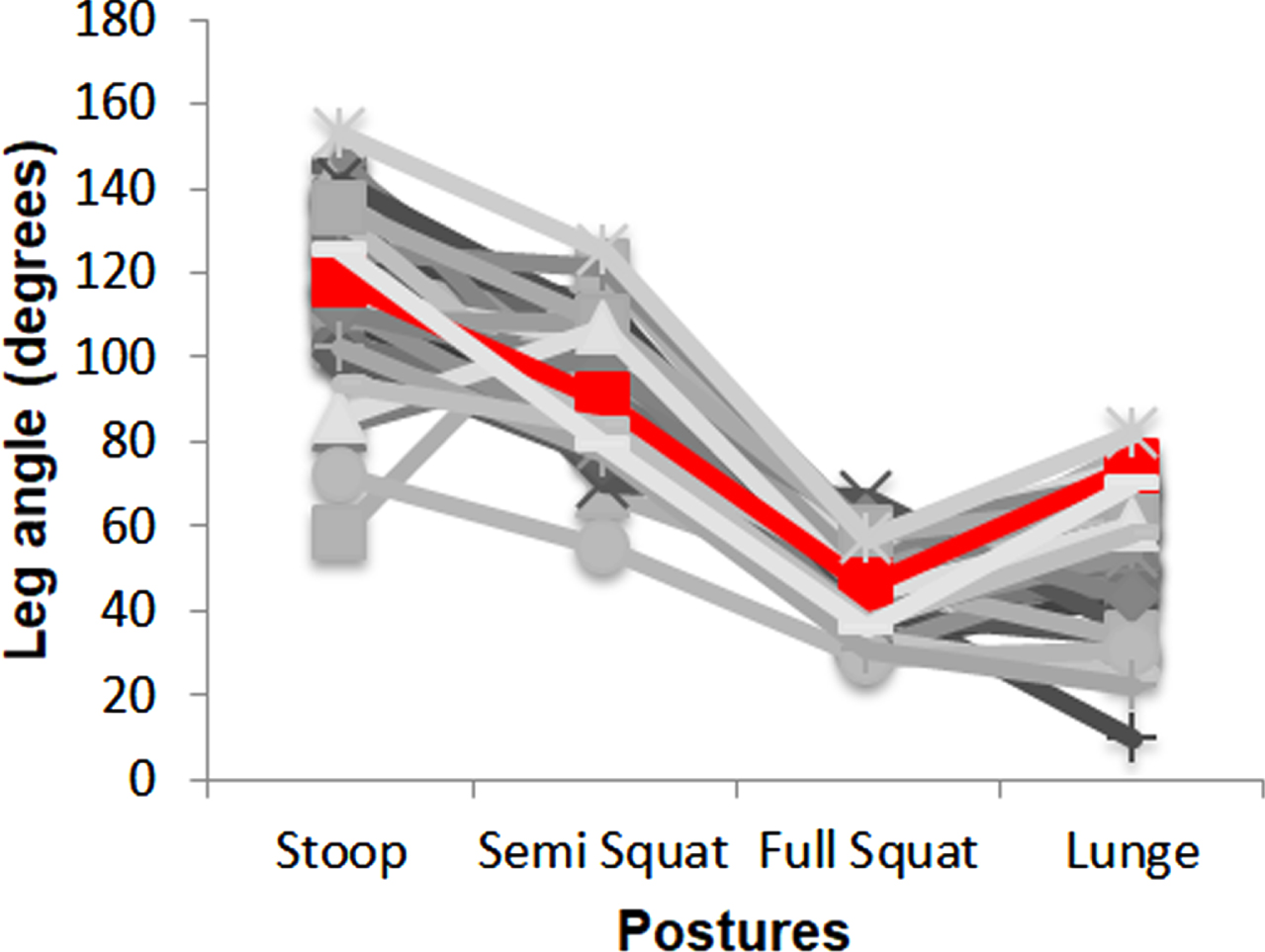
Trunk angle of different postures adopted by the subjects.
The fat percentage of calories burned is a newly introduced function in polar M430 heart rate monitor which works under the principle of smart calorie algorithm. The value is directly obtainedfrom the device. It varies according to the intensity of the exercise. Jogging is a high-intensive training that burns more amount of carbohydrates. In contrast, plogging can be considered to an interval type of training, where you pause for a moment in between your regular jogging to pick up the litter. The fact that plogging burns more fat percentage may be due to the multiple body movements that occur during the exercise.
Plastic waste management is a major problem due to an inefficient waste collection and segregation method. This growing concern about plastic pollution laid the groundwork for plogging, a modern waste collection technique. As plogging involves a mix of jogging and litter gathering, it is also a campaign towards responsible citizenship to maintain community health and a concern to prevent plastic pollution. The present research aims to assess the postural and physiological aspects of plogging. As ploggers are exposed to repetitive bending it is essential to examine the working postures during plogging. In this work, four postures, such as Stoop, Full Squat, Semi Squat and Lunge are evaluated. The findings of the posture assessment indicates that the level of risk in full squat and lunge is mild relative to the stoop and semi-squat posture. The study mainly clarified the static essence of the operation. Electromyography is a technique which can be adopted in future research to assess muscle movement, stress, and shear forces acting on subjects’ bodies during exercise.
The cardiovascular strain for ploggers were assessed to be in the higher risk category. This may be due to running with weight on one side, creating discomfort in the trapezoidal muscle which may lead to MSDs in the future.This recommends the need to develop an ergonomic intervention which surely have a vital role to play in reducing the cardiovascular strain of the activity and performing the task with ease. Ergonomic risk and physiological assessment therefore helps to find out the incompatibility of worker’s behaviour as well as the nature of the task.The fat percentage of calories burned and energy expenditure while plogging is found to be much higher than that in the jogging activity. Plogging being a low-intensity exercise with multiple movements provides everyone with a new dimension to their fitness routine as well as protecting our mother nature from plastic pollution. Proper training and awareness of the task will minimize the adverse effects of the activity. Increasing the sample size and further classifying the subjects based on BMI, age, gender etc. can provide different dimensions in further studies.
Footnotes
Acknowledgments
The authors express their heartfelt gratitude to the Director, Dean (Research and Consultancy) and TEQIP III Coordinator, National Institute of Technology Calicut, India, for providing financial assistance through the Innovative Projects Funding Scheme of the Institute to meet the expenses related to this research.
Conflict of interest
None to report.