



Abstract
BACKGROUND:
Human-centred design asks for wellbeing and comfort of the customer/worker when interacting with a product. Having a good perception-model and an objective method to evaluate the experienced (dis)comfort by the product user is needed for performing a preventive comfort evaluation as early as possible in the product development plan. The mattress of a bed is a typical product whose relevance in everyday life of people is under-evaluated. Fortunately, this behaviour is quickly changing, and the customer wants to understand the product he/she buys and asks for more comfortable and for scientifically assessed products. No guidelines for designing a personalized mattress are available in the literature.
OBJECTIVES:
This study deals with the experience of designing an innovative product whose product-development-plan is focused on the customer perceived comfort: a personalized mattress. The research question is: which method can be used to innovate or create a comfort-driven human-centred product?
METHODS:
Virtual prototyping was used to develop a correlated numerical model of the mattress. A comfort model for preventively assessing the perceived comfort was proposed and experimentally tested. Mattress testing sessions with subjects were organized, and collected data were compared with already tested mattresses. Brainstorming and multi-expert methods were used to propose, realize, and test an archetype of a new mattress for final comfort assessment.
RESULTS:
A new reconfigurable mattress was developed, resulting in two patents. The mattress design shows that personalized products can be tuned according to the anthropometric data of the customer in order to improve the comfort experience during sleep.
CONCLUSIONS:
A “comfort-driven design guideline” was proposed; this method has been based on the use of virtual prototyping, virtual optimization and physical prototyping and testing. It allowed to improve an existing product in a better way and to bring innovation in it.
Introduction and state of the art
As stated by Cooley [1, 2], human-centred de-sign brings designers to focus their attention not only on the ergonomic performances of products and workplaces but also to the wellbeing of the customer/worker when interacting with artefacts (products or work tools). Also, designers need to involve the final customer/worker in the design process. Customer wellbeing is often translated as the state of perceived (dis)comfort while using a product or performing an action. Even if comfort and discomfort are extremely subjective perceptions, in recent years, methods for an objective evaluation of perceived comfort, in terms of postural, physiological, cognitive, and environmental, have received a great deal of attention from researchers [3, 4]; this is probably due to the need of having: A comfort-driven design method, i.e. a design method that could allow to improve and optimize a product under the ergonomics/comfort point of view; The possibility, in the product development plan, to analyse the interaction between human and artefacts very early and to perform virtual analysis/simulation.
Customer wellbeing is also the performance on which designers have to focus their attention in case of products designed for ergonomics/comfort; mattresses are among these. A mattress is a typical product whose relevance in everyday life of people is under-evaluated. One-third of human life is spent sleeping [5], and, in the majority of the world’s modern and industrialized countries, this time is spent on a bed-system with a mattress. Sleeping quality is crucial for the human body to recover from both physical and physiological fatigue suffered throughout the day [6]. From an engineering point of view, the physical variables associated with sleeping comfort could include spinal alignment [7–9], contact pressure or weight distribution [10], interface skin temperature [11, 12], and vapour exchange between the subject and the bedding system [13]. Other factors like available space (width and length of bed), posture change/movement allowance (e.g. by behaviour on compression/decompression of mattress material), obstruction/limitation of posture change due to bedding systems and micromovements (such as with a water bed) are known as adverse effects on sleep comfort. Therefore, these factors are under-investigated. Now, most of the studies and bedding system designs are focused on the measurement of human-back pressure to improve sleep quality and are presented mainly in the way of mattress firmness. However, they lack exploring the real relationship between sleeping postures and mattress design [14, 15].
According to the bibliographic research of the last 30 years, the first paper dealing with a mattress design method was in 1993 [16] in which a pressure pad has been used for measuring the pressure at the interface between users and hospital mattresses to develop guidelines for improving mattresses’ performances. In recent years, two main approaches have been used to perform studies about the human-mattress interface behaviour: the experimental approach and the simulation approach. Using the experimental approach, in 2008, Torres et al. [10] have found the strong correlation among pressure variables (in particular pressure variance on buttocks and hands and pressure itself with entire body regions), perceived firmness, and perceived comfort. Zhu et al. [17] demonstrated the positive influence of the use of foams and latex in mattresses on perceived comfort. Bu et al. [18] stated that the pressure generated through the use of different springs in the mattress frame (different elasticity) has a positive influence on the perceived comfort only in a specific range (a value of surface layer between 12.4 and 30.6, according to CTBA Standard mattress testing). Thus, the mattress needs to be not too firm and not too soft. Shen et al. [19] demonstrated that the sleeping quality is correlated to the core material firmness in a three-layered mattress (upper, core, bottom). Fang et al. [20] elaborated a simple method to weight the body parts by the pressure distribution on a pressure pad for improving the personalized comfort experience. Naddeo et al. [21] demonstrated the effect of expectation on perceived postural comfort in performing a mattress evaluation during buying time.
Using the simulation approach, in Ishihara et al. [22] a FE (Finite Element) model of a soft body on a mattress has been used to evaluate the pressure at the interface, with simulation error between 5% and 15%. In Lee et al. [23] a FEM (Finite Element Method) approach has been used both for the mattress and the human body with strong correlation results (correlation error less than 10%, except for the scapula region). In Wu et al. [24], a rigid FEM manikin has been positively used to perform correlations between mattress performances and pressure distribution; Scarfato et al. [25] worked on characterizing the foams’ mechanical behaviour for realizing accurate simulations.
The conclusions of the mentioned papers drove the researchers to develop a method for designing new mattresses that have to be based mainly on the mechanical and the thermal optimization of the interaction between the human body and the mattress. Nevertheless, due to the comfort perception subjectivity, this is also depending on the variability of anthropometric characteristics of users; in Wong et al. [15], Verhaert et al. [9] the need for a customized mattress is highlighted.
In this paper, the problem of developing a new personalized mattress for optimizing the perceived comfort is studied, and a practical solution that has generated two patents, has been explained.
Aim of the study
This study aimed to develop a comfort-driven design method to bring innovation into a market in which it seems very difficult to do that: the mattresses’ market.
The first target was to understand what can be the right way to change a standard mattress’ configuration to achieve good results in terms of customers’ satisfaction and, in consequence, in terms of market share. The second target was to develop a new mattress that can be manufactured as the old one, without introducing any complication or new technology in the manufacturing process. The third target was to introduce a real innovation, not only into the product but also in the design process, through new methodologies and new instruments. The case of a personalized mattress seemed to need a significant effort, and the authors, in cooperation with a mattress company, accepted the challenge.
The research question is: which method can be used to innovate on or create a comfort-driven –human-centred product?
Methods
The first research step when defining a design method, inspiring it to the Axiomatic Design app-roach [26], is the investigation of customers’ needs and the definition of the so-called “customers’ attributes” [27]. State of the art about mattress design suggested that a mattress’ buyer looks for sleeping well and feeling comfortable and refreshed after wake up. However, the seller experience suggested us different buyers’ behaviour: a customer that buys a mattress, in the majority of cases, does not test the product or tests it just for less than 15 minutes [11]. Due to this limitation, two specific requirements have been studied for defining an evaluation method: The mattress has to be fit to the user; in order to achieve this goal, each mattress has to fit the customers’ anthropometric main characteristics: height and weight; The sensation and feeling that the customer has during his/her first approach on the mattress have to persuade him/her that the product fits perfectly with his/her needs.
The second research step is the investigation of the factors (Design parameters, up to Suh [26]) that affect the functional requirements and on the metric has to be used to measure them. There are many objective parameters relating to the subjective parameter of sleep (dis)comfort. Among those parameters, body pressure distribution, contact area, temperature, and spinal alignment are considered as critical factors with a substantial impact on sleep comfort and quality. Parameters within the pressure distribution closely correlated to sleep comfort are the maximum pressure, the average pressure [28], the maximum pressure gradient [29], the average pressure gradient, total pressure, and total contact area [28] between human body and mattress. Besides, Shelton et al. [30] defined a Pressure Index called “Pindex” to evaluate the homogeneity of the pressure distribution across the entire interface area.
Based on [20–22] and on mattress company experience, the authors have chosen five parameters to describe the comfort perception: The average pressure at the interface (MPa); The pressure variance on the surface of the mattress (dimensionless); The specific pressure distribution on shoulders, along the spine, on pelvis (Qualitative Pressure distribution); The maximum pressure (MPa); The sinking into the mattress (depth in mm).
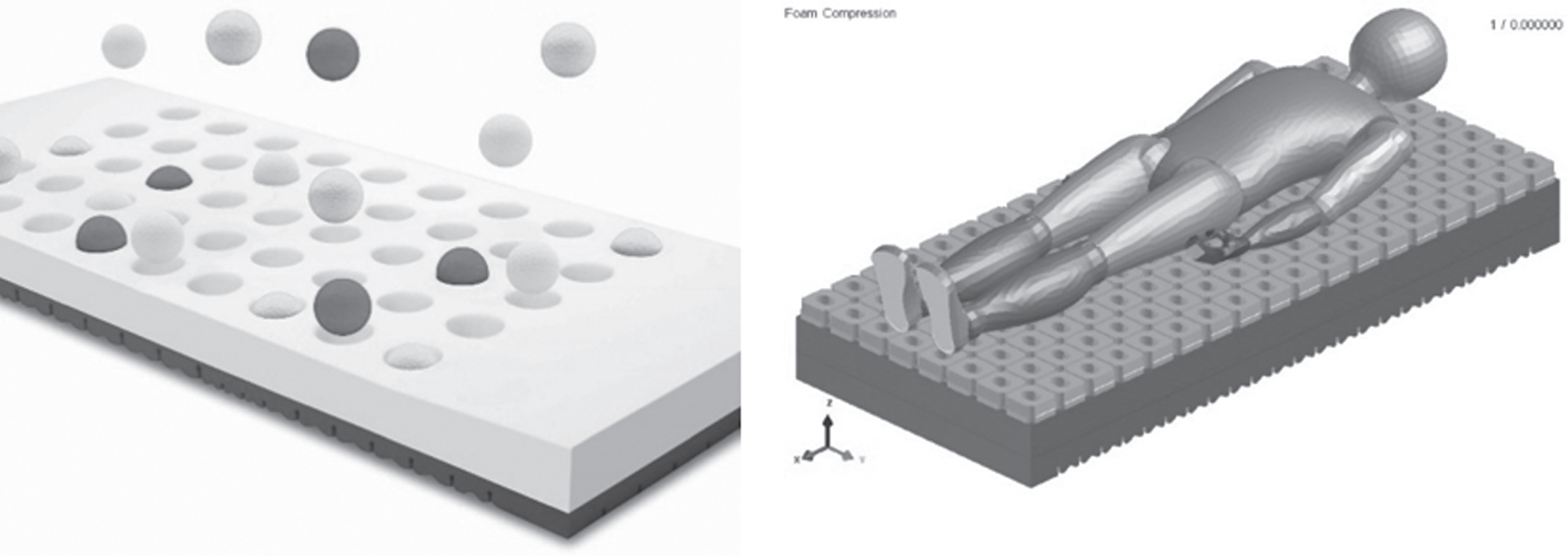
The Charlotte mattress by Rinaldi Group (Internal part on the left, FEM model on the right). In Section 3.1.
Those parameters have been evaluated by simulating a customer that lies in a supine position for a while until the mechanical assessment (due to the equilibrium between sinking effect and elastic response) has been reached. Head and neck have been excluded because, in the supine position, standard customers use a head pillow that avoids the direct contact between the head and neck with the mattress. The temperature was discarded because, in the buying moment, there is no enough time to reach the temperature equilibrium between the mattress and the customer lying on it. The spinal alignment was discarded because the chosen supine posture (on the backs with head straight) for the test is the one in which poor sleepers spend more time [10, 15] and allow to avoid lateral spinal misalignment.
The analysis was based on a comparison with a referral mattress that was assessed [31] as an acceptable comfortable one and can be considered as referral values for a good mattress.
The third research step is the application of comfort-driven innovation method [31, 32], following the above mentioned Suh’s design approach [26], that consists of the following procedure: Definition of a design starting point whose “information” can come from previous assessed products or a new idea of product; Identification of design constraints and their prioritization; Definition of process parameters based on available technologies and their limits (due to costs, companies’ availability, time to realize, etc.); Definition of a parametric solution of the problem and design of virtual experiments; Modelling and simulation of the human-product interaction in order to focus on comfort target; Results analysis and best solution choice through the best solution.
In this paper, the design parameters have been e calculated using fully parametrized explicit FE (Finite Element) model (that run in Virtual Performance Solution suite by ESI GMBH). This model considers the dynamic interaction between a manikin, represented by a human with its real joints, and a mattress.
The comfort-driven problem solving was carried out by a Knowledge-Based approach, the Multi-expert system method [33]. This method allowed the authors to perform the design optimization through the choice of the best among several problem’s solutions, considering technological limitation manufacturing feasibility and cost-saving.
The starting point
The starting point for new design development was an existing mattress that Rinaldi Group S.r.l. has in its Commercial Catalogue: The Charlotte mattress, shown in Fig. 1. As shown in this figure, the Charlotte mattress is a three-layer mattress with three different foams: FF60N (High-density memory foam) for the upper part, AP35B (Low-density polyurethane foam) for the intermediate part, and Viscopur (Viscoelastic high-density polyurethane foam) for the lower part. In the intermediate region, some balls made of AP35MS (Low-density polyurethane foam) are introduced in cylindrical holes to work as springs.
Design constraints
Authors and company engineers were subjected to several design constraints. The most important among them were the following: Materials used for layers have to remain the same and in the same order (Top, Intermediate, Down). Only the content of the cylindrical holes can be changed; The intermediate layer has to be manufactured in the same way (foam extrusion and cutting): the easiest way to respect this constraint is to not change the archetype of the mattress by changing at least the layout, the amount and the dimension of the cylindrical holes; The overall mattress dimensions have to remain the same due to the use of a textile envelope to wrap the foams layers. The company cannot change the envelope dimensions due to its costs; The gluing systems and the glue type have to remain the same, in order to avoid new certification costs for new materials used in the manufacturing process; The new archetype of mattress needs to have the possibility to be personalized easily, without incurring in technological problems or in troubles that might cause a delayed delivery to the customer.
Technology gate
Rinaldi Group S.r.l. imposed some technical limitations in order to limit the costs of their innovation. The technical constraints are explained as follows: Technologies used to manufacture the Charlotte mattress should not be changed; The new cutting system has to be a cold mech-anical cutting one in order to avoid chemical reactions or material’s characteristics changes; The mattress assembly operation needs to have approximatively the same processing time as the Charlotte one; The assembly operation has to be performed by a robotized system; The increase, in time, of manual operations has to be less than 20% (It means that the decrease, in time, of robotized operations has to be less than 20%); On these bases, the new design has been thought.
The proposed solution
Due to design constraints and technology limitations, the real problem to solve was: what can be used to substitute the foam spheres and what kind of materials can be used to drive the comfort performances?
The basic idea was to fill the cylindrical hole with a special polymer-foam based material in order to control the local softness and the mechanical behaviour in compression. Material suppliers can offer to the company a wide range of foams from 25 to 65 Kg/m3 (density) having two main behaviours in terms of hysteresis behaviour: standard elastoplastic and memory foams. The choice was to full-fill the cylindrical hole by inserting a cylindrical-shaped piece of foam among three kinds: a softer one, an intermediate, one and a harder one.
For each kind (soft, intermediate, hard), we had two choices of foam (based on company availability) whose characteristics are listed in Table 1.
Characteristics of the foams used to realize the cylindrical-shaped piece with the aim of full-filling the cylindrical hole. in Section 3.4
Characteristics of the foams used to realize the cylindrical-shaped piece with the aim of full-filling the cylindrical hole. in Section 3.4
About geometry, we had the hypothetical possibility to change the holes’ diameters as we want. In the end, a cylindrical diameter of 100 mm was chosen (as a compromise between the available cutting systems and the workability of an intermediate cut layer), and three foams (most performing in terms of durability and costs) were chosen: PU30B as intermediate, PU35B as hard and FS60N as soft.
Seven mattress designers of two mattresses plants inside the same big company were interviewed with a set of questions about the criteria that usually are used to design a mattress and to choose the right material for the manufacturing process. The purpose of those interviews was to codify, in design terms, the experts’ knowledge inside a design framework. In the multi-expert system method [24] each answer was classified as a value in a like-broken-line function that usually is triangular or trapezoidal, with one or more optimal values. This knowledge, whose content cannot be represented due to a signed NDA, was used for the following steps and some design choices.
Charlotte mattress has 45 holes for the foam-balls position and, in order to not change the mattress layout and, consequently, the manufacturing process, 45 holes have been left inside the intermediate layer of the mattress; thus, 45 cylinders have to be placed. Some hypotheses coming directly from manufacturer experience have been formulated in order to add some constraints to the cylinders’ layout, such as: On head sides, the hard foam has to be used for giving stability to the mattress corners; Along the leg sides, the hard foam has to be used for providing stability to the mattress sides; Shoulders need to be supported with an intermediate firmness foam because the softer one is not able to support the load due to the concen-trated weight, and the harder one is uncomfortable when in contact with emerging bones, i.e. scapula; The pelvis needs to be supported with an intermediate firmness foam because the softer one is not able to support the load due to the concen-trated weight, and the harder one is uncomfortable when in contact with emerging bones like pelvis bones (iliac and sacrum).
These choices allow limiting the degrees of freedom by assigning the right position to 33 of 45 cylinders.
Due to the hypothesis of the Symmetric behaviour of the mattress, the possible choices were limited to 6; thus, the potential layouts were 36 = 729 combinations.
Thanks to the information from experts’ interviews and the previous knowledge about the foam behaviour [18] and its influence on the comfort performances [43], we were able to drastically reduce the number of design options on which perform the sleeping simulation to 15. Among these 15 models, three were chosen as best fitting for three selected applications: sleeping comfort for a 50° percentile (P50) male based on the height of French Population, rev. 2017 [34, 35] with a weight of 60, 70 and 80 Kg.
The manufacturing process of Charlotte mattress is completely robotized. It consists of the cutting of foams layers (lower and intermediate) by mechanical blades, the inserting of foam-balls in holes, and the gluing together layers and balls by a water-based glue. Finally, the upper layer that is shaped directly during the foaming process is glued by water-based glue to the rest of the mattress. The new process is exactly the same but requires additional time for cutting the cylinders (the balls are preformed and are bought as they are) and preparing the chosen layout in the robotized assembly machine. The manufacturers’ production process experts estimated an increase of about 7% of production time and a range of+5/10% in terms of costs due to the cutting scraps (cylinders are cut from a rectangular flat plate). The product development “gate” has been crossed with good results, as the manufacturing company said.
Mattress and human modelling and characterization
All materials were physically tested by compression test following the ASTM standards [25]. The digital models of the used materials were set in order to reach a numerical/experimental correlation of mechanical behaviour with an error always less than 5%, in terms of the stress-strain curve and hysteresis/mechanical parameters.
The CAD (Computer-Aided Design) model of the new mattress was created in ThinkDesign® by DPT ©Environment using a hybrid modelling approach (CGS –Constructive Solid Geometry and Surface Modelling). In order to create the model of the human, we used an already developed MBS (Multi-Body System) model in Solidworks®, by Dassault Systemes ©that is fully parametrized in terms of anthropometric measures and human segments dimensions (length, volume, external surface shape) [36]. FEM models of both mattress and the human body were created in VPS® (Virtual Performance Solutions) by ESI ©(A dynamic explicit finite element solver) environment and prepared for the run.
Several hypotheses were made in order to simplify the calculations: The tests were made in a supine position [10, 15] in order to perform a simple/symmetric analysis; The manikin was positioned in a supine position, and its joints blocked; All the manikin segments were treated as connected rigid bodies, to avoid to calculate flesh deformation during the interaction. The same simulation strategy was used both for referral and for new mattresses in order to compare the results; In order to simulate the body sinking in the mattress, a vertical velocity of 100mm/min [37], from up to down, was imposed to the manikin. The mass distribution was set using the real human mass distribution (based on [1]) into segments while the gravity force was neglected due to the use of a constant velocity, as suggested in CTBA Standard for mattress testing [37]; The sinking of the rigid human body into the mattress has been stopped when the load obtained through the integration of the calculated pressure at the interface of contact surfaces is equal to the human body mass; The lower layer of the mattress was blocked on the ground by a 3DOF (Degree Of Freedom) clamps (Z-axis as plane direction and rotation). Materials have been modelled with a nonlinear/viscous material for simulating the mechanical behaviour of foams. The calculations have been performed in order to have the following outputs: Pressure map at the interface between the human body and mattress; The pressure at the interface between the three layers of foam, to understand how much each layer works in terms of energy absorption and loads distribution; Displacements along Z-axis of each node in contact with the human body: the upper mattress surface was represented with an element mesh composed by approximately 4000 nodes; about 1500 of them were in contact with the body; Peaks of pressure.
FEM model validation
Material tests used to characterize the mechanical properties of the foam were correlated with FEM simulation in order to achieve the best material modelling result. The stress/strain curve of each material was numerically correlated with its model, with a correlation error always under 3%. An example of the superimposition of the numeric stress/strain curve with the experimental stress/strain curve is shown in Fig. 2. Also, some repeated tests on mattress specimens (a cut portion whose dimensions were 50x50cm) has been used to correlate the results under compression (by a plate) with the numerical model. This step was necessary for setting the right calculation parameters (both specific material parameters and the numeric-control parameters for the ESI software –see [38] in the FEM run. The correlation errors in mean pressure and sinking were always under 5%. These experiments allowed the author to validate the numerical model and to be sure that the FEM analyses were able to simulate the mechanical behaviour of the mattress and its interaction with the rigid human-body adequately.
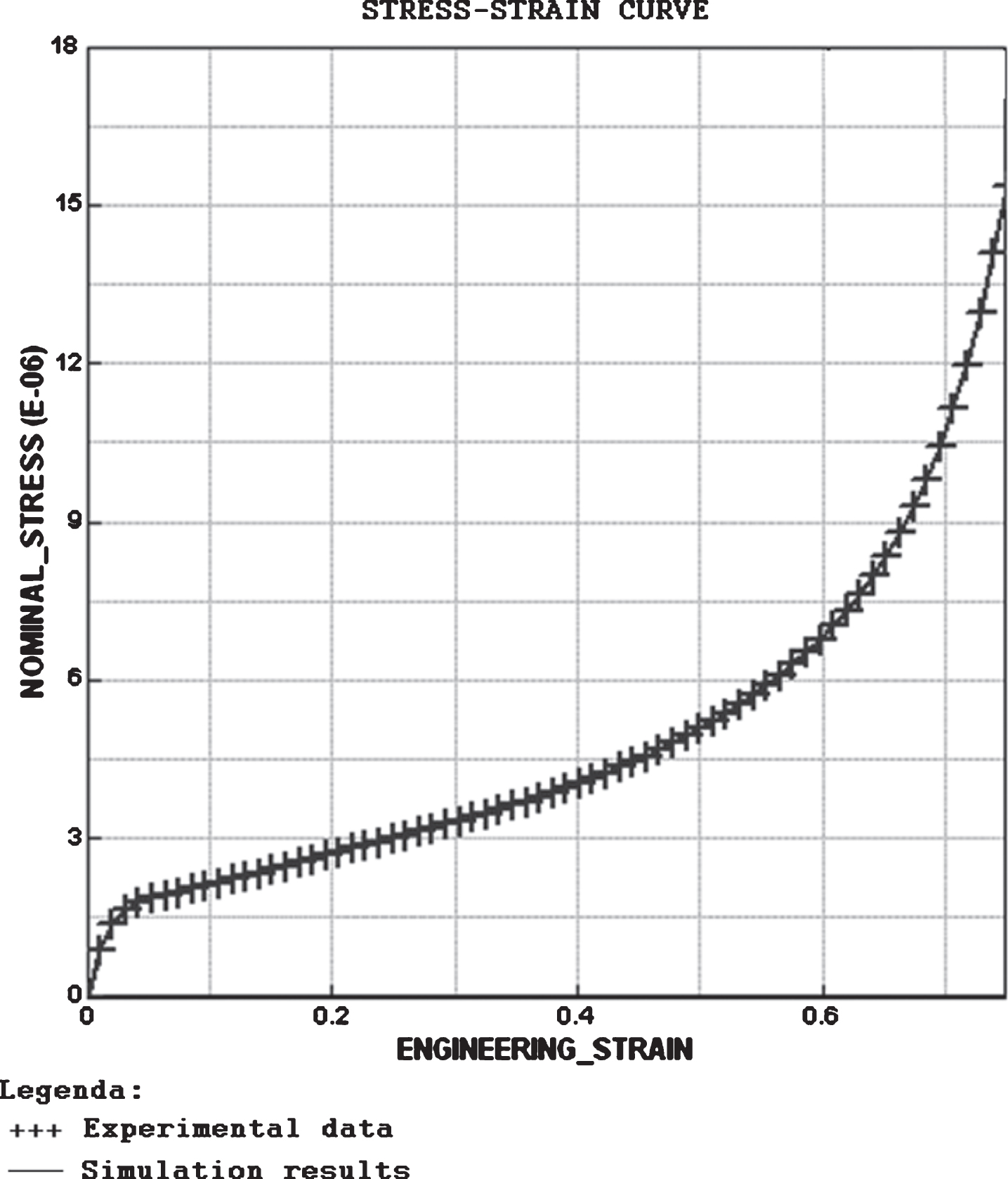
Superimposition of experimental stress/strain curve (line) with the numerical one (dots). In Section 3.7.
In order to make a comparison between the impro-ved/innovated mattress and the Charlotte mattress, a comfort evaluation criterion was developed. The “comfort” formula is protected by NDA (Non-Disclosure Agreement), but the mattress company Valflex® permitted us to publish the qualitative information about it. The factors that had been considered were the following: The ratio between the surface in contact with the human body and total surface of the mattress, in order to take into account the “wrapping” effect; Average pressure on Human body that has been compared with the ideal one coming from the literature [4, 39–41]; Maximum pressure, a good indicator of human body parts that can suffer local discomfort; Median Value and Variance of the pressure that give an idea about the distribution and the difference between the body parts perception [5]; Qualitative distribution of the pressure, evaluated by the company experts; Values and distribution of the pressure in the shoulder/spine area, in order to take into account the discomfort in the body parts that are more sensitive when a person lie down on a mattress [41]; Qualitative index about the load transfer be-tween the layers, in order to evaluate how each mattress’ layer works. This parameter was obtained as results of simulations, using the so-called “sections” [38] in which it was possible to measure force and energy flows.
All these parameters have been weighted in order to calculate a global comfort index for pressure/postural interaction with a formula like the following:
In which PC is the Perceived Comfort rating, wi are the weights (relevance) of each evaluated parameter/factor, Fcj are the n objective factors/parameters calculated by FEM analysis, and Fsj are the m subjective factors evaluated by the experts.
Fortunately, the experience of researchers and experts involved in the process and the limited number of possible layouts due to technological limitation allowed to use a “Trial and Error” method to perform the virtual optimization by choosing among the best virtually-tested solution. The final product coming from this comfort-driven innovation process is shown in Fig. 3.
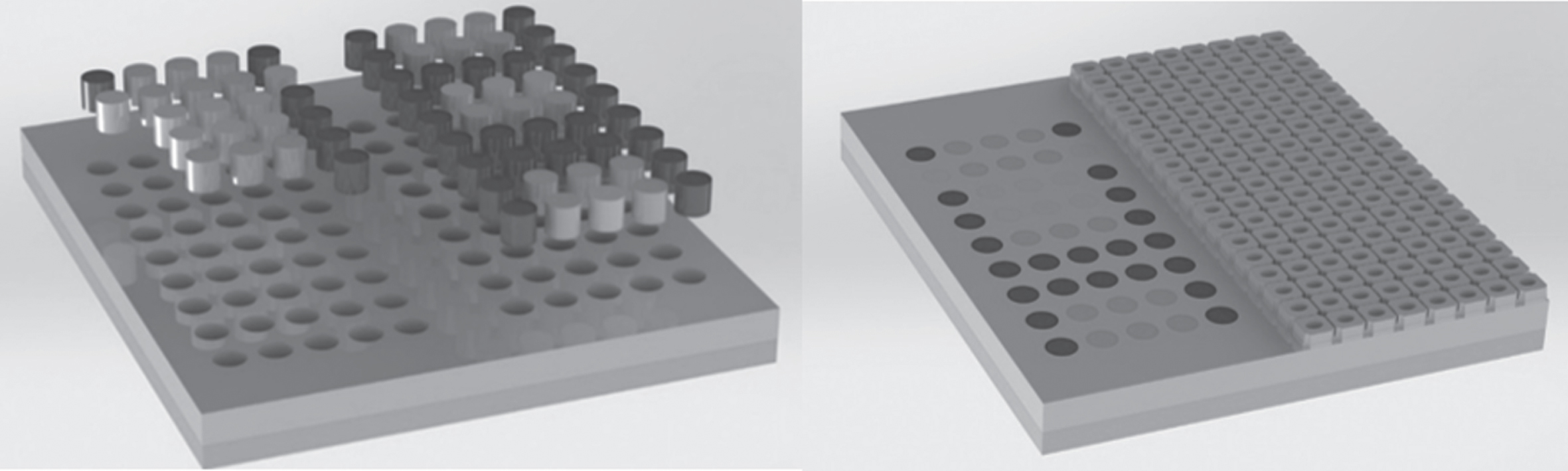
The New Charlotte archetype. In Section 3.8.
As described in section 3.4, only the intermediate layer of the Charlotte mattress was modified in order to improve the performance and innovate the product itself. The intermediate layer was designed as a foam matrix (Viscopur) in which several cylinders of three different foams are placed. In Figs. 4, 6 the results of optimization of cylinders layout for three different target-customer are shown. Moreover, in the figures, the hard foam cylinders (PU35B) are represented with light grey, the intermediate foam cylinders (PU30B) with mid-grey, and the soft foam cylinders are with dark grey. The head of the user is represented in the figures in order to understand the head/foot side.
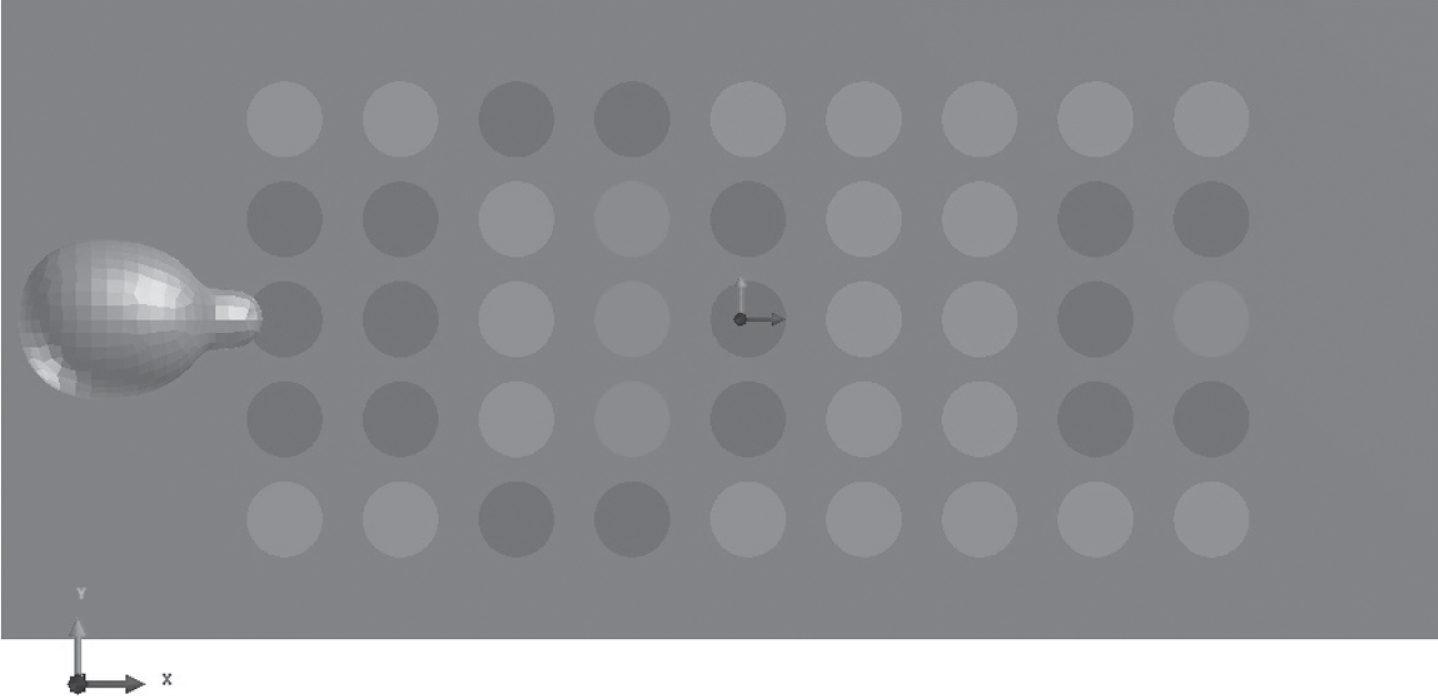
Layout Charlotte for P50 male, weight 60 Kg. In Section 4.
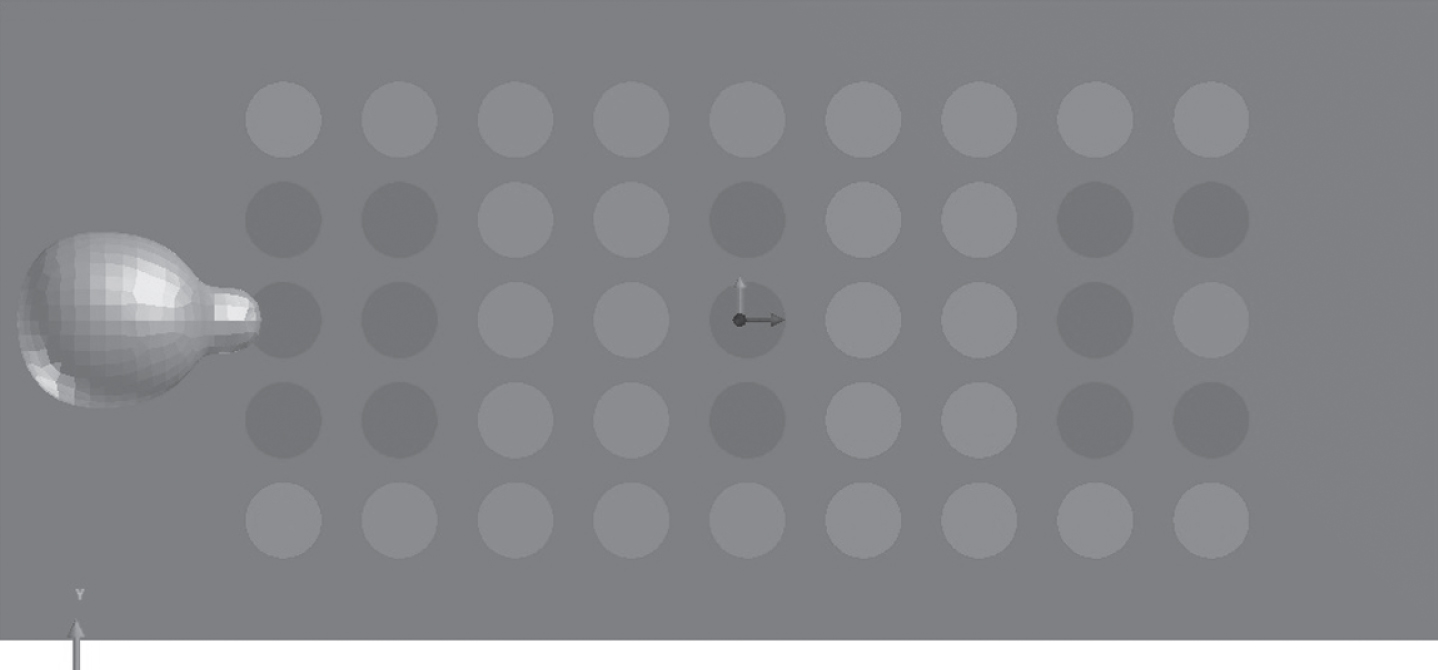
Layout Charlotte for P50 male, weight 70 Kg. In Section 4.
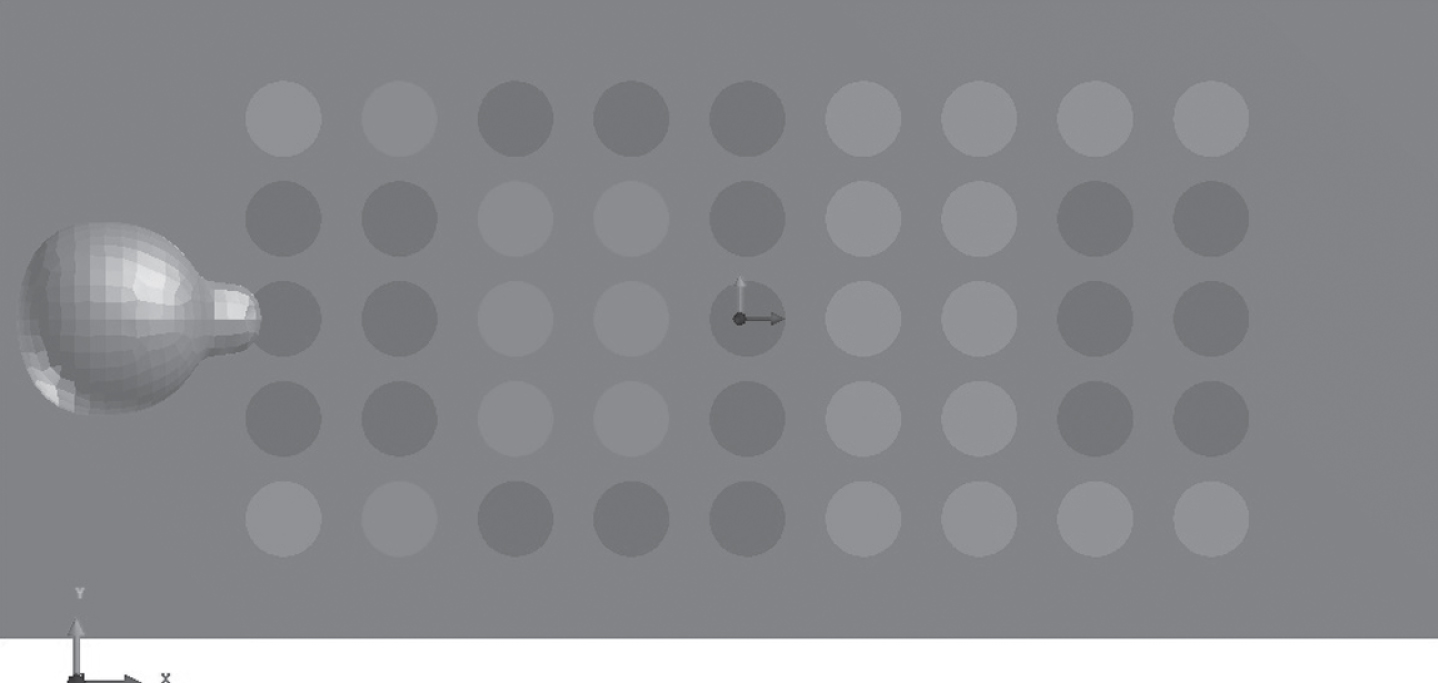
Layout Charlotte for P50 male, weight 80 Kg. In Section 4.
The designed mattress has been produced as physical prototypes and has been tested inside the manufacturing company. As first verification of the design target satisfaction, a sample composed of 18 experts coming from marketing area of mattresses’ companies was involved in a simple comparative test between the standard Charlotte mattress and the personalized one. The sample belonged to the target group of percentiles (P50 man weighting 60 (6 subjects), 70 (6 subjects) and 80 Kg (6 subjects) - accepting an anthropometric variability of±3%). The protocol test was straightforward: subjects were asked to lay in a supine position on both mattresses, opportunely installed on a rigid bed system, in a randomized blind test for 15 min each [42]. Subjects were asked to rate the overall postural comfort on a ten-point scale from 1 to 10 (1 = no comfort, 10 = full comfort). For each personalized mattress, a mean overall comfort score has been calculated as the mean of the six evaluations. While for the Charlotte mattress, the mean overall comfort score has been calculated as the mean of all the 18 evaluations. Specific data about testing cannot be published for NDA restrictions. Results obtained through the simulation and the application of the overall comfort score formula (1) were comparable (with an error lower than 10%) with the mean of the value obtained with the experimental tests. All subjects rated the overall comfort of personalized mattress higher than the Charlotte one.
Recent papers in literature [9, 15] claim that subjectivity of comfort perception makes it really difficult to design a single product that is able to fulfil customer needs and to provide a comfortable experience for everyone. Anthropometric and gender differences heavily affect the interaction experience with those products whose characteristics are dimension-dependent. The mattress is a typical product whose relevance in everyday life of people is under-evaluated and whose mechanical and dimensional characteristics can deeply change the interaction behaviour. Thus, for several years, the need for a customized mattress is highlighted in both scientific literature [9, 15] and market advertisements. Unfortunately, personalized products usually have very high costs and very challenging for manufacturing and delivering.
In this paper, a methodological approach has been described to bring innovation by introducing a comfort-driven design method to improve an existing product and transforming it into a customizable one without changing technologies and costs.
The method was based on the Suh Design approach [26] and its application allowed to develop a general guideline for developing and innovating new comfort-driven –human-centred products.
The study was based on a simulation approach, with a partial correlation between numerical simulation and experiments (made on materials behaviour and mattress behaviour, but not on the simulation of a rigid human on the mattress) that reached a high level of precision (under 5% of errors on the studied factors).
The proposed method allowed to design a new personalized mattress that is very easy to be customized in relation to people anthropometric characteristics (stature length and weight), and can be assembled through the gluing of the different layers that constitute the mattress itself (Fig. 3).
Furthermore, the comfort-driven design approach allowed to configure whatever different mattresses we want, and each of them is optimized for pre-determined users belonging to an anthropometric cluster under a comfort point of view.
The experience-based guideline to innovation is found on subjective analysis, objective analysis and experiments. This guideline can be applied to any existing product whose virtual prototype (and, consequently, whose mechanical behaviour and its effect on the human body) can be modelled, simulated and validated through an experimental session. The guideline can be synthesized as follows (Fig. 7):

Virtual comfort-driven design guideline. In Section 5.
Step 1: analyse the product, the materials by which is made, its manufacturing process, all the characteristics that will be involved in virtual simulations (like the type of interaction, hypotheses of mechanical/dynamical behaviour, boundary conditions, Finite element type, and so on) and experimental/numerical correlation for verifying the accordance of simulation results with experimental ones;
Step 2: create a robust virtual model that should be representative of the interactions (between the user and the product) that characterize the task;
Step 3: validate the model using a growing-in-complexity model, from the single material specimen to the complete/complex task itself, by experimental/numerical correlation on physical parameters (like pressure map, force feedback, stress/strain, deformation);
Step 4: use models of behaviour for describing the investigated factors that should be optimized; in the case of comfort-driven design, one of the most influencing factors is the perceived (dis)comfort;
Step 5: define a target function that represents the synthesis of the characteristics that allow to perform the required function and allow to satisfy the customer needs, and whose factors can be calculated through the virtual model;
Step 6: involve experienced designers to individuate the direction of the innovation, respecting the constraints of available technologies, costs and time of development;
Step 7: hypothesize several solutions (even with a Design of Experiment (DOE) approach) and test them virtually in order to find the best among the hypothesized ones;
Step 8: realize physical prototypes of chosen solutions to the problem and realize some experimental physical test to assess the target and verify the project. Thus, involving the final user in a Human Centred Design experience. If the physical prototype does not hit the target (set in step 5), the designer needs to re-design the virtual product and to rerun the actions (restart at step 6).
Thanks to this guideline, in the test case used for the methodology development, the final costs of manufacturing of personalization is about near zero because the comfort optimization is done in virtual by merely adopting an appropriate layout of internal cylinders and using appropriate materials for them. The study was specialized for three different weights of P50 European Males. However, it can be easily extended to each percentile and gender the company wants. Indeed, the new mattress can fit the customers’ needs expressed not only in terms of preferences but also in terms of own anthropometric characteristics like height, weight (i.e. BMI). Therefore, the mattress company organized the new production process in cooperation with their foams’ suppliers and verified that times and costs of the manufacturing process remained almost the same.
The physical prototypes of the mattresses were built by the manufacturing company and were used to make the experimental assessment, with 18 experienced people, of perceived comfort; results in terms of perceived comfort were satisfying both for potential customers and for the company itself.
Next steps of this study will be an experimental assessment of the developed mattresses in order to prove the robustness of the design method scientifically.
Finally, this mattress has been introduced in the new Market Catalogue for 2019, and the Marketing&Strategy director of Rinaldi Group did a survey among their distributors and re-sellers and had a very interesting (good) feedbacks from the pilot customers.
The performed collaboration experience allowed to witness the effectiveness of the methodology and the feasibility of the design/manufacturing process for analysing and improving, under a comfort point of view, an existing mattress, bringing innovation in it.
The first limitation of the study is linked to the FEM human model used for the investigation. Using a rigid human body means the lack of some information about the self-accommodation of human joints and about the softness of the human tissues in contact with the mattress. Nevertheless, the comparative analysis was made with the same model, and the comfort assessment gave to the authors good numerical/experimental results.
Another limitation is that the mattress has been modelled without the external tissue skin that usually is used to wrap the foams. Indeed, it has been demonstrated that this tissue skin creates a different pressure distribution among human body and mattress, due to the load distribution that is correlated to the pre-tensioning of the tissue. Nevertheless, the wrapping tissue used for those kinds of mattress is usually soft and has a low pre-tensioning in order to allow the user to feel the softness of the memory foam. Thus, this limitation can be neglected in our application. Furthermore, only the supine position has been investigated. The investigation of lateral or prone position needs to be studied, and the factors that affect the comfort perception have to be deepened.
Finally, the last limitation is about the wideness of the possible combinations of cylinders that have been limited by several hypotheses and company’s requests. Nevertheless, the study represents a reasonable exercise of developing a comfort-driven method with practical outputs.
Conflict of interest
None to report.
Footnotes
Acknowledgments
The authors want to thank the Rinaldi Group S.r.l., Giffoni Valle Piana (SA) –Italy, for the opportunity to work on a real case and for the competences of the experts they put in the project. It has to be noted that this study brings the research group to write about two patents that are under approval by Italian and European Patent offices.