



Abstract
BACKGROUND:
Concerns have been raised about compliance with environmental and safety regulations during mining activities.
OBJECTIVE:
The study assessed miners’ experiences and perceptions of environmental and safety regulations, in addition to comparing their experiences and regulatory perceptions.
METHODS:
A cross-sectional survey design was adopted for data collection from field miners in Ebonyi State, Nigeria.
RESULTS:
Findings show that miners still experience environmental pollution and serious injuries during mining activities, notwithstanding regulatory visits. Miners’ perceptions of environmental regulatory requirements and their perceptions of safety regulatory requirements had more non-significant correlations, while miners’ environmental and safety experiences had significant relationships with their perceptions of environmental and safety regulatory requirements. Nonetheless, environmental and safety regulations were perceived in different ways by miners based on important regulatory requirements.
CONCLUSIONS:
The study demonstrates the importance of using a practical approach in managing environmental and safety issues during mining activities in a developing country like Nigeria.
Introduction
Extracting mineral resources from the earth crust should be carried out, such that harm to nearby environment components and miners is reduced as much as possible. Thus, mining activities should take a sustainable approach that involves optimal environmental resource management, realistic economic enhancement and social justice [1]. Geologically, the 923,500 square kilometre-surface area of Nigeria is mostly crystalline and sedimentary rocks [2]. This geological composition contains sedimentary rocks covering various basins of rivers and lake systems, with a variety of economically mineable minerals [3]. Nigeria also has more than 30 mineral resource types which can be found in commercial quantities across her six regions and 36 States [4]. Mineral resources that are abundant and economically viable in Nigeria include: Coal, Bitumen, Limestone, Iron Ore, Granite, Barites, Gold, Lead/Zinc, among others [5]. As at 2018, official records showed that more than 55 million tons of solid minerals were extracted across Nigeria, with limestone and granite representing over 66% of total extracted minerals, at 27.19 and 9.62 million tons respectively [6]. Many of these mineral resources are abundant in the five states that make up the southeast region of Nigeria: Abia, Anambra, Ebonyi, Enugu and Imo [7]. About 1.48 million tons of minerals were extracted from Ebonyi State in 2018 alone, representing more than 70% of mineral extracts in the entire southeast region [6].
In regulating the extraction of Nigeria’s mineral resources, Nigerian Minerals and Mining Act of 2007 provides regulatory guidance for mining activities across Nigeria [8]. In practicalizing the provisions of the Act, regulatory requirements are provided in the Nigerian Mineral Mining Regulations of 2011. Requirements in Parts IV (Mines Environmental Management) and Parts V (Mines Safety Management) of the Regulations are pertinent in effectively protecting the environment from mining activities, while ensuring that physical harm to miners are reduced as far as possible [9]. In terms of environmental management, the regulations have requirements on mines supervision, impact assessment, protection of flora and fauna, mines closure, waste management, environmental pollution, among others. Under safety management, the regulations also have requirements on staff register, incident recording, personal protective equipment (PPE), fire/electric/radioactive hazards, first aid, equipment guidelines, emergency preparations, among others [9].
Despite safety and environmental requirements in the regulations, experiences during mining activities in Nigeria point towards the prevalence of environmental pollution and degradation [10, 11], poor insitutionalization of local content [12], and inadequate welfare considerations for mine workers [13]. Also, regulatory requirements for mining and quarrying activities in many African countries have taken cues from their counterparts in developed countries, as well as international and regional organizations [14]. Nonetheless, instituting effective regulatory guidelines in developing countries like Nigeria has faced challenges in terms of domesticating and practicalizing pertinent issues therein [15]. This scenario may be attributed to the slapdash approach used in designing regulatory frameworks across sub-Saharan Africa, which makes it challenging in terms of compliance, mainly due to prevailing artisanal and small-scale mining activities (ASM) in the region [16, 17]. In addition, regulatory enforcement in Nigeria is hampered by corrupt government officials whose self-serving tendencies deter regulatory compliance [18]. Furthermore, environmental and safety regulatory enforcement challenges have been att-ributed to miners’ adverse experiences and poor compliance with regulations relevant to mining activities in Nigeria [19], demonstrating the importance of understanding how miners perceive these regulations.
Previous studies have looked at stakeholders’ perceptions of undertaking mining activities sustainably [20–22], environmental and occupational risks during mining activities [23, 24], and corporate social responsibility of mining companies [25]. Also, studies have examined safety culture maturity during mining activities [26], identified constraints to effective safety management during coal mining [27], and developed a sustainable approach for assessing environmental and safety regulatory compliance during mining activities [28]. However, insignificant attention has been paid to understanding how miners perceive environmental and safety regulations during mining activities. In addition, statistical evidence relating miners’ experiences with environmental and safety regulations during mining activities in Nigeria is lacking. Nonetheless, statistical analysis of workers’ perceptions of workplace safety and experiences in a variety of industrial settings have been reported [29–31]. Also Maiti [32] has designed worksystem safety based on statistical evaluation of mine workers’ safety perception, while Sutalaksana [33] has linked workers’ safety perception with behavioural patterns using statistical testing of relevant hypotheses. Both studies however, did not focus on regulatory mechanisms. In the present study, we argue that having appropriate regulatory requirements do not necessarily translate to adequate compliance by those they apply to. This is because many stakeholders find it challenging to understand the specifics of regulatory frameworks as well as the procedural guidelines regulatory agencies impose on them [34]. In Nigeria, this scenario can be atrributed to poor consideration by stakeholders in enforcement as well as compliance with occupational health and safety regulations [35]. Poor stakeholders’ consideration for regulations means that the perception of environmental regulations may be related to safety regulatory perception, due to external-contextual factors [36], bureaucratic bottlenecks and inadequate regulatory design [37]. Therefore, miners’ experiences with relevant regulations may be linked to the extent they perceive these regulatory requirements. Also, the ‘copy and paste’ nature of designing and promulgating mining regulatory mechanisms in sub-Saharan Africa [16, 17] means that miners’ understanding of environmental regulations in Nigeria may compare with safety regulations since both dimensions having similar requirements and emerge from the same statutory instrument [9, 38]. Therefore, perceptions of these regulatory requirements are pertinent in understanding the extent those they apply to, comply with them.
It is against the background of the preceding problems that this study aims to evaluate miners’ experiences and perceptions of environmental and safety regulations, and relate their regulatory perceptions with their experiences.
Hypotheses
There are significant correlations between miners’ perceptions of environmental regulatory requirements and their perceptions of safety regulatory requirements There are significant relationships between miners’ environmental and safety experiences and their perceptions of environmental and safety regulatory requirements.
After the introduction, descriptions of the study area are presented, followed by data collection and analytical tools used. Subsequently, details of the study results and indepth discussion with relevant literature in the field are offered. Finally, conclusions are drawn with pertiment recommendations made.
Methods
Study area
The study was conducted in Ebonyi State, Nigeria (see Fig. 1). Ebonyi State has thirteen local government areas and based on 2016 estimates, its human population is 2,880,383 [39]. Currently, commercially mineable minerals in Ebonyi State are mainly granite, lead/zinc, limestone and laterite; over 2.6 million tons of these minerals were produced between 2016 and 2018 alone (See Table 1). However, prevalence of ASM in sub-Saharan Africa implies that minerals extracted by unregistered miners may not be part of official records for minerals produced [16].

Map of the study area.
Disaggregated mineral extraction data for Ebonyi State (2016–2018)
Source: National Bureau of Statistics, 2019
Granite is mined and quarried in the Ishielu-Ohaukwu area, mainly by multinational companies with indigenous vested interests. Similarly, extraction of lead and zinc deposits in the Enyigba - Ikwo area employs the services of indigenous miners who engage in artisanal mining activities. However, there was a fairly recent takeover by a multinational company that mines and separates lead and zinc deposits in the Enyigba –Ikwo area. Lead and zinc mines are also operational in Mkwuma-Akpatakpa where mining pits are operated by locals. Granite and limestone are also mined and quarried in Ishiagu –Afikpo –Amasiri areas. Though solid minerals’ extraction and exploitation are solely under the jurisdiction of the Federal government of Nigeria, regulating mining and quarrying activities takes a multi-directional approach, where state governments also exercise some powers.
Cross-sectional survey was adopted for data collection from field miners in ten mining locations in Ebonyi State. In doing this, miners’ perceptions of environmental and safety regulations were measured using pertinent environmental and safety variables, which are requirements stipulated in the Nigeria Mineral Mining Regulations of 2011. Pertinent facets of parts IV and V of the regulations [9] were extracted and used in designing the questionnaire, in order to assess how miners, understand its specifics. This is in line with the study’s main construct that adequate compliance with relevant regulatory requirements may not be realizable due to challenges in clearly understanding the specifics, and practical guidelines contained in regulatory instruments [34]. With respect to measurement, the questionnaire measured 16 environmental regulatory variables, 14 safety regulatory variables and 7 miners’ environmental and safety experiences. The questionnaire was modified based on the scale approach used by Sutalaksana et al. [33] in assessing safety climate perception of workers operating in hazardous workplaces. In the present study, miners’ cognizance of the regulatory items was elicited using a 5-point scale (1 = very low, 5 = very high).
Environmental regulatory variables assessed were: environmental impact assessment, supervision of mines, drainage system, post impact assessment, un-usual activity reportage, stakeholder committee, landscape and scenery, wild animals and habitat, toxic solid waste treatment, toxic waste water treatment, natural vegetation, air quality, soil quality, water quality, mines reclamation plan, and restoration after mines closure.
Safety regulatory variables assessed were: sign in/sign out staff register, accidents/near misses record, first aid station/first aider, mine plan for mining activities, health and safety officer(s), provisions for fire hazards, equipment/machinery guidelines, provisions for electric hazards, provisions for radioactivity, permission for high-risk operations, use of PPE, traffic management, arrangements for emergencies, and overall safe work environment.
In ascertaining miners’ experiences with environ-mental and safety regulations, the following variables were used: trainings/workshops, environmental degradation, injuries and regulatory visits. Questionnaire items under miners’ experiences measured how regular miners experienced pertinent environmental and safety variables in the last two years (1 [none] to 4 [more than 6 times]). Demographic characteristics in the questionnaire were variables like age bracket, gender, level of education and years of experience.
In terms of reliability statistics, the forty-item index established good internal uniformity, with a Cronbach’s alpha of 0.772. The final questionnaire used for the study was validated by a statistician prior to data collection. Also, ethical approval for the study was gotten from a research ethics board. Ethical principles of informed and voluntary consent, anonymity and non-injury were followed all through the data collection process.
Sampling procedure
Federal Ministry of Mines and Steel Development (FMMSD), State office in Abakaliki, Ebonyi State identified about 1000 miners operating in 20 active mining locations in Ebonyi State. This served as the study population. Ten out of the 20 active mining locations, were selected because they were classified as the most active, according to the FMMSD Ebonyi State office. Stratified sampling technique [40] was used in randomly selecting miners from respective population of miners in each location. Stratified sampling was applied because of the heterogeneous nature of the study population, which included miners working in different operational areas (quarrying and opencast mining), and most prevalent mineral resources (zinc, lead, limestone, dolerite and granite). Stratification also considered the specific nature of the study population, as well as spatial distribution of the miners in the study area. In terms of miners sampled for the study (see Table 2), at least 25 miners were sampled from each location, with 300 sampled out of a total of 1000 miners, using a sample of proportion [41]. Out of the 300 miners sampled, 254 (over 80%) valid questionnaires were retrieved and used for analysis. The response rate was high mainly due to two factors: (1) involvement of mining association leaders and (2) interactive approach used in explaining the questionnaire contents (e.g., translation into the local dialect).
Miners sampled for the study
Miners sampled for the study
ASM: artisanal and small-scale mining; LSM: large scale mining
Miners surveyed in the study were all field workers that operate in open cast mines and quarry sites within the study area. In collecting data from sampled miners, several visitations were made to the different mining sites (at least three times for each site) where miners were given questionnaires and provided guidance on how to fill them appropriately. Initially, data collection was quite challenging as many miners were unwilling to participate in the study. However, this challenge was surmounted after consultations with leaders of mining association in Ebonyi State, who provided the clearance that enabled miners to respond to the survey. The first visit to each site involved familiarizing with the mining site and making initial contact with miners who then advised on the best date to come back to meet with them about data collection. The second visit was a workshop where the themes of the study and how to fill the questionnaires, were explained in detail. During field work, the first author and two field assistants provided guidance on filling the questionnaire to some of the miners, by translating the contents of the questionnaire into the local Igbo dialect spoken around the mining sites. The questionnaires were collected in subsequent visits to the mining sites, depending on whether or not they had been completely filled out. Data collection took about eight months and was completed by January 2020. Socio-demographic characteristics of the study respondents (see Table 3) show that about 70% of surveyed miners fall within the 36 to 50 years age bracket. More than 90% of surveyed miners are male, while 42.9% and 32.3% of them have secondary/diploma and primary respectively as their highest level of education. In terms of experience, 54.7% and 24% of surveyed miners had been mining for 6–10 years and 1–5 years respectively.
Socio-demographic characteristics of surveyed miners (n = 254)
Socio-demographic characteristics of surveyed miners (n = 254)
Statistical analysis was done using SPSS version 21. Descriptive statistics (frequencies, means and standard deviations) were used in analyzing demographic characteristics of miners, as well as their experiences. Data collected on miners’ perceptions of environmental and safety regulatory variables were both analyzed using principal component analysis (PCA). The essence of conducting separate PCAs for miners’ environmental regulatory perceptions and safety regulatory perceptions was not only to determine their key dimensions, but to also ascertain variables with high rotated factor loadings (RCL > 0.800), which were then correlated using Spearman’s rank-order correlation, facilitating test of the first hypothesis. Mathematically, Spearman’s rank-order correlation (ρ) coefficient is stated as:
rg (X
i
)= rank for each observation of the X variable; rg (Y
i
)= rank for each observation of the Y variable;
In relating selected environmental and safety regulatory perceptions with miners’ environmental and safety experiences during mining activities, in line with the second hypothesis, Kendall’s tau-b coefficient test was used. Kendall’s tau-b (τ
B
) coefficient is mathematically stated as:
C = concordant pairs; D = discordant pairs; TX = tied cases of variable X; TY = tied cases of variable Y.
In the present study, variables for Kendall tau-b analysis were selected because of their relevance in the regulatory framework for mining activities in Nigeria [9]. The x-variables were miners’ environmental and safety regulatory perceptions while the y-variables were miners’ environmental and safety experiences. In carrying out the analysis, concordant, discordant pairs and their respective ties were summed and then mathematically applied in the Kendall’s tau-b formula.
Results in Table 4 show that within the last two years, about 64% of surveyed miners had not attended environmental training. Furthermore, 50% of surveyed miners had experienced flora/fauna destruction 1 to 3 times, while about 35% had not experienced it all. Also, most miners surveyed had experienced air and water pollution between 1 to 3 times, within the last two years. The results also show that over 80% of surveyed miners had not attended safety workshops/trainings, within the last two years. In terms of serious injuries due to mining activities, more than 60% of surveyed miners had experienced it between 1 to 3 times, within the last two years. In addition, about 60% of surveyed miners had experienced regulatory visits between 4 to 6 times, within the last two years.
Environmental and safety experiences during mining activities in the last two years (n = 254)
Environmental and safety experiences during mining activities in the last two years (n = 254)
S.D. = Standard deviation.
Two PCAs were carried out on miners’ perceptions of environmental and safety regulations in order to identify their main facets. To begin with, the two sets of variables were multivariate, in line with PCA requirements. In addition, the sample size of 254 was suitable for PCA since it was not small; more than 150 cases or 10 cases per variable [42]. In terms of overall KMO Measure of Sampling Adequacy, calculated scores of 0.771 for environmental regulatory perceptions and 0.781 for safety regulatory perceptions were acceptable. Furthermore, minimum and maximum KMO Measures of Sampling Adequacy for individual variables in the two datasets were also tolerable, as indicated in the respective anti-image matrices. In terms of Bartlett’s Test of Sphericity, the outputs show statistically significant results for the two datasets (Environmental regulatory perceptions: χ2 (105) = 1353.228, p < 0.0005; Safety regulatory perceptions: χ2 (91) = 1329.134, p < 0.0005), which were also acceptable. Factor Rotation Method used in improving interpretability in both PCAs, was the Varimax Method.
PCA results for environmental regulatory perceptions extracted four components, with 62.60% of the cumulative variance explained by eigenvalues above 1. The Scree Plot and interpretability criterium of factor loadings in the rotated component matrix also aligned with extracting the first four components. Similarly, PCA results for safety regulatory perceptions show that eigenvalues above 1 had a cumulative variance explained of 66.35% for the four components initially extracted. However, interpretability of factor loadings in the rotated component matrix for PCA of safety regulatory perceptions supported extracting the first three components. The Scree Plot also supported extracting the first three components. Therefore, a forced extraction of three components were carried out for the PCA of safety regulatory perceptions, with 58.90% of the total variance explained, which gave the interpretable structure required.
Results of the PCA in Table 5 demonstrate that variables of environmental regulatory perception follow a four - factor structure, with five variables loading strongly to component 1. Out of the five variables strongly loaded to component 1, the highest factor loading score of 0.804 was by the variable on EIA, while the lowest factor loading score of 0.586 was by the variable on stakeholder committee. Also, five variables loaded strongly to component 2, with landscape and scenery having the highest factor loading score of 0.831. Furthermore, three variables loaded strongly to component 3, while two variables were strongly loaded to component 4. The highest factor loading score among the variables strongly loaded to component 3, was 0.764 for the variable on air quality. Mine reclamation plan with factor loading score of 0.868, was not only the highest under component 4, but also highest out of the entire variables under miners’ environmental regulatory perceptions.
Rotated component matrix for miners’ perceptions of environmental regulations
Component loadings < 0.557 were excluded.
Results of PCA in Table 6 reveal that facets of safety regulatory perceptions follow a three - factor structure with five variables loading strongly to component 1. Out of the variables under component 1, sign in/sign out staff register had the most factor loading score of 0.764, while the least factor loading score of 0.711 was by the variable on health and safety officer(s). Similarly, four variables loaded strongly to component 2 where the highest factor loading score of 0.870 was by the variable on provisions for fire hazards which was also the highest for all fourteen variables measuring miners’ safety regulatory perceptions. Under component 2, the lowest factor loading score of 0.669 was by the variable on provisions for radioactivity. Furthermore, five variables loaded strongly to component 3; safe work environment had the least factor loading score of 0.581 while the highest factor loading score of 0.804 was by the variable on permission for high-risk operations.
Rotated component matrix for miners’ perceptions of safety regulations
Component loadings < 0.580 were excluded.
Results in Table 7 point out Kendall’s tau-b test for relationship between miners’ experiences and their environmental and safety regulatory perceptions. The variables used were selected for analysis because of their relevance in the regulatory framework for mining activities in Nigeria [9]. Kendall’s tau-b correlation between environmental regulatory perceptions (x-variables) and frequency of miners’ experiences (y-variables) [(1.) EIA and environmental training; (2.) water quality and water pollution], indicates that there was no relationship in the first set (τb = 0.068) which was not statistically significant (p = 0.243). In the second set, there was a negative relationship (τb = –0.153) which was statistically significant (p = 0.005). Similarly, Kendall’s tau-b correlation, testing the relationship between two sets of safety regulatory perceptions (x-variables) and miners’ experiences (y-variables) [(1.) PPE use and serious injuries; (2.) mine activity plan and safety training] indicates a negative relationship in the first set (τb = –0.126), which was statistically significant (p = 0.022). There was a positive relationship in the second set (τb = 0.182), which was also statistically significant (p = 0.002).
Kendall’s coefficients of relationship between environmental and safety regulatory perceptions and miners’ experiences during mining activities
* = Significant; p≤0.05.
To compare miners’ environmental and safety regulatory perceptions, fourteen variables were selected for analysis using Spearman’s Rank-Order Correlation (see Table 8). The variables correlated were selected based on two key factors: (1) having rotated component loadings above 0.800 from PCA (RCL > 0.800); (2) considered as important environmental and safety regulatory requirements (IRR), in line with Nigeria’s mining regulations [9].
Variables for Spearman’s rank-order correlation
RCL = Rotated component loading; IRR = Important regulatory requirement.
Seven variables each were respectively selected from environmental regulatory perceptions and safety regulatory perceptions, based on their rotated factor loadings (RCL > 0.800) and as importance regulatory requirements (IRR). Overall, there was a total of ninety-one correlations among designated variables of environmental and safety regulatory perceptions, with more non-significant correlations (Table 9). However, there were forty-three significant correlations, with thirty-three of them at the 0.01 level. Environmental and safety regulatory perception variables had eleven correlations at 0.01 level of significance (ER3/SR1, EC5/SR1, EC6/SR1, ER3/SR2, EC5/SR2, EC6/SR2, EC5/SR3, EC6/SR3, EC7/SR3, EC5/SR4, and EC7/SC5). However, none of the eleven correlations were up to 0.500 in terms of their respective correlation coefficients; the highest correlation coefficients here were EC6/SR1 (coefficient score of 0.302) and EC6/SR3 (coefficient score of 0.335). In terms of correlation among variables of environmental regulatory perceptions, five correlations (ER1/ER2, ER1/ER3, ER2/ER3, ER3/EC5, and EC5/EC6) had coefficient scores above 0.300; the highest coefficient score of 0.570 was between EC5 and EC6. Under correlation among variables of safety regulatory perceptions, five correlation coefficient scores (SR1/SR2, SR1/SR3, SR2/SR3, SC5/SC6, and SR4/SC7) were also above 0.300, with SR4 and SC7 having the highest coefficient score of 0.599.
Spearman’s correlation for variables of environmental and safety regulatory perceptions
* = significant; p≤0.05; ** = significant; p≤0.01
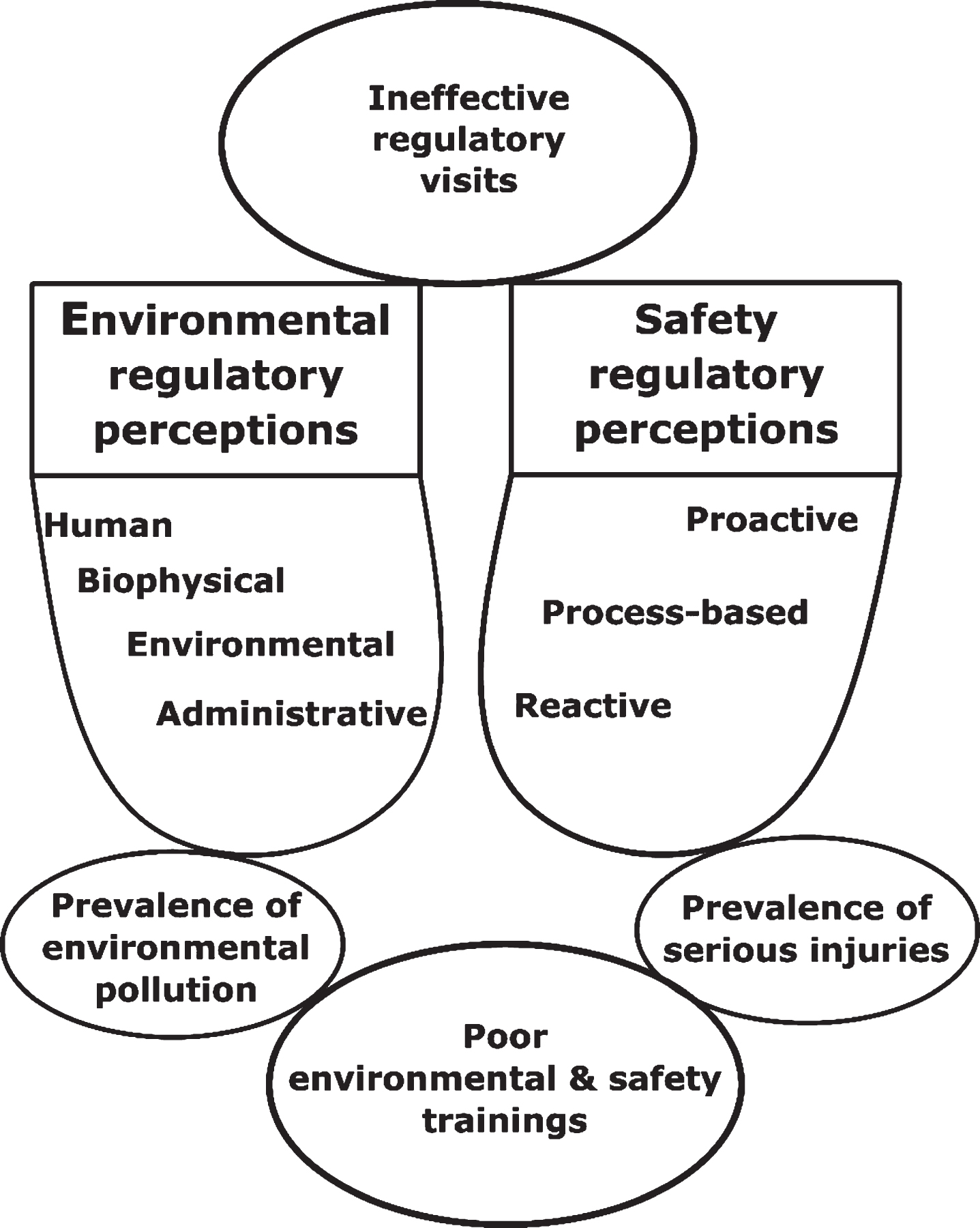
Miners’ experiences and perceptions of environmental and safety regulations.
This study examined miners’ regulatory perceptions and experiences in terms of environmental and safety issues pertinent during mining activities in Ebonyi State, Nigeria. The contributions to knowledge were understanding miners’ environmental and safety experiences, and how they perceive environmental and safety regulations pertinent to mining activities. Based on findings of the study, Fig. 2 illustrates the relationships that exist between miners’ experiences and their perceptions of environmental and safety regulations. While most miners surveyed had not attended environmental and safety workshops/trainings within the last two years, most of them had experienced serious injury at least once within the same period, which aligns with the findings of Oramah et al. [8] on inadequate training programs characterizing miners’ experiences in Nigeria. Also, majority of surveyed miners had experienced air and water pollution due to mining activities at least once, within the last two years, indicating that environmental pollution is quite common, in line with previous analytical studies done in the study area [7, 44]. However, more than half of miners surveyed had experienced government regulatory visits at least four times, within the last two years, showing that these regulatory visits had been ineffective in ameliorating environmental and safety anomalies during mining activities. This situation can be attributed to poor regulatory enforcement where government officials despite regulatory visitations, engage in corrupt practices which significantly negate compliance [18, 35].
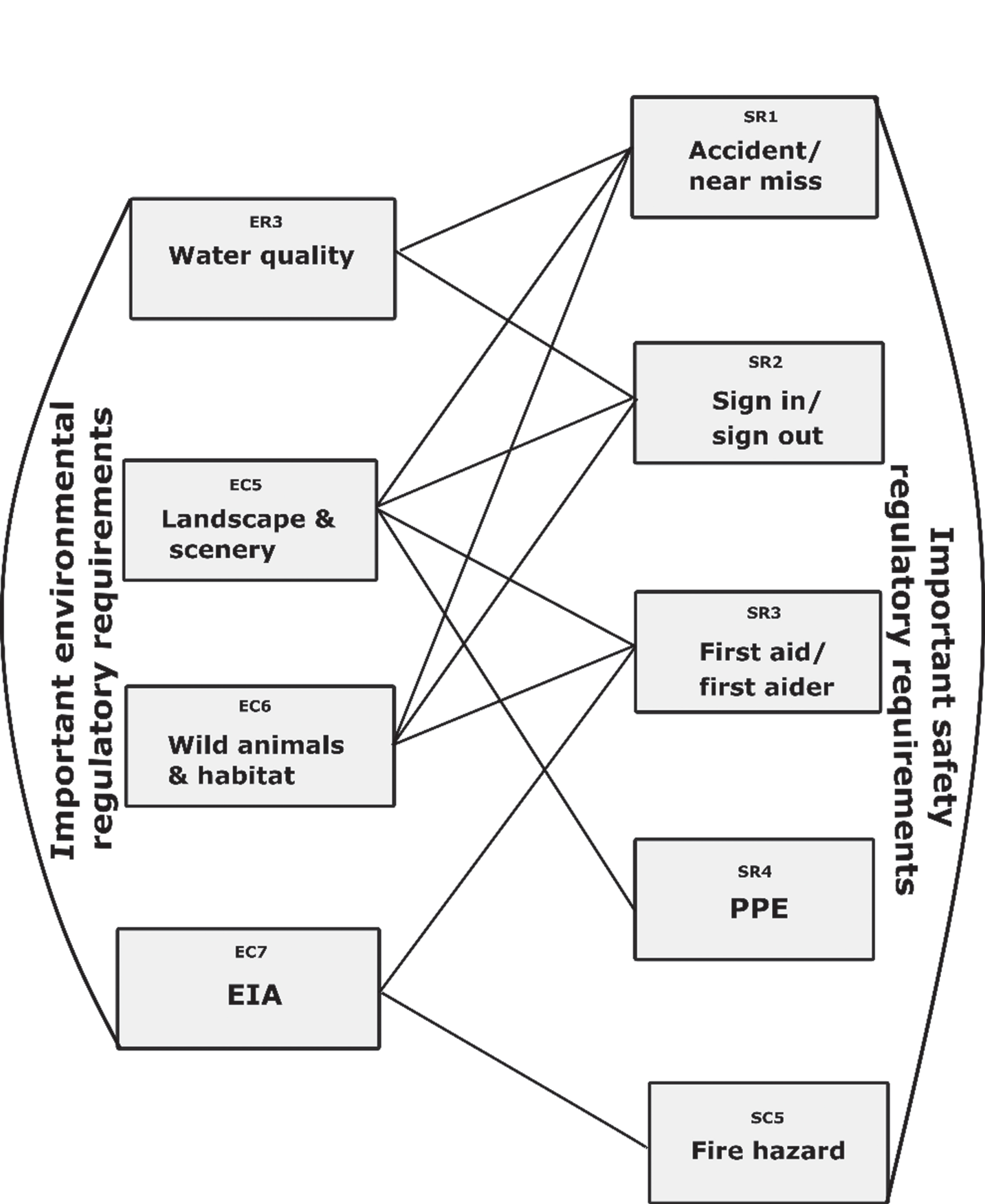
Significant correlations between important environmental and safety regulatory requirements.
Miners’ environmental regulatory perceptions had a four - factor structure; where variables under the first factor cover impact assessment, stakeholder involvement, and mines administration, which are all connected to human aspects of environmental regulatory perception. The human-centered nature of involving all stakeholders aligns with the localized approach determined by Rey-Coquais [45] in examining local perspective in developing mining regulations in Peru. Thus, regulatory outlook should have a social dimension where human aspects are integrated into mining regulations [46]. The five variables under the second factor center on waste treatment and ecosystem management, which are all connected to biophysical aspects of environmental regulatory perception. This is because variables under the second factor are mostly made up of biological and physical constituents of the environmental system (vegetation, landscape, waste management and wildlife), key drivers of environmental regulations during mining activities. This is not surprising given that some biophysical components in the study area have been degraded as a result of mining activities [7, 47]. The three variables under the third factor are related to environmental quality, in terms of air, soil and water elements around mining sites in the study area. Each of these variables had a factor loading above 0.700, indicating their high level of importance to miners’ environmental regulatory perception. Also, these environmental quality variables could be conserved if adequate regulatory mechanisms for environmental sanctity are instituted [48]. This means that the extent mining activities affect key environmental aspects can be reduced if environmental regulations are effectively enforced. Therefore, enforcement and compliance capacity of solid minerals’ regulations in Nigeria is vital in maintaining environmental quality [11]. Furthermore, commonness of artisanal mining in the study area implies that environmental regulatory compliance may be mired by bureaucratic bottlenecks instituted by government regulators [49]. Under the fourth component, the two variables on mines reclamation and restoration indicate that miners placed a lot of importance on what happens to mining sites after solid minerals are depleted. Both variables under the fourth component are connected to the administrative aspect of environmental management since they are out of control of miners, in the sense that they do not determine the overall status of these variables. This is because reclamation and restoration of mining sites after closure, are regulatory issues under the supervision of government agents and the owners of mining companies [50].
The five variables under the first factor in the PCA of safety regulatory perceptions consist of mine plans, staff registers, incident records and safety of personnel on site. These variables are looking at safety from a reactive outlook because they can enhance safety during mining activities, mainly after safety anomalies occur. The reactive outlook of these variables has a similitude with the reactive approach described by Vredenburgh [51] on assessing safety management practices in the United States. Reactive approaches, especially incidence rates, have been identified as the main emphasis of safety management during mining activities in Sweden [52], and in Ghana where many incident investigators are ineffective [53]. Accident reduction techniques (a clearly reactive approach) have also been identified as pertinent in incidence prevalence during mining activities, according to a recent Chinese study [54]. The four variables under the second factor in the PCA of safety regulatory perceptions cover equipment guidelines, provisions for fire, electric and radioactive hazards, and are linked to mining because they are process –based. This implies that the extent these variables cause safety anomalies, is determined by the type of process involved in terms of hazards and risks. On that note, regulations on mining activities outline process-based procedures that can mitigate safety anomalies. This is in line with the findings of Xingzhi et al. [55], about the importance of regulatory pressure in ensuring that practical procedures are complied with during mining activities. In addition, understanding the processes used in handling previous safety events can serve as part of a learning curve in mitigating future safety anomalies, especially fire and electric-related incidents [56]. The five variables strongly loaded to the third factor in the PCA of safety regulatory perceptions cover PPE use, traffic, permission for high-risk operations and emergency management. These variables are looking at safety from a proactive approach, since they prevent problems for safety management. This proactive description is in line with the findings of Salguero-Caparrós et al. [57] in exploring organizational regulatory compliance, where proactivity was determined as fundamental in improving occupational health and safety in the workplace. Proactive approaches involving capacity building for miners on safety issues (PPE use, permission for high-risk operations, emergencies among others) have also been identified as pertinent to engendering a safe work environment [58]. However, effectiveness of these proactive variables depends on the ability of safety regulators to predict the occurrence of safety anomalies, and the capacity of miners to speak out when they perceive scenarios that may result to safety compromise [59].
In relating miners’ environmental perceptions with their experiences, frequency of miners’ experience with environmental training had a weak positive relationship with their regulatory perception of EIA, which indicates that a high factor loading of 0.804 for EIA is non-significantly related to miners’ environmental training experiences within the last two years, before the study. Despite availability of EIA regulations in Nigeria, and high regulatory perception of EIA, miners’ environmental training experiences were low. Incompatibilities between regulations and practical application of regulatory facets have also been identified in an empirical evaluation of EIA practice in Uganda [60]. Therefore, making changes to regulatory mechanisms does not necessarily imply that those they apply to will comply with them [61]. The weak positive correlation between EIA regulatory perception and miners’ environmental training experience could be attributable to inability of regulators to adequately handle EIA projects, which has been reported in the Gambia [62].
The study identified that a factor loading of 0.730 for miners’ regulatory perception of water quality is significantly related to the extent of their water pollution experience within the last two years, prior to the study (see Tables 5 7). Consequently, the study suggests that high water pollution experience by miners could be as a result of how they perceived regulations for water quality. This is similar to the findings of Okumah and Yeboah [63] on poor stakeholders’ regulatory perception of water quality in Ghana. In addition, miners’ water pollution experiences identified in the present study aligns with posits of Ighalo and Adeniyi [64], on insufficient implementation of mining regulations dealing with water management in Nigeria. In line with the prevalence of artisanal mining in the study area, surface water pollution by heavy metals was also acknowledged by a study of artisanal mining activities in Ghana, which calls for improved regulatory control [65].
Spearman’s Rank-Order Correlations of important environmental and safety regulatory requirements confirm that a number of significant correlations exist between the variables examined (see Fig. 3). Under environmental regulatory perception, Landscape and scenery, wild animals and habitat, and water quality were the variables with the most significant correlations with variables of safety regulatory perception considered in the Rank-Order analysis. The study findings indicate that landscape is an important issue for miners, given that it had four correlations with safety regulatory requirements. Opencast mining, which is commonly practiced in the study area, has also been determined to have significant effects on landscape ecology and scenery, due its close proximity to the earth surface [66]. Study findings show the importance of wild animals and their habitat in miners’ regulatory perception during mining activities. Since the study area is in Nigeria where environmental philosophy is quite basic [67], mining activities in some Nigerian communities have also been reported as malevolently affecting wildlife, with the extinction some animal species [68]. The study identified water quality as an important environmental regulatory requirement, and significantly correlated it with two safety regulatory requirements. Water quality being concerned as important, aligns with literature which has identified reduction in water quality as a result of mining activities in parts of the study area [10, 47]. Though EIA was considered an important regulatory requirement by miners surveyed in the present study, undertaking EIA in societies where there are weak institutions, poses significant administrative challenges [69].
In terms of variables under safety regulatory perceptions, sign in/sign out register, first aid station/first aider and accident/near miss records, had the most correlations with the variables of environmental regulatory perception. Sign in/sign out register, which is a procedural requirement, significantly correlated with three environmental regulatory requirements, indicating its importance for miners that participated in the study. However, study findings indicate that most miners surveyed did not experience safety training within two years, prior to the study. This assertion could be attributable to the high number of artisanal miners in sub-Saharan Africa [17], who usually perceive safety guidelines as impediments to their mining operations [70]. Even though records of accidents and near misses during mining activities are important in gauging compliance with safety regulations, none of the mining companies whose miners participated in the study agreed to provide information on them. This scenario agrees with the findings of Gunningham [71] on the failure of contractors in some Australian mining companies to report accidents and near misses due to reputational damages and bureaucratic bottlenecks. Furthermore, weak regulatory enforcement and compliance in developing countries, reduce the likelihood of reporting accidents and near misses during mining activities [17, 72]. Arrangement for first aid during mining activities was considered important from the study result, given that it significantly correlated with other regulatory facets. Nevertheless, it was only in one (Site F) out of the ten mining sites studied, that provisions for first aid were observed, indicating meagre considerations for safety during mining activities in the study area. This observation does not align with practice code of the International Labor Organization on opencast mining, which stipulates that a qualified first aider, emergency medical kit and facility should be provided in case of accidents [73]. Use of PPE during mining activities had significant correlations, demonstrating that it was perceived as relevant by miners surveyed in the study. However, PPE use has been shown to be affected by the ineptitude on the part of management in some organizations, who do not always provide them as required [74]. Even when they are provided, they may also be inadequately utilized by miners due to ergonomic and aesthetic concerns [75]. This position agrees with Kim et al. [76] on the importance of having positive safety culture which increases miners’ awareness on the benefits of effective PPE use. Fire hazards, which were identified as an important regulatory requirement by miners surveyed in the study, indicates that surveyed miners understand the need to make adequate provisions in managing fire outbreaks during mining activities. However, safety compliance issues concerning poor training and inadequate equipment for miners in Nigeria have been described [8, 77]. Therefore, lack of control measures for fire hazards during mining activities, poses significant risks in terms environmental pollution and human wellbeing.
The present study had a number of limitations. Survey questionnaires were the main data collection instrument used. Even though the study aimed at undertaking a statistical analysis, which required mainly quantitative data, a number of perception studies also used qualitative data to draw more insights [24,78, 24,78]. Miners surveyed were all field workers who can be classified as low-level employees. This is why more than 90% of them had secondary or less, as their highest level of education (see Table 3). Even though research assistants explained contents of the questionnaire to respondents, there may have been misunderstandings of the contents of the questionnaire due to comprehension issues. Furthermore, there may have been social desirability biases which could have affect the study findings.
The study evaluated miners’ experiences and perceptions of environmental and safety regulations that are relevant to mining activities in Nigeria. In doing this, the study related miners’ experiences during mining activities with their perceptions of environmental and safety regulations relevant to mining. The findings indicate that many of the surveyed miners experienced injuries and environmental pollution during mining activities while having received little or no safety and environmental training from government and the mining companies they work for. Despite consistent regulatory visits, environmental and safety anomalies still persist in the study area. Miners’ environmental regulatory perceptions were structured in four ways: Human, Biophysical, Environmental and Administrative aspects. On the other hand, miners’ safety regulatory perceptions were structured in three ways: Reactive, Process-based and Proactive aspects. In relating miners’ experiences with their perceptions of important environmental and safety regulatory facets, the findings show that miners’ environmental training experiences were non-significantly correlated with how they perceived EIA. However, miners’ water pollution experiences were significantly related to their perceptions of water quality regulations. Correlations between miners’ perceptions of environmental and safety regulatory requirements point out the importance of some environmental regulatory facets (water quality, landscape, wildlife protection and EIA), as well as safety regulatory facets (accidents/near miss records, sign in/sign out register, first aid/aider, PPE provision and fire hazard). Therefore, the study has shown that there are more non-significant correlations between miners’ perceptions of environmental and safety regulatory requirements pertinent to mining activities. Also, the study posits that there are significantly negative relationships between miners’ environmental and safety experiences and their perceptions of environmental and safety regulatory requirements. This is despite some non-significantly positive relationships, as seen by miners’ perceptions of EIA and their environmental training experiences.
On that note, the study recommends that a know-ledge-transfer approach be used in capacity building for miners on environmental and safety issues affecting them. This approach differs from conventional training and awareness creation, since a practical approach may be more effective in fostering sustainable mining in Nigeria. Given the prevalence of artisanal mining in the study area, government authorities and owners of mining companies should provide better mining tools and PPE for miners, to ensure they are not negatively affected by mining activities. Furthermore, more research is needed in order to understand how relationships between relevant facets of environmental and safety regulatory perceptions and miners’ experiences identified in the present study, can contribute to sustainable mining in Nigeria.
Footnotes
Acknowledgments
We immensely appreciate all miners who provided data for the study. Special thanks go to field assistants that aided data collection, particularly Mr. Uche Nwoba Ogah. We also thank the anonymous reviewers for their apt suggestions, which immeasurably improved the draft manuscript. This research was partly supported by Imo State University 2016 TETFUND local PhD grant.
Conflict of interest
None to report.