



Abstract
BACKGROUND:
Rice farming is considered the most crucial industry in India, where millions of farmers suffer from LBP.
OBJECTIVES:
The present study’s primary objectives were to evaluate the prevalence of low back pain among India’s rice farmers and determine the relationship between low back pain and ergonomic risk factors and psychosocial factors encountered by the farmers.
METHODS:
Socio-demographics, ergonomics risk factors and psychosocial factors that cause LBP among rice farmers were examined. Modified Nordic Musculoskeletal Questionnaire and Oswestry LBP Questionnaire were administered among the farmers to evaluate the LBP. Univariate analysis was done to find out the odds ratios and 95% confidence intervals among the farmers.
RESULTS:
The primary findings from this study regarding the psychosocial factors, such as perceived inadequacy of income (84.7%), job demands (78.1%), work demand targets specific productivity (76.5%), rigidity in work methods (75.3%), monotony at work (73.2 %), have a relationship with LBP. The results also revealed that the relationship between the low back pain and ergonomic risk factors, such as repetitiveness (OR- 4.215; 95% CI- 2.551–6.965), working in awkward posture (OR- 85.82; 95% CI- 43.134–170.77), lifting loads (OR- 0.281; 95% CI- 0.125–0.324), pulling loads (OR- 0.274; 95% CI- 0.173–0.434), showed significant relationship with LBP in the univariate analysis.
CONCLUSIONS:
The prevalence of LBP among rice farmers connected with ergonomic and psychosocial risk factors. The awkward posture, MMH (lifting and carrying) are the main causative factors of LBP.
Introduction
Low back pain (LBP) is defined as any non-traumatic musculoskeletal disorder affecting the low back, which involved the lumbar portion of the body and included sciatica pain but excluded cervical spine problems like neck pain or neck torsion problems [1]. LBP is a significant public health and socioeconomic situation in many countries globally, being one of the major causes of work absenteeism and disability [2]. The outcome of LBP is related to increased absenteeism from work, productivity loss, and expansion of economic costs [3–5]. Work-related factors associated with LBP are physical and psychosocial in origin [6, 7]. LBP is a typical health-related problem among farmers. It was found that LBP is a standard health-related problem arising from work with Manual Material Handling (MMH) [8, 9]. The literature review also shows that LBP is ubiquitous among farmers [10, 11], especially in developing countries [12, 13]. Furthermore, one of these studies indicated that the highest prevalence of LBP arises during the transplanting process [14], which is a most strenuous job. Psychosocial factors like the monotony of work, irritation, anxiety, depression, stress, job dissatisfaction, negative body image, and poor self-esteem [15, 16].
It is well known that agriculture work involves several risk factors associated with the development of LBP. Rice farming is considered a physically demanding job in which the rice farmers have to perform several types of strenuous work in their working field. They performed the work with high physical demand and standing, squatting, stooping, and awkward posture for a prolonged period. LBP among the rice farmers has been associated with physical, occupational factors, e.g. (repetitive trunk flexion and rotation, MMH, working in an awkward posture, vibration, etc. [13, 18]. The study’s recent literature shows that occupational factors like uncomfortable working posture may cause LBP among the rice farmers [17, 19]. Prevalence of LBP has been found high in the transplanting and harvesting process due to working at a stretch in an awkward working posture [19, 20].
The present study’s main aim was to evaluate the prevalence of low back pain among the rice farmers of West Bengal, India, and determine the relationship between low back pain and ergonomic risk factors and psychosocial factors encountered by the participants. This research also explores the knowledge regarding the postural strain among rice farmers in India. The study also tries to find the correlation between LBP and loss of working days among the rice farmers.
Methods
A cross-sectional survey was conducted from July 2018 to June 2019 in West Bengal, India. A total of 425 (215 male and 210 female) rice farmers were selected using a simple random sampling method from Chowtara, Banna, Gopinagar, Ichhapur of Tarakeswar Hooghly district near Tarakeswar, West Bengal, India. Among these, 206 farmers are selected who are working in his/ her farm; on the other hand, 219 rice farmers are randomly chosen as paid rice farmers. The study’s inclusion criteria were that the rice farmers have rice farming practice experience of at least five years. The exclusion criteria of the study were the rice farmers who had a previous occupational injury history. Before conducting the study, the project’s permission was obtained from the Institutional Human Ethical Clearance Committee of the Indian Council of Medical Research Guidelines.
The Body Mass Index was calculated by measuring the stature and weight with an Anthropometer rod (Inco made) and weighing scale (Crown made). The study questionnaire was translated into Bengali, in which the questionnaire sought socio-demographic information on respondents and information regarding the nature of their farm work. The questionnaire mainly consists of objectives types of questions in which- a) personal characteristics, b) types of work performed, c) LBP problems associated with specific activity, and d) psychosocial factors. The questionnaire also more specific information on LBP, including duration of work, frequency of heavy loads carrying, other contributing ergonomic risk factors.
To evaluate the research question on the prevalence of low back pain. The current study used two different scales a) Nordic Musculoskeletal Questionnaire –NMQ b) Oswestry Disability Questionnaire. The Oswestry Low Back Pain Disability Questionnaire was administered to the rice farmers, who reported low back pain on the modified Nordic questionnaire [21, 22]. The posture analysis was done by the Rapid Entire Body Assessment (REBA) method, which was suggested by Hignett and McAtamney [23] as a means to assess posture for the risk of LBP.
The data were analyzed by using SPSS (statistical software, version 20). Association between and demographic characteristics and LBP using the univariable analysis. Univariable associations of LBP with ergonomic risk factors and psychosocial factors were analyzed using odds ratios (ORs) with a 95% confidence interval (CI) with P-value <0.05.
Results
The physical demographics (height, weight, and BMI) of male and female farmers are shown in Table 1. The study result shows a significant difference (p < 0.05) found in height and weight between male and female farmers. But no significant changes were found in BMI between the male and female farmers. Table 2 shows a significant association (OR- 0.461; 95% CI- 0.298–0.714) of LBP between male and female rice farmers. The study also reflected a significant association (OR- 9.871; 95% CI- 5.623–17.33) between the paid farmers and the farmer’s works on his/her farm. Table 1 also indicated that the work duration among the farmers has a significant role (OR- 0.460; 95% CI- 0.299–0.707) in LBP prevalence.
Physical demographics of the male and female rice farmers
Physical demographics of the male and female rice farmers
Relationship between low back pain and participant characteristics (n = 425)
NS = not significant.
Table 3 shows the responses to psychosocial attributed factors or causes of LBP among farmers. The questionnaire analysis (Table 3) stated that 62.3% of male rice farmers and 70.5% of female rice farmers reported that low back pain was mainly responsible for psychosocial factors like work organization and work behavior. The job requires knowledge of the skillful activity. This result (Table 3) also reported that other psychosocial factors, like frequent mistakes during work, are the causative factors for LBP reported by 20.0% male rice farmers and 34.8% female rice farmers. 68.4% male rice farmers 79.5% female rice farmers felt low back pain due to frequent rotation for tasks and place. 68.8% of male rice farmers and 80.0% of female rice farmers reported that rigidity in work methods and procedures is one of the causative factors of LBP. Sometimes they (81.4% male and 71.4% female farmers) felt LBP is also causative because work demand targets specific productivity. The study also found that 68.6% male and 88.6% female rice farmers think job rotation and labor division may prevent LBP. Table 3 also showed that 61.4% of male rice farmers and 85.2% of female rice farmers felt monotony of work is responsible for LBP. Besides, the study also found that 74.4% of farmers felt that lifting, pulling or pushing, and carrying loads (more than 20 kg) also found the causative factor of LBP among them.
Responses to psychosocial attributed factors or causes of low back pain at work among the rice farmers
Table 4 presents the ergonomic risk factors responsible for the LBP among both groups of rice farmers. Several ergonomic risk factor like repetitiveness of work (OR-12.6; 95% CI- 5.99 -26.48), awkward posture (OR-316.80 95% CI- 93.42- 1074.22)), lifting loads (MMH) (OR-0.365; 95% CI- 0.205–0.649), pulling loads (MMH) (OR- 0.538; 95% CI-0.304–0.951), did show significant relationship with of LBP in the univariate analysis in case of male farmers. The study also showed that the reported LBP pain was not found significantly in other ergonomic risk factors like carrying loads (MMH) and working hours per day and rest during work among the male rice farmers. The results of the study also found that ergonomic risk factor like awkward posture (OR-360.00; 95% CI-106.32–1218.96), lifting loads (MMH) (OR-0.0.14; 95% CI-0.002–0.107), carrying loads (MMH) (OR- 0.076; 95% CI-0.023–0.255), pulling loads (OR-0.062; 95% CI- 0.021–0.182), long working hours (OR-0.186; 95% CI-0.082–0.426), rest breaks during work (OR-0.096; 95% CI-0.038–0.240) did show significant relationship with of LBP. Only repetitiveness of work does not found any significant relationship with LBP among female rice farmers.
Relationship between low back pain and ergonomic risk factors encountered by the participants (n = 425)
NS = not significant.
Table 5 represents the analysis of different working postures in rice farming by using the REBA method for assessing the risk level of LBP. The study found that most working postures (digging, sowing, harvesting, sheafing) found very high-risk factors. The action categories were suggested as work must cease until a safer solution can be found. Figure 1 represents the result of the Oswestry Low Back Pain Disability Questionnaire analysis, in which only 1% male and 1% female rice farmers reported being crippled and 3% male and 5% female rice farmers reported severe disabilities. In contrast, 25% male and 31% female rice farmers reported moderate disabilities, and the Oswestry Low Back Disability Questionnaire also shows that 34% of the rice farmers (15% male and 19% female rice farmers) reported minimal disabilities. Figure 2 represents the comparative study of LBP at different times among male and female rice farmers. The result shows that 78% of male farmers felt LBP during work, whereas 82% of female rice farmers felt LBP. The result also indicates that the feeling of LBP increases among both groups of rice farmers after work.85% of the male and 89% of female farmers felt severe LBP after work. From Fig. 2, it was cleared that the female rice farmers felt more LBP than male rice farmers. Figure 3 represents the linear regression between LBP and working days lost among both farmers works on his/her farm and paid farmers. Figure 4 illustrates the analysis of the prevention method adopted by the rice farmers for LBP. This study shows maximum rice farmers’ use of the proper lifting techniques to avoid the LBP, followed by doctors’ advice when the LBP is acute and takes lumber support by wearing a belt. Figure 5 represents the different rice farming activities, which cause LBP among farmers.
Analysis of different working posture in rice farming by using REBA method for assessing risk level of low back pain
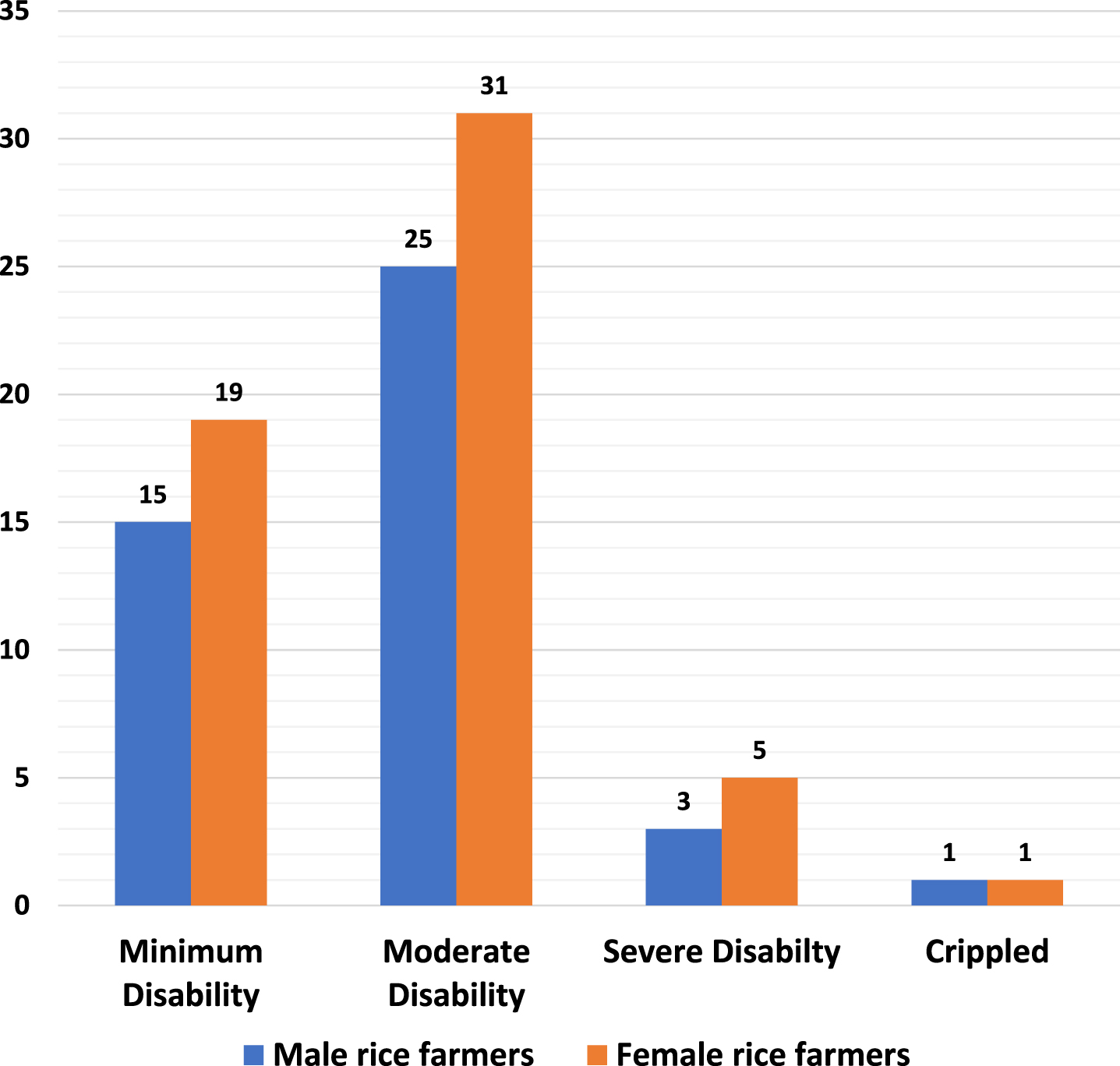
Analysis of Oswestry Low Back Pain Disability Questionnaire.
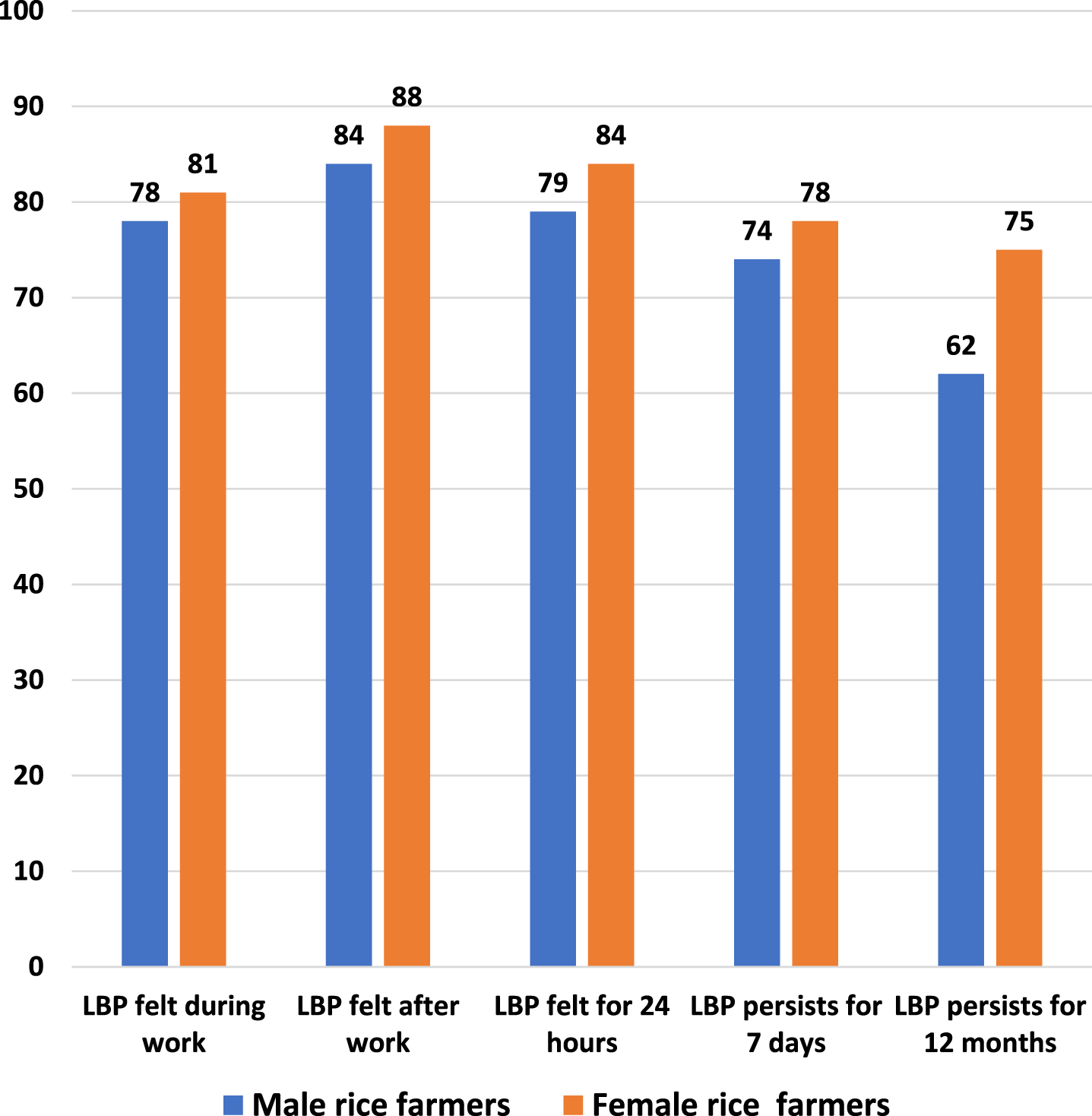
Comparative study of low back pain at different times among the male and female rice farmers.
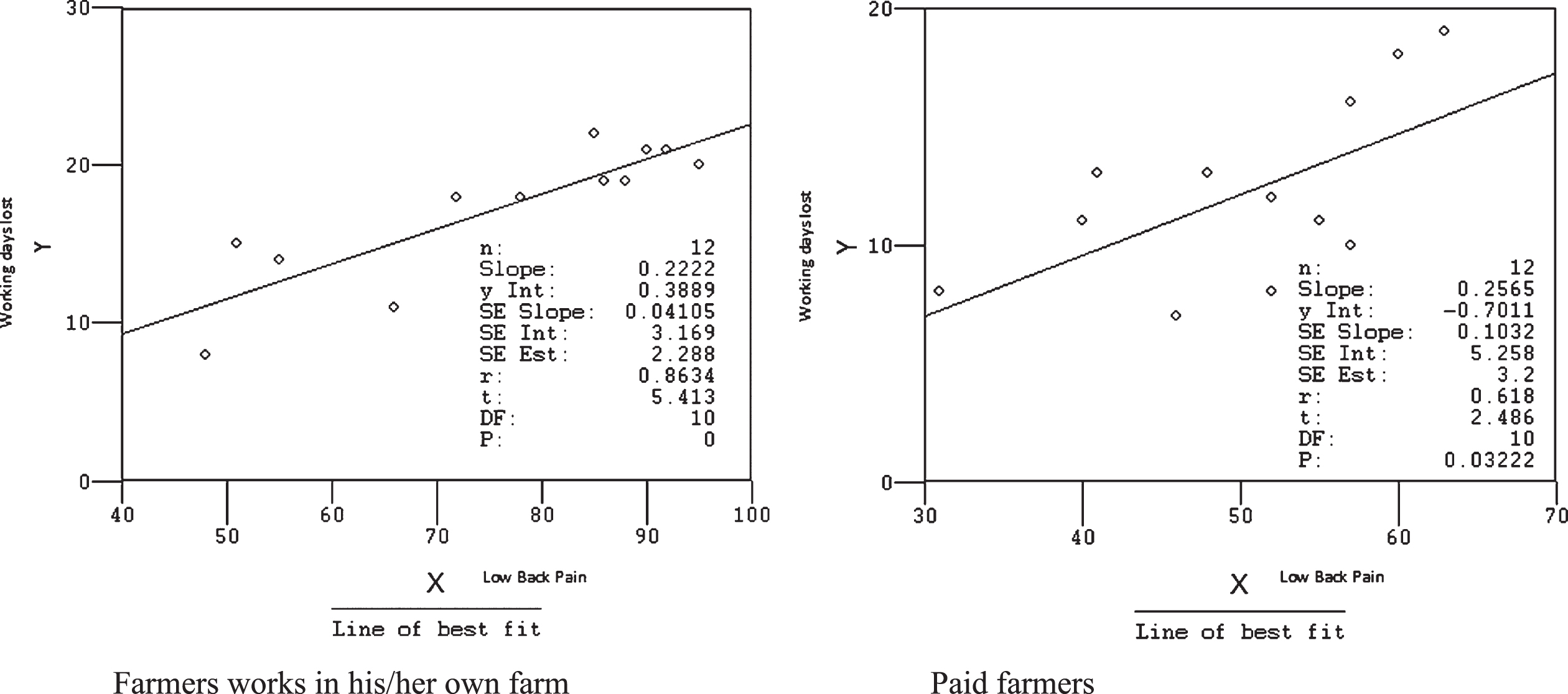
Linear regression between low back injuries or pain occurred and working days lost among paid farmers and farmers of his / her farm.
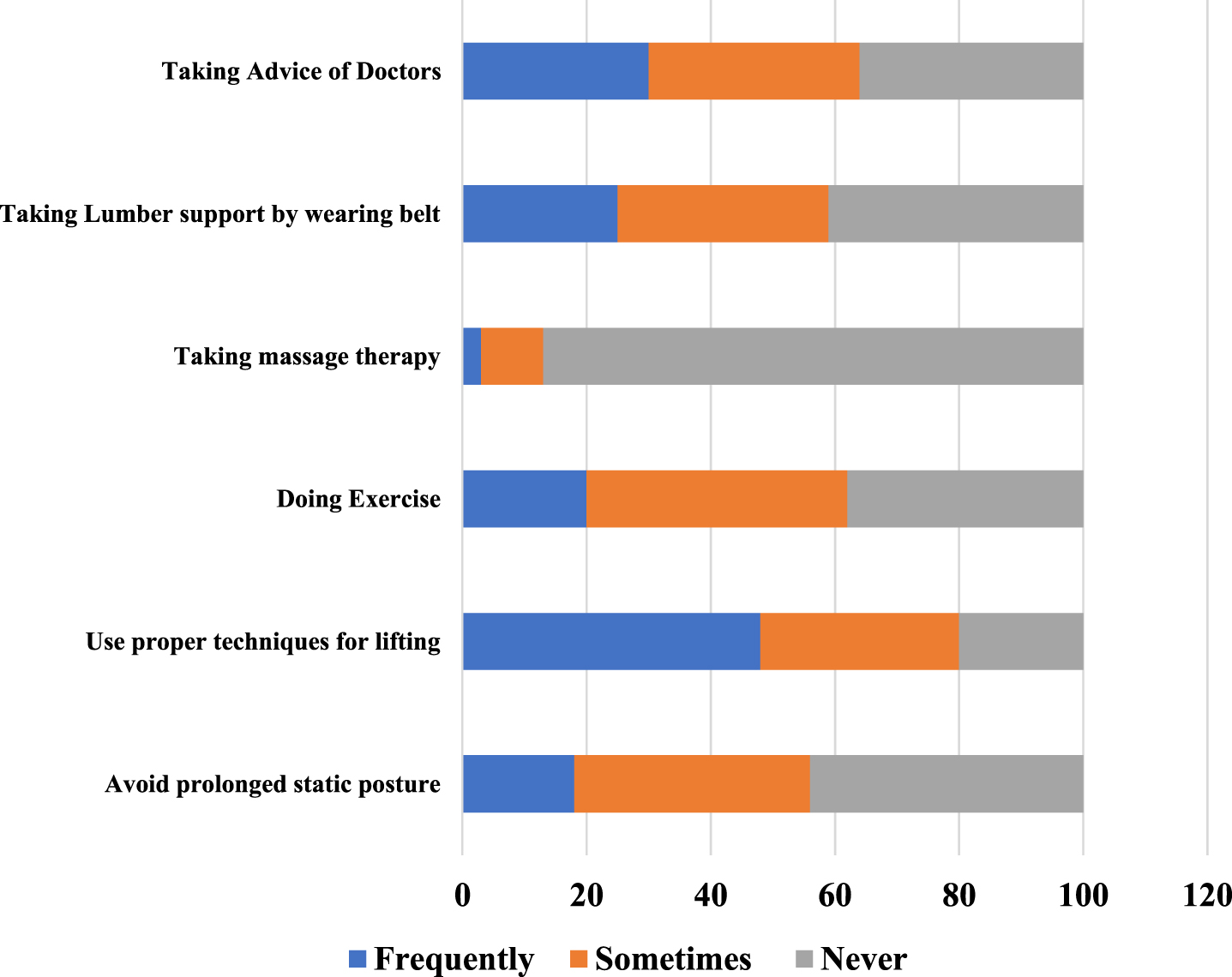
Prevention of Low Back pain (LBP) among the rice farmers.
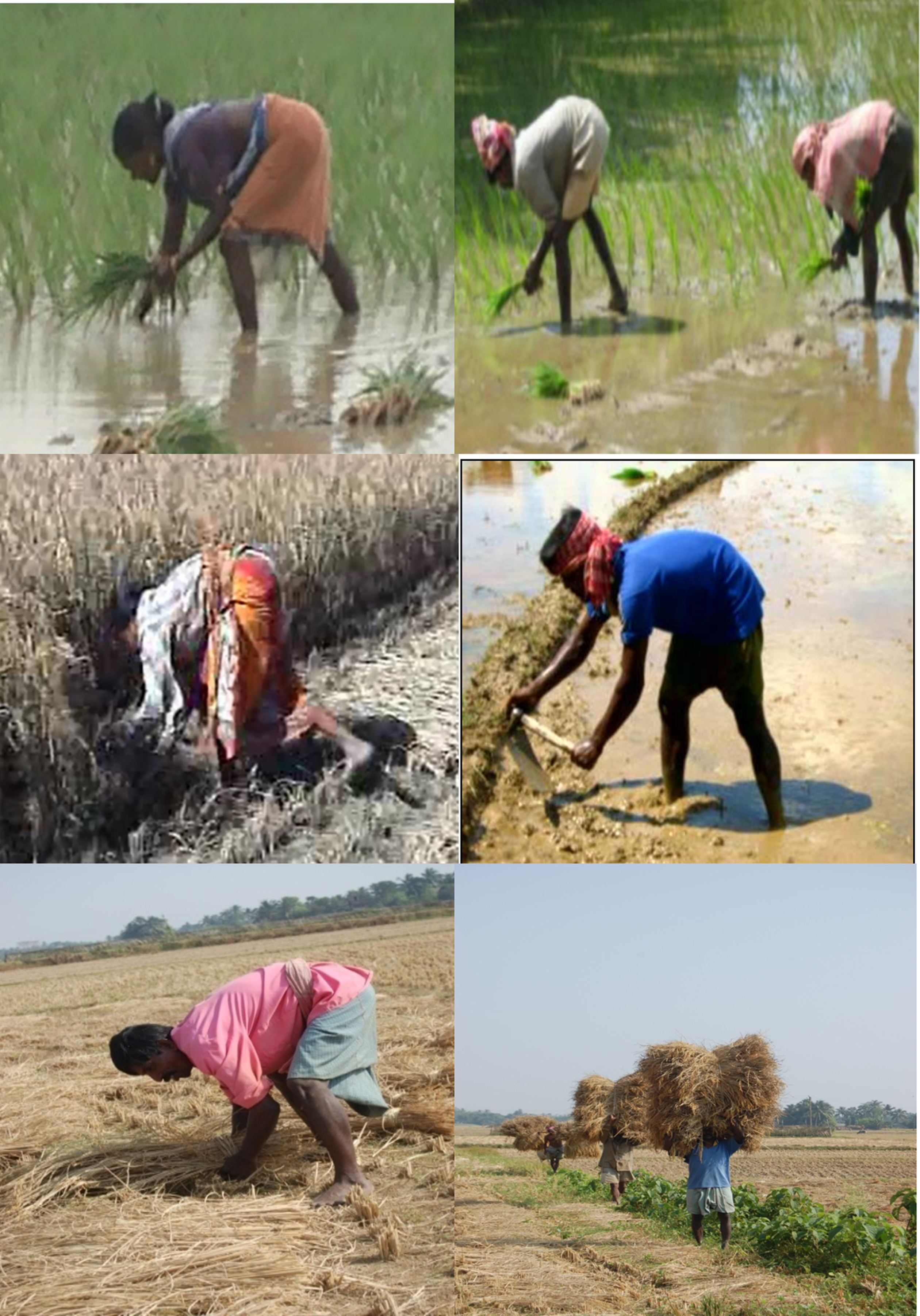
Different activities in rice farming.
LBP is a worldwide public health issue and noted as one of the most frequent widespread musculoskeletal problems affecting the human population experienced in our daily lives [24]. LBP can be a significant health-related problem with significant public health-related problems associated with economic load [25]. It was established that rice farming had been considered a high-risk occupation due to a high physical demand level. The LBP arises due to the physical demand of work during rice farming among the farmers, including standing, squatting, bending, and twisting during work for long hours, carrying heavy loads on the above shoulder, which may cause MSDs. Rice farmers continue to use the same conventional hand tools (sickle, spade), other tools (harrow, country plow) for their work. Long hours of work, various physical work, psychosocial factors, and awkward postures may lead to LBP among rice farmers. Ergonomic risk factors include working in a static positioning for a long duration, forward bending and twisting posture, heavy load lifting and heavy carrying loads, kneeling. The biomechanical loads which are applied to the body tissue can be the causative factors of LBP.
The results show that the prevalence of LBP among the rice farmers was 71.76%, rated as a high prevalence. The same type of findings found among the rice farmers by the other researcher [20]. They found the result very high, 83.14% among the Thai rice farmers. The study also demonstrates that there is a significant result of LBP among male and female rice farmers. The same type of results has been found in the previous study by the researchers. The prevalence of MSDs among the gender difference of rice farmers has been found in an earlier study [19]. BMI is another contributing factor to LBP. Other researchers supported the result of the study. They also claimed that age and BMI are also the risk factors related to LBP [26]. The results also show a significant relationship between the LBP and the number of working days/ weeks. The result shows an increasing number of working hours per day did not significantly differ, but the number of days per week shows due to the cumulative effect. The same types of finds have been found by other researchers [12, 20]. According to the long working in a constrained posture with heavy MMH, activities are responsible for LBP.
The primary findings from this study regarding the psychosocial factors like perceived inadequacy of income (84.7%), job demands repetitive motions of body segments (78.1%), work demand targets specific productivity (76.5%), rigidity in work methods and procedure (75.3%), monotony at work (73.2 %), often have to: Lift, pull or push and carry loads (74.4%), been annoyed and irritated easily (68.2%), got tired quickly (65.2%), unpleasant work environments (25.9%) have a relationship between LBP. These studies have the same findings as a study by Hoogendoorn et al. [27]. They also described that psychosocial factors, such as perceived inadequacy of income, the monotony of work, job dissatisfaction, poor relationship with other farmers and farm managers, and unpleasant work environments, seem to impact LBP. They also reported that one of the crucial findings related to workplace psychosocial factors had been associated with LBP.
The study’s main findings were that the physical ergonomics risk factors played a vital role in the relationship between LBP. Physical Ergonomics factors like the repetition of work, working in an awkward posture, lifting loads (MMH), carrying loads (MMH), pushing loads (MMH) have a significant relationship with LBP among the rice farmers. A similar type of findings has been shown by other researchers [13, 17–20]. So, the study’s main finding was recognizing different types of MMH activities like lifting/pulling/pushing/carrying activities as the most common cause of LBP among the rice farmers. Working in an awkward posture for a long duration is also a contributing factor for LBP. A similar observation has been shown by Gangopadhyay et al. [28], who found the same result among the preadolescent potato farmers. This result (analyzing the working posture) of the study represents the evidence confirming that most of the rice farmers’ working posture was harmful, indicating that corrective measures should be implemented immediately. Similar observation types by the REBA method have been found by Das and Gangopadhyay [29] among the adult potato farmers and rice farmers [19]. They analyzed that most farming activities were strenuous and harmful for the farmers and needed immediate correction or work must cease until a safer solution can be found.
The Oswestry Low Back Pain Disability Questionnaire analysis revealed that the rice farmers classified as having minimal disabilities can perform the most daily activities and agricultural activities during rice farming and make no intervention recommendations. Rice farmers with moderate disabilities likely have more difficulty lifting, carrying, pulling, and pushing, mainly hampered to perform their agricultural fieldwork. For the rice farmers with mild disabilities, working in a farming field to earn money, personal life, and sleeping is a minor extent affected by the farmers. For rice farmers with severe disabilities (according to ODI), LBP is a significant problem affecting daily activities and earning activities (working on a farm). These farmers should require immediate attention. The rice farmers with crippled LBP impinges on all aspects of the patient’s (farmers) life and required positive intervention.
Considering the above facts and analysis of the Nordic Musculoskeletal Questionnaire (NMQ), it was revealed that 85% of male and 89% of female rice farmers felt more LBP after completion of work. At the same time, 85% of male and 89% of female rice farmers felt more LBP for 24 hours. However, the results also show that during rice farming, the feeling of LBP had been decreased up to 78% and 82% in male and female rice farmers, respectively. This study found that female rice farmers felt more prevalence of LBP than male rice farmers. A similar finding has been seen by other research [19]. A similar type of result has been focused among the potato farmers, where it was found that pain felt maximum after completion of work then it was persisting for 24 hours [28, 29]. However, during work, the pain felt has been reducing to some extent. The researchers have found similar observation types among the brickfield workers [30–32] and railway track maintenance [33].
Limitations of the study
This study had some limitations, which also be considered. Firstly, the research was done by the cross-sectional method, and there is no comparison of LBP with the control population. Additionally, this study used self-reported questionnaires to collect data, which may have developed data bias. Furthermore, while the REBA method for the analysis of posture technique provided a reliable posture assessment technique, in this study, there is a lack of direct exposure assessment technique (e.g., electro goniometric) which may be required for assessment of biomechanical stress.
Ergonomics intervention for LBP
The study advises to take the lumber support by wearing a belt to prevent LBP. The study also suggests using the proper techniques while lifting to avoid the LBP. The design of hand tools may prevent low back pain and agricultural injuries due to avoid awkward posture while working among the rice farmers. Total working hours per day should be reduced. Increased rest breaks should include their work schedules, reducing low back pain and the working day lost in their work and ultimately increasing productivity. Ergonomic work practice modification can prevent reducing the chances of developing low back pain. Farmers are suggested to frequently change the posture and avoid static posture while performing the agricultural fieldwork. Since working in prolonged squatting and stooping posture, farmers are advised to take rest pauses during the work period to avoid low back pain. Rice farmers are suggested to avoid high repetitiveness of work in their work scheduled. Farmers are also advised to try to maintain below 50% repetitiveness of work. Rice farmers are suggested to follow the limitations of load carriage (load lifting, carrying, pulling, pushing, etc.) to prevent MSDs. Some stretching exercises for short duration should include their work scheduled to prevent low back pain among the rice farmers. Job rotation should be done. Job rotation reduces the monotony of a job and reduces fatigue, reducing the low back pain. Proper knowledge and education should be provided for the rice farmers to better their health.
Future research
Future research needs to identify the following: A follow-up study should take into account every month of the suggested ergonomic intervention among male and female farmers. The EMG analysis of back muscle should be considered when muscle fatigue can be recorded.
Conclusion
A high prevalence of LBP has been found among India’s rice farmers due to psychosocial and ergonomics factors. The primary findings from this study regarding the psychosocial factors like perceived inadequacy of income (89.3% male, and 80.0% female rice farmers), job demands repetitive motions of body segments (66.5% male, and 90.0% female rice farmers), Work demand targets specific productivity (81.4% male, and 71.4% female rice farmers), rigidity in work methods and procedure (61.8% male rice farmers, and 80.0% female rice farmers) reported. 61.4% male farmers and 85.2% female rice farmers reported that monotony at work is another psychosocial factor. LBP has a relationship with tired quickly, reported by 47.4% male and 83,3% female rice farmers. The study also found that most of the working postures of the rice farmers are high-risk level and action categories suggested as work must cease until a safer solution can be found. The other main findings of the study were that the physical ergonomics risk factors like the repetition of work, working in an awkward posture, lifting loads (MMH), carrying loads (MMH), pushing loads (MMH) played a vital role in the relationship between LBP among the rice farmers. This study also emphasizes the psychosocial and ergonomic risk factors for low back among rice farmers. It suggests some ergonomic recommendations for rice farmers to get rid of low back pain to improve life.
Conflict of interest
None declared.
Funding
None declared.
Footnotes
Acknowledgments
The authors would like to thank all rice farmers and for their extensive cooperation during this study.