



Abstract
BACKGROUND:
Small and medium-sized enterprises (SMEs) represent 95 % of businesses and are economically essential. When occupational injuries occur, scientific literature suggests that the return-to-work (RTW) success rate is proportional to the size of enterprises and the way RTW is managed may put workers in SMEs at risk. As most studies on RTW organizational practices have been conducted with large enterprises, little is known about how RTW is managed in SMEs.
OBJECTIVE:
The aim of this study was to explore SME’s organizational practices in the RTW process of workers having suffered an occupational injury.
METHODS:
Semi-structured phone interviews were conducted with 15 participants from 3 different stakeholder categories (i.e., SME representatives, workers, and healthcare professionals) in order to explore their experiences regarding RTW in SMEs. Data were analyzed using a phenomenological analysis strategy.
RESULTS:
SMEs’ organisational practices evoked by participants gather in three themes: 1) Reducing the risks of occupational injuries (i.e., ensuring injury prevention), 2) Managing occupational injuries (i.e., dealing with the initial occupational injury, handling administrative aspects of work disability, and being actively involved in the RTW process), and 3) Preventing consequences of occupational injuries (i.e., adapting operations following injuries).
CONCLUSION:
Organizational practices for RTW are used diversely in SMEs. Proposed lines of action adapted to the realities and needs of SMEs may be beneficial to hundreds of thousands of workers, enterprises and professionals involved in the RTW process.
Introduction
Occupational injuries are an important public health issue, worldwide. In 2019, their global cost was estimated at 680 billion euros [1]. That same year, the United States’ National Safety Council (NSC) established that occupational injuries cost the country $171 billion, while the average cost per occupational injury was $42 000 [2]. Despite the disparity in methods of calculating the total cost, there is a consensus that occupational injuries have become an important economic burden worldwide [1–6].
In Canada, the total number of lost-time injuries from work due to occupational injuries, amounted to 392 502 in the year 2000 [3]. An encouraging trend had been observed when the total number of annual claims decreased annually, reaching a low at 232 629 in 2015. However, those numbers started to rise again in 2016 and counted 264 438 accepted lost time claims nationwide in 2018 [3]. This recent trend continued in 2019 with 271 806 accepted lost time claims [4]. The average cost of an occupational injury in Canada is now estimated at $ 52 400 [5].
Following the occurrence of an occupational injury, studies show that it is recommended that workers return to work as soon as possible [6] and most workers return to work in less than 90 days of disability without the need for rehabilitation [7–9]. In 2015, the Canadian Federation of Independent Business indicated that between 71 and 85 % of compensated workers in Canada return to work before the 90-day mark [7]. Meanwhile, over 10 % of workers remain on disability beyond 3 months [7–9]. These periods of prolonged absences related to occupational injuries generate the majority of expenses [9–12]. Hence, the economic impact of a worker on disability can be significant [13, 14].
Workers who have difficulty returning to work are often referred to work rehabilitation services, which consist of a multidisciplinary team, generally comprised of physiotherapists, occupational therapists, kinesiologists, and at times psychologists. The number of workers with occupational injuries requiring rehabilitation services before they can return to work increased by 3% between the years 2006 and 2012 [15]. Interestingly, 14% of people who received rehabilitation services following an occupational injury experienced a relapse, a recurrence, or a worsening of their condition after their return to work [15]. Many authors discuss this problem concerning the difficulty of certain workers to stay at work in a sustainable manner after returning from a period of disability [10, 11]. This is a sobering situation considering that an unsuccessful return-to-work (RTW) attempt is an important factor affecting the success of prolonged disability prevention. It is therefore essential to focus on the RTW process following an occupational injury [16, 17].
Although there are several methods for measuring the level of success of a RTW, these methods are usually based on the worker’s initial RTW and do not present longitudinal information concerning the disability status and length to which the worker remains at work [18]. The reality is that RTW following an occupational injury-related disability period is a complex process and may involve relapses and disability periods following the initial RTW [8,14, 8,14]. The RTW process is dynamic, in constant transformation, and is comprised of a series of actions involving the different stakeholders, i.e., the worker, the enterprise, the insurer, and the clinicians [18]. The RTW process is the path that the injured worker travels in order to achieve the final objective, which is generally returning to the work that was done prior to the occupational injury. This path is made up of three phases and begins with the occurrence of the occupational injury and disability. The first phase also includes the worker’s physical rehabilitation process and RTW planning. The second phase concerns the initial RTW, which may include certain modifications concerning work tasks, equipment, or work schedule. The third phase completes the RTW process and ends once the regular tasks are resumed and sustained in a satisfactory manner [18].
In 2004, the Canadian Institute for Work & Health (IWH) completed a systematic literature review of the RTW process. The results of this review led to the development of the “Seven ‘Principles’ for Successful Return to Work,” which are recognized as the best practices regarding RTW. These are: 1) The workplace shows a commitment towards health and safety; 2) The workplace offers modified tasks to facilitate early, safe, and sustainable RTW; 3) The RTW plan supports the worker without harming colleagues; 4) The supervisors are trained in occupational injury prevention and RTW planning; 5) The enterprise contacts the worker soon after the injury; 6) There is one person responsible for coordinating the RTW; 7) There is an adequate communication between the enterprise and the healthcare professionals [8, 19]. However, there appears to be some uncertainty as to how these practices are put into place in different contexts. As such, many studies have suggested that an enterprise itself may present factors that can be either facilitators or obstacles to the RTW process [10, 20–23]. Among these factors, the size of an enterprise is considered a good predictor of the level of risk for occupational injuries [24]. However, most studies that address best practices in enterprises have been carried out with large enterprises [25–28], leaving little knowledge as to how these best practices are realistically implemented in the particular context of SMEs. Also, the measures for work injury and RTW management by the legislative system do not make any distinction according to enterprise size, other than the pricing policies to fund the program [29]. By doing so, indicators tend to show that the legislative system minimises the importance of the size of an enterprise as a predictor of occupational injury, but also of the RTW success rate [29].
In fact, the knowledge that is available in the literature shows that the RTW success rate falls as the size of an enterprise decreases [24]. Being financially vulnerable [24, 26], with more financial constraints than large enterprises [30], SMEs appear to grant less significance to all aspects related to occupational injuries having an impact on the RTW process [10, 31]. Many factors may explain such a situation which, not only increases the risks of occupational injuries, but also affects the RTW process [32]. SMEs mainly lack the information and resources to manage efficiently workers who have suffered an occupational injury [24]. Also, gaps in available physical and human resources, in workers’ qualifications, or in job descriptions [20, 25] may contribute to the difficulties in managing RTW in SMEs. Indeed, these specific shortcomings for SMEs limit the possibility of developing intervention programs [26] and so, have an impact on their ability to implement an adequate and sustainable RTW process for workers having suffered an occupational injury. Hence, the RTW organisational practices used in large enterprises cannot be directly implemented in SMEs due to the differences found in available resources, finances, and RTW management information.
Since the enterprise is seen as being a key factor in the worker’s rehabilitation [32, 33], it is suggested that the best way to avoid prolonged work disability is to encourage the participation and collaboration of the enterprises during the RTW process [34, 36]. Thus, as part of the rehabilitation and RTW process, it is generally proposed to implement interdisciplinary interventions [13, 34] that consider the multidimensional aspects of workplace disabilities, such as individual characteristics, the workplace environment, the healthcare system, and the psychosocial context [22, 37]. To maximize a worker’s RTW potential following an occupational injury, it is important that the enterprise’s main stakeholders be involved and take into consideration different aspects of the workplace environment [32, 33].
Considering that the enterprise has a significant influence on the RTW process [36, 38], organizational practices must be considered as an essential element in the RTW process [25, 38]. However, health and safety risks are mishandled in SMEs and go unrecognised by the legislative system [39]. Although many requests have been made by SMEs and their workers for more adequate support from the legislative system, it appears that this system may underestimate the needs of SMEs [39]. Despite the economic impact of occupational injuries, workers and SMEs have so far been significantly neglected due to the lack of scientific research related to the RTW process [27, 28] and the applicability of RTW best practices in SMEs. It is therefore essential to increase our knowledge and better understand the RTW processes in SMEs.
The aim of this study is to explore SME organizational practices in the RTW process of workers having suffered an occupational injury as experienced by the different stakeholders involved. Achieving this objective will ultimately give a better understanding of SMEs’ actual RTW management methods and practices. This new information will further the scientific knowledge that is presently lacking about the RTW process in SMEs and will lead to new suggested studies to further develop this knowledge. Proposed lines of action adapted to the realities and needs of SMEs will be beneficial to hundreds of thousands of workers, enterprises, insurers, and professionals involved in the RTW process in SMEs.
Methods
Study design
To reach the objective of exploring SMEs’ organizational practices in the RTW process of workers having suffered an occupational injury, it was important to examine the phenomenon as experienced by each person involved in the process [40]. Hence, a phenomenological study design was used [40, 41]. This design enabled the participants to describe their daily human experience by giving it a specific meaning and allowing to comprehend the nature of this experience [40, 41], which is consistent with the aim of our study. In fact, the phenomenological approach allowed us to better understand how SMEs’ organizational practices influence the RTW process by exploring and identifying specific RTW characteristics [40, 42].
Participants and sampling
A purposive sampling strategy [40, 41] was used in order to represent the population being studied with the greatest of exactitude. Hence, this ensured that the participants’ statements were most representative of the studied phenomenon [41, 43]. The participants were selected based on the nature of their role as stakeholders in the RTW process in SMEs. Three stakeholder categories were targeted: 1) SME representatives, 2) SME workers, and 3) healthcare professionals.
SME representatives were included in the study if they were responsible for the management of disability cases and RTW of workers having suffered an occupational injury. Workers were included if they fulfilled the following criteria: a) Having suffered an occupational injury within the 24 months preceding this study, b) Having participated in a RTW process, and c) Being an employee for a SME at the time of the occupational injury. Finally, healthcare professionals were included if they had been involved in RTW processes within SMEs and had worked at least 2 years in socio-professional rehabilitation. All participants had to be fluent in French.
A fourth category of participants from the legislative system was determined to be essential for this study, for example, case managers, work rehabilitation counsellors, etc. In fact, in the course of their duties, they communicate and intervene regularly with injured workers and with SMEs. However, although attempts were made, we were unable to recruit any participants from this category in the allotted timeline.
The methodological approach used different sources in order to recruit the stakeholders involved in the RTW process in Québec SMEs. Communications were done through invitation letters presenting the research question, the study design, and the study protocol. These invitations were sent by e-mail to one public healthcare clinic specialising in RTW rehabilitation and to three private healthcare clinics specialising in RTW rehabilitation in the Québec City area following a telephone contact that was initially made in order to evaluate the level of interest in participating in the study. The different stakeholder categories that were being recruited were specified and examples of different healthcare professionals that could participate were given: 1) occupational therapists, 2) physiotherapists, 3) kinesiologists, 4) psychologists, etc. Telephone contacts were made to three SMEs in the Québec City area along with a public announcement that was launched on the social media network Facebook to present the research project and offer workers and SMEs feeling concerned an opportunity to participate.
Data collection
Open-ended, semi-structured phone interviews of an average of 60 (45–80) minutes in length were conducted by the first author with each participant. The interviews were digitally recorded with the participants’ informed consent. The interviews focused on the stakeholders’ experiences in order to explore the SMEs’ organizational practices with regards to the RTW process.
The interview guide was comprised of eight sections: 1) socio-demographic information, 2) introduction (e.g., Tell me about your work.), 3) RTW process (e.g., Tell me about the RTW process from the moment the worker is injured.), 4) perceptions of the RTW process (e.g., Tell me about the participation of the people involved in the RTW process.), 5) facilitators (e.g., Tell me about the elements that facilitate the RTW process in SMEs.), 6) obstacles (e.g., Tell me about the elements that hinder the RTW process in SMEs.), 7) improvements (e.g., Tell me about what could help improve the RTW process in SMEs.), and 8) others (e.g., Do you have any other information that you wish to add, that may not have been addressed or you deem it necessary to clarify or specify?) Since this study included three stakeholder categories, the guide was slightly modified and the questions were adapted, using the main themes of the original guide, in accordance to the different roles of the participants in the RTW process. The guide was previously validated by a pre-test with three persons, each representing a stakeholder category.
Data analysis
A phenomenological analysis strategy was chosen to examine the data [40, 44]. The main objective of the phenomenological analysis was to obtain units of significance from the raw data with the purpose of seizing the participants’ experience of a particular phenomenon [47].
Once the interview contents were textually transcribed and imported into the QDA Miner software, a 5-step phenomenological analysis process was followed [41, 44]: 1) An initial reading of all the data was done to get an idea of the essence of the phenomenon. 2) Several more readings were completed. Meaning and relevance were attributed to the passages of the verbatims to create units of meaning and codes. 3) The units of meaning were transformed into expressions revealing the experience of the participants. 4) A synthesis of the structure of the RTW phenomenon based on the experiences of the participants was carried out. 5) The structure was fine-tuned through several back-and-forth between the raw data and the general structure to clarify and interpret the data on the participants’ experience [41, 44].
The first five interview transcripts were independently analyzed by two members of the research team, who met after analyzing each of these interviews to compare their coding and obtain a consensus on codes and structure. This step reduced the risk of bias by ensuring that the coding did not reflect the perceptions of a single person [41, 46]. Coding of subsequent interview transcripts was done by the first author and was reviewed regularly, throughout the process, by a second team member. Regular discussion meetings were also held between members of the research team in order to confirm, through consensus, any adjustments or changes made to the existing codes and all additional codes. This iterative process of creating successive versions of the structure of the participants’ experience was carried out until members of the research team agreed that the analysis produced represented the data as closely as possible [41, 46].
Data saturation and sample size
The sample size was determined by data saturation which was attained through the iterative process between data collection and data analysis used in this phenomenological study [41–43]. In the phenomenological approach, the sample size is typically identified when the participants’ responses are repetitive and no new information is added [41]. According to the scientific literature, the essential concepts (themes) of a phenomenon are presented in the initial stages of an experience as early as the sixth interview [45, 46]. However, these initial concepts linked to the phenomenon being studied do not allow subtle conceptual problematics to emerge entirely, whereas data saturation may be attained with twelve interviews [43, 45]. Due to the specificity of the phenomenon in this study and the three stakeholder categories involved, data saturation was reached at the fifteenth participant.
Ethical considerations
This study was approved by the Integrated University Centre for Health and Social Services of the Capitale-Nationale (CIUSSS-CN) ethics committee under the ethic’s project number 2020-1926. All participants gave their written and verbal informed consent. The privacy of all participants was protected throughout every stage of this study (recruitment, data collection, data analysis, knowledge-sharing). In order to preserve anonymity and data confidentiality, only the first author had access to the participants’ nominative data. All information that may reveal the participants’ identity was saved on a USB memory stick with a password and was kept in a locked cabinet.
Results
Participant characteristics
Fifteen participants were recruited and represent each of the three stakeholder categories targeted for this study. The interviews were conducted with three workers, four SME representatives, and eight healthcare professionals. There is an over-representation of women (13 of the 15 participants) compared to the participation of 2 men, both of which are workers. More healthcare professionals (n = 8) were recruited as compared to the workers (n = 3) and SME representatives (n = 4). Among the SME representatives, two are owners of their enterprise, one is a director of administrative services, and one is an employee. Among the healthcare professionals, four occupational therapists, three kinesiologists, and one physiotherapist took part in the study. Three healthcare professionals work in the public healthcare system while five work in two different private clinics. Table 1 provides a list of the main characteristics of the participants.
Participant characteristics
Participant characteristics
*F = Female; M = Male; **HCP = Healthcare professional; W = Worker; SME = SME representative.
The number of workers employed in the seven participating SMEs ranges from 4 to 80. Seven different activity sectors are represented: 1) Construction (all other specialty trade contractors), 2) Manufacturing (office furniture manufacturing), 3) Manufacturing (converted paper product manufacturing), 4) Professional, scientific, and technical services, 5) Forestry and logging (logging), 6) Healthcare and social assistance (community health centre), and 7) Other personal and household goods repair and maintenance (hair care services). Table 2 provides a list of the SME characteristics.
SME characteristics
The results suggest that SMEs organizational practices regarding RTW consist of three main themes: 1) Reducing the risks of occupational injuries, 2) Managing occupational injuries, and 3) Preventing consequences of occupational injuries. The first theme consists of different practices ensuring injury prevention through, for example, training or proper protective equipment and tools. The second theme is divided into three sub-themes: a) dealing with the initial occupational injury, b) handling administrative aspects of work disability, and c) being actively involved in the RTW process. The practices revealed through this theme consist in managing an occupational injury from its initial occurrence through to the completion of the RTW process. The third and final theme consists of practices leading to the adaptation of SME operations following injuries with the objective of preventing further consequences of occupational injuries.
Reducing the risks of injury
The results suggest that many practices meant to lower the risks of occupational injuries are implemented to different degrees in, and between, SMEs. For instance, some SMEs randomly
“There is training. Not regularly, but occasionally there is training on the safe ways to work: The straps, the buggies, all that.” 2 [SME-15] 3
Whereas other SMEs are more meticulous on how often the training is given and on the timing of the training. They also give reminders of awareness on injury prevention.
“When the month of fatigue comes around, where I feel that it’s more dangerous in July, I will have another little meeting, ‘call for prevention.’ ‘Be careful. You are all tired. The possibilities for injuries are much higher.’ I tell everyone, ‘If you are tired [ ... ], for whatever reason, [ ... ] just tell me.’ I insist a lot on that.” [SME-9]
Despite the different precautions, training, and reminders that may be put in place with the intention of lowering the risks of occupational injuries, accidents may and still do occur. This can often lead to the implementation of new procedures to ensure that such an injury does not occur again. This is done, not only to protect the worker who was injured from being injured again, but to ensure that no other employee suffers the same occupational injury.
“I’ve seen employers put things into place for an employee and for all the other employees because of that work accident. They say, ‘Hey, that should never have happened. It will never happen to you.’ [...] ‘That will never happen to anyone else either.’” [HCP-8]
Managing occupational injuries
3.2.2.1. Dealing with the initial occurrence of occupational injuries. The interviews with the majority of the participants reveal that when occupational injuries do occur, the organisational practices differ from one SME to another. In most cases within their enterprise, injured workers are
“It’s pretty much left into the hands of the employee. Except when it’s something really serious. But if you have, say, a cut on the arm, it’s the normal procedure of going to the hospital and following the doctor’s recommendations.” [W-12]
Whereas, somewhat more
“There is a list of light tasks in the truck that the doctor can check off. No matter who, the injured worker or the person accompanying them, well, everyone knows that there is a list in the truck that they can leave with and go to the hospital.” [SME-9]
Sometimes, workers in their enterprise must finish their shift before seeking medical attention unless the injury is considered to be serious.
“I had a witness, whom I told. But I had to finish my shift anyways. That worsened my injury, [ ... ] they [employers] minimized my injury.” [W-11]
In most cases, the injured workers will consult a doctor. However, what is expected of the workers after they have met the doctor differs from one SME to another. In some cases, the injured worker is encouraged to follow the doctor’s recommendations. Some employers even suggest that the injured worker take a few extra days off immediately following the accident in order to start the healing process properly and limit the damages. Yet, this method of functioning is not seen in the majority of SMEs. Some SMEs insist that the injured worker returns to work to finish the work day after having received medical attention.
“I’ve seen guys with sprained fingers that went to the hospital and then came back [to work]. Normally, according to the Worker’s Compensation Board’s Law, you go home. But the company forces guys to come back to the factory.” [W-10]
The way with which the injuries are dealt with differs among SMEs. In certain situations, the relationship between the worker and the employer is quite influential.
“[...] I think it depends on the personality of the employer, or the work relationship with the employee. We have cases where employees are really left to themselves. Aside from handing in their medical documents after medical appointments, neither the employer nor the employee gives one another news of the changes in the injury status.” [HCP-4]
3.2.2.2. Handling administrative aspects of work disability. After the initial injury management is done, many administrative aspects are managed at different times. The way in which this management is handled sets the stage for and influences the eventual RTW process. According to the healthcare professionals, most SMEs have identified a person responsible for handling the administrative aspects, however, that person’s main role within the enterprise differs from one SME to another.
“Often, the person who is responsible for the employee [is a] person with whom the insurance company will communicate to get information. Maybe someone from human resources, a director, a boss, a foreman. Often, it will be a person who will enable us to gather information on the work tasks. It may also be a union representative. So that’s how the connection is made.” [HCP-7]
“Often, there is no team that is assigned to that. So, it often comes down to the immediate supervisor, or, for example, let’s say in a daycare centre, it will be the owner.” [HCP-4]
The majority of the participants explain that, whomever is responsible for managing the administrative aspects of the injury, that person usually completes the accident report for the insurer with the injured worker.
“It’s really not a big deal. So, [the worker] will explain how it happened. Then, I fill out the report and describe the incident. Then, I ask the worker to confirm that it is really what they want written. Then, I complete the administrative side. I send that to the insurer and they will confirm whether or not it is accepted.” [SME-15]
Another administrative aspect that is mentioned is the gathering of information concerning the regular work tasks and light tasks. A SME representative needs to send a clear description of these tasks to the different stakeholders, i.e., the healthcare professionals, insurer, and prevention mutual group (if present). Finally, one administrative aspect described by participants from the three stakeholder categories and which appears to play an important role on how the RTW process evolves, is when the enterprise disputes the occupational injury. The participants state that in most instances, when the injuries are disputed, a prevention mutual group is involved and “pushes” for the enterprise to go forward with the dispute.
“When you are on disability, the company sends you to see their doctor, because they want to dispute. The company always disputes your accident.” [W-10]
“Sometimes, the mutual will ask to have an external expertise. So, they will have a medical follow-up done by one of their experts to see if they agree with the doctor in charge of the case.” [SME-15]
3.2.2.3. Being actively involved in the return-to-work process. Among the different actions that are named by participants from the three stakeholder categories, collaborating with the injured worker is described as being one of the most important practices favouring the RTW process. Some SMEs communicate with the workers as quickly as possible after the occupational injury has occurred and maintain a regular contact with them.
“The employer will regularly call to get news to know how the condition is coming along. These are often cases that will be easier to return to work, because when the employer calls to get news regularly, the worker feels considered.” [HCP-4]
During the RTW process, some SME representatives guide the worker step by step throughout the process.
“I spoke with [the worker] to get a description of the event. Then, I explained how they would be paid. Because, the first 14 days, it’s the employer that pays. Then, we get reimbursed by the insurer. So, that’s it. I made them aware of how much money they would get and that it would be deposited in their account.” [SME-15]
“In an environment where the employer is more open to listening, I get the impression that the RTW will be greatly facilitated and the job retention will be more sustainable.” [HCP-4]
The participants in this study all agree that the stakeholders involved in the RTW process must communicate efficiently together, otherwise the RTW success rate will be suboptimal. Below is an example of an inefficient communication between departments within one enterprise.
“The information about the RTW does not get through. Human resources would tell us, ‘yes, everything is correct. Everything is good,’ but nothing was sent to the dispatcher. My client was a truck driver and there was no link between the dispatcher and human resources. And it wasn’t even a big enterprise. [ ... ] It was very difficult.” [HCP-6]
Participants describe how suboptimal communication between the enterprise and other stakeholders affects the RTW process.
“What I find that stands out a lot is the role of communication with the employer and with the insurers. Basically, bridging the gap. I’ve spoken with some workers that went back [to work] where there was no communication. They sometimes felt anxious about returning to work. They would say, ‘I don’t know how they will accept what I am doing.’ It’s like teamwork, you add the employer to your team.” [HCP-3]
In order to ensure that the communication remains efficient among all stakeholders involved, some workers and all the healthcare professionals who participated in this study indicate that a coordinator needs to be appointed during the rehabilitation process and throughout the RTW process. Having an occupational therapist involved, especially in coordinating all communications, is a beneficial practice because they can relate important information to the other stakeholders (for example, the interdisciplinary team, the physician, the insurer, the enterprise representative, etc.), but is not often seen in SMEs. However, when SMEs do allow an occupational therapist to be in charge of coordinating the RTW process, the worker feels supported.
“The support is constant. We are there, on site, when possible. Because there are places where we can’t really go. But when we can be there physically, we can validate the proper postures, answer questions, validate the fears, all that. Just the fact that they [the workers] talk about it and that we can tell them that ‘it’s OK’, they are reassured.” [HCP-3]
Although allowing an occupational therapist to be involved in the work environment is deemed to be a facilitator and is a practice that is found in some SMEs, it is rather rare.
Another SME organisational practice is that SMEs encourage all people within the enterprise to be involved in a worker’s RTW process. One way that employers do this is to explain the process to their employees. This helps to:
“properly prepare the colleagues of a worker’s arrival and tell them what that process will be.” [HCP-1]
“Everything was clearly explained and I just revalidated with them [colleagues] exactly what I had to avoid doing in the beginning. They [employers] really opened the door for me.” [W-1]
Many SMEs not only prepare their employees to a worker’s RTW process, they also encourage their employees to collaborate in making sure that the process is respected.
“We are a team. We are a family. So, everyone has to take part in order to watch over one another. I tell them, ‘That person has to be careful about that task.”’ [SME-9]
“We are an enterprise that is very, very close to its employees. We watch out for each other. If there is something that we can do to help, we will do it.” [SME-15]
The way SMEs deal with the progressive RTW process is variable. Some practices identified are: 1) accepting the RTW of the worker as supernumerary, 2) respecting a progressive hourly RTW, 3) respecting a gradual increase of task complexities, and 4) adapting the RTW on a case-by-case basis. These four practices are often described as facilitators to a successful RTW.
“The workers that go back in a RTW process in a supernumerary situation are not expected to be productive. We expect them not to be counted on the payroll. This allows us to do rehabilitation, but in the work environment.” [HCP-3]
“When it is possible, we will attempt a progressive RTW, most of the time. This progression will be done more or less quickly, depending on the worker’s condition.” [HCP-4]
“It happens, sometimes, where they [healthcare professionals] will ask for the worker to come back 2 or 3 days per week. Well, we make it work.” [SME-15]
Other practices concerning the RTW process are identified as being suboptimal. For example, some SMEs insist that an injured worker come to work despite being on disability, as prescribed by the doctor.
“My employer tried a few times. ‘Come anyways.’ Even though I was on disability.” [W-12]
“Not all bosses are bad. There are some good ones too. But there are some who force their workers to come back and work.” [W-10]
Some SMEs also refuse all types of progressive RTW.
“Not all employers are willing to allow a progressive return or certain task modifications.” [HCP-5]
“We don’t always have the possibility of doing a progressive RTW. If, for example, we had planned on starting the RTW with half-days and increasing them towards full days but the employer does not allow it, that limits us for the RTW process.” [HCP-5]
However, refusing a progressive RTW, at times, is due to the inability to adapt the workload or work schedule as requested by the healthcare professionals.
“If we have to offer light workloads for a whole month, well, I don’t have light jobs to keep him [the worker] busy for a month.” [SME-9]
Adapting operations following injuries
Once the RTW process is completed, and sometimes even during the actual process itself, some SMEs make changes to their ways of functioning. Adaptions to specific aspects of SME operations are done in order to avoid the downfalls of having dealt with an occupational injury. In some cases, in order to ensure that the enterprise can continue operating, the SMEs require that employees put in extra hours or take on heavier workloads.
“It’s like, you don’t have a choice to double down, so that we can all stay.” [SME-14]
“It’s because the business is negatively affected by the individual’s situation.” [SME-13]
These measures are usually put into place for a short time if the RTW process of an injured worker is completed quickly. However, when the disability and the RTW process are prolonged, the employees, the shareholders, and the owners are greatly affected.
“That is the reality of the long-term. Everyone is tired. [ ... ] The managing becomes difficult.” [SME-13]
Therefore, in order to avoid having to deal with the negative consequences of another prolonged disability due to an occupational injury, SMEs take the time to analyse the situation and make important changes to their operations.
“It led us to reflect on a reorganization of the job position within the enterprise. Well, it led to the abolition of that position.” [SME-13]
In other cases, the stakeholders within the SMEs review and analyze the specifics of an accident in order to implement specific actions to prevent further occurrences of the kind.
“We look at what happened. Then we ask ourselves, ‘OK. What do we do?’ Then it’s either, A) a method of working, or B) improving the situation around the accident that occurred. You know, prevention.” [W-10]
This brings the SMEs back, full circle, to injury prevention, as was previously presented in section 3.2.1 “Reducing the risks of injury”.
Different RTW organisational practices were identified, of which some are considered to be optimal practices for increasing the RTW success rate, while others are deemed to be less optimal practices. Table 3 provides a list of all SME RTW organisational practices identified in this study and makes the disparities among these practices more evident, thereby demonstrating that there are a number of subjects in which there is no consensus among the 15 study participants.
SME RTW organisational practices
SME RTW organisational practices
The aim of this study was to explore SME’s organizational practices in the RTW process of workers having suffered an occupational injury. The three main findings revealed by this study offer a better understanding of how SMEs function during the RTW process. First, the SME RTW organisational practices are situated on an occupational injury management continuum that has a broader scope than the RTW process itself. Second, many of the best practices recommended in the literature are found to be used by SMEs. Third, results show that the implementation of these best practices is done to different degrees and less optimal practices are also found to be used by SMEs. As such, improvements to the RTW process in SMEs are suggested in order to increase the chances of a quick and successful RTW.
RTW as part of an occupational injury management continuum
Although the aim of the study was to explore the organizational practices regarding RTW, data analysis led to the understanding that SMEs do not appear to distinguish practices specifically linked to RTW from other efforts to prevent occupational injuries and prolonged disability. These occupational practices named by the participants are situated on a continuum which has a broader scope than the RTW process itself, as shown in Fig. 1.
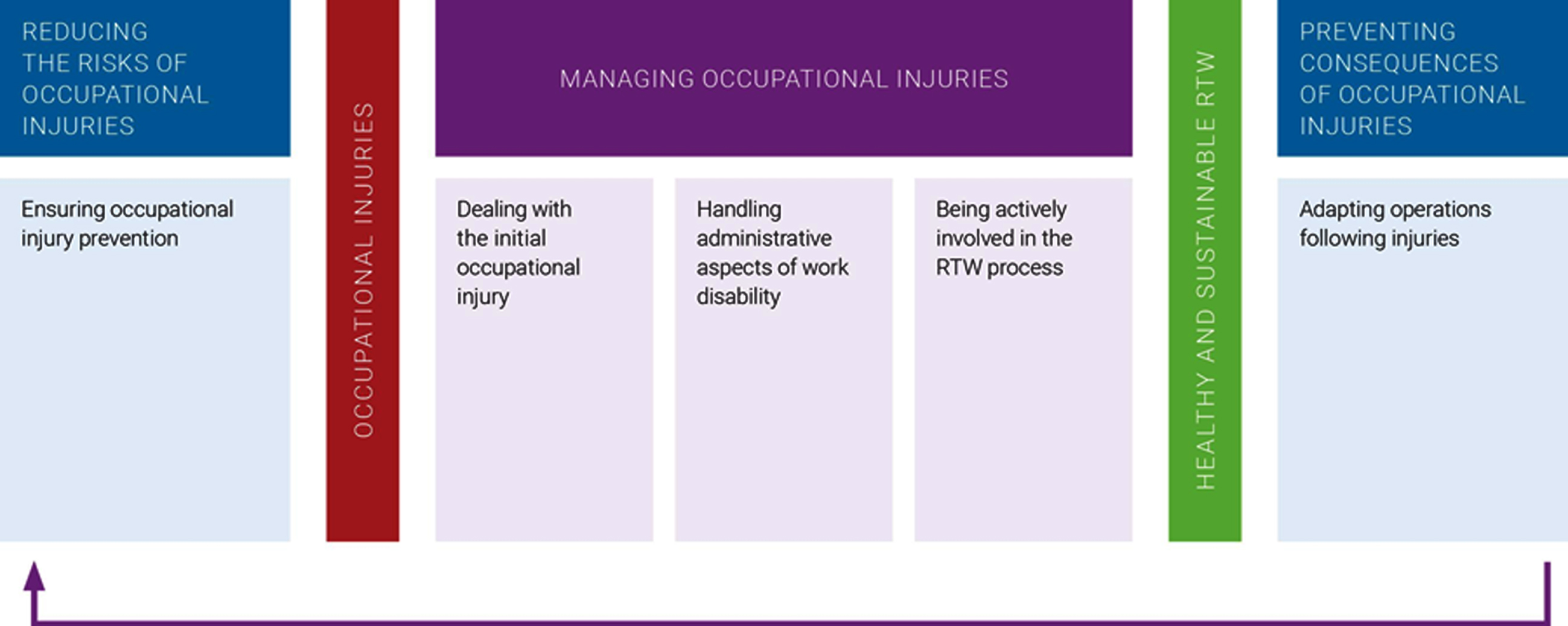
Occupational injury management continuum.
In fact, the results show that the RTW process cannot be separated from the health and safety practices in regards to occupational injury prevention. The occupational injuries and the RTW process that they incur may lead to a review and modification of a SME’s organisational functioning. Whether it be after the RTW process is completed or during the process itself, occupational injuries have important impacts on an enterprise’s ability to deal with the process and its consequences. Occupational injury prevention, the RTW process, and adapting operations following injuries must be taken as a whole in order to maximise the RTW success rate.
As can be seen in Fig. 1, the occupational injury management continuum is not linear in its application of the different RTW organisational practices. This was evident throughout the interviews with the participants from the three stakeholder categories. On numerous occasions, the different participants explained that specific actions, such as reviewing and analysing the cause of an occupational injury in order to bring upon operational changes, are done immediately after the occurrence of an injury. This analysis may also be done during the RTW process or once the RTW process is completed. The timing of these changes is influenced by the actions following the initial event.
The occupational injury management continuum is a rather dynamic process in which there is a continuous to-and-fro of different actions related to the ever-changing condition of the injured worker and to the different needs of a SME in relation to the impacts of the RTW process. This is consistent with the findings published by the scientific community, which state that despite the fact that many stakeholders see the RTW process as being linear with a specific order in the RTW stages, it is actually a dynamic process of multiple actions [18, 22]. As such, Young et al. defined the RTW process as being dynamic and in constant evolution where the actions go to-and-fro between the three different phases of the process [18]. It is important that occupational injury management be seen as a continuum in order to shorten the duration of the disability and increase the RTW success rate. If a linear approach to the RTW is used, there is a risk of having the worker’s condition become stagnant and the RTW progression slowed down or even halted, thereby prolonging the disability. The organisational practices are intertwined and influence the final outcome of the worker’s RTW, thereby impacting the SME’s operations in the short-term and the long-term, whether it be positively or negatively.
Even though the majority of the published studies concerning the best RTW practices were performed in large enterprises, the current study suggests that they are also implemented in SMEs. This study also suggests that their application in SMEs should be viewed as a dynamic continuum of prevention, management, and operational changes.
The literature suggests several RTW best practices to ensure a successful RTW of a worker having suffered an occupational injury [8, 19]. This study has identified many SME organisational practices that are compatible with these RTW best practices. However, we found differences between the best practices recommended in the literature and the actual implementation of these practices in SMEs. These differences are more apparent in three RTW organisational practices.
Firstly, the literature states that the enterprise should actively participate in the interdisciplinary aspects of the RTW process [25, 33] (e.g., planning the RTW). This study shows that most SMEs appear to be involved, however, more passively, reacting to the information as they receive it. This finding suggests that, by being passively involved, SMEs are more likely to have a lesser understanding of the RTW process. Therefore, it is deemed more difficult for SMEs to ensure that the injured workers and their colleagues have proper support throughout the RTW process.
Secondly, the literature suggests that the person responsible for the RTW process be trained in occupational injury prevention and RTW planning. Our results show that some SME employees may receive training on injury prevention, however, sparingly and inconsistently, whereas it appears that most SMEs have no training concerning the RTW process and its planning. The deficiencies in implementing this practice could lead to a lack of understanding of the RTW process by SME representatives. This could have an important impact on the RTW success rate.
Thirdly, the seventh best practice principle indicates that there is an adequate communication between the enterprise and the healthcare professionals [8, 19]. Our results show that this practice is present, yet, sparingly and is deemed inefficient in many SMEs. The lack of communication between stakeholders could result in slowing down the RTW process and prolonging the disability period. This study, in accordance to the literature, found that communication is one of the most important facilitators to the RTW process and yet, when communication is done inefficiently, it becomes the main obstacle to a successful and sustainable RTW [8, 48].
These differences between the best practices suggested in the literature and their actual implementation in SMEs could hinder a worker’s RTW process. However, our results suggest that SMEs are sensitive to maintaining a positive relationship with their workers during their disability period. The literature suggests that the enterprise contacts the worker soon after the injury [8, 19]. Our study results contribute to the literature by identifying that SMEs not only have an early contact with the injured worker, but also maintain regular communications throughout the RTW process. This appears to go beyond and add to this recommended RTW best practice, thereby improving it.
Another contribution that this study makes to the literature is the emergence of a theme which has not been identified as being part of the RTW best practices. Considering the consequences that occupational injuries have on SMEs’ productivity and development [5, 48], our results identified practices related to the adaptations that SMEs make to their operations following an occupational injury. This could lead to a reflection on how the enterprise is structured and changes are brought upon in order to limit the impact of occupational injuries in the future (e.g., redefining a job position). It is therefore essential to consider these adaptations as a best practice that is part of the RTW process, as they could influence it in the future.
Considering that the RTW success rate decreases in proportion to the size of its enterprise, it is important to investigate whether these differences in implementation of RTW best practices is a cause or an influencer of the RTW success rate.
The issue of differences in implementation
Although best practices are put in place by SMEs, there is no consensus among the participants on how to implement RTW best practices. In fact, there appears to be differences in their implementation or in how they are carried out. This study shows that the ways in which the organisational best practices are implemented vary according to the importance that the SMEs give to these practices. Enterprise culture and values, past experiences with occupational injury management, lack of personnel to implement and supervise the best practices, and lack of time to oversee these practices, were a few of the reasons mentioned in an attempt to explain the differences evoked in this study.
Our results show that the differences in the implementation of best practices in SMEs appear to have an important impact on the RTW process. Firstly, many SMEs have financial restraints [30] being financially vulnerable [26]. These financial constraints may explain partially the reasons why SME representatives responsible for overseeing the occupational injury management and the RTW process rarely receive the proper training. This lack of training could also be an indicator as to the reasons for the differences in the implementation of best practices, as identified in our study.
Considering that SMEs are financially vulnerable and that occupational injuries are a financial burden, it is essential that the RTW best practices be optimally implemented. To be optimal, the RTW organisational practices must be applied consistently and with stability. In doing so, the costs of occupational injuries could be reduced significantly with a lowered disability duration.
Less optimal practices: A worrying reality in SMEs
As discussed above, this study has shown that most RTW best practices are implemented in SME occupational injury management, even if it is done inconsistently. Yet, our results also show the presence of a number of less optimal practices (e.g., refusing a RTW plan). Regardless of the reasons for using these subpar practices, they are evoked and described as being important obstacles to a successful RTW process.
Different reasons may explain why SMEs would use less optimal practices. Firstly, knowing that SMEs are more financially vulnerable [26], it is expected that any work time lost due to an occupational injury could have a negative impact on the enterprise’s productivity. This could entice the SME representative to use less optimal practices with the belief that they would diminish the overall costs of an occupational injury. However, there is a risk of aggravating the injury or prolonging the work disability, thereby actually increasing the financial cost of an occupational injury in the mid to long term [9, 23].
Secondly, when enterprises have a small number of employees, as is seen in SMEs, it may be difficult to replace an injured worker. SMEs may not have the personnel to temporarily replace an absent worker. In order to limit the loss of revenues, the enterprise may divide the injured workers’ job tasks, requiring the other employees to perform them along with their own tasks. However, this practice potentially leads to overworked employees. Tired employees could lead to inefficiency and decreased productivity, thereby increasing the cost of an occupational injury [7, 27].
The use of less optimal RTW practices is a reality in SMEs for various reasons, which may differ from one SME to another. A common trend is the implementation of many suboptimal practices is the lack of understanding of the advantages of RTW best practices. SMEs would gain in receiving adequate training and building their knowledge on injury prevention, occupational injury management, and the RTW process.
Avenues for improvement
Recently published studies have proposed certain actions to stimulate the reflexive process for improving RTW organisational practices in SMEs [48]. Through the exploration of RTW organisational practices in SMEs, this study has identified differences and inconsistencies in the implementation of RTW best practices and the use of less optimal practices in SMEs. Therefore, specific avenues for improvement are proposed.
The results from this study and the shared experiences from the participants indicate that there is a good potential for improvement with regards to the enterprise system. Firstly, although some SMEs do offer health and safety training, it does not appear to be done regularly for most SMEs. Similar to the scientific literature [47], it is recommended that health and safety training be offered on a regular yearly basis with timely reminders done throughout the year. According to our analysis, this suggested frequency is realistic and addresses the needs of SMEs.
Secondly, having a predetermined injury management and RTW protocol would ensure that all workers have a better understanding of the process and what is to be expected when a worker suffers an occupational injury. This protocol should be flexible and adaptable providing the main guidelines needed for ensuring the best results possible. Prior knowledge of the process would enable all stakeholders involved to collaborate with more ease throughout the process, thereby giving the injured worker much needed support which can improve the RTW success rate [38, 48].
Thirdly, the SME representative responsible for ensuring the occupational injury management and coordinating the RTW process must have a standardized training [38, 48]. This training would ensure that the SME representative would acquire the knowledge and abilities to efficiently manage occupational injuries and the RTW process, and guide adequately the injured workers and their colleagues. This would also ensure that the SME representative be able to communicate efficiently with all stakeholders involved (i.e., the healthcare professionals, the insurers, and the other employees).
Finally, the scientific community recommends that the preferred approach to occupational injury management be interdisciplinary [36, 48]. Many studies specify that this approach is more efficient when RTW interventions (i.e., occupational therapy and occupational rehabilitation) are done within the work environment itself [25, 48]. It is strongly recommended that the interdisciplinary approach be implemented from the outset in order to facilitate the RTW process, to shorten the RTW duration, to increase the RTW success rate in SMEs and to lower the financial burden of occupational injuries.
Study strengths and limitations
The strength of this study relies on the participation of stakeholders, from the different categories that play an important role in the RTW process in SMEs. Their participation allowed to get an in-depth description of the process from their different points of view, all of which having an impact on the successful rate of RTW. In fact, by exploring the opinions and experiences of the different stakeholder categories involved, this allows to fully understand how and why specific organisational practices are implemented, or not, with the goal of facilitating the RTW process. Also, having a greater number of healthcare professionals who are involved in many RTW processes made it possible to have a more neutral opinion of the RTW process by relating different experiences from different workers and SMEs in which they have been involved throughout the years. The rigour and transparency in the methodological process allow for adequate reproducibility. However, by using a phenomenological study design, the perceptions of the stakeholders were explored through interviews, the SME organisational practices were not directly observed.
The absence of insurer representatives, mutual group representatives, the injured workers’ colleagues, psychologists, and physicians, among the participants was a limitation to this study. Since these professionals and workers play an important role in the RTW process, their experience with this phenomenon could have made a useful contribution to this study and could have provided nuances to the different concepts that were exposed. It is proposed that these avenues be explored in a second study, as the responses would add important information that would make the present results more complete and fully address the aim of this study.
Although the number of participants was appropriate to attain data saturation, it does not allow to assert that the realities of the SMEs represented in this study are common to all SMEs in the province of Québec, Canada. In fact, considering that there are legislative differences in the other Canadian provinces and in other countries, transferability of the results to other contexts cannot be guaranteed.
Conclusions
Information on SMEs is scarce in the scientific literature. Little was known about SMEs RTW practices. This study showed that SMEs do implement most of the best practices recommended in the literature; yet they do so with much variability and inconsistency. This study identified the SME RTW organisational practices, placing them on an Occupational Injury Management Continuum to better understand how these practices are part of an important dynamic process. If well understood by all stakeholders involved in the RTW process and properly implemented, the continuum can lead to a shortened and successful RTW, thereby benefitting all stakeholders, especially the workers and the SMEs.
Funding
This work was supported by the first author’s master scholarship from the Institut de Recherche Robert-Sauvé en Santé et en Sécurité du Travail.
Footnotes
Acknowledgment
The authors want to thank all individuals who participated in the study.
Conflict of interest
No conflict of interest to declare.
The organisational practices that were reported to be used in SMEs are indicated by bold lettering.
The themes are exemplified by verbatim extracted from the participants’ interviews. The extracts are a free translation from the original French transcripts.
Letters in the hooks refer to participant’s stakeholder category (HCP = Healthcare professional, W = Worker, SME = Small and medium-sized enterprise representative). The numbers (1 to 15) in the hooks refer to participant’s number.