



Abstract
BACKGROUND:
The suicide of college students had been a social topic attracting people’s attention, and the generation of suicidal ideation was an inevitable link in the psychological process of suicidal behavior. It was the focus of many researches whether the pressure of college students with suicidal ideation can be detected and relieved in time.
OBJECTIVE:
The study aimed to analyze the therapeutic effect of cognitive behaviour therapy on psychological stress, depression, and other negative emotions of college students with suicide ideation.
METHODS:
114 people from 1,158 college students with suicide ideation in the Wuhan area were divided into an experimental group and a control group in this study. Students in the experimental group were given with the cognitive behaviour therapy, and students in the control group were not intervened in any way. The suicide ideation scale (despair, optimism, and sleep), psychological stress test rating, and self-reporting inventory (somatization, compulsion, interpersonal relationship, depression, anxiety, hostility, terror, delusion, and psychosis) were used to evaluate the objects in the pre-test stage, intermediate-test stage, and the tracking-test stage. The multivariate logistic regression was adopted to analyze the influencing factors of the suicide ideation of the college student.
RESULTS:
The suicide ideation of the college student was significantly positively correlated with the psychological stress, depression, interpersonal sensitivity, anxiety, and psychosis (P > 0.05); the total score of suicide ideation, despair, optimism, and sleep in the experimental group were lower than those in the control group (P < 0.05) in the intermediate-test stage and the tracking-test stage (P < 0.05); the psychological stress, depression, and anxiety of the college students in the experimental group in the intermediate-test and tracking-test stage were slighter than those in the control group (P < 0.05); the somatization, compulsion, and interpersonal relationship of students in the experimental group were significantly lower than those in the control group (P < 0.05).
CONCLUSIONS:
The psychological stress, depression, interpersonal sensitivity, anxiety, and psychosis were all risk factors for the college student to have suicide ideation. Negative emotions such as psychological stress, emotional depression, and anxiety of the college student with suicide ideation could be improved effectively by cognitive behaviour therapy, and the level of suicide ideation could be reduced finally.
Keywords
Introduction
Suicide refers to a dangerous behaviour of an individual that deliberately or voluntarily end his/her life in various means under the action of complex psychological activities. It is a complicated social phenomenon [1, 2]. According to relevant statistics, there are 350 million patients with depression in the world, and one person dies due to suicide about every 40 seconds. In China, there are around 200,000 to 300,000 people killing themselves every year, nearly 700 people ending their lives every day, and more than 6,000 people attempting to suicide. Suicide has become the fifth leading cause of death in the Chinese population [3–5]. Among them, the suicide rate of college student is 20 / 100,000, which is much higher than that of ordinary people of the same age. It is mainly caused by the psychological stress and depression caused by the interpersonal relationship and learning [6]. Although the suicide of college student accounts for only a small part of the total number of college students, as an elite group in a country, their suicides not only affect a family or a school, but also cause irreversible harm to the entire society [7, 8]. Relevant researches show that the most important period in the entire suicide process is the emergence of suicide ideation, which is defined as the motive of suicidal behaviour experienced by chance. It is the most sensitive factor for inferring that individual may commit suicide if the individual has the thought to end his/her life but has no explicit action to achieve this purpose [9]. Therefore, it is conducive to preventing and interfering with their mental health in advance to understanding the suicide ideation of the college students.
As a serious social problem, the grouped suicidal behaviour of college students has attracted the attention from many psychologists at home and abroad [10, 11]. For example, an online survey is taken by Goodwill et al. [12] for 868 students from four universities in the United States. It is found that the interpersonal injury and discrimination are positively correlated with the severity of depression, suicide ideation, alcohol abuse, and suicide attempt. A psychosocial model of suicide risk for 156 Latino college students was taken by Chang et al. [13]. It is found that emotional depression and loneliness are significant predictors of the suicide risk indexes, and the depression is nearly twice as strong as the loneliness. Cognitive behaviour therapy is a combination of the cognitive therapy and behaviour therapy. It belongs to a short-term, goal-oriented psychological therapy [14]. It was originally designed to treat the depression, but now it also helps to solve other common problems, such as various types of anxiety, psychological stress, etc. [15]. Now, it is used for treatment of individuals with suicidal tendencies by some scholars. For example, Brown et al. [16] proposed that anxiety usually occurs together with the suicide ideation, and used the cognitive behaviour therapy to treat patients with suicide ideation. It is found that anxiety and suicide risk of the patient can be reduced by the cognitive behaviour therapy with times goes on. Therefore, the treatment analysis is taken for the college students with suicide ideation based on the cognitive behaviour therapy in this study to solve the psychological stress and emotional depression of the college students.
In summary, it is currently a hot topic to treat the individual with depression and suicide intention by using the cognitive behaviour therapy. Based on this, 1,158 college students from Wuhan were selected as research objects of the study, and 114 students of them were divided into an experimental group and a control group. Students in the experimental group were given with the cognitive behaviour therapy. The improvement effects of the cognitive behaviour therapy to the students with suicide ideation were evaluated comprehensively by comparing the suicide ideation, psychological stress, and change in the self-reporting inventory of the subjects.
Methodologies
Study data and basic information
In this study, 1,158 college students in the Wuhan area were selected as the research objects. All subjects were evaluated using the self-rating idea of suicide scale (SIOSS) firstly. 114 college students with suicide ideation were selected as the suicide ideation group, with an average age of 19.56±1.36 years old (18–21 years old), and the other 1,044 college students were in the no suicide ideation group, with an average age of 19.14±1.65 years old (18–21 years old). Students in the suicide ideation group were divided into an experimental group and a control group randomly. There were 21 males and 16 females in the experimental group, treated with the cognitive behaviour therapy for two months. There were 17 males and 20 females without any intervention in the control group.
The inclusion criteria were defined as follows: college students who voluntarily participated in this research and provided informed consent; college students who voluntarily accepted others; college students who were voluntarily open in the team; college students who were able to participate in the team activity; and college student older than 18 years.
The exclusion criteria were defined as follows: disables; those who suffered with severe mental disease; those who suffered with unclear consciousness and poor compliance; and those whose were unable to participate in the treatment timely due to individual’s cause.
As shown in Table 1, among 1,158 college students selected in this study, the number of men was not so much different from that of women, which was 53.17%and 46.83%respectively. In terms of age, the freshmen accounted for the majority (48.36%), followed by the sophomores (33.86%). There were no seniors. This may be seniors had no time to participate in this study due to the stress of graduation and employment. In terms of majors, students in science were less and occupied 63.17%. In terms of nationality, the majority students were Han (71.64%). The number of students from urban area was not so much different with that of students from rural area; most students were from two-parent family, accounting for 83.51%; and the number of non-only child was low, accounting for 67.22%.
Basic information of college students as samples
Basic information of college students as samples
114 college students with suicide ideation were divided into the experimental group and the control group. The students in the control group were not intervened in any way. The students in the experimental group were treated with cognitive behaviour therapy once a week with the standard psychological treatment for one hour each time for eight weeks. Two professionally trained psychotherapists were responsible for the treatment. In consideration of needing to deal with the suicide ideation of college students, so the specific treatment contents are as follows. First, the negative automated thinking of the tested college students was corrected by leading the subjects know the cognitive behaviour theory, understand each other, build trust, and adjust their negative emotions through the cognitive behaviour therapy, so as to understand and accept themselves. Second, the subject college students were taken as a group so that they can feel the power of team support and partners in daily life. In this way, the degree of harmony among members was promoted, the cognitive patterns can be recognized, and the cognition can be reconstructed in team activities. Third, all groups of members were taught to deal with the emotional problems through the cognitive behaviour, to study, reconstruct the cognition, control the emotion, establish the skill of adaptive cognition and behaviour, and apply them in practical lives through creating the warm, understanding, and sincere atmosphere. Evaluation of the treatment effects: the subjects were evaluated by the psychological stress scale, suicide ideation scale, and self-reporting inventory at the pre-test, intermediate-test, and tracking-test stages. The pre-test stage was one week before the treatment, the intermediate-test stage was the second, fourth, sixth, and eighth week of the treatment period, and the tracking-test stage was one and two months after the end of treatment.
Scales
First: Self-rating idea of suicide scale (SIOSS)
In this study, the SIOSS compiled by Xie et al. in 2018 [17] was adapted to the national conditions of China was used to evaluate the suicide ideations of college students. The scale covered four dimensions: despair, optimism, sleep, and disguise with 26 test items in total. The total score of despair, optimism, and sleep was the total score of the suicide ideation. The scores were determined by “yes or no”, 1 score was for “yes”, and 0 score was for “no”. If the total score of suicide ideation was higher than 12 and the concealment factor was lower than 4, it indicated that the student had the suicide ideation. A higher total score indicated a stronger suicide ideation. The overall consistency of the scale with despair, optimism, and sleep was 0.862, 0.915, and 0.878, respectively.
Second: psychological stress test rating
Appropriate stress can stimulate your potential and make life more exercised and stronger. Excessive stress can cause abnormal psychological and physiological reactions, leading to the occurrence of diseases, which is an important reason for the formation of psychological disorders and physical diseases. One. This article uses the psychological stress test rating (PSTR) compiled by Chin [18] to evaluate the psychological stress of college students. The scale was a single-dimensional scale, providing a total of 50 test questions. It was scored on a 4-level scale, with 0–4 scores indicating never, rarely, sometimes, often, and always respectively. A higher score indicated higher psychological stress of the individual. It indicated that the stress was moderate if the score was 43–65; it indicated that the stress was too small if the score was lower than 43, and the stress had to be increased moderately. It indicated that the stress was too high and had to be reduced appropriately.
Third: self-reporting inventory
The self-reporting inventory compiled by Duan [19] was one of the most famous mental health test scales in the world, and was the most widely used outpatient examination scale for mental disorders and mental diseases. Therefore, the self-reporting inventory compiled by Derogatis in 1975 was used in this study to evaluate the psychological symptoms of college students. There were 90 items in total, covering a wide range of psychiatric symptoms from feelings, emotions, thinking, awareness, behaviour to lifestyle habits, interpersonal relationship, diet, and sleep. There were 10 dimensions in total including somatization, compulsion, interpersonal sensitivity, depression, anxiety, hostility, terror, delusion, psychosis, and “other”. The Richter’s 5-score scale was adopted, with 1-5 scores being “extremely disagree”, “disagree”, “unknow / unsure”, “agree”, and “extremely agree”. The higher the score, the worse the metal health.
Statistical methods
The data processing in this study was analysed by using the SPSS 19.0 statistical software. The mean±standard deviation (
Results
Difference analysis of general demographic variable suicide ideation of college students
The difference analysis of general demographic variable suicide ideation of college students is given in Table 2. It could be seen that there was no significant difference between suicide ideation of college students in different genders, grades, majors, ethnicities, residence origins, and only child or not (P > 0.05); there was a significant difference between suicide ideation of college students in single-parent or two-parent families (P < 0.05).
Difference analysis of general demographic variable suicide ideation of college students
Difference analysis of general demographic variable suicide ideation of college students
As shown in Fig. 3, the scores of psychological stress test rating in the suicide ideation group were significantly higher than those in the no suicide ideation group, which had a statistical significance (P < 0.05). In the self-reporting inventory, scores of somatization, interpersonal sensitivity, depression, anxiety, psychosis, and paranoia in the suicide ideation group were higher than those in the no suicide ideation, and the difference was significant extremely (P < 0.001). Scores of compulsion, hostility, terror, and other in the suicide ideation group were higher than those in the no suicide ideation, and the differences were significant (P < 0.05).
Analysis on the influencing factors of suicide ideation of college students
As shown in Table 3, the single-factor logistic regression analysis was taken by taking the age, gender (1 was for male, and 0 was for female), grade (2 was for freshmen, 1 was for sophomore, and 0 was for junior), major (1 was for science, 0 and was for liberal arts), nationality (1 was for Han, and 0 was for minority), residence origin (1 was for urban area, and 0 was for rural area), family situation (1 was for two-parent family, and 0 was for single-parent family), only child or not (1 was for yes, and 0 was for no), psychological stress score, somatization, compulsion symptom, interpersonal sensitivity, depression, anxiety, hostility, terror, paranoia, psychosis, other scores as independent variables, and taking the suicide ideation as the dependent variable. There was no significant correlation between the suicide ideation and age, gender, grade, major, nationality, residence origin, family situation, only child or not, compulsion symptoms, hostility, and terror (P > 0.05). The suicide ideation had extremely significant positive correlations with the psychological stress score, depression, and anxiety of the college students (P < 0.001). The suicide ideation had significant positive correlations with somatization, interpersonal sensitivity, paranoia, psychosis, and other scores (P < 0.05).
S ingle-factor logistic regression analysis of the college students with suicide ideation
As shown in Table 4, the multivariate logistic regression analysis was conducted by taking the psychological stress score, depression, anxiety, somatization, interpersonal sensitivity, paranoia, psychosis, and other score as independent variables. It indicated that the suicide ideation had extremely significant positive correlations with the psychological stress and depression scores of the college students (P < 0.001), had the significant positive correlations with the interpersonal sensitivity, anxiety, and psychosis (P > 0.05), and had no significant correlations with the somatization, paranoia, and other scores of the college students (P > 0.05).
Multi-factors logistic regression analysis of the college students with suicide ideation
In Fig. 2, the changes of the total scores of suicide ideation in the experimental group and the control group in the pre-test, intermediate-test, and tracking-test stage were given. It revealed that the level of suicide ideation of the students in the experimental group shown a declining trend with increase of the time, while it in the control group had certain fluctuations with increase of the time, but it was around 15 scores. There was no statistically significant difference for total scores of the suicide ideation in the pre-test between the two groups (P > 0.05). The total scores of suicide ideation in the experimental group in the intermediate-test and tracking-test stage were significantly lower than those in the control group, and the difference had a statistical significance (P < 0.05).

Comparison on scores of psychological stress and self-reporting inventory in the suicide ideation group and no suicide ideation group. Note: Fig. A showed score of psychological stress of two groups; Fig. B showed the scores of somatization, compulsion, interpersonal sensitivity, depression, and anxiety of two groups; Fig. C showed the score of hostility, terror, paranoia, psychosis, and other of two groups. * Indicated that the difference was significant by comparing with the no suicide ideation group (P < 0.05); **Indicated that the difference was significant extremely by comparing with the no suicide ideation group (P < 0.001).
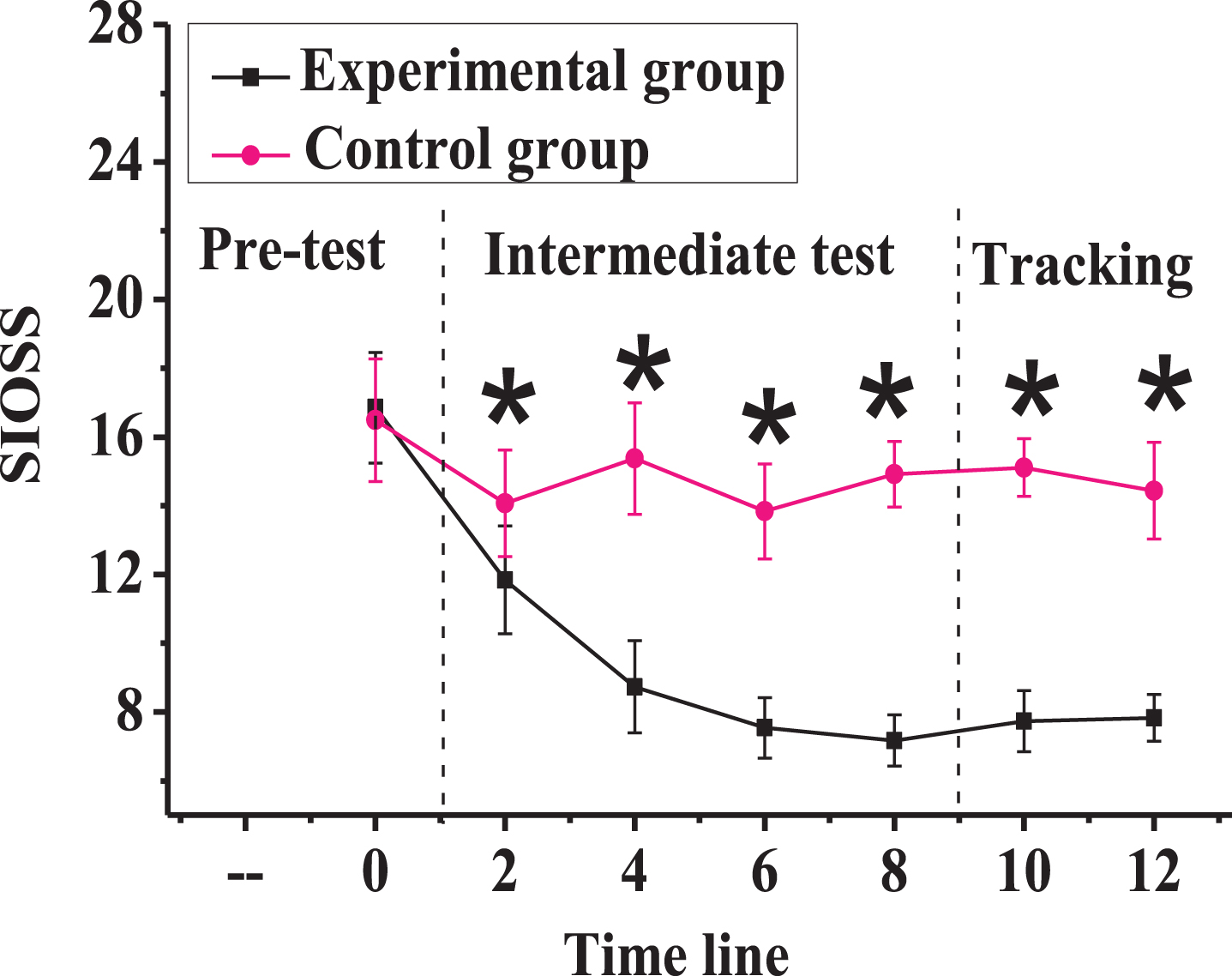
Changes of the total scores of suicide ideation of the college students in the experimental group and the control group. Note: *indicated that it had a statistical difference by comparing with the experimental group (P < 0.05).
In Fig. 3, the changes of the suicide ideation, despair, optimism, and sleep of the college students in the experiment group and control group in the pre-test, intermediate-test, and tracking-test stage were given. It can be seen that the scores fluctuated over time in the control group, but they were remained stable generally. Despair was basically maintained at around 11 scores, optimism was maintained at around 2.5 scores, and the insomnia was maintained at around 2.7 scores. Among them, scores of the despair, optimism, and sleep dimensions of the students in the experimental group were not significantly different from those in the control group in the pre-test stage (P > 0.05); scores of the despair, optimism, and sleep of the students in the experimental group were significantly lower than those in the control group in the intermediate-test and tracking-test stage, and the differences had statistical significances (P < 0.05).

Changes of each dimension of the suicide ideation of the college students in the experiment group and control group. Note: Fig. A shown the despair scores in two groups; Fig. B shown the optimism scores in two groups; Fig. C shown the sleep scores in two groups. *Indicated that it had a statistical difference by comparing with the experimental group (P < 0.05).
In Fig. 4, the changes of the psychological stress levels of college students in the experimental group and the control group in the pre-test, intermediate-test, and tracking-test stage were given. It showed that the psychological stress level of the students in the experimental group declined with increase of the time, and the psychological stress level of the students in the control group was basically stable at around 95 scores. There was no statistically significant difference for the psychological stress level of college students in the pre-test between the two groups (P > 0.05); the psychological stress level of the students in the experimental group in the intermediate-test stage was significantly lower than that in the control group, and the difference had a statistical significance (P < 0.05); and the psychological stress level in the experimental group in the tracking-test stage was significantly lower than that in the control group, and the difference had an extreme significance (P < 0.001).
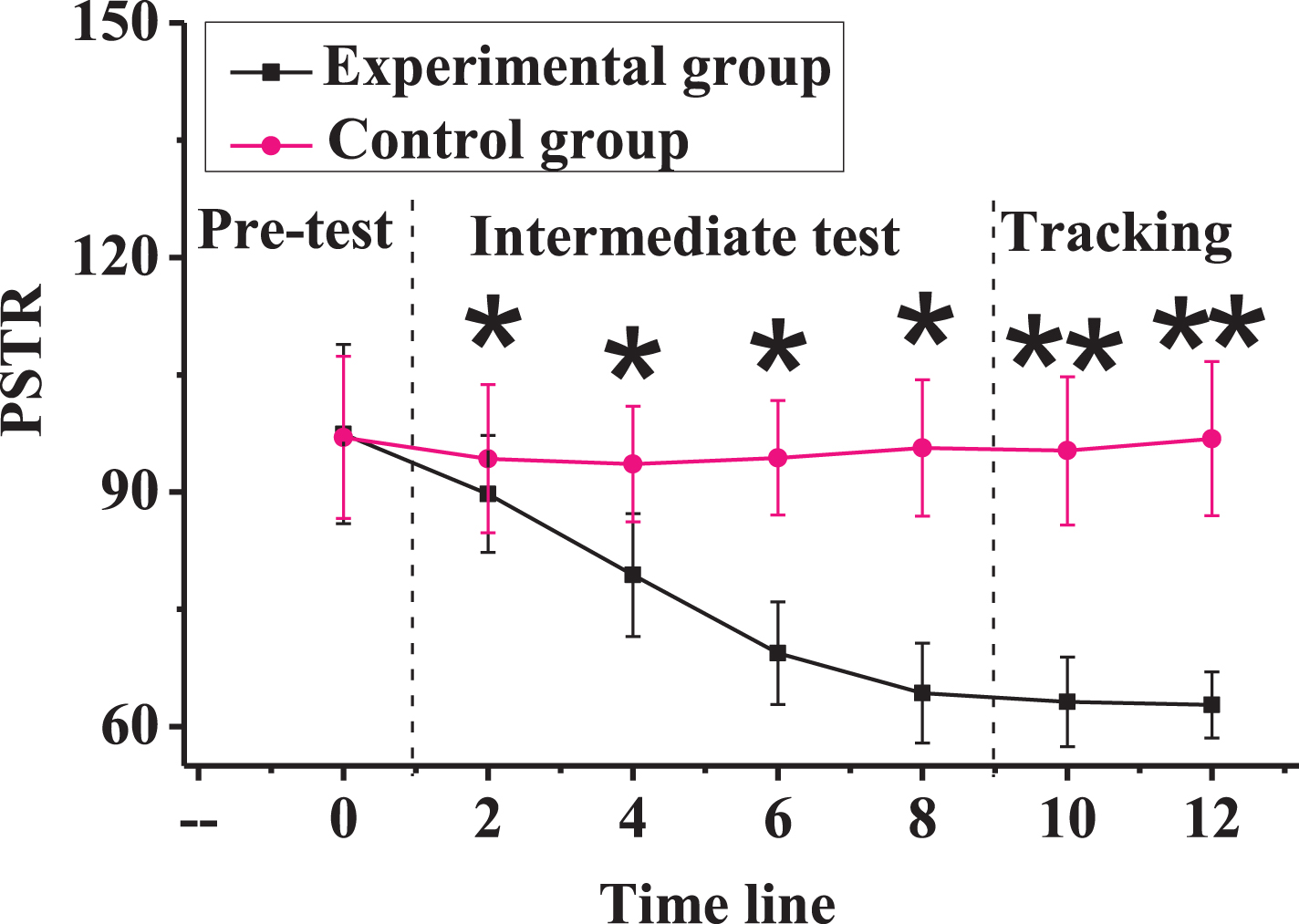
Changes of the total scores of self-reporting inventory of the college students in the experimental group and the control group. Note: *indicated that the difference was significant by comparing with the experimental group (P < 0.05); **indicated that the difference was significant extremely by comparing with the experimental group (P < 0.001).
In Fig. 5, the changes of the total scores of self-reporting inventory of the college students in the experimental group and the control group in the pre-test, intermediate-test, and tracking-test stage were given. It can be seen that the total score of the self-reporting inventory in the experimental group declined gradually with increase of the time, while that in the control group was basically stable at around 160 scores in overall. There was no statistically significant difference in the total score of the self-reporting inventory of the college students in pre-test stage between the two groups (P > 0.05); the total score of self-reporting inventory in the intermediate-test and tracking-test stage in the experimental group was significantly lower than that in the control group, and the difference had a statistical significance (P < 0.05).

Changes of the total scores of self-reporting inventory of the college students in the experimental group and the control group. Note: *Indicated that the difference was significant by comparing with the experimental group (P < 0.05).
In Fig. 6, the changes of the somatization, compensation, interpersonal sensitivity, and depression scores in the pre-test, intermediate-test, and tracking-test stage of college students in the experimental group and the control group were given. It can be known that scores of somatization, compulsion, interpersonal sensitivity, and depression in the control group in the pre-test, intermediate-test and tracking-test stage were stable with small fluctuation all the time. Scores of somatization, compulsion, and interpersonal sensitivity in the experimental group declined basically with increase of the time, but the difference in the pre-test and intermediate-test stage was not significant than those in the control group (P > 0.05), and it was lower than the control group significantly in the tracking-test stage, which had a statistically significant difference (P < 0.05). The score of depression in the pre-test stage in the experimental group had no great difference with that in the control group (P > 0.05); it was lower than the control group significantly in the intermediate-test stage, and it had a significant difference (P < 0.05); the score in the tracking-test stage was lower significantly than that in the control group, and it had an extremely significant difference (P < 0.001).
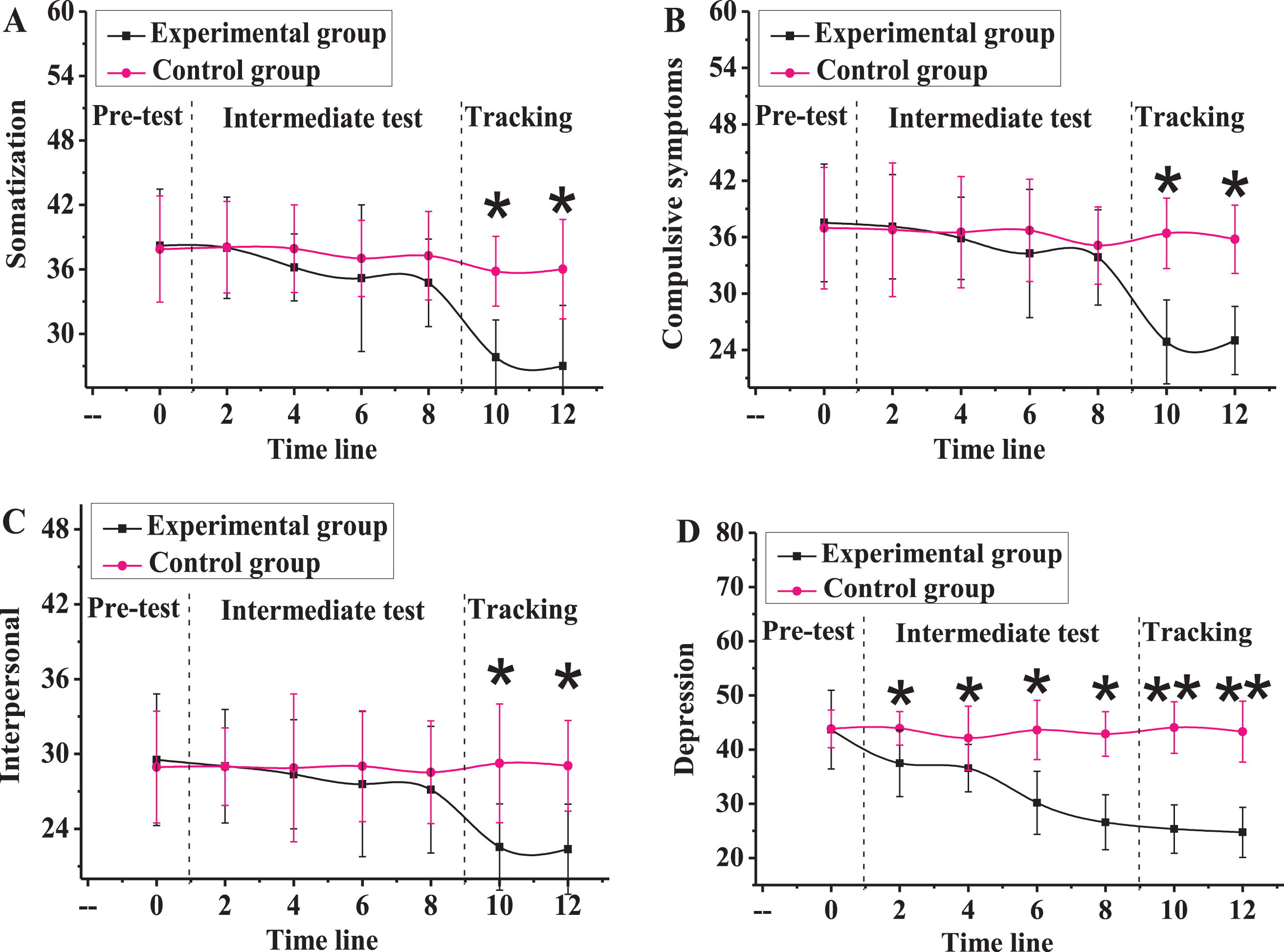
Changes of somatization, compensation, interpersonal sensitivity, and depression scores of the college students in the experimental group and the control group. Note: Fig. A shown the somatization scores in two groups; Fig. B shown the compulsion scores in two groups; Fig. C shown the international sensitivity scores in two groups; and Fig. D shown the depression scores in two groups. *indicated that the difference was significant by comparing with the experimental group (P < 0.05); **Indicated that the difference was significant extremely by comparing with the experimental group (P < 0.001).
In Fig. 7, the changes of the anxiety, hostility, and terror scores of college students in the experimental group and control group in the pre-test, intermediate-test, and tracking-test stage were given. It can be seen that the scores of anxiety, hostility, and terror in the control group were remained stable with small fluctuation. The scores of hostility and terror of the students in the experimental group were significantly lower than those in the control group in the intermediate-test and tracking-test stage, and the difference had a statistical significance (P < 0.05); the score of anxiety in the experimental group was not significantly different from that in the control group in the pre-test stage (P > 0.05); it was significantly lower than that in the control group in the intermediate-test stage, and the it had a significant difference (P < 0.05); it was significantly lower than that in the control group in the tracking-test stage, and it had an extremely significant difference (P < 0.001).
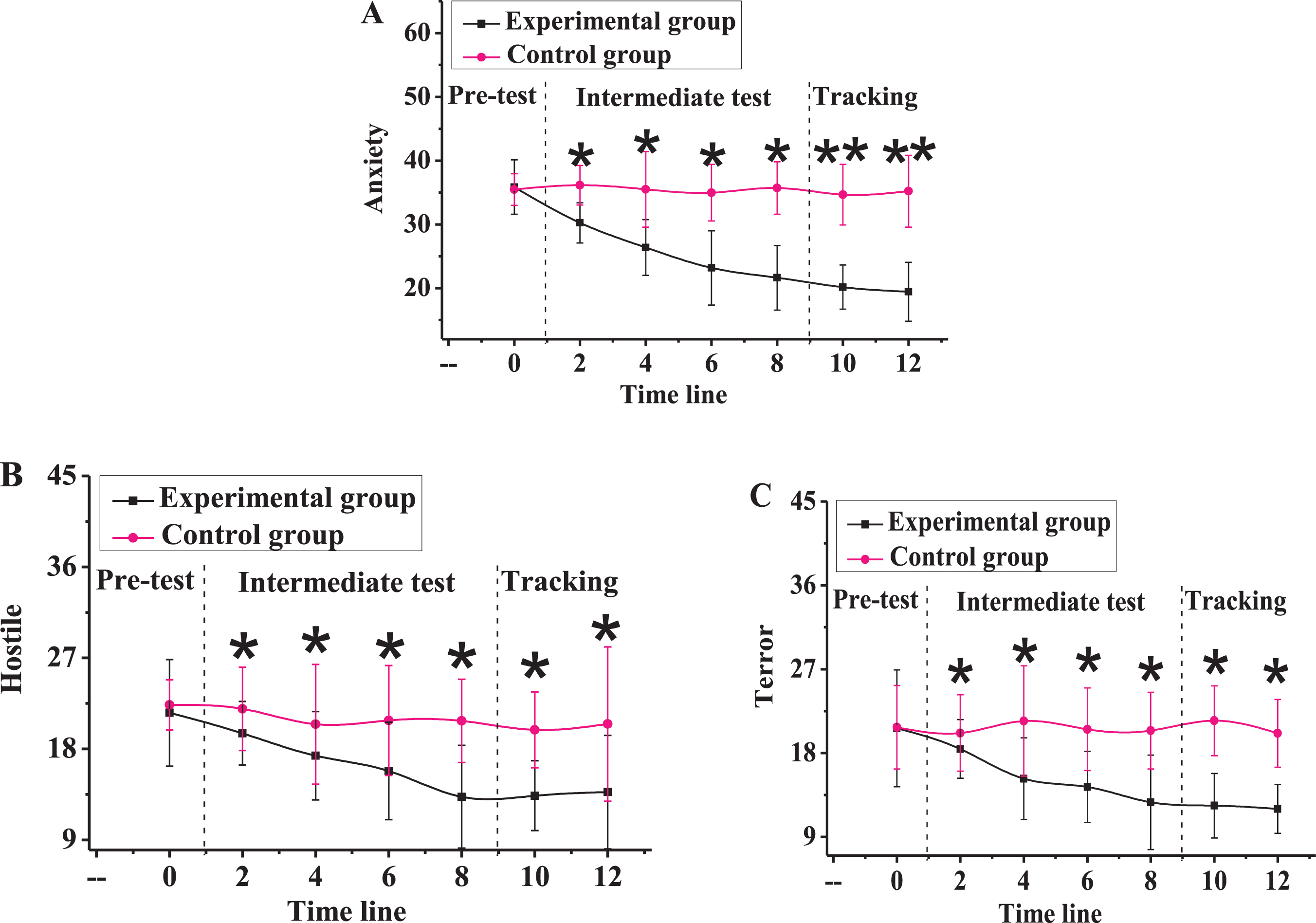
Changes of anxiety, hostility, and terror scores of the college students in the experimental group and the control group. Note: Fig. A shown the anxiety scores in two groups; Fig. B shown the hostility scores in two groups; Fig. C shown the terror scores in two groups. *Indicated that the difference was significant by comparing with the experimental group (P < 0.05); **Indicated that the difference was significant extremely by comparing with the experimental group (P < 0.001).
In Fig. 8, the changes of the paranoid, psychosis, and other scores of college students in the experimental group and the control group in the pre-test, intermediate-test, and tracking-test stage were given. It can be seen that the scores of paranoid, psychosis, and other in the control group were remained stable with small fluctuation. The scores of paranoid and psychosis in the experimental group decreased with increase of the time, but the difference with that in the control group was not significant in the pre-test, intermediate-test, and tracking-test stage (P > 0.05). The score of other in the experimental group were not significantly different from that in the control group in the pre-test stage (P > 0.05); the score was significantly lower than that in the control group in the intermediate-test and tracking-test stage, and it had a significant difference (P < 0.05).
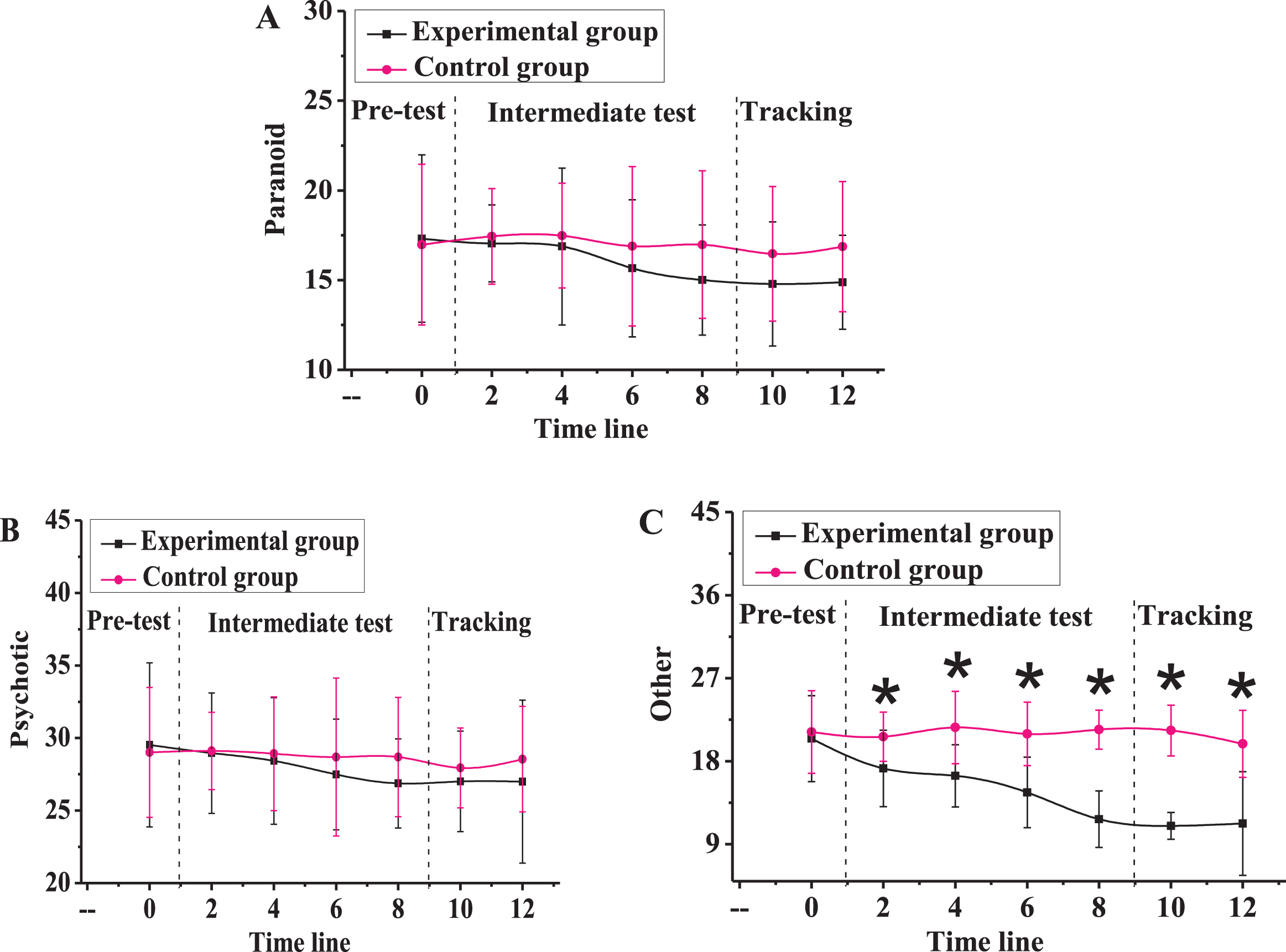
Changes of paranoia, psychosis, and other scores of the college students in the experimental group and the control group. Note: Fig. A shown the paranoia scores in two groups; Fig. B shown the psychosis scores in two groups; Fig. C shown the other scores in two groups. *Indicated that the difference was significant by comparing with the experimental group (P < 0.05).
With the development of social economy, the material level and spiritual needs of human beings are also increasing. Suicide has become one of the main reasons for death. As the future successors of all industries of the whole country, suicide of the college students has been well concentrated by many scholars at home and abroad [20, 21]. Therefore, some college students in the Wuhan area are selected as samples in this study for relevant researches. Firstly, it is found that there is no significant difference in suicide ideation of college students in different genders, grades, majors, ethnicities, residence origins, and only child or not (P > 0.05), but it is different in single-parent and two-parent family (P < 0.05). This is basically consistent with the research results of Grande et al. [22]. By analysis, the reason may be that child of single-parent family is more likely to have an inferiority complex with more vulnerable emotion. Compared with other child growing up in normal families, the ability of bearing the external stress is weak [23]. The dimensions of psychological stress and self-reporting inventory in the suicide ideation group are significantly higher than those in the no suicide ideation group, and the it has a statically significant difference (P < 0.05), which is similar to the research results of Torok et al. [24]. It may because that the individuals with suicide ideation bear too much psychological stress when facing difficulties, they cannot control their emotions, and often look down upon things [25]. It is found by further multi-factor logistic regression that the suicide ideation of college students had extremely significant positive correlations with the psychological stress and depression score (P < 0.001), and had significant positive correlations with the interpersonal sensitivity, anxiety, and psychosis (P > 0.05). It indicated that the psychological stress, depression, interpersonal sensitivity, anxiety, and psychosis are all risk factors for the suicide ideation, and the psychological stress and depression have a greater impact on the suicide ideation. The body of psychosis has the characteristics of poor emotional stability, sensitivity, and strong suspicion, and it is easier to lose confidence in life and have the suicide ideation [26].
In this study, the cognitive behaviour therapy was used to treat the college students. First, it was found that the total score of suicide ideation, despair, optimism, and sleep dimensions of college students in the experimental group were significantly lower than those in the control group in the intermediate-test and tracking-test stage (P < 0.05). Such results were consistent with the research results of Zou et al. [27], indicating that the levels of despair, sleep, and optimism of the college students with suicide ideation could be reduced significantly by the cognitive behaviours therapy and corresponding technologies. In order to further analyse the changes of related risk factors, the levels of psychological stress and self-reporting inventory of the objects in the pre-test, intermediate-test, and tracking-test stage were compared. It was found that the psychological stress, depression, and anxiety of college students in the experimental group were significantly lower than those in the control group in the intermediate-test stage (P < 0.05); were lower than those in the control group in the tracking-test stage, and it had an extremely significant difference (P < 0.001). The results were consistent with the research results of González-Valero et al. [28], indicating that the negative emotions such as psychological stress, depression, and anxiety in the suicide ideation group can be improved significantly by the cognitive behaviour therapy. In addition, the scores of somatization, compulsion, and interpersonal relationship in the experimental group were not significantly different from those in the control group in the pre-test and intermediate-test stage (P > 0.05), but they were significantly different in the tracking-test stage (P < 0.05). By analysis, it may be because that the somatization, compulsion, and interpersonal relationship are the long-term habitual neurological disorders, which can’t be treated immediately. With the influence from maintenance effect of the cognitive behaviour therapy, the improvement effect of the somatization, compulsion, and interpersonal relationship appear slowly [29, 30]. In addition, it was also found that the score of other in the experimental group was significantly lower than that in the control group in the intermediate-test and tracking-test stage, and the difference was statistical significant (P < 0.05). By analysis, it may be because that the other dimension herein refers to the sleep and diet of the objects, and the cognitive behaviour therapy had a good effect on improving the poor sleep and diet of the college students [31].
Conclusion
In this paper, a cognitive behaviour therapy program was used for targeted treatment of the college students with suicide ideations, and a comparative analysis of the treatment effect was performed. It was found that the psychological stress, depression, interpersonal sensitivity, anxiety, and psychosis of the college students were all risk factors for occurrence of the suicide ideation. The negative emotions of the college students with suicide ideation such as psychological stress, emotional depression, and anxiety can be improved effectively by the cognitive behaviour therapy, and the level of suicide ideation was decreased finally. However, due to lack of practical experience in this study, there were certain deviations in the control of interview time during the treatment, and there were some regional limitations in selection of sample size for the college students. In future, the range of college students for objects had to be enlarged and the treatment time had to be controlled to investigate the application of the cognitive behaviour therapy further. In short, a certain experimental basis for the application of cognitive behaviour therapy in suicide of the college students was provided in this study.
Conflict of interest
None to report.