



Abstract
BACKGROUND:
In India, where agriculture is the prime occupation among the rural population, farmers are extensively using pesticides in crop production without taking adequate precautions.
OBJECTIVE:
The current study aimed to examine pesticide usage patterns, usage of personal protective equipment (PPE), knowledge on pesticide toxicity, and attitude towards occupational safety among farmers diagnosed with leukaemia (n = 60), lymphoma (n = 33), and breast cancer (n = 30) visiting a tertiary cancer care hospital in Hyderabad, India.
METHODS:
Face-to-face interviews were conducted using a pre-tested questionnaire and the data collected were analysed with statistical software SPSS 23.
RESULTS:
The survey revealed that the participants had an average of 19.6 years of farming experience and women were predominantly involved in the mixing of pesticides and other agricultural work apart from spraying. All of them were not using any PPE and the majority of them did not have any knowledge on the route of exposure, toxicity symbols, and safe handling of pesticides. Statistical analysis showed no significant association between educational status and knowledge, attitude and practices (p > 0.05).
CONCLUSION:
Even though the majority of the farmers were educated, their lack of adequate knowledge on pesticides had enabled them to adopt risky behaviours in handling and storage of pesticides. There is a need for continuous training programs for farmers to promote awareness and minimize the hazards of occupational exposure.
Introduction
Agriculture in India is considered the backbone of the Indian economy as it contributes to 20% of the Gross Domestic Product; hence, improving the crop yield is a constant priority [1]. Among the various measures employed to improve production, the usage of pesticides is one such important method for managing and controlling pests. Currently, India is the second largest producer of pesticides in Asia and globally the fourth largest with 50 percent demand for domestic consumption [2]. In India, ever since the advent of the green revolution, there is a growing concern among the health professionals and scientific community on the potential risk posed by pesticides to human health as well as the ecosystem [3]. Though all sections of the population are exposed to the risks of pesticides at different levels, the direct risk is more among the farmers. During the mixing and spraying of pesticides, farmers are often exposed to the product in the concentrated form and, therefore face the greatest intensity of pesticide exposure [4].
Occupational exposure to pesticides is common in developing countries because farmers are often under-trained, illiterate, and consider it expensive and not essential to use personal- protective-equipment (PPE) [5]. Especially, the pesticide handlers in India feel it is impractical to use safety equipment due to the humid tropical climate [6]. In India, inadequate safety precautions by farmers engaged in pesticide spraying, unsafe storage of pesticides in the home, lack of knowledge on pesticide toxicity labels, and Good Agricultural Practices (GAPs) are the major causes of occupational hazards [7]. The safety instructions on the containers of the pesticides are difficult to follow because many farmers are uneducated and even those who are educated often find them incomprehensible [8]. In addition, due to the smaller land held by the Indian farmers, their family members are often engaged in agricultural activities. Subsequently, members of their family also run elevated risks of pesticide exposure when mixing the pesticide formulations or applying them to crops and/or while coming in contact with the primary sprayer [9]. Therefore, the use of well-maintained and appropriate spraying equipment following all the necessary precautions at all stages of pesticide handling could minimize pesticide exposure and their potential adverse effects on the health of farmers for whom farms are the workplaces [10].
Studies indicate that Information, Education, and Communication (IEC) approach employing multiple methods like pamphlets, group discussions, community fairs, and videos by involving the farming community in designing such interventions can promote safe usage of pesticides, help prevent occupational hazards and thus, increase the health and well-being of the farmers [11]. Before such interventions can be planned, it is important to conduct a situational analysis of the current Knowledge, Attitude, and Practice (KAP) related to pesticide use among the farmers. The KAP questionnaires have been found to provide insights about pesticide exposure, and handling practices and hence have been used to identify the lack of appropriate technical knowledge and shortage of inputs when dealing with unsafe usage of pesticides. Countries like Brazil and United States had made legislation for the mandatory usage of PPE for farm workers’ safety [12]. However, KAP studies conducted in some countries revealed that there are still many farmers who do not use the PPE throughout their farm work activities and hence are prone to occupational risks [13]. In such a typical agricultural workplace, exposure to pesticides may occur during the preparation or mixing of the pesticide formulations with water or while loading the pesticide formulation mixtures into the application equipment, or even while spraying the pesticides and/or by the re-entry of the farmers into the pesticide-treated fields to perform other allied farming tasks [14]. Hence, assessing the modalities of an individual’s exposure to pesticides may throw light on the underlying unsafe workplace practices adopted by the farmers.
Hospital-based studies conducted earlier had found a significant association between occupational exposure to pesticides and morbidity related to poisoning [15]. Studies also suggest the possible role of pesticide exposure, at farm worksites, notably organophosphorus, organochlorines, phenoxy acetic acids, and triazine compounds in the higher incidence of health disorders such as asthma, bronchitis, infertility, birth defects, Alzheimer’s, Parkinson’s, autism, amyotrophic lateral sclerosis, attention deficit hyperactivity disorder (ADHD), obesity, including cancers [16]. However, in Indian context, this occupation associated risk factor for cancer is sparsely explored. In this regard, a broader study was being conducted to assess the pesticide residues among the farmers visiting a tertiary cancer care hospital in Hyderabad, Telangana in South India. This paper reports on the preliminary formative survey conducted to assess their KAP and behaviours related to pesticide use during their active farm work earlier.
Materials and methods
This hospital-based cross-sectional study was approved by the Institutional and hospital Ethics Committees. The data was collected from the farmers visiting a tertiary cancer care hospital in Hyderabad (Fig. 1). A pre-tested questionnaire was administered in interview mode by the investigators and the survey was conducted at the hospital premises during the visits of the participants. The potential participants were explained the study objectives and a written informed consent was obtained from each participant before participation in the study.
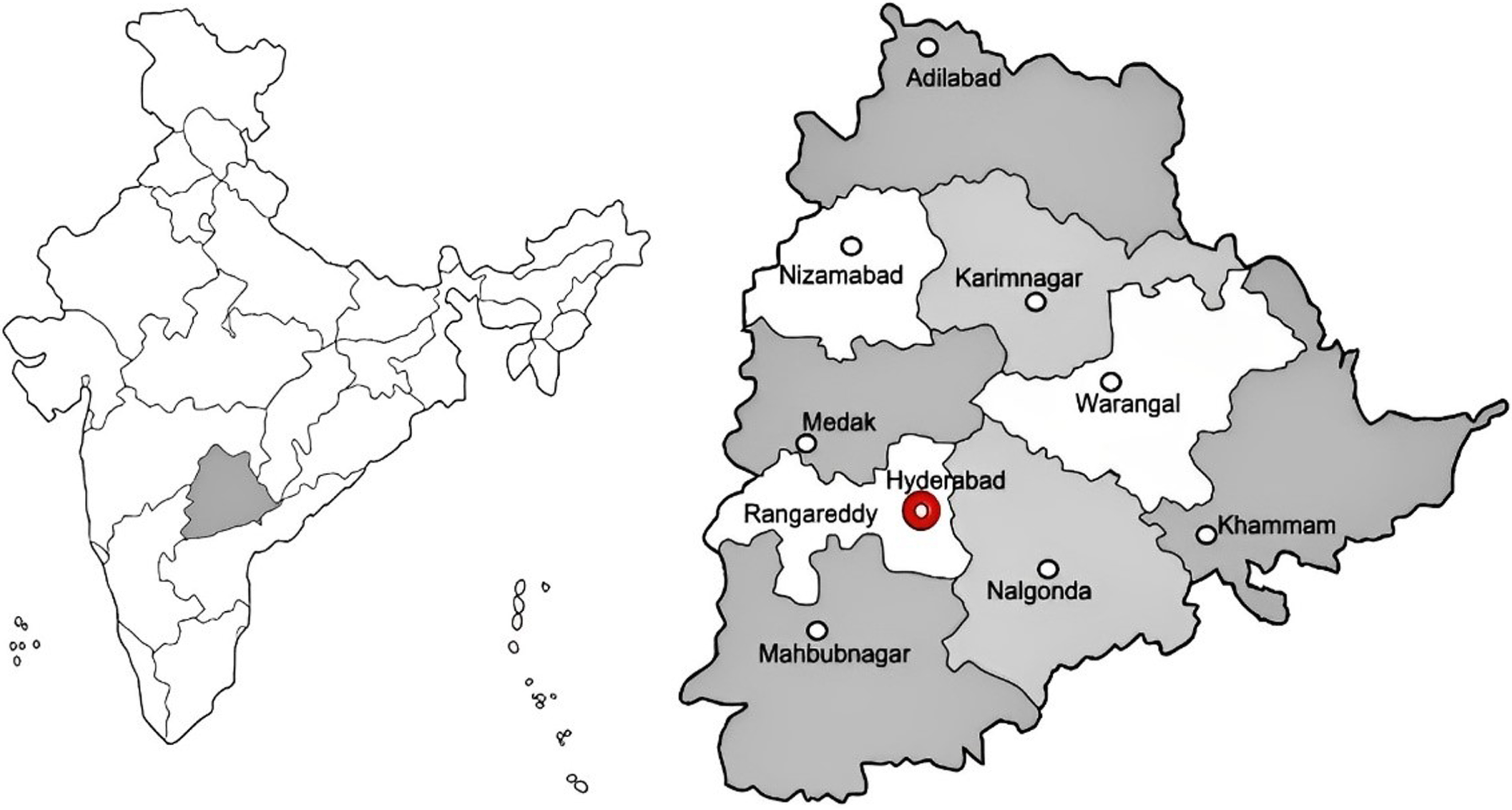
Location of the study area.
Prior to the collection of data, in the formative phase of the study, a preliminary survey was conducted to assess the frequency and the type of different cancers reported in the regional tertiary cancer care hospital. The findings from the preliminary survey revealed that the patients belonging to the farming community visiting the hospital were commonly diagnosed with either of leukaemia, lymphoma and breast cancer while the other types of cancers were negligible. Hence, the participants included were subjects with previous history of engaging in farming activities diagnosed with leukaemia, lymphoma, and breast cancers between the age group of 18 to 60 years. Those with other cancers and occupations were excluded from the study. Overall, 123 participants who self-identified themselves as farmers or farm workers engaged in pesticide spraying and other agricultural activities and found to have been diagnosed with lymphoma (n = 33), leukaemia (n = 60) and breast cancers (n = 30) and visited the hospital between December 2020 and March 2021 were recruited for the study. All the participants showed their willingness to participate in the present study.
A questionnaire was prepared based on the previously published literature supported by the validated questionnaires used for our earlier studies and was pre-tested among 30 subjects before its administration [17, 18]. It sought to obtain information on different variables such as demographic particulars; socio-economic status; occupational exposure to pesticides; and knowledge, attitude, and practices related to the use of pesticides. The questions employed were both open-ended type and ‘yes’ or no’ kind and the information were collected through face-to-face interviews by trained investigators in the regional language of the participants or the language of the participant’s comfort.
The questionnaire was divided into five sections with a total of thirty questions. The first section included questions (n = 5) on socio-demographic particulars such as gender, age, the extent of land holding by the farmers, their principal occupation, and their educational status. The second section had questions (n = 7) on their involvement in different farming activities (watering, sowing, cutting, thrashing, weeding, and harvesting) for the cultivation of major crops such as cotton, paddy, and vegetables (tomato and eggplant). The third section dealt with their personal histories (n = 4) such as dietary habits, consumption of alcohol, and smoking. The fourth section contained questions (n = 14) related to the participants’ attitude, awareness and practice, knowledge on the routes of pesticides exposure, frequency of spraying and protection methods such as usage of PPE, if any while handling pesticides, reading of the precautions on the label, and storage practices of pesticides adopted. The fifth section asked about sanitary practices such as washing hands and clothes immediately after handling the pesticides or reuse of clothes without washing.
The mean and standard deviation values for different variables such as age, gender, land holding, and duration of participation in agricultural activities were calculated. Bivariate analyses were made focusing on: (a) knowledge on safe usage of pesticides (b) protective measures adopted by farmers and (c) attitude towards storage of pesticides and hygiene practices. The outcome variable (number of responses of “yes” were considered) and predicator variables such as years of use of pesticides, age, gender, education level, duration of spraying (working hours), the practice of mixing of formulations, usage of PPE and place of storage of pesticides were used for one-way analysis of variance (ANOVA) test to find out the significant difference between the duration of exposure and different groups. Pearson Chi-square test was used to analyse the association between the educational status of the farmers and their knowledge on toxicity symbols, routes of entry, reading of label information, and precautions taken, if any. Statistical analyses were done using SPSS version 23 (Make: IBM®) to determine the association between the different variables concerning pesticide usage.
The information collected from the participants using the pre-tested questionnaire on the demographic particulars is presented in Table 1. All the participants were natives and the majority of them (65%) were in the age group of 46-60 years and the average age was found to be 43 years. About three-fourths of the participants reported to have been engaged in agricultural activities for more than 10 years. Based on the self-reported information provided by the participants of both gender, men (46%) and women (54%), those with a minimum level of education such as primary, secondary, graduate, and above were identified as ‘educated’, while those who never had primary level of education are grouped as ‘uneducated’. At least 75% of the participants were educated predominantly with the regional Telugu language as a medium of instruction. All the farmers reported that their houses were situated away from the farmland. It was further found that 59% of the family members of the participants were also engaged in agricultural activities including spraying. The average extent of land holding among the farmers was found to be 1.5 acres and they were engaged in agricultural activities for 19.6 years on average. The information provided by the participants on their dietary habits revealed that most of them were non-vegetarians (98%) while only 2% were vegetarians. The majority of them (96%) reported to have quit smoking and consuming alcohol.
Demographic particulars of the participants (n = 123)
Demographic particulars of the participants (n = 123)
*Pucca: Building with concrete roofing; Kutcha: Non-permanent structures made of mud and straw. aMultiple responses allowed.
When asked about the 22 pesticides that were listed in the questionnaire as the most commonly used in Telangana, very few participants had knowledge on their chemical names while about 42% were able to recall the trade or commercial names. It was found that acephate, chlorpyrifos, cyhalothrin, dichlorovos, fenitrothion, monocrotophos, phorate, phosmet, profenofos, and quinalphos were the common pesticides used by the farmers. Hardly any of them could recall any instance of experiencing morbidity symptoms upon exposure to the pesticides when they had used them on the farms in the past. All the participants reported to have used a hand pump as a major mode of spraying. The mean quantity of pesticides used for spraying was found to be 18.73 mL/acre before it was diluted. On average, it was found that the duration of participation in agricultural activities was around 19.6 years and the farmers reported to have been involved in pesticide spraying for 3.63±0.9 hours in a day for around 3 to 4 months in a year depending on the varying cropping seasons. However, no significant difference (p > 0.05) was found between the duration of participation in agricultural activities and gender (Fig. 2). Further, while the male farmers were directly involved in spraying pesticides with a susceptibility to direct exposure, their female counterparts were actively engaged in other farming activities like mixing pesticide formulations with a considerable possibility of exposure along with other agricultural activities such as sowing, seeding, watering, ploughing, thrashing, cutting and weeding.
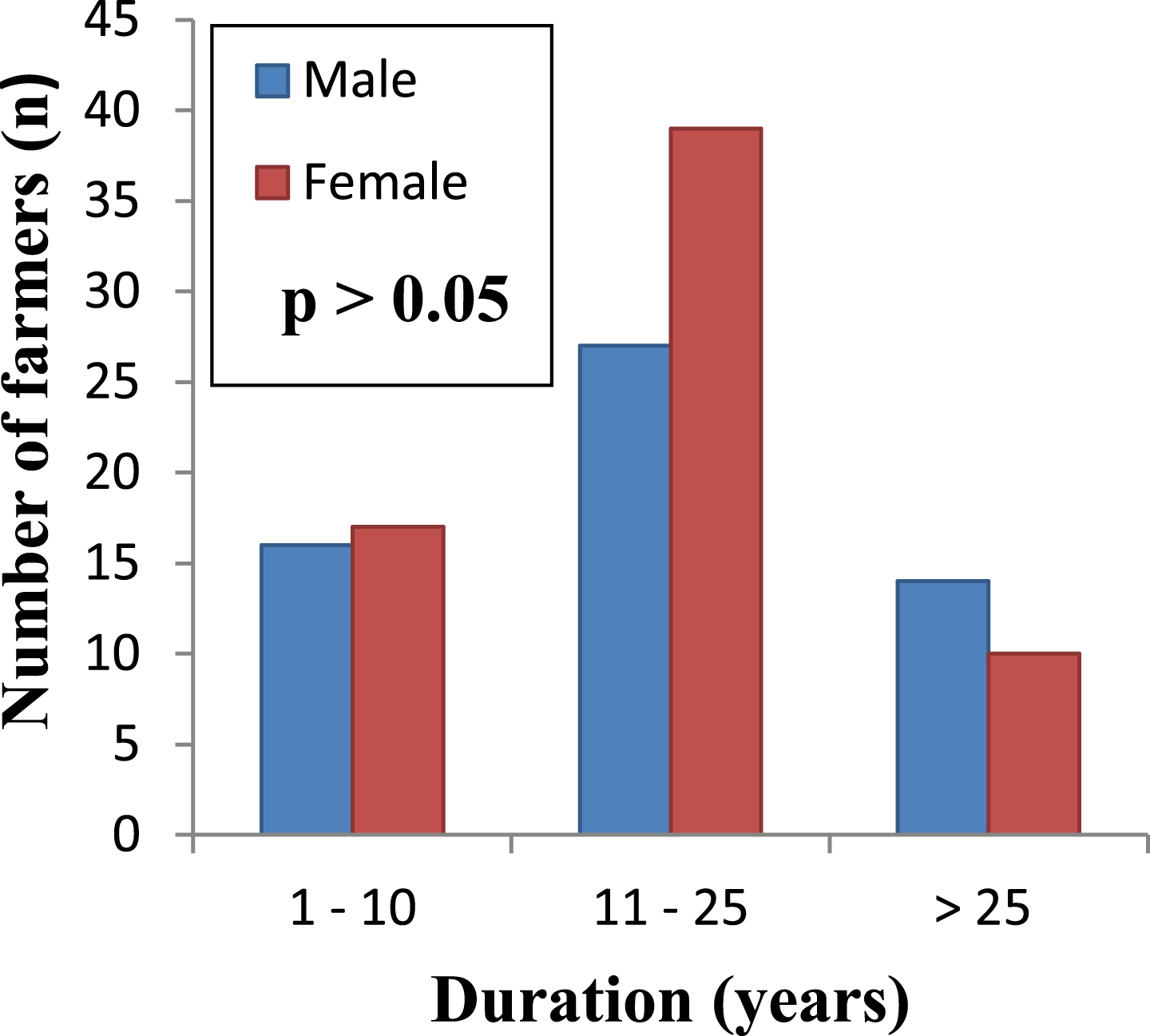
Association between sex and duration of exposure.
Regarding the pesticides use among the farmers, the knowledge and practices were assessed (Table 2). It was observed that 93% of the participants were not aware of the routes of entry of the pesticides. Out of the 123 participants, only 9 (7%) had knowledge on the route of exposure and further reported that the skin (dermal) was the primary pathway of entry. Information on the usage of PPE, if any, by the farmers revealed that none of them (100%) have used PPE and followed adequate safety measures. Further, the farmers had no knowledge on the utilization and availability of PPE and hence perceived them as inaccessible. Pearson Chi-square test revealed no significant association between education and knowledge on the route of exposure and usage of PPE (Table 3).
Pesticide related awareness, attitude and practice among the surveyed farmers (n = 123)
Association between education and knowledge, attitude and practices
*Statistical significance at p < 0.05 and CI at 95%.
The majority of participants (91%) did not have any knowledge either on the toxicity symbols or hazard labelling as per the WHO guidelines given on the pesticide containers. Only 11 participants (9%) had a rudimentary understanding of the toxicity symbols, with green indicating lesser toxicity and red denoting extremely toxic. Owing to their lack of education and awareness on safe usage of pesticides, the majority of them (94%) neither had any knowledge on other colour codes such as blue and yellow nor read the labels. Pearson Chi-Square test revealed no significant association between educational status and knowledge on toxicity symbols (Table 3). The practice of pesticides storage followed by the participants was found to be varied as only one participant reported having stored the pesticides in the home along with other items indicating the unsafe practice of pesticide storage, while rest of the them stored pesticides in a separate room (55%) or in the field itself (44%) showing no significant association between educational status and safe storage practices (Table 3).
In the present study, an attempt was made to evaluate the knowledge, awareness, attitude, and practices related to pesticide usage among the farmers/farmworkers visiting a tertiary cancer care hospital in Hyderabad. The study participants were ignorant of the toxic effects of pesticides despite their self-reported average usage of over 19 years and hence did not follow GAPs. Similar findings were reported earlier in studies conducted across India [19, 20]. In the present study, the farmers were primarily engaged in the cultivation of rice (55%) followed by cotton (33%) and vegetables (12%). As per Central Insecticide Board, Government of India, more than 30 pesticides have been registered for their use in rice. In India, cotton and rice cultivation utilizes 57% of the total pesticide consumption [21]. The state of Telangana has emerged as the ninth largest in India in terms of area under rice cultivation, eighth largest in rice production, and fourth largest in terms of rice yield rate, next to Punjab, followed by Andhra Pradesh and Tamil Nadu [22].
In the present study, the insecticide class of pesticides reported to have been used frequently by the farmers were acephate, chlorpyrifos, cyhalothrin, dichlorovos, fenitrothion, monocrotophos, phorate, phosmet, profenofos, and quinalphos. Further, it was also observed from the information provided by the participants that, they were using both the highly and moderately hazardous class of pesticides namely chlorpyrifos, phorate, and quinalphos including the banned pesticide monocrotophos. Similar observations on the usage of the above-mentioned pesticides by farmers were reported in other parts of India [23]. The Ministry of Agriculture, Government of India advocates the Integrated Pest Management (IPM) practices by creating awareness of safe and judicious usage of pesticides, encouraging adoption of ecologically sustainable bio-pesticides, and following the label claims by conducting annual training and demonstrations through posters, banners, field guides and manuals [24].
The reported use of a conventional back-pack pump consisting of a tank and a spray rod in the current study is akin to the contraptions used by many farmers across the country and could result in problems such as over application, not reaching the pest habitat, and depositing unsafe residues on the skin of the sprayers [25]. In the present study, the majority of the female farm workers were engaged in various farming activities such as ploughing, thrashing, cutting, and watering along with helping their spouses in mixing of pesticide formulations. This division of labour in farming practices was also reported in another study conducted in selected villages of Rajasthan in India [26].
In the current study, only 9 participants (7%) reported that they had knowledge on the route of exposure and that the pesticides may enter the human body through the skin. However, they were unable to list other routes of entry such as nose, eyes, and oral. Dermal exposure plays an important role in occupational exposure to pesticides since the agents may be emitted into the air from the sprayer and then transfer directly onto the skin surface. Also, aerosols may land on the surface of crops and then adhere to the body through direct skin contact [27]. None of the participants were using any standard PPE while spraying pesticides as they neither had the knowledge nor resources to gain access to them. Similarly, a study conducted in Telangana among farm women also reported that inaccessibility was the main reason for the insubstantial use of PPE [14]. In another study, it was reported that the cost was a significant factor in not using the PPE while handling the pesticides [28]. Thermal discomfort was found to be another reason for the non-usage of PPE [29]. Only two participants reported having used plastic bags as head caps and gloves, towels, and handkerchiefs as facemasks in minimizing the exposure which, however, were again not in accordance with FAO/WHO International Code of Conduct on Pesticide Management [30].
Even though 75% of the participants reported to be having adequate educational qualifications, they could not read/follow or understand the complex label instructions written on the pesticide containers, though were available in regional language. Further, no association was found between educational status and knowledge on the routes of exposure, usage of PPE, knowledge on toxicity symbols, safe storage practices of pesticides, and reading of labels on the pesticide containers. Similar to our findings, in another study, it was observed that even the farmers who were educated were unable to understand the label information, knowledge on the route of exposure, and recommended safety and application guidelines due to their lack of training on pesticide safety [31]. Illiteracy and lack of knowledge on the extent to which pesticides represent a hazard have been considered the most important barriers to the adoption of self-protective measures such as the use of PPE by farmers [32, 33]. In the present study, about 42% of the participants had knowledge on the names of the pesticides. Further 95% of the participants also reported that reading the label information given on pesticide containers was not important and hence were disinterested to read the same, which indicated their attitude towards adopting safety measures. Similar observations were also made in another study wherein farmers reported a low tendency towards reading pesticide labels due to poor literacy, advanced age, way of providing the label information, and unclear texts with small and illegible fonts [34]. For agricultural pesticides, the label is the primary source of information about the safety precautions be followed by the farmers. Due to their illiteracy, it can be difficult for farmers to comprehend written warnings. To simply the labelling, one method which is suggested is to add graphic representations, or pictograms to improve the ability of warnings to be understood by the farmers.
In the present study, the majority of farmers neither had any knowledge nor could they interpret the hazard symbols. Out of the four hazard symbols, only 9% of participants knew the meaning of the red and green symbols. However, they were not aware of the remaining colours like yellow and blue symbols given on pesticide containers. This could be probably related to the general understanding that the red colour and the symbol of the skull and crossbones signify danger. A similar lack of knowledge on toxicity symbols among the users was reported by other researchers from elsewhere in the world [35, 36]. Even though a majority of the participants (95%) reported to be residing in pucca houses (buildings with concrete roofing), only 55% reported that they stored the pesticides in a store-room in their respective houses while the rest of the participants (45%) stored the pesticides in the field itself. Earlier studies have shown that the practice of indoor pesticide storage is significantly linked to health hazards among family members [37]. In the present study, only one person reported having stored pesticides in his house along with other items.
In the current study, 60% of the participants were taking bath immediately after spraying pesticides whereas a study conducted in West Bengal revealed that only 37% of farmers were taking bath after spraying pesticides [38]. In this study, all the participants reported having washed their hands using soap after spraying pesticides, while only 32% of them changed clothes after engaging in the spraying activities. Similar personal hygiene practices were reported in another study conducted in the state of Tamil Nadu, India [39].
The main limitation of the present study is that it was conducted on the participants who were visiting the hospital during the study period. Therefore, these results have limited generalisability. Further, this was an interview-based survey. Hence, there is also a possibility of recall bias. The results of the present study may have limited generalisability and maybe viewed with caution because of the limited sample size which is confined to a small geographical area in the Southern India. This study is also limited by the inclusion criterion that allowed for considering participants diagnosed with only three types of cancers. However, this study can be considered as a basis for formulating future studies to include wider sample size from a broader geographical area and also by including other types of cancers.
Conclusion
The present study indicates that the knowledge inadequacy on the safe usage of pesticides among farmers influences their on-field practices. Their lack of knowledge on the routes of exposure to pesticides and the hazard symbols are the important reasons for the non-use of PPE. There was no significant association observed between educational status and the knowledge, attitude, and practices towards pesticide usage among the participants. Our study revealed that even though the majority of the participants were educated, their lack of adequate knowledge on pesticides enabled them to adopt risky behaviours in handling and storage of pesticides. Knowledge deficits included the non-use of PPE and other safety measures, not reading the pesticide labels, lack of knowledge on hazard symbols, and improper storage of pesticides. Therefore, to improve farmers’ knowledge about safe handling practices of pesticides and to minimize the hazards associated with exposure with no proper PPE, it is recommended that priority is given to promoting and implementing pesticide safety interventional and extension programs for farmers to encourage, motivate and ensure them to adopt the safety measures such as using PPE, following GAPs while engaged in farming activities. This behavioural change will have a long-term impact in minimizing the risk of occupational exposure and associated health hazards.
Ethical approval
The study was approved by the ethics committee of ICMR – National Institute of Nutrition (NIN protocol no. CR/08/II/2019) and MNJ Regional Cancer Centre, Hyderabad, T.S., India (Reg. no. ECR/227/Inst/AP/2013/RR-16).
Informed consent
Written informed consent was obtained from all participants before the collection of questionnaire data.
Conflict of interest
The authors have no conflicts of interest to report.
Footnotes
Acknowledgments
The authors would like to thank the Department of Health Research, Ministry of Health and Family Welfare, Government of India, for providing financial assistance. The authors also acknowledge the support provided by Dr. R. Hemalatha, Director, ICMR-NIN and Dr. N. Jayalatha, Director, MNJ Institute of Oncology and Regional Cancer Institute, Hyderabad and the healthcare officials and paramedical staff, for their helpful co-operation in conducting the study.
Funding
This work was supported by the Department of Health Research, Ministry of Health and Family Welfare, Government of India (grant no. R.11012/17/2017-HR).