



Abstract
BACKGROUND:
It is well known that police officers (POs) are expected to be the first responders in emergency cases requiring First Aid (FA) such as cardiac arrest.
OBJECTIVE:
Description of practices and educational needs of Hellenic POs in providing FA/Cardiopulmonary Resuscitation (CPR) in case of medical emergencies and description of the equipment of professional FA kit.
METHODS:
An anonymous cross-sectional survey was conducted from January 1, 2016, to December 31, 2017, using a self-administered questionnaire designed to serve the purposes of this particular survey. The instrument consisted of 53 questions (multiple choice and open-ended questions) administered in a convenience sample of 700 POs of the Attica prefecture.
RESULTS:
A sample of 520 POs (constables and lieutenants) completed the questionnaire (response rate = 74.28%). Among the participants, 248 (47.7 %) declared that they had provided FA/CPR in the past, while among those declaring that they had never provided FA/PCR (n = 248), 153 (61.7%) said that they had experienced FA/CPR needs, but did not know what they had to do. Moreover, only 18.1% (94/520) of the POs answered that they have FA equipment in their professional equipment, which mainly includes bandages (54/94, 57.4%), while 29.7% of POs provided answers about their educational needs (313 in total) declared that they would like to be educated in bleeding control.
CONCLUSION:
There is a need to educate and train Greek POs in first aid and CPR in an organized and mandatory way in order to meet emergency needs.
Introduction
Hellenic Police is a Law Enforcement Agency that accounts for approximately 53.000 police officers (PO) whose role in Greek society is diverse. A role that goes deeper than that of law and order (Law 4249/2014 Article 11), reaching social and humanitarian dimensions and includes the pursuit of preserving and maintaining the human physical and mental integrity of the general population, including the PO [1, 2], whose primary tool is the knowledge on the provision of First Aid (FA) [3]. The necessity of knowledge and training in FA [4] (which is estimated to be established in any occupation, every worker and citizen) [5, 6] to Greek PO is highlighted through two main axes: Regarding the general population, mainly through road accidents [7], cardiovascular disease [8–10], anthropogenic and natural disasters (for example, in 2018 Attica wildfires) [11]. Regarding the Hellenic Police. From 1984 to 2017, Hellenic Police lamented 130 deaths due to terrorist acts, shooting incidents, traffic accidents, and other accidents [12]. Moreover, within a year, more than 170 POs were injured by custom-made explosives during episodes in Athens, according to official data of the Athens Central Clinic [6, 12].
POs, in the course of performing their duty, often come into contact with blood or body fluids by means a needle-stick accident with a drug syringe, the bite of an arrested person, or blood from the captured person getting into the officer’s eyes, mouth, or open wound [13]. If an arrested person carries hepatitis B virus (HBV), hepatitis C virus (HCV), or human immunodeficiency virus (HIV), and if an exposure accident occurs, the PO is at risk of becoming exposed to (one of) these viruses [13]. In one study of POs in San Diego, almost 30% of all POs recalled at least one needle-stick accident during their work [14]. Moreover, in New York, the incidence of needle-sticks and human bites among Pos is estimated at 39 per 10,000 per year [15].
Moreover, according to Hawkins et al. [16], POs were the first responders in emergency cases requiring FA such as cardiac arrest and vehicle accidents due to the nature of their duties and work. Specifically, POs responded to medical emergencies in 80% of the cases of the incidents they were called upon to address, in 88% of cases they arrived faster than emergency medical services (EMS) and in 60% provided early medical care before EMS arrived. There is a similar situation observed in Tanzania where regardless of whether an ambulance is available for evacuation, Pos have arrived at the crash scene first, effectively becoming the first responders to those who have suffered from road traffic injuries (RTIs) [17].
The profession of PO due to high exposure to stressful and health-threatening situations, related to health risk factors and mainly: blood pressure, metabolic syndrome and cardiovascular diseases. Predisposing factors are: rotational shiftwork, sleep deprivation, poor diet, smoking, alcohol consumption, inactivity, exposure to noise and infectious agents, obesity, stress, and post-traumatic stress [18, 19]. For this reason, the education on FA is paramount of importance.
In the current literature, there is no other study that provides information regarding practices and educational needs of POs on FA/ Cardiopulmonary Resuscitation (CPR). Thus, the purpose of this study was to provide a description of practices and educational needs of Hellenic POs in providing FA/CPR in case of medical emergencies and description of the available equipment of professionalFA kit.
Methods
Procedure, sample, and data collection
An anonymous cross-sectional survey was conducted from January 1, 2016, to December 31, 2017, in the Attica metropolitan area, which has a PO personnel of 25,000 persons. A convenient sample of 700 POs consisted of the primary investigator’s colleagues who were on duty together, and the POs of the three Hellenic Police divisions (VIP & Sensitive Targets Protection, security, and immediate action of Attica divisions) were invited to participate in the survey. PO freely decided to take part or not in the survey. Refusals were noted to allow for response-rate calculation.
Description of questionnaire
A self-administered questionnaire, based on previous similar studies [20, 21], was developed to serve the purposes of the present work was used to collect data (Appendix I). Face validity was assessed sharing the questionnaire to 5 POs. The final version of the questionnaire emerged after the incorporation of the comments of 5 POs who completed the questionnaire. Concerning the further assessment of questionnaire’s reliability and validity, it should be noted that the questionnaire includes independent questions and no total score was calculated. As such there was no need to assess for example internal reliability or criterion validity. A typical example of questionnaires that do not require validation are those used in Knowledge, attitudes and practices (KAP) studies [22, 23]. The final version is consisted of 53 questions (multiple choice and open-ended questions) divided into four sections as follows (the number of questions in parentheses): Part I (n = 14): Socio-demographic characteristics such as gender, age, marital status, educational level, work experience, smoking habits, as well as whether they have a P.C. at their home and access to the internet. Part II (n = 13): Questions assessing the level of knowledge regarding FA, as well as questions about the certifier and the content of the educational program. Moreover, participants were asked to report how many times and where they provided FA in the past and to describe their FA equipment. Part III (n = 20): Specific questions assessing POs’ knowledge regarding FA, Basic Life Support (BLS)–CPR, and defibrillation. More specifically, 9 and 8 questions, as indicated in Appendix I, was used to assess FA and CRP knowledge level, respectively. The rest three questions did not use to assess knowledge level because correct answers do not exist for these ones. Participants who answered correctly less than 25% of questions (i.e., 2 out of 8 and 2 out of 9 questions for FA and CRP, respectively) were arbitrarily characterized as having a low level of knowledge. Participants who answered correctly between 25% and 50% of questions were characterized as having a moderate level of knowledge and the rest as having a high level ofknowledge. Part IV (n = 6): Questions about the educational needs of POs and suggestions.
Statistical analyses
Frequency distributions were used for categorical variables. Means, medians, ranges, and standard deviations (SD) were used for continuous variables. The association between categorical variables was assessed using the X2 statistic. The IBM SPSS v25.0 statistical package was used for all statistical analyses.
Results
Demographic characteristics
A total of 700 questionnaires were distributed, and 520 were returned (response rate: 74.3%), corresponding to 2.1 % of the 25,000 POs serving in Attica.
The baseline characteristics of 520 participants are presented in Table 1. Most of them were males (83.5%), unmarried (61.0%), had graduated from Technological Educational Institution – police Constables school (70.8%), and their mean±SD age was 30.4±5.9 (range, 21–53; median 29). Previous mean±SD work experience in males was 9.3±5.5 years (range, 1–30) and in females was 8.4±6.1 years (range, 2–30).
Demographic characteristics of 520 participants
Demographic characteristics of 520 participants
The distribution of the number of correct answers regarding FA, CRP, and Defibrillation questions is presented in Fig. 1. Regarding the nine questions about knowledge in FA, 481 of the 520 participants (92.5%) answered correctly at least one of the nine questions, and none of the responders answered correctly to all nine questions, while 15.2% answered correctly to more than 50% of questions. No factors were significantly associated with the percentage of participants answering correctly to more than 50% of questions.
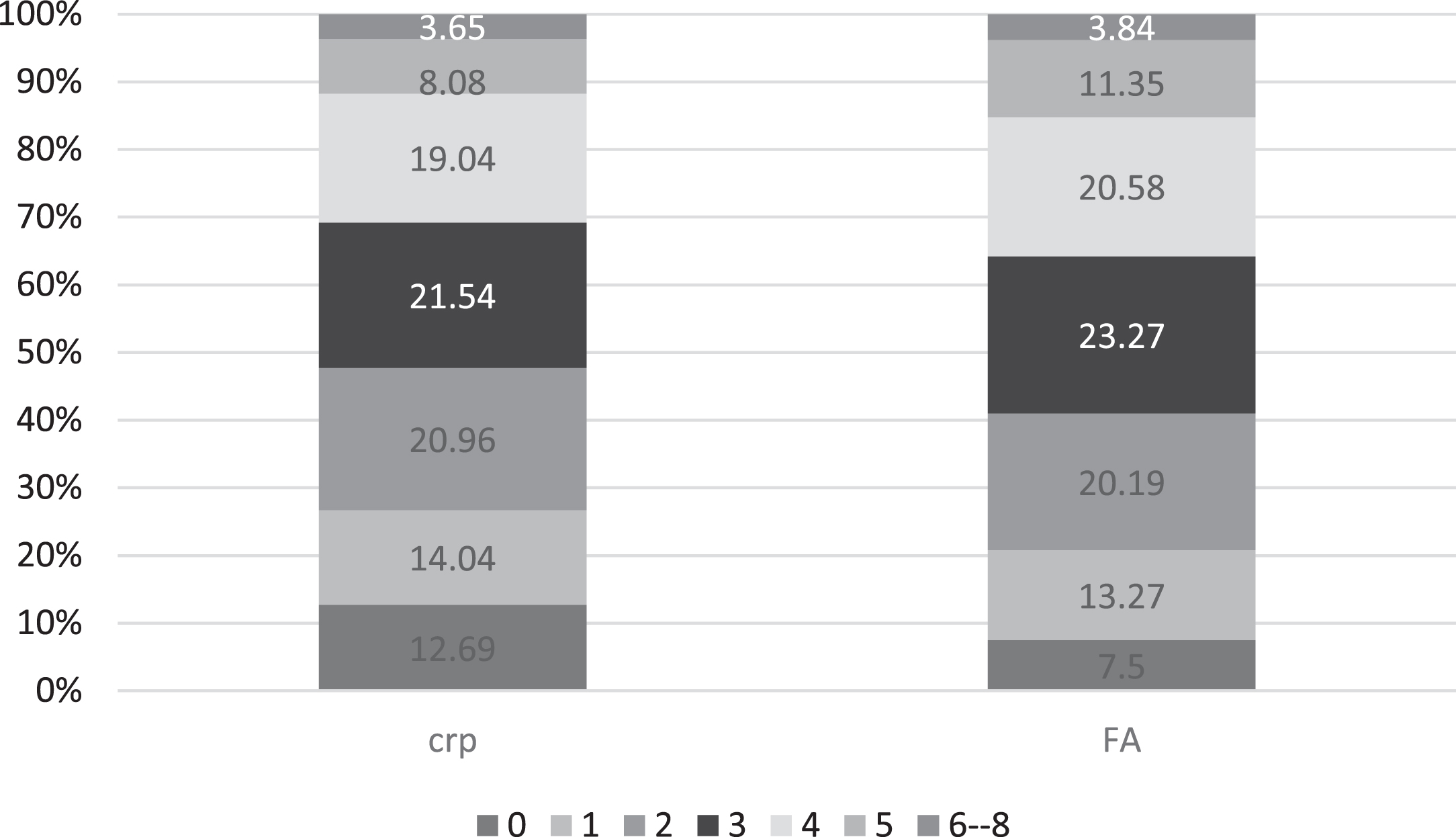
Distribution of the number of correct answers for (FA), Cardiopulmonary Resuscitation (CPR) and Defibrillation questions.
On the other hand, concerning the eight questions about CPR and Defibrillation, 454 of the 520 participants (87.3%) answered correctly at least one of the eight questions, and one of the responders answered correctly to all eight questions. It should be noted that only 11.7% of participants answered correctly to more than 50% of questions for CRP/Defibrillation. It was found that the percentage of participants who answered correctly to more than 50% of questions was statistically significantly higher among those mentioning that they had training for FA (19.0%) compared to those not having training (7.1%, p < 0.001), among those aged more than 35 years old (20%) compared to those aged less than 35 years old (10.0%, p = 0.038) and among those having more than 15 years of work experience (18.5%) compared to those having less (10.5%, p = 0.025).
Provision of first aid/cardiopulmonary resuscitation: Frequency, place, and actions
Provision of first aid/cardiopulmonary resuscitation: Frequency, place, and actions
Note. FA, First Aid; CPR, Cardiopulmonary Resuscitation.
Regarding the provision of FA/CPR, 248/520 (47.7%) participants answered that they have never provided FA/CPR in the past. Moreover, of the 248 POs that provided FA/CPR in the past, 115 (46.4%) answered that the incident took place during their duty, while of the 248 POs reported that they have never provided FA, 153 (61.7%) declared that they experienced FA/CPR needs. However, they did not know what they should do, with this percentage being statistically significantly higher among POs mentioned that they had never attended a training program in the past compared to their counterparts (75.0% vs. 48.0%, p < 0.001).
Only 39% of the participants (205/520) declared that they had completed a short first aid training seminar including theoretical and practical arms. Also, 86.7% evaluated their knowledge of FA as poor. The majority answered that they needed a training program (92.3%), 4.6% declined such a need, and the rest did not provide an answer. The proportion of POs that answered that they need a training program was statistically significantly higher among POs declared that they did not know what FA is (24.2% vs. 3.4%, p < 0.001), while no significant association was detected between the need for an FA training program and gender, smoking habits, attending a training program in the past. Most of the participants answered that such an educational program should be repeated every year (265/520 50.9%) while 78.3% (407/520) declared their willingness to spend up to 3 hours weekly for this, and 84.4% of the participants requested the provision of FA textbook – manual. Also, the most effective method of learning FA was a combination of seminars and hands-on practice (59%). Most of the respondents (90/353, 25.5%) answered that they would like to be educated in cardiac arrest (CPR) according to their personal needs (Table 3). Lastly, 93 of the 313 responders (29.7%) answered that they would like to be educated in bleeding control according to their professional needs (Table 3).
Personal and professional educational needs in First Aid
Personal and professional educational needs in First Aid
Note. FA, First Aid; CBRN, Chemical, Biological, Radiological and Nuclear threats.
Equipment of professional first aid kit
Equipment of professional first aid kit
Note. FA, First Aid.
Only 18.1% (94/520) of the POs answered that they have FA equipment in their professional equipment, which mainly includes bandages (54/94, 57.4%), disposable latex gloves (24/94, 25.5%), scissors (11/94, 11.7%), povidone-iodine (10/94, 10.6%).
To the best of our knowledge, this is the first Greek study describing the practices and educational needs of Hellenic POs in providing FA/CPR in case of medical emergencies. Our study underlines that most Hellenic POs did not know what they should do when they experienced FA/CPR needs, indicating the necessity of educating and training POs in Greece in an organized and compulsory manner. A recent Spanish study found that 24.1% of PO had performed at least once FA/CPR in an actual situation which is higher than Greek POs’ response (18.2 %) [20].
The previous finding is in line with a similar Greek study in a sample of Athens population investigating the knowledge about the National Center for Emergency Care (EKAB, tel. number: 166) and knowledge of Basic Life Support (BLS) [24]. In this study it was found that 60% of the respondents did not know what BLS is and only 16.6% were aware of the symptoms of a serious cardiac event [24].
An interesting finding was that the percentage of POs who had experienced FA/CPR needs but did not know what they should do was statistically significantly higher among POs who mentioned that they had never attended a training program in the past to their counterparts. This finding is in line with two previous studies [20, 25]. Specifically, in a Spanish study published in 2017, it was found that knowledge and disposition were significantly associated with having received training with a periodicity of less than two years [20]. In addition, another Malaysian study indicated that the respondents would be willing to handle or render help during any medical emergencies if they had received the proper FA/CPR training [25].
PO education in FA/CPR and the use of Automatic External Defibrillator (AED) may also improve the poor return of spontaneous circulation (ROSC) rate (below 10%) observed in Greece in a recent European study regarding out-of-hospital cardiac arrest (OHCA) [26]. Furthermore, in a study conducted in Sweden [21], it was found that dispatch of first responders (firefighters and/or POs) in addition to emergency medical services in people who experienced Out-of-Hospital Cardiac Arrest (OHCA) was associated with a moderate, but significant, increase in 30-day survival (from 7.7% pre-intervention to 9.5% after intervention). What is more, in a recent review, it was shown that time the weighted mean survival rate of the study groups was higher than that of the control groups (p < 0.001), as was the weighted mean survival rate of the group first shocked by police compared to those first shocked by EMS (39.4% vs. 28.6%, p < 0.001) [27].
One more interesting finding is that only 18.1% (94/520) of the POs had FA equipment in their professional equipment, which mainly includes bandages (54/94, 57.4%). Expect proper and continuous theoretical and hands-on training in FA/CPR; it is crucial for POs to have the appropriate Professional FA Kit, to provide high-quality services in medical emergencies. This finding is in line with those of three previous studies [17, 29]. Specifically, according to an American study, hemostatic gauze can be effective for treating junctional wounds following brief training, which is important for troops and non-military providers [28]. In another study conducted in Tanzania, in which the purpose was to determine what factors facilitate or hinder the use of trained first aid skills by POs at work, all POs reported lack of equipment as a barrier to using their skills [29]. Additionally, POs highlighted the lack of gloves for self-protection and boards for lifting and carrying injured victims as significant challenges [29]. As a result, it was common for them to find themselves in difficult situations, especially when dealing with bleeding victims [29]. In a qualitative study published in 2019, POs proposed that patrol cars and police posts be stocked with first-aid materials. Bystanders could even assist with rescuing injured victims if first-aid materials were available, as opposed to what is currently happening since no one is ready to work without protection[17].
This questionnaire could be used in high-income countries and in countries with a lifestyle and culture similar to Greece, with only minor adjustments for demographic characteristics. What is more, this questionnaire would be more effective in security force personnel such as police, coast guard and fire service, because its design concerns this kind ofpopulation.
Strengths and limitations
Significant strengths of the study are the high number of participants originating from different police departments and the high response rate. The major limitation of this study is that it was conducted in Attica and that it could therefore be argued that the results are not generalizable for all POs in Greece. Another limitation of this study is the high rate of unanswered questions and its design. Even though qualitative studies are more expensive and time-consuming than questionnaire surveys, this kind of study could perhaps reveal more areas for improvement and would not have been limited to aspects we covered in the survey questions. Lastly, one more limitation of the present study is that the data collection was conducted six years ago (2016-2017). However, as far as we know, the educational program of Hellenic POs on first aid has not been changed since 2016. Consequently, the results of the present study remain valid.
Conclusions
There is a need to educate and train Greek POs in first aid and CPR in an organized and mandatory way in order to meet emergency needs. Moreover, the POs should also possess the necessary first aid equipment to render high-quality first aid when on duty.
Further studies need to be conducted on national level with a nationally representative sample in order to determine the educational needs and the level of knowledge of the POs on FA/CPR in all over the country and to determine the differences between rural and urban areas. This crucial to design an effective intervention. Lastly, personnel from all of the security forces such as fire service and coast guard should take part in future studies to investigate the differences between them.
Ethical approval
Ethical approval was obtained from the Ethics Committee of a Greek University (Doc. Ref: 2206/2015) and the Administrative Support and Human Resources (H.R.) Approval from the branch of the Hellenic Police (Doc. Ref: 1821/15/107886) was obtained prior to data collection.
Informed consent
Informed consent form was obtained from all participants prior to their enrollment. All participants were given adequate time to read, understand and perform questions regarding the study protocol and procedures. Study publication procedures did not require participants’ approval.
Footnotes
Acknowledgments
The authors have no acknowledgments.
Conflict of interest
The authors declare that they have no conflict of interest.
Funding
The authors report no funding.
Questionnaire (53 questions)
| 1. Do you think that is necessary to be trained in FA for the proper execution of your profession? |
| Yes |
| No |
| 2. Which is the most effective method of learning FA? |
| e- learning |
| Seminars |
| Lectures |
| Hands on practice |
| Textbook |
| Combination |
| Other |
| 3. Which is the best timing for reeducation in FA? |
| Every 3 months |
| Every 6 months |
| Every year |
| Other |
| 4. Would you spend your free time for education in FA? |
| Yes |
| No |
| 5. How much time would you spend on a weekly basis for education in FA? |
| Up to 1 hour |
| 1– 3 hours |
| 3– 6 hours |
| Other |
| 6. A FA textbook would help you in providing FA? |
| Yes |
| No |