



Abstract
BACKGROUND:
There are companies that can be considered financially successful while creating negative externalities for their workers. This is the case of contact centers.
OBJECTIVE:
The objective of this article is to investigate the challenges for a service company (such as a contact center) in reconciling its economic and financial objectives with the promotion of the work dimension, guaranteeing workers the possibility of professional, collective, and human development.
METHODS:
This research has a qualitative ethnographic approach. An activity-centered work analysis method, also known as “Ergonomic Work Analysis” (EWA), was carried out in one of the largest companies in the Brazilian contact center market.
RESULTS:
The case shows that the achievement of economic-financial objectives of the analyzed company is mainly done by harming the well-being of its workers. In particular, the work of the attendants did not bring any development perspective for them. The prevalence of instrumental rationality in decision-making processes and the asymmetry of power relations between stakeholders are the main reasons why workers’ well-being is not considered.
CONCLUSION:
The discussion proposes that work-related sciences, such as ergonomics and psychodynamics of work, can bring another type of rationality to the decision-making processes of companies. The work also needs to be sustainable enough to allow the construction and development of professionals, and the health of working population, while improving the company’s performance.
Keywords
Introduction
The economic and social changes of the last decades have provoked deep transformations in business organizations, mainly with the progressive globalization of the production and consumption market [1]. Companies have intensified their search for resource optimization in order to create competitive advantage in the market [2]. The increased pressure for cost reductions through high productivity rates was also achieved with the intensification of work [3]. One of the consequences is the elimination of many jobs promoted by an intensive automation process [4, 5]. Another relevant change was the shift from a predominantly industrial economy to a service economy. Added value is no longer based only on the production and sale of goods, but also on the supply and sale of services [1]. However, the process of streamlining the provision of services is also characterized by intensification of work, with its negative impacts on workers [6]. Thus, the worker in the context of telemarketing (call centers or contact centers) seems to be considered only as a simple adjustment variable of the productive system, being the “factor” that can and should maximize productivity. This is especially true in developing countries like Egypt [7], India [8], Turkey [9], Taiwan [10], and Argentina [11]. A large number of contact center workers are concentrated in Southeast Asia and India [12].
This service sector is characterized by economic and financial gains obtained in a context of tension between work management and organization, and between production and the human dimension of work [13–15]. The work in contact center companies is considered by managers as “simple” and capable of being “executed” from the strict compliance with operating procedures and prescribed scripts, meeting previously established goals. In this scenario, work is precarious, financial rewards are relatively low, and there is lack of support in the relationship between workers and clients. In addition, competition among peers is strongly encouraged, time constraints are high, control is strict regarding scripts and procedures, and unethical behavior is sometimes encouraged [7, 16]. It is a sector characterized by high turnover, influencing the quality and efficiency of work, in addition to generating costs with workers dismissal and admission [17, 18]. It is believed that, over the next years, there will be a robotization of work in the call center, aiming to reduce waiting times and customer dissatisfaction. However, it is assumed that this will not replace the way the process is carried out today, occurring in a combined and complementary way to human work [19]. Exhausting working hours, short and limited intervals between calls, noise, occupational stress, and prolonged voice use with insufficient recovery time are among the main risk factors for the development of diseases for these workers [12].
These characteristics lead to effects on workers’ physical and psychological health and low job satisfaction [9, 20]. For example, working with the public can involve embarrassing situations with verbally aggressive clients, interfering with organizational and worker’s health [21]. Although there may be differences between companies, the need to improve work activities in contact centers is recognized, especially in relation to the psychosocial sphere [22]. In this context, ergonomics and other work-related sciences (such as psychodynamic of work) propose improvements at work. However, telework –of which telemarketing is part –has been a subject little explored in ergonomics [23].
Some studies are focused on improving some working conditions related to physical health problems. One example is the prevention of work-related musculoskeletal disorders among contact center operators [24]. A study carried out in call centers in Sweden found that three out of four operators have local or multiple body pain, especially in the neck, shoulder, arm and hand regions [25]. These disorders originate from static work postures and movement impediments related to sitting work and repetitive upper limbs movements and prolonged computer work [26]. Awareness of the importance of postural variation and breaks is advised [27]. Other physiological dysfunctions have also been reported. For example, Nair et al. [12] observed in a systematic literature review a prevalence of up to 68% of voice problems in call center operators. These problems involved vocal symptoms (such as laryngeal symptoms and vocal respiratory), and musculoskeletal-related symptoms (including hoarse/rough voice, vocal fatigue, effortful voice, and breaks/cracks in voice). Another study investigated the Computer Vision Syndrome in call center operators in Brazil, whose observed symptoms were eye fatigue, “weight” in the eyes, “burning” eyes, tearing and weakening of vision [28].
There are also studies that investigate the relationship between the quality of the physical environment and employee satisfaction [29]. Other studies relate organizational constraints and their impacts on workers’ psychic health. Conflicts in the work environment and health consequences result from psychosocial pressures, including high work intensity and undesirable working hours [30], time pressure causing negative behavior and emotions [31], and working pressure and emotional regulation strategies [32]. Other studies aimed to identify risk indicators for stress and mental energy, relating them to psychosocial working conditions in different call centers [33]. More recent studies evaluated the effects of an ergonomic intervention on physical and mental symptoms of call center workers in Iran [34] and occupational stress and feelings of entrapment in call center workers in Turkey [35].
With a wider vision, ergonomics can contribute in the physical, cognitive, and organizational domain, acting in many work design aspects. Some of them are (a) force, mental well-being and supervisor and peer support acted more in the complexity of the task; (b) inappropriate postures, mental well-being, characteristics of work, supervisor and peer support and the work environment acted on the skill and efforts required; (c) repeatability, workstation design, mental well-being, supervisor and peer support, work environment, and job characteristics acted more on the degree of worker’s control [36]. Most of ergonomics (and work-related sciences) literature related to call center or contact center services focuses on a few specific aspects. It does not provide broader solutions to minimize the negative effects on the intensification of work in contact and call centers. Thus, the objective of this article is to investigate the challenges for a service company (such as a contact center) in reconciling its economic and financial objectives with the promotion of the work dimension, guaranteeing workers the possibility of professional, collective and human development.
To achieve this research objective, we focused on the theoretical contribution that connects ergonomics to business sustainability through rationalities in decision-making processes [37]. There are five main types of rationalities. Instrumental rationality refers to subsequent social decisions and actions based on a rational calculation of means-ends [38, 39]. Substantive rationality promotes decisions and actions based on ethical standards and values not related to results [38, 39]. Communicative rationality promotes cooperation and coordination for decisions that consider the interests of different stakeholders [40]. Bounded rationality consciously recognize human cognitive limitation and the need to consider intrinsic complexities in decisions [41]. Pathic rationality is related to psychic aspects of the work and it is more related to human desires and the perspective of personal achievement, collective issues and the perspective of the contribution to providing satisfaction and minimization of “pathogenic suffering” [42, 43]. Understanding the reasoning used by people who plan and manage work in organizations could explain how the contribution of work-related sciences, such as ergonomics and psychodynamics of work, can improve work in the context of contact centers. These improvements can be concentrated in a developmental perspective, towards propitiating conditions for health and professional improvements. The contribution of ergonomics in the context of this research is to help improve relations between workers and other elements of the system where work is carried out [44]. In this sense, it is pointed out the need for companies not only to increase their own performance, especially in financial terms, but also to improve the well-being of their workers [45]. The psychodynamics of work is aligned with ergonomics, focusing mainly on promoting the mental health of workers, who are “live” subjects in work situations [42]. To support these two disciplines in their application within corporate contexts, the research was supported by the theme of corporate sustainability. This theme, currently well discussed in companies, emphasizes the importance of creating win-win relationships between economic, social and environmental aspects [46]. Taking care of workers is one important objective to promote social sustainability. Workers of different hierarchical levels are needed to effectively introduce corporate sustainability and apply the concepts of ergonomics and work psychodynamics. The present research benefits from the theme of decision for sustainability, especially introducing decisions using substantive and communicative rationalities, and considering human cognitive limitations [37].
Method
This research has a qualitative ethnographic approach, following the work analysis method centered on the activity, also known as “Ergonomic Work Analysis” (EWA) [47, 48]. The proposal was to investigate workers’ activities considering the variability in each work situation and the macro organization of work. In this way it is possible to propose changes in the content and working conditions to improve organizational performance and workers’ well-being [45, 49].
This study was carried out in one of the largest companies in the Brazilian contact center market and followed the main steps of an EWA proposed by Guérin et al. [47]. As proposed in Fig. 1 these steps are: (i) demand and context analysis, that is, the organization’s initial requests for ergonomic action (generally related to solve problems inherent to the organization’s performance or worker health) and its organizational context, (ii) exploration of company’s operation, with a general study of the company and delimitation of the situation to be analyzed, (iii) analysis of the technical process and tasks, (iv) analysis of activities and (v) diagnosis. The transformation process was not developed in this study.

EWA steps. Adapted from Guérin et al. [47].
In recent years, several studies have used similar methodologies. The analyzes involved documentary research, data collection about activities, interviews, direct observations, verbalizations, interactions through field notes and validation with focus groups [28, 51].
Entering the specific method used for each phase, the first two steps of the EWA (i and ii) were developed through four meeting with the company’s board (an initial meeting lasting four hours with seven participants and another three meetings with the corporate area, totaling ten hours and involving eight participants) and the analysis of documents made available by the company or found on the internet by the team of researchers.
The analysis of the technical process and tasks (iii) was developed mainly with the analysis of technical documents made available by the company and forty-nine semi-structured interviews [52, 53] with managers of the business segment (commercial (two meetings with two people), financial (one meeting with two people), training (one meeting with two people), human resource management (five meetings involving six participants), work organization (fourteen meetings involving twenty six people), health (two meetings involving three people), legal (three meetings involving seven people) and other departments (twenty one meetings involving thirty one people)). Involving only managers, the interviews were carried out from a list of pre-established questions (which may vary according to the interviewee’s area of expertise). Subsequently, the interviews prompts were developed based on the responses obtained from the interviewees. Each interview lasted approximately ninety minutes. The participants were indicated by the company and the interviews were previously scheduled, being recorded according to the authorization of each interviewee. These interviews brought information about corporate segments, power and hierarchy relationship, organization and expected flow of activities, physical space, diversity of work situations, available organizational resources, and tasks prescribed by organization to operational attendants, as well as the criteria for evaluation. From the interviews, it was possible to elaborate the first hypotheses about the dynamic of work.
The activities’ analysis (iv) was carried out mainly through semi-structured interviews, focus groups and free and systematic observations with workers in the operational area (mainly supervisors and attendants). The semi-structured interviews (one involving two supervisors and two involving three operational attendants) focused mainly on the analysis of operational attendants’ activities, especially focused on their exchanges with customers and the use of computerized systems. Questions were raised about different situations, such as strategies for locating the requested information, use of different parts of the software in the same service, interferences of supervisors and people responsible for quality, perception of the workstations, environmental factors, working hours, tricks used by attendants to achieve their goals, etc. Horizontal and vertical communication processes were addressed by research and validated with attendants. Focus groups were organized to address labor issues more collectively and promote discussions among participants to increase participation of different actors in the company. Eleven focal groups were organized (five involving thirty-five supervisors and six involving forty-two operational attendants). The main topic discussed in these groups was the activity performed by different actors and how they deal with different challenges to achieve the goals; questions related to being a leader or managing other colleagues and, finally, questions related to the evaluation of individual and collective performance. Then, free and systematic observations were carried out in six different workplaces with operational attendants. Work positions were selected according to the service situation (intensive, selective, charging, sales or back-office), the attendant (new or experienced) and the diversity of contracts. Thus, customer service, sales, credit recovery, technical assistance and back-office operations were observed. Free observations lasted 12 hours and they were recorded in a field diary. Free observations made it possible to identify workflow structures, physical workspaces, relations between attendants and between them and other actors in the work situation, computerized systems and other tools, variability of production, and attendants’ activities. These observations made it possible to establish specific hypothesis and choose specific work situations, which were centered on systematic observations. Through 16 hours of systematic observations, the activities of five previously chosen operations were observed (which reflected the diversity of systematic contracts). Customer service operations were chosen, with pressure for productivity and intense work pace; sales operations (assets and liabilities) and credit recovery operations, where the pressure for results is intensified; technical assistance operation, which privileges the resolution of user demand, with a less intense work rhythm; and back-office operations, which operate with less direct contact with the user. In general, researchers listened to the conversations between attendants and their customers with headphones and filled some spreadsheets with pre-structured information. Those observations were focused on some specific questions that emerged from the previous (free) observations and related to different hypothesis relating what worker were actually performing on the scenario provided by the tasks. Thus, these observations result in more in-depth information about the different work activities in the company with regard to working conditions and organizational issues, like division of work, difficulties faced by workers, time schedules and performance evaluation. At this stage, an attempt was made to apply discussion groups of operational attendants in the mold promoted by the psychodynamics of work, but the company did not authorize it. Even so, based on the theoretical basis of work psychodynamics, the researchers tried to raise elements that cause suffering and pleasure in the relationship between operational attendants and work organization.
In the diagnosis stage (v), from the qualitative analysis of the collected data, it was possible to identify aspects that were repeated in different operations and specific aspects of a certain group of operations. In this way, it was possible to establish relationships between the impacts on workers and the organization of work. At the end of the EWA, in response to the company’s demand, a diagnosis was prepared addressing issues of work, health and worker performance, and proposals were also presented to transform work situations. As this is a very specific case, the suggestions for improvements in micro-level work situations were not described in this article. However, to achieve the research objective of this study with a macro view, an analysis of the relationships between stakeholders is presented.
Demand, context analysis and exploration of the company’s functioning
The Researched Company (RC) is a multinational and one of the largest contact center companies operating in the Brazilian market, employing more than 70.000 workers. The initial demand of the selected company was to suggest changes in the organizational of work to solve some legal requirements related to labor issues and reduce the high rates of leaves and turnover.
RC provides services for several Contracting Companies (CCs) from different economic segments (Fig. 2). Among its main clients are companies in the telecommunications, financial services, manufacturing and commerce sectors, offering around 800 different types of operations. The main type of service performed by RC is mediated by telephone and computerized systems, which absorbs 93% of the work force. It also maintains face-to-face service in some CCs and some services mediated by other platforms, such as chats (with the remaining 7% of attendants). The RC is functionally organized, with specialized departments and a vertical hierarchy, the attendants are not organized as semi-autonomous groups, all teams have a supervisor, not exceeding 20 per supervisor. There is a separation between the corporate area, responsible for the direction and management of work processes, and the operational area, responsible for carrying out the operational work. Each functional area has its internal hierarchy and is supported by areas that permeate the entire organization, forming a kind of matrix structure. The disjunction between corporate and operational areas occurs in all aspects. The first area determines the quantity and location of workstations for each CC, organizes the teams of attendants and supervisors, prepares the itineraries, determines the control, evaluation and remuneration criteria, allocates physical resources and layout is designed to maximize use of the available area. The corporate area is also responsible for planning and controlling all operations. The operational area is structured in several intermediate levels of hierarchy, having managers, coordinators, supervisors and attendants. Managers are responsible for delivering the results of each operation to the associated CC. Their teams are composed by coordinators and CC agents (who provide conditions for the execution of the service and are responsible for planning operations, quality controllers, trainers, etc.). Coordinators maintain teams of supervisors who directly monitor the operations and from whom they demand the desired results. Supervisors are responsible for the performance of their teams, and a significant part of their compensation depends on reaching and exceeding previously determined targets.
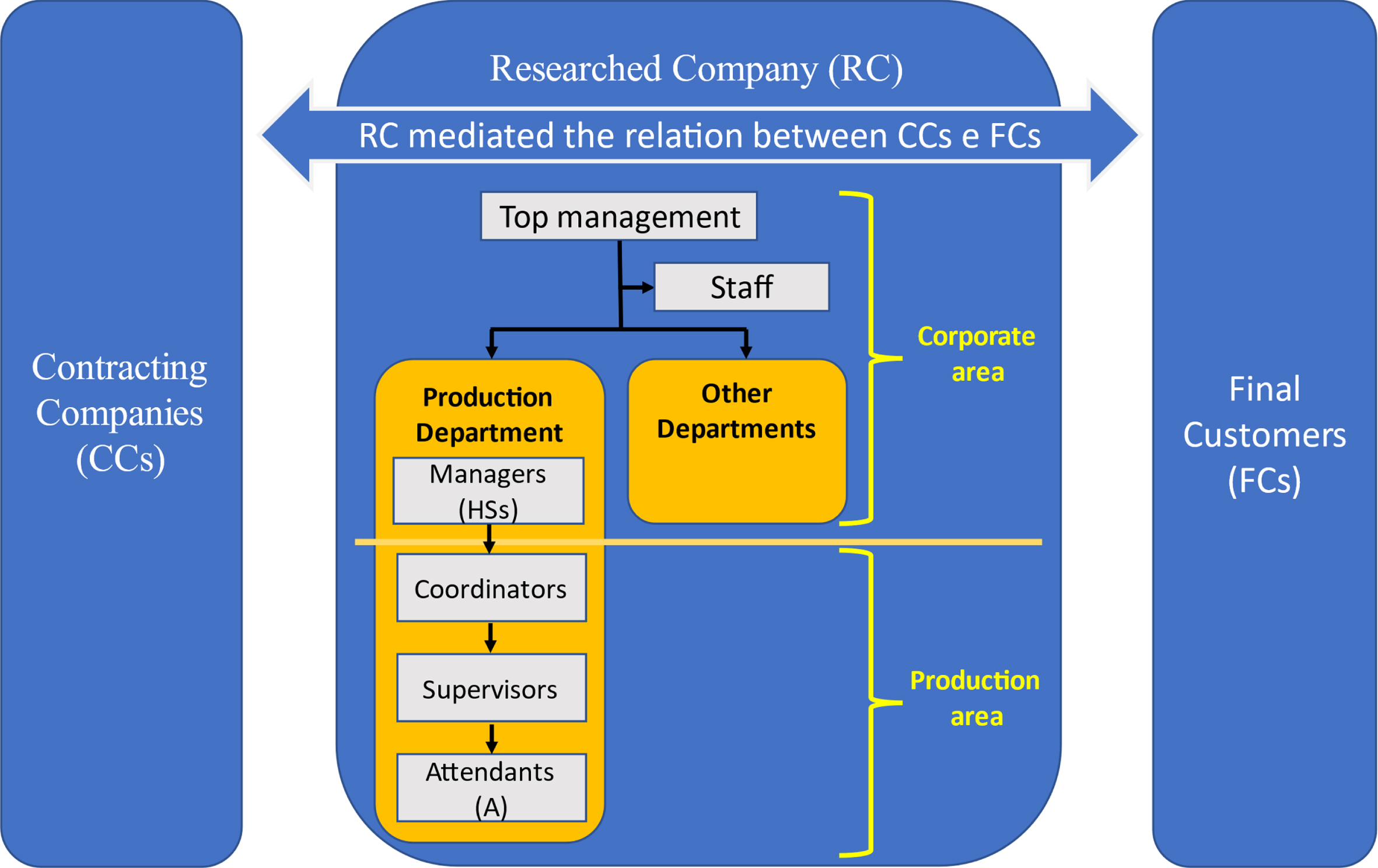
RC’s relationship with other stakeholders and its simplified organizational chart.
The attendants represent 93% of the company’s employees, and in the case of the studied area, are distributed in more than 100 different job positions. They are predominantly young (50% of them are between 18 and 25 years old), 75% are women, and 85% have at least high school education. For most of this population, this is their first job in the formal labor market.
The RC’s economic results are positive, with good rates of profitability and return on equity. This indicates that the company is in a comfortable position in relation to shareholders. However, there is a strong commitment of its revenues related to high rate of absenteeism (about 10% on average) and turnover (around 100% per year). Labor lawsuits are so important that, if turned into a loss, they could compromise 55% of RC’s share capital. There were also difficulties in hiring attendants, especially in seasonal periods that absorb a significant portion of the young female population (such as Christmas or Carnival). These costs arising from the relationship with the workforce could place the company in a situation of economic vulnerability, which can compromise its own financial sustainability.
As a result of the interviews carried out with the managers, and the information provided in the company’s sustainability, RC discloses its commitment to improving the well-being of the employees, developing an excellent level of work to meet the needs of its customers. Different types of training and specific rules were developed to guide attendants to follow specific itineraries in customer service, within specific performance objectives. Focusing specifically on the effects on attendants, it was observed that the company’s objective was to minimize “inappropriate behavior” and impose productivity goals that could maximize the number of calls answered for each attendant. The amount and the extent of prescriptions leaved little autonomy to the attendants. This task analysis pointed out the need to investigate some specific issues during the observation of the attendants’ activities. Some of the more relevant aspects found in the case study that differ from RC’s intentions are: Productivity pressure: The services considered as less complicated by managers, such as customer service (SAC), concentrate 80% of the attendants and were organized as a massive service, with an intense pace of work and strong individualized control. To achieve certain results, the company encourages competition among operators, exerts pressure on results and applies sanctions (such as reduction of time off on weekends, reduction of a variable part of the remuneration). Controls related to breaks, schedules and respect of a defined script were carried out by information systems as well as by the supervisors and coordinators. A situation experienced during the observations showed how a supervisor was called and reprimanded by her hierarchy for letting two attendants go to the bathroom at the same time. Better working conditions only for some attendants: More specialized services (with 20% of attendants), such as technical assistance or credit recovery, require more skilled and trained attendants. In these services, control criteria and working hours were more flexible, allowing a better scope of the service in order to face clients’ requests and to provide more autonomy for the workers. Different operations have different goals and can be more or less challenging. For example, the operation that needs more specialized attendants has the objective of making 22 successful calls (answered and resolved) or 40 missed calls. The operation that needs less specialized attendants has the objective of answering 220 calls during the working day. The objectives of each type of operation cannot be compared with those of other operations. Although some operations have less intensity, the principles of individualized control were maintained. Individualized performance evaluation: The evaluation of the attendants is carried out in different and simultaneous ways, based on the control of fulfillment of goals, respect for production deadlines, respect for scripts, adherence to procedures and itinerary, and quality service perceived by final costumer. As it was difficult to fulfill the criteria (also due to problems independent of the attendants’ performance), there was almost inexorably some kind of punishment, mainly financial. Attendants did not have real-time information about their ratings, and their variable pay is often a surprise. The results of the work were evaluated by what is visible and measurable, disregarding the evaluation of the service relationship process, which requires the attendants to use different strategies to develop their activities, engaging their intelligence and subjectivity. The use of these non-prescribed procedures, but necessary to run the service processes, could lead to negative evaluations. Weakening of work groups: The individualized evaluation of performance, which also favors strong competition among colleagues, has the effect of generating anxiety among attendants, in addition to corroborating the weakening of work groups and the cooperation mechanisms. Fragmentation of work processes: The fragmentation of the work process hinders the professional development of the attendants, limiting their knowledge about the services performed, and creating situations of conflict and distrust between them and the hierarchy. Limited professional progression: There were a limited number of positions in the vertical hierarchy and there was no horizontal progression program that could value the knowledge of the attendants developed throughout their professional life at the company. In addition, vertical promotion did not have clear and coherent rules, being considered as one of the causes of the high levels of turnover. Frequent conflicts between attendants and the hierarchy: Supervisors used different resources to increase the productivity of their teams. Sometimes they used public and direct pressures, such as publicly warning an attendant who has not met their goals; or threatening to take the day off at the weekend; or offering irrelevant prizes and gifts, such as chocolates or key chains. They also promote competition between attendants, expressing contempt for “losers”. A situation experienced during the observations showed how a supervisor charged each operator to sell. In one specific situation, she stopped to talk to an attendant, reminding her the number of sales she still needs to make (10), reinforcing that she could win a candy for every two sales. This supervisor reminded the attendant how many sales she had committed to making with her superior (23 sales per day). When walking again, she tried to encourage all the attendants by exposing the name of one of them that did not make any sales on the day. Ideological separation between attendants and other employees (who manage their work): At all levels of the hierarchy, there was an unfavorable perception about the work of the attendants. It was common to hear speeches from the hierarchy blaming attendants for not meeting their goals. Often, attendants were called “immature, uncommitted, uninterested in the service”, especially because they did not fulfill prescribed tasks. The discrepancy between what was prescribed by the organization and what the attendants faced to achieve the best possible results were not considered by the hierarchy, except when it was an excuse to punish then. Failure to fulfill prescribed tasks: Attendants voluntary disregard some prescribed tasks or procedures, because they considered the guidelines inadequate to solve customer problems, but mainly because they have to deal with organizational constraints (time, lack of information, etc.). Several situations were described during the focus groups. There were situations where the attendants intentionally slow down their sales because they have already reached their monthly goal. Other strategies were used to circumvent the control systems, for example, asking the next costumer to wait to finish recording the previous call without explaining the reason and putting the call in “mute” for a few seconds. Presence of “prescribed lies”: Organizational restrictions also induced attendants to even lie to customers in order not to be penalized. Situations where the attendant omitted some available information to achieve company goals were not uncommon. The same occurred when the deadline for solving a problem was not respected by the company, leading the attendants to present an excuse not to be attacked, regardless of whether it is true or not. As the incompatibility between the prescription and the execution of the service was not considered by the hierarchy, the attendant was always held responsible and penalized with reduced remuneration, warnings, suspension of scheduled holidays, missing time off on weekends or even dismissal. The use of lies in work situations is contradictory to values and can be a source of ethical suffering and compromise the worker’s psychic health. As an example, an attendant commented that she has already received questions from customers asking to cancel a product. Regardless of the answer, she commented on the anguish of having to choose to say that she cannot cancel (contrary to the rules of the regulatory and supervisory entity of the telecommunications sector) or let the product be canceled, knowing that she will be penalized for inducing the cancellation. Inconsistent training: The training of attendants did not always fulfill its purpose, as it did not correspond to the real situations found in operations. The constant migration of operations between different teams and the frequent changes in prescriptions and procedures were not always preceded by specific training. Controls, goals and work rhythms were also not adjusted to assimilate the new requirements decided by the organization. Based on the verbalizations of the focus groups, attendants pointed out the constant lack of vacancies in some training, the high number of online trainings that were considered ineffective, lack of time dedicated to training, causing continuous interruptions, the fact that they are in training for an operation and need to work on another. High turnover and absenteeism rates: Were important indicators of health-related problems in contact center attendants, even if there are no specific records related to health disorders and sick leaves at the company. The violent behavior of the workers towards colleagues, costumers and hierarchy was also announced as another concern of the corporate area of RC. Verbalizations made by the attendants confirmed their dissatisfaction, explaining the high turnover found when analyzing some data provided by the company. These data of one specific operation, showed that, for example, 84% of attendants were hired for less than 6 months, 14% between 6 months and a year, and only 2% had been working for more than a year. Effects on final customers satisfaction: This aspect was not the focus of our research and little information was collected. However, the observations made it possible to raise situations, especially in the Customer Service, in which the attendants need to solve problems of customers who were dissatisfied with products or services purchased on the CCs’ platforms. The presence of high negative emotional loads from final customers, the pressure to achieve goals and the presence of problems that could not be solved from the prescriptions received by the attendants, cause even more dissatisfaction of end customers. In this sense, on the corporate side of the RC, the final customer’s dissatisfaction with the services provided appeared more as a penalty factor for attendants, not being identified organizational actions that seek to know the situation or develop procedures that mitigate any deficiencies.
Diagnosis: Attendants’ relationships with other stakeholders
The study was concluded by delivering to the RC’s corporate area several suggestions for improvements in work organization and in more specific work processes. However, to achieve the specific research objective of this article, an element that researchers pointed out as relevant concerns the relationship between stakeholders. This relationship was not only specific to the RC, it can also be extended to other companies in the same economic segment. Attendants have to relate to other stakeholders. For this research four main groups were considered: Hierarchical Superiors of Attendants (HSs –composed by RC employees responsible for the control, management or decision-making on the attendants’ work processes, or for the management of corporate business strategies); RC Contracting Companies (CCs); CCs Final Customers (FCs –who receive calls or chat messages from attendants) and State and its public services (which must mediate the relationship between attendants and HSs). The HRs can be associated with production area managers, according to Fig. 2. However, at a broader level, this stakeholder is represented by all the people who need to disclose and apply the rationale present in the company’s management strategy. In relation to the State (federal government) and the related public services (as the health system), it appears only in the first stage of EWA as a stakeholder involved in the formulation of the initial demand. This demand included the need to promote changes to resolve some legal requirements related to labor issues. Considering this specific role of regulating labor relations to force the adoption of compliance policies in the management of people in companies, the State requests do not always have the strength to shape the relationship between this type of companies and their attendants to guarantee well-being and not just the fulfillment of basic requirements.
Figure 3 shows (i) the relations between stakeholders with arrows (the dashed arrow indicates a more indirect relationship); (ii) power-relations between stakeholders with some positive and negative points; (iii) primary (non-exclusive) stakeholder interests with text; and (iv) if their interest are satisfied, marked with tick (yes) or cross (no) or question mark (depending on specific situations).
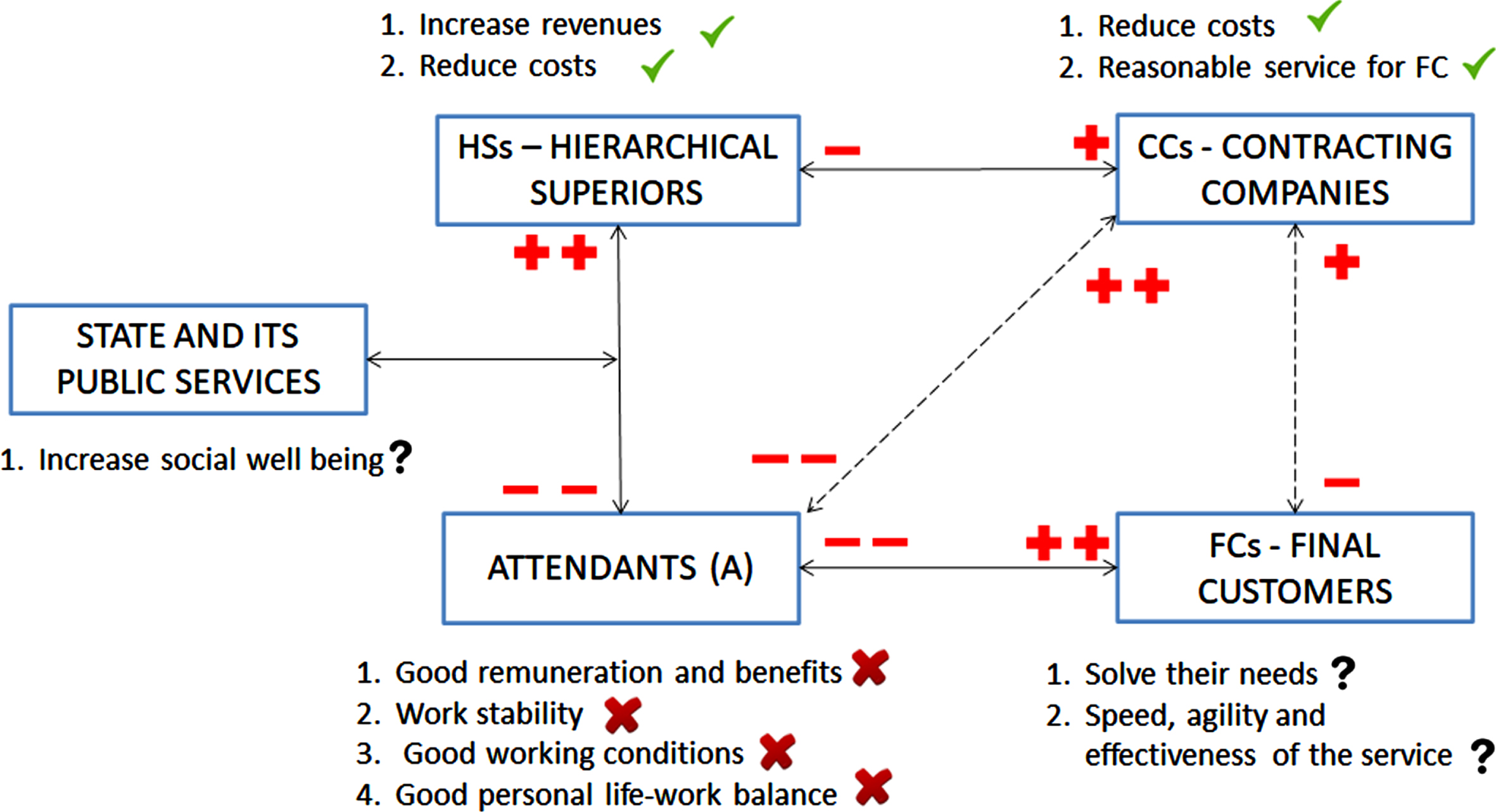
Power-relations found in the case study between stakeholders.
What can be understood is that HSs and CCs have greater power in this service relationship, and they can achieve their main interests. The strategy of outsourcing call center services is chosen by the CCs based on an analysis of costs and benefits, meeting their needs. Regarding the HSs, who make the strategic decisions in the RC, the results showed that although the costs related to high turnover and absenteeism rates, the economic results of the company are positive, with good rates of profitability and return on equity. The State and its public services in this organization of work and cannot completely achieve their purposes. The unions were facing great difficulties, especially because they had lost a lot of power concerning their capacities to negotiate and to organize this specific category of workers. This situation was particularly accentuated in Brazil and other developing countries because of the little power among social players in order to negotiate and mediate the relationship between companies and workers. Although there is an initial demand for the need to solve some legal requirements, the marginal position of the State and the union is visible in the lack of comments from attendants or other CR actors in relation to these stakeholders. FCs seem also to be not central actors. According to the results previously described in the points “Effects on final customers satisfaction” and “Better working conditions only for some attendants”, it seems that the quality of the service received is the result of an evaluation of economic convenience of the RC and the CCs.
Attendants are in the weakest position, powerless in relation to other stakeholders and unable to achieve their interests. This is visible in the results, mainly in aspects such as “Productivity pressure”, “Weakening of work groups”, “Fragmentation of work processes”, “Limited professional progression”, “Frequent conflicts between attendants and the hierarchy”, “Failure to fulfill prescribed tasks”, “Presence of prescribed lies”, and “Inconsistent training”. The stakeholder that exerts the strongest power over the attendants is the RC, through the HSs and their organizational hierarchy. This asymmetry of power relations is visible mainly in the aspects “Individualized performance evaluation”, “Weakening of work groups”, “Fragmentation of work processes” and “Ideological separation between attendants and other employees (who manage their work)”.
RC discloses a commitment to the development of a more sustainable business. In addition, the results of this research showed some negative effects on working conditions caused by work intensification. The EWA diagnostic phase allowed to present some suggestions to improve local working conditions, but as it is a structural problem on the contact center sector, it is important to disseminate the debate among the companies and the society in order to propose actual and effective organizational improvements. Contact center services seem to be basically based on Taylor’s and Ford’s propositions in goods production systems, especially those concerning the “simplification of tasks” and the separation between conception and “execution” [54]. They are not based on principles that consider a perspective of services relationships, which must be based on continuity, trust and other intangible values [55].
The study shows elements that indicate the existence of different types of costs resulting from the intensification of work. Some of them have a negative impact on the company’s economic and financial results, such as those that motivated the initial research demand. The company’s need to solve some legal requirements caused direct costs, such as those related to the obligation to rethink and modify structures or work processes, in addition to being hostage to pecuniary fines or punishments that could affect its operation. Regarding high rates of leaves, turnover and absenteeism, these affect the proper functioning of call centers, negatively impacting the quality and efficiency of the service and increasing costs related to workers. With regard to quality and efficiency, it is important to manage workers so that there are no shortages or excess employees considering demand fluctuations. This can be done with schedules based on algorithms that consider these variations over time in the short and long term. Workers’ preferences, amount of activities and specific days can be considered [17, 18]. Despite the existence of these technological solutions, high rates of absenteeism can compromise, or at least hinder, their efficiency. Regarding the increase in labor costs, there is a direct effect of high turnover rates on hiring and firing costs. However, other costs must be considered, such as those derived from training, since workers need to be continuously trained, and costs with social security [56, 57]. The financial effects related to the satisfaction of final customers should also be considered.
Other costs are externalized to society, such as those related to the illness of workers, which imply expenses for the public health system and for families. Contact center workers have their voice as their main work tool, being susceptible to voice and speech disorders. As they spend a lot of time sitting, other bodily functions, such as musculoskeletal ones, can be affected. In addition, as they are exposed to several psychosocial risk factors, mental disorders have also been reported in the literature, such as depression, anxiety and exhaustion [58–60]. There are also non-monetary costs, such as those related to workers’ loss of motivation to work. Young people can quickly lose the illusion of developing an interesting job, a source of professional and personal development. The presence of “prescribed lies” is particularly critical, causing ethical conflicts among workers.
What is observed is that, even with high internal monetary costs and possible legal penalties for non-compliance with labor legislation, in the current economic context, RC is considered as a successful company. It almost fully meets corporate compliance requirements, seems to satisfy its direct customers (CCs) and generates good financial results for its shareholders. However, if the externalized costs were internalized, it can be assumed that RC’s economic-financial performance would probably be very compromised.
What could be evidenced in this study is that because of strong power relations those who manage contact center companies (the hierarchical superiors, as shown in Fig. 3) can, until today, calculate trade-off that optimizes economic and financial gains, not worrying too much about other costs, especially externalized ones. It seems that in these type of services with highly standardized processes, improving working conditions (even in relation to what is required by legislation) does not pay off economically. The situation analyzed in this customized contact center services showed how RC improves working conditions mainly with the aim of improving productivity of the service provided. These findings may be enough to confirm that work is mainly considered by RC’s managers as an adjustment variable in the service production. The well-being of workers is not a central issue for the company, even if it is disclosed internally. The RC’s decisions are strongly influenced by an instrumental rationality, aimed mainly at maximizing economic and financial gains. This situation is structural in the contact center industry. Without changes in power relations (for example, more public intervention or change in the labor market), or in the prevalence of instrumental rationality in the decision-making process, no significant improvement is expected.
Work-related sciences, especially ergonomics and psychodynamic of work, can suggest ways for a service company (such as contact centers) to reconcile its economic-financial objectives with the promotion of the dimension of work, providing workers with more possibilities for professional, collective and human growth. Ergonomics is traditionally associated with the improvement of local working conditions [61]. However, this association has limited results in transforming working conditions, especially in a context characterized by a great asymmetry of power relations [62] and where decisions are based on an instrumental rationality. Ergonomics actions need to act in a less operational and more strategic discussion, proposing organizational changes [63, 64]. This discipline cannot change structural power relationships with stakeholder but can have impacts by bringing new rationalities in corporate decision-making processes. Its approach that consider the complexity of work system [65] and that promote the participation of different stakeholders allows building a new production model that generates not only desired economic return, but also socio-environmental and cultural development. Psychodynamics of work can contribute especially by bringing a substantive rationality, based on psychoanalytical concepts. Work is considered as the main path to self-fulfillment and health promotion is a central element to the development of culture and of society [66]. These two disciplines can bring new rationales in the corporate decision-making process.
In a substantive rationality, ergonomics and psychodynamics of work consider workers not as a cost, but as active agents that can bring improvements to the process of producing goods and services [55]. Recognition of values associated with work allow the inclusion of the human dimension in the dynamics of the service cycle [67]. In this situation, the worker could play a central role and contribute to the benefit of all actors and society [68]. Promoting the content of the work could promote a balance between those involved in the service cycle. In other words, the promotion of more work-related values, especially worker health and professional development [42, 69] could allow for performance improvements in organizations. However, any action to promote the centrality of work [70] requires a redistribution of power and results, thus requiring a review of the rationality involved in the process (including pathic issues). This path is not being adopted by RC’s managers as well as by the different actors who conceive these work systems. The CCs, by outsourcing services, create conditions to promote a rupture between their production process and the service proposed for FCs, and their relationship becomes mediated by attendants. As there is no direct professional relationship between CCs and attendants, communication and knowledge arising in the contact with FCs are underutilized. In addition, CCs risk their image and their reliability when the outcome of this service relationships generates frustrations in FCs.
Ergonomics also proposes a work situation based on a communicative rationality, with the involvement of all possible stakeholders in corporate decisions [45]. One of the improvements proposed by our team based on the EWA diagnosis was the introduction of a work improvement committee as proposed by the literature connected to ergonomics [71–73]. This study reinforces that the limited communication between planning and operation of the service in RC and between CCs and attendants prevents the consideration of different stakeholders’ interests. Power relations in decision-making processes are not equalized, with economic interests prevailing over socio-environmental interest, which prevents the existence of a truly sustainable and socially responsible environment.
Considering complexity of work systems [65] it is necessary to recognize the presence of limited rationality in decisions. Workers are not an element of production to be managed, they are the only resource in a production system that can be developed [67]. Work is a protagonist in production systems, if we consider the relevance of the actions of different actors in a company, especially if it is possible to understand the importance of human actions at different levels of the hierarchy [68]. Professional competence is even more decisive for the interpretation and understanding of the expectations of the final customers of the service [74, 75]. Thus, the result of the service provided is a shared construction between the worker and the user, based on the conditions provided by the organization [76, 77]. The choices regarding the organization and management of the work in the RC are not neutral, and the work situations created have been reflected in different manifestations of rejection of work and conflicts between managers and employees. Consequently, the development of workers is hampered, and the company has its economic performance more vulnerable. The financial impact can also cause intangible costs. It is also important to consider branding issues, as it is also important for the companies to build and maintain a good image in society. The purpose is to consider workers and professional collectives as active subjects, protagonist in their lives, inside the organization and among society [42, 78].
Summarizing so far, we observed that the presence of large asymmetries in the power relationship between stakeholders allows HSs to act from an instrumental rationality focused on maximizing the economic-financial objectives of the RC. The inclusion of concepts from work-related sciences can bring other rationales in the decision processes of these companies, allowing to add a promotion of the dimension of work, providing workers with more possibilities for professional, collective and human growth. The specific suggestions for improvement pointed out in the diagnosis (and not discussed in the article because they are specific changes in processes and physical structures) were thus useful to promote the dimension of work. However, these changes can bring improvements only in the short term: it was observed that the company was not willing to change current power relations and support organizational changes. However, to really change the observed work situations, where the improvement of a particular situation causes the aggravation of the other, it is important to change decision-making processes. It is in this context that the knowledge of work-related sciences was connected with organizational structures already present in companies, such as those related to corporate sustainability. This connection is already being recognized in the literature, especially between ergonomics and sustainability [79], a technical committee was even formally constituted in the context of the International Ergonomics Association [80]. With a focus on labor issues, ergonomics proposes concepts aligned and very similar to those of sustainability, especially because the social requirements of the triple bottom line are linked with the sustainability of work [79]. As also proposed from corporate sustainability literature, it is suggested to include other stakeholders interests in the creation of corporate value [81], and not just the private financial interests of shareholders [82]. In particular, workers can be key actors for the success of organizations when new rationales are introduced into decision-making processes [37]. From this process, it is expected the creation of new niches of contact center services, with the opportunity to effectively meet the needs of FCs to build stronger and longer-term relationships.
A sustainable approach could help to transform these scenarios, proposing to consider the interests of different stakeholders. Attendants are considered as “generic workers”, not as people who could develop themselves and develop the profession, in a collective and long-term perspective. The introduction of corporate sustainability policies does not just mean transforming some actions into a win–win in relation to the dimensions of the triple bottom line [83]. We note that RC is following this path, documenting its actions in its sustainability reports, but working conditions are marginally improved, remaining precarious. This case study confirms that it would be necessary to introduce other values into the decision-making processes of all stakeholders. The first step must be the recognition of all decision makers who are acting with limited rationality, so that they can take into account the interests and needs of other stakeholders. In addition, values related to sustainability should be disseminated, such as respect for the environment, improving the quality of life of all people (including workers), altruism and a sense of community, in addition to seeing economic value as a means and not as an end [82]. The personal decisions of the different stakeholders can benefit from the adoption of a substantive or axiological rationality, which is not considered by the managers of the studied company. Focusing on work issues, it was observed that, despite the attempts, the quality of life of RC workers is not improving, there has not been an effective appreciation of the sense of community. By disseminating these values throughout the system, it would be possible to establish relationships based on a more cooperative attitude among all stakeholders. In this context, decisions would result from a communicational process, where, through communication between stakeholders, subjective rationality would be considered to include more variables in decisions. There will always be win-lose cases, where a decision may have advantages for one stakeholder and disadvantages for another, but it is believed that existing trade-offs would improve over time. In short term, companies would likely decrease their economic and financial gains, but in the long term it is possible that economic gains would be created even greater than today, especially if positive externalities are considered as economic values [84]. It is also important to consider other rationalities as bases for improving the relationship between companies and society; communication values such the prevalence of truth rather than communication distortions could also be an interesting path [40, 82]. Otherwise, subjectivity must also be considered in the conception and management of work, as people’s affections are always present and there is enormous importance in building and maintaining trust and pertinence, non-material values [84–86]. Therefore, it is necessary to promote the introduction of “sustainable” jobs [87]. There is no neutral work in terms of health, subjective development, and professional issues. There are always positive or negative consequences for workers, for the constitution of collectivities and for society. Positive or negative externalities are always present. It is not enough to give jobs for the population. Work also needs to be sustainable enough to allow people to develop and build health for working populations.
Conclusion
In this article we seek to investigate the challenges for a service company (such as a contact center) in reconciling its economic and financial objectives with the promotion of the work dimension, guaranteeing workers the possibility of professional, collective, and human development. The results show that the achievement of economic-financial objectives is mainly done by harming the well-being of its workers. Even if physical working conditions did not present significant risks for people, the work itself did not bring workers’ development. The lack of professional, collective, and human development hinders workers’ well-being and represents a risk to their health. This is especially true in customer service cases typified as “mass service”. In these circumstances, the content of the tasks and the methods of individual evaluation of workers’ performance end up defining production scenarios that are incompatible with the construction of a real profession. The results show that the turnover is so high that there is a complete renewal of the worker population each year. There is no professional perspective and the turnover reflect a kind of “job rejection”.
To reconcile economic-financial objectives with the promotion of the dimension of work, it is proposed that in addition to introducing improvements at a more operational level, more structural changes promoted by work-related sciences such as ergonomics and work psychodynamics need to be implemented. In particular, it was observed that the main cause of the lack of promotion of the work dimension was the presence of asymmetries in power relations. Organizational changes and new rationalities in the decision-making processes of companies are fundamental to improve these scenarios. For this, it is proposed that the work-related sciences connect more with issues that currently have a more strategic reach within organizations, such as corporate sustainability.
Reflecting on the results of the article, it is possible to point out three main research limitations. The first is related to the methodology used in the research. It was possible to analyze the company in detail and therefore reach a reliable diagnosis. However, it was not possible to advance in the phase of the transformation process to implement the diagnostic suggestions. Participating in this phase through an action research [88] would have further enriched the results and the discussion of this research. Another limitation of this study is related to the openness of sustainability departments to embrace concepts derived from work-related sciences in their work within organizations. Although sustainability is recognized as beneficial in economic, social and environmental aspects, in general more emphasis is placed on the latter aspect [89]. In addition, sustainability department still does not have a strong power of action, relying on the efforts of other departments. In the case of matters of the social sphere, the sustainability department generally relies on the results already developed by the human resources department (or similar). The last limitation of this research is the difficulty of convincing companies to change their attitude. In the researched company there were legal pressures to promote improvements in work. However, in companies such as contact centers, there is strong competition to win contracts, mainly focused on contract price. Especially in operations considered to have “low added value”, there are fewer maneuvers to convert benefits for workers into economic and financial gains.
Ethical approval
Not applicable.
Informed consent
Not applicable.
Conflict of interest
The authors declare no conflict of interest.
Footnotes
Acknowledgments
None to report.
Funding
None to report.