



Abstract
BACKGROUND:
Construction workers are exposed to hand-transmitted vibration (HTV) and/or noise caused by vibrating hand tools in the work environment.
OBJECTIVE:
The present study aims to investigate the effects of exposure to HTV and/or noise on workers’ hearing loss and body balance.
METHODS:
Forty construction workers were exposed to HTV (10 m/s2 rms, 31.5 Hz) and/or typical construction noise (90 dBA) in three simulated experiment scenarios with the vibrating hand-held tool for 30 minutes over three days. The hearing loss from 1000 to 6000 Hz and the body balance were determined before and after each exposure scenario.
RESULTS:
Separate noise exposure at all frequencies except for 1000 Hz could significantly affect hearing threshold levels (p-value<0.05). Separate exposure to HTV cannot lead to a remarkable effect on hearing loss (p-value>0.05); however, it can synergistically increase the effect of noise on hearing loss. Also, the affected frequency range in concurrent exposure has been greater than in separate noise exposure. The separate effects of exposure to HTV and noise on the subjects’ body balance were not statistically significant (p-value>0.05); however, these effects became significant in concurrent exposure (p-value<0.05). Based on the estimated effect sizes, noise could synergistically increase the observed effect of HTV on body balance.
CONCLUSION:
There is a synergistic interaction between HTV and noise on hearing loss and body balance. It seems necessary to pay attention to the risk evaluation of simultaneous exposure to noise and HTV when setting the occupational action limit values.
Introduction
Hearing loss is the partial or total inability to hear noise in one or both ears. It is one of the most common factors that threatens the health of workers worldwide [1]. Personal characteristics such as age, genetics, and environmental factors can also contribute to hearing loss. Exposure to noise and vibration are cited as the main environmental factors that can induce occupational hearing loss. Noise exposure can cause temporary threshold shift (TTS) and permanent threshold shift (PTS) of hearing [2, 3]. Workers who are exposed to noise above the permissible limit may experience TTS over time, and their ears will completely recover their ability to hear once noise exposure stops. However, if hearing is not entirely restored, PTS may occur [4].
Reports from the United States indicate that after the manufacturing sector, the construction sector has the largest number of workers exposed to noise [5, 6]. The noise can originate from construction machinery and vibrating tools such as jackhammers, grinding stones, screwdrivers, concrete vibrators, drills, and various cutting tools, etc., which are necessary for various construction activities. In this way, construction workers are exposed to noise when working with vibrating tools. Moreover, working with these tools produces different levels of mechanical vibration, which can cause exposure to hand-transmitted vibration (HTV) among construction workers [7–9]. Therefore, investigating the effects of HTV with noise exposure on construction workers is crucial. House et al. conducted study to investigate noise-induced hearing loss among construction workers diagnosed with hand-arm Vibration Syndrome. The results showed that a significant proportion of construction workers are exposed to high noise levels and at risk of noise-induced hearing loss. They also identified hand-held vibrating tools as the main sources of noise exposure in construction [10].
However, the literature has sought to address whether occupational exposure to hand-arm vibration (HAV) from electric and pneumatic vibrating tools is associated with TTS and PTS, independent of noise exposure. The literature shows different and contradictory reports on this topic. For example, in a systematic review, Wire et al. investigated the contradictory findings regarding occupational exposure to HAV and hearing loss, pointing out that most of the results show the relationship between HAV and hearing loss independent of age and noise-inducing disorders, but causal relationships were not determined in the studies [3]. However, Pettersson et al. showed that there were no significant changes in hearing threshold between the combined exposure to noise and HAV compared to separate exposure to noise [11]. Also, construction workers work under the supervision of different employers for short periods for each building, which causes their periodic examinations to be neglected. Therefore, more detailed laboratory research is still needed to investigate interactions between HAV and noise caused by these hand-held vibrating instruments on hearing loss.
Noise can lead to discomfort, anxiety, resentment, sadness, despair and unhappiness, cardiovascular problems, and stress [12–15]. Studies show that vibration can affect human health and cause various discomforts and consequences such as musculoskeletal disorders, digestive disorders, vision and hearing impairments, nervous system disorders, physiological disorders and stress, and exacerbation of cardiovascular disorders [16–19]. These consequences induced by noise and/or HAV exposure can affect body balance, increase human errors, decrease the ability to do work and performance of a person while doing work, and consequently, increase occupational accidents [15, 19–24]. Furthermore, various studies show the extent of injuries related to loss of balance caused worldwide. Balance disorders caused by cognitive, sensory-based motor disorders can lead to increased health risks with a high probability of falling [25–28]. In this regard, it can be mentioned that construction workers whose job nature requires them to work at heights, need to maintain stability their posture to prevent falls and associated safety consequences. However, this stability can be affected by noise and/or vibration. Several studies, such as the ones by Park et al. [29], Chen et al. [30], Ahuja et al. [31], Mani et al. [25], Park et al. [26], and Golhosseini et al. [22] have been conducted to investigate the relationship between balance and exposure to noise and/or whole-body vibration (WBV). These studies have shown that exposure to noise and/or WBV can affect balance in different ways.
A review of studies shows that less attention has been paid to the effect of HTV or its simultaneous exposure to noise on balance. However, in many industries, including the construction industry, various electric and pneumatic manual vibrating tools are used, which are sources of noise and HTV. Workers who use these tools are exposed to the risk of HTV and noise caused by these vibrating hand tools. Therefore, detailed experimental investigations are required, which have been considered in this study.
As a result, this present empirical study aims to investigate the effect of separate and simultaneous exposure to HTV and/or noise on hearing loss and balance in construction industry workers. The study seeks to clarify the various aspects of the interaction effects of these factors more precisely.
Materials and methods
Participants
The research population consisted of 40 male workers in the construction industry who were recruited through an announcement. The inclusion criteria required participants to have experience working with manual construction vibratory tools, be between the ages of 25 and 35, and not suffer from cardiovascular, respiratory, neurological, or skeletal-muscular problems.in addition, participants had to have no diseases related to ear and balance, no exposure to ototoxic chemicals, and no history of drug, cigarette, or alcohol use, which was assessed through a self-report questionnaire. to reduce the possible confounders, two questionnaires on general health and noise sensitivity were used. The General Health Questionnaire (GHQ-28) [32] was used to assess workers’ overall health, and workers with a total score of less than 23 were included in the study.
The Weinstein noise sensitivity scale[33] was used to assess workers’ sensitivity to noise, and workers with a score of less than 75 were included in the study. It should be noted that workers who had a hearing threshold of less than 25 dB for each ear at frequencies from 1000 to 6000 Hz were included in the experiment according to the ISO 8253-1 standard [34]. All workers who met the inclusion criteria signed informed consent before participating in the study.
Experimental exposure conditions
This study was conducted as a within-subject design with repeated measurements so that the pre-exposure measurements for each subject were considered baseline data. Subjects were exposed to the stimuli in three separate experiments for three days that were arranged randomly. Field investigations have shown that construction workers are exposed to noise and hand-held vibrating tools intermittently. The typical period of continuous work with these tools is approximately 30 minutes. In this regard, each exposure scenario time was considered to be 30 minutes [11]. In addition, continuous exposure for a longer duration caused the loss of participants in the experiment. Based on observations of actual working conditions, the duration of exposure was divided into 6 stages of 5 minutes with a 1-minute rest between each stage as follows:
Experiment 1: Separate exposure to HTV [10 m/s2 rms, dominant in Z-direction].
Experiment 2: Separate exposure to noise [(Leq,5mins) = 90 dBA, range from 84 to 94 dBA].
Experiment 3: Concurrent exposure to HTV (Experiment 1) and noise (Experiment 2).
These exposure scenarios were selected based on the field data about vibration and noise of typical demolition tools employed in the construction industry, including electric demolition jackhammers, and considering the occupational exposure limits recommended by ACGIH-TLVs [35] and ISO 5349 [36]. Field investigations in different construction work situations during working with these types of tools showed that the main direction of the vibration transmitted to the hand during work was in the Z–axis. Therefore, the shaker device as a vibration simulator was set so that the maximum amount of HTV was in the Z-axis (arm direction). To simulate the noise emission by hand-held vibrating construction demolition tools, the recorded noise of the electric jackhammer working on a construction project with noise levels ranging from 84 to 94 dBA was used. The noise was adjusted so that the 5-minute equivalent level that reached a subject’s ears was 90 dBA. The noise frequency spectrum used in this research is shown in Fig. 1. The test room’s air temperature was maintained at 22 to 23 °C, and the air humidity was 50–53%. The room’s illuminance was 300 lux according to the recommended values of the Illumination Engineering Society (IES). During the experiments, which were conducted in the spring of 2022, the subjects wore regular clothes for this season.
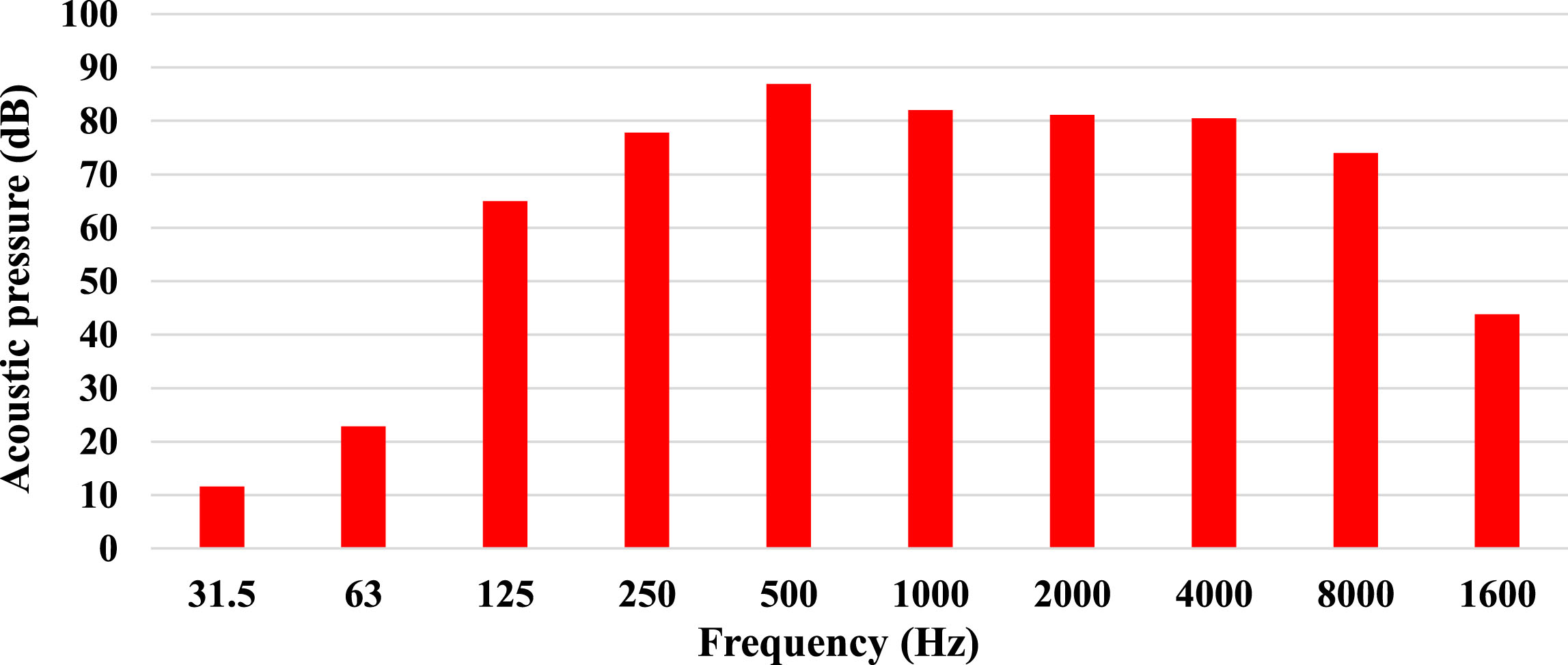
Diagram of the noise frequency spectrum in 1/1 Octave Leq(A).
The vibration simulator included an electrodynamic vibration generator with a capacity of 500 Newton along with a switching amplifier of 500 Watts, which was employed for simulating hand-transmitted vibration according to the ISO 10819 [37] recommendations for reference vibration simulator design [38, 39]. The vibration signals in the 1–500 Hz frequency range were simulated using the Lab View software (2018) in this device. It could be adjusted and rotated at different angles for accurate simulation of the real workstation. In this study, working with electric jackhammers to demolish the building floor was simulated as a common demolition activity. Noise exposure was also simulated by an amplifier (BSWA audio amplifier SWA-100) and a spherical speaker (OS003-BSWA Technology Co.) placed behind the subjects [40].
A Kistler 3D force plate (9286BA, Winterthur, Switzerland) with a sampling rate of 100 Hz was used to measure the body balance as the center of pressure (COP) of the subjects in the anterior-posterior (A/P) and medial-lateral (M/L) directions. A low-pass filter filtered the collected signals with a cutoff frequency of 5 Hz. The force plate results were used to calculate the COP parameters of the A/P and M/L axes as reported in Golhossein et al. and Cornelius et al. [22, 41]. In the current study, the root mean square (RMS) of COP displacement (mm), which defines the standard deviation of COP displacement, is reported as RMSCoP. The hearing thresholds of both ears at frequencies of 1000, 2000, 3000, 4000, and 6000 Hz were measured using an audiometer (KS5, Maico) with headphones placed on both ears in a calibrated acoustic room.
Experimental method
Workers who passed the inclusion criteria participated in the experiment during the specified timetable in three sessions for three days. There was a minimum interval of 24 hours between the experiments to avoid carryover and sequence effects. The subjects were asked to avoid exposed to vibration induced by vibrating tools in the last 24 hours and high levels of noise that can affect their hearing threshold. Additionally, they were asked to take a bath before each session, have proper sleep, refrain from doing intense physical exercises, and avoid consuming caffeinated substances, sleeping pills, or other stimulants. At the beginning of each session, each subject rested on a chair for 15 minutes in the corner of the laboratory to reduce stress and adapt to the test environment.
According to Fig. 2a, the subjects’ hearing status was determined in the audiometry room before exposure to noise and/or HTV. To perform the audiometry test, a subject was first asked to correctly put the headphones on their ears so that their cushions covered the ears completely. The red cushion was placed on the right ear and the blue one on the left ear. Then the subjects pressed the answer button as soon as they heard a subtle noise. The hearing measurement started from the frequency of 1000 Hz and a sound level of 20 dB. If they could hear the sound level, it was reduced until they could no longer hear or reached –5 dB. If the subjects did not recognize the sound level of 20 dB, the volume was increased until they heard the sound level and gave a signal. The sound level, determined as the hearing threshold level for each ear, was tested three times to ensure its accuracy. Then it went to 2000, 3000, 4000, and 6000 Hz frequencies. The process was followed to determine the subjects’ hearing thresholds at different frequencies. It should be noted that the background noise level in the audiometric room was low enough that the audiometric tests continued at the mentioned frequencies up to –5 dB according to the ISO 8253 standard [34].
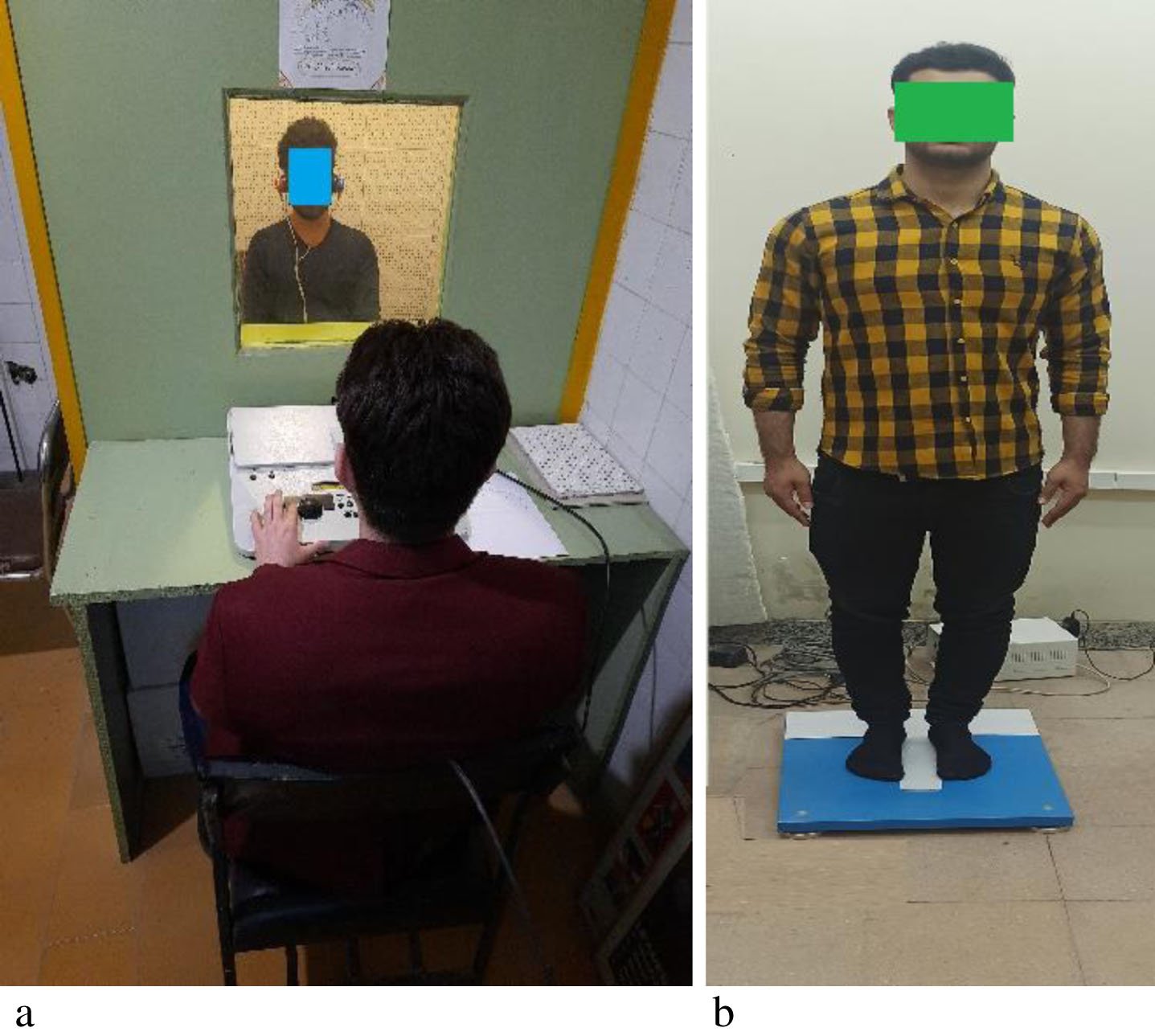
Experiment setup: a. audiometry test; b. postural balance test.
In the next step, the subjects were asked to stand on the balance platform to characterize their postural balance before exposure as baseline data. At this stage, as shown in Fig. 2b, the subjects were instructed to stand for 10 seconds on the center of the force plate with their hands stretched out at their sides, their heads facing forward with their eyes open and without displacement. Each subject performed this process three times before exposure, and the average of these three times was analyzed. This study used RMSCoP to evaluate the postural balance in the A/P and M/L axes.
In each experimental scenario, the subjects were randomly exposed to HTV and/or noise for 30 minutes, which consisted of six stages of 5-minute exposure with a 1-minute pause between each stage. In the scenarios where the subjects were exposed to HTV, they held vibrating handles with their hands by applying a hand force in a combination of 50±5 newtons (N) compressive force and normal grip force (20% of their maximum voluntary contraction power) according to ISO 10819 and ISO 10068 standards [37, 42]. As shown in Fig. 3, these values were read and controlled instantly through the digital displays in front of the subjects. The amount of HTV (10 m/s2 rms, 31.5 Hz) produced by the simulator, which was applied to both hands simultaneously, was monitored by a triaxial hand-arm accelerometer connected to a 6-channel vibration meter (SV 106, Svantek). The amount of noise (90dBA) exposed to the subjects was monitored by a sound level meter (SV971, Svantek). The results of vibration and noise measurements were analyzed in the Svantek Supervisor Software. It should be noted that before starting the measurements, the vibration meter SV 106 and sound level meter SV 971 were calibrated by SV 111 and SV 33 calibrator devices, respectively.
In the experimental scenario where subjects were exposed only to HTV, they used standard ear muffs to reduce the noise emission by the vibrating simulator up to the acceptable background noise limit. The in-ear dosimeter showed that the noise level reaching the ear canal after using ear muffs was reduced up to 52 dBA so this amount of background noise did not affect the results. To simulate the test environment closer to the construction work environment, the height of the shaker device was adjusted according to the height of the workers by using rectangular concrete cubes of a specific size. Therefore, the subjects held the handles of the shaker device in the condition of straight back and stretched arms as shown in Fig. 3.
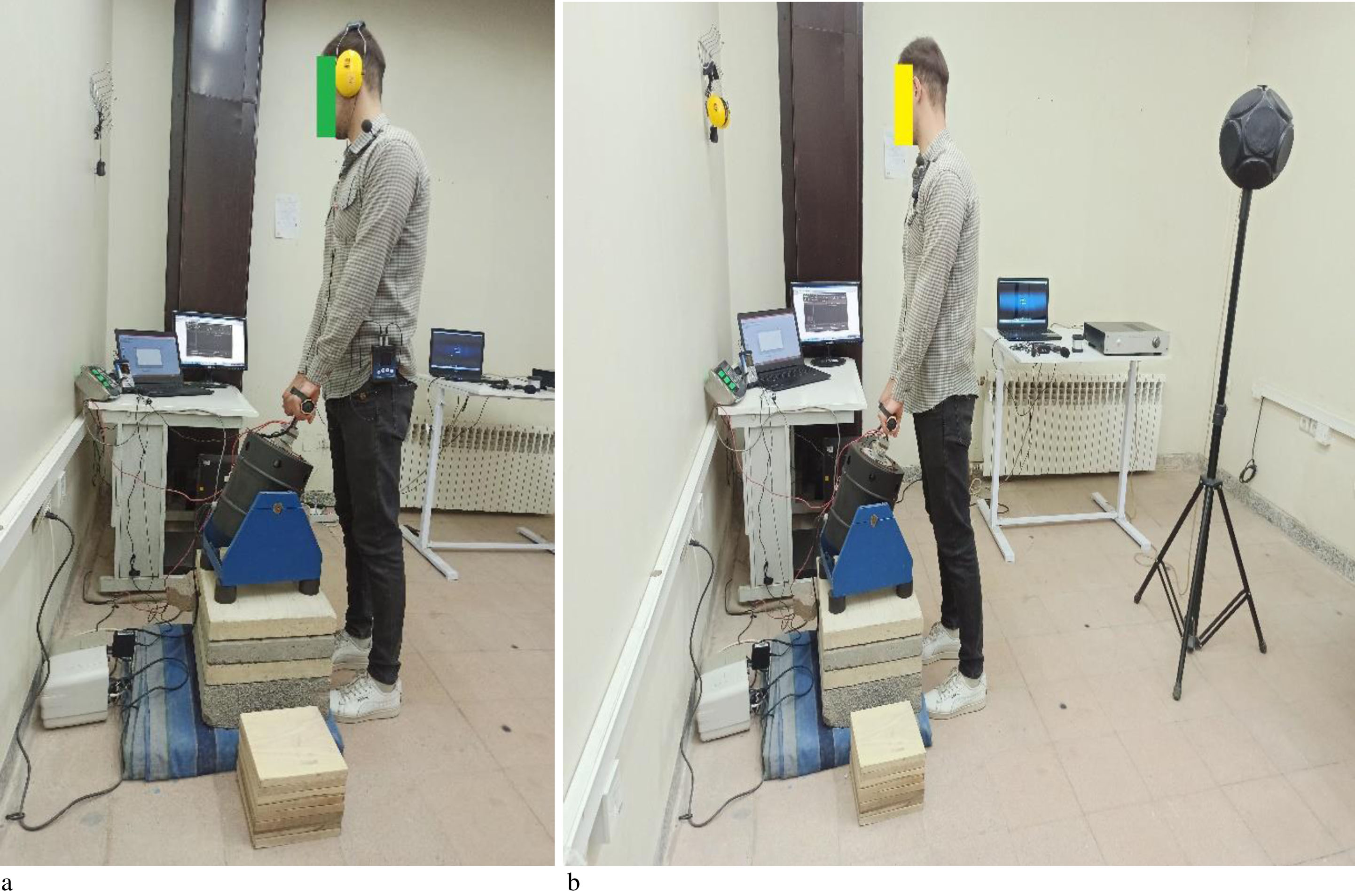
The subjects’ posture during six exposure: standing up with straight arms, gripping the handles, and wearing ear muff: a. Separate HTV exposure; b. Separate noise exposure and concurrent exposure.
In the last step, the subjects’ postural balance and hearing threshold were measured immediately after each exposure scenario. It should be noted that before starting the study experiments, the subjects were allowed to test and check the method to familiarize themselves with the experiment process. All subjects were given cash gifts to prevent them from leaving the test and to ensure that the tests were completed by the end of the third day. The different steps of the test in this study are shown in detail in Fig. 4.
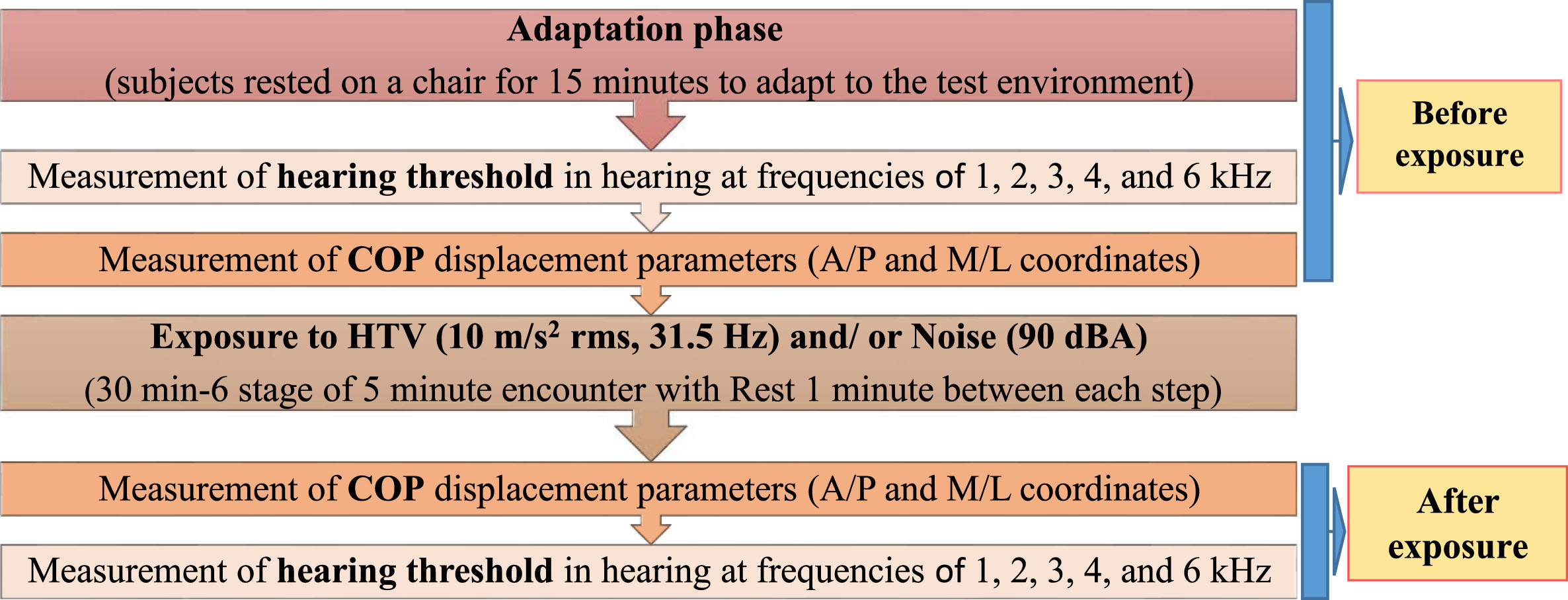
The flowchart of the study experiment steps.
The desired signals from the force plate were extracted using Kistler Bioware software and entered into Excel 2016 with X and Y coordinates to calculate the RMSCoP in A/P and M/L axes, respectively. The Excel outputs and other collected data were statistically analyzed using IBM SPSS Statistics 25.0. In this study, the hearing threshold difference in each frequency and RMSCoP of each axis were calculated by subtracting the values before the exposure from the values obtained after the exposure. A paired sample t-test was used to calculate the significance of changes in variables before and after exposures. Repeated Measures ANOVA was employed to check the significance of variable changes among different exposure scenarios. Additionally, for pairwise comparisons, the LSD post hoc test was used to find the origin of differences in different exposure scenarios. A p-value less than 0.05 was established as the statistical significance limit.
Results
The study participants were 40 men employed in the construction industry. The mean±SD of their age, general health status, and noise sensitivity scores were 30.52±3.53 (years), 4.05±16.22, and 14.65±53.55, respectively.
Table 1 displays the mean±SD of the subjects’ hearing threshold before and after exposure to frequencies of 1000, 2000, 3000, 4000, and 6000 Hz for different exposure scenarios. The results indicate an increased hearing threshold in all frequencies and exposure scenarios. The paired t-test was used to determine the significance of the mean difference in the subjects’ hearing thresholds before and after exposure to frequencies of 1000, 2000, 3000, 4000, and 6000 Hz for different exposure scenarios (Table 1). The results revealed that exposure to HTV did not significantly affect hearing thresholds in any of the frequencies. However, noise at all frequencies, except for 1000 Hz, significantly affected hearing thresholds. Concurrent exposure to HTV and noise in all frequencies caused significant changes in hearing thresholds.
The mean±Standard deviation (SD) and significance levels of the subjects’ hearing thresholds for each exposure scenario
The mean±Standard deviation (SD) and significance levels of the subjects’ hearing thresholds for each exposure scenario
HTV: Hand-transmitted vibration.
Table 2 shows the significance levels of the difference in hearing thresholds at frequencies of 1000, 2000, 3000, 4000, and 6000 Hz for different exposure scenarios. The multivariate test results were significant in all frequencies and indicated the mean difference in hearing thresholds for different exposure scenarios. Moreover, the within-group effects test results, which checked the average difference between exposure scenarios in single-variable mode, confirmed the impact of different exposure scenarios on hearing thresholds at all frequencies.
The significant levels of changes in hearing thresholds at different exposure scenarios
As statistically significant mean differences in hearing thresholds were found in different exposure scenarios, the LSD post hoc test was conducted to determine the origin of these differences. Table 3 displays the results of the pairwise comparison test based on the LSD post hoc test and the effect size of each exposure scenario on the subjects’ hearing thresholds.
The pairwise comparisons test and the effect size of each exposure scenario on the hearing threshold
HTV: Hand-transmitted vibration.
According to Table 3, the concurrent exposure scenario to HTV and noise at a frequency of 4000 Hz had the most significant effect size among all scenarios, with an effect size of 0.836. The noise exposure scenario with the largest effect size was observed at the frequency of 4000 Hz with a value of 0.692. The largest effect size for HTV exposure scenarios was observed at the frequency of 6000 Hz with a value of 0.058. The effect size of the concurrent exposure was more significant than the total effect size of each independent exposure scenario at all frequencies, indicating synergistic interference effects in concurrent exposure to noise and HTV in all frequencies. Figure 5 illustrates the changes in the mean difference of hearing thresholds for different exposure scenarios.
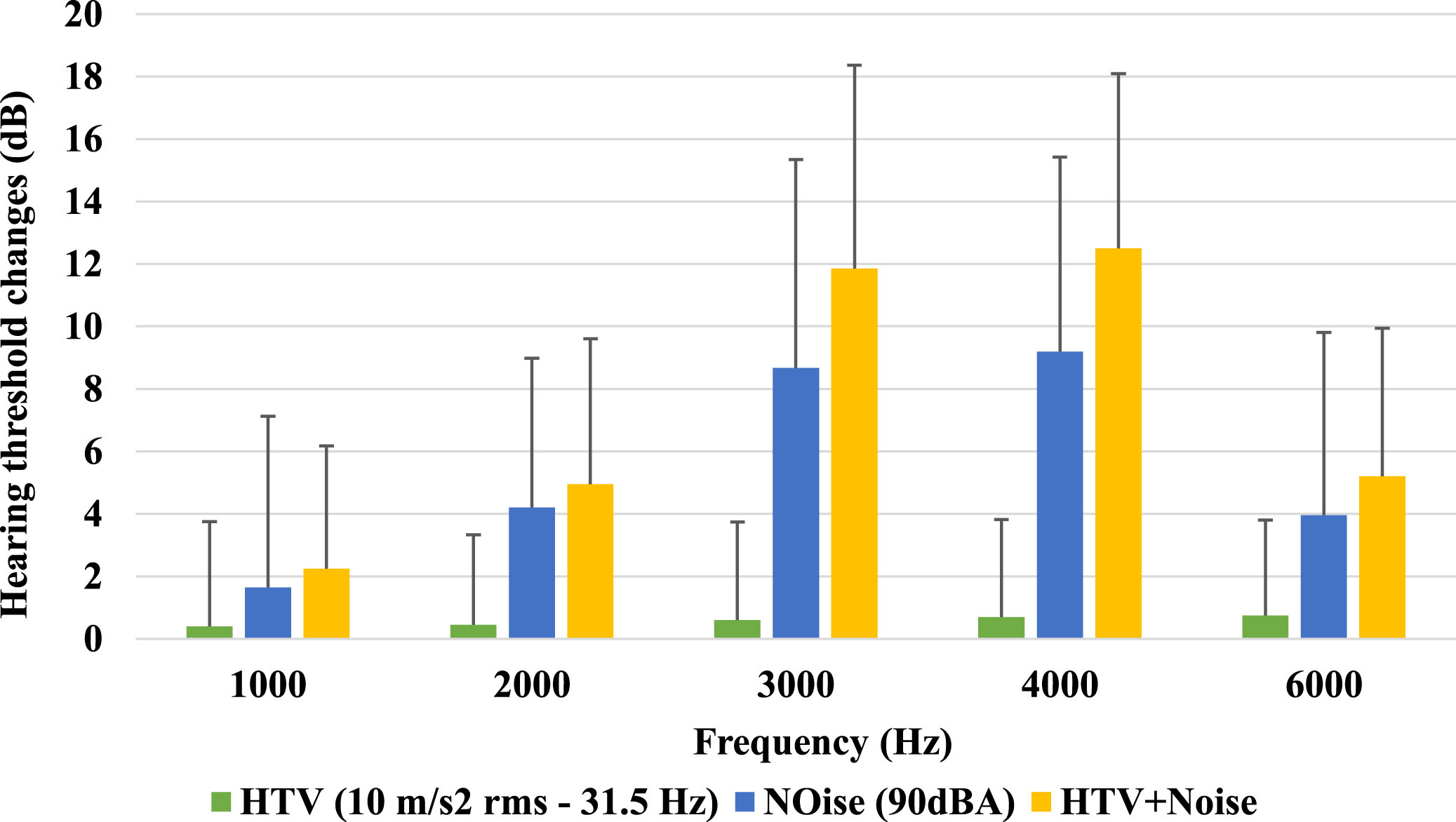
Comparison of the hearing threshold changes for different exposure scenarios.
The RMSCoP differences of the subjects in the before- and after-exposure stages in both A/P and M/L axes for different exposure scenarios are presented in Table 4. The results indicate that the RMSCoP difference in the before- and after-exposure stages in both axes was not significant for independent exposure to either HTV or noise scenarios. However, these differences became significant during concurrent exposure. Table 4 also shows the effect size of each exposure scenario on the RMSCoP difference of the subjects in the two axes. HTV played a dominant and more pronounced role in disrupting the subjects’ postural stability than noise. One interesting observation from this table is the synergistic interference effects on the mean difference and effect sizes. The observed effect size for the RMSCoP difference during concurrent exposure to HTV and noise in both axes was more significant than the total effect size of each independent exposure scenario. Moreover, the observed RMSCoP difference in the A/P axis in all scenarios was greater than that in the M/L axis.
The subjects’ RMSCoP difference and the effect size of each exposure scenario
HTV: Hand-transmitted vibration, RMSCoP: Root mean square center of pressure, A/P: Anterior-Posterior, M/L: Medial-Lateral.
The significance levels of the RMSCoP difference in the two A/P and M/L axes for different exposure scenarios using repeated measurements ANOVA are shown in Table 5. Multivariate tests and tests of within-subjects effects values were not significant on both axes.
Table 5 presents the significance levels of the RMSCoP difference in the two A/P and M/L axes for different exposure scenarios using repeated measurements ANOVA. The multivariate tests and tests of within-subjects effects values were not significant for both axes.
The RMSCoP difference among different exposure scenarios
RMSCoP: Root mean square center of pressure, A/P: Anterior-Posterior, M/L: Medial-Lateral.
In this experimental laboratory study, we investigated the changes in the hearing thresholds and postural balance of typical construction workers in short-term exposure to HTV, noise, and concurrent exposure in simulated work with vibrating demolition tools. The results of the present study showed that hearing threshold shifts in separate HTV exposure were insignificant in all frequencies (p-value>0.05). In separate noise exposure, hearing threshold shifts in all frequencies, except for the 1000 Hz frequency, were significant (p-value<0.05). In the combined exposure, hearing threshold shifts were significant in all frequencies (p-value<0.05).
Pettersson et al. studied the effect of separate and combined exposure to noise and HTV on the hearing threshold differences in the hearing acuity of healthy people in real and controlled conditions. They found that after exposure to HTV, there was no significant difference in hearing thresholds, and combined noise and HTV exposure caused more significant hearing thresholds than exposure to HTV alone. These findings are consistent with the results of the present study. Another study by Pettersson et al. showed that there was no significant difference in hearing thresholds at the frequency of 1000 Hz, while a significant difference was established between exposure to noise and even exposure to HTV [11]. Pettersson et al. also showed that combined exposure to HTV and noise increases the risk of noise-induced hearing loss, and combined exposure to noise and HTV causes more hearing loss than separate exposure to noise [2]. Duan et al. showed that after adjusting for confounding factors such as age, years of work, sex, and smoking, the workers who are exposed to both noises and HTV concurrently have a higher risk of hearing loss than those who are exposed to noise alone [43]], which is consistent with the current study.
Pairwise comparisons showed that in the frequencies of 3000 and 4000 Hz, the hearing threshold shifts in the combined exposure scenario were significant compared with separate noise exposure (p-value<0.05). In this regard, the results of the Zhu et al. study showed that simultaneous exposure to noise (90 dBA) and HTV (30 m/s2, 60 Hz) led to increases in TTS at a frequency of 4 kHz. The TTS difference between simultaneous exposure and separate exposure to noise at 4 kHz frequency was about 3.5 dB, which is consistent with the results of the present study [44]. Singh showed that most workers exposed to noise and HTV have moderate to severe hearing loss in the frequency bands of 1500–6000 Hz, similar to the present study [45]. Turcot et al. investigated whether hearing impairment is worse in workers with vibration white finger symptoms who are exposed to noise than workers who are exposed to similar noise without white finger symptoms of vibration. The studied frequencies included 500, 1000, 2000, and 4000 Hz. Their results confirmed the findings of previous studies that more hearing loss occurs at higher frequencies in workers exposed to noise and HTV simultaneously. It should be noted that in this study, the highest frequency was 4000 Hz, which was consistent with the results of the present study [46].
Our findings indicate that the hearing threshold shifts in concurrent exposure are greater than the sum of the independent exposures of each noise and HTV (Table 3 and Fig. 5). Accordingly, some studies have shown synergistic effects of noise and HTV on hearing thresholds, while others have indicated no increased effect caused by concurrent exposure to noise and HTV on hearing thresholds [2, 47–49]. The reasons for the difference in these findings can be attributed to the differences in the population, age, work history, medical history, exposure to chemicals, genetic factors, inclusion criteria, and exposure duration, intensity, and nature of noise and HTV. All of these factors can be effective in hearing loss.
One of the main reasons for subjects’ hearing thresholds to be affected by noise exposure is the damage and reversible physical changes of the auditory cochlea. Noise can break the tip junctions between the cilia of the outer cochlear hair cells and cause them to lose contact with the tectorial membrane. Additionally, the excessive release of neurotransmitters from the inner cochlear hair cells can lead to the swelling of the auditory nerve roots, while the reduced blood flow of the cochlea can also contribute to the impact of noise on hearing loss [4, 50–52]. The effective mechanisms of HTV exposure on hearing thresholds have not been well-defined. Nevertheless, some possible reasons for the increased effect of concurrent exposure to noise and HTV on hearing thresholds, compared to exposure to noise alone, include the fact that exposure to HTV caused by handheld vibrating tools can lead to physiological homeostasis disorders by activating the sympathetic nervous system, and noise causes changes in the activities of the cardiovascular system. As a result, HTV may increase the effects of noise exposure in the development of hearing thresholds and cause more severe damage in concurrent exposure, compared to independent noise exposure in vascular striae. Exposure to HTV may also affect the capillaries supporting the auditory nerves with direct mechanical damage to the structure of the inner ear, increasing individuals’ hearing sensitivity to noise, and consequently increasing the effects of concurrent exposure to noise and HTV [3, 53–55].
The significance of hearing threshold changes in simultaneous exposure, compared to separate exposure to noise, at frequencies of 3000 and 4000 Hz, is due to the fact that the most sensitive frequency range of the human auditory system in exposure to noise is the range of 3000 to 6000 Hz. Resonance is also created in the frequency range of about 4000 Hz, strengthening the ear canal noise wavelength [4, 40]. In this study, it appears that in simultaneous exposure, the HTV used has made the organ of Corti more sensitive than in separate exposure to noise in this frequency range. Consequently, a significant reduction in the hearing of the participants occurred in the frequencies of 3000 and 4000 Hz.
The present study demonstrates that separate exposure to noise did not result in a significant difference in RMSCoP in either axis (p-value>0.05). These findings are consistent with some previous studies [22, 56]. Park et al. showed that as the frequency of noise increases in the P/A axis, the length of the path of posture changes and changes in the position of the CoP of the body also increase. However, the effect of noise level on the length of postural sway and postural change was insignificant [29]. The review of studies on the effect of noise on postural balance yields contradictory results, with some studies indicating that exposure to noise affects postural balance [57–60]. However, in the present study, due to the duration of exposure to noise, as well as the intensity and nature of the noise received, noise exposure did not cause a significant difference in the subjects’ postural balance.
The RMSCoP difference of the subjects in both axes was greater when exposed to HTV compared to when exposed to noise. Despite this greater effect of HTV on the RMSCoP difference compared to noise, exposure to HTV alone did not cause a statistically significant RMSCoP difference in either axis (p-value>0.05). These findings are consistent with the results of Pollard et al., who investigated the effect of exposure to HTV and WBV of a truck during work on various body functional parameters, including postural balance. Their results showed no significant relationship between WBV, HTV, and postural stability [61].
The RMSCoP difference was significant in combined exposure to HTV and noise (p-value<0.05). In all experimental scenarios, the difference in the A/P axis was higher than that in the M/L axis. The results showed that the RMSCoP difference and the effect size of combined exposure were more significant than the sum of the independent noise and HTV exposure scenarios. These results are partially consistent with those of Golhosseini et al., who investigated the effects of combined exposure to noise and WBV on maintaining postural balance in driving simulation conditions [22].
It should be noted that no similar study was found investigating postural balance in exposure to HTV and concurrent noise exposure, and therefore, there are no comparable results to those of the present study. Most studies conducted on the relationship between postural balance and vibration are related to WBV. Thus, the present study provides valuable information regarding exposure to HTV and concurrent exposure to noise and HTV on postural stability.
It can be stated that concurrent exposure to high-frequency whole-body vibration and noise can put an additional load on the sub-systems that maintain construction workers’ postural balance. By stimulating the vestibular system, noise can indirectly disturb their postural stability. Through mechanical effects on the labyrinth of the auditory system, vibration can directly disrupt the vestibular system metabolism and disturb their postural balance. Therefore, one possible mechanism for the obtained results can be inner ear disorders caused by exposure to HTV and noise, which can cause balance disturbances [22, 62]. The occurrence of fatigue and stress caused by these harmful physical factors can also be one of the effective factors in disturbances in construction workers’ postural balance because studies have shown that stress and fatigue can reduce the sensory inputs and motor outputs of the body’s balance system [63–66]. Other possible reasons for the effect of concurrent exposure to HTV and noise on postural balance changes can be attributed to physiological changes and increased sympathetic nervous system activity. Studies have indicated that exposure to physical stressors such as noise and vibration can affect the information processing of the central nervous system, causing an imbalance in the functions of the nervous system and physiological changes. Thus, it can lead to an increase in the activity of the sympathetic nervous system [67–69]. Additionally, noise can affect motor functions and, consequently, human postural balance by creating changes in the performance of the limbic system, the autonomic system, and the neuroendocrine system [13, 69].
In the current study, HTV was used at a frequency of 31.5 Hz, ranging from the critical frequency of the body close to the critical frequency of the head. This factor can also be effective in creating the reported status changes. Various studies have indicated that HTV with a frequency below 40 Hz can effectively transmit to upper body organs, including the head [70–72].
Among the limitations of the present study, we can point out the population size, which should include a larger number of people in future studies. The use of more advanced screening tools with higher sensitivity, such as Otoacoustic Emissions (OAE) tests, instead of audiometry, is suggested for more accurate evaluation of hearing status and cochlear function for future studies. Additionally, further research is suggested to discover the possible mechanisms of the effect of HTV exposure on hearing loss and changes in postural stability. In addition, in this context, there is limited dose-response data related to the effect of intensity, duration, and frequency of exposure to HTV on body responses, which should be considered in future studies. It is also recommended that future studies focus on validating this experimental design in a real work environment.
Conclusions
This study demonstrates that construction workers who are concurrently exposed to noise and HTV experience changes in hearing thresholds more easily and quickly than those who are exposed to noise and HTV separately. Additionally, the long-term use of hand-vibrating demolition tools among construction workers can lead to hearing loss. Thus, regular audiometric testing is essential for construction workers, as it is often neglected.
Furthermore, this study found that exposure to HTV has a more dominant role in disrupting subjects’ postural stability than occupational noise. Based on the estimated effect sizes, noise could increase the observed effect of HTV on body balance in both axes.
Given the nature of construction workers’ occupational activities, it is inevitable to have concurrent exposure to noise and vibration when working with construction tools. Therefore, to protect construction workers from the risks of concurrent exposure to noise and HTV on hearing thresholds and postural balance, it is necessary to pay attention to the risk assessment of simultaneous effects in the workplace within the recommended occupational exposure limits. Prevention and protective measures, such as using hearing protection devices, vibration-reducing gloves, and implementing regular work-rest programs to reduce exposure to HTV and/or noise and their resulting health effects, are essential.
Ethical approval
This study was approved by the Ethics Committee of Hamadan University of Medical Sciences (Ethics code: IR.UMSHA.REC.1400.657).
Informed consent
All participants who met the inclusion criteria provided written informed consent according to the explanations given before conducting the tests.
Conflict of interest
The authors declare that they have no conflict of interest.
Footnotes
Acknowledgments
The researchers are grateful to all construction workers in Hamadan city who helped them conduct this research.
Funding
The study was funded by Vice-chancellor for Research and Technology, Hamadan University of Medical Sciences (No. 140010148495).