



Abstract
BACKGROUND:
The hazardous material release has frequently occurred worldwide. As a respiratory stimulant and a toxic substance, ammonia has numerous adverse effects on human health.
OBJECTIVE:
The purpose of this study was to evaluate the human vulnerability and toxic effects of both chronic and acute respiratory exposure to ammonia.
METHODS:
This study was conducted in an ice factory. Ammonia reservoirs were selected as the danger center. The scenarios were evaluated from the perspective of the worst-case. The Emergency Response Planning Guidelines 1–3 was used to predict the dangerous concentrations in acute exposure. The probability of human vulnerability was estimated using the Probit model. PHAST 7.2 software was used to model consequences. As a measure of chronic exposure to ammonia, NMAM 6016 was used. A respiratory symptom questionnaire developed by the American Thoracic Society was used for collecting respiratory symptom histories.
RESULTS:
The ERPG3 level or concentration of 750 ppm was found at a distance of 617.71 and 411.01 meters from tanks, respectively, as a result of a rupture in reservoir 1 over a period of two halves of the year. It was found that the highest probit values for tank 2 at distances of zero, 25, 50, 75, 100, 125, and 150 meters were 9.55, 5.92, 5.47, 4.82, 4.23, 3.56 and 2.96, respectively. The prevalence of pulmonary symptoms, which include coughing, dyspnea, phlegm, and wheezing, was 28%, 19%, 15%, and 26% in the chronic exposure group.
CONCLUSION:
In the event that an ammonia reservoir ruptures catastrophically, it may cause human injury at ERPG-2 or ERPG-3 levels. Results revealed that exposure to this substance can impose many pulmonary symptoms on the respiratory system of workers in industries. In order to reduce the vulnerability of humans to potential release scenarios, control measures must be implemented. Also, preventive and mitigation measures can be designed to enhance safety and resilience against the release of hazardous materials.
Introduction
One of the biggest challenges and risks in both industrial and non-industrial settings is chemical exposure, resulting in many injuries and damages depending on their composition, concentration, way of entering the body, and the duration of exposure [1–4]. One of these chemical compounds is ammonia. There are several uses for ammonia including cold storage, ice production, fertilizer production, including nitrate, sulfate, and ammonium phosphate, and the preparation of nitric acid, drugs, and explosives [5, 6]. Its ability to transfer heat makes it an excellent refrigerant. Despite low concentrations of ammonia gas, it can cause serious burns and death if inhaled or absorbed through the skin. Skin irritation and alkaline burns can occur when exposed to ammonia or its solutions. Respiratory exposure to ammonia causes immediate symptoms, and corrosion and irritation are the primary causes of its toxic effects. A significant amount of ammonia exposure can cause burning in the mouth, larynx, and trachea. In addition, it can lead to airway obstruction and bronchiolar and alveolar edema. Furthermore, acute exposure to excessive levels of ammonia gas could result in death within minutes [6, 7].
In humans, there is no known LD50 of exposure to ammonia. A LD50 value of 350 mg/kg and a LC50 value of 2000 ppm have been determined for rats (4 hours). According to the American Conference of Governmental Industrial Hygienists (ACGIH) reports, the allowable time weight average (TWA) for this compound is 25 ppm. Also, previous researches revealed that concentration of 150 to 200 ppm of ammonia gas causes general discomfort. In the concentrations of 400–700 ppm, irritation is observed. A concentration of 500 ppm and higher is very dangerous [6, 8].
Accidents related to ammonia storage tanks in various industry and project settings have generally been catastrophic and resulted in irreparable damage to humans and the environment [9–13]. An efficient way to evaluate and estimate the hazardous effects of releasing toxic compounds like ammonia is to evaluate quantitative risk and model the consequences. In addition, the study of major incidents has shown that the probability and consequences of such incidents are predictable and preventable [14–16]. In consequence modeling, mathematical prototypes predict the effects and consequences of substance release and atmospheric dispersion. The main consequences are fire, explosions, and the discharge of poisonous compounds. Radiation from fire, increased pressure from explosions, and poisoning due to gas leaks are the most significant effects of exposure [17, 18].
Ice factories are among the industries that commonly use ammonia gas. Industrial freezers in these sectors produce ice cubes using gases such as ammonia produce ice cubes. According to those mentioned above, ammonia gas causes many casualties and damage due to its toxic nature and its significant potential for causing harm. As a toxic substance, releasing ammonia gas into the environment can adversely affect the environment and individuals.
Occupational exposure to this compound can create different pulmonary symptoms. These symptoms include inflammation of nose, throat, and respiratory tract, which might result in sobbing or coughing. Alveolar edema and irritation to the lowest parts of the oral cavity, pharynx, larynx, and trachea can result from exposure to high concentrations of ammonia. Commonly, respiratory exposure exclusively affect the respiratory system and the area of contact [6, 20].
Release of toxic compounds such as ammonia have been reported worldwide many times in the past few decades, according to previous studies. In Alabama, United States, for example, 120 employees were poisoned in 2010 after ammonia gas leaks from a refrigeration plant. More than 60 employees were poisoned by ammonia at a food factory in China in 2013. Ammonia release in different environments has been investigated and modeled extensively in the field of leak and dispersion modeling and its toxic effects, showing the importance of this issue [21, 22].
In most of the previous studies, the effects of chronic occupational exposure have been investigated separately, or the effects of acute occupational exposures have been evaluated with the consequence modeling approach in the event of various scenarios. Therefore, the present study was conducted with the aim of covering the existing research gap in this field and evaluating the acute and chronic effects simultaneously with two proactive and reactive approaches. In this study, we evaluate the human vulnerability and toxic effects of chronic and acute occupational exposure to ammonia in an ice factory. By examining the case study of this particular workplace, we aim to provide insights into the potential risks associated with ammonia exposure and identify strategies for minimizing these risks in similar industrial settings.
Accordingly, the mentioned topics indicate that ammonia is stored in large quantities in industries where people are exposed to it and transferred to different sectors through ammonia storage. A reactive approach should be used to investigate the effects of chronic ammonia exposure, and a proactive approach should be used to examine the concentration profile after catastrophic events. Therefore, according to the importance of the aforementioned, this study was conducted to evaluate the human vulnerability and toxic effects of chronic and acute occupational exposure to ammonia.
Methods
Study design
The aim of this study was to evaluate both acute and chronic effects of respiratory exposure to ammonia in an ice factory in Qom province, Iran, in 2022. In the reactive approach, ammonia exposure was measured in the respiratory system and the amount of pulmonary symptoms among exposed and non-exposed employees was investigated. In the proactive approach, ammonia dispersion profile was evaluated under worst-case scenarios using PHAST software.
In the first phase, using process specifications, accident records, and expert opinions, risk areas were identified. This study employed opinion from eight experts, which included researchers with Ph.D. degree in occupational health and safety (n = 4), and chemistry (n = 2) as well as experts with a masters in fluid mechanics (n = 2). One of the chemical experts of the studied company was responsible for transferring the required information to the expert’s panel. Before conducting the study, it was ensured that no important and personal information from the studied company was published, and the senior management approved the extracted data of the studied company.
Following that, the potential consequences of selected scenarios were modeled using PHAST software version 7.2.
In the present study, the assessment of human risk (severity dimension) due to ammonia leakage was implemented based on different stages of consequence modeling. Initially, the site was identified, the main systems and safety systems were evaluated, incidents and near-misses were reviewed, and experts and specialists’ opinions were gathered. The second stage involved identifying risk centers based on their type and level of risk. Hazardous material leakage from risk centers were the subject of qualitative and quantitative analysis in the third phase of the study. At the end of the process, ammonia leakage from the studied reservoirs was modeled, and its consequences, including human vulnerability, were evaluated.
Ammonia gas reservoirs were chosen as the hazard source for this study. Upon understanding the process and operation of the industry, accidents records, conducting interviews with workers, in particular, safety officials, and examining documents, risk centers were determined based on potential toxic substance leakage on the site. Leaks or ruptures in equipment are often considered scenarios. This study considered the significance of human vulnerability and assessed scenarios under the worst possible circumstances (complete reservoir breakage and complete material leakage). Ammonia concentration profiles were determined based on emergency response planning guideline (ERPG) criteria. ERPG-1, ERPG-2, and ERPG-3 levels for ammonia were 25, 150, and 750 ppm, respectively (8, 23).
The three concentration ranges are defined below: 750 ppm (As a general rule, ERPG-3 refers to the highest airborne concentration at which the majority of people can be exposed for one hour without adverse health consequences). 150 ppm (ERPG-2 is the highest airborne concentration below which almost everyone is capable of being exposed for an hour without resulting in irreparable health issues or symptoms that can stop an individual from enacting safety precautions). 25 ppm (ERPG-1 is the lowest airborne concentration which nearly everyone might be exposed for up to an hour without feeling any more than slight, transient health impacts or smelling an offensive odor).
Ultimately, after consequence modeling and determining the concentration profile in the proactive approach (acute exposure), the respiratory exposure of the workers as well as their respiratory symptoms were also evaluated in the reactive approach (chronic exposure), which will be explained in the following.
Material specifications (NH3)
Ammonia gas is an odoriferous and colorless substance. Physical and chemical features of NH3 are outlined below. German chemists Fritz Haber and Carl Bosch developed the Haber-Bosch process in 1909, which uses a metal catalyst to catalytically convert N2 (from the air) and H2 (from industrial methods) into NH3 under high-pressure (150–250 atm) and high-temperature (400–600°C) conditions. Its molecular weight is 17.03 g.mol–1, and its density is 0.769 kg.m–3. In terms of flammability, it is at its lowest limit of 15% and its highest limit of 27%. In recent years, NH3 production has soared. It is estimated that 144 million metric tons of NH3 were produced worldwide in 2020. NH3 has many industrial and agricultural uses, including fertilizer, plastics, nitric acid, explosives, and refrigeration. Ammonia is a hazardous gas and presents significant safety risks. Molecular space and interaction energy of ammonia molecules are negligible. Consequently, ammonia disperses easily. There is an IDLH-15 min of 50 ppm or 36 mg/m3 for ammonia, which is toxic. Ammonia vapor is flammable in the air. Ammonia vapor is difficult to ignite in the atmosphere. Pressure vessels store ammonia under vapor pressure in liquid form [21, 25]. The top individual producers are China, Russia, India, and the United States [24, 25].
Analyzing the climate of the environment
This phase involved identifying all physical conditions that may affect possible consequences. Each scenario was analyzed separately for factors affecting its development and formation. To model dispersion, dispersion parameters such as temperature, wind speed and direction, atmospheric stability class, ground unevenness, and relative humidity must be included. Climatic parameters belong to Qom province in Iran, which were collected in 2022. Meteorological data from the nearest station in this region were used in this section. The climate conditions have been chosen to approximate the typical conditions throughout the course of a year or another period of time when the equipment is in operation. The modeling for the ice factory was based on the identified hazards and included two reservoirs containing ammonia under summer and winter weather, which represented the average weather of two halves of the year (Table 1). According to the Iranian solar year, the first six months of the year include spring (April, May, and June) and summer (July, August, and September). The second six months of the year also include fall (October, November, and December) and winter (January, February, and March).
Average of atmospheric parameters
Average of atmospheric parameters
Models provided by PHAST (Process Hazard Analysis Software Tool) are among the most effective models offered in predicting the discharge, and dispersion of substances into the environment and are known as a decision-making tool for assessing the risk of toxic substances. This software created by DNV (Det Norske Veritas) firm, complies with a multitude of international regulations and is widely utilized [26]. In this study, PHAST 7.2 was used for all modeling steps. Gas releases have been modeled using Gaussian models in the PHAST software. Based on this model, the concentration profile of scattered material perpendicular to the wind direction is assumed normal Gaussian. The simplicity and high accuracy with which these models predict the concentration profile of released materials make them ideal for analyzing the consequences of accidents [27–29]. Software packages that simulate a sequence of events and consequences are mostly used to assess the risks and consequences of hazardous material discharges, from initial containment loss to the effects of flammability and toxicity on people living downwind. Each stage of the calculations needs to be accurately modeled to establish confidence in these assessments.
The validity of PHAST software has been confirmed in Witlox et al.’s study and has been used in many studies [28].
Assessing human vulnerability
Probit functions indicate the correlation between substance concentration in the air, the duration of exposure, and its effects on humans. In any random combination of concentration and exposure time, the Probit function for a substance would estimate the number of deaths resulting from a substance-induced accident. Probit functions are founded on the toxicological information of materials from animal trials in current literature. This data is transformed into exposure-response relationships for humans. Therefore, the Probit equation can be used to estimate the likelihood or percentage of death from exposure to toxic gases. Probit values range between 0 and 8, with greater numbers being more likely to cause death. Based on the equation below, the present study calculated the Probit values [8]:
Where, C is the concentration, T is the exposure time (minute), K1, K2 and n are probit constant coefficients for each chemical compounds. The values of K1, K2 and n are –9.82, 0.71 and 2, respectively [30].
Measuring respiratory exposure
NIOSH Manual of Analytical Methods (NMAM) No. 6016 [31] was used to measure the respiratory exposure to ammonia for all 70 employees working in operational jobs. Three samples of respiratory exposure were taken during this study; so that the real occupational exposure of personnel was determined (one sample was taken at the beginning of the shift, one sample was taken in the middle of the shift, and one sample was taken at the end of the 8-hr work shift). To prevent break-through, the sampling time for each sample was 45 minutes based on the initial examination and permissible air volume in the NIOSH 6016 procedure. NIOSH method number 6 was chosen for time repartitioning sampling method. As a result of this strategy, sampling was conducted over three periods of 45 minutes throughout the shift. The sampling rate was 0.2 L.min–1. A SKC pump was used to collect samples using silica gel absorbent inoculated with sulfuric acid. Ion-exchange chromatography was used to analyze the samples.
Respiratory symptoms assessment
A modified version of the American Thoracic Society (ATS) respiratory symptom questionnaire was used to collect demographics and respiratory symptoms histories. The questionnaire was completed by participants themselves. Moreover, the training class provided adequate explanations before participants completed the survey [1]. All 70 operational employees were selected and evaluated for respiratory symptoms as exposed group, and 70 employees were selected from the administrative department as non-exposed group.
To be eligible for the study, one must have at least two years of work experience, be free of chronic and acute respiratory conditions, be free of exposure to other chemicals that can affect the respiratory system, and be satisfied to participate in the study. At any point in the study, participants could withdraw from it. Exclusions included employees with respiratory disorders such as asthma, bronchitis, and COPD (Chronic Obstructive Pulmonary Disease). Furthermore, since smoking can affect the respiratory capacity and develop chronic obstructive pulmonary disease, employees with a smoking history were excluded from the study. Each participant worked a day shift. Participation in the study required the completion of a consent form.
Data analysis
All data were investigated by the IBM SPSS V. 25 software. The Kolmogorov-Smirnov test was applied to examine the normality of data distribution. The data were found to be normally distributed. Chi-square, Fisher exact, and repeated measures ANOVA statistical tests were used to conducted the analyses. The significant value for all statistical tests was considered to be 0.05 (p < 0.05)
Results
According the demographic features of participants, the respondents’ mean ages, years of work experience, and body mass index (BMI) of the subjects were 34.40±5.89 years, 7.32±4.88 years, and 23.56±5.12 Kg/m2, respectively. All participants were male.
Consequence modeling
The following are the outcomes of the two NH3 reservoirs of the researched ice factory’s working conditions:
Process conditions of the first ammonia reservoir, including temperature, pressure, and fluid volume, were 30.0C, 12.0 bar, and 1.5 m3, respectively. Additionally, the second ammonia reservoir’s temperature, pressure, and fluid volume were –10.0C, 12.0 bar, and 1.5 m3, respectively.
Figures 1 and 2 illustrate, respectively, the region impacted by the ammonia leak caused by the catastrophic reservoir breach. As the wind direction moves towards the reservoir, the distance to the reservoir is plotted on the X-axis, and the toxic vapor cloud’s width is plotted on the Y-axis. In each figure, three areas were identified, including 750 ppm (ERPG-3), 150 ppm (ERPG-2), and 25 ppm (ERPG-1).
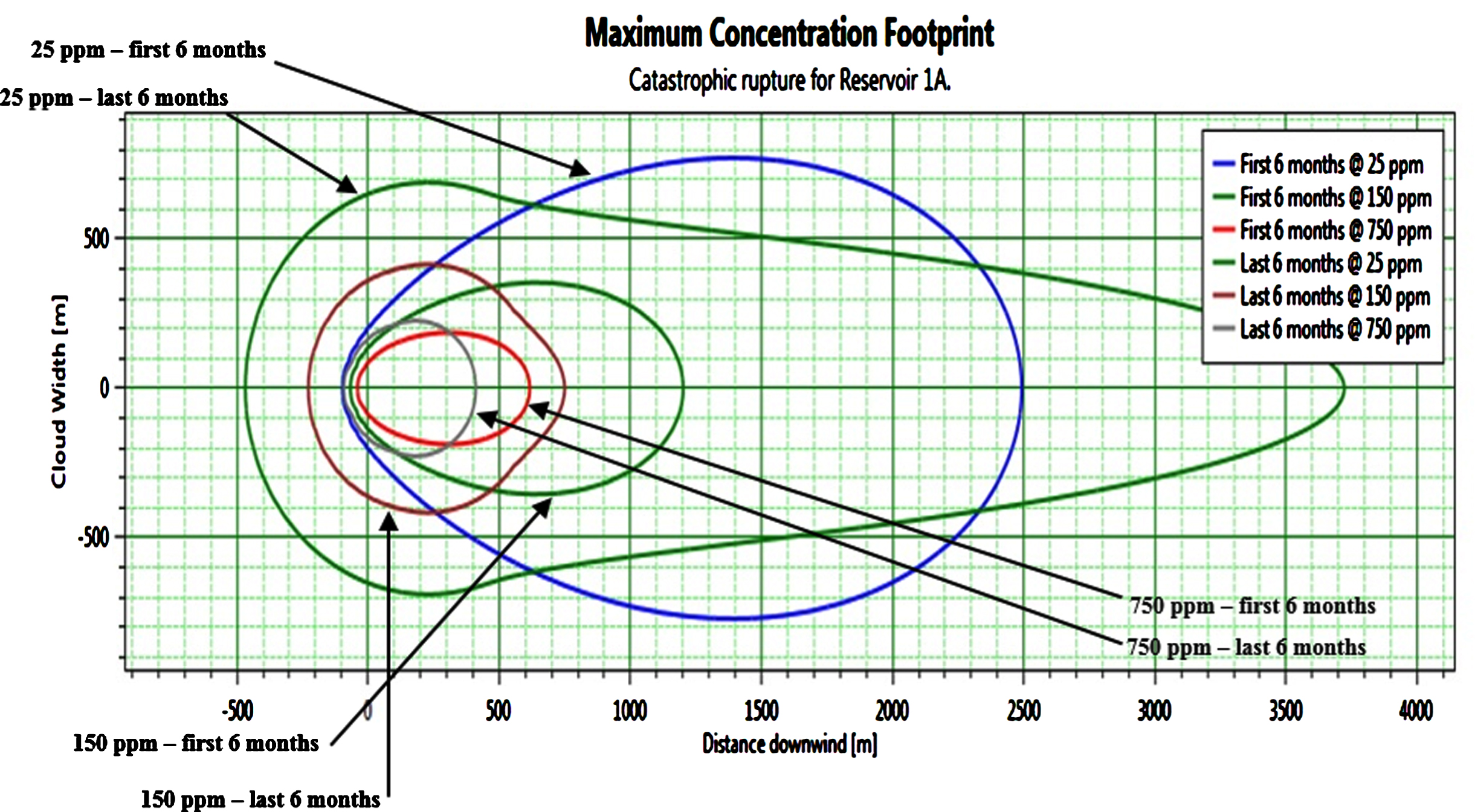
The area affected by ammonia leak in reservoir 1 in case of a catastrophic rupture in the reservoir (both in summer and winter climatic conditions).
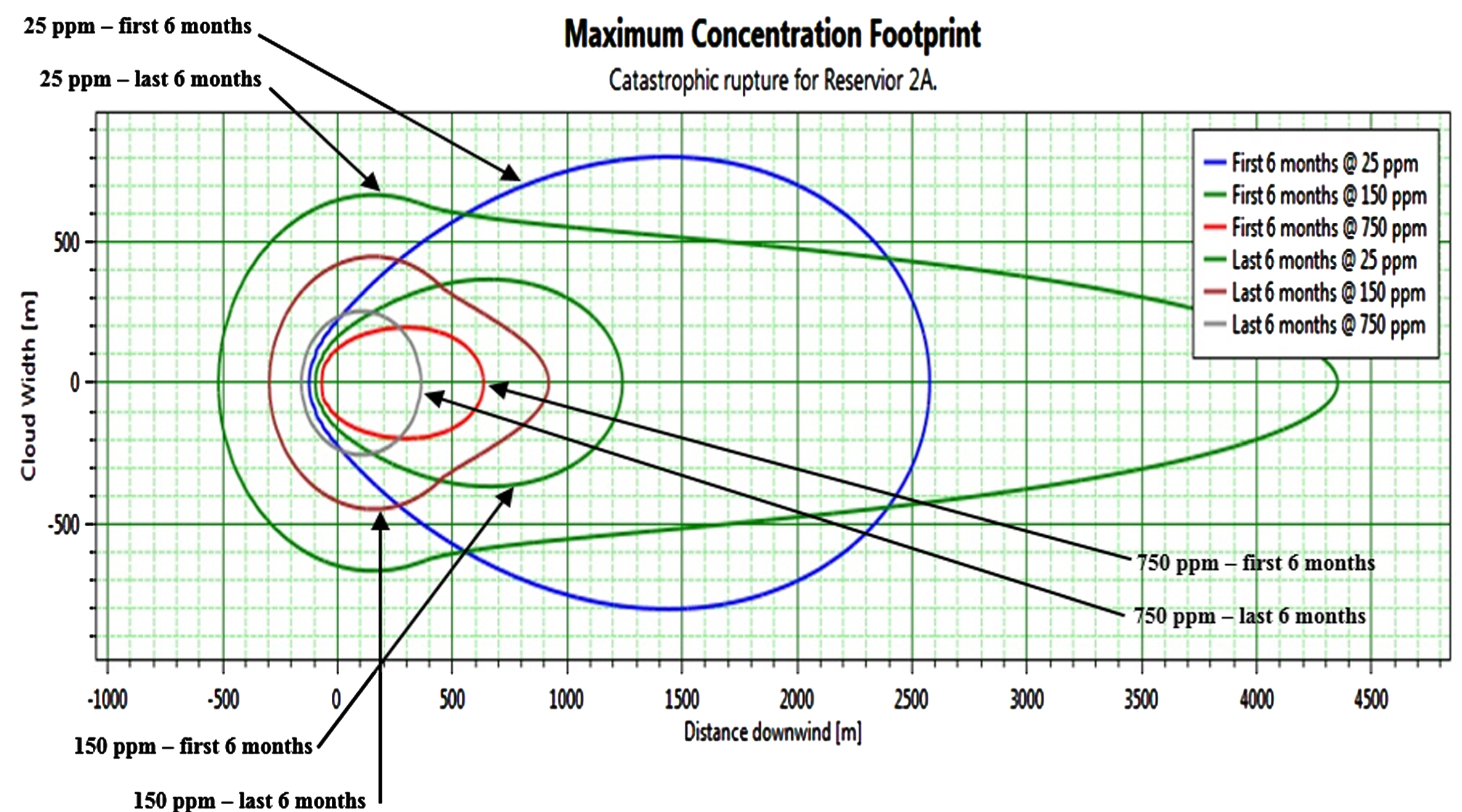
The area affected by ammonia leak in reservoir 2 in case of a catastrophic rupture in the reservoir (both in summer and winter climatic conditions).
Around the reservoirs, the distances (meter based) affected by a devastating rupture and ammonia leak based on ERPG levels for two different climate conditions, summer (representing the first half of the year) and winter (representing the second half of the year) are presented in Table 2. Reservoir 2 had a higher toxic probability of death (ratios) in the event of a rupture and ammonia leak. During the first half of the year, if an ammonia release occurred in reservoir 2, the probability of death (fraction) at distances of 0, 120, 166, and 200 meters from the reservoir would be 0.99, 0.1, 0.01, and 0.001, respectively. During the second half of the year, the probability of death (fraction) at distances of 0, 109, 145, and 165 meters from the reservoir would be 0.99, 0.1, 0.01, and 0.001, respectively. In both climatic circumstances, the death rates for ammonia leakage are illustrated in Figs. 4 and 5 in terms of the distance from reservoirs.
Distances affected around the reservoirs in wind direction (meter) in case of a major rupture and ammonia leak based on ERPG levels
At a distance of zero, 23, 75, and 146 meters from the reservoir in the first half of the year, the probability of death (fraction) was 0.99, 0.1, 0.01, and 0.001, respectively, in the case of ammonia leakage from tank 1. A probability of death (fraction) of 0.99, 0.1, 0.01, and 0.001 was observed in the last six months of the year at distances of zero, 23, 101, and 149 meters from the reservoir, respectively. The Figs. 3 and 4 show other values for toxic probability of death (ratios) associated with ammonia leakage in both types of climate.
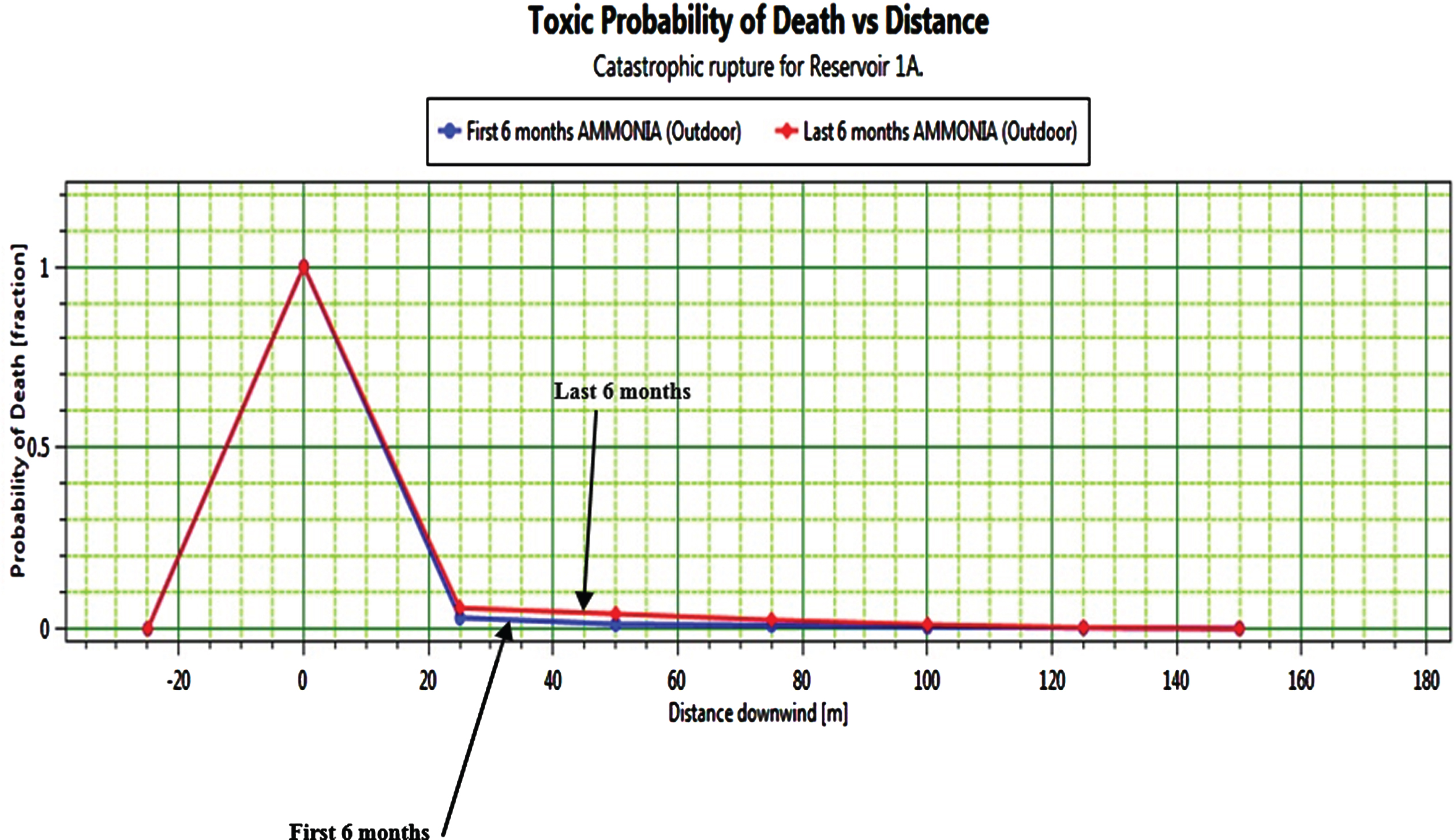
Probability of death based on the distance from the reservoir due to ammonia leakage from reservoir 1 in case of a catastrophic rupture in the first and last six months of the year.
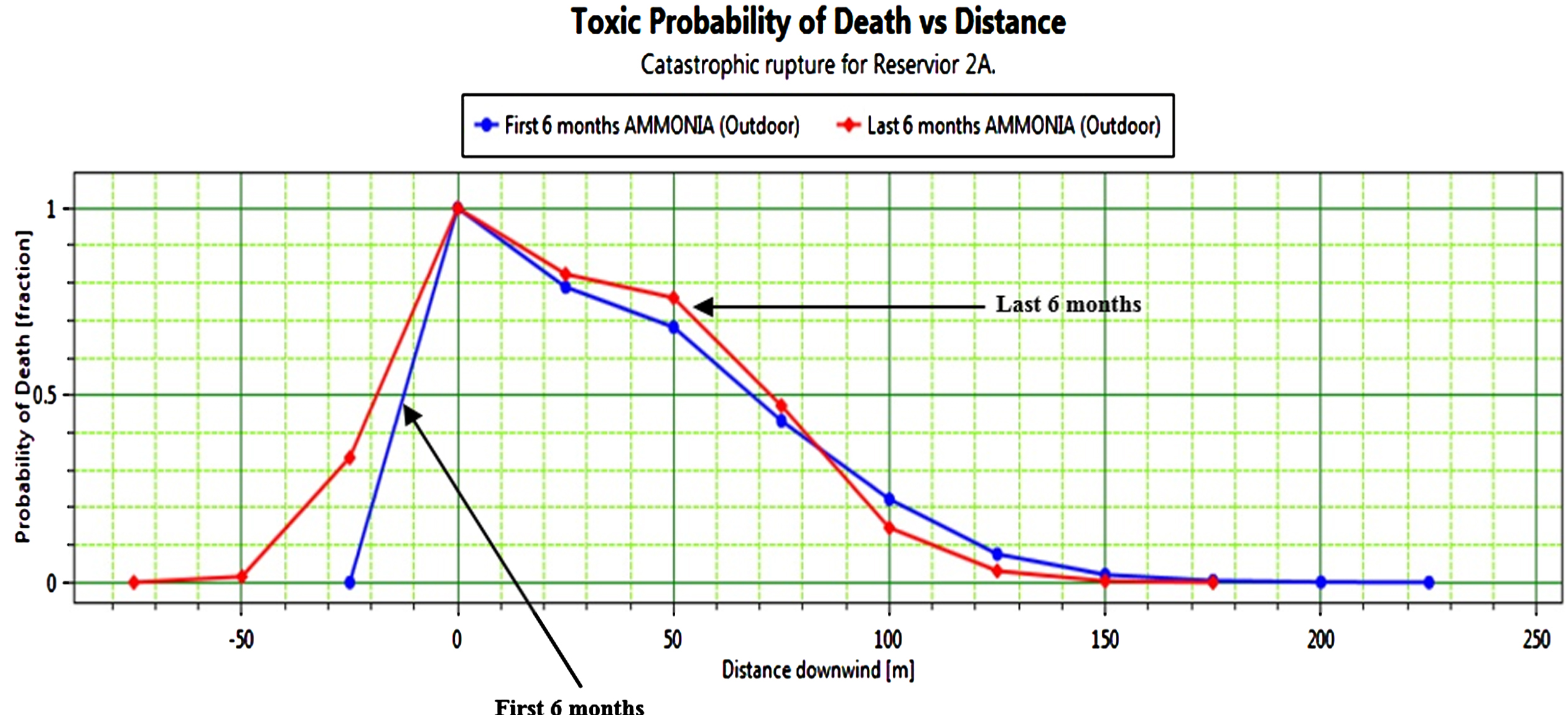
Probability of death based on the distance from the reservoir due to ammonia leakage from reservoir 2 in case of a catastrophic rupture in the first and last six months of the year.
Table 3 demonstrates the results of Probit values for ammonia leaks and ruptured reservoirs in relation to the distance from the reservoirs. It was found that the highest values of probit for reservoir 1 at distances of zero, 25, 50, 75, 100, 125, and 150 meters were 8.89, 3.49, 3.26, 3.03, 2.72, 2.32, and 1.87, respectively. In tank 2, the highest probit values at mentioned distances were 9.55, 5.92, 5.47, 4.82, 4.23, 3.56, and 2.96, respectively.
Average Probit values based on the distance from reservoirs 1 and 2 (in wind direction) in case of catastrophic ruptures and ammonia leakage
The results showed that reservoir 2 had the greatest number of fatalities. In addition, due to the location of the factory in the city center and its proximity to densely populated areas, if the analyzed scenario occurs, large regions surrounding the facility, such as adjacent buildings and streets, can be affected by the ERPG-2 and ERPG-3 concentration range (Figs. 5 and 6).
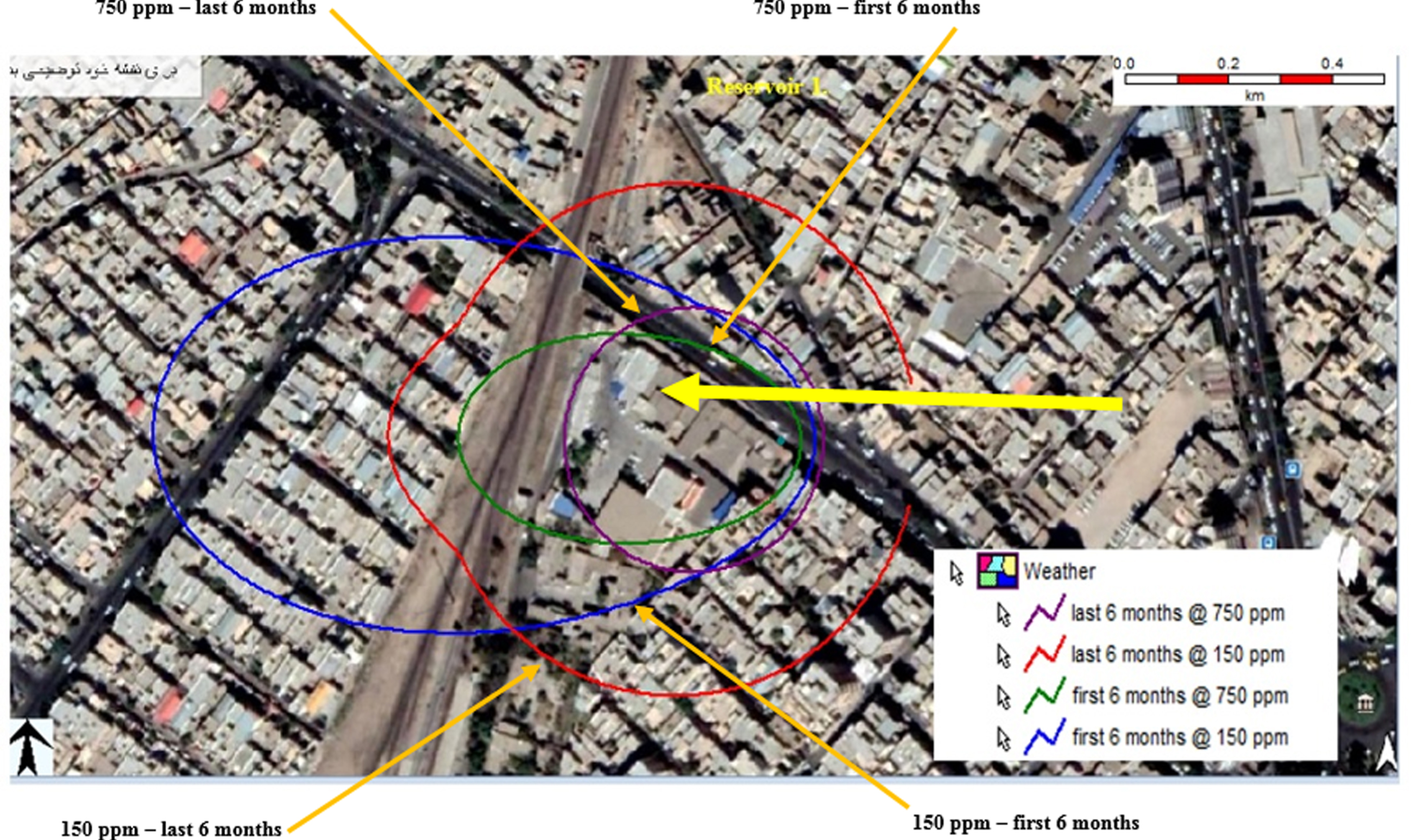
Areas affected by the concentration range of ERPG2 and ERPG3 in case of ammonia emission from Reservoir 1 (Arrow symbol indicates the study site).
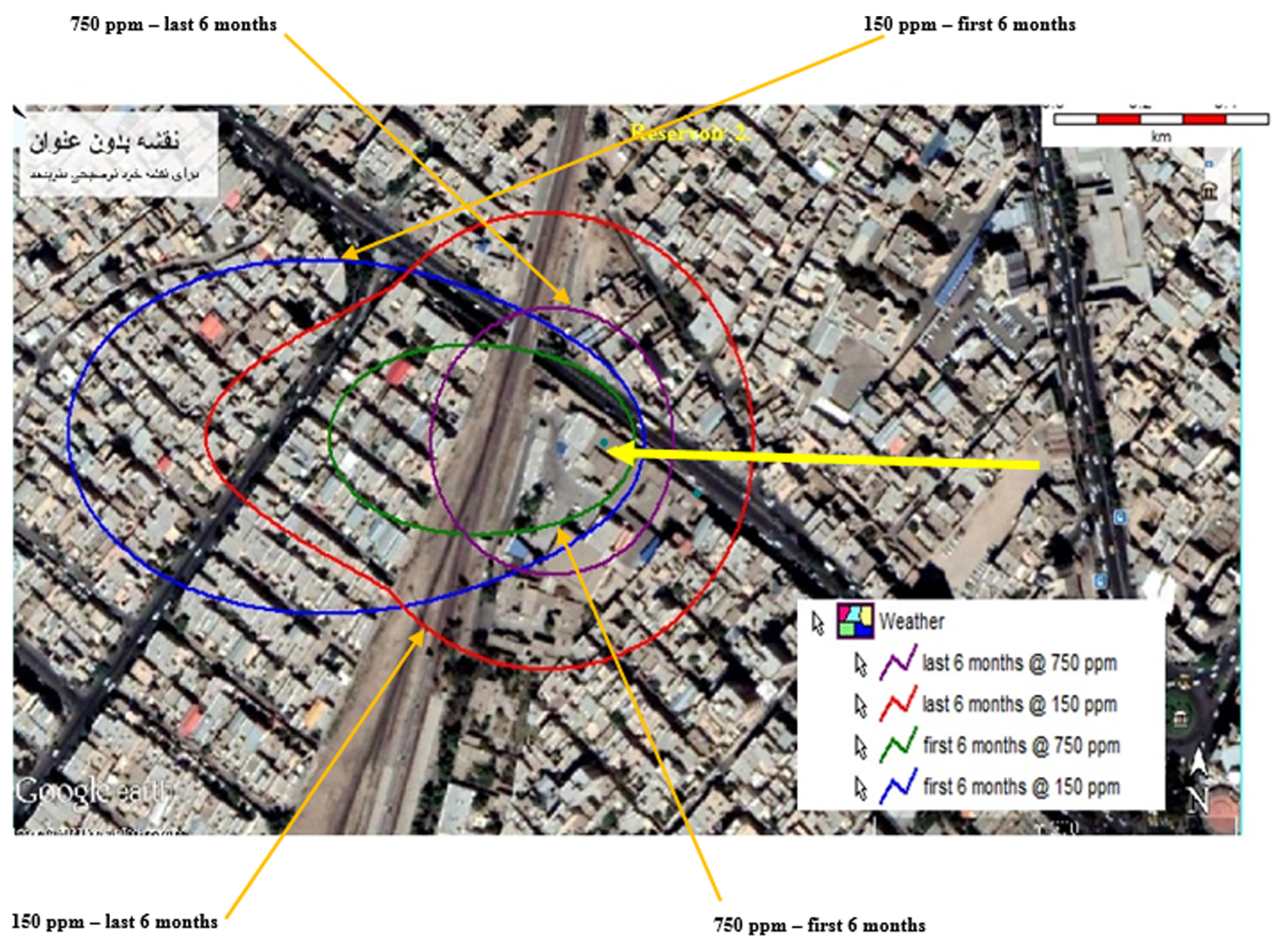
Areas affected by the concentration range of ERPG2 and ERPG3 in case of ammonia emission from Reservoir 2 (Arrow symbol indicates the study site).
The measurements revealed exposure levels on four workdays of the week were 5.13±1.89, 4.90±1.93, 4.96±1.89, and 5.06±1.80 ppm, respectively. The findings of the repeated measures test showed that there were no appreciable variations between these respiratory exposures on the four workdays (p-value >0.05).
Frequency (percent) of respiratory symptoms in exposed and non-exposed participants
Frequency (percent) of respiratory symptoms in exposed and non-exposed participants
*Chi-square or Fisher’s exact test.
A single exposure shift resulted 28%, 19%, 15%, and 26%, prevalence rates of cough, dyspnea, phlegm, and wheezing, respectively. The prevalence rate of the mentioned disorders among employees without exposure was much lower and there was a significant difference between the prevalence rates between the exposed and non-exposed (p < 0.05) (Table 4).
Ammonia is one of the most toxic compounds, and its release into the environment can result in many negative effects on human health and the environment [32, 33]. The current study seeks to predict and examine the adverse effects of ammonia under two climatic circumstances (first and second half of the year). Ammonia is an exceedingly poisonous gas that produces severe toxicity in the body. Furthermore, the Orozco et al. investigation showed that, rather than flames or explosions, the greatest risk associated with abrupt ammonia dispersion is the production of a hazardous vapor cloud of this molecule [8].
Ammonia has been accidentally discharged from refrigeration installations several times in the past. A release can occur as a result of many conditions, including plant upsets that result in overpressure situations and the lifting of pressure relief valves, seal leaks from rotating shafts, mechanical damage to refrigerant piping caused by corrosion, physical injury to system parts caused by tool collisions, hydraulic shock, or hose failure during ammonia deliveries. On-site damage and fatalities have resulted from these incidents, and adverse effects have been observed off-site as well [34].
Based on the analysis of the developed concentration profile in the event of reservoir rupture, according to ERPG levels, it was found that during the first and last half of the year, concentrations reached the lethal concentration range ERPG-3 level or 750 ppm in reservoir 1, up to a distance of 617.71 and 411.01 meters from the reservoir in the direction of the wind respectively.
Based on the findings, the study scenario could be more hazardous in the first half of the year due to more distances falling within ERPG-3. Different climatic circumstances and faster wind speeds cause this issue, which results in a greater air layer displacement. The most important factor in determining the volume and range of ammonia gas emissions in the environment, according to Tan et al., is wind speed [21]. The results of reservoir 1 modeling showed that in the first half of the year, distances of 1212.48 and 2515.57 meters from the reservoir were at ERPG-2 and ERPG-1 levels, respectively. In the second half of the year, distances of 761.66 and 3762.75 meters from the reservoir were within ERPG-2 and ERPG-1 levels, respectively.
The distances of 639.06 and 379.87 meters from reservoir 2 were at ERPG-3 level in the first and second halves of the year, respectively. Compared to reservoir 1, this reservoir has a wider range of effects.
The study also revealed that, in the first half of the year, the distances of 1251.52 and 2602.28 meters from the reservoir were at ERPG-2 and ERPG-1 levels, respectively, and in the last six months, up to 933.42 and 4401.30 meters from the reservoir were at ERPG-2 and ERPG-1, respectively (Table 2 and Figs. 1 and 2). Consequently, if the reservoirs rupture catastrophically, large areas around the reservoirs may be contaminated at ERPG-3 and ERPG-2 levels, resulting in death or severe toxic effects for those present. Previous studies have shown that ammonia released from reservoirs caused large areas to be contaminated and caused death in the ERPG-3 and ERPG-2 regions, which is compatible with the findings of the current study [8, 33]. Figures 5 and 6 illustrated that due to the ice factory location, which is in the city center and densely populated areas, and because traffic volume is extremely high on the surrounding streets if the studied scenario occurs, many people will be exposed to the ERPG-3 and ERPG-2 concentration range which may result in permanent damage.
Based on the evaluation of human vulnerability and probability of death, the catastrophic rupture of reservoir 2 led to the highest death rate. According to the toxic likelihood of death (ratios) calculated in the event of reservoir breach and ammonia release, the rupture of reservoir 2 had the highest mortality rate. The probability of death (fraction) from an ammonia release in reservoir 2 during the first half of the year is 0.99, 0.1, 0.01, and 0.001, respectively, in the event of an ammonia leak at distances of 0, 120, 166, and 200 meters from the reservoir. The death likelihood (fraction) at distances of 0, 109, 145, and 165 meters from the reservoir during the second half of the year is 0.99, 0.1, 0.01, and 0.001 respectively (Figs. 3 and 4). It was found that the highest values of Probit for tank 1 at distances of zero, 25, 50, 75, 100, 125, and 150 meters were 8.89, 3.49, 3.26, 3.03, 2.72, 2.32, and 1.87, respectively. In reservoir 2, the highest Probit values at mentioned distances were 9.55, 5.92, 5.47, 4.82, 4.23, 3.56, and 2.96, respectively (Table 3).
Chemicals are an important environmental and health treat [7, 36]. In addition, small industries have a high risk for numerous factors, including absence of an integrated and systematic framework of health and safety management, inappropriate evaluations of regulatory agencies, and inadequate understanding of chemical compound risks and threats by managers and workers. Also, the increasing population of human beings leads to expanding urban borders. In addition, this contributes to the increasing demand for energy resources and the growth of a variety of industries. As a result, urban and industrial boundaries become closer over time. As a consequence of this proximity, residential areas are located in the danger zone, and in the event of an accident, casualties will increase. Since ammonia gas has a high potential of causing accidents and the severity of those accidents is high, one of the most feasible solutions is to estimate the danger zone and establish the furthest limits of urban borders to industrial areas in order to reduce human vulnerability to such catastrophic events. The assessment of human vulnerability due to ammonia leakage in this study revealed that ice factories are potentially hazardous sources of ammonia gas release and dispersion to surroundings in the event of devastating events.
One of the reasons for this issue is a large amount of ammonia stored and used as refrigerants in ice factories. Ammonia storage standards and safety rules in these industries in Iran are sometimes ignored. This is even though in similar industries where ammonia is used, such as livestock and poultry processing industries, slaughterhouses, and other food industries, there are stricter safety rules and more supervision by standard organizations and occupational safety inspections. The volume of ammonia used in the ice-making industries in Iran is very high. In addition to the low safety levels of ammonia storage tanks, these factories are often located in dense urban areas, which increases the risk of catastrophic events. The investigation and control of these incidents have high importance, especially in factories in densely populated areas; high mortality rates and morbidity levels can be caused by such accidents. The review of studies conducted in other industries also showed that using ammonia gas has always been a significant challenge in human and environmental vulnerability [22, 37].
The investigation of respiratory symptoms caused by exposure to ammonia also showed that exposure to this substance can impose many pulmonary symptoms on the respiratory system of workers in industries. A single exposure shift resulted 28%, 19%, 15%, and 26%, prevalence rates of cough, dyspnea, phlegm, and wheezing, respectively. The prevalence rate of the mentioned disorders among employees without exposure was much lower and there was a significant difference between the prevalence rates (Table 4). According to Rahman et al.’s study, pulmonary symptoms such as coughing and wheezing are among the acute and chronic effects of exposure to ammonia [38]. Also, in the study by Mahdinia et al., it was found that respiratory exposure to ammonia, even in amounts lower than the permissible limits, can reduce lung capacity and lead to various pulmonary symptoms [39], which reflects what was found in the present research.
Therefore, to reduce the probability and severity of catastrophic events in similar industries, the following control measures are suggested:
By designing training programs, ensure that knowledgeable personnel operate the ammonia refrigeration system. Provide barriers to safeguard refrigerated equipment, such as lines, valves, and other components, in place where forklifts are used, Forklift driver training should incorporate ammonia refrigeration awareness and discuss the risks of forklift accidents that may result in ammonia discharges. Maintain refrigeration equipment according to manufacturer recommendations with a documented preventative maintenance schedule. There should be a preventive maintenance program for: compressors, evaporators, pumps, control valves, and electrical safety, including high-temperature cutouts, high-pressure cutouts, low-pressure cutouts, low-temperature cutouts, automatic purge systems, emergency response tools including, air monitoring equipment self-contained breathing apparatus (SCBAs), and air-purifying respirators.
Keep ammonia refrigeration systems leak-free. All reports of ammonia odors should be investigated and all leaks should be repaired as soon as possible. All equipment such as piping, valves, seals, flanges, etc., should be leak tested at least four times a year.
Ammonia detectors ought to be put in if the facility is not open 24 hours a day or in locations that are vulnerable to leakage. It is critical to replace pressure relief valves (PRVs) regularly.
Make sure that internal system is properly labeled or color-coded to identify the refrigeration system lines and valves.
Post warning signs and placards related to ammonia (e.g., NFPA 704 NH3 diamond) where ammonia is used as a refrigerant. All piping used for ammonia refrigeration needs to undergo routine checks for corrosion, rust, and effective insulation/vapor barriers.
Regularly inspect emergency supplies and ensure that respirators, such as air-purifying and self-contained breathing apparatus (SCBA), and other equipment are in satisfactory condition. Also, make sure that staff members are properly trained in utilizing such devices. The king valve line could be fitted with a solenoid valve controlled by a switch outside the compressor/recycle room. Provide operator training programs with updated piping and instrumentation diagrams (P&IDs), process flow diagrams, ladder diagrams, or single lines.
Strengths and limitations of the study
Due to PHAST software’s inability to model domino events, domino events cannot be investigated in the present study. Domino effect refers to a series of events precipitated by a single event. Finally, a detailed examination of occupational medical examinations of exposed persons in terms of lung capacity and symptoms, as well as studying the trend of changes and subsequently implementing appropriate control measures are suggested.
In the present study, if the investigated scenarios are created, creating an accident in one reservoir can cause a catastrophic rupture in the second reservoir and intensify the effects of each other. The cumulative effect caused by the catastrophic rupture in both reservoirs was not evaluated in this study due to the limitations of PHAST software. Researchers should therefore use other software for modeling and comparing the consequences of ammonia dispersion. It should also be mentioned that due to time and economic constraints, it was not possible to conduct an interventional study. Therefore, in the future, researchers are suggested to conduct intervention studies using the dynamic cycle of risk management in the field of occupational exposures to harmful chemical agents and report the effectiveness of the measures taken in reducing the amount of acute and chronic occupational exposures.
Considering that this study was conducted in Iran and regarding the existing limitations in the field of chemical legislation and the defects in the safety inspection of chemical storage and connections. It is suggested that the results of this study be used with caution in countries with advanced chemical legislation systems.
Among the strengths of the present study, we can mention the assessment of acute and chronic respiratory exposure to ammonia as a toxic and widely used compound in industries using two active and reactive approaches simultaneously. This study offers a novel scientific and operational viewpoint on managing hazardous chemicals exposure in industries prone to catastrophic accidents.
Conclusion
Due to the densely populated urban area where the factory is located and the high traffic rate in the surrounding areas, the study found that a catastrophic rupture of reservoirs could lead to ammonia emission into the surroundings, affecting a large number of people in ERPG-3 and leading to a high mortality rate. The investigation of respiratory symptoms caused by exposure to ammonia also showed that exposure to this substance can impose many pulmonary symptoms on the respiratory system of workers in industries A proactive and forward-looking approach to managing hazardous substances such as ammonia can be gained from the results of the current study. Therefore, providing macro and practical decisions and technical and executive measures can be beneficial in reducing vulnerability to such incidents.
Conflict of interest
The authors declare that there is no conflict of interest.
Ethical approval
The present study was approved by the ethics committee of Qom University of Medical Sciences [Ethics code: IR.MUQ.REC.1398.108].
Funding
This study supported by authors.
Footnotes
Acknowledgments
The authors are grateful to the management team and personnel of the studied ice factory who cooperated in the process of data collection.
Informed consent
Not applicable.