



Abstract
BACKGROUND:
The performance of healthcare workers directly impacts patient safety and treatment outcomes. This was particularly evident during the coronavirus disease 2019 (COVID-19) pandemic.
OBJECTIVE:
This study aimed to analyze research trends on factors influencing work performance among healthcare workers through bibliometric analysis and conduct a comparative analysis from macro and micro perspectives before and after the COVID-19 pandemic to complement the existing research.
METHODS:
This study involved a bibliometric analysis of 1408 articles related to work performance in the healthcare field published between 2010 and 2023, using the Web of Science, Scopus, and PubMed databases, and 37 articles were selected to determine the factors influencing work performance.
RESULTS:
By conducting a bibliometric analysis of the articles based on country, institution, journal, co-cited references, and keywords, this study identified a significant growth trend regarding the factors influencing work performance in the healthcare field, and research hotspots shifted from organizational factors like standard towards psychological factors such as burnout, anxiety, and depression following the outbreak of the COVID-19 pandemic. Subsequently, this study extracted 10 micro-level and 9 macro-level influencing factors from the selected articles for supplementary analysis. Furthermore, this study conducted a comparative analysis of the impact of these factors on work performance before and after the COVID-19 pandemic.
CONCLUSIONS:
This study addressed the limitations of previous studies regarding incomplete extraction of factors influencing work performance and unclear comparisons of parameters before and after the COVID-19 pandemic. The findings provide insights and guidance for improving the performance of healthcare workers.
Introduction
Healthcare operations are characterized by urgency, variability, individual differences, invasiveness, and multidisciplinary collaboration; they are closely related to patient safety and involve high workloads and high-precision job requirements [1, 2]. The performance of healthcare workers impacts patient safety and treatment outcomes, and a deficiency in their performance can cause serious medical errors [3, 4]. Since the publication of “To Err Is Human” in 2000, medical errors have received widespread attention, and patient safety and work performance of healthcare workers have been emphasized [5]. Medical errors, which are primarily caused by human factors, refer to deviations between the expected and actual behaviors in healthcare operations [6] and are the third leading cause of death in the United States [7]. In the United Kingdom, 237 million medication errors are estimated yearly, with 66 million being potentially clinically significant. The number of deaths caused by such errors exceeds approximately 1,700 annually [3]. Medical errors can lead to a decline in work performance; therefore, it is necessary to identify and enhance the factors influencing healthcare workers’ performance to improve the work environment and overall performance.
The specificity of healthcare operations places a heavy workload, huge responsibility, and high pressure on healthcare workers [8]. Approximately 18% of nurses are forced to quit their jobs due to heavy workloads [9]; for example, in China, 46% of the nurses work more than 11 h per day, while 35% work more than 6 days per week [10]. Improving work performance ensures patient safety [11]; therefore, systematically exploring the factors that influence the performance of healthcare workers is necessary. Since the outbreak of the global novel coronavirus in December 2019 (coronavirus disease 2019 [COVID-19]), the psychological pressure and workload of healthcare workers have dramatically increased [4, 12]. Although the World Health Organization declared on May 5, 2023, that the novel coronavirus no longer constitutes an international emergency of public health concern, healthcare workers have experienced more intense work pressure and workloads throughout the 3-year duration of the COVID-19 pandemic [13].
The work performance of healthcare workers refers to the outcomes and effects achieved by healthcare workers in their work processes [14]. Kagan et al. conducted a questionnaire survey with 87 registered nurses working in a Klebsiella pneumoniae isolation ward and identified mastery of professional knowledge, self-perceived professional competence, and work experience in the isolation ward as the primary influencing factors of work performance [15]. Meanwhile, Kalmbach et al. conducted a questionnaire survey of 1,215 medical interns to investigate the relationship between sleep duration, working hours, emotions, and work performance. They found that sleep disturbances or brief sleep due to internship obligations and excessive working hours can affect the interns’ emotional state, increase their risk of depression and medical errors, and reduce their work performance [16]. Additionally, Chao et al. conducted a questionnaire survey of 344 healthcare workers in a rural hospital in Taiwan to explore the relationship between job stress, job satisfaction, work performance, and intention to quit and found that job stress positively impacted work performance but negatively influenced job satisfaction. Job stress and satisfaction were the two primary factors influencing work performance and intention to quit [17]. These studies have primarily used questionnaire surveys to identify the factors influencing the work performance of healthcare workers; however, they did not consider complete coverage of healthcare worker populations and a mix of macro- and micro-level factors.
The performance of healthcare workers during the COVID-19 pandemic remains a research hotspot. Sun et al. conducted a survey of 669 healthcare workers in Pakistan using a structured questionnaire and reported that stress, depression, and anxiety during COVID-19 could exacerbate fatigue and adversely affect the mental health level of healthcare workers, thereby affecting their work performance. Furthermore, Sarikose et al. used a questionnaire survey to explore the relationship between the nursing quality foundation and the level of nursing work performance among 370 nurses working in a private hospital and two university hospitals in Turkey. They identified factors, including the work environment, staffing, adequacy of resources, superior competence, nurses’ capabilities, receiving support, and colleague solidarity, as significant factors influencing work performance [18]. The factors affecting work performance proposed in these studies accurately reflect the characteristics of the medical work environment during a pandemic; however, comparing these factors with those observed during the non-pandemic is essential for a better understanding of the changes in factors influencing work performance before and after the COVID-19 pandemic. Therefore, it is necessary to conduct a bibliometric overview of the research trends on influencing factors of work performance among healthcare workers and further explore the changes in influencing factors of work performance before and after the COVID-19 pandemic from macro and micro perspectives through supplementary comparative analysis.
Overall, the current research on factors influencing healthcare workers’ work performance faces the following challenges: i) the identification and categorization of factors affecting work performance are inadequate; ii) the influencing factors of operation performance are a combination of macro and micro factors; and iii) recently, research on factors affecting operational performance during COVID-19 has become one of the concerns; however, what are the differences between this time and non-COVID-19 periods? Hence, it is imperative to employ bibliometric analysis to survey the research dynamics of factors influencing healthcare workers’ work performance and undertake a supplementary comparative analysis to investigate the changes in these influencing factors from macro and micro perspectives, particularly before and after the COVID-19 pandemic.
Methods
Bibliometric analysis
Bibliometric analysis introduction
Bibliometrics first emerged in the early 20th century and was defined in 1969 as “the application of mathematics and statistical methods to books and other media of communication.” Since then, it has been widely used in literature analysis[19]. Additionally, bibliometrics is a tool for both quantitative and qualitative analysis of research hotspots and trends in specific fields [20–22]. It achieves this by collecting information, such as authors, keywords, countries, journals, institutions, and references from literature, using graphical and visual visualization effects to reveal the inherent connections between literature items, thereby providing insights into the development of the target field [23, 24]. Bibliometrics is also frequently applied to explore research dynamics in the medical field [25, 26].
We can reveal associations, citation relationships, and development trends among literature items using bibliometrics. Based on this quantitative and objective analytical approach, we can accurately extract factors related to healthcare workers’ work performance for further in-depth analysis.
Bibliometric analysis software
Currently, various software tools are available for bibliometric analysis, such as Citespace, Vosviewer, Hastro, BibExcel, and CitNetExplorer. In this study, we primarily used Citespace and Vosviewer. These two software tools are widely employed by international scholars in bibliometric analysis due to their advantages in performance and graphical aesthetics [27]. CiteSpace employs set-theoretic data standardization methods to measure similarity between knowledge units and provides a clear depiction of the evolution and historical span of information in a particular field over time. Therefore, this enables the visualization of information related to authors, countries, and citations. However, Vosviewer utilizes probabilistic data standardization methods and provides various visualization views in fields, such as keywords and institutions, including network cluster view, overlay visualization, and density visualization. Its strengths lie in producing visually appealing graphics and simplifying mapping [27–29].
In Citespace-generated visualizations, node size represents the number of published articles; larger nodes indicate a higher volume of publications. The thickness of connections between nodes signifies the strength of collaboration, with thicker connections indicating closer collaboration. Additionally, node color reflects the publication year of the articles. Node centrality represents the connecting ability of each node; higher centrality indicates that the node serves as a transitional key point connecting multiple groups. Cluster colors denote different clusters, with larger clusters indicating a higher number of keywords within them. In Vosviewer-generated density views, node color indicates the density of surrounding elements, with higher and lower densities closer to red and blue, respectively. Density is determined by the quantity and importance of surrounding elements. In Vosviewer-generated overlay visualizations, node size represents the frequency of appearance in research, with larger nodes indicating higher research prominence in the field. Node color represents different years, mapped according to the average publication year of the elements [29].
Bibliometric analysis method
In this study, bibliometric analysis was conducted based on a dataset comprising 1408 identified publications related to healthcare workers’ work performance. Three main analyses were performed. First, descriptive analysis was performed to gain an overall understanding of the publication patterns in the research field by examining the countries, institutions, and journals of the literature. Second, co-citation analysis was conducted to identify influential articles in the field by analyzing co-citation and burst references, showing how research hotspots have evolved over time. This analysis helps identify key or frontier articles in the field, reveal recent research trends, and forecast future research directions. Finally, keyword analysis was performed to provide a concrete analysis of research hotspots in the field. Keywords are highly refined terms used by authors to represent their research, typically including information about the research subject, perspective, and methods. We examined the thematic characteristics of different keyword clusters using keyword clustering analysis, identifying popular topics. By analyzing keywords frequently co-occurring, we can reflect longstanding research hotspots in the field and help retrieve the distribution of research hotspots within the domain. Furthermore, by comparing co-citation networks of keywords from different years, we can uncover the knowledge structure related to work performance in the healthcare field and potential future research trends.
Search strategy
This study aimed to review, extract, and summarize the factors influencing work performance in the healthcare field. When conducting bibliometric analysis, this study selected Web of Science, Scopus, and PubMed as search databases. In determining the search keywords, this study considered the following two aspects: the research participants and objectives. The research participants of this study were healthcare workers, and the research objective was to identify the factors influencing work performance. Therefore, this study primarily focused on the following three phrases: healthcare workers, work performance, and influencing factors.
When exporting the results, each search item was exported in “.txt” format with “full records and citations” to collect as much additional information as possible. Regarding the selection of publication years for the literature search, considering that the global spread of the COVID-19 pandemic began in 2020 and has been ongoing for approximately 3 years, most articles related to the work performance of healthcare workers during this period revolve around the pandemic. Thus, we selected articles from the non-pandemic period of 2010–2019. Additionally, we set the search scope from 2010 to 2023, covering approximately 13 years. The specific search strategy is outlined in Table 1 as follows:
Summary of the search strategy
Summary of the search strategy
The process of filtering the literature in this study comprised two phases.
In the first phase, to investigate the research dynamics of influencing factors on the work performance of healthcare workers, this study initially selected Web of Science, Scopus, and PubMed as retrieval databases. This study conducted a literature search centered on the phrases “healthcare workers,” “work performance,” and “influencing factors,” as well as related keywords. After identifying and removing duplicate and irrelevant articles, this study proceeded with bibliometric analysis.
In the second phase, to compare the influencing factors of work performance before and after the COVID-19 pandemic from both macro and micro perspectives, this study further extracted articles from the literature obtained in the first stage for supplementary comparative analysis. The author team conducted searches using the Web of Science core database, utilizing Science Citation Index Expanded (SCIE) and Social Sciences Citation Index (SSCI) as citation indexes.
Subsequently, the team independently reviewed the abstract, keywords, and main text of these papers. Articles were excluded if they only focused solely on the work performance of the medical profession rather than that of healthcare workers, did not explicitly present the specific content of influencing factors, or only mentioned influencing factors without specifying their specific impact on work performance. Additionally, to further clarify the literature retrieval process and purpose of this study, we have included a retrieval flowchart (as shown in Fig. 1 below) for supplementary explanation. In this flowchart, we have annotated the two stages of literature retrieval and provided a description of the purposes and contents of each stage.

Literature retrieval process.
Literature information
Overall, 1476 articles were collected. During the first stage, 68 duplicate and irrelevant articles were excluded, while the remaining 1408, which originated from 4744 institutions in 116 countries, had a total of 6650 authors, and were published in 854 different journals, were used for bibliometric analysis. These articles cited a total of 10894 references from 4149 different journals and were authored by 8506 individuals. The distribution of publication years for these 1408 articles is shown in Fig. 2.
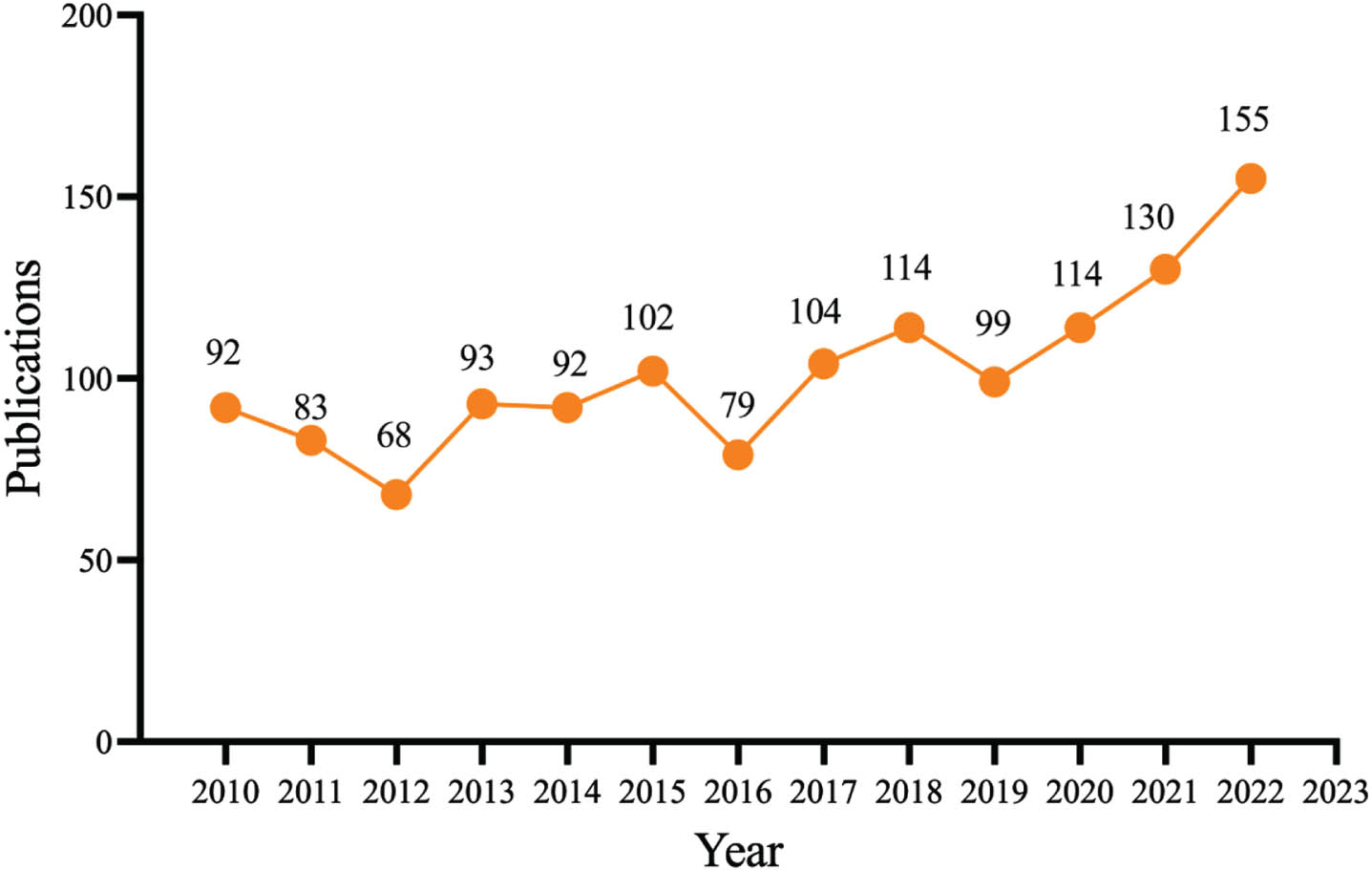
Time trend of the publications.
The number of publications in this field showed an overall increasing trend over the years (with some years experiencing a slight decline). There has been a significant increase in the number of publications, particularly after 2020. This surge reflects the growing attention from scholars, especially since 2020, when the COVID-19 pandemic emerged, making it a prominent topic of interest in the healthcare workforce domain.
Bibliometric analysis of the country
Visualization was conducted on countries with more than thirty-eight publications using CiteSpace, as shown in Fig. 3.

Country analysis.
From the results of the visualizations above, the United States had the highest number of publications, followed by China; scholars from China and Canada publish articles almost every year, while Kore an scholars have published a larger number of articles in the last 3 years. Additionally, scholars from the United States had the most frequent collaborations with scholars from other countries.
This study calculated the average citation count for the top 12 countries regarding publication volume to further analyze the highly productive countries in this field. The specific data are presented in Table 2.
Top 12 countries contributing to publications
The United States has made the most significant research contribution in this field, with a total of 406 published articles and the highest number of citations, reaching 4796 and ranked first in average citation intensity per article. China and the United Kingdom were second and third, with 632 and 161 published articles, respectively. China and the Netherlands were second only to the United States regarding average citation counts.
A compilation of institutions with a publication count of ≥3 is presented in Table 3.
Top 12 institutions contributing to publications
Top 12 institutions contributing to publications
The top 19 institutions regarding publication output were mainly located in the United States, Australia, Canada, the Netherlands, Iran, and Japan. The University of Toronto published twenty articles, ranking jointly first among all institutions. The above institutions are mainly universities but also include others, such as national medical centers.
After counting the number of articles published in journals, this study compiled a list of journals with a publication count of ≥10, along with their citation counts, and calculated the average number of citations per article, as presented in Table 4.
Top 12 journals contributing to publications
Top 12 journals contributing to publications
The journal with the highest number of publications was “International Journal of Environmental Research and Public Health” with a total of 46 articles, followed by “Journal of Nursing Management” with 32 articles, which had the highest number of citations, reaching 729. Regarding the average citations per article, the top-ranked journal was “International Journal of Nursing Studies,” with an average of 45.82 citations per article, followed by “ Journal of Advanced Nursing,” with an average of 42.18 citations per article.
Analysis of co-citation journals
This study extracted the top 14 co-cited articles, as presented in Table 5.
Top 14 contributing co-citation journals
Top 14 contributing co-citation journals
The journal with the highest number of total citations was “Journal of Applied Psychology,” with a total of 71 citations, followed by “Journal of Advanced Nursing,” “ International Journal of Nursing Studies,” and “Journal of Occupational and Environmental Medicine.” “PLOS One” and “Journal of Applied Psychology” had higher centrality, indicating that these two journals hold relatively important positions in this field.
This study obtained information on co-citation references using CiteSpace, as shown in Fig. 4.

Top four references with the strongest citation bursts.
Lai and Spoorthy’s paper had a higher strength of emergence, with a strength of approximately 3 [30, 31]. Combined with the burst illustration in Fig. 4, these two articles have been commonly referenced since 2021 and are expected to maintain a high impact in the field in the near future.
Keyword clustering
This study used CiteSpace to cluster the co-occurrence network of keywords and formed 11 clusters, as shown in Fig. 5.

Co-citation network cluster view.
The clusters were numbered in descending order according to their range, from largest to smallest, as follows: #0 aged, #1 clinical competence, #2 COVID-19, #3 job satisfaction, #4 controlled study, #5 healthcare personnel, #6 questionnaire, #7 middle-aged, #8 employee performance appraisal, #9 workplace, and #10 nurses. Keyword directions were centered around age, training, and performance appraisal.
This study used Vosviewer to generate a keyword co-occurrence network visualization of 8003 keywords from 1408 articles. First, this study analyzed the research hotspots and visualized keywords with a frequency of occurrence ≥51; the resulting density visualization is shown in Fig. 6
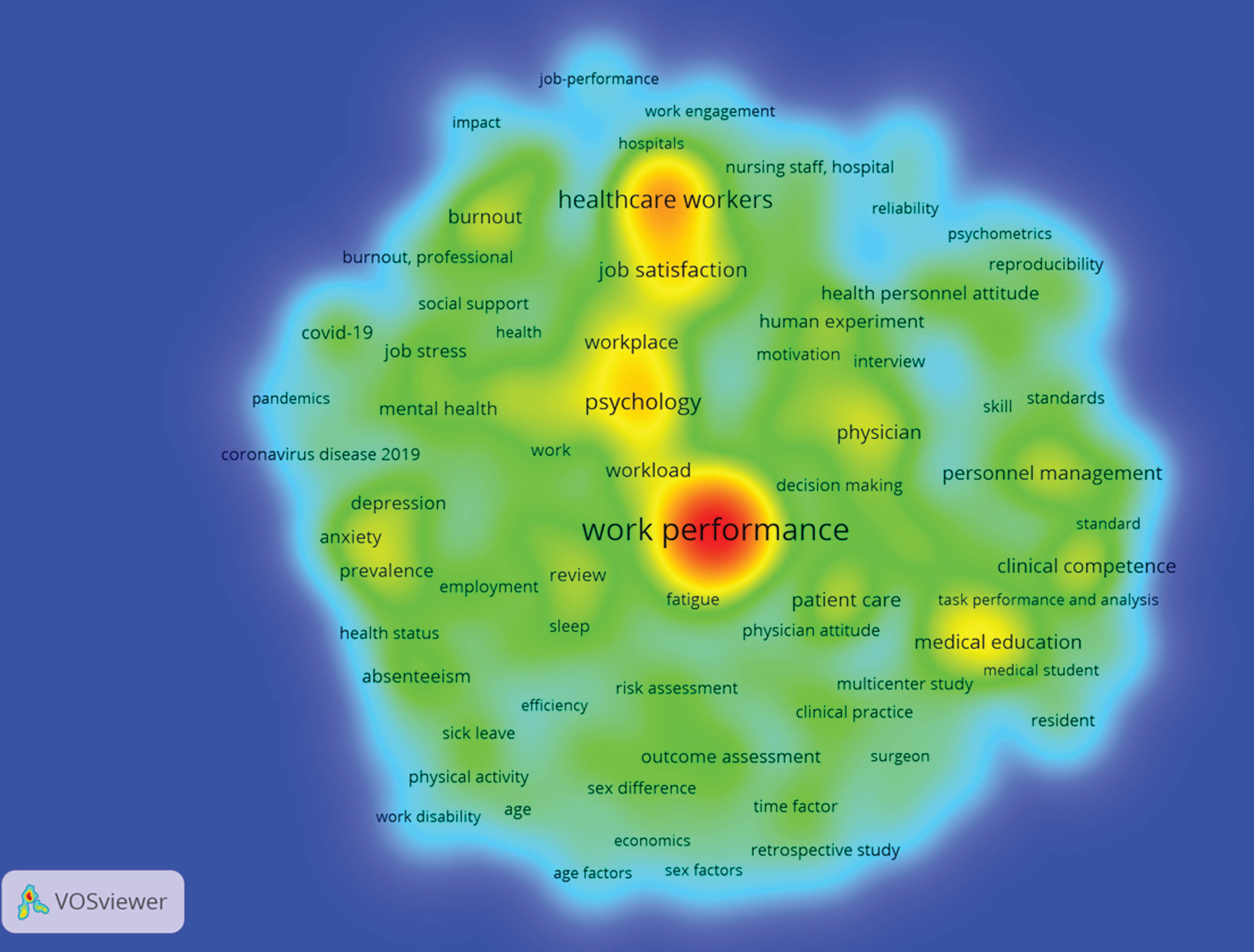
Keyword density visualization.
By selecting and extracting factors influencing work performance from Fig. 6, we can observe that the nodes related to “burnout,” “anxiety,” “psychology,” and “job satisfaction” are notably highlighted in yellow compared to other nodes, indicating that these keywords have received significant attention. Among them, “psychology” was mentioned most frequently, with 221 mentions, followed by “job satisfaction” and “burnout” with 202 and 119 mentions, respectively. Additionally, research on topics such as “sleep,” “workplace,” and “workload” is also highly popular.
Next, this study analyzed the evolving trends in research hotspots after filtering the keywords and using Vosviewer to export the overlay visualization, as shown in Fig. 7.
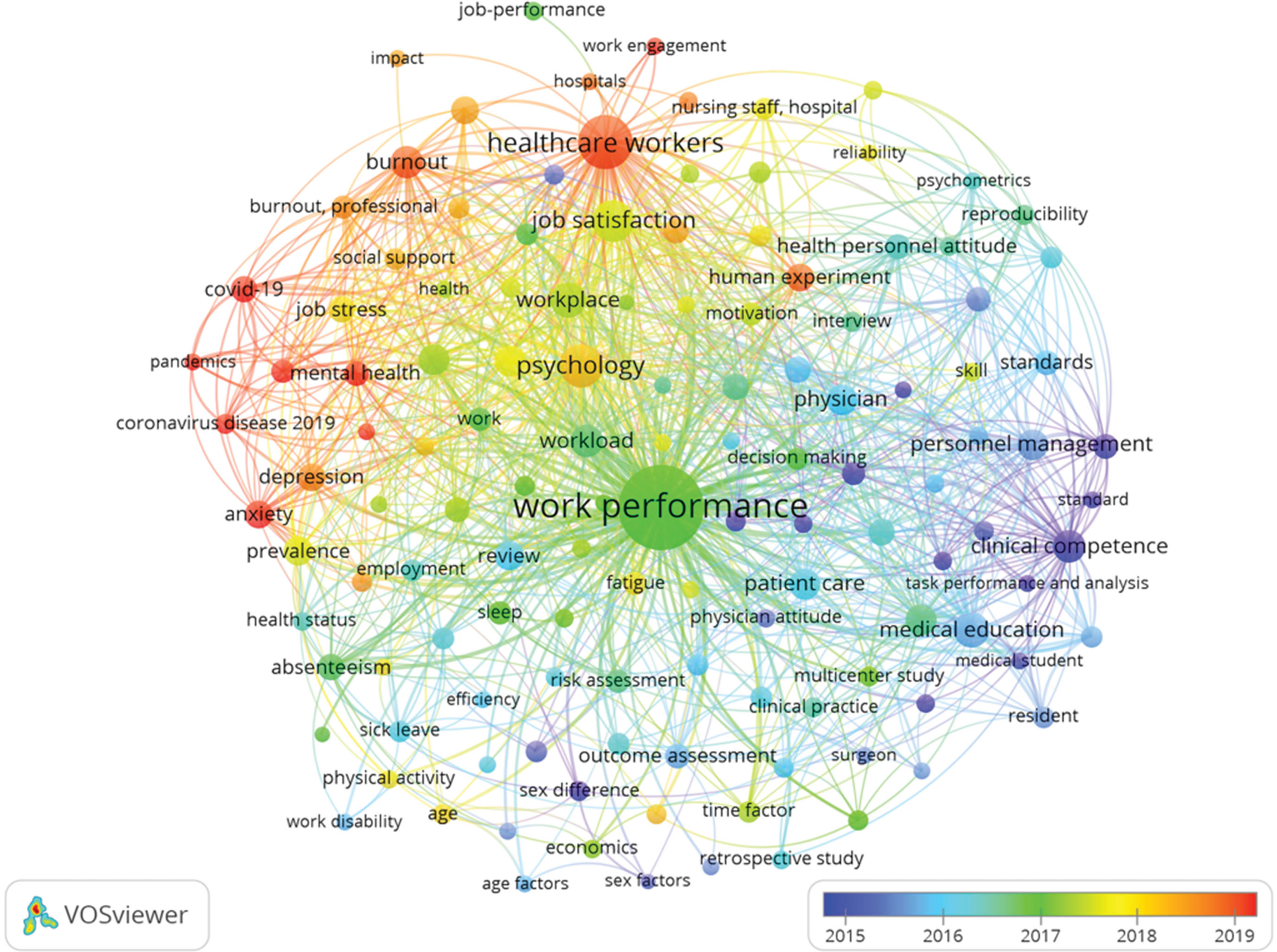
Keyword overlay visualization.
From the legend in the bottom-right corner of Fig. 7, it is evident that the color of nodes, moving from right to left, changes from purple to red, representing the newer years of the appearance of the keywords. Therefore, within the purple area of the figure (around 2015), the keywords primarily focus on “clinical competence,” “standard,” “decision making,” “sex difference,” and similar topics.
Continuing leftward in the figure, within the central yellow-green area (around 2017), the research emphasis shifts towards topics such as “sleep,” “workload,” “physician,” “health status,” and related aspects.
Finally, in the top-left corner of the figure, within the orange-red area (around 2019), the research focus predominantly centers on “burnout,” “mental health,” “anxiety,” “depression,” and similar subjects.
Based on the results of the bibliometric analysis, this study found a clear shift in the focus on influencing factors over time. The emphasis has transitioned from early factors, such as clinical competence, standardization, and decision-making, to factors, including burnout, mental health, anxiety, and depression. We believe that the global COVID-19 pandemic that occurred during this period may be a significant reason for this shift in research focus. Therefore, this study identified 37 articles for analysis (The method for article extraction is illustrated in Fig. 1 of “2.2. Selection criteria”, which includes articles that focus on the work performance of the medical profession, explicitly present the specific content of influencing factors, and discuss their specific impact on work performance.) and organized them into a table (Table 6), with entries including author, year, country, population, methods, sample size, influencing factors, and COVID-19 occurrence.
Extraction of influencing factors
Extraction of influencing factors
As shown in Table 6, 25 of the 37 articles were based on non-COVID-19 situations, while 12 focused on the COVID-19 pandemic in their research background. The factors that influence work performance mentioned in Table 6 are organized from macro- and micro-perspectives, definitions, and relevant reference literature, as shown in Table 7.
Explanation for influencing factors
Table 7 presents 19 factors that influence work performance, including 9 macro and 10 micro factors. This study plotted a comparative graph based on the frequency of occurrence (the proportion of articles that mentioned a particular factor to the total number of articles in that context) of the 19 influencing factors to gain a deeper understanding of the attention paid to these factors during both non-related and related COVID-19 pandemic periods.
In Fig. 8, the blue and orange bars represent articles unrelated and related to the COVID-19 pandemic, respectively. The following research findings were obtained through analysis:
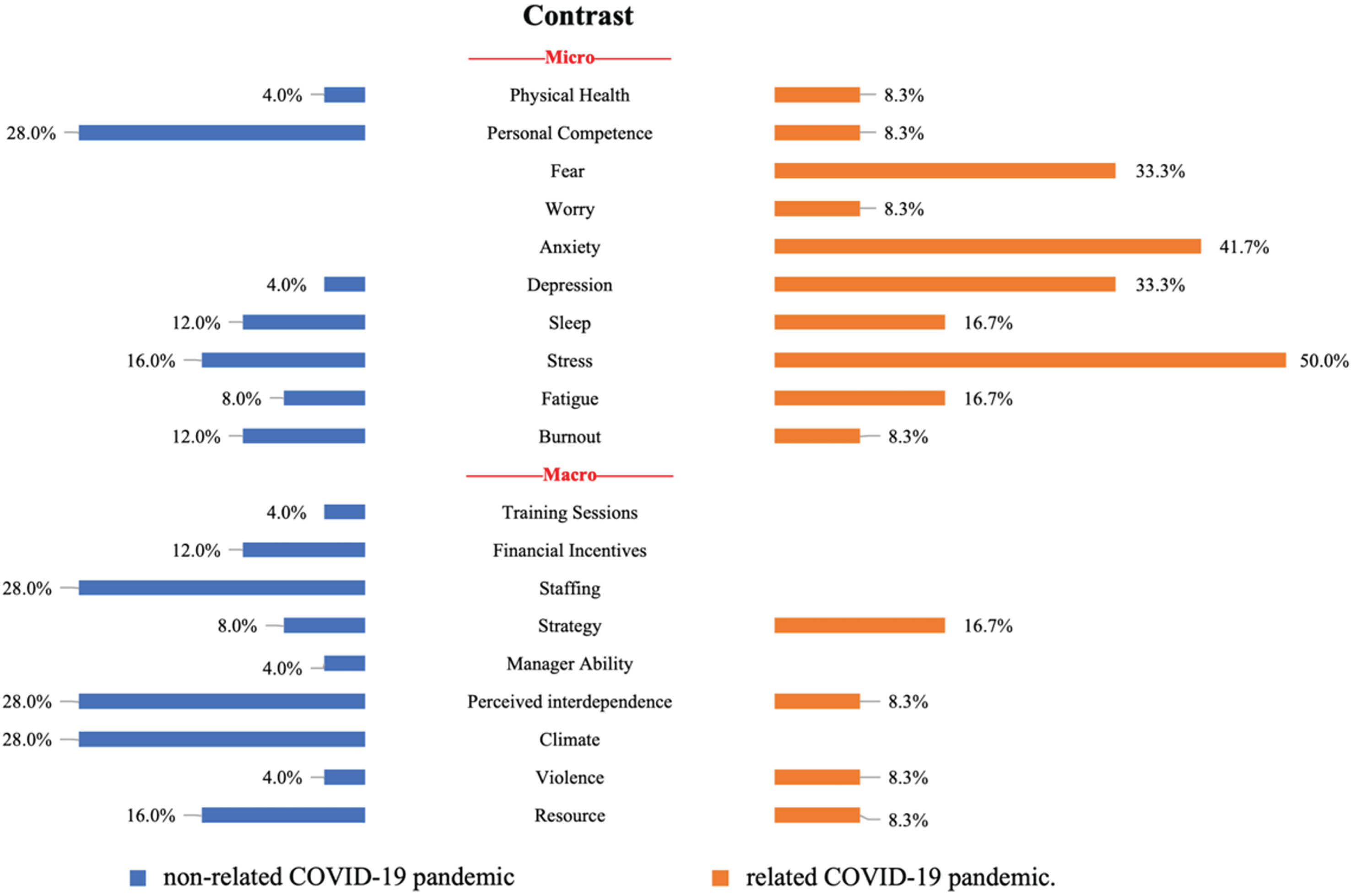
Percentage of frequency of occurrence.
At the micro level, regarding the influencing factors on work performance during the non-pandemic period, the most significant factor cited was personal competence, accounting for approximately 28.0%, followed by stress at approximately 16.0%. Sleep and burnout accounted for approximately 12.0%, while anxiety, worry, and fear were not considered during the non-pandemic period. Conversely, for factors influencing work performance during the COVID-19 pandemic, the most prominent factor was stress, accounting for approximately 50.0%, while anxiety accounted for approximately 41.7%. Fear and depression accounted for approximately 33.3%, while sleep and fatigue accounted for approximately 16.7%.
At the macro level, for influencing factors on work performance during the non-pandemic period, the significant factors were staffing, perceived interdependence, and climate, accounting for approximately 28.0%, followed by resources at approximately 16.0%. Financial incentives were also a significant factor, accounting for approximately 12.0%. For influencing factors on work performance during the COVID-19 pandemic, the most significant factor was strategy, accounting for approximately 16.7%, followed by perceived interdependence, violence, and resources, accounting for approximately 8.3%. However, the other five macro-level factors were not considered.
Research trends on influencing factors of healthcare workers’ work performance
In this study, we conducted a bibliometric analysis of 1408 articles related to the factors influencing healthcare workers’ work performance. We examined various aspects, including the annual trend of article publications, descriptive analysis (including country, institution, and journal analysis), co-cited references analysis (including co-cited journal and reference analysis), and keyword analysis (including keyword clustering and co-occurrence analysis).
First, the analysis of the annual trend of article publications (Fig. 2) revealed a significant increase in the number of publications after 2020, indicating an unprecedented surge in research related to the factors influencing healthcare workers’ work performance due to the COVID-19 pandemic. During the COVID-19 pandemic, the factors affecting work performance exhibited unique characteristics. For instance, Sarfraz et al. emphasized healthcare workers’ fears of contracting the virus and anxiety related to the shortage of medical resources due to their exposure to highly contagious and urgent work environments [18]. Ong et al. also highlighted physical issues, such as headaches caused by wearing personal protective equipment, which impacted work performance [55]. Furthermore, scholars, including Lulli and Yadeta, emphasized the necessity of studying work performance factors in healthcare during the COVID-19 pandemic [61, 65]. Comparing the periods before and during the COVID-19 pandemic is essential to understand and clarify the changing trends.
Second, in the analysis of the Strongest Citation Bursts (Fig. 4), two articles published during the early stages of the COVID-19 pandemic, Lai (2020) and Spoorthy (2020), exhibited significant citation bursts [30, 31]. Lai (2020) revealed that healthcare workers were more susceptible to symptoms, such as depression, anxiety, and insomnia, due to the impact of the pandemic, necessitating immediate special interventions, particularly for women, nurses, and frontline healthcare workers [31]. Spoorthy (2020) also discussed the psychological health challenges experienced by healthcare workers during the pandemic and suggested psychological therapeutic approaches based on stress adaptation models to address these issues [30]. These studies indicated that the most significant impact of the COVID-19 pandemic on healthcare workers was not only an increase in patient numbers and workload but also psychological health issues caused by the pandemic’s uncertainty and high contagiousness. This aspect was further confirmed in subsequent related research [66].
Third, in the keyword overlay visualization (Fig. 7), this study observed changes in the focus of work performance factors over time, with the left side representing the more recent period. This indirectly indicates a shift in research priorities. Before the COVID-19 pandemic, the main focus of work performance factors was on clinical competence, standards, and decision-making. However, with the onset of the COVID-19 pandemic, the emphasis shifted toward issues related to burnout, mental health, anxiety, depression, and other psychological health problems among healthcare workers.
Comparison of influencing factors of work performance before and after the COVID-19 pandemic from macro and micro perspectives
Through a supplementary comparative analysis of the 37 articles, it can be observed that:
At the micro level, the highest proportion during the non-pandemic period was personal competence, indicating that personal abilities and work experience significantly impacted work performance during this period. During the COVID-19 pandemic, stress had the highest proportion, indicating that the greatest change of the pandemic in the healthcare setting was the increase in stress experienced by healthcare workers, which affected their work performance. There was also increased attention to fear, worry, and anxiety, which were not focused on during the non-pandemic period. This suggests that during the COVID-19 pandemic, particularly in the early stages, healthcare workers’ psychological states were affected by factors, including high mortality rates, limited understanding of the infectious agent, and lack of specific treatment plans.
At the macro level, the highest proportions during the pre-COVID-19 pandemic were staffing, climate, and perceived interdependence, while during the COVID-19 pandemic, strategy had the highest proportion, possibly attributed to the sudden changes in the working environment in healthcare settings caused by the COVID-19 pandemic. Therefore, healthcare institutions should develop emergency response plans from a strategic perspective to ensure that healthcare workers receive and treat more patients while ensuring their safety. During the COVID-19 pandemic, healthcare institutions reduced their focus on training sessions, financial incentives, staffing, manager ability, and climate and only focused on strategy, perceived interdependence, violence, and resources. This indicates that in emergencies, such as a pandemic, it is important to provide sufficient medical resources to enhance healthcare workers’ sense of security and create a harmonious working atmosphere, thereby reducing their psychological stress and improving work performance [33, 38].
Furthermore, by comparing the macro- and micro-level factors, this study observed no significant difference in the emphasis on macro- and micro-level factors during the non-pandemic period. However, during the COVID-19 pandemic, healthcare institutions mainly focused on micro-level factors. This indirectly indicates that the COVID-19 pandemic not only increased the workload of healthcare workers but also imposed a greater psychological burden owing to the uncertainty surrounding the pandemic.
Practical value of the study
Multiple factors frequently influence the work performance of healthcare workers. By conducting a comparative analysis of influencing factors before and after the COVID-19 pandemic, this study can provide the following guidance for preventing a decline in work performance during future urgent events similar to the COVID-19 outbreak: First, during special periods, healthcare managers should recognize the psychological well-being of their staff. The focus should be on micro-level factors closely associated with this period, such as fear and worry. Positive measures that address these concerns should be implemented to mitigate the factors affecting frontline healthcare workers’ performance, such as conducting psychological counseling sessions and developing corresponding measures to prevent the occurrence of medical violence conflicts. Second, healthcare institutions should develop timely plans from a macro-level strategic perspective. This includes rational workload planning tailored to specific circumstances, ensuring an adequate supply of medical resources, and providing timely medical training. These actions will help healthcare workers adapt to new situations and safely provide timely care and treatment to patients. In summary, to improve the work performance of healthcare workers, medical institutions can optimize and improve in various aspects. By focusing on the mental health of employees, developing macro-strategic plans, improving the work environment, and enhancing team collaboration capabilities, medical institutions can better respond to future emergencies similar to the COVID-19 pandemic and ensure that healthcare workers can provide high-quality medical services.
Limitations
This study had some limitations. First, this study qualitatively identified the influencing factors on work performance without quantitatively measuring the impact of each factor on work performance. Second, this study was limited to identifying and comparing the influencing factors on work performance without providing specific improvement strategies to enhance work performance. Furthermore, this study was solely based on a literature research and lacked empirical research. Therefore, field investigations and studies in healthcare institutions are needed to validate our findings. Finally, in this study, when extracting the factors influencing healthcare workers’ work performance, this study only searched the SCIE and SSCI indexes of the Web of Science core database. Therefore, the selected 37 articles may have limitations in terms of extracting influencing factors.
Conclusion
This study used bibliometric methods to review 1408 articles on work performance in the healthcare field between 2010 and 2023. CiteSpace and Vosviewer were used to provide an overview of the countries, institutions, journals, co-cited journals, references, and keywords of the articles to provide insights into the development trends and frontiers of research on work performance in the healthcare field. And 37 articles related to factors influencing work performance were selected from 1408 articles for supplementary analysis, ten micro- and nine macro-level influencing factors related to healthcare work performance were extracted. Based on this, a comparative analysis of the frequency of occurrence of the aforementioned factors influencing work performance before and after the COVID-19 pandemic was conducted.
The results addressed limitations in previous studies, such as incomplete extraction of factors influencing work performance and unclear comparisons of changes before and after the COVID-19 pandemic. This study not only supplements the shortcomings of research on healthcare work performance at the theoretical level but also provides insights and guidance for improving the work performance of healthcare workers.
Ethical approval
This study was reviewed and approved by the Biological and Medical Ethics Committee, Northeastern University, China (ID: NEU-EC-2021B003S).
Informed consent
Not applicable.
Conflict of interest
The authors declare that they have no conflict of interest to disclose.
Footnotes
Acknowledgments
This research has received valuable views and suggestions from experts in the medical care field. We would like to express our sincere gratitude to all experts and scholars for their help in completing this thesis. We would also like to thank the editor and anonymous reviewers for their valuable comments and advice.
Funding
This work was supported by the National Natural Science Foundation of China (Grant No. 72171042) and the Fundamental Research Funds for the Central Universities (Grant No. N2406006).