



Abstract
BACKGROUND:
The concept of ergonomics in health services is attracting significant attention in the scientific community. There is a need for an integrated study presenting a summary of the published literature backed by detailed bibliometric characteristics.
OBJECTIVE:
The aim of this study is to provide a summary of the published literature supported by detailed bibliometric properties.
METHODS:
Within the scope of this study, a total of 3008 articles on ergonomics in the health field were reviewed and analyzed using a bibliometric method.
RESULTS:
It reveals the trends of the publications conducted between 1999–2023, and defines the common citation structure between the articles, bibliographic coupling, and keyword co-occurrences. This study presents a knowledge map of ergonomics studies conducted in the health field using a bibliometric analysis method.
CONCLUSION:
The research results provide comprehensive information to the relevant literature, and define global research focuses and future scopes. This serves as a guide for academics to understand developments in the field of ergonomics and health more easily and quickly.
Introduction
Ergonomics encompasses a wide range of practices that aim to optimize the suitability of designs, work environments, and living conditions for human use and adaptation [1]. It is also known as human factors in several countries, primarily in the United States. Considering the systematic order in working conditions and the benefits it provides physically and mentally, ergonomics becomes a significant element in working environments [2]. In health services, human factors and ergonomics cover many parameters such as the design and analysis of individual tools and tasks, physical ergonomics, and the layout of operating rooms and patient rooms, human-technology integration, and teamwork [3].
Despite the acceptance of the need for human factors and ergonomics in health services since the beginning of the profession and discipline, the development and growth process has been slow [4]. The first conference related to health ergonomics was held in Paris in 1991. This was followed by the establishment of the International Ergonomics Association’s (IEA) Technical Committee on Health Care Ergonomics and Patient Safety (HETC9) by François Daniellou in 1997. Since 2005, conferences and sessions with the theme of ergonomics for health services and patient safety have been regularly held, and papers on the subject have been presented [5]. Human factors and ergonomics have grown exponentially in terms of publications in the health field over the last 50 years [3]. As evidence of this growth, a review of citation rates for human factors and health services from 1972 to 2020 determined that the cited publications increased threefold [6]. As seen, the field is vast and hosts in-depth research. In this case, bibliometry will be one of the most suitable methods to evaluate the field in terms of quantitative and statistical aspects.
The number of scientific publications worldwide is increasing rapidly, and with this increase, it becomes more difficult to follow scientific developments. Monitoring changes in different science fields or their subfields by scientists is of vital importance, and academics need to stay up-to-date and have access to the data they need at all times. This demand and requirement have also increased the use of bibliometric methods to this extent. Bibliometry can be defined as “the analysis of works written by certain individuals or institutions in a given field and time, and the relationships between them” [7, 8]. A review of the literature has not identified a bibliometric study examining published works related to human factors and ergonomics in the health sector. In light of this information, the aim of this study is to consider and evaluate studies related to human factors and ergonomics in the health sector using bibliometric analysis techniques within the scope of the literature.
Materials and methods
In this study, bibliometric analysis techniques were employed to accomplish the aim of the research and to discover publications related to ergonomics in the health field in the international literature.
Data source
The bibliometric analysis method was first defined by Pritchard in 1969 [9]. Bibliometry is a method used to analyze publications on a scientific topic quantitatively and qualitatively [10, 11]. It allows researchers to extract quantitative information about the distribution of publications by countries, authors, and journals, and helps to determine hotspots and boundaries of research in a specific field quickly [12].
Data collection
The Web of Science (WoS) Core Collection was used as the data source in accordance with the recommendations of previous bibliometric studies to determine the scientific literature related to ergonomics in the health field [13, 14]. WoS is the most authoritative data source used to review publications, as it includes the most important and influential journals worldwide [15].
This database includes journals indexed by the Social Science Citation Index (SSCI), Science Citation Index Expanded (SCIE), and Arts & Humanities Citation Index (A&HCI), which are seen as respected citation indexes in the academic field [16].
Data scanning was conducted on June 15, 2023, by entering the keywords “Ergonomics” and “Health” into the Web of Science Core Collection (WoSCC) basic search field. As a result of the scan, a total of 6004 publications were identified.
The scans were not restricted by time or any country. Only research articles were included, while other types of publications (e.g., reports, meeting abstracts, retracted publications, and book chapters) were excluded. Studies on ergonomics were included as categories, and the other categories were excluded. Additionally, studies indexed by SCI-E, SSCI, and E-SCI were included. After the inclusion criteria, 3008 publications were included in the research scope, and examined.
Ethical consideration
Since the data of our study were obtained from WoSCC, ethical board approval was not required.
Data analysis
All full records of the publications and cited references were exported from WoSCC. The data were sorted according to bibliometric parameters such as title, keywords, journal, publication year, citation, author, institution, country, and reference. These exported data were transferred to Microsoft Excel 2010 (Redmond, WA, USA) and VOSviewer (Leiden University, Leiden, The Netherlands) to identify the most contributors (authors, institutions, countries) and to create bibliometric descriptor indicators and maps. There is a positive correlation between node size and the number of articles in VOSviewer. Co-authorship analysis was used to evaluate cooperation between different authors, countries, and institutions [17].
The total link strength (TLS; the sum of link weights connected to a node) indicates the power of cooperation between two nodes. The width of links between two nodes is positively correlated with the cooperation strength. CiteSpace (version 5.8.R1) and VOSviewer were used to visualize keyword co-occurrence analysis and reference analysis [18]. Figure 1 shows the methodology used in the study.

Research methodology.
The findings of the research are discussed under two headings: descriptive and bibliometric.
Descriptive findings
As seen in Fig. 2, the topic of ergonomics in health care has attracted considerable interest from academics, resulting in an increase in the number of studies on the subject in this field. In particular, 2021 marks the year with the highest number of publications in this field since 1999, followed by 2020 and 2022, respectively. It can be stated that there has been a constant increase in publications since 2008.
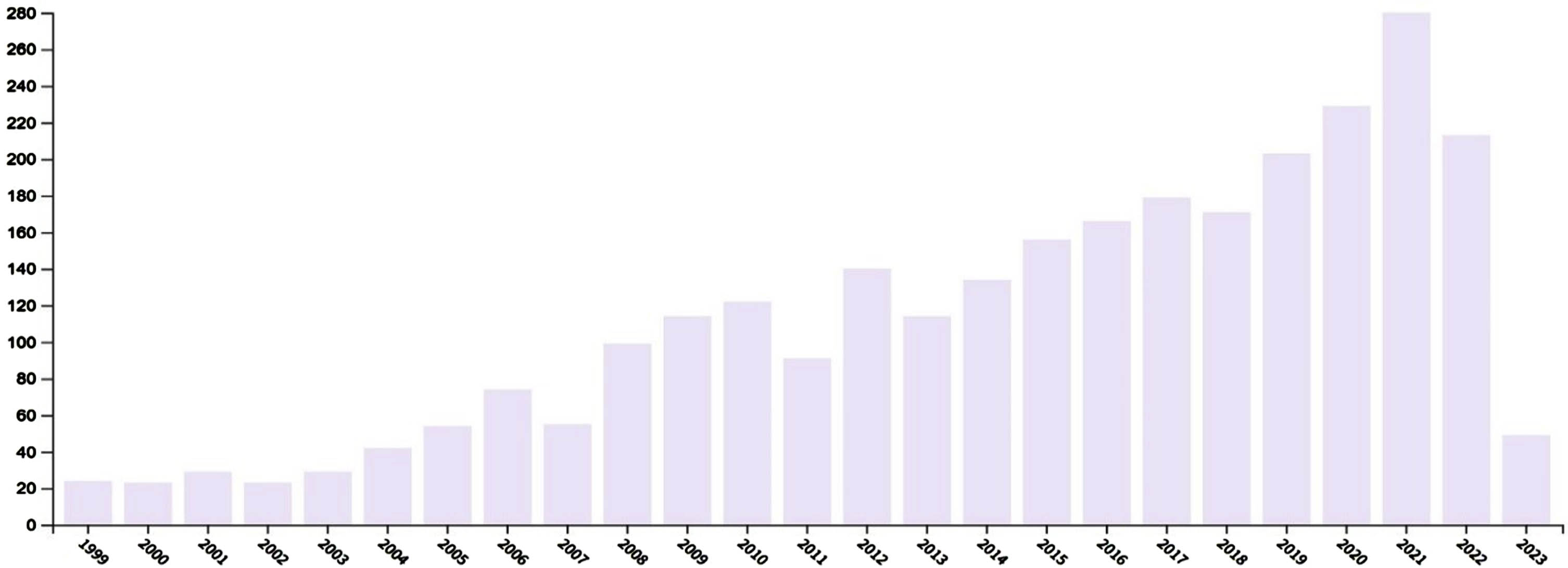
Distribution of publications on ergonomics in health care by year.
Examining Fig. 3, which shows the distribution of publications on ergonomics in health care by language, it is observed that the majority are in English (2981), followed by French (25), German (1), and Spanish (1), respectively.

Distribution of publications on ergonomics in health care by language.
The bibliometric findings are discussed under three headings: co-author analysis (author, country), citation analysis (journal, author, and country), and keyword analysis.
Co-author analysis (author, country)
Figure 4 displays a visual network map of the co-author analysis among the authors of the publications on ergonomics in the field of health. Among the 8780 authors, 1435 have at least two publications and 5 citations. In the figure, larger circles indicate more publications, while smaller circles point to fewer publications. If there is a line between two author’s names, it implies that the two authors have collaborated. The thicker the line is, the more they have worked together. The authors with the most publications are Nussbaum MA. (29 publications), Carayon P. (26 publications), and Mathiassen SE. (24 publications), respectively.

Co-author network.
Figure 5 displays a visual network map of the co-author analysis for collaboration among countries for publications related to ergonomics in the field of health. In the program (VOSviewer), the number of documents cited from countries is selected as a minimum of 5 by the program, including 8 different color clusters in 48 countries. The closer two countries are in a cluster, the stronger their ties are. Authors from the United States have the highest total link strength (260 countries), followed by the United Kingdom (171 countries), and Sweden (133 countries).

Inter-country collaboration network.
Figure 6 features the visual network of the most cited authors. The total number of authors in the examined publications was determined to be 8780. The study focused on 1506 authors who have at least two publications and two citations. In the visual, each color represents a cluster, and a total of 30 clusters have been identified. The larger and more pronounced clusters indicate that they have more citations and more detailed relations with many other clusters. The most cited authors are Mcatamney L. (2288 citations, 3 publications), followed by Carayon P. (1613 citations, 26 publications), and Corlett EN. (1459 citations, 2 publications).
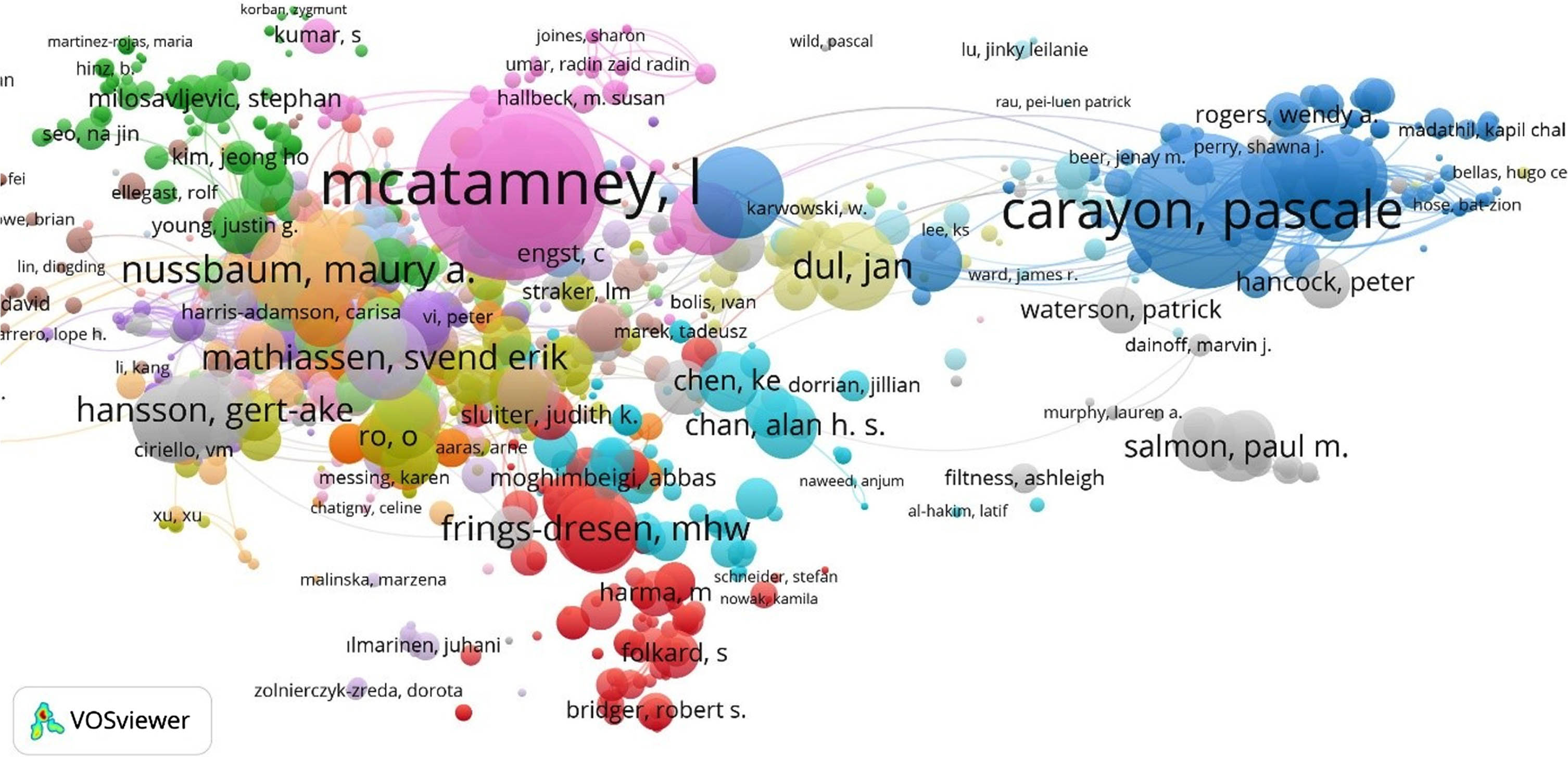
Network of the most cited authors.
Figure 7 provides a visual related to the citation network of the journals. The 3008 publications examined were published in 20 different journals. It was determined that at least 20 publications and citations were received by 10 of these journals.
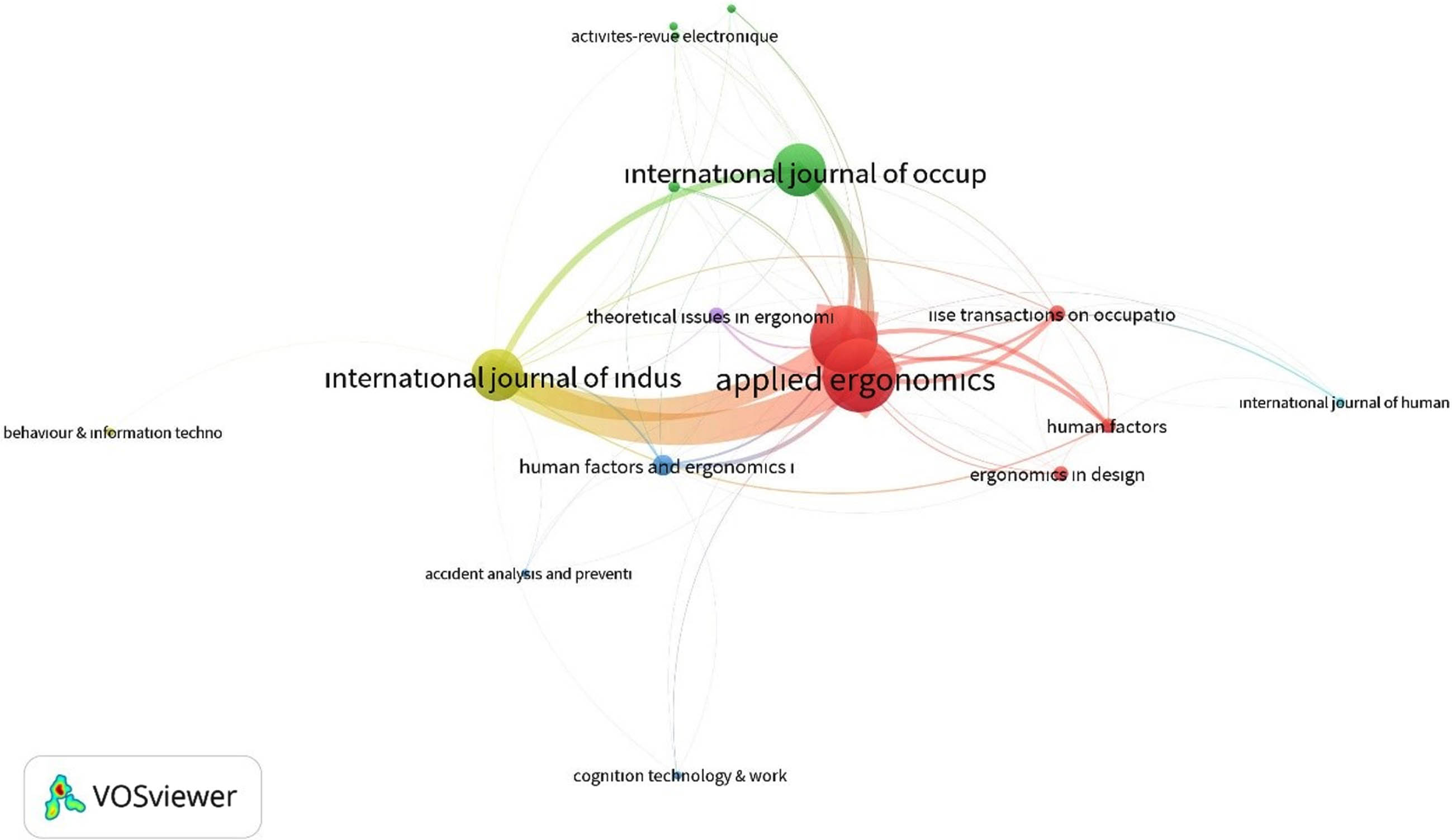
Citation network of countries.
Looking at the journal-based distribution of publications, Applied Ergonomics was found to have the most publications (840 publications), followed by Ergonomics (738 publications), and the International Journal of Occupational Safety and Ergonomics (498 publications). In terms of the journals with the most citations per publication, Applied Ergonomics was found to have the most citations (23,367 citations), followed by Ergonomics (19,945 citations), and the International Journal of Industrial Ergonomics (8,693 citations).
According to the conducted visual bibliometric analysis, six clusters in different colors were identified. The red, yellow, and green clusters appear larger and more pronounced, while the other colors appear smaller and sparse. Considering the whole visual network map, the most cited journals, such as Applied Ergonomics and Ergonomics, are in the same cluster.
Figure 8 provides a visual network map of the most cited countries. There are at least 10 publications and 10 citations in 40 out of 94 countries. The United States has the most citations (19,225 citations), followed by England (6,655 citations), Sweden (5,619 citations), and Canada (5,271 citations). In addition, the visual network map has five clusters in different colors, demonstrating the connections (relationships) between countries. For example, Canada, Denmark, Finland, France, Norway, and Sweden are in the same cluster, indicating close relationships with these countries.

Network of the most cited countries.
Figure 9 provides a visual network map of the relationships among the keywords in the publications related to ergonomics in the health field. Of the total 7,034 keywords in the publications, the 393 most frequently used ones appear at least five times. According to the visual representation in Fig. 9, the most cited keywords are Ergonomics (212), Musculoskeletal Disorders (172), and Occupational Health (105). The size of the circle indicates the most researched topic, and the closer two keywords are to each other, the more often they are used in publications. The lines between them indicate that they were used in the same publication.
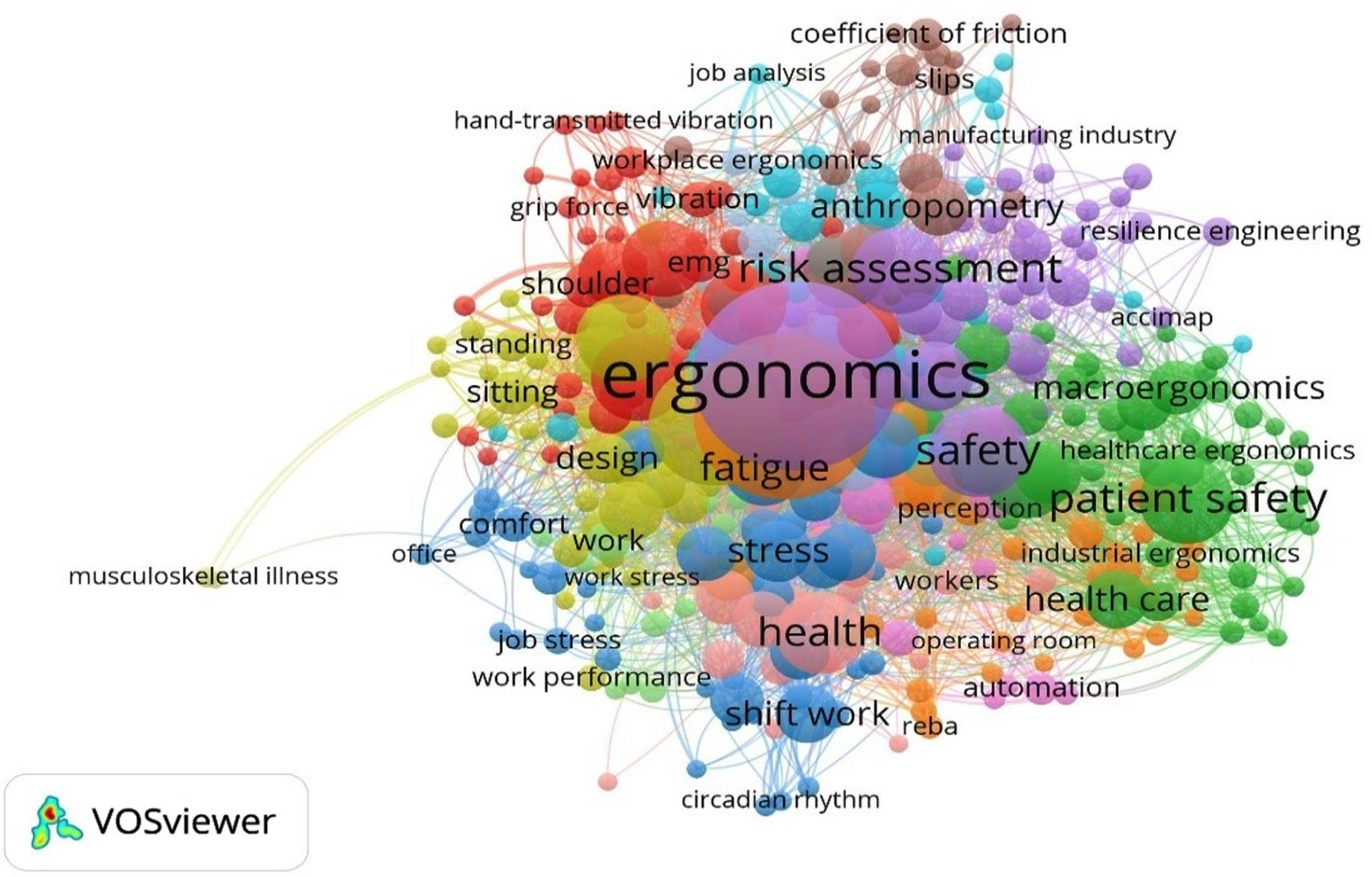
Network of keywords.
In this study, we used visualization tools such as VOSviewer and Excel to examine publications related to ergonomics in the health field over the last twenty-four years, providing a comprehensive overview of global research’s temporal distribution, research collaborations, hotspots, and trends. A total of 3,004 publications were analyzed, accessed from the Web of Science Core Collection database.
In the international literature, it was determined that studies on ergonomics in the health field had continually increased since 2008, with the most prolific year being 2021. It was also observed that the majority of the publications were in the Englishlanguage.
In this field, a total of 8,780 authors contributed to the research, with the most prolific author being Nussbaum MA, with 29 publications. The most prolific authors are from the United States, who are part of an international collaboration network of 260 different countries, and the journal with the most publications is Applied Ergonomics, with 840 articles.
Countries, authors, and journals with the most publications in the field are considered the most productive [19]. Therefore, the United States is the most productive and efficient country in studies related to ergonomics in the health field, whereas Nussbaum MA is the most productive author and Applied Ergonomics is the most productive journal.
Considering the citation analysis of journals, authors, and countries, it is seen that the journal Applied Ergonomics has the most citations with 23,367, that the most cited author is Mcatamney L. with 2,288 citations, and that the United States has the most citations with 19,225. The fact that the journal with the most publications retains its leadership in citation ranking indicates the journal’s productivity and popularity. The most cited author is seen to have a total of three publications. Getting many citations in this field with few publications demonstrates the author’s productivity. Finally, prominence of the United States as the country with the highest citation count and its influence on the international collaboration network can be attributed to its global position as the largest economy and the substantial financial resources allocated to scientific research.
Keywords are a brief summary of the basic content of a document [20]. In this study, the most frequently used keywords are Ergonomics, Musculoskeletal Disorders, and Occupational Health, respectively. It is seen that studies on ergonomics in the health field mostly take place within the framework of how to prevent musculoskeletal disorders with ergonomics, and the studies conducted by the most cited author McAtamney L. and the most publishing author Carayon, P support our keywords [21–23].
The growth trajectory of the ergonomics domain in health clearly indicates its increasing significance in the modern healthcare paradigm. When the literature is reviewed, it is observed that most of the research on ergonomics has been conducted in industrialized and developed countries. The investigation, utilization, and significance of ergonomics are insufficient in developing countries [24, 25]. In a study conducted in 2023, which performed a bibliometric analysis of safety ergonomics, it was found that 533 articles from the WOS core database were included, and the United States was identified as the leading country in terms of the number of publications [26]. Notably, the US has showcased a predominant role, both in terms of contributions and collaborations. The most cited and published journals, namely, Applied Ergonomics and Ergonomics, have emerged as the central figures driving discussions and setting the tone for the field’s trajectory.
From the study, it’s evident that the primary focus of research in this domain revolves around the prevention of musculoskeletal disorders, ensuring the safety and wellbeing of healthcare personnel, and optimizing the healthcare environment for both patients and workers. The prominence of keywords such as Ergonomics, Musculoskeletal Disorders, and Occupational Health resonates with this observation, further confirming the predominant areas of interest.
It is also noteworthy that while there has been a consistent rise in the number of studies, especially since 2008, the most productive year in terms of research output has been 2021. This could potentially be attributed to the challenges faced by healthcare workers during the ongoing global pandemic, spotlighting the need for better ergonomics in healthcare settings. Additionally, during the pandemic period, people spent more time on laptops, desktop computers, and other devices. We believe that the increase in the number of studies related to ergonomics during the pandemic period is due to the association of long periods spent in inappropriate postures with various musculoskeletal disorders [27].
Limitations of the study
This study predominantly sourced its research on ergonomics in the health field from the WoSCC database. Consequently, potential research from other influential international databases, such as PubMed and Scopus, was not incorporated into our analysis. This might have led to selection bias by omitting pertinent studies available in those databases or in non-indexed journals. Studies with alternative phrases may have gone unnoticed due to the picking of particular keyword combinations based on a literature review already in existence. Furthermore, insightful information can be provided through co-citation, co-occurrence and descriptive analysis yet they might not adequately involve complex dynamics and rising trends in the literature. Future endeavors could benefit from a more holistic approach, integrating findings across multiple databases to ensure a comprehensive representation of the field. Additionally, the incorporation of meta-analyses can further amplify the depth and breadth of the insights gathered.
Conclusion
In conclusion, close scientific collaboration was observed between countries and researchers in this field. Rather than the number of publications made, the productive contents of the research on ergonomics in the health field are important, and reading the research of the most cited authors while planning studies will be guiding. In addition, this study will be a guiding source of reference for academics and professionals who would like to do research on the subject. At the same time, this study also plays a special role in promoting the development of the subject area. It helps in discovering new research points and research directions in the field of ergonomics and health to encourage the comprehensive and in-depth development of the subject.
Ethical approval
Ethical approval was not required for this paper.
Informed consent
Not applicable.
Conflict of interest
The authors declared no potential conflicts ofinterest.
Footnotes
Acknowledgments
The authors have no acknowledgments.
Funding
This research received no specific grant from any funding agency in the public, commercial, or not-for-profit sectors.