



Abstract
BACKGROUND:
Using a computer may lead to pain in wrists, neck, and back. In addition, adopting various body postures like sitting cross-legged, semi-fowler’s position, and putting the laptop on the leg may lead to the development of persistent and irreversible discomfort.
OBJECTIVE:
The purpose of this research is to design and build an adjustable ergonomic laptop desk based on the anthropometric characteristics of students in the age range of 20 to 30 years and to evaluate its efficiency using RULA and NERPA methods.
METHODS:
This cross-sectional study conducted on 108 students, in which an adjustable and portable ergonomic desk designed and built based on 10 anthropometric dimensions of students and the length and width of 10 different laptop models. Two assessment methods, RULA and NERPA, were used. Wilcoxon statistic test and SPSS version 26 software used for data analysis.
RESULTS:
The dimensions of the desk were calculated in three positions, and the desk was made with the ability to adjust height, width and tilt, each with two degrees of freedom. The statistical analysis comparing score of RULA and NERPA in two situations without using a desk and using an ergonomic laptop desk had a significant difference (P-value < 0.001). Comparison of RULA and NERPA scores showed that NERPA evaluated the low ergonomic risk level better than RULA method.
CONCLUSIONS:
Due to the ability to adjust the designed desk, the changes in RULA and NERPA score in all three modes, it indicates the effectiveness of the table in improving the body posture of users when using a laptop.
Introduction
In recent decades, progress in various scientific, research, commercial, and industrial fields has led to the widespread use of computers. Also, as a result of technological advances and the widespread use of portable equipment such as laptops and tablets to access information and communicate, mobile-learning has become a new paradigm in the educational environment [1]. The prolonged utilization of a computer in a professional or domestic setting could potentially heighten the probability of generating musculoskeletal disorders (MSDs) and the onset of cumulative trauma disorder (CTD) among individuals [2]. Based on the Dockrell et al. study, 95.4% of students used laptops instead of desktops and found musculoskeletal pains due to a lack of ergonomic principles and long-term use [3]. Furthermore, Rafiee et al. discovered that 77.3% of students who used a laptop for less than two years suffer from wrist and neck pain [4]. They also stated that the pressure points are as follows: 60.3% in the neck, 27.3% at the wrist, and 26% at the right shoulder.
Based on the studies, the use of laptops increases the neck flexion angle, reduces the range of motion, and increases stress on the neck [5–7]. Laptop users encountered six main issues with laptop desks: storage, lack of extra features, lack of laptop mats, discomfort when typing or using the laptop, and complaints of neck pain [8]. Wheelchair users experience difficulties in using laptops due to limited mobility and inadequate workstations, resulting in discomfort in the neck, shoulder, and wrist regions [9]. Working with a laptop in the absence of a desk has been found to engender a heightened sense of unease in the neck region to the tune of a 25 to 50% increase, and a corresponding elevation in back pain on the order of 15 to 30% [10]. Albin stated: Laptop users face severe problems due to not adjusting the viewing angle with the screen and not following the principles of ergonomics, which can be reduced by designing ergonomic workstations [11]. Many studies have shown that different body postures, such as fowler’s on the floor, sitting cross-legged and placing a laptop on an unsuitable table or other object, may cause discomfort in affected limbs in the long-term and cause chronic and irreversible disorders [12]. The effectiveness of using workstations and its effects on neck strain and productivity have been assessed, and the results confirm the importance of adjustable work tools that distinguish anthropometric differences, gender difference and biomechanics to meet the needs [13–17]. It is better to consider the needs of customers in addition to ergonomics in the design of laptop desks [18–20]. Due to the serious and irreversible complications that laptop users face, it seems necessary to design an appropriate desk.
There are several studies in the literature that have examined the usage patterns of students when it comes to employing laptops in various positions. For instance, Ronette Hough et al. indicated that a considerable proportion of students, approximately 51.4%, prefer to position themselves in a sitting posture with their back resting against a surface while using their laptops during class time. About 39.4% of the participants, tend to lie on their back while using laptops. Moreover, a notable percentage of students, around 26.4%, choose to sit on a chair that has a backrest but without a table nearby, indicating their preference for this particular position. Additionally, 19.4% of students opt to adopt a cross-legged position with their laptops placed on their laps. These findings, as reported by Hough et al. [21], shed light on the diverse ways in which students position themselves while utilizing laptops during class time. Similarly, Mojtaba Jafarvand et al. examined the focusing on the cross-legged position among students in the usage of laptops. They found that students indeed utilize laptops in this specific posture [22].
Awkward posture at work is a major risk for musculoskeletal disorders. Various methods have been developed to evaluate occupational postures with the risk factors of musculoskeletal disorders, which can be used to identify high-risk occupations [23–25]. Meanwhile, The RULA method assesses load on the musculoskeletal system due to body posture and predicts medium and high-risk levels better [26–28]. The NERPA method is similar to RULA, while provides a more accurate evaluation. This method reduces angular observation error, and is better at identifying low-risk postures [27, 29]. In this study, both RULA and NERPA methods were used to check high-risk and low-risk levels in evaluate body posture.
The survey conducted among students showed that they use laptops in sitting cross-legged, sitting on a chair, and the semi-fowler’s positions. The students who lived in the dormitory put the laptop on their feet and could not use the laptop table due to the lack of appropriate dimensions of the available laptop tables. Therefore, the aim of this study was to design and fabricate an adjustable laptop ergonomic desk based on the anthropometric characteristics of students in the age range of 20–30 years. Then, in the next phase, the table was developed for use in different positions (sitting cross-legged, sitting on a chair, and the semi-fowler’s position) and finally its efficiency was evaluated and compared using RULA and NERPA methods.
This paper is structured as follows: Sectio 2 presents the materials and methods. Section 3 presents the results. Section 4 discusses the research findings. Finally, Section 5 presents the conclusion, the research achievements and the benefits of the research results.
Material and methods
Design of adjustable desk
This applied research was carried out on university students. The initial test measurement determined the sample size of 20 people. The sample size for women and men was calculated separately with a confidence factor of 95%. After calculation, the total sample size was 108 people, consisting of 47 men and 61 women in the age group of 20 to 30 years. The sample selection was done using Poisson sampling and random selection, with students’ consent obtained.
Inclusion criteria included having at least one year of experience using a laptop, using it for more than one hour a day, and being physically healthy. Exclusion criteria included having any organ defects or musculoskeletal problems, and the person’s unwillingness to continue cooperating. Based on these criteria, no person was excluded from this study.
The participants were given the necessary training and were assured that their information would remain confidential; written informed consent was obtained from the participants to participate in this study.
Measurement of anthropometric dimensions
In this study, the anthropometric data of people was recorded by individual simulation in three positions: sitting cross-legged, sitting on a chair, and semi-fowler’s. Ten anthropometric dimensions such as elbow-fingertip length, abdominal depth, hip width, shoulder-fingertip length, sitting elbow height, knee height in sitting cross-legged posture, thigh thickness, knee-to-knee breadth in sitting cross-legged posture, eye-elbow length, and knee height in sitting on a chair are measured by using an adjustable chair, a Stadiometer, a caliper, and a tape measure. Figure 1 shows how to measure anthropometric dimensions. For each of these dimensions, the mean, maximum, minimum, standard deviation, and percentile from 1 to 99 were calculated.
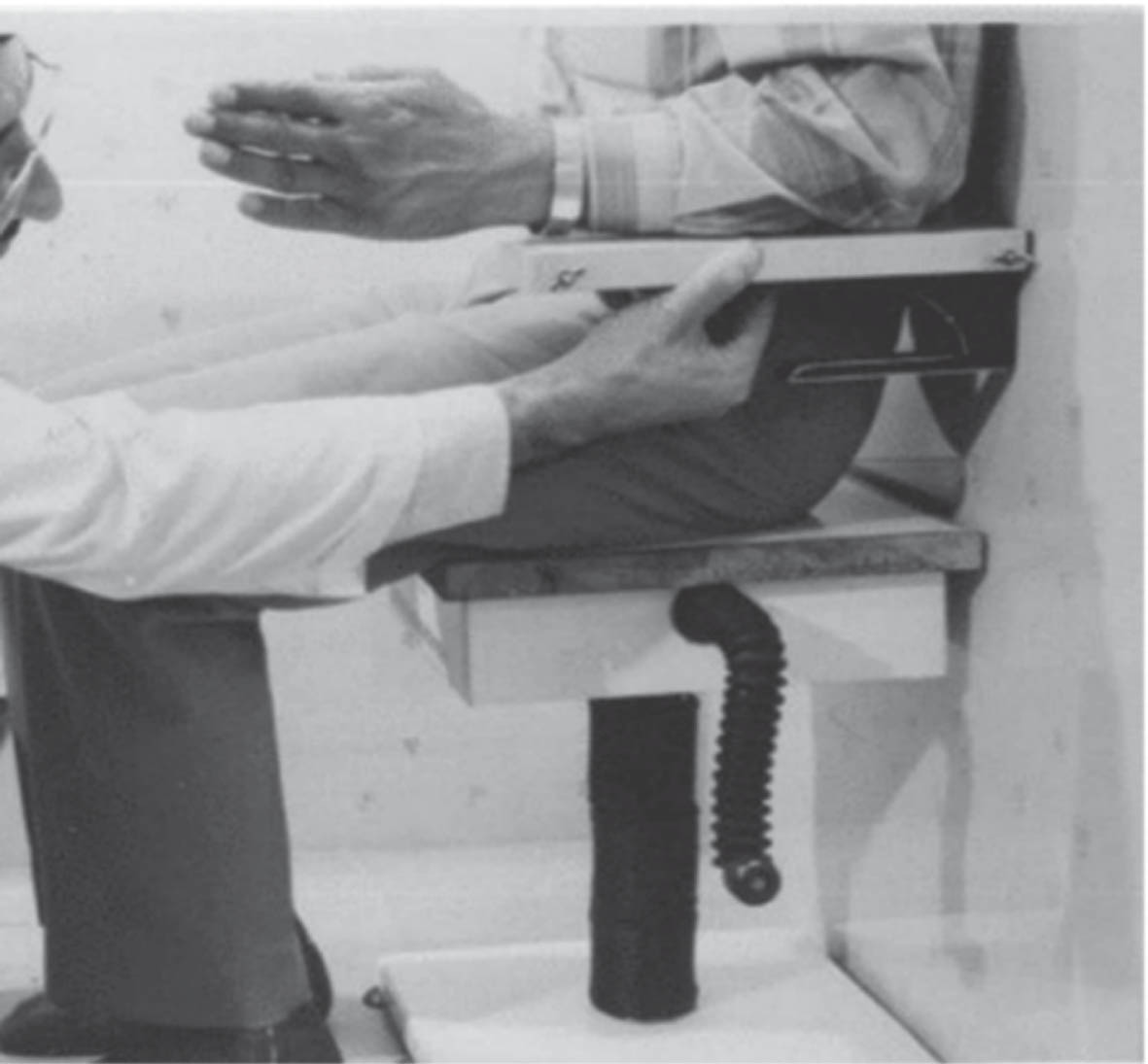
The method of measuring anthropometric dimensions using an adjustable chair and stadiometer (elbow-sitting height).
In order to design the length and width of the desk, 10 different models of laptops available on the market (with a 15.6-inch screen) were studied. According to the average width of laptops, the desk width was determined to be 25.8 cm, and the length of the desk was calculated at 41.7 cm using the gold ratio of 1.618. A good product design in marketing is seen as an opportunity and advantage. The way a product looks affects customer choice in different ways: aesthetic communication, functional and ergonomic information, attention attraction, and categorization. The use of the golden ratio is common in the design of modern industrial products and it has been proven that these rules improve the aesthetic impression a product can have on potential consumers [30]. Items such as the desk height, the distance between the legs, the adjustable range of leg height, the distance of the desk from the body, the slope of the desk surface, the viewing angle, and the distance between the eyes and the screen are calculated using percentiles and standard deviation.
The characteristics and anthropometric equations used in the desk design are mentioned in Table 1.
Table design equations
Table design equations
It is worth mentioning that the desk designed with 0-to-45-degree slopes can be used for all three modes; it can be adjusted according to the height of the eye-elbow to control the bending angle of the neck. In addition, the desk legs had three degrees of freedom (up/down, left/right, and bent back/front). Figure 2 shows how the user uses the desk.
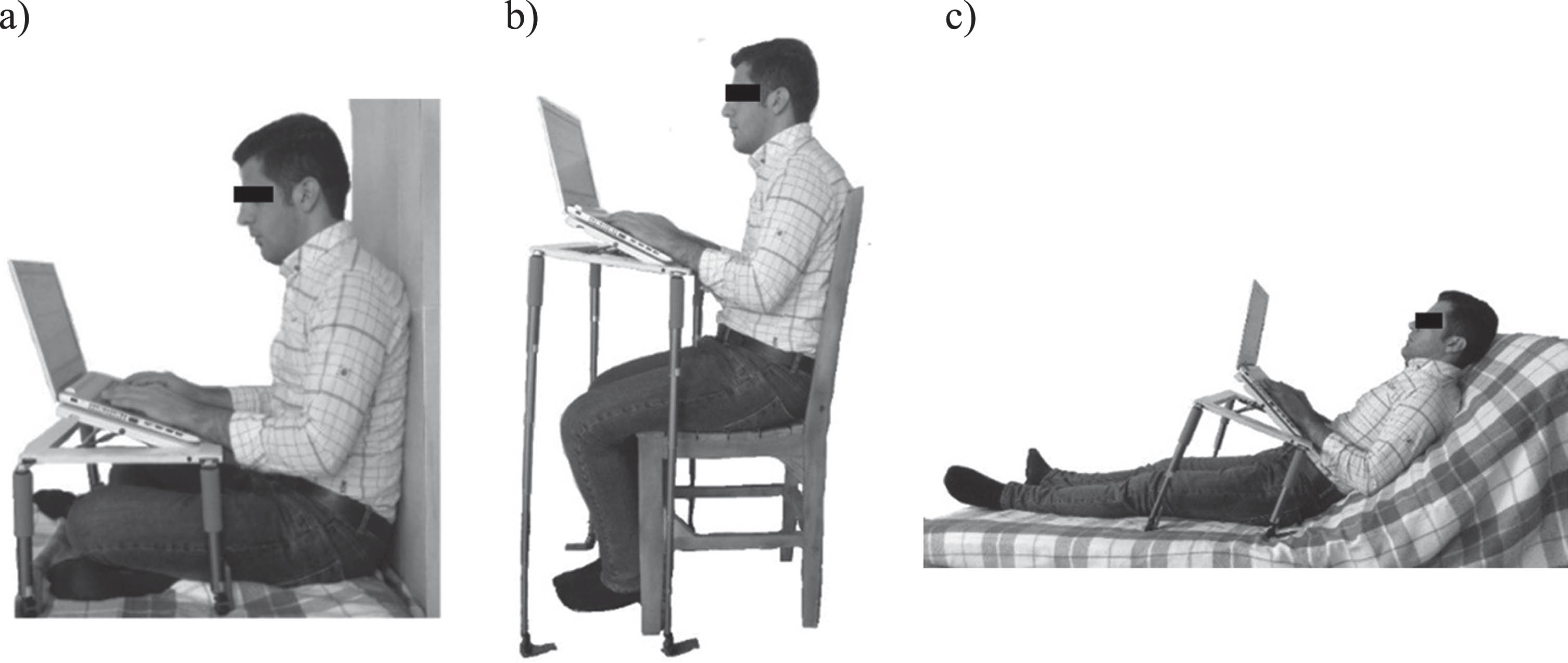
Different modes of using a laptop. a) Sitting cross-legged, b) Sitting on a chair, c) Semi-fowler’s position.
At first, the body posture of people was evaluated in three positions. Afterward, according to previous studies [31], a time of 20 minutes was considered for typing with a laptop to check the body posture of the participants. Finally, their posture was evaluated while using the specially designed laptop desk.
RULA method
In the RULA method, body parts are classified into two groups: A (including arm, forearm, wrist, and wrist twist) and B (including neck, trunk, and leg). After summing up the scores and obtaining the final score, the level of corrective measures is determined. In this study, the body posture of the participants was photographed in different angles and modes, and the body posture of the subjects was evaluated and graded using the RULA worksheet.
NERPA method
The recorded images of the participants in different angles and situations were scored using the NERPA worksheet. In this method, body parts are classified into two groups: A (including the arm, forearm, and wrist) and B (including the neck, trunk, and leg). In this method, after summing up the scores and getting the final score, the level of corrective measures is determined.
Results
The mean age of the participants was 23±3.14.
Designing the ergonomic laptop desk
The average, standard deviation, minimum, and maximum, as well as the 1st, 5th, 50th, 95th, and 99th percentiles of the measured anthropometric dimensions of the participants for 10 investigated parameters, are presented in Table 2. Table 3 also shows the specifications of the designed desk.
Anthropometric dimensions of students
Anthropometric dimensions of students
Table design dimensions
In this study, both methods of RULA and NERPA were used to comprehensively evaluate the effectiveness of the laptop table for both high and low risk levels. Table 4 displays the frequency and percentage of the RULA score. In sitting cross-legged, the highest frequency (38.8%) was related to score 5, which was held by 41% of men. In the position of sitting on a chair, the highest frequency (42.6%) was observed in score 5, of which 52% were men, and in the semi-fowler’s position, the highest frequency (44.4%) was related to score 5, of which 47% were women. According to the RULA, 66.6% of the postures were classified as level 3 risks, with the results being 76.9% of men sitting cross-legged, 88.4% of men sitting on a chair, and 81.8% of men in a semi-fowler’s position. The RULA identified 66.6% of the postures as having a level 3 risk, with the results as follows: sitting cross-legged, 76.9% of men; sitting on a chair, 88.4% of men; and the semi-fowler’s position, 81.8% of men.
Frequency of RULA score
Frequency of RULA score
Table 5 shows the frequency and percentage of NERPA scores. In sitting cross-legged, the highest frequency (51.8%) corresponds to a score of 5, of which 64% were men. Also, while sitting on a chair, the highest frequency (77.7%) was related to a score of 4, of which 82% were men. In the semi-fowler’s position, the highest frequency (92.6%) related to score 4, which was 100% men. According to the NERPA, 78.1% of postures were classified as risk level 2, and 21.9% of the postures were classified as risk level 3, the highest of which was sitting cross-legged (36.1% of women and 70.4% of men).
Frequency of NERPA score
The correlation between the RULA and NERPA methods was checked (r = 0.78). In addition, the results of the average changes of RULA and NERPA scores in two situations without & with using the desk are presented in Table 6.
Changes in RULA and NERPA scores in three positions: sitting cross-legged, sitting on a chair, and semi-fowler’s
A: Without use an ergonomic laptop desk; B: Using an ergonomic laptop desk.
The average RULA scores after using the desk decreased significantly compared to the previous state in the three positions of using the desk, and the biggest change was in sitting cross-legged (–1.85). Also, the mean NERPA score after using the desk decreased significantly in all three modes, with the most significant changes observed in the cross-legged sitting position (–1.44). The comparison of the changes in scores of the RULA and NERPA methods is shown in Table 6. In the cross-legged sitting position, the average change of RULA scores was about 0.41 units higher than the average change of NERPA scores. In other words, after using the desk designed in the cross-legged sitting position, RULA scores were more reduced compared to NERPA scores. In the sitting on a chair position, the average change of RULA scores was about 0.70 points higher than the average change of NERPA scores. That is, after using the designed desk, the decrease in RULA scores was greater than the decrease in NERPA scores. In the semi-fowler’s position, the average change in RULA scores was about 0.88 units higher than the average change in NERPA scores, which indicates the decrease in RULA scores is greater than the decrease in NERPA scores after using the designed desk.
The results of the RULA assessment before using the laptop desk showed that 69.4% of people sitting cross-legged, 62.9% of people sitting on a chair, and 67.6% of people in the semi-fowler position had risk level 3, and this level soon requires ergonomic intervention and changes in the person’s posture. The evaluation of people’s posture after using the ergonomic laptop desk showed that the priority level of corrective measures for all people was reduced to level2, which indicates a reduction in the risk of musculoskeletal disorders.
The results of the NERPA evaluation before using the ergonomic laptop desk showed that 55.5% of people sitting cross-legged and 10.1% of people sitting on a chair had risk level 3. At this level, ergonomic intervention and changes in the person’s posture are needed soon. When using an ergonomic laptop desk, the risk level was reduced to 2 in all subjects, which indicates an improvement in posture.
The risk level of musculoskeletal disorders in laptop users is relatively high, as in the Studies of Dashti et al. and Esmaeilzadeh et al., the highest prevalence of pain was reported in the neck and wrist region [6, 7].
Considering the adverse effects of being in inappropriate body postures on people’s health, performing ergonomic interventions can be an effective step in reducing the incidence of these disorders. Greene et al. improved work postures, methods, risk factors, and pain through ergonomic interventions in computer users’ workstations [14]. Jafarvand et al. recommended laptop users to use adjustable laptop desks to reduce RULA scores, especially in the cross-legged position [22]. Erliana et al. demonstrated that redesigning workstations allowed students to decrease computer-related risk from 2–3 to 1 [19]. Bazazan et al. studied how ergonomic intervention impacted posture correction in control room operators. The findings indicated a decrease in RULA score after the intervention, with average scores of 5.1, 4.4, and 4.6 before, after, and 12 months later, respectively [28].
The study by Veelen et al. found that adjusting the height of the operating desk surface can reduce discomfort in the shoulders, back, and wrists during surgery [17]. The computer desk and monitor height affect neck position and MSDS. It is crucial to use adjustable work tools considering anthropometric differences [15]. In this study, by designing a laptop desk based on anthropometric dimensions, the risk level of participants was reduced. The results of the evaluation of the two methods after the intervention showed that by adjusting the dimensions of the desk according to their body dimensions, people were able to choose a more suitable and comfortable posture, and the possibility of people suffering from musculoskeletal disorders was reduced.
The study conducted by Purnomo et al. aimed to enhance the design of the laptop table through the implementation of the TRIZ (Theory of Inventive Problem Solving) method. The application of TRIZ in the design process focuses on the examination of variable contradictions [8]. Also, Purnomo et al., discovered enhancements by incorporating storage capabilities, modifying the laptop stand, and introducing additional features. Nevertheless, its usability is limited to specific positions. In contrast, the ergonomic laptop desk in the present study can be utilized in three positions: sitting cross-legged, sitting on a chair, and semi-fowler’s. Despite Purnomo et al.’s study validating the absence of disparities between suggested table designs and consumer expectations [8], the examination of the scores of the RULA and NERPA methods in the current study confirms the effectiveness of the ergonomic laptop desk in improving body posture(Table 6). One of the significant advantages of the laptop table produced in the present study is its adjustability and portability, whereas the table modified by Purnomo et al. lacks this capability [8]. Naini et al.’s study on laptop desks for wheelchair users showed that using a new laptop desk can be very effective in improving body posture and reducing local discomfort in the neck, shoulders, and wrists. It also improved typing accuracy but not speed. The study used the RULA method to evaluate the desk’s efficiency [9]. The same results of Naini’s study and the present study confirmed that ergonomic laptop desks can reduce musculoskeletal disorders, but the present study has the advantage of being usable in different positions and having a cooling fan.
A study was undertaken with the objective of creating a laptop table that would be suitable for use in a sit-down cafe where there is access to a Wi-Fi hotspot. The primary focus of the design was to ensure that the table would be ergonomic and comfortable for consumers, allowing them to place their laptops, food, and drinks in a convenient manner. In the research conducted by Hutabarat et al. the Analytic Hierarchy Process (AHP) method was utilized to determine the ideal design, while anthropometry was employed to determine the actual dimensions. The findings of their investigation revealed that the chosen design, which took into consideration the preferences of customers, featured a laptop table equipped with a designated area for food and drinks. Additionally, the table was constructed with brown-colored wood and had the following dimensions: length = 56 cm, width = 34 cm, height = 36 cm [18]. In contrast, the study conducted by Hutabarat et al. [18] only utilized four anthropometric dimensions when designing the table, and the resulting laptop table was specifically designed for use on cafe tables, lacking both portability and adjustability. While in the present study, 10 anthropometric dimensions were measured for the design of the laptop table, and the designed table is adjustable and portable.
Examining the frequency of evaluation scores of the RULA and NERPA methods without using a desk showed that men have a higher priority level for corrective measures when using a laptop, and this means that men are at a higher risk than women. The study by Treaster et al., which examined the gender difference in the prevalence of musculoskeletal disorders of the upper limbs, showed that women experience a higher prevalence of musculoskeletal disorders than men [16]. The findings of this study were not consistent, with the results of our study, which is probably related to the different body postures in different modes of using the laptop. In addition, the anthropometric dimensions of men are larger than those of women; as a result, in the same posture (using a laptop without a desk), men tend to bend their trunk and neck more, which leads to a higher level of risk.
The results of this study showed that the NERPA method identifies low risk levels and the RULA method identifies high risk levels better, in other words, RULA has more predictive power in detecting high risks than NERPA, and NERPA performs better in detecting lower risk levels. This finding was consistent with the result of Sadeghi Yarandi et al. [27]. Sadeghi Yarandi et al. compared three postural assessment methods, NERPA, RULA, and LUBA, in home appliance manufacturing workers and found that NERPA identified the risk of lower musculoskeletal disorders better than the other two methods, and RULA also identifies the risk of high and very high musculoskeletal disorders better than the other two method [27]. The results of Sanchez et al.’s study showed that, in general, NERPA is more limited than RULA but has a better diagnostic tool for identifying low ergonomic risk [29]. Increasing the number of divisions and considering larger angular ranges in the NERPA method has made this method less successful in identifying the high-risk level. The examination of RULA angles showed that the low number of divisions for different parts of the body and the high scores assigned to smaller angular ranges are the reasons for the high scores in the RULA method [27].
In the examination of the average score changes of the two methods, the results showed that the score changes of RULA were greater than those of NERPA. In the RULA method, the most changes were related to sitting cross-legged, and the least changes were related to sitting on a chair. Based on the results, the greatest improvement was made in the correction of the cross-legged sitting posture. The NERPA method saw the most changes in the sitting cross-legged position and the least changes in the semi-fowler’s position, with the sitting cross-legged position receiving the most correction and the semi-fowler’s position receiving the least. In other words, sitting cross-legged was the riskiest mode of using a laptop, which got a high score, and after using a desk, it decreased to a lower risk level. For this reason, the most changes in the correction score relate to this mode. When using a laptop without a desk, the semi-fowler’s position had a lower level of risk than other positions, and this made the changes in the risk score or posture correction in the semi-fowler’s position lower than the others. Tae-Lim et al. conducted research with the aim of investigating and correcting the posture of dental hygiene students. The total score of the RULA posture evaluation before and after correction was 5.72±0.58 and 4.31±0.1, respectively, which showed a significant decrease [24].
In the present study, the correlation between the two methods was checked, and r = 0.78 was obtained, which indicates a good correlation between the two methods. In Khandan et al.’s study, the correlation between RULA and NERPA posture assessment methods investigated in industrial workers was reported as r = 0.74 [23]. Also, Salimi et al. found a correlation r = 0.9 between the RULA and NERPA methods in female hairdressers [25].
The ergonomic desk, made with the ability to adjust the height, improves the neck position and reduces the damage and injuries to the neck to an acceptable level. One of its benefits is the ability to adjust the designed desk in different situations, allowing people of all ages to use it. In an office environment, an adjustable desk height can be better than a fixed one. The results of Rafiee et al.’s study showed that 21% of laptop users adjust their body posture according to the laptop, and because the laptop keyboard is connected to the screen, it leads to postures such as a bent neck or back, raised shoulders, etc., which eventually leads to various physical injuries [4]. The lack of use of other methods to evaluate the productivity of the laptop desk was one of the limitations of the present study. In contrast to the research conducted by Vledder et al. [20], wherein objective instruments were not employed to assess the efficacy of workstation intervention, the current study utilized the RULA and NERPA posture evaluation methods to gauge the ergonomics [20]. This particular aspect represents a notable advantage of the present study. In the study conducted by Esmailzadeh et al. [7], they used a self-report tool to investigate the impact of ergonomic interventions, despite the potential for bias [7]. In contrast, the present study identified the lack of a self-report tool as one of its limitations. This investigation was undertaken at one of the universities within the nation. It is recommended that this study be repeated in other universities to include diverse racial populations. Given the evidence provided by research, it is recommended that a comprehensive approach be taken in addressing ergonomic concerns [7]. In addition to using an ergonomic laptop desk, it is advised to include corrective exercises and short-term periods of rest. It is suggested that the efficiency of the table should be checked while using the tablet. The small size of the sample and the selection of students from the age group of 20–30 years were among the limitations of the present study. According to the conditions, it was not possible to check it for long-term use. Since laptop users are of different age groups, generalizations should be made with caution. Therefore, it is suggested to investigate the efficiency of using the desk designed for long-term users in other age groups, different occupational groups, and in men and women. In this study, pen-paper and observational methods were used for evaluation; it is suggested that computer-based and simulation methods be used to evaluate the desk. The results can help manufacturers produce tables for students.
Future research will be done on equipping the table with a mouse pad and elbow supporter. In the next study, the table will be designed based on the anthropometric dimensions of other age groups (elderly, children, etc.).
Conclusion
Students utilize laptops in various positions, such as sitting on crossed legs, sitting on a chair, and semi-fowler’s position. The utilization of an ergonomic laptop desk has the potential to mitigate their ergonomic risk level. As a consequence, the design, which takes into account anthropometric dimensions and allows for adjustability based on individual body proportions, effectively lessens the risk level and the likelihood of musculoskeletal disorders. Although RULA and NERPA had high correlation, they had different performance in identifying risk levels. RULA identified higher risk level while NERPA identified lower risk level better. These findings provide valuable insights for laptop desk manufacturers to design products that conform to the anthropometric dimensions of the target demographic.
The study’s constraints include the fact that the table is tailored for individuals aged between 20 and 30, thus limiting its applicability to different age cohorts like children. The efficacy of the table in prolonged utilization was not explored, and solely employing the paper-and-pen assessment techniques (such as NERPA and RULA) constituted another constraint of the research study.
It is strongly advised to delve into the efficacy of employing a specially crafted table intended for prolonged usage across various age demographics, locations and nationality, diverse occupational categories, and among both male and female individuals. Within the confines of this particular investigation, the assessment was conducted utilizing traditional tools such as paper, pen, and observational techniques. It is highly recommended to explore the utilization of advanced computer-based methodologies alongside simulation approaches as means to assess the functionality and usability of the aforementioned table.
Ethical approval
Not applicable
Informed consent
The written informed consent (Local Language) was obtained from the participants to participate in this study.
Conflicts of interest
The authors declare that they have no conflict of interest.
Footnotes
Acknowledgments
The authors thank all participants for their kind collaboration.
Funding
Not applicable.