



Abstract
BACKGROUND:
Amidst the post-COVID-19 economic downturn and the expanding higher education landscape in China, employee employment challenges have given rise to the widespread overqualification issue. This phenomenon has attracted extensive attention and is prompting a need for an in-depth exploration of perceived overqualification. However, existing studies predominantly concentrate on its outcomes rather than antecedents, leaving a notable gap in understanding the influence mechanism between individual advantageous resources (e.g., job embeddedness, career adaptability) and overqualification, particularly in specific events such as career shocks.
OBJECTIVE:
This study aims to examine the interplay between employees’ career adaptability, job embeddedness, and the mediating role of relative deprivation in shaping perceived overqualification, particularly in the aftermath of career shocks.
METHODS:
A comprehensive analysis was conducted using data gathered from 339 questionnaire responses. Partial Least Square (PLS) path analysis, R’s necessary condition analysis (NCA), and the Random Forest (RF) algorithm were employed to scrutinize the relationships and identify critical factors influencing perceived overqualification.
RESULTS:
The findings indicate that after encountering career shocks, career adaptability and job embeddedness not only directly impact perceived overqualification but also exert their influence indirectly through the mediation of relative deprivation; Career adaptability, job embeddedness, and relative deprivation are necessary conditions for perceived overqualification, with relative deprivation having the most significant impact.
CONCLUSIONS:
Based on the results, focusing on the psychological changes of employees after suffering career shocks provides valuable guidance for managers in channelling the emotional and cognitive responses of their employees.
Keywords
Introduction
Amidst the post-COVID-19 economic downturn and the widespread accessibility of higher education, underemployment has attracted extensive attention from academia and practitioners [1]. Take China as an example, its higher education has significantly developed over the past 20 years, with the number of university graduates increasing from approximately 3.4 million in 2000 to 11.79 million in 2024 1 . Meanwhile, the unemployment rate among urban youth (16–24 years old) in China has continuously climbed over the past five years, rising from 10.8% in 2018 2 to 20.4% by April 2023 3 .Against this backdrop, one particular concern within underemployment is the phenomenon of perceived overqualification, where individuals feel that their qualifications surpass their job requirements [2, 3].
Given the existing circumstances, it is noteworthy that numerous scholars have conducted extensive research on perceived overqualification. However, previous research has predominantly focused on the outcome of perceived overqualification, encompassing various aspects such as cognitive perceptions, emotional experiences, attitudes, and behaviors [2, 3]. To further advance our understanding, there is a crucial need to delve into the antecedents of perceived overqualification, particularly the mechanisms influencing this phenomenon, a gap in the current literature [2, 4]. Although some scholars have attempted to address this question, their focus has primarily been on demographic variables [3], personality traits [5], team affiliation [6], and job characteristics [7, 8]. However, a noticeable research gap persists in understanding the comprehensive range of antecedents for perceived overqualification [2, 4]. Particularly, there needs to be more context-specific studies highlighting the factors that impact perceived overqualification. Specifically, do individuals who genuinely possess advantageous resources in the workplace also perceive overqualification when they suffer career shocks? If so, how does this perception arise? And what role does emotional experience play in this process?
To address this gap, this study integrates the turnover unfolding model and the Conservation of Resources (CoR) theory to investigate the impacts of individuals’ advantageous resources (e.g. job embeddedness, career adaptability) on perceived overqualification among employees who have experienced career-related shocks, considering relative deprivation as the mediator variable. A “shock” in the turnover unfolding model represents various events within and outside the organization that can impact employees [9]. Shocks can make employees reconsider their connection to their jobs, triggering emotional solid reactions [10].
The Conservation of Resources (CoR) theory posits that individuals strive to acquire, retain, and protect valuable resources [11]. These resources encompass material wealth, conditional assets enabling access to critical resources, personal traits such as self-efficacy, as well as energy resources like time and money. Job embeddedness represents the depth of an individual’s connection to the workplace, providing a support network as a buffer against work stress [12], which can be defined as conditional and energy resources based on CoR theory. Individuals highly embedded in their work possess a wealth of tangible and intangible resources, forming a network of connections between individuals and organizations, deterring them from leaving the office [12]. While career adaptability equips individuals with the necessary flexibility and capabilities to manage career transitions smoothly [13], defined as individual resources based on CoR theory. Indeed, career adaptability has long been regarded as a personal resource advantage [8, 14]. Whether job embeddedness or career adaptability, existing research has focused more on their positive impacts [15–19], with only a minority of scholars concerned about their “stuck effect” and “dark side” impactrespectively [20–22].
Building upon this, this study will focus on the “stuck effect” of job embeddedness and the “dark side” of career adaptability. Specifically, when individuals in an organization experience career shocks (such as affirmations, external job change opportunities; failed promotions, work conflicts, etc.), they first assess the impact of these career shocks on their resources, including job embeddedness and career adaptability, which integrate features of conditional and energy resources, and personal resources.
Subsequently, they reevaluate their roles and status within the organization. If career shocks lead to a reduction in individual responsibilities or a mismatch between roles and abilities, individuals may begin to perceive that their resources (e.g., job embeddedness and career adaptability) are not being fully utilized. According to the primacy of resource loss in CoR theory [11], when individuals cannot effectively utilize their resources, they may spiral into a vortex of resource loss, with resource scarcity leading to further losses, such as skill degradation due to underutilization. Career shocks may lead to a mismatch between individuals’ roles and responsibilities and their skills and abilities, whereby personal resource advantages (e.g., job embeddedness and career adaptability) may trigger negative emotional responses (e.g., relative deprivation), resulting in perceivedoverqualification.
Relative deprivation is frequently employed as a mediating variable between perceived overqualification and outcome variables [2]. The significance of negative emotions as influential factors in shaping the perception of overqualification has been emphasized by [3]. Consequently, relative deprivation, a common experience linked to negative emotions [23], emerges as a potential factor contributing to individuals’ perceived overqualification [7]. Nevertheless, there remains a gap examining the role of relative deprivation in the antecedents of perceived overqualification. Thus, this study introduces relative deprivation as a mediator in the connections among career adaptability, job embeddedness, and perceived overqualification.
The study will contribute in several aspects. Firstly, it utilizes the CoR theory to provide novel insights into how individuals’ advantageous resources (e.g. job embeddedness, career adaptability) influence on perceived overqualification, particularly highlighting the contextual role of career shocks. This less-explored area advances the research frontier. Secondly, introducing relative deprivation as a mediator enriches the understanding of the emotional mechanisms underpinning perceived overqualification, shedding light on the significance of emotional experiences in this process. Furthermore, by exploring the “dark side” of career adaptability and “stuck effect” of job embeddedness, the study reveals how these typically positive resources may lead to perceived overqualification under shocks, thereby adding complexity to the narrative around career resources. Finally, this study combines PLS and R for sufficiency analysis, necessity conditions analysis and importance ranking of influencing factors. The integration of these methods echoes the research of many expert scholars [24–26].
Literature review and hypotheses development
The antecedents of perceived overqualification
What factors induce perceived overqualification? Existing studies mainly focus on demographic variables, personality traits, interpersonal relationships, and work characteristics [2]. Regarding demographic variables, scholars have differing views. Some argue that women are more likely to experience it due to career obstacles and gender discrimination [4], while others suggest that men are more prone to it [27]. Similarly, how age predicts perceived overqualification is ambiguous [3], with studies indicating that young and older individuals may face mismatched positions [4]. Despite conflicting findings, higher levels of education have been associated with perceived overqualification, as job opportunities have not kept pace with increasing educational qualifications [3]. Additionally, individuals who have been with an organization longer and are familiar with their tasks may perceive overqualification if they are not assigned essential responsibilities [8].
Concerning personality traits, individuals with narcissistic tendencies tend to overestimate their abilities and are more likely to experience perceived overqualification [28]. Individuals with high levels of negative affectivity focus more on the negative aspects of their work, leading to a higher perceived overqualification [3]. Bored individuals may experience overqualification because they attribute their boredom to having high qualifications rather than to the stable traits that make them more prone to experiencingboredom [5].
In the realm of interpersonal relationships, employees who have established high-quality relationships are less likely to perceive overqualification. For example, having high-quality leader-member exchange relationships and being part of a highly cohesive team make individuals feel valued, provide them with more opportunities for resource acquisition, and expose them to more challenging tasks, thus reducing the sense of overqualification [6].
Regarding job characteristics, [7] propose two primary pathways through which perceived overqualification arises. Firstly, it can be an emotional response when individuals perceive under-utilization of their qualifications in the work environment, resulting in negative psychological experiences because of the discrepancy between expectations and reality. Secondly, a lack of perceived job value can also lead to a sense of overqualification. Factors such as high job repetitiveness, uniformity of attire, low salary levels, and low job challenges contribute to this perception [7, 8].
Despite some progress in studying the antecedents of overqualification, significant gaps in our understanding warrant further research [2, 4]. For instance, it remains unclear whether individuals who genuinely possess advantageous resources in their work also experience a sense of overqualification. Therefore, additional investigation is necessary to shed light on this aspect and address the existing gaps in the literature.
Job embeddedness, relative deprivation and perceived overqualification
Job embeddedness is a resource-rich state in which various tangible and intangible resources converge to form a network of connections between individuals and organizations, preventing individuals from quitting their jobs [12]. The concept was initially introduced to answer the question of “why employees stay in their jobs” [29]. As a result, most related studies have predominantly focused on its positive impacts, such as reducing turnover intentions [18], fostering organizational citizenship behavior [15], and enhancing job performance [16].
However, some scholars have proposed that job embeddedness can have adverse effects when employees are exposed to unfavorable working conditions [20, 22]. For example, in abusive supervision, highly embedded employees are more susceptible to experiencing emotional exhaustion and adverse physical symptoms [20]. Moreover, Allen’s findings indicate that this stuck effect of job embeddedness is not limited to extreme organizational contexts such as abusive supervision; it extends universally to job insecurity situations, resulting in adverse reactions. Therefore, Allen predicted that job embeddedness’s “stuck effect” may permeate organizational life.
In the turnover unfolding model [9], “shocks” refer to various events that can significantly impact employees within and outside the organization. These events can be either positive or negative. Positive shocks include project completion, salary increase, and receiving external job opportunities, whereas adverse shocks encompass team conflicts, promotion failure, and working environment transition. Experiencing a series of shocks can affect an individual’s emotional reactions, subsequent attitudes, and behaviors [10, 30].
Job embeddedness encompasses the individual’s connections or networks within the work environment and the fit, such as relationships with colleagues or alignment with organizational values and culture [12]. Thus, according to the CoR theory, job embeddedness can be seen as a composite resource, incorporating both conditional resource and energy resource characteristics, as these connections and networks provide avenues for individuals to access other resources (such as support and information), contributing to their stability and growth within the organization.
Regarding adverse shocks, employees’ negative events experience like promotion failure or conflicts with managers could prompt them to reevaluate their current organization’s values and reflect on the fit between their identity and their current position [10]. Individuals tend to question their prior decisions critically during such reassessment and may exhibit reduced satisfaction with their earlier choices [31]. Based on the CoR theory, individuals prioritize protecting existing resources over acquiring new ones. Therefore, highly job-embedded individuals tend to prioritize protecting their resources when they faced with adverse shocks, but are reluctant to opt for resignation readily [32]. Consequently, the compounded effect of diminished satisfaction intensifies emotional reactions [10], such as anger or resentment, particularly in highly embedded individuals who sense a deprivation of autonomy. As job embeddedness rises, the difficulty of leaving the current organization becomes more pronounced [32], heightening the perception of deprivation.
On the other hand, the CoR theory posits that individuals strive to maximize the utilization of resources and endeavor to cultivate a spiral of resource appreciation, aiming to attain a greater reservoir of resources [33]. Highly embedded individuals possess abundant initial resources [12] and are committed to maximizing resource utilization, striving to cultivate a resource appreciation spiral to gain more resource stock. Thus, when better career opportunities arise externally, highly embedded individuals, due to their strong organizational ties, find it difficult to act on their thoughts of leaving caused by these positive shocks, leaving them stuck in the current situation [10]. As a result, they incur a series of opportunity costs associated with staying, missing out on further career development opportunities [34, 35], and the chance to acquire more resources, thereby experiencing emotional deprivation.
Relative deprivation is an intrinsic mechanism whereby employees usually compare their current job situation with their ideal job depending on some subjective criteria [36], and when individuals subjectively perceive a discrepancy between expectations and reality, it can trigger negative emotions like anger, dissatisfaction, and resentment [23]. The prolonged growth of these negative emotions can result in the continuous depletion of personal resources. The CoR theory suggests that individuals consistently strive to preserve, protect, and augment the resources they value [11]. Individuals may adopt cognitive defense mechanisms to counter the persistent expansion of these negative emotions. Previous research has shown that one defensive pathway is to lower their organizational commitment or identification [23, 37]. This study contends that an additional pathway involves bolstering self-awareness to establish psychological defenses.
In summary, when individuals encounter shocks, they reevaluate their connection to their work, thereby diminishing their perception of alignment with the organization [10]. This “stuck effect” triggers a sense of deprivation. To cope with the resource depletion caused by these negative emotions and maintain a positive self-concept, individuals constantly reaffirm their own values by altering their self-perception [38]. They come to believe that their abilities exceed the demands of their current role. That is to say, individuals, in an effort to protect and replenish resources, may undergo a process from resource assessment to resource protection, loss, and ensuing negative emotions (relative deprivation), ultimately leading to perceived overqualification. Through this process, they establish psychological defenses to prevent further resource loss. Drawing from the preceding discourse, this study proposes the following hypotheses.
Hypothesis 1: Job embeddedness will positively influence perceived overqualification when individuals encounter career shocks.
Hypothesis 2: Job embeddedness will positively influence relative deprivation when individuals encounter career shocks.
Hypothesis 3: Relative deprivation will positively influence perceived overqualification when individuals encounter career shocks.
Hypothesis 4: Relative deprivation will mediate the relationship between job embeddedness and perceived overqualification when individuals encounter career shocks.
Career adaptability, relative deprivation and perceived overqualification
Career adaptability reflects individuals’ ability to navigate current and future occupational tasks, transitions, and events [13]. It is a personal resource advantage in the work environment and career management [8]. High career adaptability entails focusing on future career development (career concern), maintaining self-discipline to deal with future career tasks (career control), actively seeking information related to career development (career curiosity), and possessing strong confidence to overcome career obstacles (career confidence) [39]. While previous research has predominantly highlighted positive outcomes of career adaptability [17], some studies suggest adverse effects. For instance, high career adaptability has been linked to job dissatisfaction [21] and increased turnover intentions when organizational needs cannot meet employee expectations [40].
According to the CoR theory, career adaptability is considered a personal resource because it involves personal abilities, attitudes, and personality traits such as problem-solving skills, flexibility in future career planning, and career goals, which are intrinsic qualities that help individuals cope with changes and challenges in career development [8, 41]. According to the “gain spiral” concept in the CoR theory, individuals with ample resources tend to invest these resources to obtain even more, thus increasing their overall resource stock [42]. However, when confronted with negative shocks, individuals with high career adaptability may weaken their attachment to the current organization [10], becoming less inclined to invest in related resources. This shift in investment leads to a perception of overqualification.
Furthermore, individuals with high career adaptability display increased mobility and a greater willingness to seize opportunities [40, 43]. Therefore, when these employees encounter positive shocks, they become more attentive to the extent to which their current job provides opportunities for career advancement [8, 44]. Perceiving a discrepancy between the opportunities offered by the current organization and their expectations can trigger negative emotions such as dissatisfaction and anger, contributing to relative deprivation. Meanwhile, their strong focus on career development and awareness of the level of challenge in their current job may lead them to feel that their resource advantages are underutilized, resulting in a sense of overqualification [8]. Moreover, individuals tend to feel overqualified when they feel themselves as superior to others or focus on the negative aspects of their work [2]. In this case, career adaptability individuals may perceive themselves as overqualified, and relative deprivation mediates this effect. In light of the earlier discussion, this research articulates the subsequent hypotheses.
Hypothesis 5: Career adaptability will positively influence perceived overqualification when individuals encounter career shocks.
Hypothesis 6: Career adaptability will positively influence relative deprivation when individuals encounter career shocks..
Hypothesis 7: Relative deprivation mediates the relationship between career adaptability and perceived overqualification when individuals encounter career shocks.
Research methods
Sample and data collection
Due to the prevalent phenomenon of perceived overqualification in contemporary organizations, this study focuses explicitly on employed staff at China as the population frame [28]. The selection is grounded in the significant shifts in China’s labor market dynamics and educational landscape. The impact of COVID-19 on slowing down China’s economic development, alongside a substantial increase in higher education attainment, has led to a pronounced mismatch between the advanced qualifications of the workforce and the requirements of available jobs. This unique context underscores the relevance of investigating the phenomenon of overqualification among China’s employed staff and also offers insights not readily observable in other countries’ more static labor markets.
This study employed a non-probability sampling method, specifically judgment sampling, due to the practical infeasibility of accessing the entire employed population in China, which, as reported by the National Bureau of Statistics of China, amounted to 733 million by the end of 2022, including 459 million urban employed individuals. Also, the perception of overqualification tends to be more prevalent among employees who are in the early stages of their careers and those with higher educational backgrounds [3]. Thus, the sampling frame was narrowed to MBA and EMBA students at Guizhou University, because of their diverse industry backgrounds, advanced education and developingcareer stages.
Because of the COVID-19 pandemic, the data collection procedure involved creating an electronic questionnaire on the Wenjuanxing platform and distributing it to MBA and EMBA students via online WeChat groups. To select samples that have recently experienced shocks, the questionnaire included items such as “In the past year, I have encountered negative professional conflict events in my work” and “In the past year, I have encountered positive professional conflict events in my work.” The survey was administered from December 7, 2022, to January 10, 2023. 550 participants provided their basic information and responded to job embeddedness, career adaptability, relative deprivation, and perceived overqualification measures.
After excluding samples that did not experience shocks or provided invalid responses, a final sample of 339 valid questionnaires was obtained, resulting in an effective response rate of 61.64%. Employing G*Power analysis and Krejcie & Morgan’s table, this study identified an optimal sample size range of 77 to 384. Given the 43 questionnaire items, the final sample of 339, exceeding the recommendation of the sample size, which exceeds 5 times or more than the item number [45], is deemed suitable. The participants were from various cities in China, including Beijing, Shanghai, Tianjin, Chongqing, Guangdong, and Guizhou. The male proportion was 48%. Regarding age, 39.5% of the sample was between 22 and 26. 33% were between 27 and 31 years old. 17.4% were between 32 and 36 years old. 8.2% were between 37 and 46 years old. 1.9% were over 47 years old. Concerning education, 74.8% had a bachelor’s degree or higher. Regarding income, 32.7% had a monthly income below 5000 RMB, 32.4% had an income between 5000 and 8000 RMB, 25.9% had an income between 8000 and 17000 RMB, and 9% had an income above 17000 RMB. Regarding job tenure in the current organization, 25.3% had worked for less than one year, 23.3% had worked for 1–2 years, 16.2% had worked for 3–5 years, and 35.2% had worked for more thanfive years.
Variable measurements
All the scales (shown in Appendix 2) applied in this study adopted the Likert five-point scoring method, where one represents “strongly disagree,” and five represents “strongly agree.”
The Scale developed by [46] was employed to construct perceived overqualification. The scale consists of nine items, such as “I have job skills that are not required for this job”.
The three-item scale developed by [47] was employed to measure relative deprivation. Example items include “Generally speaking, I think I ought to have a better job situation than the one I have now”.
The Chinese version of Career adaptability was employed, which was revised by [48]. This scale consists of 24 items across four dimensions: concern, control, curiosity, and confidence. Example items include “You often think about what your future will be like,” “You can keep upbeat,” “You explore surroundings around you,” and “You can efficiently perform tasks.”
Job embeddedness was assessed using the overall scale developed by [49], which consists of seven items. An example item is “I feel attached to this organization.”
In addition, building upon previous research, this study incorporated education, gender, job tenure, and income as control variables [3].
Measurement assessment and hypotheses test
Reliability and validity
This study employed Smart PLS 4.0 to examine the questionnaire’s reliability and validity, and the relevant results are presented in Table 1. Firstly, the Cronbach α coefficients for each scale were above 0.75, and the composite reliability (CR) values exceeded 0.8, surpassing the threshold of 0.7 [50], indicating good reliability.
Reliability and validity
Reliability and validity
Secondly, this study utilized well-established scales published in international journals, and their content validity has been extensively validated. The factor loadings for each item were above 0.6 [50], indicating good convergent validity of the scales. Additionally, the AVE for each scale was above 0.5, demonstrating good convergent validity.
Finally, using the HTMT ratio to assess discriminant validity. The results in Table 2 show that all values were below 0.9, indicating good discriminant validity [51]. Thus, the reliability and validity of this study have been fully confirmed.
Discriminant validity (HTMT)
Due to the reliance on self-reported questionnaire surveys, a common method bias issue may arise. This study employs the Harman’s single-factor method to examine [52]. Principal component analysis was applied to reduce the dimensionality of all items, and a maximum variance rotation yielded seven factors. As Table 3 shows, the primary factors accounted for 32.444% of the variance, which did not exceed the criterion of 40% of the total variance explained. According to the assessment criteria, this study does not have significant common method bias.
Harman’s single-factor test
Harman’s single-factor test
The NCA package in R was utilized in this study for a necessary condition analysis. In conjunction with structural equation modeling, this approach has been employed in several previous studies [26, 54]. NCA offers the option to generate envelopment plots using CR-FDH and CE-FDH. Based on the sample characteristics, this research primarily relies on the results derived from CR and reports the results from CE to ensure result stability. According to Dul’s research, necessary conditions must satisfy two criteria: first, the effect size (d) must be greater than 0.1, and second, the Monte Carlo test should yield significance (p < 0.01) [55]. As presented in Table 4, the results demonstrate that career adaptability, job embeddedness, and relative deprivation are necessary conditions for perceived overqualification. Scatter plots illustrating the necessary conditions are depicted in Figs. 2, 3, and 4, where larger blank spaces in the upper-left quadrant indicate stronger constraints of the predictor variables on the outcome variable.
Necessary conditions analysis
Necessary conditions analysis
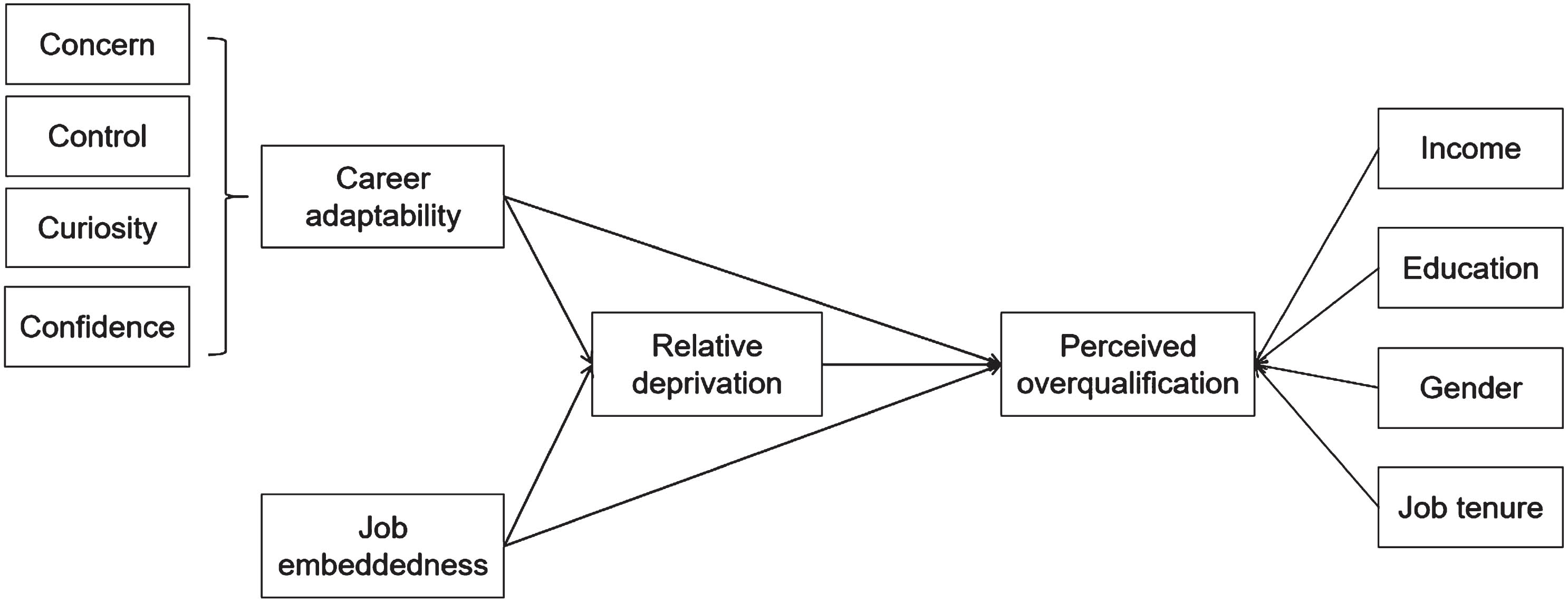
Research model.

Scatter plot of the necessary condition-RD.

Scatter plot of the necessary condition-CA.

Scatter plot of the necessary condition-JE.
Subsequently, we present the bottleneck levels of necessary prerequisites. Table 5 shows no essential conditions exist for perceived overqualification at the 10% level. When the overqualification reaches 20% to 40%, a certain level of career adaptability suffices for alignment. Nevertheless, when the overqualification exceeds or equals the 50% threshold, a certain level of career adaptability, job embeddedness, and relative deprivation are required. As the perceived overqualification level increases, the required levels of career adaptability, job embeddedness, and relative deprivation also escalate.
Bottleneck levels (%)
Appendix 1 shows the PLS-generated output model picture with beta values and p values.
Path coefficient
Firstly, path coefficient analysis was conducted. The results are presented in Table 6, showing that job embeddedness positively influences both perceived overqualification (Beta = 0.218***, p < 0.001) and relative deprivation (Beta = 0.27***, p < 0.001), thereby confirming hypotheses 1 and 2. Relative deprivation positively affects perceived overqualification (Beta = 0.441***, p < 0.001), confirming hypothesis 3. Career adaptability positively influences perceived overqualification (Beta = 0.204***, p < 0.001) and relative deprivation (Beta = 0.315***, p < 0.001), thus validating hypotheses 5 and 6.
Path coefficients
Path coefficients
Next, the mediating effect was examined. This study employed Bootstrapping analysis with 5000 repeated samples to validate the mediating role of relative deprivation. As shown in Table 7, job embeddedness significantly influenced perceived overqualification through the mediating effect of relative deprivation (Beta = 0.119***, p < 0.001), confirming H4. Likewise, career adaptability impact significantly impacts perceived overqualification through the mediating effect of relative deprivation (Beta = 0.139***, p < 0.001), confirming H7.
Mediating effect
Mediating effect
To further clarify the specific impact of income, career adaptability, job embeddedness, and relative deprivation on perceived overqualification, this study employed the random forest algorithm in R language to rank the importance of these factors. This method has been applied in several articles [25, 56]. As shown in Fig. 5, the impact of relative deprivation is more significant than career adaptability, job embeddedness, and income.
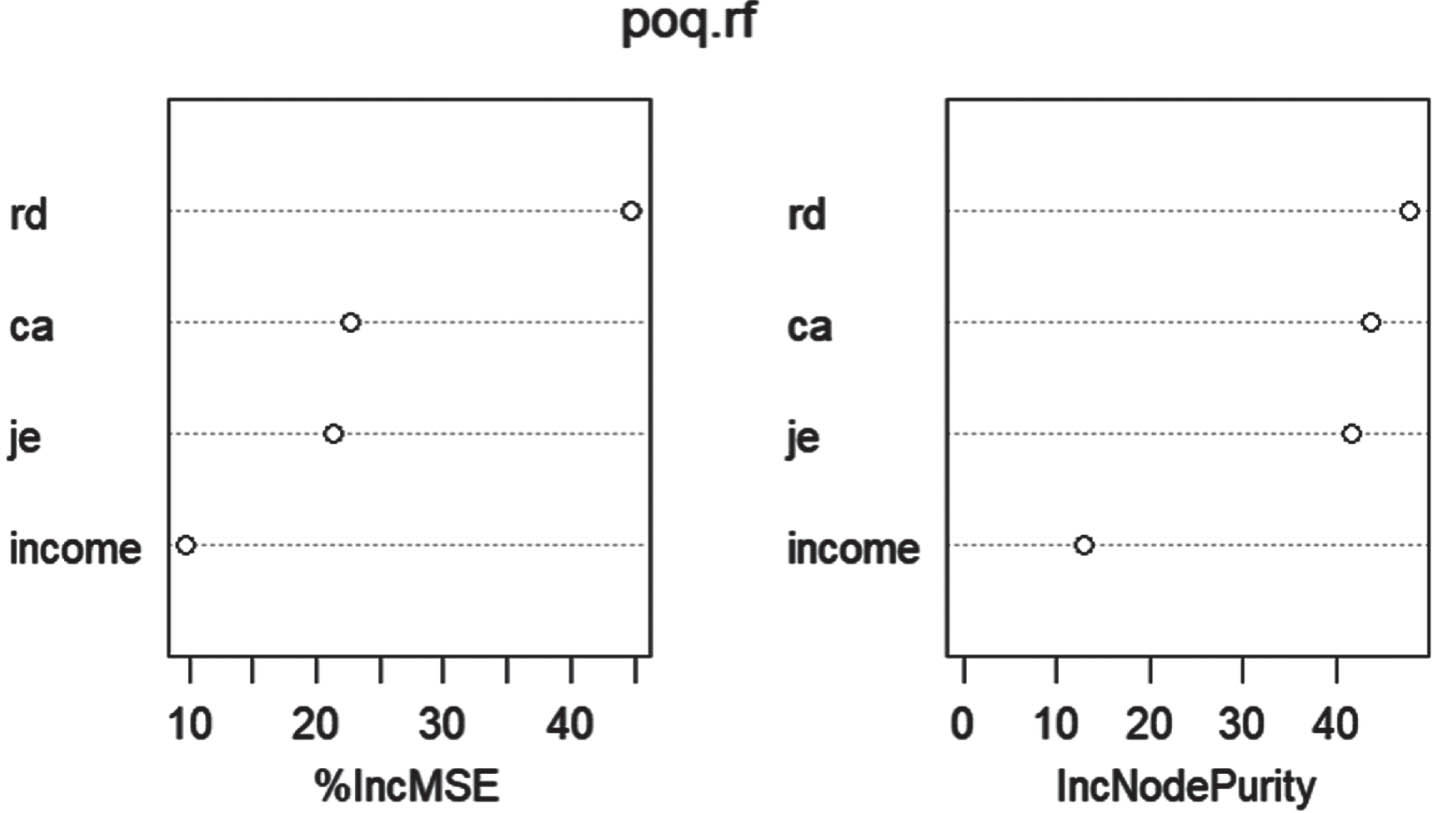
Importance ranking of influencing factors.
This study integrates the turnover unfolding model with the CoR theory to examine the relationship between employees’ career adaptability, job embeddedness, and perceived overqualification after experiencing shocks while considering relative deprivation as a mediator variable. By conducting a comprehensive analysis of 339 questionnaire responses using partial least squares (PLS), an R’s necessary condition analysis (NCA), and feature factor importance ranking based on the random forest (RF) algorithm, the study reveals that individuals with resource advantages, after experiencing shocks, may increase their experience of negative emotions, leading to a strong sense of overqualification.
Specifically, the findings reveal that after experiencing career shocks, job embeddedness and career adaptability not only directly affect perceived overqualification but also exert their influence indirectly through the mediation of relative deprivation. The existing literature on the antecedents of perceived overqualification often overlooks specific contextual factors (e.g., [3, 34]). This study addresses this gap by incorporating the concept of career shocks within the turnover unfolding model. When employees experience shocks, the original advantageous resources such as job embeddedness and career adaptability become the weight of the individual versus the organization, and they perceive that the current organization/position can no longer match their talents, i.e., they develop a sense of overqualification. This finding echoes research on the “stuck effect” of job embeddedness [20, 22], as well as research on the dark side of career adaptability [21, 40].
In addition, relative deprivation is often used as a mediating variable between perceived overqualification and outcome variables [2]. Still, the present study found that relative deprivation also has an important place in the antecedents of perceived overqualification, which mediates the relationship between career adaptability, job embeddedness and perceived overqualification. By introducing relative deprivation as a mediator, it enriches the understanding of the emotional mechanisms that underpin perceived overqualification, shedding light on the significance of emotional experiences in this process. This finding confirms the possibility of negative emotions as antecedents of perceived overqualification, as proposed by [3, 7].
On the other hand, this study also finds that after experiencing career shocks, job embeddedness, career adaptability and relative deprivation are all necessary conditions for perceived overqualification. The current management literature has not analyzed the necessary conditions enough, and the literature on perceived overqualification is still mainly based on regression logic for sufficient condition tests (e.g., [3, 34]). Therefore, this study is conducive to enhancing the completeness and accuracy of the research on the phenomenon of overqualification by integrating the hybrid approach of NCA and PLS. The combination of these two approaches to achieve complementary strengths is a promising direction in the future, which will help to promote the development of research on the relationship between necessity and sufficiency in the traditional field of management studies [26, 54].
This study finds that job embeddedness, career adaptability and relative deprivation are all necessary conditions for perceived overqualification when employees experience career shocks. This means that employees with high feelings of overqualification have quality resources such as job embeddedness and career adaptability at the same time they have high feelings of relative deprivation. Often these individuals, in turn, play a central role in improving organizational performance and are critical resources within the organization. Therefore, in practice, managers should pay attention to the career shocks suffered by excellent employees and their reaction after the shocks and provide correct guidance so as to maximize the resource advantages of these employees.
Furthermore, by applying Random Forest algorithm method, this study found that relative deprivation has the most significant effect on perceived overqualification compared to other factors after experiencing career shocks. This result echoes the studies of [7, 57], which argued that perceived overqualification is primarily an emotional response to the work environment and that discrepancies between expectations and perceived outcomes may lead to an emotional reaction from boredom and dissatisfaction in employees, leading to a cognitive realization of being overqualified. Such thoughts and emotions are the essence of perceived overqualification [7]. Therefore, from this perspective, it is reasonable that relative deprivation has the most significant effect on perceived overqualification.
Conclusion
In conclusion, this study has provided valuable insights into the intricate dynamics of perceived overqualification, particularly in the aftermath of career shocks. By integrating the turnover unfolding model with the CoR theory, our research examined the interplay between employees’ advantageous resources (e.g. job embeddedness, career adaptability) and perceived overqualification, and the role of relative deprivation as a mediator variable in shaping perceptions of overqualification. The findings underscore the importance of considering specific contextual factors, such as career shocks, in understanding the antecedents of perceived overqualification. Against the current economic slowdown coupled with the expansion of higher education, the employment landscape for young individuals appears challenging, fostering conditions conducive to overqualification. This phenomenon can lead to adverse socio-economic, psychological and health effects [1]. Consequently, the implications of this study are crucial for organizations aiming to develop effective strategies to attract, motivate and retain organizational talent [8].
Moreover, this study provides valuable guidance for management in navigating employees’ emotional and cognitive responses following career shocks, particularly amidst the ongoing economic downturn. Recognizing the impact of job embeddedness, career adaptability and relative deprivation, managers can tailor interventions to address these dynamics, fostering a healthier organizational environment. Importantly, this study also offers insights for individual employees. By objectively assessing their resource strengths, employees can better understand their capabilities. The study encourages open communication with leaders to navigate career shocks more effectively, preventing the persistence of negative emotions. Overall, this research contributes to the academic understanding of perceived overqualification and offers practical implications for organizational strategies and individual career management.
Limitations and prospects
While this study provides valuable insights, certain limitations must be acknowledged. First, the self-report measures selected for this study had small sample sizes and a single source, which may introduce common methodological biases. Although this problem was mitigated to some extent by the present study, future research could use multiple sources to obtain a larger sample. Second, the cross-sectional design used in this study limited the ability to establish dynamic causal relationships between variables. A multi-stage collection or experimental approach could be used in future studies. Finally, this study did not consider moderating variables, and boundary conditions could be examined regarding organization and leadership in future research.
Ethical approval
Not applicable.
Informed consent
Not applicable.
Conflict of interest
The authors declare no conflict of interest.
Footnotes
Acknowledgments
We would like to express our sincere gratitude to Associate Professor George I Christopoulos at Nanyang Business School, Nanyang Technological University, Singapore for his invaluable guidance and support throughout the research and writing of this paper. His expertise and insights significantly contributed to the depth and quality of this work. We also appreciate the participants to set aside their free time to complete the questionnaire.
Funding
This study is funded by: (1) China Scholarship Council (csc No: 202206675003); (2) Research on the path of high-quality employment for young people under the digital economy (No:GDYB2023010); (3) The Endogenous Driving Force Mechanism of Green Innovation In Resource-Based Enterprises in Western China Under the Two-Carbon Target State-Owned Enterprises In Guizhou Province (NO: GDPY2022019).
