



Abstract
BACKGROUND:
The dimensional seat design process should consider both the users’ tasks and their physical characteristics.
OBJECTIVE:
To use an approach for the design and evaluation of seat dimensions based on the anthropometric characteristics of the Iranian population and the requirements of tractor operators.
METHODS:
Some existing equations relating the seat dimensions to anthropometric characteristics were modified according to logical justifications and international standards. A new mathematical-statistical method was used to extract the equations estimating the constant seat dimensions based on the theoretical maximizing of the accommodation level. In addition, an Overall Seat Accommodation Score (OSAS) was developed to represent the mean of seat dimensions accommodation level and dimensional accommodation equality, simultaneously.
RESULTS:
The dimensional seat design can be affected under different conditions of adjustability, esthetic, and space limitations. However, it was shown that it is possible to improve the design of tractor seats without any significant increase in the final cost and complexity.
CONCLUSION:
A new approach was used for tractor seats for a sample of Iranian operators and can be used for the design and evaluation of tractor seats for other target populations.
Introduction
A vast majority of the population, due to their occupation, spends a significant amount of their waking hours in a sitting position. An inappropriate sitting posture can threaten their health and decrease their performance. Tractor is the main power source in farms used in almost all agricultural operations. Tractor operators perform different tasks such as steering the tractor, looking backward to control the implement, and operating different control tools in a sitting position [1, 2]. Improper design of the agricultural tractors workplace is one of the main causes of agricultural accidents [3]. Generally, the amount of attention paid to the operator’s physical characteristics in the design process of the tractor workspace can influence stress, efficiency, safety, comfort, and required effort [4, 5]. The seat, as the fundamental physical interface between the operator and the tractor, should provide suitable operating conditions including the field of vision and easy access to different control tools [6]. In addition, the seat should provide a comfortable seated position that involves a normal position of the lumbar curve, relaxation of back muscles [7], uniform pressure distribution and a lower average pressure between body and seat [2], lack of pressure on the blood vessels of the thigh, normal blood circulation [7, 8], and the logical magnitude and pattern of loads tolerated by the body structure [7–11]. The geometric parameter of a seat including the seat dimensions and its position related to other parts of the workspace is one of the important design factors that can significantly affect the mentioned criteria and subsequently the comfortability and performance. One of the most important data that should be considered to determine the seat’s geometric parameters are body dimensions [7, 12]. Several researchers have tried to determine suitable dimensions for different seats based on the body dimensions of the user population. Application of anthropometric dimensions in the design and evaluation of wheelchairs [13], classroom furniture [14–18], driver seat [19–21], pilot seat [23], fire apparatus seat [24], armored vehicle seat [25], airplane passenger seat [26, 27], car passenger seat [28, 29], tractor seat [1, 30] and combine harvester seat [31–33] can be found in the literature. Although the methods and equations used in the literature can be helpful to design a tractor seat, the occupation requirements of tractor operators should be considered in the design process. The special tractor operators’ requirements such as the wide field of vision to see the tractor wheels, crop rows, and the line created by the marker, actuating the different control tools including pedals, levers, and buttons some of which do not exist in common vehicles, monitoring rear implements and attachments while driving forward, and driving at low speeds for long hours in unsuitable field-conditions can affect the required posture and consequently the design of seat. This is of particular interest because seat design affects not only the sitting posture but also the performance of users.
In the design process, a seat dimension is determined in such a way as to ensure at least 90% accommodation of the user population [34]. About some dimensions, this goal is achievable by selecting a constant value for the intended dimension. In these cases, determining the seat dimension providing an accommodation of more than 90% is very simple but there is an optimal value that provides the maximum possible accommodation that the designer should try to determine the dimension in a value close to it. In other cases where 90% accommodation is not achievable by selecting a constant value, the matter is a bit more complicated. To provide an accommodation of more than 90%, the intended dimension should be adjustable. However, it should be noted that the adjustability of some dimensions may increase the final cost and complexity of the seat, which is a limitation in the design process. Therefore, the designer may be forced to select a constant value for the seat dimension and be convinced of a lower accommodation level. In these cases, too, there is an optimal value that provides the maximum possible accommodation that can provide a more satisfying design. To the authors’ best knowledge, the published literature lacks a specific method that calculates such constant value. The approach for making the final decision in such cases has not been clearly explained.
As mentioned, the designers attempt to reach an accommodation of more than 90% for each seat dimension. Having 90% accommodation for the seat’s dimensions implies the inappropriateness of each dimension for a group including 10% of the target population. This inappropriateness can happen in myriads of situations with two clear boundaries. For one boundary, the maximum number of individuals experience an inappropriateness of the minimum number of seat dimensions if and only if there would be a minimum overlap between unaccommodated groups. For the other boundary, 10% of the population experiences an inappropriateness on all the seat’s dimensions if and only if a complete overlap between unaccommodated groups is met. For example, consider the design of a seat with 10 dimensions for a population of 100 people in which there is 10% disaccommodation in each dimension. It is obvious that the unaccommodated group for each dimension is equal to 10 members. As a boundary condition, it is possible that unaccommodated groups for different dimensions do not overlap. Consequently, all members suffer from disaccommodation in only one seat dimension. On the other hand, as another boundary condition, it is possible that the unaccommodated groups have a complete overlap and 10 members suffer from disaccommodation in all seat dimensions. One should note that if the disaccommodation of each seat dimension remains constant, the severity of disaccommodation decreases and the volume of unaccommodated group increases if this disaccommodation would be evenly distributed among the population. Contrariwise, the severity increases and the volume of the unaccommodated group decreases if the disaccommodation would be found in just a small group of the population. Now, one key question to answer is: “which of these two conditions can be defined as a better scenario?” The answer quite depends on the goals and existing constraints of a specific problem the designer faces. When the user population can be selective, for example via a physical examination, a situation near the second-mentioned situation is better. Because the unaccommodated group can be rejected and accommodation in the selected group would be near 100%. Since anyone can be a tractor driver, a situation near the first-mentioned situation seems to be better in designing the tractor seat. Because the severity of disaccommodation can be decreased. It seems that an evaluation method that give an idea as to how much the resulted situation is close to the mentioned boundaries can be useful for the final decision.
In a dimensional design and evaluation of a tractor seat for Iranian operators based on anthropometric characteristics using mathematical equations relating the seat dimensions to anthropometric characteristics, it was attempted that the available equations be modified following the requirements of tractor operation and space limitations. A new statistical-mathematical method was introduced and used to modify existing equations for the calculation of constant seat dimensions. Using the modified equations, theoretically, maximizing the accommodation levels that can be obtained by selecting a constant value for the intended dimensions became possible. A new criterion was defined in which simultaneously an overall accommodation level of different seat dimensions and dimensional accommodation equality for different individuals in a target population were calculated. Since the final decision on a seat dimension depends on the economic, spatial, and esthetic constraints in addition to the target population’s physical characteristics, to help decide under different conditions, a flowchart is designed that can be used by tractor seat designers.
Methods
Study setting and sample
This study was conducted in Bijar, the widest county of Kurdistan province in the west of Iran. At the time of the study, there were a total of 4,287 tractor operators in the study area. The minimum required sample size was calculated based on Cochran’s formula equal to 353. All participants were male operators who were randomly selected from the study area. A written consent form was obtained from all volunteered participants and the ethical review committee of the Tabriz University of Medical Sciences approved the study (IR.TBZMED.REC.1400.806).
Anthropometric characteristics
Nine anthropometric characteristics including weight, stature, shoulder height (acromial), elbow rest height, elbow-wrist length, popliteal height, buttock-popliteal length, shoulder breadth (bideltoid), and hip breadth were measured, following the procedures described in the literature [32] (Fig. 1). One height-adjustable stool, one horizontal footrest, one four-piece portable stadiometer/caliper (measurement resolution of 1 mm), and one body weight scale (up to 180 kg with a measurement resolution of 0.1 kg) were used for anthropometric measurements. All measurements were carried out to the nearest millimeter by one trained investigator. After data collection, the statistical analysis was performed using SPSS v.16 (SPSS Inc., Chicago, IL, USA). Anthropometric data were analysed for normal distribution using the Kolmogorov-Smirnov statistical test. Minimum, maximum, mean, standard deviation (SD), standard error of the mean (SEM), coefficient variation (CV), 5th percentile, and 95th percentile values were calculated for each of the anthropometric dimensions.
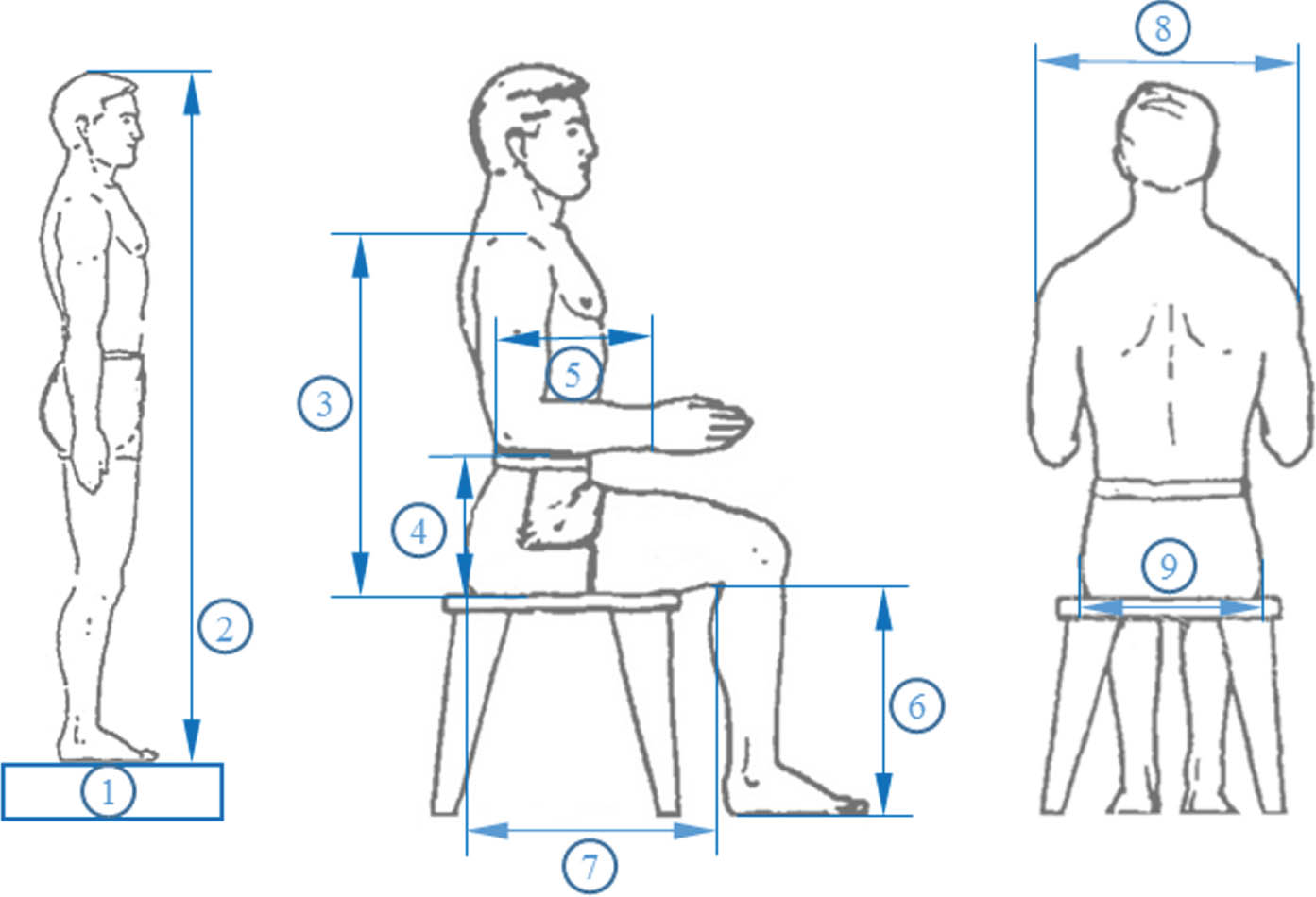
Anthropometric dimensions measured in the study: 1) weight; 2) stature; 3) shoulder height (acromial); 4) elbow rest height; 5) Elbow-wrist length; 6) popliteal height; 7) buttock-popliteal length; 8) shoulder breadth (bideltoid); and 9) hip breadth.
Seat height, seat width, seat depth, backrest height, and backrest width have been considered the most important seat dimensions in previous tractor seat design studies [1, 36]. Seat height can significantly affect the operator’s comfort and performance. A too-high seat increases pressure on the popliteal fold and disturb the operator’s stability. On the other hand, a too-low seat rises load on the ischia tuberosity [20]. In addition, some tractor pedals such as the differential lock pedal in some tractor models are immediately in front of the seat and should be activated by the heel and a too-low seat may not allow the operator to activate such pedals. Seat width and seat depth can affect the operator’s comfort, pressure distribution on body tissues, and blood circulation. Too long seat pan imposes pressure on the popliteal surface, eliminates the possibility of providing appropriate lumbar support, restricts leg splay, impede posture changes [37], and consequently cause discomfort and kyphotic posture [38]. However, too short seat pan can put extra-pressure on the back of the thighs [39]. Because of the seat pan inclination, a part of the body weight should be supported by the seat backrest. The backrest height can significantly affect the mobility of the arms and shoulders of tractor operator and consequently interfere with some activities such as rear viewing and hydraulic control lever operation. Since the operators’ shoulders should be free while monitoring rear attachments or implements, a trapezoidal-shape seat backrest with a smaller width on the upper edge seems suitable for the tractor seat [1]. So, the upper and lower backrest widths were considered as two separate dimensions in this study. When the elbow is supported, the load on the spine and arm is reduced significantly [40, 41]. If the seat has armrests, the tractor operator can control the steering wheel with only one hand and put the other hand’s elbow on the armrest in long-term operations. The armrest has not been considered as a main part of the tractor seat in almost all previous studies. However, Ghaderi et al. (2014) considered the armrest height dimension when evaluating combine harvester seats [31]. In the present study, the armrest was considered as an optional part of the tractor seat, and its height and length were added to the design parameters. Eight seat dimensions considered in tractor seat design are shown in Fig. 2.
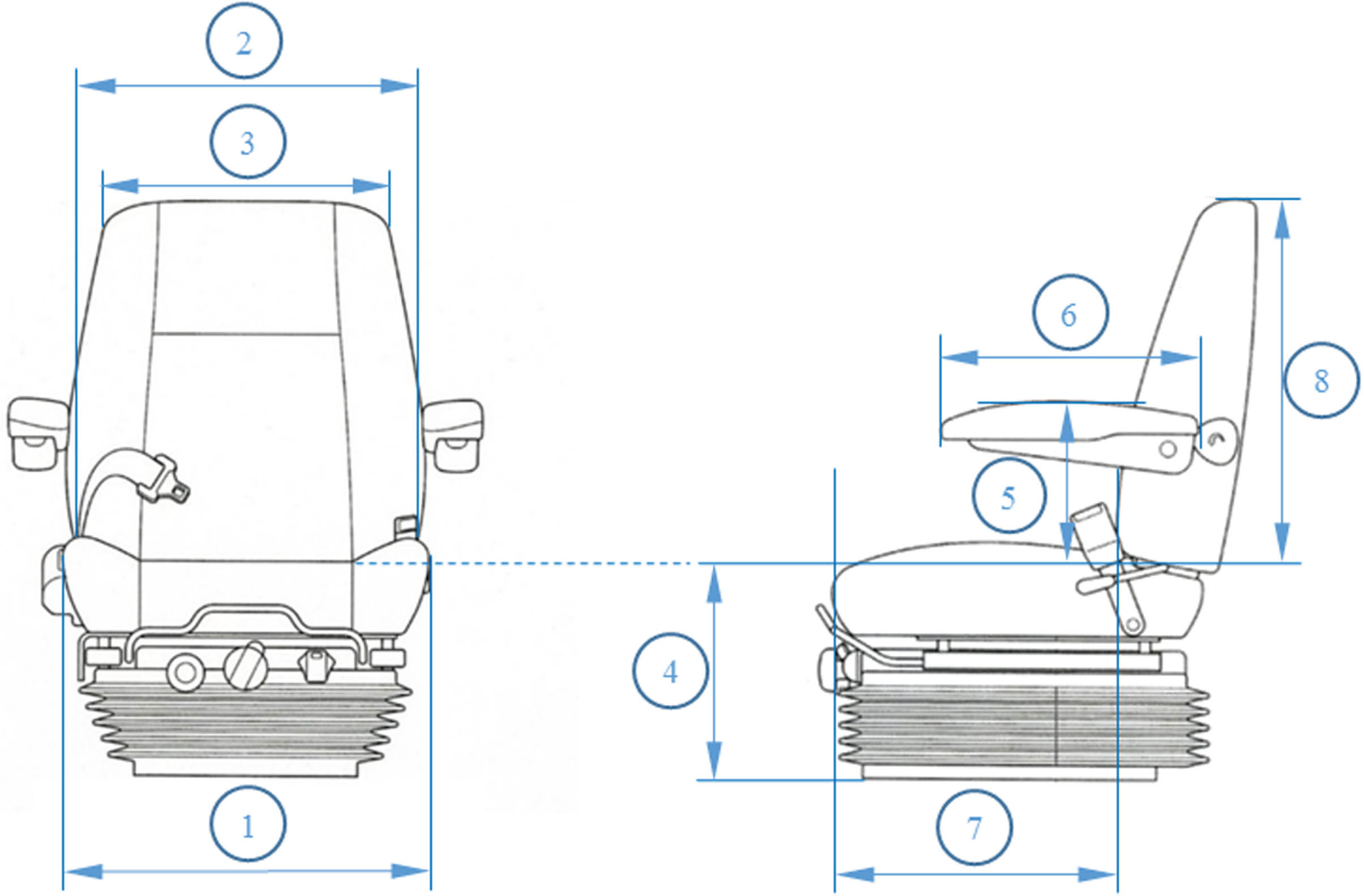
Studied seat dimensions: 1) seat width; 2) lower backrest width; 3) upper backrest width; 4) seat height; 5) armrest height; 6) Armrest length; 7) seat depth; and 8) backrest height.
Table 1 shows equations used to determine the seat dimensions in the study. Seat width should be wide enough to assure user comfort and allow convenient posture change [1]. So, seat width should be wider than hip breadth to provide adequate clearance for clothing and lateral movement [39]. However, a very wide seat can disturb the esthetic and space economy [31]. In a compromise between accommodation and space economy, Equation (1) has been recommended for the calculation of the seat width based on the hip breadth. With similar considerations, Equation (2) has also been used to determine the lower backrest width. Equation (3) has been introduced for the calculation of the upper backrest width based on shoulder breadth. A 30 mm has been subtracted from shoulder breadth to ensure that the upper backrest width is narrower than shoulder breadth and the operators’ shoulders are free and allow him/her to monitor tools at the rear of the tractor.
The equations used to determine seat dimensions in the study
The equations used to determine seat dimensions in the study
Previous studies have unanimously reported that the seat height should be lower than the popliteal height [43, 47]. However, some researchers have suggested that this difference should not exceed 12% of the popliteal height [44]. Some investigators have proposed that seat height should be adjusted so that the lower leg forms a 5° to 30° angle relative to the vertical direction and the shin constitutes an angle relative to the thigh between 95° and 120° [15, 31]. It seems that such considerations are suitable for designing home, office, and classroom furniture. However, task requirements and consequently adopted posture by tractor operators are different from the above-mentioned activities. Tractor operators usually put their corresponding heel on the floor to counteract the effects of vibration during the accelerator pedal operation [48, 49]. The required angle for the accelerator pedal relative to the floor depends on the required travel course for this pedal. Based on the accelerator pedal position of commonly used agricultural tractors in Iran, it was assumed that the required angle for this pedal is equal to 25°. It is noteworthy that this value can be changed accordingly.
According to ISO 6682 (1986) and SAE J898 (2003), the comfort angle of ankle flexion is between 85° and 108° [50, 51]. Based on SAE J826 (1995) and SAE J4002 (2010), it can be assumed that when the operator wear shoes, the barefoot flesh line forms a 6.5° angle relative to the shoe sole [52, 53] (Fig. 3).
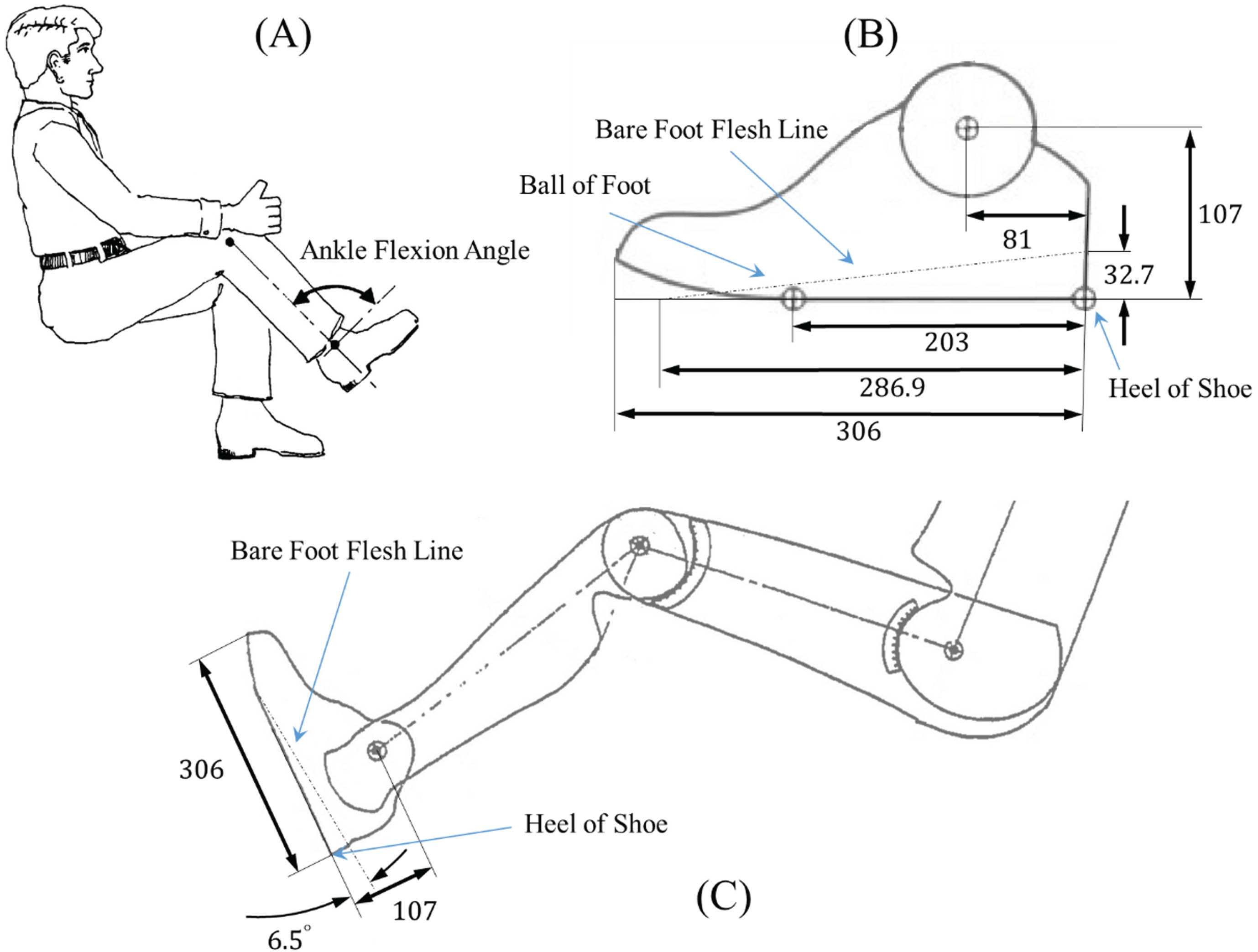
According to Fig. 4, it can be written as follows:
Posture of the lower body during the accelerator pedal operation. A: Popliteal; B: Confluence point of heel and shoe sole; C: D: Confluence point of shoe sole and floor; Confluence point of ball of foot and accelerator pedal.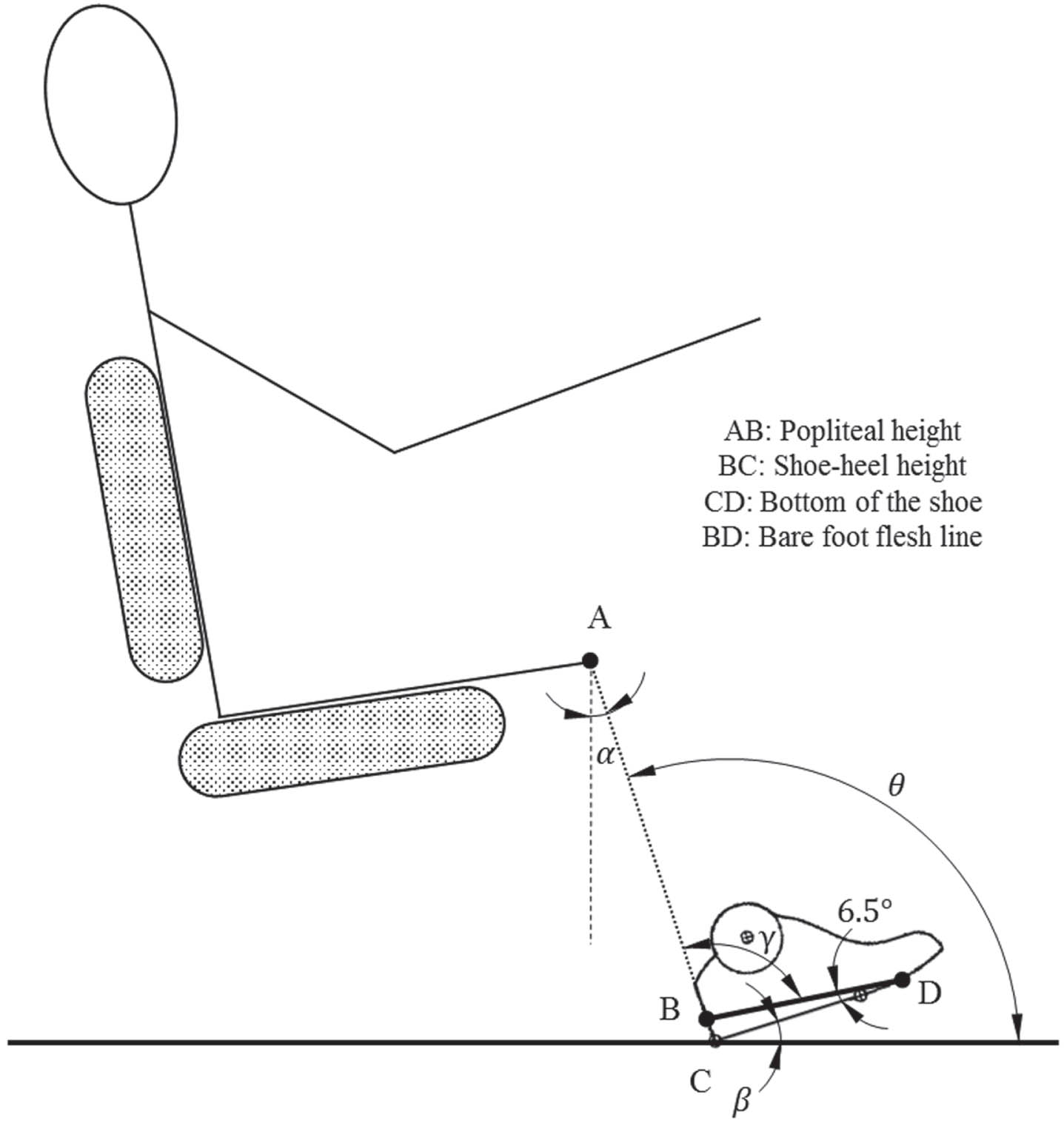
By replacing Equation (10) to (12) in Equation (9), Equation (13) can be derived as:
Considering the comfort range of ankle angle (85°≤γ≤108°), when α is equal to 5 degrees, the angle between the shoe sole and the floor (β) that is the required angle for the accelerator pedal relative to the floor, cannot be more than 16.5° which is not enough to operate the accelerator pedal. So, the operator would be forced to keep the ankle at an angle out of the comfort range (lower than 85°). According to Equation (13), to reach the required angle for the accelerator pedal relative to the floor (β≥25°) while maintaining the ankle angle in the comfort range, the lower leg angle relative to the vertical direction (α) should not be lower than 13.5°. Therefore, it is suggested that the seat height should be determined so that α be 13.5°–30° and so β be 25°–41.5° to permit a user to operate the accelerator pedal. Thus, a revised equation (Equation (4)) is suggested for the calculation of the tractor seat height. Based on international standards [52, 53], a 33 mm correction factor is added to the popliteal height for the effect of shoe sole height instead of a constant value of 20 mm as used in previous studies [14, 39].
Ghaderi et al. (2014) determined the armrest height for a combine harvester seat based on the elbow rest height [31]. However, Parcells et al. (1999) noted that the real elbow height depends not only on the measured elbow rest height but also on the shoulder flexion and abduction angles [44]. Therefore, Equation (5) was used in this study to calculate the armrest height. It has been suggested in the literature that the armrest length should be longer than the elbow-wrist length, and this was applied in Equation (6) [45].
Obviously, the seat depth should not be more than the buttock-popliteal length. However, the seat pan should not also be very shallow. Parcells et al., (1999) proposed Equation (7) to determine the seat depth based on the buttock-popliteal length [44]. Tractor operating requirements such as rear viewing and hydraulic control lever operation necessitate mobility of the arms and shoulders of the operators [30] and this requires that the backrest height is below the scapula [42]. A range of 60% –80% of the shoulder height for designing the backrest height has been recommended [14, 46] to ensure that the upper edge of the backrest is lower than or at most on the upper edge of the scapula (Equation (8)).
Two types of equations are introduced in this study that relate the seat dimensions to the anthropometric characteristics (Table 1):
Type 1. The equations which consider only one upper or lower limit for the seat dimension (similar to Equation (3) and Equation (6)). So, there are two cases that can be considered in order to reach an accommodation equal to X% : If there is an upper limit in the equation, the intended dimension should be equal to or less than the calculated value from replacing the (100-X)th percentile of the corresponding anthropometric dimension(s) in the limit. For example to achieve 95% accommodation in upper backrest width, this dimension should be equal to or less than SB5th - 30 in which SB5th is the 5th percentile of shoulder breadth (Equation (3)). If there is a lower limit in the equation, the intended dimension should be equal to or more than the value calculated from replacing the Xth percentile of the corresponding anthropometric dimension(s) in the limit. For example to achieve 95% accommodation in armrest length, this dimension should be equal to or more than EWL95th which is the 95th percentile of elbow-wrist length (Equation (6)). Type 2. The equations that consider both upper and lower limits for the seat dimension. In these cases, to reach an accommodation equal to X%, the seat dimension should be suitable for both the The calculated upper limit is≥of the calculated lower limit. In this case, a value between limits can theoretically guarantee the accommodation of X%. However, there is an optimal value of the seat dimension for which the accommodation is maximum (≥X%). For an anthropometric dimension,
To achieve a constant amount of a seat dimension near the optimal amount in (III) and (IV) cases, the following method can be used:

Normal distribution of anthropometric dimension values.
In design calculations, it is assumed that the anthropometric dimensions are normally distributed [43]. In a normal distribution, for a constant range of the intended parameter, the maximum area would be achieved when the range expanded around the mean with equal distance from both sides. As shown in Fig. 5, for a range of a parameter equal to d, the area of (2) is more than that of (1). The value of Yth percentile of a normally distributed parameter can be calculated using Equation (14). A range expanded around the mean with equal distances from both sides can be obtained by using an equal Z for the lower and upper percentiles of the range. Therefore, values calculated by using an equal Z for the lower and upper percentiles in the corresponding equation can theoretically calculate the seat dimension which can maximize the accommodation. It is noteworthy that anthropometric dimensions collected in a real population always have a deviation from a completely normal distribution. So, it is possible that the mentioned calculation method has a deviation from the real optimal value, but seems that this method can give a good estimation of it.
Based on the above-mentioned descriptions, it is possible to extract an equation from each type 2 equation to estimate the constant seat dimension. For example, in order to match a constant seat height for a range of popliteal height values, the seat height should be more than the lower limit of Equation (4) for the higher percentile of the popliteal height and less than the upper limit of the equation for the lower percentile of the popliteal height when the higher and lower percentiles have equal distance from the mean (Z is equal for them):
Since seat height is constant, Equation (15) and Equation (16) can be satisfied simultaneously if and only if the left side of the equation is equal to the right side for both equations. So, it can be written as:
By solving Equation (17), the amount of Z for which the accommodation is theoretically maximum can be calculated as:
So, a suitable estimation of constant seat height can be obtained by replacing Equation (18) in Equation (17):
According to the above calculations, the constant seat height can be obtained using Equation (19). Also, the accommodation percentage can be obtained using the Z value in Equation (18) and the standard normal distribution table. Similar calculations can be done for other seat dimensions to obtain their corresponding equations. The final equations for the seat dimensions are presented in Table 2. It should be noted that such equations are not needed for the upper backrest width and armrest length because of the lack of the lower and upper limits in Equation (3) and Equation (6), respectively.
The equations that are used to calculate the constant dimensions of the seat
Note: C: Constant; SD: standard deviation. Other abbreviations are similar to those in Table 1.
The above-described procedure for a special seat dimension has been summarized in a flowchart (Fig. 6).
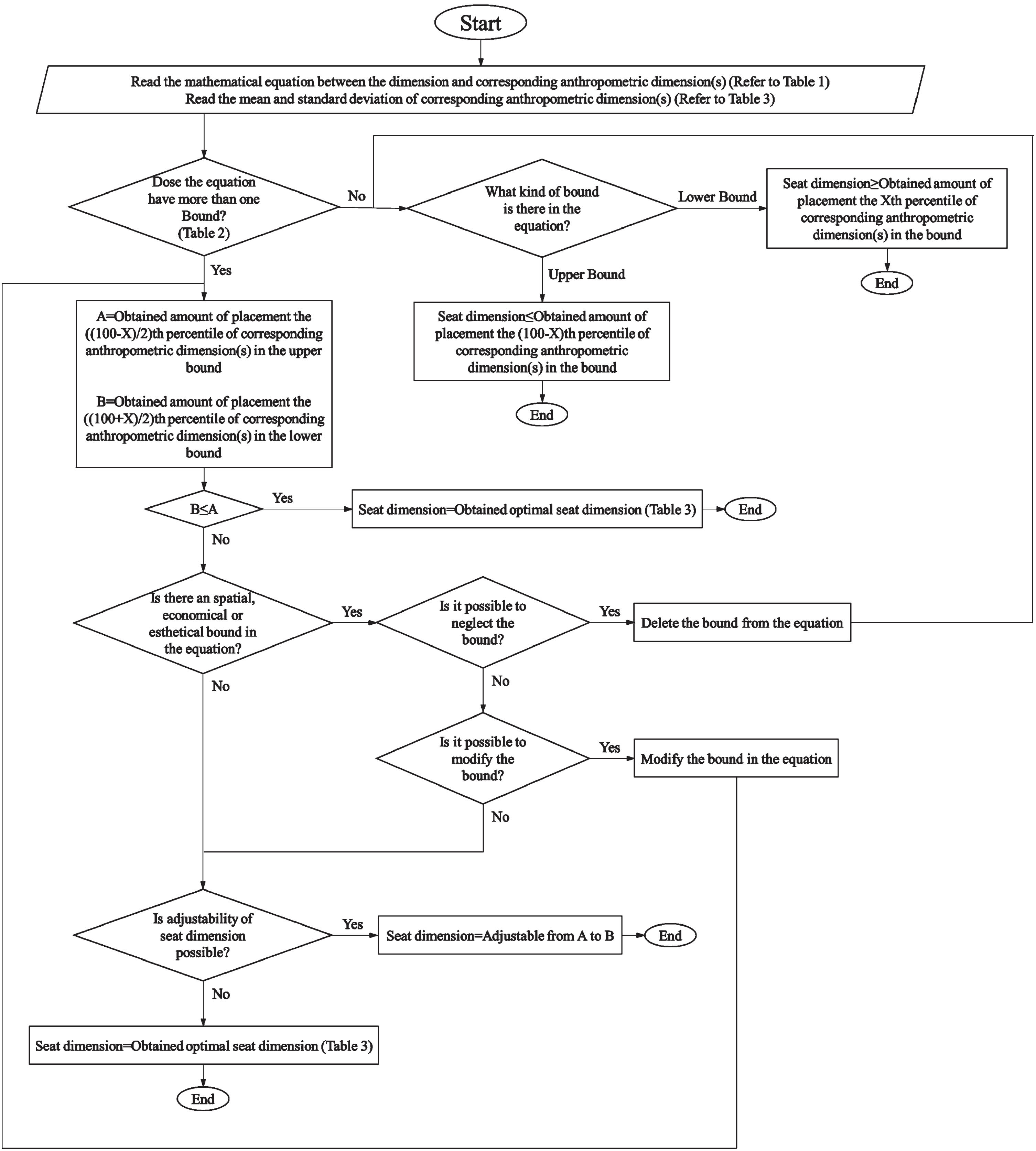
Proposed procedure for determining a seat dimension.
To evaluate the determined seat dimensions, the anthropometric characteristics of each member of the sample operators (n = 364) were compared to the corresponding seat dimensions, and match/mismatch percentages were calculated. For non-adjustable cases, when the seat dimension was between the limits of the equation, it was considered as “match”; when the seat dimension was greater than the upper limit of the equation, it was considered as “high mismatch”; and when the seat dimension was smaller than the lower limit of the equation, it was considered as “low mismatch". For adjustable cases, when the lower limit of the seat dimension was greater than the upper limit of the equation, it was considered as “high mismatch”; and when the upper limit of the seat dimension was smaller than the lower limit of the equation, it was considered as “low mismatch”; otherwise, it was considered as “match”.
A Seat Accommodation Score (SAS) for a user was defined based on the sum of the different Seat Dimension Scores (SDS) as well as the weight of the dimension effect on the seat suitability (Equation (32)). If a seat dimension was matched for a user, SDS was set equal to 1; otherwise, it was set equal to zero. According to the equation, SAS, independent of the number of seat dimensions, is in a range of 0–100. For qualification purposes, scores of 0–30, 30–60, 60–80, 80–95, and 95–100 can be defined respectively as very bad (VB), bad (B), Neutral (N), good (G), and very good (VG).
Where SAS is the Seat Accommodation Score for a user; SDSj is the score for the jth seat dimension for the intended user; Wj is the weight of jth seat dimension in evaluation (in the current study Wj was considered equal to 1 for all seat dimensions); m is the number of seat dimensions.
The mean of the SAS values which is equal to the mean of the match percentages of different seat dimensions can be used as an overall seat accommodation score. However, a parameter can be extracted from the SAS data that cannot be seen in the mean of match percentages data. The standard deviation of these data can be used as a criterion for dimensional accommodation equality for different individuals in a target population. When the standard deviation is a small number, it can be said that the seat dimensions are relatively suitable for a large number of individuals. Conversely, when the standard deviation is a big number, it can be said that the seat dimensions are more suitable for a group of the population and less suitable for another group. So Overall Seat Accommodation Score (OSAS) was defined as Equation (33).
Anthropometric dimensions
A total of 364 successfully recorded data were used for statistical analysis. The minimum, maximum, mean, SD, SEM, CV, 5th percentile, and 95th percentile of the measured anthropometric dimensions are presented in Table 3. The mean weight and stature of the sample were 73.5 kg and 1717 mm, respectively. The mean weight and stature have been reported to be 75.8 kg and 1730 mm for the Iranian male and 59.8 kg and 1584 mm for the Iranian female workers, respectively [54]. These dimensions in our sample were slightly smaller than those in general Iranian workers. Currently, the agricultural tractors in Iran are generally operated by men [49]. However, significant differences between male and female anthropometric characteristics necessitates consideration of women in similar future studies.
The anthropometric dimensions of the study participants (n = 364)
The anthropometric dimensions of the study participants (n = 364)
The required conditions for anthropometric accommodation of 90% of the user population
The required conditions for anthropometric accommodation of 90% of the user population
Values are in mm.
Replacing Equation (30) in Equation (5) will result:
To reach a theoretical accommodation of 90% for a seat dimension, the seat dimension should satisfy both corresponding conditions in Table 4. Where the corresponding ranges have an overlap, it can be reached by selecting a constant value in the intersection range. Otherwise, the seat dimension should be adjustable. So, according to Table 4, an accommodation of 90% is expected for the upper backrest width, armrest length, and backrest height dimensions by selecting a constant value for them. However, for the seat width, lower backrest width, seat height, armrest height, and seat depth dimensions, it is impossible to satisfy both corresponding conditions by selecting a constant value. So, these dimensions should be adjustable. If the adjustability of a dimension is impractical, the suitable constant value for it can be calculated using the corresponding equations in Table 2. The proposed dimensions for the adjustable and non-adjustable tractor seats and their expected accommodation levels are shown in Table 5.
The proposed dimensions for the adjustable and non-adjustable tractor seats and their accommodation levels for the sample
The calculated dimensions (for both the adjustable and non-adjustable tractor seats) were evaluated based on their match/mismatch with the anthropometric dimensions of the sample users (Table 6). As expected, match percentages for the adjustable seat were acceptable and ranged from 89.0% to 98.6%. The match percentages for the non-adjustable seat were between 67.1% and 98.6%, which is almost equal to the expected accommodation levels in Table 5. The OSAS for the adjustable and non-adjustable seats were 92.3% (12.0%) and 83.9% (16.2%), respectively. It was demonstrated that the imbalance of accommodation between individuals for the non-adjustable seat was more than that of the adjustable one. It means that the non-adjustable seat was to a large extent inappropriate for a group of the target population.
The match/mismatch percentages and OSAS for different seat dimensions of the adjustable and non-adjustable seats based on Equation (2) to Equation (9)
Based on the findings in section 3.2, for a theoretical accommodation of 90% in all dimensions, some of the dimensions should be adjustable. Some of the tractor seats in Iran have fixed dimensions and positions. Currently, available seats used in Iranian common agricultural tractors usually have only longitudinal and vertical position adjustability. In other words, only the seat height and its longitudinal position relative to other control tools are adjustable. Also, in some cases, seats have no armrests. It seems that these issues are rooted in the fact that tractor manufacturers only have observed the requirements of national corresponding standards [55, 56], which themselves have their own limitations with regard to seat design.
Some dimensions of two most common seats used in agricultural tractors manufactured in Iran are shown in Table 7 [57]. As can be seen in the table, the only adjustable dimension is the seat height. These seats’ dimensions were evaluated based on their match/mismatch with the anthropometric dimensions of the sample users (Table 8). The results indicated that the match percentages were not acceptable in some of dimensions. The OSAS values of saet A and seat B were respectively 50.6% (14%) and 30.3% (9.1%) which were not acceptable. The adjustability of seat dimensions can increase the seat accommodation level but the adjustability of some seat dimensions such as seat width, backrest width, seat depth, and armrest height can increase the complexity and then the final cost of the seat. However, the findings of this study indicate that the design of tractor seats can be improved, regardless of economic constraints.
Dimensions of two most common seats used in agricultural tractors manufactured in Iran [57]
Dimensions of two most common seats used in agricultural tractors manufactured in Iran [57]
The match/mismatch percentages and OSAS for different seat dimensions of two most common seats used in agricultural tractors manufactured in Iran based on Equation (2) to Equation (9)
In this study, according to the mentioned standards requirements [55, 56], seat design with only adjustable height has been considered. Also, it was assumed that the armrest is optional. If the armrest is available, it should be 262 mm higher than the upper surface of the seat pan. In this case, the match percentage would be about 64%. In addition, an armrest length equal to 299 mm can provide an accommodation of 95%.
The seat height should be adjustable between 407 to 434 mm to reach an accommodation level of 90% and the required vertical adjustability should be more than 27 mm (Table 4). Based on the [56], allowable vertical adjustability for tractor seats should be selected between±15 mm and±45 mm. Common tractor seats in Iran have a±30 mm adjustability in seat height which is equal to the midpoint of the range determined in the mentioned standard. Therefore, it is suggested that the seat height would be adjustable from 390 mm to 450 mm (420±30 mm).
A seat depth equal to 433 mm would result in more than 89% accommodation level. According to the conditions noted in Table 4, the seat width should be adjustable from 426 mm to 452 mm to provide a 90% accommodation level. The [56] standard highlights that this dimension should be greater than 450 mm, but do not specify its upper limit. Since wider seats may not be ergonomically inappropriate and only affect esthetic and space economy, the recommended value in this standard seems logical. Furthermore, the adjustability of seat width makes the design more complex and costly. Consequently, it would seem advisable to recommend that seat width should be fixed and near its upper limit (452 mm) as much as possible. Based on the seat width of commonly available agricultural tractors in Iran (Table 7), it was assumed that there is no spatial limitation, the upper limit of the corresponding equation was ignored, and Equation (1) was modified to Equation (36). Therefore it is recommended that the seat width should be equal to 452 mm. Mehta et al., (2008) determined this dimension between 420–450 mm according to the hip breadth of a sample of Indian agricultural workers [1]. Ghaderi et al., (2014) suggested a seat width of 450 mm, which resulted in an 87% accommodation level for combine harvester seats in Iran [31].
Similar to the seat width, Equation (2) can be modified to Equation (37) and the lower backrest width equal to 452 mm can be appropriate for the target population. Several previous studies [1, 30] and standards [55, 58] have proposed the same values for the upper and lower backrest width; however, such an approach may lead to the wide upper backrest or narrow lower backrest. The wide upper backrest can prevent shoulder movements during monitoring of the rear implements and the narrow lower backrest cannot support the lumbar region. ISIRI 8369 (2005) and INSO 13140 (2015) have proposed the width and height of the backrest as more than 450 mm and more than 260 mm, respectively [55, 56]. However, a backrest with a height of 260 mm which can be selected according to the mentioned standards is short and can only support the lumbar region. Also, a backrest with an upper width of 450 mm is wide and may not allow the free movements of operators. According to the findings of the current study, decreasing the upper backrest width to 371 mm can increase the accommodation level to about 95%. Therefore, the recommended height, lower width, and upper width of the backrest are 410 mm, 452 mm, and 371 mm, respectively.
Since the final decision on a seat dimension depends on the economic, spatial, and esthetic constraints in addition to the target population’s physical characteristics, a flowchart (Fig. 7) showing the design guidelines for tractor seats has been introduced. This flowchart can be used by experts and designers for different target populations under different conditions of adjustability, esthetic and space limitations. Also, similar flowcharts can be developed for other types of seats.
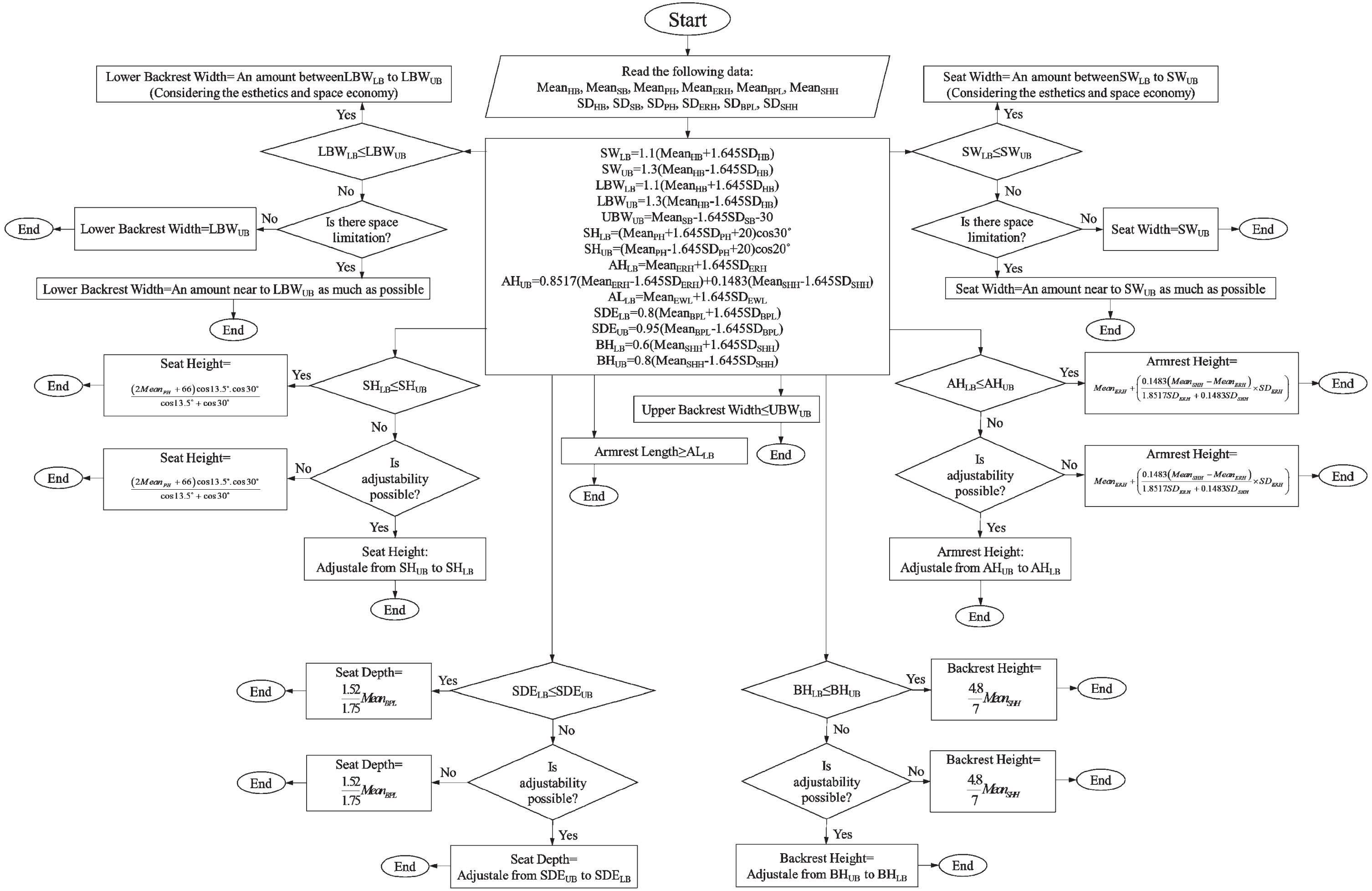
Design guidelines for tractor seat considering the adjustability, esthetic, and space limitations.
The match/mismatch percentages of different dimensions for the designed seat were calculated (Table 9). These data were also calculated for the adjustable seat under similar conditions for better evaluation and comparison of the results. The OSAS of adjustable and designed seats were 93.4% (10.7%) and 91.4% (10.7%), respectively. It can be seen that the designed seat can meet the expectations well, without including the complications and cost of different dimensions adjustability. For simultaneous presentation, the designed seat dimensions and match percentages are shown in Fig. 8.
The match/mismatch percentages and OSAS for different seat dimensions of the adjustable and designed seats based on Equation (30), Equation (31), and Equation (4) to Equation (9)
The match/mismatch percentages and OSAS for different seat dimensions of the adjustable and designed seats based on Equation (30), Equation (31), and Equation (4) to Equation (9)
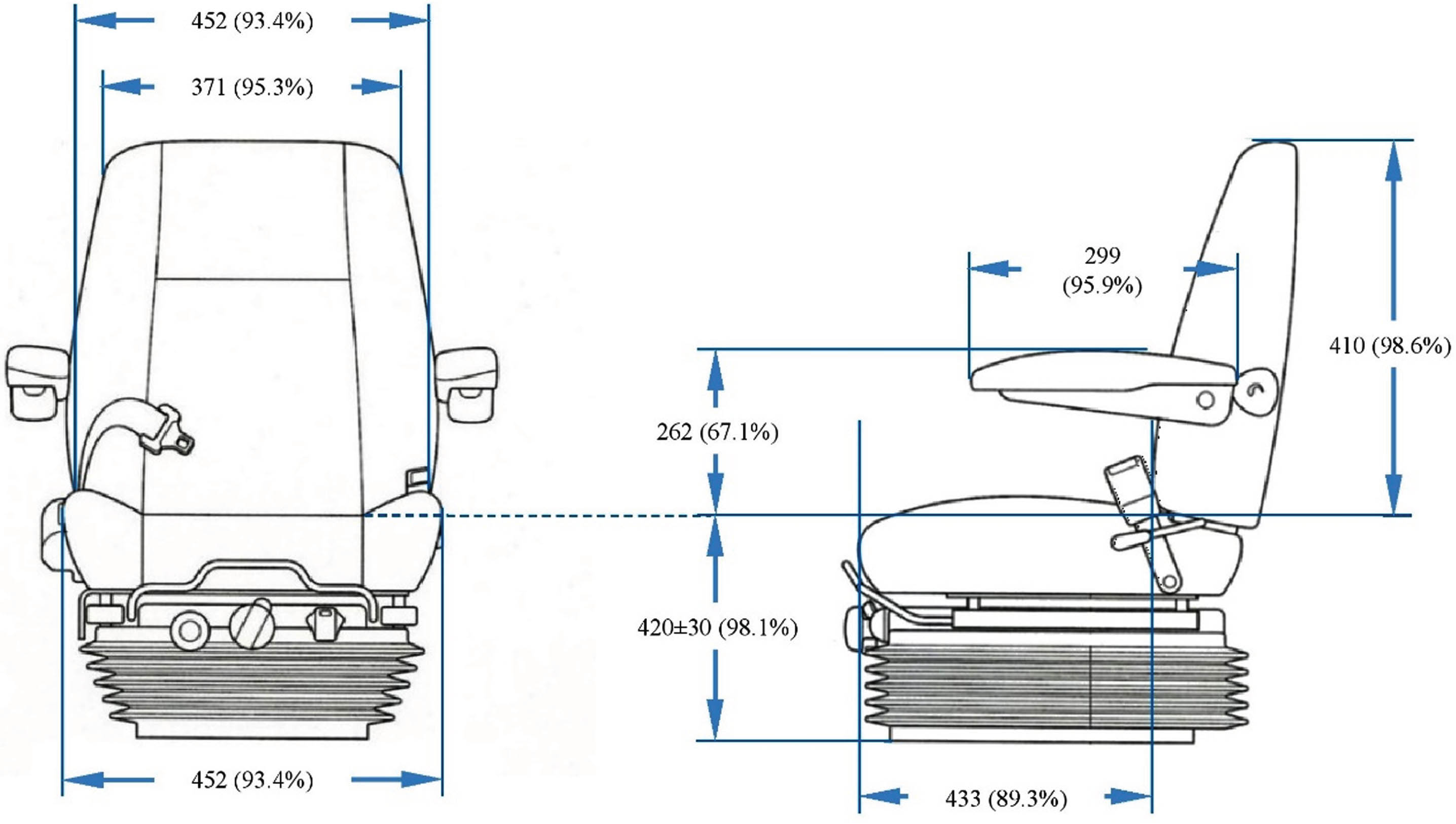
The designed seat dimensions and match/mismatch percentages. Dimensions are in mm.
The frequency of each SAS value for the adjustable and designed seats has been given in Table 10. The adjustable seat was very good, good, neutral, and bad for 65.66%, 20.60%, 13.19%, and 0.55% of the operators, respectively, while the corresponding values for the proposed seat design were 51.10%, 34.07%, 14.01%, and 0.80%, respectively. The proposed seat design was good or very good for more than 85% of the operators, which is satisfactory. It is noteworthy that a large part of the mismatch is related to the optional armrest which can be eliminated from the design. These findings indicate that it is possible to improve the design of tractor seats without any significant increase in the final cost and complexity.
The frequency of each SAS for the designed and adjustable seats
A dimensional design and evaluation approach was proposed for seats based on the corresponding anthropometric dimensions and mathematical equations. Some equations related to the match between the seat dimensions and the anthropometric characteristics of previous studies were modified in accordance with the requirements of tractor operation and space limitation. The correction factor that considers the shoe sole height in the equation related to the seat height was determined based on international standards. A new statistical-mathematical method was introduced and used for estimating the suitable constant seat dimensions, based on the theoretical maximization of the accommodation level of the intended seat dimension. This method can be used for other target populations and other equations in which a desired dimension is related to corresponding anthropometric characteristics to maximize the accommodation level via calculating a constant value for the dimension. Despite previous efforts that determine the level of match/mismatch between each seat dimension and anthropometric characteristics of users separately, this study presents a criterion that simultaneously calculates an overall accommodation level of different seat dimensions and dimensional accommodation equality for different individuals in the target population. The introduced method for evaluation can be used for the ergonomically-based design of other objects with different dimensions and other target populations. A flowchart that can be used for the dimensional design of tractor seats under different conditions of adjustability, esthetic, and space limitations was created.
Footnotes
Acknowledgments
The authors acknowledge all participants who participated in this study. The authors also appreciate the anonymous reviewers’ comments in helping to refine this paper before publication.
Ethical approval
Tabriz University of Medical Sciences (IR.TBZMED.REC.1400.806).
Conflict of interest
The authors declare that they have no conflict of interest.
Informed consent
Not applicable.
Funding
No funding was received for this work.