



Abstract
BACKGROUND:
Given the evolving digital revolution, technology and digital tools are becoming inseparable from work and daily occupations. Occupational therapy practitioners (OTPs) focus on supporting individuals in their desired and needed activities. Many of these daily activities (i.e., online banking, shopping, social media, smartphone use) require digital skills at a growing rate, and insufficient technological skills may subject individuals to limited engagement and social isolation.
OBJECTIVE:
To understand OTPs attitudes regarding technology utilization.
METHODS:
We surveyed 109 OTPs about their attitudes, work practices, and barriers to addressing their clients’ digital technological functioning.
RESULTS:
The findings of our study suggest that while OTPs acknowledge the importance and potential benefit of technology for their clients, there is a notable professional gap in the training and skills of OTPs to support their clients’ digital functioning effectively and to integrate technology into their practice.
CONCLUSIONS:
There is a need to improve and expand OTP’s digital skills and knowledge regarding addressing clients’ digital functioning and technology implementation in occupational therapy practice.
Keywords
Introduction
The digital revolution is impacting daily activities and changing how people work and interact, often requiring more use of digital services and digital skills. Digital services are defined as automated or electronic services accessed online or through digital devices, such as online banking, e-commerce platforms, streaming services for entertainment, telehealth, and various government services. Digital skills, or technological skills, refer to the competencies required to utilize these services effectively cover a range of abilities, from basic computer literacy and internet navigation to using productivity software like word processors and spreadsheets, understanding online security practices, and more. The increasing dependence on digital services in the workplace means that people who lack specific technology skills may be at a disadvantage. For example, a person who lacks certain digital skills and is unfamiliar with using various digital services may need support in pursuing and maintaining certain jobs. Furthermore, as daily tasks and activities become more digital, individuals who do not have the necessary skills may experience limitations in occupational engagement [1]. The digital revolution is also creating new opportunities for participation in various fields of life. Many occupations and activities can now be performed remotely, such as working, shopping, socializing, healthcare and more [2, 3].
In this study, we explore the diverse and far-reaching impact of digital technology specifically on the work of occupational therapy practitioners (OTPs), who require technology and digital competencies at a growing rate [4–7]. OTP’s incorporate technology in various ways in their clinical work such as electronic documentation, computer software, digital games, or virtual reality for cognitive or physical rehabilitation, telehealth, 3D printing for assistive devices, orthotics, or adaptive equipment, communication aids and environmental control systems such as switches or voice commands. OTPs also address their clients’ digital functioning recognizing the increasing relevance of technology in daily activities and occupations, involving smartphones, computers, and tablets. Larsson-Lund and Nyman [6] discuss the role OTPs have in the changing digital society to address challenges in aligning clients’ occupational and activity needs with their everyday environments and technologies through occupational therapy (OT) practice, research, and education.
From 2002 to 2016, the number of people working in occupations involving advanced digital skills rose from 4.8% to 23% in the United States (US) [8]. Employment involving intermediate digital skills requirements increased from 39.5% to 47.5%, while the percentage of positions with only basic digital skills requirements decreased from 55.7% to 29% [8].
The impact of the digital era on human occupation is also evident in data collected across Europe and in the US. The European Commission’s annual Digital Economy and Society Index (DESI) report from 2021 found that 34% of individuals had been classified as having limited to no digital skills. Furthermore, while 87% of people (aged 16–74) used the internet regularly in 2021, 46% do not possess basic digital skills [9].
Similarly, in the US, one-third of workers lack digital skills, with 31% having limited to no digital skills at all. A considerable portion of Americans, amounting to 16%, are unable to use email, web search, or perform other basic online tools [1], while only 35% were found proficient and 33% had advanced digital skills [10]. Across all participating Organization for Economic Co-operation and Development (OECD) countries and economies, 43% of adults scored below the proficiency levels of problem-solving in technological environments [1].
Data also suggest an increasing need for health professionals’ digital skills [11, 12]. Needs include knowledge of digital technology and its ethical use in client care as well as the digital skills to provide adequate care for patients, including related communication and social skills [13]. However, 45% of health workers report not having the necessary skills to utilize digital technologies in their clinical work [13]. While many health professionals perceive technology and its applications as beneficial and potentially supporting of client’s wellbeing, many others feel frustrated and lack the competencies to engage with these technologies and digital platforms [14, 15]. A notable study from 2016 revealed low levels of confidence among ‘Generation Y’ OT students in using technology for clinical practice [16]. Lack of necessary competencies and low levels of confidence in technology use can potentially hinder OTP’s utilization of technology and attention to clients’ digital functioning.
Previous research on healthcare workers has often focused on specific digital skills [14]. Our study examines OTPs’ technology utilization and work practices in addressing clients’ digital functioning. The current study explores OTPs’ updated perceptions of technology and digital skills and delves into their work practices and the barriers they encounter. This is essential given the rapidly evolving advancements in technology. We hope to reach practical insights into OTPs’ clinical work and identify areas for enhancing digital knowledge and competency.
To do so, we surveyed OTPs (i.e., occupational therapists and occupational therapy assistants) from around the globe, asking about their experience with assessments and interventions related to clients’ digital skills and technology implementation at work. This information will provide a greater understanding of the way OTPs approach technology in their practice and may suggest possible directions for improvement.
Method
This study used a cross-sectional quantitative descriptive survey of 26 questions (see sample in Fig. 1) developed by the researchers. The survey questions addressed OTPs’ attitudes, work practices, and barriers when incorporating technology into clinical work and addressing their clients’ digital skills and environments.
The survey was distributed online using Qualtrics software through various social media platforms, professional groups, and professional conferences for OTPs. All respondents provided informed consent before participation, ensuring ethical compliance throughout the study. The survey was initiated by 140 Occupational Therapy Practitioners (OTPs), with a completion count of 109 respondents. This group comprised 105 occupational therapists and four occupational therapy assistants. Descriptive statistics were employed to summarize and characterize the data. We utilized the statistical software JMP, Version 16. SAS and Excel on each survey question to facilitate in-depth analysis, enabling the identification of noteworthy trends within the data. Furthermore, we conducted a contingency analysis to investigate statistically significant associations or relationships between different topics (i.e., the relationship between OTP’s assessment of their client’s digital functioning and their familiarity with outcome measures to measure digital skills). A significance threshold of p < 0.05 was predetermined to ascertain statistically significant results.
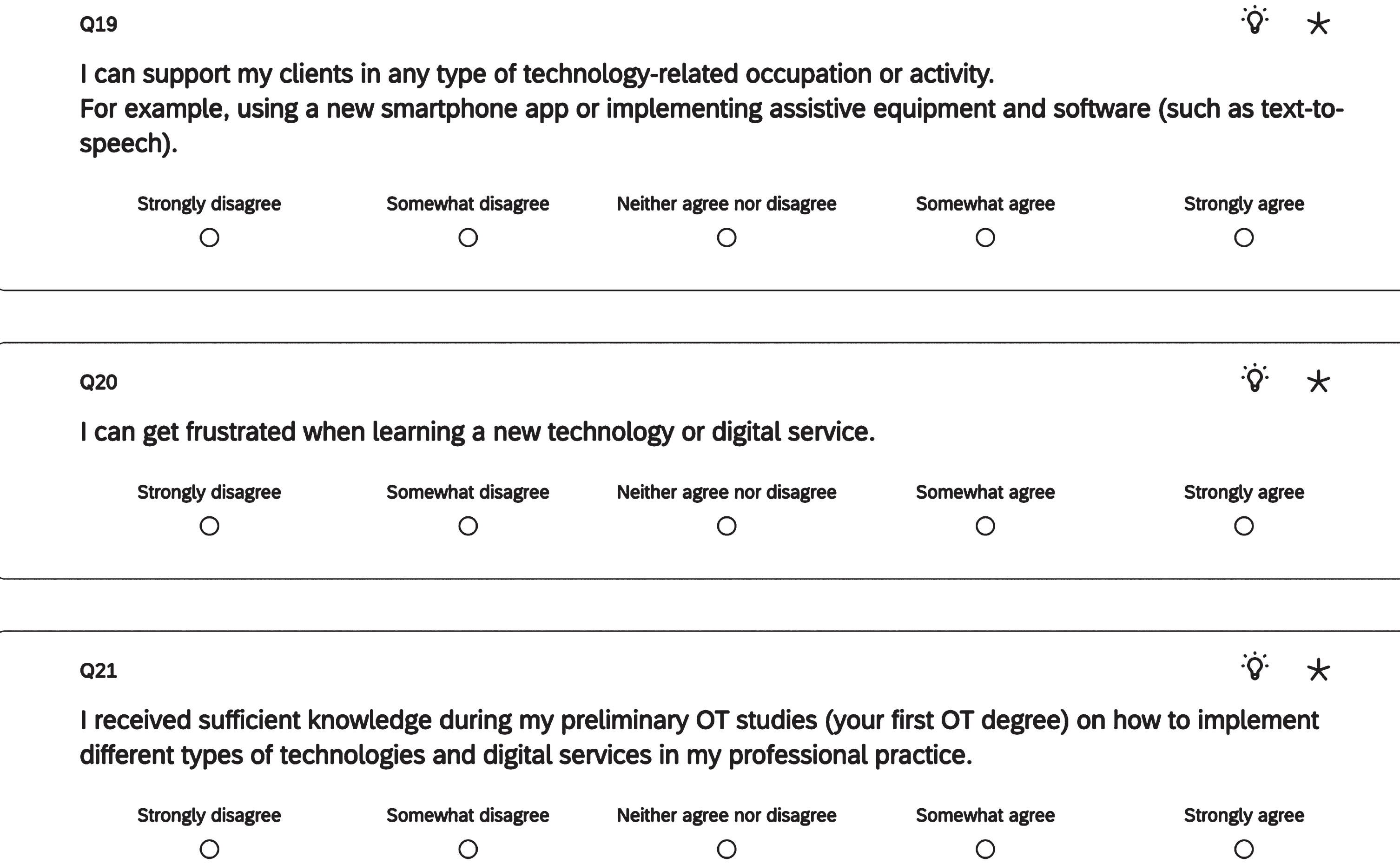
Visual representation of the survey screenshot used for data collection.
Demographics
Of the 109 OTPs who completed the survey, almost 90% were women, with half residing in North America and 30% from the Middle East and Europe. A third had over 20 years of experience and 44% had under 10 years. The leading clinical settings included Neuro Rehab (21%), Education (17%), and Early Intervention (13%), with 55% of respondents working with adults. Table 1 describes demographic characteristics. Table 2 contains the distribution of clinical setting. Table 3 presents the distribution of the clinical population.
Demographic characteristics (N = 109)
Demographic characteristics (N = 109)
Distribution of clinical setting
Distribution of clinical population
The survey asked the OTP about their professional use of technology, as well as attitudes regarding technology in their work in terms of ease of learning, searching for technologies that can support their clients, and frustration level with technology use (see Table 4). A significant 79% found it easy to learn new technology, such as using new computer programs or connecting smartwatches. While more than half of the OTPs (62%) reported they can support their clients in any type of technology such as using a smartphone app, 23% disagreed. When asked about frustration with learning a new technology or digital service, 40% agreed they could get frustrated, whereas 40% disagreed.
Attitudes of OTPs regarding technology and digital tools in occupational therapy
Attitudes of OTPs regarding technology and digital tools in occupational therapy
The vast majority (94%) believed some technologies or digital services can be helpful for their clients. Moreover, 84% agreed they would utilize technology-related activities or services more often in clinical practice if they had all the required skills, knowledge, and resources.
The survey questioned OTPs about their work practices regarding technology-related activities with an emphasis on the assessment process of their clients’ digital functioning. Table 5. describes OTPs work practices.
Work practices of OTPs related to technology implementation and addressing clients’ digital functioning
Work practices of OTPs related to technology implementation and addressing clients’ digital functioning
Only 5% reported they always evaluate their clients’ digital functioning, 19% reported they do so most of the time, and 22% never do. More than 60% of OTP respondents indicated they utilize non-standardized observations to assess their clients’ digital functioning, and a mere 4% utilize standardized assessments. We also examined the OTPs’ familiarity with standardized assessments for evaluating their clients’ digital functioning. 73% of the respondents were not familiar with relevant standardized assessments.
The survey also asked OTPs about the specific technology-related activities they perform with clients. Respondents reported using technology for various activities such as listening to music, checking email, paying bills, documenting clinical work, browsing the internet, and using smartphones. Almost half of the respondents (46%) reported they keep up to date with technologies that can support their clients while a third (30%) do not.
We asked OTPs about their perceived barriers to addressing their clients’ digital functioning such as evaluating digital functioning and providing intervention to support clients’ digital occupations. Respondents indicated the leading perceived barrier (see Fig. 2) to addressing clients’ digital functioning and to implementing technology in clinical practice was insufficient knowledge (24%). Other leading barriers were funding, lack of standardized assessment and time limitations.
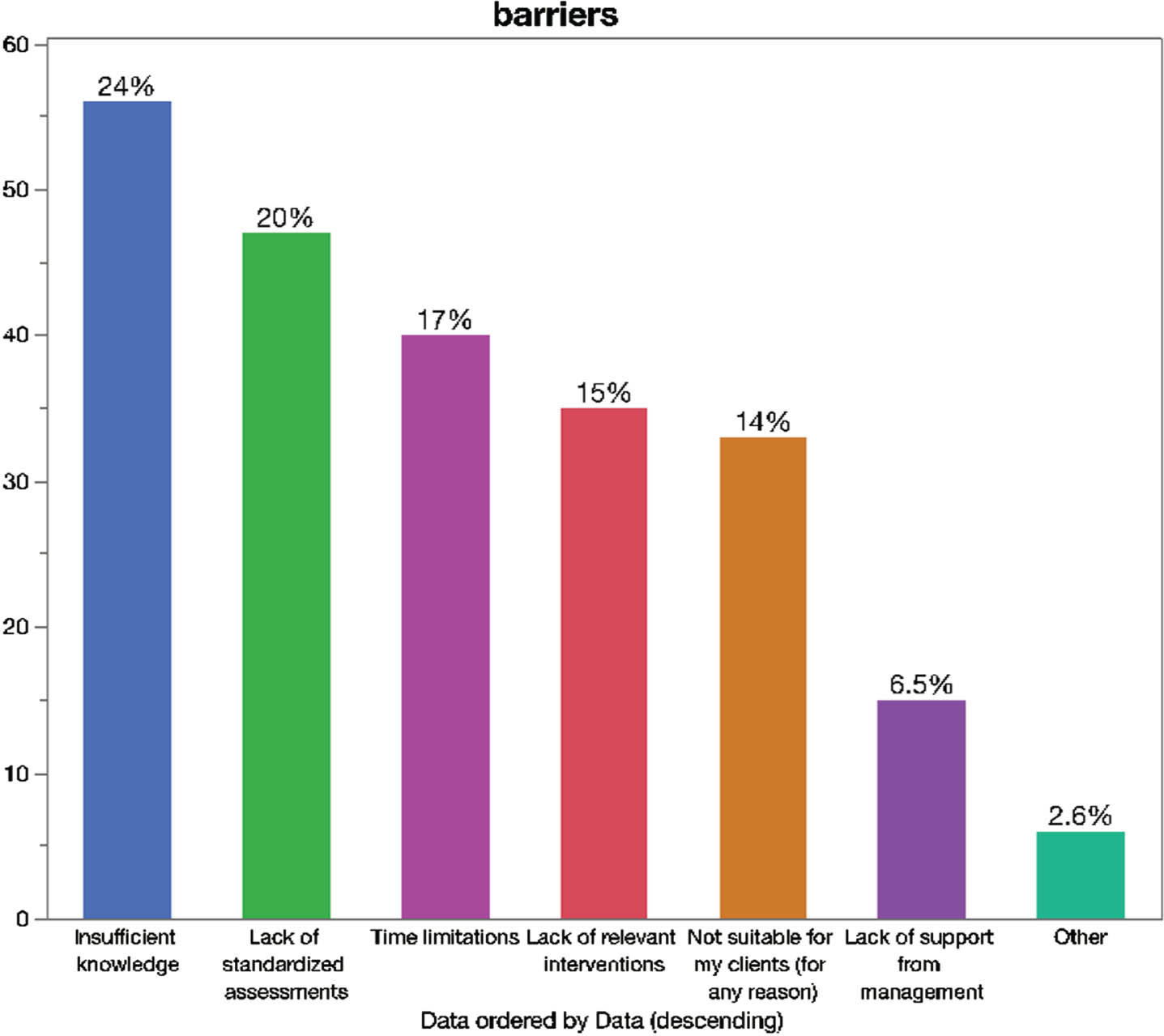
Barriers to addressing clients’ digital functioning.
We examined OTPs’ perceptions of their technology-related academic education and training (see Table 6). The majority of OTPs reported that they did not receive sufficient knowledge on evaluation of clients’ digital functioning (81%) nor on technology implementation in clinical practice (76%) during entry-level OT studies.
OTPs report on technology related academic training
We examined connections between the OTPs attitudes and their practices. OTPs who were more confident in supporting clients with technology were also more likely to stay updated on relevant technologies (p-value < 0.0001), experience less frustration when learning new technologies (p-value < 0.0001), and find it easier to learn new digital services (p-value < 0.0001), all with statistical significance.
There was no significant relationship between the OTPs’ years in practice and their assessment of their clients’ digital functioning or familiarity with standardized assessments that evaluate their clients’ digital functioning.
Discussion
Attitudes
The reported ease and confidence among OTPs in using and adopting new technologies point to a readiness to integrate digital tools into clinical practice. However, the contrast between OTPs’ confidence and the notable 23% who feel unable to support clients with technology and 40% who experience frustration when learning new digital services highlights a critical gap. Furthermore, the desire among OTPs to increase their technology utilization in clinical practice, provided they had more skills and resources reflects the underutilization of digital health services observed among healthcare workers [17]. The willingness for technological integration and recognition of its potential benefits for clients validates the importance of technology use in clinical practice. These results emphasize the need to expand technology-related training and resources within the OTP curriculum and ongoing professional development, ensuring that practitioners are digitally competent and experienced in supporting clients in the evolving digital landscape. Moreover, Tawfik et al.’s study, which correlates technology-related frustration with emotional exhaustion among healthcare professionals, stresses the potential risk of professional burnout among OTPs [18].
Work practices
The survey’s results indicate a noteworthy gap in OTP’s evaluation practices concerning clients’ digital functioning, with only 5% of respondents reporting that they always evaluate digital functioning. This is especially significant considering the magnitude of internet and technology usage in developed countries and the global average adult screen time nearing 7 hours daily in 2023 [19]. Despite the prevalence of technological activities in daily life, the low number of OTPS who evaluate digital functioning highlights a need for training in this domain. This aligns with findings from Cattaneo et al., which identified a particular weakness in assessment competence related to technology among educators [20]. The survey’s results demonstrate the under-utilization of standardized assessments and intervention frameworks by OTPs in addressing clients’ digital functioning, despite the IMPACT Act (2014) mandating standardized measures in post-acute care settings [21] and the ethical imperative to use standardized assessments that support evidence-based practice. This difference may be explained by OTPs’ unfamiliarity with relevant standardized assessments and specific intervention frameworks.
OTPs integrate technology and digital services in their professional work, such as when addressing their client’s digital activities or documenting clinical work. Nevertheless, a third of OTPs reported they do not keep up to date with technology that can support their clients. This underscores the necessity of enhancing technological competency among practitioners and ensuring they are equipped with the resources and frameworks to integrate technology into their interventions effectively.
Barriers
The reported barriers OTPs face in addressing clients’ digital functioning and integrating technology into clinical practice reveal pressing organizational and educational gaps. Insufficient knowledge emerges as a primary barrier, emphasizing that current academic programs under prepare OTPs for the digital aspects of clinical practice. This inadequacy resonates with literature on insufficient training among health professionals in digital health technologies [22].
OTPs perceived scarcity of standardized assessments and intervention frameworks specific to clients’ digital functioning signals an urgent need for knowledge dissemination and reviews of existing assessments and interventions.
Time limitations and funding were reported as other significant barriers, pointing to operational inefficiencies or excessive caseloads that practitioners face, limiting their ability to adequately engage with clients’ digital needs. This finding suggests a need for workflow optimization within OT settings to accommodate these crucial aspects of client care and examination of costs related to addressing digital functioning and integrating technology.
Misconceptions about the applicability of technology in client interventions also emerged from the results, as seen by almost 15% of OTPs who believed technology was not suitable for their clients. This suggests a broader educational concern beyond mere skill acquisition and calls for enhanced professional development that updates practitioners on the diverse potential of technology in various therapeutic settings.
The barriers identified in this study extend beyond the individual practitioner’s control, involving organizational and policymakers, such as management support and funding. The concept of E-leadership, as proposed by Laukka (2022), highlights the role of leadership in fostering a conducive environment for technology integration [23].
Addressing these multifaceted barriers is not a task for the solo practitioner but requires a mutual effort from educational institutions, professional organizations, healthcare administrators, and policymakers. A strategic approach involving curriculum development, resource distribution, professional growth, and leadership engagement is essential. Such comprehensive measures will help equip OTPs with the tools to navigate the digital landscape effectively, ultimately leading to improved client outcomes in OT practice.
Relationships
The study’s findings suggest that personal technology use among OTPs does not necessarily translate to professional work. This further emphasizes the need for specific digital training in OT, moving beyond reliance on individual learning.
Interestingly, OTPs who are inclined to learn more about technology in practice keep updated on new advancements, indicating an acknowledgment of technology’s potential in client support. A segment of OTPs who experience frustration when faced with new digital tools may also exhibit avoidance of technology use in their practice [24]. This tech-related stress was correlated with a reduced tendency to stay updated with beneficial technologies and, therefore, could potentially hinder the adoption of new digital methods beneficial to their clients, aligning with Jarva et al.’s findings that hands-on experience enhances digital competence in healthcare [17].
Confidence emerges as a significant factor in the study. OTPs who are confident in their digital skills are not only more proficient at integrating technology but also exhibit less frustration in learning new technology. They are proactive, seeking new tools and training to bolster their practice, underscoring the role of self-efficacy in successful tech adoption.
These findings call for a structured support system within the professional setting. Enhancing practitioners’ confidence and competence requires a robust framework involving specific digital skill training, peer and managerial support, and an environment that mitigates tech-related stress. It is about providing tools as well as fostering a supportive ecosystem where OTPs can expand their digital knowledge and skills, which is crucial for the dynamic landscape of healthcare digitalization.</para>
Limitations and future research
There are several limitations to our study. A web-based questionnaire restricts the sample to those online and may not reflect the broader OT profession. Additionally, the relatively small sample size may limit the statistical significance of the findings. It is also essential to note that the correlations identified between various aspects of OTPs’ work practices and attitudes do not confirm causation.
There is a need for future research to delve into the causal relationships and explore the multifaceted factors influencing OTPs’ technological confidence within their practice. The evident link between OTPs’ confidence and their inclination to engage with technology underscores the importance of this area. Future investigations should also consider a more substantial and diverse sample size to enhance the generalizability and validity of the findings.
Further studies could provide a more subtle understanding by examining the spectrum of digital skills OTPs require to address diverse client needs across various settings. Moreover, assessing the direct impact of OTPs’ digital competencies on intervention outcomes could offer valuable insights, informing targeted educational strategies and resource allocation in professional development programs.
Addressing these gaps can facilitate a more informed integration of technology in OT, enhancing service delivery and client outcomes.
Conclusion
The digital revolution is changing daily activities and interactions, demanding basic digital skills for daily activities and services. Healthcare workers are required to have the knowledge and skills to provide adequate care using digital tools and platforms. OT professionals must maintain and provide technology-related care and address their client’s digital functioning. We conducted a cross-sectional quantitative survey involving 109 OTPs. This study examines the attitudes, work practices, skills, and barriers OTPs face in integrating technology into their clinical practice and addressing their clients’ digital functioning. The findings highlight the need for academic institutions, professional organizations, healthcare administrators, and policymakers to promote OTPs training and acquisition of knowledge for implementing technology and supporting their client’s digital functioning.
The study also emphasizes the link between OTPs’ confidence in technology-related skills and their tendency to stay updated with technologies that can support their clients. OTPs who express greater confidence are more likely to embrace technology and actively seek opportunities to enhance their digital competence. This emphasizes the importance of cultivating confidence through education and training.
By addressing these challenges and fostering technological competence among OTPs, the OT profession can harness the full potential of the digital revolution to provide optimal care for clients and support participation in everyday activities.
Ethical approval
The authors obtained ethical approval for this study from the Institutional Review Board of Boston University under approval number 6463X.
Informed consent
The study’s authors provided all participants with detailed information about the study’s objectives, the procedures involved, potential risks and benefits, and the confidentiality of their responses. All participants submitted informed consent for their participation in the study.
Conflict of interest
The authors declare that there are no conflicts of interest regarding the publication of this article.
Footnotes
Acknowledgments
Artificial Intelligence (AI) tools were utilized during the writing process of this paper solely to enhance the readability and language clarity of the content.
9
This research received no specific grant or funding of any kind.