



Abstract
BACKGROUND:
Confined space work poses a significant threat to worker safety and health, especially in industrial environments like petrochemical plants and refineries. These environments present additional hazards beyond those inherent to confined spaces, such as high pressures, temperatures, and exposure to toxic, flammable, and combustible substances.
OBJECTIVE:
This study aimed to apply the Deparis method (Participatory Risk Diagnosis) to confined space work in the oil and gas industry. The goal was to identify the key risk factors involved from the perspective of the workers themselves, propose risk reduction measures where feasible within the Deparis framework, and highlight factors that require more sophisticated methodologies for risk mitigation.
METHODS:
The study employed the Deparis method to assess 20 different working conditions. The survey yielded a range of results, encompassing issues with readily achievable on-site solutions to more intricate challenges requiring specialized expertise and resources.
RESULTS:
The Deparis method successfully identified risk factors present in the tasks from the workers’ perspective. The application of risk reduction measures proposed by the method allowed for the criticality of most factors to be reduced to acceptable levels. However, certain critical areas, such as physical space constraints, task organization, communication with confined space workers, and exposure to chemical and biological hazards, were found to require alternative approaches to achieve the desired safety levels.
CONCLUSIONS:
The study underscores the effectiveness of the Deparis method as a valuable tool for evaluating risks in confined space operations and advocates for its broader adoption due to its demonstrated efficacy. Additionally, the study highlights the need for further research and development of more sophisticated risk mitigation strategies for specific critical areas in confined space work within the oil and gas industry.
Keywords
Introduction
Access to Confined Spaces (CS) is required for various production activities, from industrial maintenance inside large equipment to agricultural tasks like entering grain storage silos. It can also occur in the domestic environment when cleaning wells and water tanks, or in the urban environment when working on water and sewage systems, among other cases.
In Brazil, the Ministry of Labor’s Regulatory Standard 33 (NR-33) [1] defines Confined Spaces as “any area or environment not designed for continuous human occupation, which has limited means of entry and exit, whose existing ventilation is insufficient to remove contaminants or where oxygen deficiency or enrichment may exist.” This definition is similar or the same as those used in most countries regulating the subject, according to the comparative table drawn up by [2]. It should be noted that the definition of Confined Space covers a wide range of situations, which, despite falling into the same category, can be very different from each other, presenting very different dangers in each case.
Worldwide, this type of activity results in thousands of deaths each year. [3] found 1030 deaths between 2011 and 2018 across the country, resulting in an average of 130 fatalities per year. [4] analyzed the Canadian province of Quebec statistics, indicating 12 deaths per year between 2005 and 2011. [2] compared studies carried out in Australia, Canada, the United States, Singapore, and the United Kingdom, where the number of deaths per year was around 0.05 per 100,000 workers, with the exception that the United Kingdom does not have official statistics, and an estimate was used to compare with the others. As in the UK, there are no official statistics on fatalities in confined spaces in Brazil since deaths from accidents are calculated without considering this criterion. However, authors and experts say that the number of deaths is high ([5–9]) and that it is the second leading cause of death at work, second only to work at heights.
According to [10], the main risk factors found in Confined Space activities can be classified as: (i) the presence of toxic components in the atmosphere of the environment, (ii) the presence of flammable or explosive products, (iii) engulfment, defined as the involvement of a person by solid particulate material, so that, during the respiratory process, inhalation may cause unconsciousness or death by asphyxiation [11]; and (iv) mechanical risks such as falls, cuts or impacts. In addition to these factors related to the workplace, [12] also points out the possibility of extreme temperatures, noise, vibrations, and accident risks related not to the location but to the tasks performed.
Analyzing the causes of accidents makes it possible to identify the safety failures that allow these risks to materialize. These include: (i) failure to identify the area as a Confined Space [13]; (ii) lack of or poor quality prior risk analysis [14]; (iii) the lack of or non-compliance with entry procedures [15]; (iv) the lack of training or inadequate training of those carrying out the task or rescue professionals [16]; (v) the failure to assess the atmosphere of the space prior to entry or during the execution of the activity [14]; (vi) lack of adequate ventilation and isolation [14]; (vii) poor rescue planning [17, 18]; and (viii) difficulty communicating or accessing information from inside the space during the activity [19].
Systems and regulations have been developed for decades to prevent and mitigate the risks involved in confined environment activities. However, according to [16, 19], as a rule, these systems and regulations have been based on measurements and assessments of the interior of the space prior to the start of activities. Outside workers often make Records and controls via paper notes, thus not characterizing real-time monitoring.
General safety standards and legal requirements encompass: (i) ensuring the isolation of the plant or equipment and preventing the entry of products; (ii) carrying out tests or monitoring the atmosphere inside the Confined Space; (iii) requiring a professional to stand outside the Confined Space controlling the access of the performers to the interior and observing the activity from the outside when visual contact is possible (this function is usually called an attendant or observer); (iv) training all task performers and attendant; and establishing emergency response procedures [17].
In Brazil, safety measures for work in Confined Spaces are governed by the Ministry of Labor’s Regulatory Standard 33 (NR-33) [1], which aims to establish the minimum requirements for identifying confined spaces and recognizing, evaluating, monitoring, and controlling existing risks to permanently guarantee the safety and health of workers who interact directly or indirectly in these spaces. As a complement to NR-33, the Brazilian Association of Technical Standards (ABNT), through the Brazilian Regulatory Standard NBR 16577:2017 [11], specifies technical requirements for identifying Confined Spaces, for carrying out safety procedures for workers who interact in these spaces and addresses the equipment used in these environments.
Despite the existence of standards, protocols, and numerous efforts across most countries to reduce accidents in confined spaces, the results have reached a plateau. The industry is calling for new solutions to address these longstanding problems to meet the ongoing demand for competitiveness [19]. [10] underscores the difficulty in reducing fatality rates.
Work in confined spaces is common in refineries, petrochemical plants, and other process industries due to the need for maintenance inside equipment, which, when in operation, usually contains toxic, flammable, or explosive products. People can enter this equipment after the products have been drained, decontamination procedures have been carried out, and sources of contamination have been blocked, but these procedures do not always guarantee complete safety for work inside the equipment. For this reason, Petrobras, the largest company in the petrochemical sector in Brazil, has published annual public calls inviting innovative companies, among other challenges, to present technological solutions to improve the monitoring of this type of activity, recognizing the potential risk involved.
The objective of this study is to identify the primary risk factors affecting the health and safety of workers engaged in tasks within Confined Spaces, and propose solutions to eliminate or mitigate these threats, where possible. This research is justified by the fact that, as has already been explained, despite the controls already implemented and required by legislation in most countries, dozens of deaths still occur every year in Confined Spaces, even in developed countries.
The SOBANE (Screening, Observation, Analysis, Expertise) methodological approach advocates for a systematic progression of expertise application in managing risks within work situations. This begins with the Participatory Risk Diagnosis (Deparis) method during the initial phase, known as Screening. However, despite thorough bibliographic references consultation within the oil and gas industry, no evidence of Deparis method utilization in confined space works contexts was found. Therefore, the potential value of employing this tool to assess its effectiveness as a preliminary diagnostic method in such scenarios is notably significant for research in this field. Deparis involves active participation of workers, leveraging their insights into the environment and relevant activities. During its implementation, identified risk factors are often mitigated or eliminated promptly, utilizing resources available within the organization’s internal environment [20].
This article is structured into four sections. After introducing the topic, which allowed us to contextualize the work, we outline the methodology in section two, discuss the results in section three, and conclude in section four, where we also present suggestions for future research.
Methods
Given the objectives delineated in this study, the subsequent section delineates the methodological procedures employed to conduct the research. Employing a qualitative approach, the study endeavors to elucidate interpretations of reality by scrutinizing the detailed content gleaned from collected data, aligning with the theoretical framework to establish nuanced insights.
The research entailed the analysis of practical cases, characterized by an in-depth examination aimed, at least in part, at illuminating broader categories of cases. To achieve this, data was gathered through the application of Participatory Risk Diagnosis, engaging workers directly involved in the activities under scrutiny to glean their perspectives and understanding of associated risk factors, thereby identifying both prevalent and severe concerns. Volunteer participants received verbal and written information about the study. They could ask questions about the research and were informed that they could refuse to participate or withdraw from the study at any time. Subjects who agreed to participate in the study signed a written informed consent form. Ethics Committee approval was not required because the questions concerned only working conditions and, most importantly, because there was no invasion of the participants’ privacy or physical and psychological integrity.
The Deparis method is recommended by the SOBANE (
The strategy consists of four levels: Preliminary Diagnosis (Screening): At this level, the safety weaknesses of the work situation are identified, identifiable improvements are indicated, and those that are possible are immediately implemented by the personnel involved and their immediate supervisors; Observation: Problems that cannot be easily solved at the level I require detailed observation, which may require the help of a preventionist and quantitative measurements of the environment and working conditions; Analysis: When the previous levels are insufficient to reduce the risks to acceptable levels, specialized analysis and research into solutions is required. This may require the assistance of external preventionists with appropriate tools and techniques; Expertise: In cases of high complexity, where the people directly involved in the activity, together with the organization’s internal and even external preventionists, but generalists, are unable to reach a solution, the help of highly specialized experts with specific techniques and tools may be necessary.
Figure 1 illustrates the general outline of the SOBANE strategy, considering the four levels mentioned above:
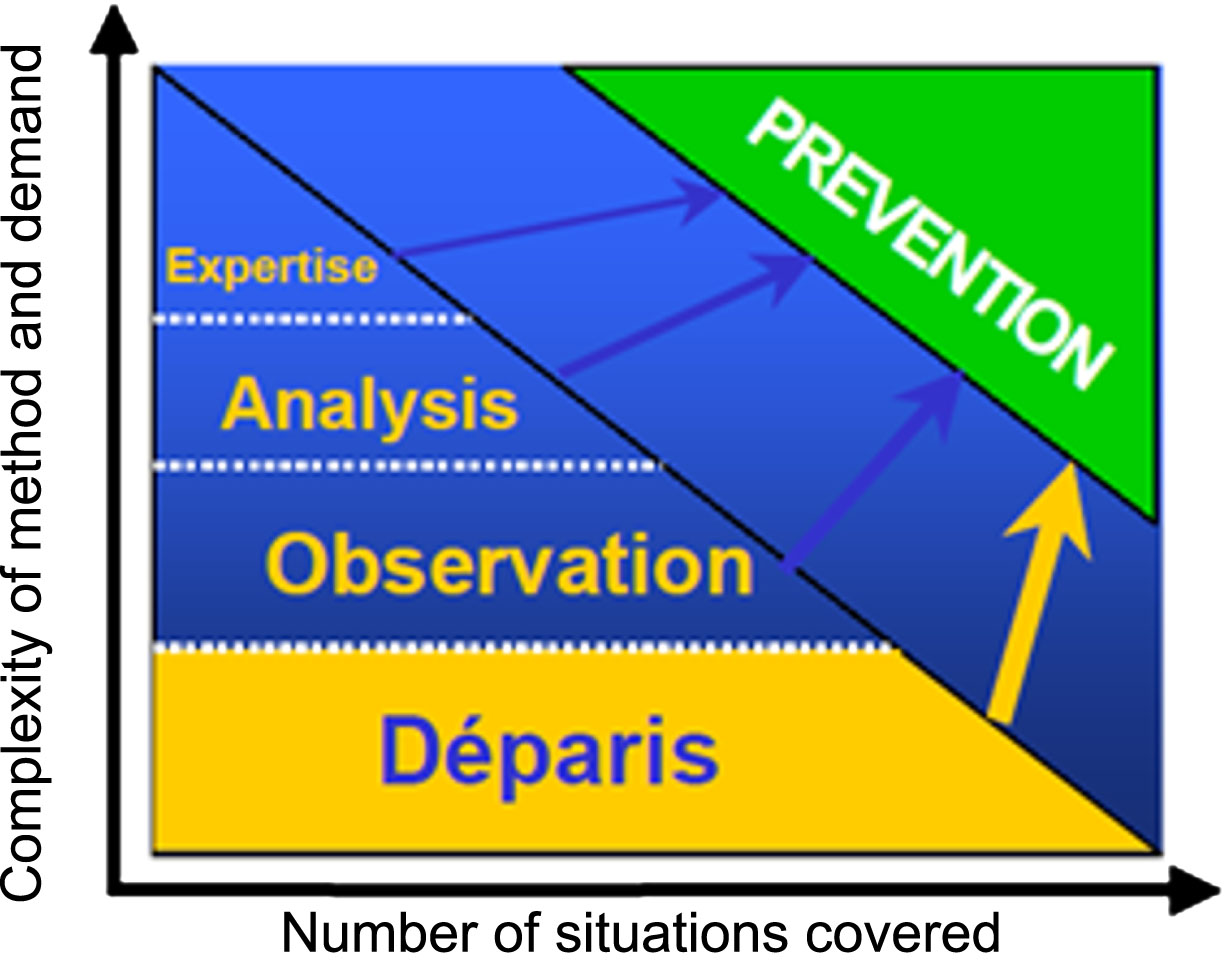
General outline of the SOBANE methodological approach. Source: Adapted from Malchaire (2003).
The SOBANE approach, therefore, prioritizes the actions of those directly involved in the work situation. According to [21], it’s not enough to understand the work situation; you must know it, and the people who know best are the workers themselves, so they are the best people to point out the risks involved in work activities. In addition, they are the ones who best know the resources available to improve the situation quickly and easily.
To guide the engagement of these people in managing risk factors, the SOBANE methodology indicates the Deparis method for carrying out the Preliminary Diagnosis. The method proposes that the analysis be carried out under different headings: Work areas; The technical organization between roles; The workplace; The risks of accidents; Commands and signals; Work tools and materials; Repetitive work; Cargo handling (lifting); The mental load; Lighting; Noise; Ambient temperature; Chemical and biological risks; The vibrations; Labor relations between workers; The local and general social environment; The content of the work; The psychosocial environment.
According to [20], the order of these headings was designed from the most general to the most specific to develop a physical approach to the work situation, considering the general organization (1 and 2) before workspaces (3), and following with safety (4) and the tools and direct means of work (5 to 9). The analysis of environmental factors (nos. 10 to 14), often addressed first, has been deliberately postponed to avoid them receiving more attention than the other aspects, as tends to happen. The psycho-organizational factors (nos. 15 to 18) were left at the end but were not forgotten, as is often the case in risk analyses of work environments.
The technique should be coordinated by someone who has studied it in depth, preferably, but not necessarily, a preventionist who, together with those involved and those who know the work, should describe the ideal situation. The coordinator should adapt the headings to the reality of the work situation, including eliminating and adding aspects to be assessed as necessary. Next, the group should point out what is different from what is desired, assigning a score out of three satisfaction levels and seeking suggestions on improving these deviations. It should be indicated who would be responsible for making the changes indicated, and, even if superficial, an assessment should be made of how costly the proposed changes would be [22]. A table like the one in Fig. 2 is filled in for each item.

Template for applying the Deparis method. Source: [20].
This study applied the Deparis method in 20 different Confined Space work situations in industrial process units. Each application involved three or four participants: a technique coordinator, one or two performers of the task (entrants into the Confined Space, an observer, and an attendant). Some of them took part in analyzing more than one work situation.
The work situations analyzed differed in their nature or the Confined Space in which they were carried out. The same Confined Space was analyzed during different tasks, and similar tasks were analyzed in different spaces. Table 1 shows the work situations analyzed.
List of work situations analyzed

Source: Prepared by the authors.
The headings were adapted, as recommended by the method, so that they better corresponded to the reality of this type of activity and environment, as well as the vocabulary itself, making use of terms common to workers’ daily lives to make them easier to understand and encourage them to contribute to the analysis. This adaptation resulted in 11 headings: Place of work; Organization of the task about the other participants; Risk of accidents; Tools and working materials; Repetitive work; Handling and lifting loads; Lighting; Noise; Room temperature; Chemical and biological risks; Vibrations.
To encourage the participants to contribute, explanations were provided before each application of the technique, explaining the reason for the study, clarifying that it was not a personal performance evaluation and that there would be no negative repercussions from taking part in the analysis. To reassure them even more, identification of the participants was optional. Once this had been clarified, the workers were asked about their experience of this type of activity and asked to explain the activity in as much detail as possible.
Graph 1 shows the satisfaction scores for the 11 items for the 20 work situations evaluated. Analysis of the graph shows that the factors identified as most problematic by workers are workplaces, chemical and biological risks, task organization and communication, and accident risks. These results are in line with the main risk factors pointed out by [2, 19], and [23]. The evaluations of the results for each item are shown below.
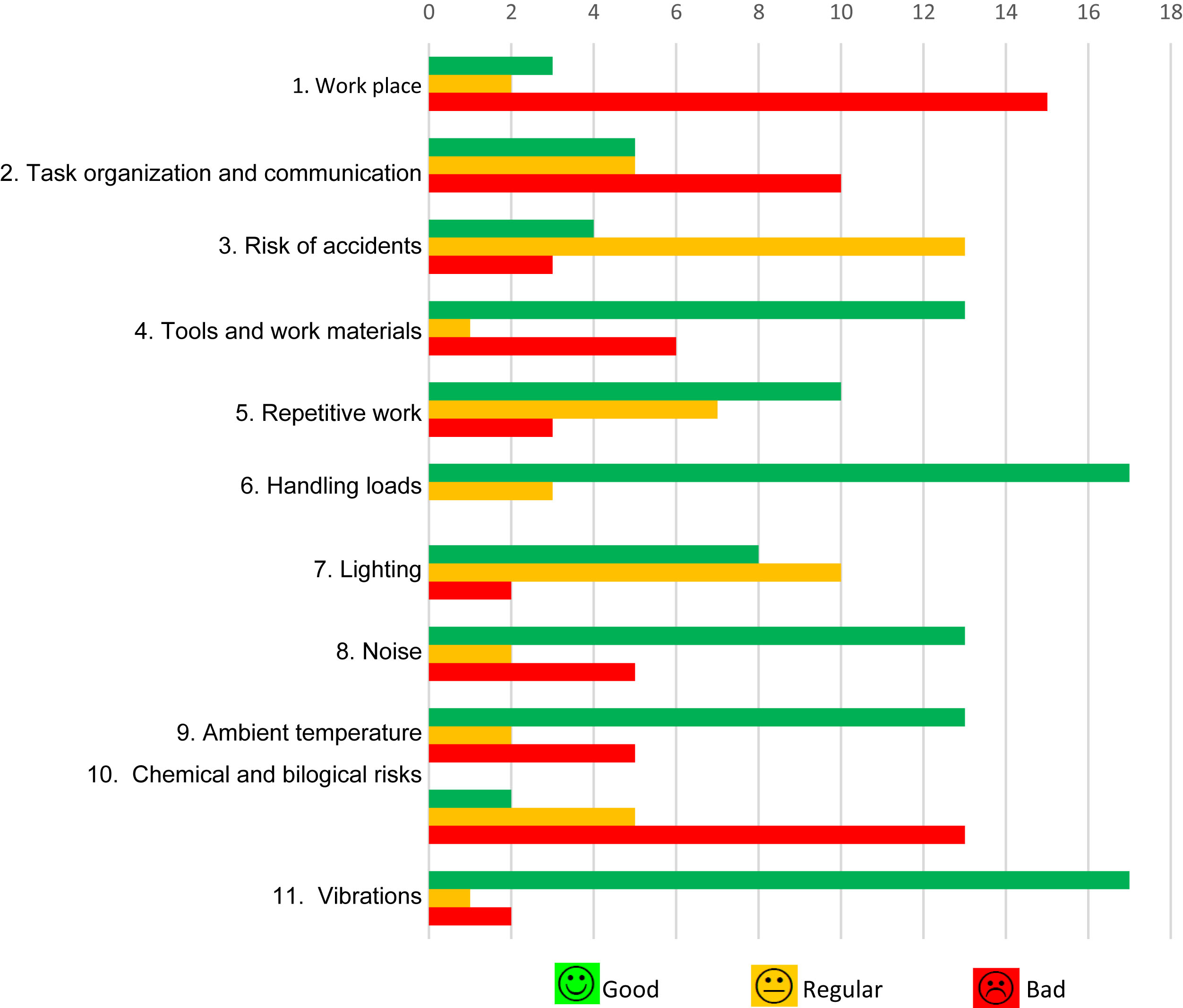
Overview of the evaluations of the headings. Source: Prepared by the authors.
Of the 20 situations evaluated, 15 rated the workplace as bad, 2 as fair and 3 as good. Among the inadequate evaluations, nine pointed to difficulties in moving around inside, of which six were considered very cramped, four cases presented uncomfortable positions, and one mentioned little visual contact with colleagues inside the space.
These complaints about workspaces were to be expected, as they are perfectly in line with the literature. [24, 25] point out that workspace-related factors are among the principal risks of accidents in confined spaces. The analysis of the situations resulted in the understanding that circulation difficulties are inherent to the size of the workspaces. As such, the measure adopted was to try, whenever possible, to place materials and tools outside the circulation areas, keeping them within reach of the workers but outside their movement space. In cases where uncomfortable positions were reported, it was decided to promote the rotation of workers to allow for frequent rest breaks since cramped spaces were unavoidable.
Task organization and communication
In 10 cases, there were difficulties in making eye contact and communicating with the attendant. In cases where direct communication between the attendant and the performers was not possible, an auxiliary attendant (called a mirror) was used inside the confined space, a common practice in this type of activity. Even so, in five cases, not even the guard inside the confined space could maintain permanent visual contact with the guard and the person carrying out the task simultaneously due to obstacles inside the equipment. In these cases, it was decided to monitor the working conditions through direct oral communication or radio at constant intervals of every 2 minutes.
Even so, at the end of the activity, there were reports of a lack of communication for periods longer than five minutes in two of the work situations. The attendant reported that they couldn’t hear the workers without the aid of the radio and that the workers didn’t always answer their radio calls at the agreed minimum intervals. The workers, for their part, pointed out that the attendant didn’t always contact them within the stipulated period and that, when they did, it was uncomfortable to answer because, to do so, the worker needed to put down the tool they were using to move their hand to the radio’s answer button, hindering the progress of the task. These results confirm the findings of [19, 26], and [27], who indicate that communication problems are among the most significant risk factors in confined space activities. It is therefore understood that it will be necessary to find a more satisfactory solution to this problem. Figure 3 shows an example of the positioning of an observer at the entrance to a confined space and their view of the interior.
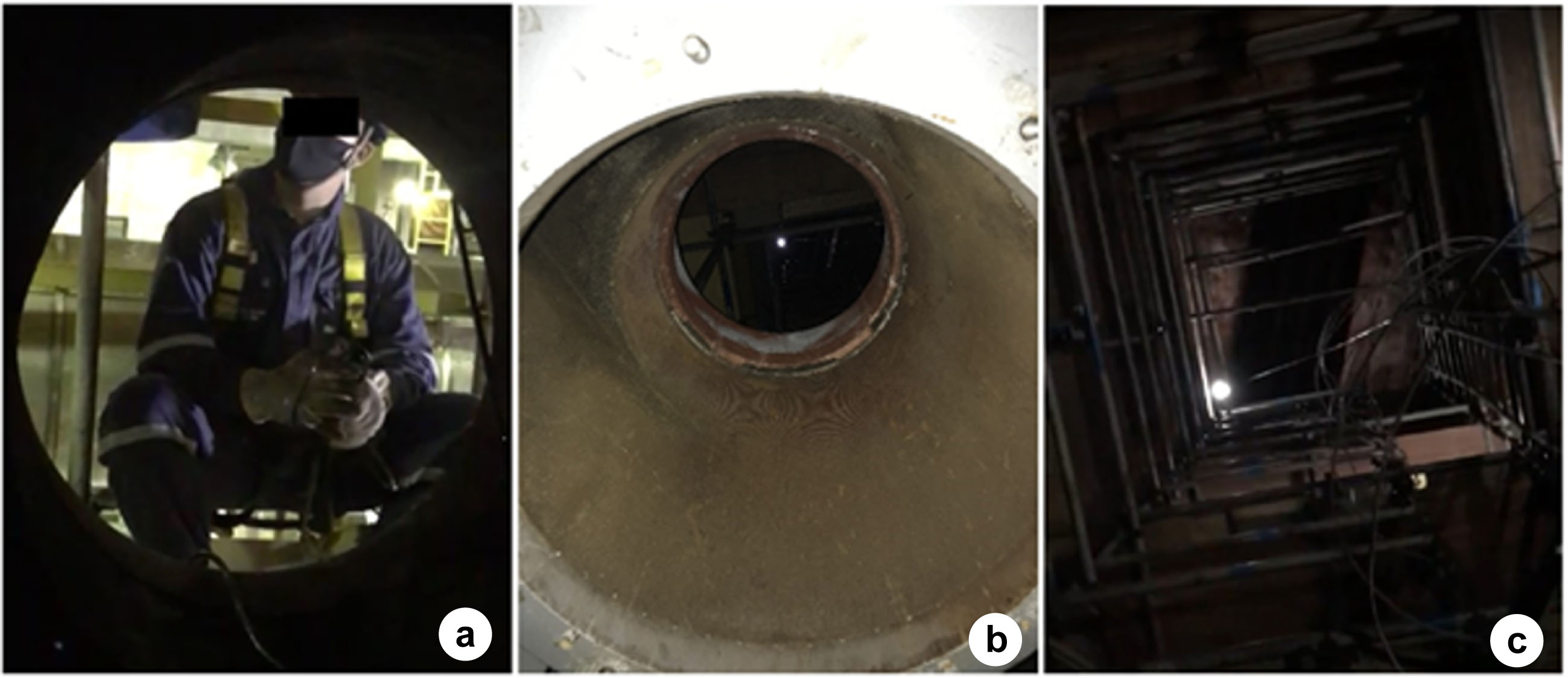
Lookout seen from inside the CS (a) / View of the lookout from inside (b) / Inside the CS (c). Source: Prepared by the authors.
In addition to the 10 negative evaluations, 5 regular evaluations were recorded, two of which used a mirror watch. The other evaluations regarding task organization and communication were positive. There were no negative comments about work organization or team rapport.
The general assessments of work situations concerning the risk of accidents resulted in 4 satisfactory, 13 fair, and 3 unsatisfactory analyses. However, Graph 2, which shows the evaluations separated by type of accident, suggests that there is a predominance of risks considered to be low. Only the risk of electric shock had most medium-level assessments. It should be noted that although only ten work situations used electrically operated tools, all twenty situations analyzed had electric lighting.
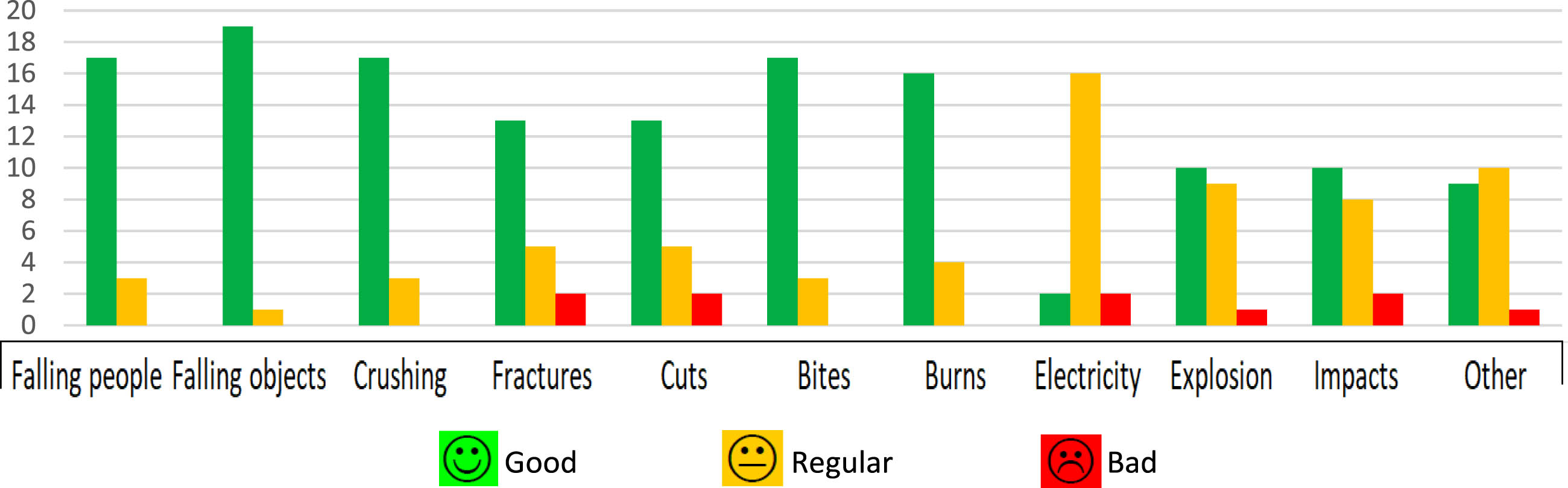
Overview of the evaluations of the headings. Source: Prepared by the authors.
As far as the risk of electric shock is concerned, these results agree with the studies by [2] and [28], who point to electricity as one of the main risk factors causing accidents in confined spaces. On the other hand, the same authors also consider the risks of explosion and fall from a height to be relevant. At the same time, in the workers’ perception, most situations did not present considerable risks of falls from a height. This result is believed to be due to the specific geometries of the activities assessed. Regarding the risk of explosion, nine assessments indicated a moderate risk and one a high risk, accounting for half of the situations analyzed.
The concentration of regular evaluations in general terms for this item is noteworthy, especially when you look at the scores given to each risk individually and see that almost all the accident risks were considered low, with the exception, as already mentioned, of the risk of electric shock. We can then conjecture whether it was concern about electric shocks that led the majority to give the overall risk of accidents a moderate rating or whether there was another reason.
One possible explanation is that, as these are known to be hostile environments and within an industry whose workforce is considered to have a consolidated safety culture, the tendency is for this workforce not to minimize the risks of accidents. On the other hand, professionals experienced in their jobs, as were most of the workers taking part in this study, tend to feel confident that their activities will run smoothly. This would result in a tendency towards a moderate classification of accident risks.
Those involved in the activities could not make any suggestions for mitigating the risk of accidents because they considered the risks intrinsic to the activities carried out or negligible. Regarding the risk of electric shock, the measure adopted was to carry out an additional check, before starting the activities, on the integrity of the electrical cables of the equipment and lighting used.
Most of the tool evaluations and work materials were positive, with 13. One evaluation was fair, pointing to a failure to supply clean uniforms and biological protection face masks. The six negative evaluations indicated the need for more uniforms and masks and criticism of the tools provided.
This item was where the most interventions could be made during the analysis. The findings in various work situations served to identify the insufficient supply of face masks (note that this study was carried out in November and December 2020, during the COVID-19 pandemic, and it is worth pointing out that seventeen of the activities analyzed had two or more workers simultaneously inside the Confined Spaces). In response to this problem, PFF2 masks were distributed to all workers. Additional uniforms were also requested.
In addition, users identified several damaged tools, such as brushes, sandpaper, spanners, and sledgehammers, which were replaced and sent for maintenance or disposal. Activities were interrupted while tools in good condition were provided.
Repetitive work
Concerning repetitive work, three unsatisfactory situations were pointed out. Two were concerned with working with a manual sander, and the third was removing scale with a sledgehammer and chisel. The alternatives pointed out were using electric sanders and removing the scale with a high-pressure water jet. The other evaluations indicated seven regular situations, including another case of using a manual sander and ten satisfactory situations.
Repetitive work does not receive much attention in the Confined Space literature, not because repetitive work does not occur in CS, but probably because it is no more serious when it occurs in these spaces than in normal environments. For this reason, there is no need to compare the data on this factor in the literature.
Cargo handling
No evaluation indicated situations where hefty loads were handled. In 3 cases, the situations were indicated as regular, with medium-weight loads being lifted using ropes to raise and lower materials from tower platforms and reactors, but the workers understood that the loads were compatible with their capacities and were unable to point to viable alternatives to reduce the need for effort.
Lighting
Regarding lighting, there were eight positive reports, ten fair and two poor. Due to the additional risk of accidents that, according to [29], poor lighting causes, all the regular and poor evaluations demanded that more light bulbs be installed inside the equipment. In some cases, the request was met immediately. In no case were activities started until satisfactory lighting conditions had been achieved.
Noise
Regarding noise in the rooms, 13 evaluations were satisfied; two were fair, mentioning noise from exhaust fans and air blowers, and five indicated high noise levels related to the tools used. Considering that, according to the Laborers’ International Union of North America manual (2001), noise is magnified inside Confined Spaces and that, according to [29], the noise inside confined spaces not only causes damage to workers’ hearing systems but also increases the chances of accidents due to miscommunication between workers and the guards, there is a clear need to improve working conditions in situations with high noise levels.
Since no alternative, less noisy equipment was available, the procedure adopted was to use appropriate individual hearing protection equipment. Most of the workers already wore simple hearing protectors (inserted into the ear canal). For this reason, external hearing protectors were requested from those responsible, but they were unavailable, and a purchase request was made.
Ambient temperature
[30] states that extreme temperatures are common inside Confined Spaces and can cause damage to workers’ health and accidents in the event of sudden malaise or fainting. Of the situations analyzed, 13 were rated as satisfactory, 2 as fair, and 5 as poor. However, it’s worth noting that all the situations rated well were during the night shift, and six occurred during the day, indicating complaints of excessive heat.
The seventh report of an unsatisfactory temperature was a night shift with a complaint of excessive cold, attributed to the low ambient temperature and the substantial air displacement caused by exhaust fans and air blowers. This problem was not noticed when the technique was applied and was only reported by the worker at the end of the day. It was considered because it was deemed relevant, and this problem was considered more carefully in subsequent assessments, considering the need to wear coats.
Therefore, the strong influence of working hours on the temperature of the workplaces can be seen, which is characteristic of this type of environment since, in most cases, sunlight falls directly on the sheet metal of the equipment in the industrial plants. We tried to alleviate the heat problems by making water and cold juices available at the exit of the workplaces (to avoid further aggravating the issue of lack of space inside) and defining fixed restbreaks.
Chemical and biological risks
13 work situations were considered bad regarding chemical and biological risks, 5 fair, and only 2 good. Most comments referred to the possibility of leaks or the release of contaminants due to the activity, such as welding (metal fumes). In addition, biological risks were pointed out on three work fronts where distancing between the workers carrying out the task, which would be desirable due to the current COVID-19 pandemic, was not possible due to limited space. In the latter cases, it was decided that fixed groups would preferably carry out work in pairs or groups to avoid contact with more people than necessary, and face masks were made available to all workers, as mentioned in section 3.4.
About the chemical, risks pointed out, no additional solutions were found other than those already practiced by the regulations and safety standards, such as prior decontamination of the spaces, isolation of possible product intakes from other equipment in the industrial unit, and the use of forced ventilation. It is understood that the risk of the presence of toxic products is not 100% eliminated since there may be flaws in the process of isolating Confined Spaces, as well as the possibility of contaminants being generated as a result of the activity itself, in the case of welding work, or the release of contaminants as a result of dirt coming off during cleaning and brushing work. This result is in line with what is found in the literature, given that authors in the field [13, 31–33] are practically unanimous in pointing to the possibility of contaminants as being the main risk factor in confined spaces. Therefore, a more in-depth analysis in search of more reliable solutions isnecessary.
Vibrations
Regarding vibration, the conditions in most work situations were considered satisfactory. There were three mentions of the use of electric sanders, which are abrasive equipment whose use necessarily implies the occurrence of vibration. The alternative indicated by the workers was the use of manual sanders; however, their use involves repetitive movements and increases the task’s difficulty, which needs to be carefully considered. The choice of the most appropriate tool was left up to the workers so they could use the one they considered most appropriate in eachcase.
Vibrations, non-ergonomic postures, and lifting heavy loads are risk factors for workers’ health. These factors are widely recognized in ergonomics, and their occurrence is also observed in Confined Space work [28–30]. However, it is possible to argue that vibrations in CS are no more severe than vibrations in services outside them. This result seems to point in this direction, indicating the occurrence of vibrations in some work situations but whose relevance was considered secondary to other risk factors.
Conclusion
This study, involving 43 workers engaged in confined space work or serving as attendant, offers a unique perspective often absent in the literature pertaining to such environments. Typically, literature draws from the expertise of specialists coordinating activities or deriving knowledge from standards and existing literature, rather than from those directly engaged in such work.
As anticipated, the implementation of various measures resulted in notable improvements in safety conditions and reduction in workloads across different fronts. These measures included task organization, tool replacement, and provision of suitable materials and lighting. The workers’ favorable response to these measures likely stems from their active involvement in their formulation.
The findings underscore the effectiveness of the Deparis method and suggest its potential for further exploration within the oil, gas, and petrochemical industries. While not serving as a definitive solution to neutralize risk factors, the method proves valuable as a best practice for identifying and significantly mitigating certain risks. Moreover, the identification of severe aspects, particularly from the workers’ perspective, and the unresolved issues highlight the study’s contribution to confined space work research.
Among the eleven analyzed aspects, workplace conditions received the most negative evaluations due to spatial constraints and heightened chemical and biological risks inherent in confined environments. Additionally, suboptimal worker interaction and monitoring, despite adopted procedures, underline the need for further investigation to ensure reliable and consistent oversight of activities.
This study, focusing on confined space work in process industry equipment, enriches the field of Occupational Safety Engineering and Ergonomics in two significant ways. Firstly, it demonstrates the applicability of participatory diagnosis in such settings, evidenced by the substantial implementation of measures driven by participant feedback and workers’ high adherence. Secondly, it identifies unresolved risk factors that demand deeper examination, suggesting avenues for future research, particularly in leveraging technological advancements for enhanced communication and monitoring.
In addition to the findings outlined, it is imperative to acknowledge the limitations of this study. The analysis was conducted considering a restricted number of work situations (20) over a relatively short period of approximately 6 months and within a spatial context confined to the oil and gas and petrochemical industry in southern Brazil. Consequently, this study does not purport to be universally applicable but rather representative of the specific context in which it was undertaken.
In conclusion, while this study does not offer a definitive solution to safety concerns in confined spaces within the specified sectors, it underscores the efficacy of the Deparis method as a preliminary diagnostic tool. Furthermore, by highlighting critical points from workers’ perspectives, it fills a notable gap in existing academic literature and serves as a foundation for future studies in these sectors.
Ethical approval
This study was determined to not require ethics committee review as it solely examined working conditions and did not involve any intrusion into participants’ privacy or potential harm to their physical or psychological well-being.
Informed consent
Prior to participation, all study participants provided written informed consent, confirming their voluntary involvement and right to withdraw at any point.
Conflict of interest
The authors declare that they have no conflict of interest.
Footnotes
Acknowledgments
The authors acknowledge the study participants for their invaluable contributions to this research.
Funding
The authors report no funding for the present study.