



Abstract
Background:
N-methanocarbathymidine (N-MCT) has previously been shown to be effective against lethal orthopoxvirus and herpes simplex virus type-1 infections in mice. In this investigation, the antiviral activity of N-MCT was assessed against herpes simplex virus type-2 (HSV-2) in BALB/c mice.
Methods:
BALB/c mice were infected intranasally with a lethal challenge dose of HSV-2. N-MCT was administered orally twice daily to mice using doses of 0.01 to 100 mg/kg to determine effects on survival and on viral replication in organ and central nervous system (CNS) samples.
Results:
N-MCT provided significant protection from mortality even when treatments were delayed until 3 days after viral infection. Viral replication in organ and CNS samples from N-MCT-treated mice was reduced below the limit of detection after 4 days of treatment. Conclusions: These results indicated that low dose N-MCT treatment was more effective than acyclovir therapy. N-MCT may be effective against HSV disease in humans and is currently undergoing preclinical evaluation. In particular, its potential use as a combination therapy for HSV, with its differing metabolism from acyclovir, make it a promising compound to develop for human use.
Introduction
Herpes simplex virus (HSV) infection in newborns results in approximately 1,500 infant deaths annually in the US. Survivors have a life-long infection and may suffer long term neurological deficits. Approximately 75% of neonatal cases are caused by infection with HSV type-2 (HSV-2) [1,2]. The treatment protocols using high-dose acyclovir (ACV) in fairly recent clinical trials have shown improvements by decreasing mortality and improving clinical outcomes [2]. The concentration of ACV, which is efficient in crossing the blood-brain barrier in patients, peaks 2 h after oral treatment with the prodrug valacyclovir, and is easily measured in cerebrospinal fluid [3]. The ability of ACV to penetrate brain tissue without significant pathology already present is limited by its non-lipophilic chemical properties [2] and complicated by the fact that ACV is actively transported out of the central nervous system (CNS) compartments [4]. Efforts to identify alternative antiviral drugs possessing enhanced penetration of CNS tissues are necessary to further reduce morbidity and mortality in infants, as well as adults. HSV encephalitis in patients older than 3 months occurs in 1 out of 250,000 with the nearly exclusive majority of cases involving infection with HSV-1. Only foscarnet and intravenous cidofovir are currently available for treatment of ACV-resistant isolates [1]. ACV-resistant isolates are responsible for 5–6% of cases in immuno-compromised individuals [5]. Antiviral therapies with activity against differing viral targets and improved penetration into the CNS tissue should prove particularly beneficial to these patients as well.
N-methanocarbathymidine (N-MCT) is a conformationally locked nucleoside, where only the North conformer with the sugar moiety in the anti conformation exhibits significant antiviral efficacy in animal models against orthopoxviruses and herpesviruses [6,–10]. N-MCT is more potent than ganciclovir and ACV against HSV-1 and HSV-2 [6], and has efficacy comparable to cidofovir against vaccinia virus, but with less toxicity at therapeutic doses ranging from 10 to 500 mg/kg administered either intraperitoneally or orally [8]. In the current investigation, the antiviral activity of N-MCT was assessed against HSV-2 in BALB/c mice administered lethal doses of HSV-2 strain MS, and its effect on viral replication in organs and the CNS were evaluated.
Materials and methods
Virology
Antiviral activity in mice
Female BALB/c mice were purchased from Charles River Laboratories (Raleigh, NC, USA) at 3–4 weeks of age. Animals were quarantined and acclimated for 3 days prior to use. Mice were group housed in microisolator cages and utilized at a quantity of 15 mice per treatment group. They were obtained, housed, utilized and euthanized according to the United States Department of Agriculture and the Association for Assessment and Accreditation of Laboratory Animal Care International regulatory policies. All animal procedures were approved by the University of Alabama at Birmingham Institutional Animal Care and Use Committee prior to initiation of studies.
Viruses and cells
The wild type strain of HSV-2 utilized was MS, which was originally a gift from Jack Hill of Burroughs Wellcome and its source has been reported previously [11]. Virus pools were prepared and quantified in either primary rabbit kidney cells or human foreskin fibroblasts (HFF) for use in vitro and in vivo. HFF cells were prepared as primary cultures from freshly obtained newborn human foreskins, which were minced and washed repeatedly with phosphate-buffered saline deficient in calcium and magnesium (Mediatech, Inc., Manassas, VA, USA). The tissue was incubated with slow mechanical stirring using a magnetic stir bar and stir plate in 0.25% trypsin (Sigma, St Louis, MO, USA) for 1 h at 37°C in a CO2 incubator. The supernatant containing individual cells was filtered through sterile gauze into a flask containing growth medium consisting of minimum essential medium with Earl's salts (Mediatech, Inc.), supplemented with 10% fetal bovine serum (FBS; HyClone, Inc., Logan, UT, USA), L-glutamine (Mediatech, Inc.), vancomycin (Viropharma Inc., Exton, PA, USA) and amphotericin B (Fungizone, Sigma). Cells were collected by centrifugation, seeded into 25 cm2 flasks and incubated in a 37°C humidified CO2 incubator until they reached confluence. The cells were then expanded until passage 4, when the antibiotics in the growth medium were changed to penicillin (Sigma) and gentamicin (Invitrogen, Carlsbad, California). All studies with HFF cells were conducted with cells at passage numbers below 10. Primary rabbit kidney cell cultures were prepared and utilized similarly except that passage numbers used were below 4. Culture medium for both cell lines was minimum essential medium with Earle's salts containing 10% FBS and 2 μM L-glutamine, 100 units/ml penicillin and 25 mM gentamicin.
Chemistry
Antiviral compounds
N-MCT was kindly provided by N& N Scientific Inc. (Potomac, MD, USA) and was suspended in 0.4% carboxymethylcellulose (Sigma-Aldrich Co., St Louis, MO, USA) for oral administration. ACV (Sigma-Aldrich Co.) was weighed and suspended in sterile saline for oral treatment of mice. Compounds were administered in a volume of 0.2 ml twice daily. Efficacy studies began 24–72 h post-virus inoculation by administration of 25, 50 and 100 mg/kg N-MCT or 100 mg/kg ACV by oral gavage twice daily 12 h apart for 7 consecutive days. N-MCT was also administered at 0.01 to 25 mg/kg and ACV at 0.1 to 100 mg/kg for evaluation of a lower dose regimen. In studies determining effect on viral replication in target organs, twice daily oral treatments began 24 h post-virus inoculation by administration of 25 mg/kg of N-MCT or 100 mg/ kg of ACV for 7 consecutive days. These doses were chosen based upon the results obtained from mortality experiments and results from previously published pathogenesis studies showing effects on viral replication in target organs of mice.
Experimental infections
Mice were manually restrained for intranasal inoculations of 1.1 × 10⁵ plaque forming units/mouse in a total volume of 0.04 ml, which was the dose resulting in 90% mortality of HSV-2, strain MS. For mortality experiments, animals were evaluated at least once daily for 21 days and four times daily during peak occurrence of clinical neurological signs so that mice could be humanely euthanized. Pathogen-esis studies were performed to compare the effect of N-MCT and ACV on viral replication in target organs of mice. Three mice each from vehicle- and drug-treated groups were euthanized on days 1, 2, 3, 4, 5, 6, 7 or 10 post-inoculation for collection of lung, liver, spleen, kidney, olfactory bulb, cerebral cortex, pons/ medulla, diencephalon and cerebellum. Samples were pooled by tissue type, homogenized as a 10% w/v suspension, and frozen until assayed for virus. Virus titres were determined by plating serial dilutions of tissue homogenates on HFF cells in media supplemented with HepaGam® (Cangene Corp., Winnipeg, MB, Canada) to reduce secondary plaque formation. Plaques were enumerated microscopically after three days incubation and staining. Trigeminal ganglia were also collected individually and co-cultured directly on primary rabbit kidney cells with N' N' dimethylenebi-sacetamide (Sigma-Aldrich Co., St Louis, MO, USA) for detection of latent virus [12]. For toxicity evaluations, uninfected mice were given 25, 50 and 100 mg/ kg of N-MCT twice daily and observed for mortality and clinical signs of toxicity.
Statistical evaluation
Mortality rates were analysed by Fisher's exact test and the mean day of death (MDD) results were evaluated using the Mann-Whitney U rank sum test. A P-value of <0.05 was considered significant.
Results
N-MCT administered orally twice daily at doses of 25, 50 and 100 mg/kg beginning 24, 48 or 72 h postviral inoculation significantly reduced mortality at all doses and time points (P<0.001; Table 1). There were no clinical signs of toxicity and no mortality due to the administration of N-MCT to uninfected mice (Table 1). All mice appeared clinically normal throughout the experimental periods in both the infected and uninfected groups treated with N-MCT. The positive control treated mice receiving ACV at 100 mg/kg also had significantly increased survival (P<0.001) when treatments were initiated at 24 or 48 h post viral inoculation, however, only a significant increase in the MDD (P<0.001) occurred when treatments were delayed until 72 h post viral inoculation (Table 1).
Effect of twice daily oral treatment with N-MCT or ACV on the mortality of BALB/c mice inoculated intranasally with HSV-2, MS
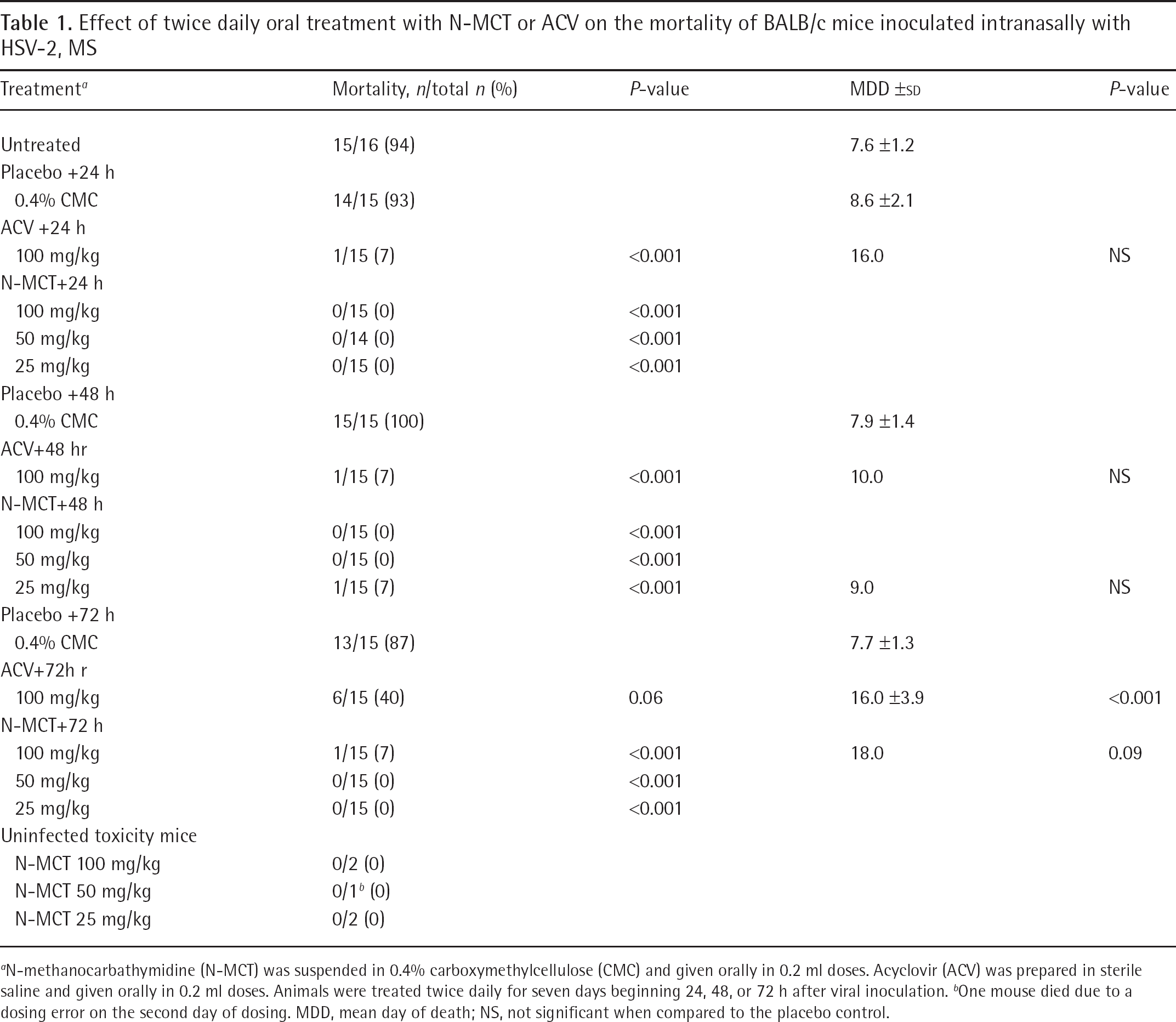
N-methanocarbathymidine (N-MCT) was suspended in 0.4% carboxymethylcellulose (CMC) and given orally in 0.2 ml doses. Acyclovir (ACV) was prepared in sterile saline and given orally in 0.2 ml doses. Animals were treated twice daily for seven days beginning 24, 48, or 72 h after viral inoculation.
One mouse died due to a dosing error on the second day of dosing. MDD, mean day of death; NS, not significant when compared to the placebo control.
Following the initial experiment, additional experiments investigated the use of lowered doses of orally administered N-MCT. A second experiment included 7 groups of mice treated with doses of N-MCT ranging from 25 to 0.39 mg/kg. Four groups of ACV-treated mice were also included with doses ranging from 100 to 3 mg/kg. All treatments were initiated 24 h post viral inoculation and continued for 7 days. Again, N-MCT significantly reduced mortality at all doses (P<0.001; Table 2). ACV at 100 or 30 mg/kg also had significantly increased survival (P<0.001), however, only a significant increase in the mean day of death (P⩽0.001) occurred when doses of 10 or 3 mg/kg were used (Table 2).
Effect of twice daily oral treatment with N-MCT or ACV on the mortality of BALB/c mice inoculated intranasally with HSV-2, MS
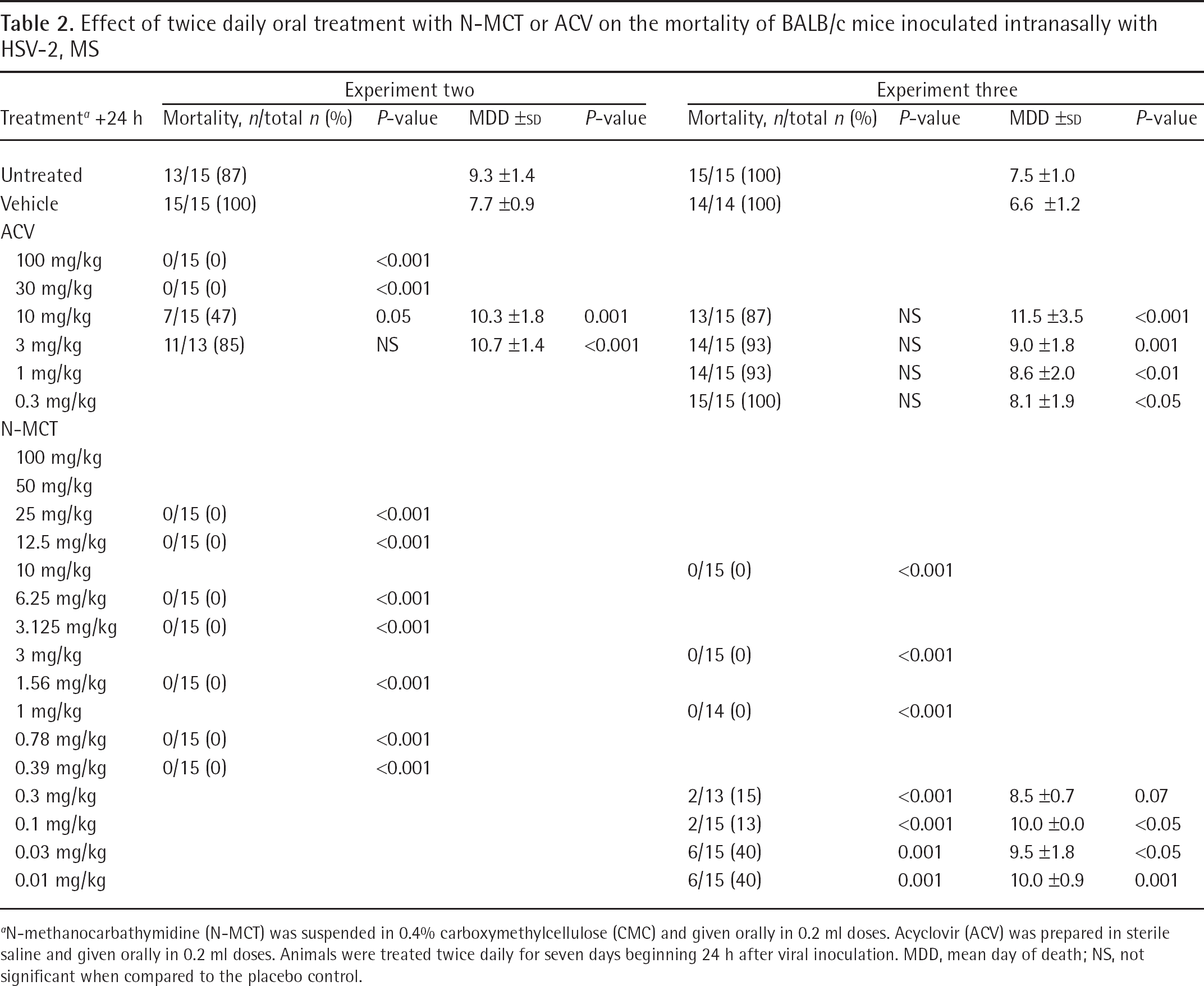
N-methanocarbathymidine (N-MCT) was suspended in 0.4% carboxymethylcellulose (CMC) and given orally in 0.2 ml doses. Acyclovir (ACV) was prepared in sterile saline and given orally in 0.2 ml doses. Animals were treated twice daily for seven days beginning 24 h after viral inoculation. MDD, mean day of death; NS, not significant when compared to the placebo control.
A third experiment included 7 groups of mice treated with doses of N-MCT ranging from 10 to 0.01 mg/kg. Four groups of ACV-treated mice were also included with doses ranging from 10 to 0.3 mg/kg. All treatments were initiated 24 h post viral inoculation and continued for 7 days. Again, N-MCT significantly reduced mortality at all doses (P⩽0.001; Table 2). There was also an increase in the MDD at the three lowest doses of 0.1, 0.03 and 0.01 mg/kg (P⩽0.05; Table 2). ACV at doses of 10, 3, 1 or 0.3 mg/kg did not significantly increase survival, but a significant increase in the MDD (P⩽0.05) occurred at all doses (Table 2).
When lung, liver, spleen, kidney and CNS samples were evaluated for viral quantitation by standard plaque assays, the mice treated with 25 mg/kg doses of N-MCT had reduced viral replication in organs and CNS samples below detectable limits when compared to untreated or ACV-treated groups (Figure 1).
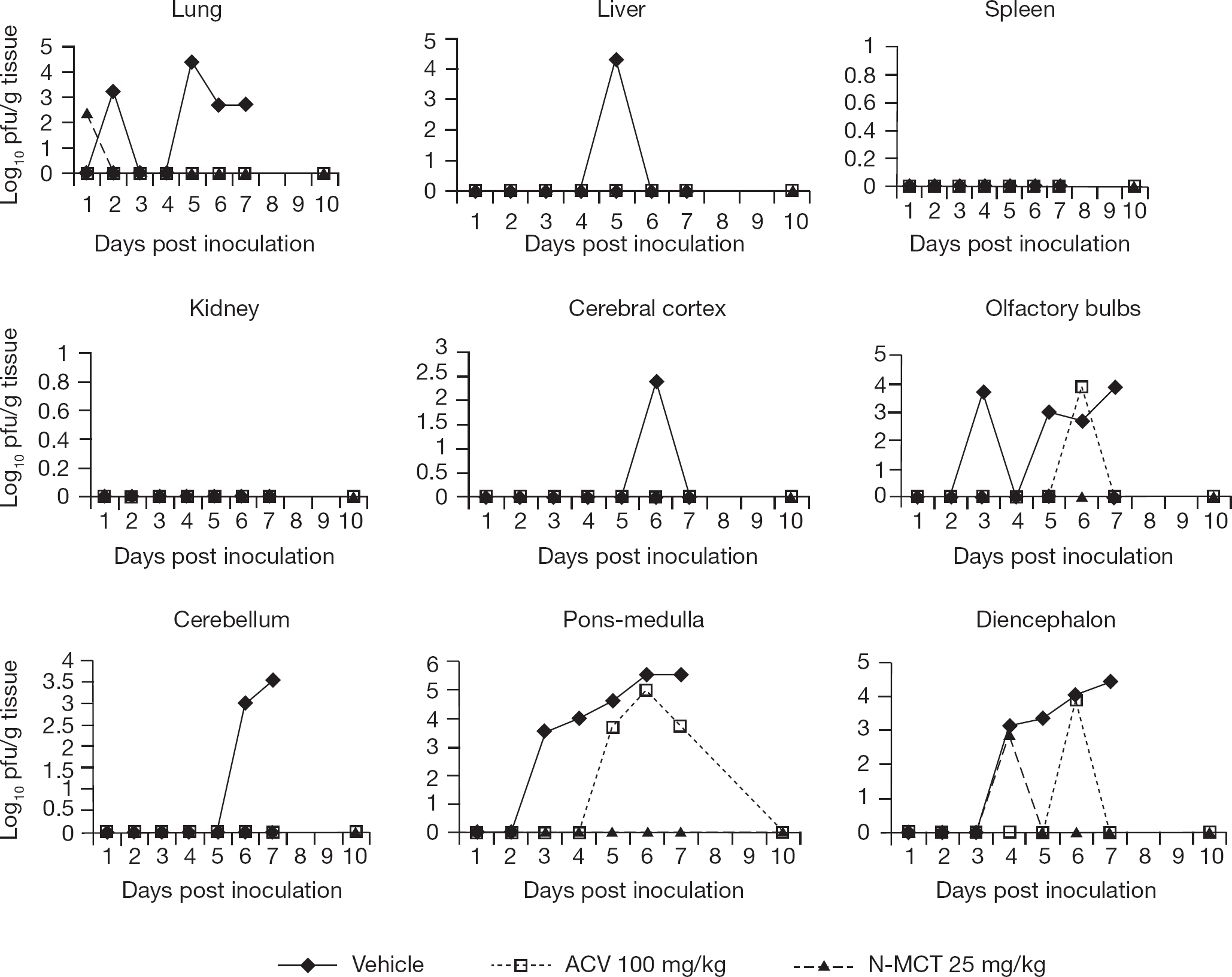
Efficacy of N-MCT or ACV against herpes simplex virus type-2 replication in target organs of mice
Only the day 4 samples of diencephalon showed viral replication in the N-MCT treated group, but all other samples from day 5 through to day 10 were below the limit of detection. When the trigeminal ganglia samples were evaluated for latent virus, there were no statistically significant differences between vehicle-treated, N-MCT- and ACV-treated groups although N-MCT reduced the total number of positive results to 11/24 in comparison to 18/24 in vehicle treated mice (Table 3).
Effect of twice daily oral treatment with N-MCT or ACV on the reactivation of latent virus from trigeminal ganglia of BALB/c mice inoculated intranasally with HSV-2, MS
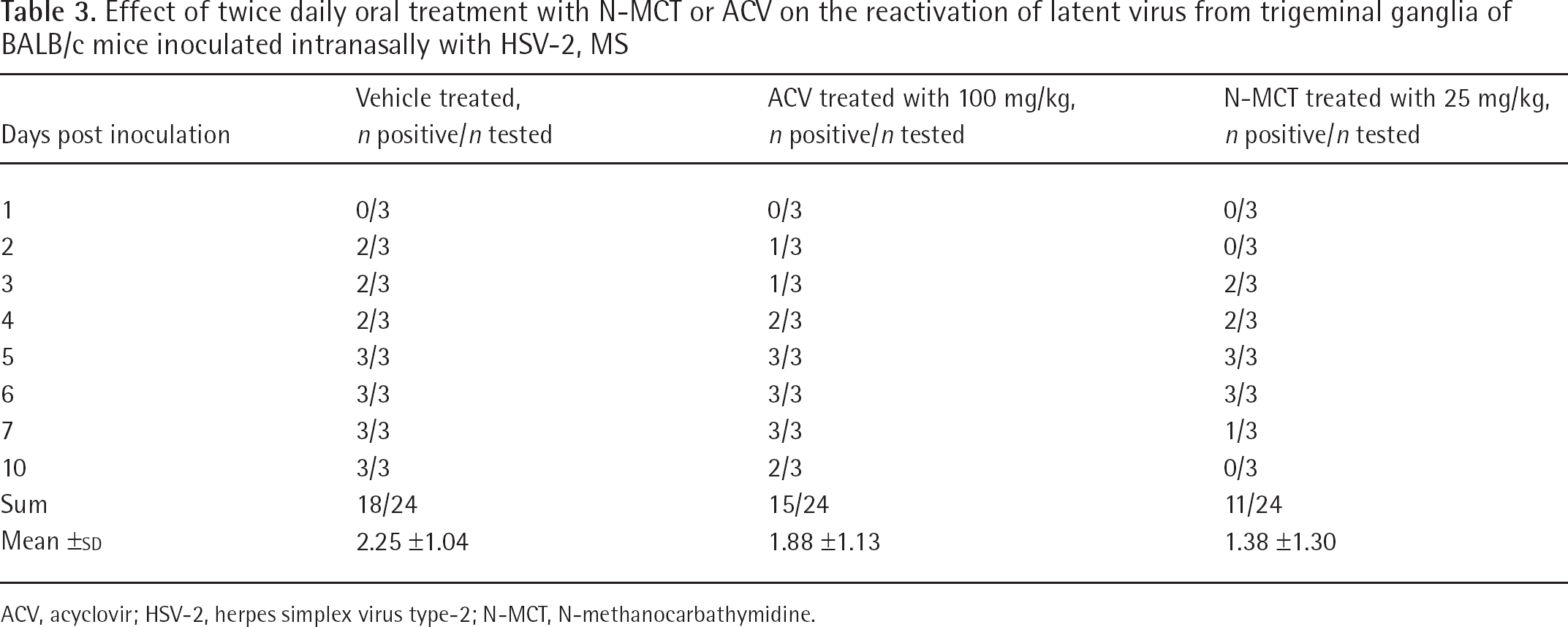
ACV, acyclovir; HSV-2, herpes simplex virus type-2; N-MCT, N-methanocarbathymidine.
Discussion
These results demonstrated that N-MCT, in addition to being highly effective against orthopoxviruses and lethal HSV-1 infections in mice [7,8], was even more potent than ACV against HSV-2. N-MCT was previously shown to be highly effective in preventing mortality when administered at doses of 5.6 mg/kg or more and given intraperitoneally twice daily to mice lethally infected with HSV-1 [7]. Orally administered N-MCT was effective at preventing mortality in mice lethally infected with HSV-2 using doses as low as 0.4 mg/kg, and importantly, was 75-fold more potent and more effective at low doses than ACV, the current standard of treatment. While oral administration of ACV to mice, instead of the more orally bioavailable valacyclovir, may affect exact dosing comparisons, the efficacy of N-MCT at very low doses is clearly evident, as well as its lack of toxicity. In previous studies using N-MCT against orthopoxviruses, N-MCT was administered at 50 or 100 mg/kg twice daily intraperitoneally or orally to uninfected mice in groups of 5 and there were no mortalities or clinical signs of toxicity (DCQ et al., unpublished data) and also administered at 500 mg/kg twice daily orally with no mortality or toxicity [8]. Previous studies using 50 mg/kg intraperitoneally twice daily against lethal HSV-1 infections in mice also showed no evidence of toxicity [7].
The antiviral activity of N-MCT was demonstrated by a reduction in viral replication in systemic target organs and within the CNS of infected mice. These findings were corroborated with recent studies in guinea pigs which also showed that low-dose therapy using N-MCT was superior to ACV [13]. Newborn guinea pigs inoculated intranasally with HSV-2 had fewer mortalities and symptoms when treated with N-MCT with doses as low as 5 mg/kg, even with a delay of treatment until 72 h post viral inoculation, than vehicle-treated animals. In similar neonatal guinea pig studies, ACV at the high dose of 60 mg/kg was only effective at 24 h post viral inoculation. Therefore, again, indicating that N-MCT was more efficacious than ACV. Utilizing very low-dose therapy with N-MCT may alleviate toxicity issues even for use in paediatric cases.
In neonatal herpes encephalitis particularly, few therapies are known to cross the blood-brain barrier and penetrate into the nerve tissues. Recent investigations reported some penetration by CMX001 [14] by using a radiolabelled compound administered to uninfected rodents. In light of these findings, similar investigations using radiolabelled N-MCT may also determine whether it is present within the nerve tissues of the CNS after dosing uninfected and infected mice and should be considered an important series of investigative studies.
To reinforce the relevance of HSV, genital HSV affects 50 million adults in the USA between the ages of 14–49 [15] and is the major cause of neonatal HSV disease. The incidence is 1 in 3,200 deliveries in the USA [16]. HSV encephalitis is also the most common cause of sporadic, fatal encephalitis in the USA with an incidence of 1 case per 250,000 per year [16]. The development of new antiviral therapies that are effective and offer different mechanisms of action is essential.
Notably, N-MCT is metabolized differently than ACV by being less dependent on HSV thymidine kinase for monophosphorylation, and may exhibit a different drug resistance profile [6]. It has activity in vitro against tk-HSV-1 isolates while ACV loses efficacy [17]; therefore, in addition to N-MCT being more efficacious than ACV, it may be useful in combination therapy for HSV in patients to reduce the likelihood of development of drug resistance. There is clearly a need for additional therapeutics with greater efficacy, less toxicity and demonstrated efficacy against HSV to effectively manage genital HSV-2 disease [15,18]. N-MCT is undergoing preclinical evaluation and will be further investigated as a potential antiviral for HSV infections in humans.
Footnotes
Acknowledgements
This work was supported by NIH, NIAID contract N01-AI-15439 to the University of Alabama at Birmingham.
AR and RG have an equity interest in N & N Scientific, Inc. All other authors declare no competing interests.