



Abstract
During the first 100 years of occupational therapy, the profession developed a remarkable practice and theory base. All along, technology was an active and core component of practice, but often technology was mentioned only as an adjunct component of therapy and as if it was a specialty. This lecture proposes a new foundational theory that places technology at the heart of occupational therapy as a fundamental part of human occupation and the human experience. Moreover, this new Metaphysical Physical–Emotive Theory of Occupation pushes the occupational therapy profession and the occupational science discipline to overtly consider occupation on the level of a metaphysical-level reality. The presentation of this theory at the Centennial of the profession charges the field to test and further define the theory over the next 100 years and to leverage technology and its role in optimizing occupational performance into the future.
Roger O. Smith, PhD, OT, FAOTA, RESNA Fellow
Technology is a perfect topic for the 100th anniversary of occupational therapy. Over the past millennium, no single force has had more of an impact on the quality of life across society than technology. This is even more true for people with disabilities. The invention and advent of the automobile, the power wheelchair, the Internet, the mobile telephone, prosthetics, surgical technology, and self-care technologies have made populations safer, made the lives of people with disabilities more inclusive in the community, and increased our longevity. Technology has redefined occupation forever. Therefore, at the 100th year of occupational therapy, it is of historical value to highlight technology and its integral and massive impact on the occupational therapy profession and its underlying science. Moreover, this points us toward and mandates an acceptance of the role of technology in the future of occupation-related professions for the next 100 years.
Technology has also been subliminal to occupational therapy. It is so ingrained in what we do, we often fail to recognize its significance to our practice and profession. The 100-year anniversary of the profession is a good time to bring technology to the forefront of theory and practice. In 1992, Pedretti et al. portrayed technology as an adjunct to occupational therapy. Today, I, as one of these authors, update this premise and proclaim that technology has a role in occupation so fundamental, it must be considered an essential building block of occupation.
This Eleanor Clarke Slagle Lecture1 provides an overview of the relationship between technology and occupation, reviews the history of this relationship, and describes how technology is a core component in a new theory of occupation. This lecture has three primary objectives: (1) to increase our appreciation of technology as an inherent part of occupation; (2) to create a new, fundamentally different way to think about occupational therapy and occupational science; and (3) to charge the occupational therapy community to change the future. This new treatise on technology and occupation has major implications for today’s practice and for tomorrow. Moreover, when we teach occupational therapy and occupational science, we need to overtly present the role of technology.
This discussion of technology also requires some open thinking. Whereas we always have encouraged students to open their minds, this lecture challenges all of us to think outside of our comfort zones. As practitioners, administrators, specialists, educators, inventors, entrepreneurs, students, and wearers of many hats, we likely need to discard any conventional baggage that we bring into discussions. We cannot just think outside the box; we need to hop outside of the box and look at fresh perspectives. To begin, this lecture describes data collected using new methods.
Overall Impact of Technology on Occupation Today
According to the American Occupational Therapy Association’s (AOTA’s) Director of Conferences, Frank Gainer, more than 9,000 convention goers attended the Eleanor Clarke Slagle Lecture at the 2017 AOTA Annual Conference & Centennial Celebration in Philadelphia. Some data collected from this sample reflect how the occupational therapy community relates to technology, setting the stage for observations of the occupational therapy profession.
Instead of asking attendees to turn off their mobile phones, as we are often requested to do in airplanes or movie theaters, we asked them to use their personal mobile devices to provide real-time group assessment data. Mobile audience response technology solicited snapshots of group understanding. The first question asked attendees to answer, on a scale of 0 (rarely) to 10 (frequently), “How much technology do you use in your daily occupations?” A total of 4,028 attendees successfully responded, with an average score of 8.2. This result has two significant implications. First, a lot of attendees indicated that technology was a common component in their daily occupations. Perhaps even more important, this data point demonstrates that nearly 45% of a large occupational therapy audience successfully found and logged onto new data collection software and read, answered, and submitted a response to the system in just a short few minutes. This was not a technical audience, but a large group of occupational therapy professionals.
Later, the group was asked, “What do you use to make sure you wake up in the morning?” Of the 3,744 responders, 33 used a watch; 158 “natural sunrise, rooster, or internal clock”; 480 an alarm clock; and a dominating 2,988 (nearly 80%) a cell phone (85 reported “other”). Clearly, members of the occupational therapy community have adopted not only technology, but recent technology, as primary tools in their daily lives. As indicated by this use of morning wake-up systems, technology has dramatically changed this fundamental self-care occupation.
These data are not unique to the occupational therapy community. They resemble the experience of the majority of people in the United States and even the world. Technology adoption is maturing rapidly. Not long ago, using electronic technology was optional. Today, we depend on it. Many of us would not even know how to live without it. Studying, getting to work, working, spending our leisure time, and communicating with others would be so hampered without technology. We could no longer perform our major life functions. And we know that one key part of the federal definition of disability is “substantially limits one or more major life activities” (U.S. Department of Labor, 2017).
So, what if, all of a sudden one day, any one of us was prevented from using our technology because of a stroke or an injury, and we joined the more than 55 million others (U.S. Census Bureau, 2012) in the United States who have a disability? Who should help us figure out new ways to do our life occupations, including our occupation-related technology? Who will help us find alternatives to accessing the occupation-related technology we depend on? This is a rhetorical question for the occupational therapy community.
Just to quantify a bit, how much technology are we really using? Here are a few interesting statistics from the Nielsen Total Audience Report (Nielsen Company, 2017). Of course, considering the 2016 U.S. presidential election result, one needs to maintain a healthy skepticism regarding the science of our polls, but look at what Nielsen says about how much time we spend with occupation-related technology. This is scary. In 2014, we viewed over 4 hours a day of television. In 2016, it was still over 4 hours a day. These statistics are amazingly stable from the 1970s. Data from more than 40 years ago indicate that the American public spent several hours a day with the TV (Nielsen Company, 1982). The data were foreboding then and still are today. The average American spends a substantial part of their waking hours in front of a television screen. This should be a major concern for an occupational scientist who subscribes to beliefs that healthy lifestyles include human interaction, interactive occupations, and physical activity.
In March 2017, Science News published an overview of evidence revealing how smartphones may be changing our daily behavior and how we think (Sanders, 2017). Sanders cited interesting studies in the physical therapy (Jung, Lee, Kang, Kim, & Lee, 2016), cognitive science (Sparrow, Liu, & Wegner, 2011), and psychology (Cheever, Rosen, Carrier, & Chavez, 2014; Przybylski & Weinstein, 2017; Storm, Stone, & Benjamin, 2017; West et al., 2015) literatures. The face validity of these studies is strong. But even if these studies are only partially correct, think of what these findings mean to occupational therapy practitioners.
First, smartphones change our daily behavior radically as they inject dozens and dozens of interruptions into the flow of our other activities. Second, screen time infringes on sleep—not only before bed, but during sleep. One study revealed that 49% of college students reported checking their phones at least once during the night (Rosen, Carrier, Miller, Rokkum, & Ruiz, 2016). Of course, not students in our field! Third, smartphones might also lead to inefficient problem-solving strategies. Google seems so easy to use, we may use Google when we can easily identify the trivia or calculate faster in our head (Storm et al., 2017). Finally, and maybe most scary, screen time may be linked to well-being and health. Respondents in a survey in Great Britain reflected a lower sense of well-being after screen time (Przybylski & Weinstein, 2017). Today, we might take for granted the interactions between occupation-based technology and health, but maybe we should not be so complacent.
Switching gears, let’s go back in history about 100 years. In 1895, H. G. Wells wrote about time travel. Let’s do that.
Technology and Occupation Over the Past 100 Years
One hundred years ago lived the Gilbreth family. How many children did they raise? Twelve. Two of these kids wrote the book Cheaper by the Dozen (Gilbreth & Gilbreth, 1948), which became the basis of the scripts for subsequent popular films about how to efficiently raise a busy family (Figure 1). Lesser known is that the parents of this clan, Frank and Lillian Gilbreth, were pioneers in the field of industrial engineering and are recognized as such in most textbooks in the field. Frank was one of the early advocates of scientific management (Gilbreth, 1912; Figure 2). Lillian Gilbreth was instrumental in the field of industrial psychology beginning with her PhD dissertation (Gilbreth, 1914; Figure 3). Even less known, though, is their work in the early 1900s related to disability and the fledgling occupational therapy society. In fact, correspondence in 1917 from George Barton to William R. Dunton, Jr., reveals that Frank Gilbreth was invited as an early honorary member of the National Society for the Promotion of Occupational Therapy (Barton, 1917).
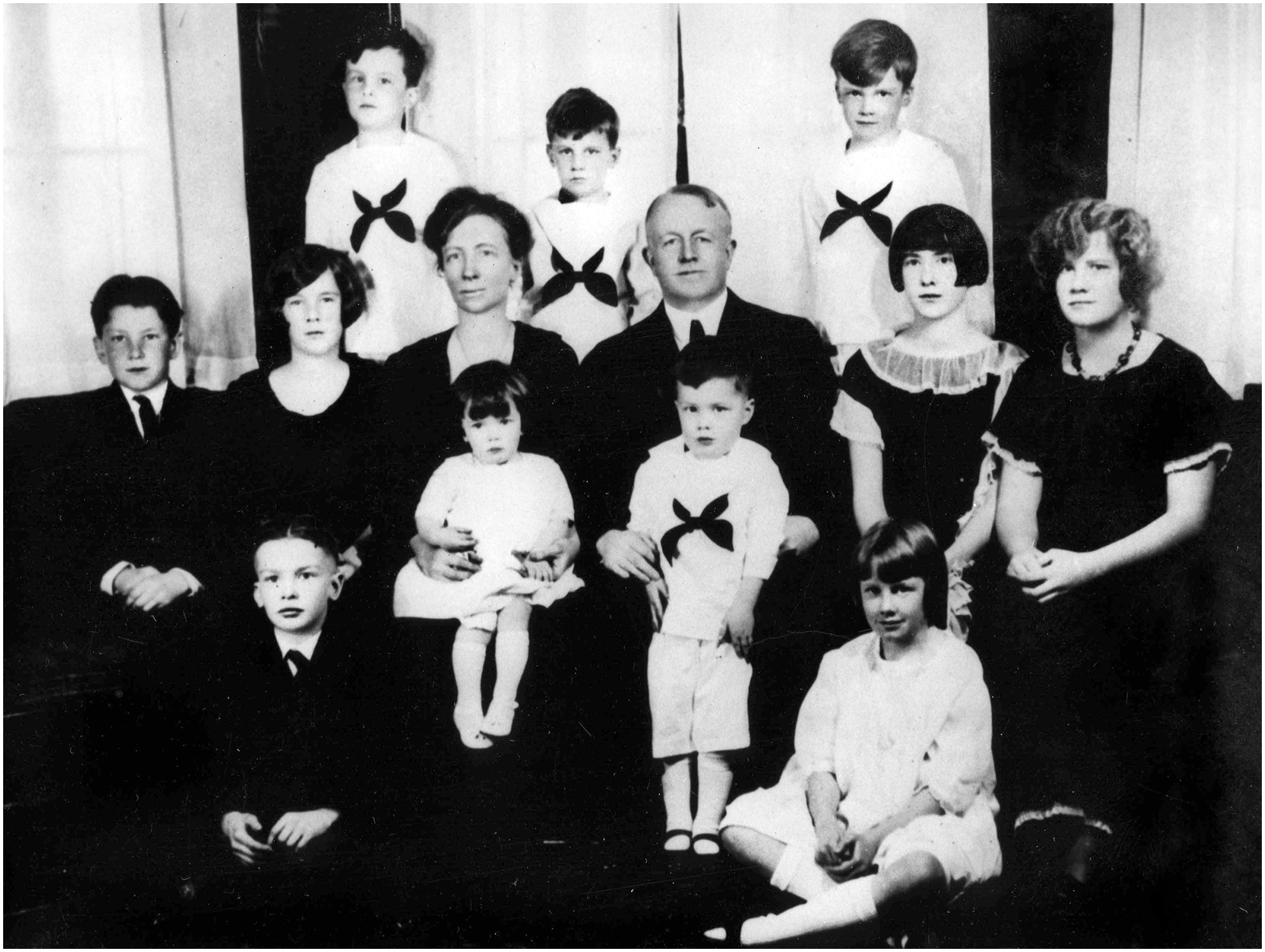
Frank and Lillian Gilbreth with 11 of their 12 children circa 1920s.
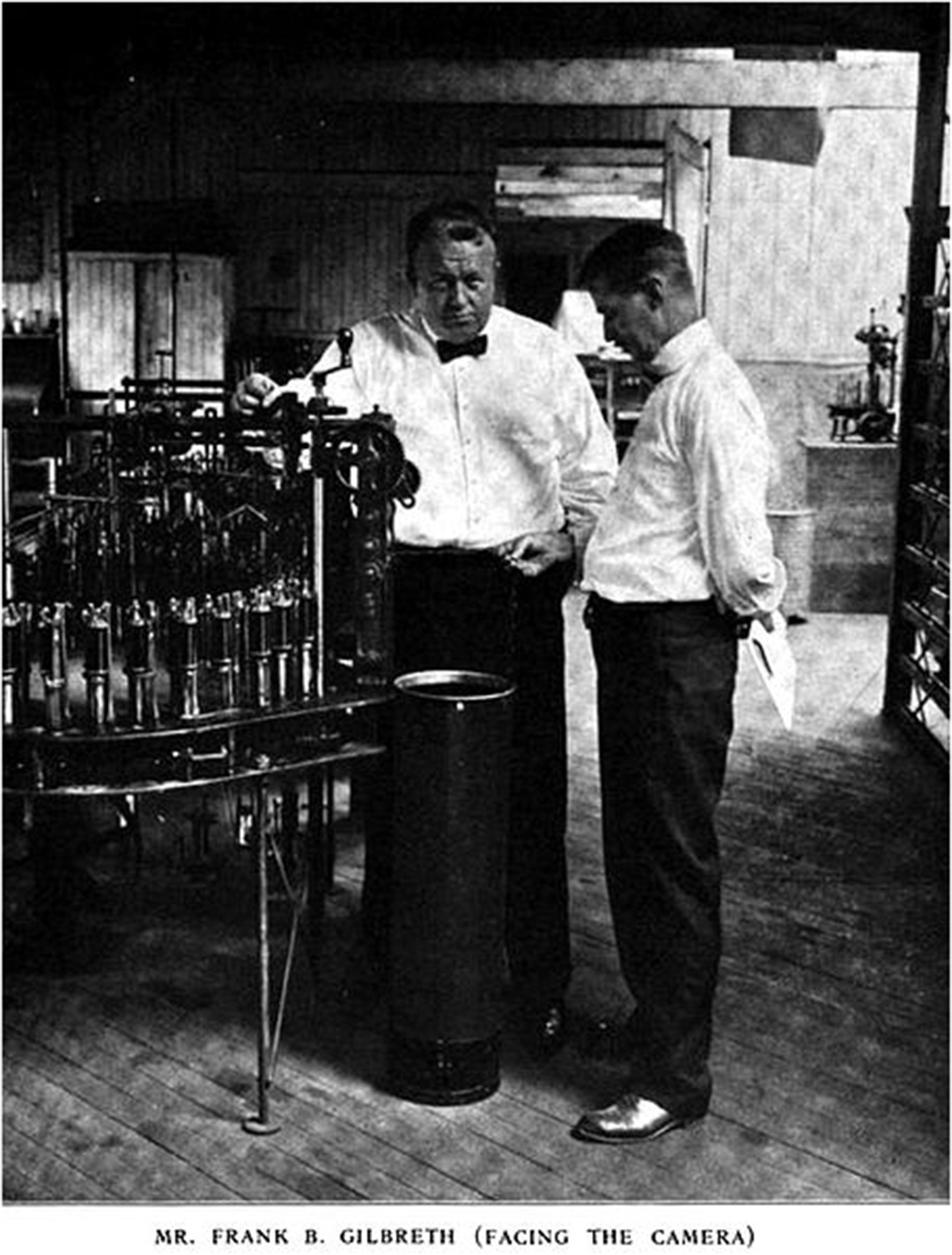
Frank B. Gilbreth (facing camera).
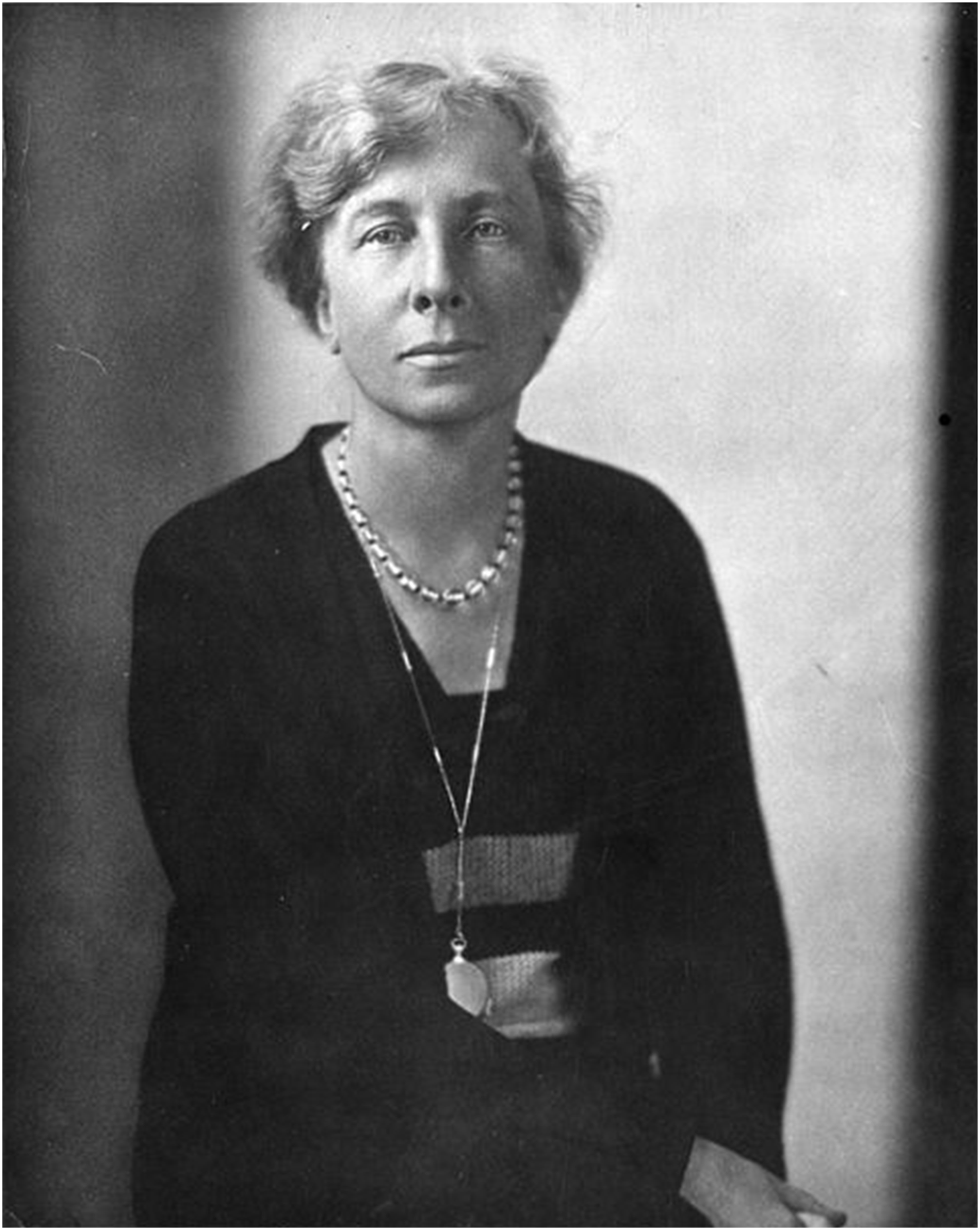
Lillian M. Gilbreth.
Frank and Lillian Gilbreth also published prominent works related to the occupations of people with disabilities, equipment to help people with disabilities, and the management of daily functions for people with disabilities. Examples include “The Conservation of the World’s Teeth—A New Occupation for Crippled Soldiers” (Gilbreth & Gilbreth, 1917) and Motion Study for the Handicapped (Gilbreth & Gilbreth, 1920; Figure 4).
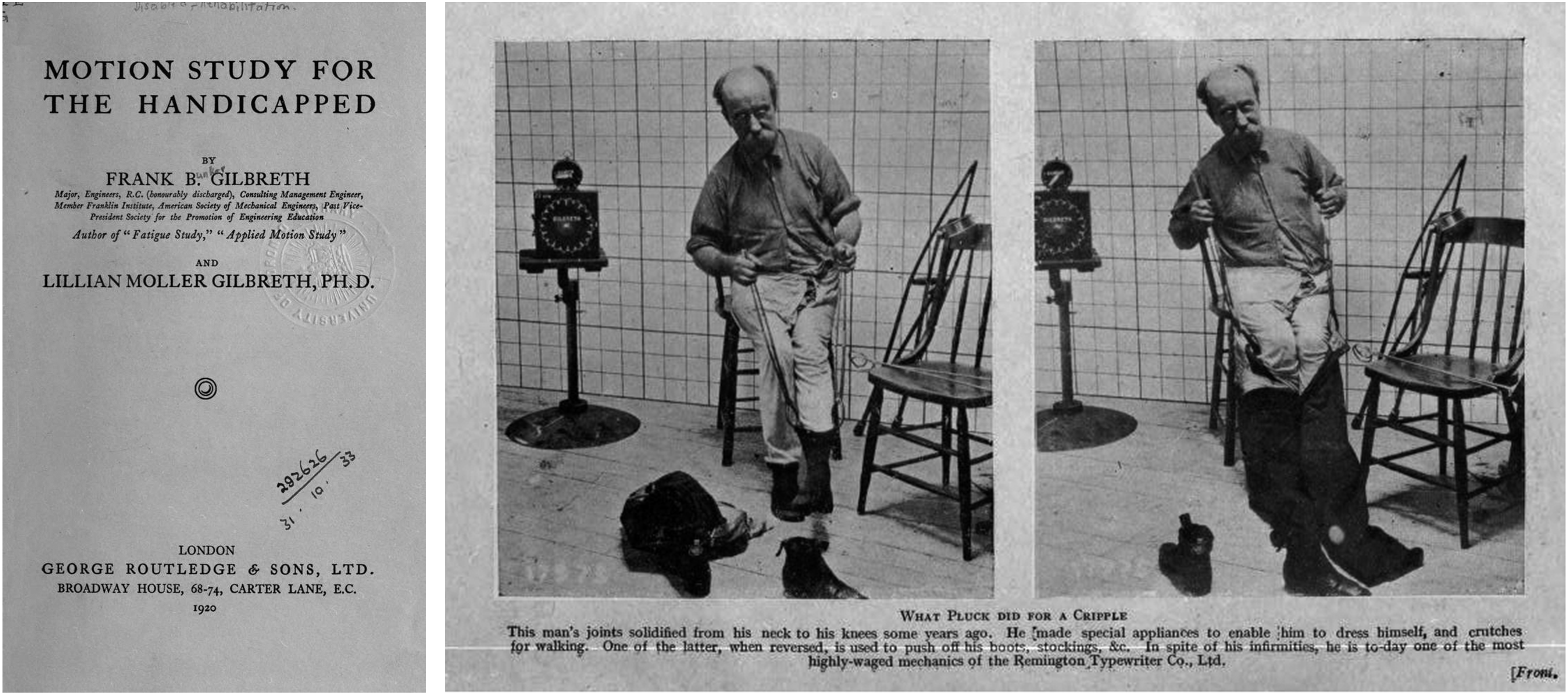
Pages of Motion Study for the Handicapped.
The occupational therapy literature cites Frank and Lillian Gilbreth on several occasions. Doris Pierce (2001b) wrote an article on “Untangling Occupation and Activity.” Earlier, Suzanne Peloquin (1991a, 1991b), in “Occupational Therapy Service: Individual and Collective Understandings of the Founders,” mentioned the Gilbreths, as did Cynthia Creighton (1992) the following year in “The Origin and Evolution of Activity Analysis.” All three highlighted the relevance of the Gilbreths to occupational therapy. However, none emphasized the later contributions Lillian made to society. Lillian Gilbreth is considered the first industrial engineering psychologist and “a genius in the art of living.” She also made significant contributions to disability interventions. Besides her early motion studies around disability with Frank, in the 1940s she coauthored Normal Lives for the Disabled (Yost & Gilbreth, 1944).
The two professions, occupational therapy and industrial engineering, actually developed side by side. Then, over the next 100 years, both matured into significant professions advocating similar concepts—in occupational therapy language, work simplification, activity analysis, and energy conservation, and in industrial engineering terms, task analysis, time–motion study, and efficiency. One might say that occupational therapy went the way of disability and industrial engineering went the way of mainstream work and ergonomics, but that is not true. Lillian Gilbreth published in disability, and occupational therapists publish in ergonomics. Occupational therapy and industrial engineering are a health and a technical profession that share the same blood and philosophies.
The similarity has a light and jovial side as well. Occupational therapy is challenging to define as a profession. Because of this challenge in clearly depicting what occupational therapy is to the public, close colleagues have jokingly provoked controversy by stating that “OT” stands for the “Other Therapy” or “Zero Therapy.” Having a degree in industrial engineering, I can also say that mechanical, electrical and electronics, and civil engineering peers, along with the public, have trouble defining industrial engineering. Once someone even said, “I know what IE stands for: ‘Imaginary Engineering.’”
Not only do occupational therapy and industrial engineering have similar roots, they also live in parallel universes where the professions are constantly challenged to define themselves. I pose that the underlying discipline and science of “industry” and “occupation” may be the keys to explaining the profession. Industrial engineering and occupational therapy may be fundamentally, theoretically, and philosophically grounded as a discipline. This may significantly differentiate us from many of our collegial professions. Although this creates a face validity challenge, it provides a depth and a quintessential sense of purpose.
But what does this tell us? Occupational therapy is closely related to a technical engineering discipline. We have roots in a technical view of the world that is relevant to occupational therapy. A 1993 historical analysis, published 25 years ago when computers were just emerging as personal devices. “An Analysis of Computer-Related Articles in Occupational Therapy Periodicals” summarized the reception of computers in the occupational therapy literature from 1978 through 1988 (Angelo & Smith, 1993). The number of papers went from only a few to more than 40 a year. This makes sense. Occupational therapy moves with the technology, and it should. Technology is relevant to occupation in four key ways.
First, technology is an assistive technology (AT) intervention. Pick your term. We say adaptive devices or adaptive equipment. The federal definition says assistive technology device and assistive technology service. In the 1950s, an occupational therapist named Fred Sammons started a tiny business. Figure 5 portrays an early invoice attesting to his success. In 1959, he charged Harmarville Rehabilitation $4. The University of Kansas Medical Center was one of the bigger spenders, with more than $13 in purchases. Of course, we know that Fred was an entrepreneur and has modeled business tact and skill for all of us (Rehabilitation Research Design & Disability Center, 2017). Fred invented and solicited inventions from the field, adding 200 technologies a year to his famous catalogs. Besides creating and distributing a variety of button hooks, he was there to help trademark Velcro and co-create splinting plastic with a chemical plastic stabilizer.
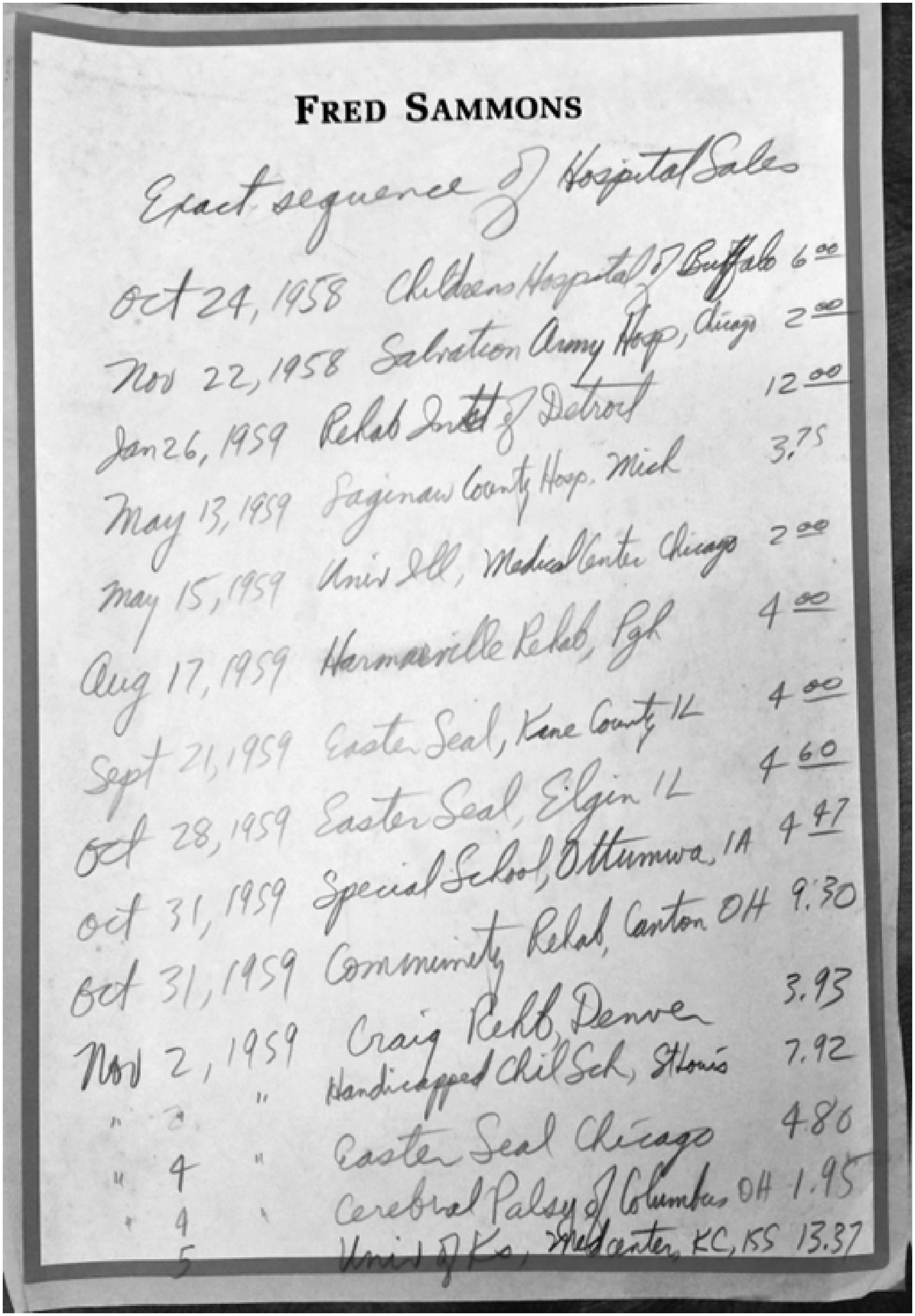
Early invoice record from Fred Sammons.
Second, therapeutic technology (TT) is a medium. One hundred years ago, we were actually sophisticated in our technology. Most of us today would be challenged to figure out how a floor loom works in its complex mechanical technology. We also used foot-powered band saws and exercise equipment. Some of it was low tech but heavy on the biomechanics, like bilateral inclined sanding jigs. In fact, the first Eleanor Clarke Slagle Lecture, by Florence Stattel (1956), focused on occupational therapy equipment. Four years later, Muriel Zimmerman (1960/1985) highlighted devices. The index of American Journal of Occupational Therapy articles for 1947–1971 categorized and listed many dozens of AT interventions (Figure 6). Recent Eleanor Clarke Slagle lecturers have highlighted more modern uses of technology. Of course, we have not always called technology technology. Sometimes TT is equipment, modalities, tools, media, adaptive devices, or adaptations.
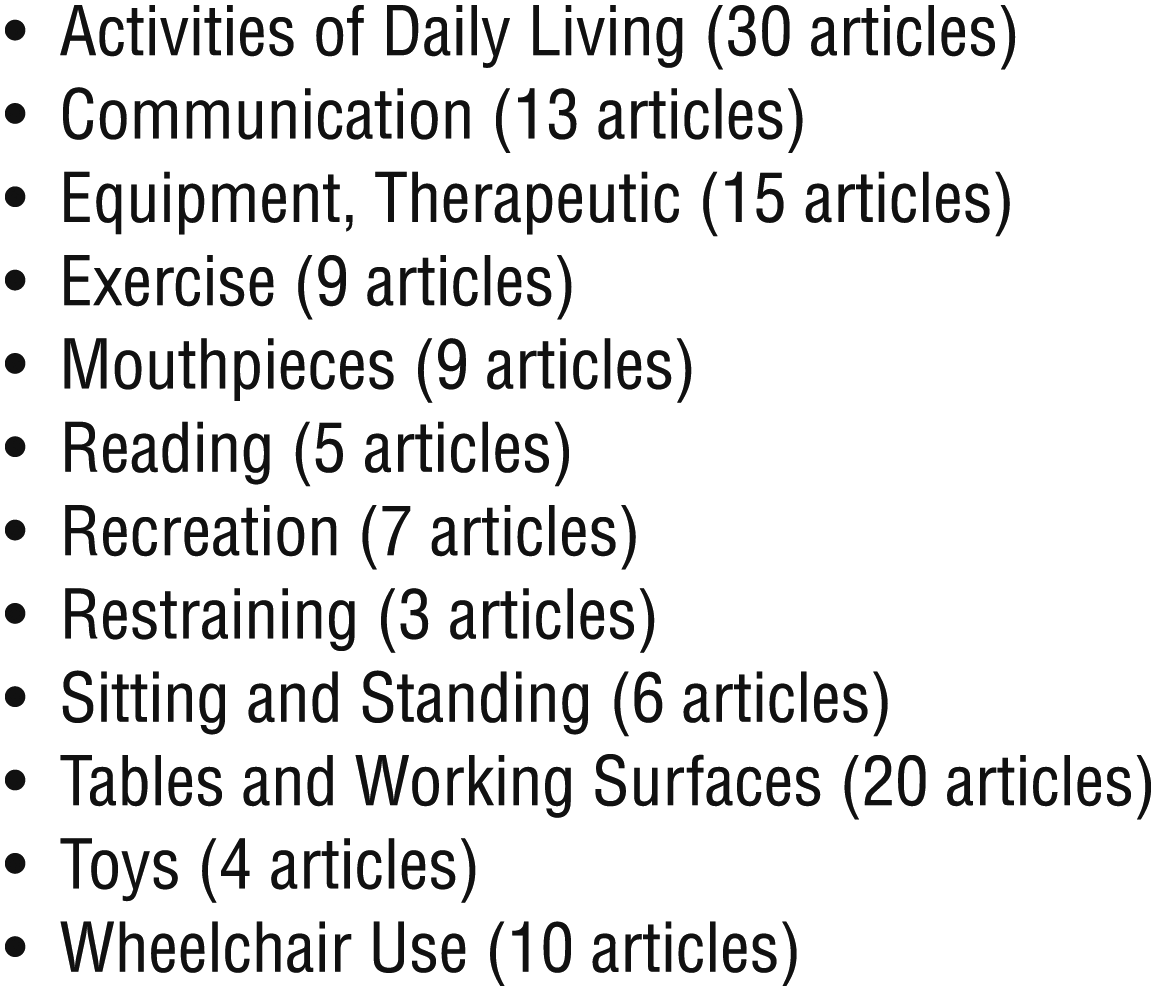
Articles related to assistive technology published in the American Journal of Occupational Therapy, 1947–1971.
Third, environmental technology (ET) is a broad-scope intervention that AT and TT reside within. Many occupational therapy and rehabilitation theorists embed AT into the environment. This, however, reflects a medical model that tends to place anything outside of flesh and bones in a category of its own. Notwithstanding, AT and ET are distinct. Unlike AT, which is associated with the person and usually goes with and is used by the person (e.g., wheelchair, denture brush, prosthetic limb, mouth wand), ET stays in the set environment and is used by anyone in the environment. Examples of ET include ramps, lever door handles, bus tie-down systems, and grab bars. Remodeling, architectural design, and the physical environment fit within ET. AT theorists separate AT and ET (Cook & Polgar, 2015; Scherer & Sax, 2010).
Last, and most fundamentally, technology is a core part of occupation. Let us call it occupation-related technology (ORT). Today, increasing evidence documents that electronic technology dominates the majority of our waking occupations. Technology is no longer optional in our work, play, and self-care occupations. Clearly, occupations include technology, although some occupations include low or very low tech, more like objects, such as a cup, toilet flush handle, or envelope. Using a broad definition of technology, I would say that all human occupations are technology based. One cannot perceive of an occupation without an object or objects, whether they be low or high technology.
This is not something to fear, but to embrace. Occupational therapy practitioners have been technology experts all along the past 100 years. Although the technology has changed and inventions have required that we quickly update what we do and what we know, we have adapted as a profession. The ADLs and IADLs we teach have radically changed. Today we know microwave ovens, magnetic induction stoves, frozen foods, and food delivery. We’ve moved from wall, to corded, to cordless, to cellular telephones. We know electric toothbrushes can improve dental hygiene for someone with motor or cognitive limitations. Once, we used alarm clocks to wake up in the morning. These morphed into clock radios, and as noted earlier, today we use mobile handheld computers as wake-up technology. Interestingly, only a few years ago, we couldn’t even buy the technology we depend on today. Countless inventions have changed how we and our clients live. We cannot take these for granted. They are ORT. A video showing a quick review of technology and occupation portrays the past 100 years in about 100 seconds (Smith, 2017b).
Technology and Occupation: Now and Into the Future 100 Years
A fingerprint biometric sensor represents a cognitively low-effort method for unlocking a smartphone. It uses a person’s unique fingerprint for identification. This sensor has been mainstream on mobile phones for a couple of years. The fingerprint sensor is also an example of how fast technology is changing. Fingerprint technology is being superseded by face recognition technologies that do not even require touching the device. The significance of these phenomena? They all affect our clientele as easier and alternative access methods to daily activity devices. Who is tracking this for our clients? Some clients might be fine typing a passcode to access their personal technology today, but tomorrow, they may not be able to type or position a finger. What do they do if they cannot remain still enough for facial recognition?
A neo-Luddite might say that technology is not necessary. In this way, technology is like climate change. We can ignore the science, but it is not going away. Therefore, we have a mandate to help nonscientific thinkers, the technology averse, and the slow adopters along a longer path. Real science and technology, as frightening as they might be in their unknown, are here to stay and will continue to be embedded in occupations of all types. Thus, we need to accept the existence of technology and leverage its capacity for our occupational therapy clientele to optimize the quality of life for everyone. Let’s look more closely at a modern technology, the telephone, and its historical path in relation to disability.
Technology and disability have a long and intertwining history. The telephone is a great exemplar of the inherent linkage among technology, disability, and occupation. We know that Alexander Graham Bell invented the telephone. Bell and his father were teachers of people who were deaf and hard of hearing. Bell was motivated by technology advances for improving communication (History.com Staff, 2009). This 1880s technology radically changed our everyday occupations today. Lesser known is that this teacher of the deaf also created the first wireless phone (Library of Congress, 2017) and founded the American Telephone and Telegraph Company (AT&T; Telecommunications History Group, 2017). Today, the mobile phone provides the platform for some of the most important AT devices for people with disabilities.
Occupational therapy practitioners are not often considered to have strong technical backgrounds. Occupational therapy students often express a fear of physics and math, but does this indicate a misfit to a technology mandate or orientation in practice? Likely not, because understanding technology does not require a technical degree or the ability to program software or to understand a formula. Understanding how technology is applied in occupation requires little knowledge of the details inside the technology. Applying technology, however, requires substantial knowledge of the functional features of a technology and the skill to determine why, how, and what technology matches a given occupation and context.
Although this may seem like a more superficial understanding of technology, it is deceptively sophisticated. Critical to technology application is an understanding of the individual person’s abilities, the demands of preferred occupations, and the context of the environment. Applied AT theories virtually all include the person, the occupation, and the environment as core concepts. The Human Activity–Assistive Technology Model (Cook & Hussey, 1995), the Matching Person and Technology assessment process (Scherer & Craddock, 2002), and the Student, Environments, Tasks, and Tools framework (Zabala, 2002) are popular examples. Occupational scientists and occupational therapy practitioners are intrinsically prepared in our basic professional training as we apply technology to optimize our clients’ occupations. This knowledge base and skill level might be labeled a practitioner’s technology quotient, for which occupational professionals are inherently recruited, socialized, and instructed at a high level. Our connection to technology may be subtle, however. In many recent occupation-based training programs, we have not yet re-enriched our technology application instruction after we dispensed with our looms, woodworking equipment, and kilns, but the foundational capacity is there.
How much technology do we have today to help people with disabilities? If we consider all occupations, even the occupation when we close our eyes for hours at a time to regenerate (sleep) is loaded with technology. Sleeping can require special mattresses and pillows, adjustable beds and positioners, sleep monitors, white noise or noise-cancelling devices, gentle wake-up systems, or smoke alarms, among others, and this is just for the mainstream population. Many more sleeping devices promote better sleeping specifically for people with disabilities. If we focus on disability, AbleData.com lists more than 35,000 currently available products specific to disability. In a recent sampling, 6,106 products were related to ADLs, and another 4,517 were environmental adaptations or housekeeping AT (AbleData.com, 2017).
Occupation-based professionals need to be cognizant of the newer developing technologies so we can convey helpful solutions to our clientele when they emerge. It would be sad if we heard about a matching technology solution for a specific client the day or week after we saw the client. Therefore, we need to stay in touch with cutting-edge developing technology. An example of a developing technology in 2017 pertains to the accessibility of electronic devices. Automated teller machines, public informational kiosks, computers at libraries, and new customer payment systems in restaurants depend on people being able to access the technology regardless of ability or disability. Thus, a keyboard panel or visual display might need to be adapted or adjusted for a specific person. For example, a person with visual impairment who needs audio information may need to turn on voiceover. A person with motor limitations may need to activate a scanning control method. All operating systems, including Microsoft Windows, Apple Macintosh, Linux, Android, and iOS, have accessibility features that occupational therapy practitioners need to know to assist their clientele. As more smart devices emerge, even more customizable interfaces will be available for users. Whether a microwave oven, a voting machine, or an airline check-in registration terminal, any device should accommodate each user with individual needs.
At the University of Maryland, the Trace Center leads a project called the Global Public Inclusive Infrastructure (2011), a set of tools to promote technology access for tomorrow. Someday, everyone with a special interface requirement will be able to walk or roll up to a device, and it will recognize who they are and automatically switch the interface to their prior selected design. This personalized technology is just around the corner. We need to be ready to help our clients take advantage of it. If not us, who will understand the full occupational needs of people with disability and help them adapt their technology and their environments to optimize their function and quality of life?
Thus, as occupational professionals, we need to look forward, possibly into the next 100 years. We will see brain–computer interfaces, personal robotic assistants, exoskeleton robotics, social robots, augmented and virtual reality therapies, smart homes, and driverless motor vehicles. These are all emerging today. Further into the future, as Elon Musk has described, is “neural lace,” tiny brain implants connected to computers (Strickland, 2017). We may also see particle travel and time travel. For centuries, science fiction has presented us a window into the future. We saw flying machines, wireless handheld mobile phones, and video telephones in sci-fi movies decades ago. These are standard technologies today.
Physical and Emotive Dimensions of Metaphysics
A review of technology history and current use clearly depicts the integral relationship of technology and occupation. This relationship, however, may be even more fundamental than it appears. Metaphysics is a branch of philosophy that considers the basic reality of existence. From a metaphysical vantage, I posit that technology and occupation are inextricably linked. Moreover, technology and occupation are fundamental elements of existence.
To have this theoretical discussion, I remind us that occupational science and occupational therapy have several unique features, all of which point us to a gestalt view of the world because we are inclusive of many perspectives:
We are broadly educated across the liberal arts and the social, physical, and biological sciences.
We bring the perspective of an applied therapy profession that practices across all settings in which people live, work, and play. We speak the languages of acute, chronic, and community health; education; vocational success; and community participation without hesitation.
We overtly create interventions to optimize the quality of life for everyone. This includes all people with all types of disabilities and impairments—motor, sensory, cognitive, and behavioral.
We fundamentally understand all domains of human functional performance and its interactions with a full range of contexts and environments (AOTA, 2014).
What defines our space is not the broad populations we serve, settings in which we work, methods of intervention, types of human disability, or functional domains we address. What defines us is the unifying concept of occupation: how people occupy their time and space.
The occupational therapy profession emerged 100 years ago with the great vision of George Barton, William Rush Dunton, Jr., Eleanor Clarke Slagle, and their colleagues. They had a deep theoretical underpinning, but one they probably could not articulate because it was intuitive. Plus, they were practical professionals, not theoreticians. Since then, and over the many decades, we have tried extensively to explain occupational therapy. Thank the University of Southern California for bringing the idea that we have a science underlying our therapy. We now all believe this. And we intensively strive to define occupation, differentiate activity, and explain meaning. But it is not easy:
We are constantly telling our students how to present an elevator pitch to those who do not know occupational therapy.
Our Eleanor Clarke Slagle lecturers have needed to be stalwart conveyors of core concepts of our practice, profession, and science.
In our literature, we have consistently hinted about theory supporting our science.
Some of us philosophically oriented researchers even felt that we needed to start the Journal of Occupational Science and a related organization, the Society for the Study of Occupation, around this idea of studying occupation.
I’ll quickly mention a few of the great occupational therapy theoreticians to set the stage. Early on, Gary Kielhofner talked about objects being a key part of the Model of Human Occupation and its association with the environment (Kielhofner & Burke, 1980). Gerald Sharrott and Cynthia Cooper-Fraps (1986) elaborated with a foundational-level discussion about motivation. David Nelson (1997) used the word form not unlike Aristotle did in describing his four causes and substance. (I just referenced occupational therapist David Nelson as a philosopher in the same breath as Aristotle!) Clare Hocking overtly presented objects as being key to occupation (Hocking, 1994, 1997). Doris Pierce repeatedly has forwarded discussions that border on metaphysical philosophy as she has spoken clearly of the importance of time and space in relation to occupation (Pierce, 2001a, 2001b).
Ruth Zemke (2004) solidified the metaphysical level of discourse in her Eleanor Clarke Slagle Lecture, in one of the most overt public discussions of occupation and metaphysics. She spoke of the cosmic level of time and space. Talk about cosmic: Zemke mentioned a quote from Donald Trump that was in the Orange County Register on April 15, 2004, to the effect that “subtlety and modesty are appropriate for nuns and therapists,” but not for people in business (quoted in Zemke, 2004, p. 618). Zemke retorted that therapists are ready to announce their accomplishments to the world.
Here is where Trump maybe was right once: Somehow, our field has escaped promoting an occupation-based theory of metaphysics, deferring to philosophy and science, not as we speak among ourselves as occupation-based professionals, but to the audience of philosophers and scientists at large. Perhaps as a field we are too modest, or maybe we think occupation is too narrow to forwardly propose a full-fledged metaphysical theory of existence in which occupation is core. So, this lecture takes the step and posits such. I take the metaphor from science fiction that has so often described the human condition in the context of the future and “boldly go where no one has gone before” (Roddenberry, 1966).
This metaphysics theory draws on my liberal arts BA in psychology and communications and ties it to my PhD in industrial engineering, all in the context of occupational science. Let me suggest that occupational therapy is so well grounded that we can draw a direct path to where it not only fits in a metaphysical reality, but also serves as the core of a plausible metaphysical reality.
The time is right. Our new professionals are increasingly entering our profession and discipline with a broad understanding of the sciences and a solid liberal arts background. With our advanced educational requirements leading to more diverse scholars than ever before, our field is poised with an increased capacity and appreciation for a metaphysics-level theory.
Metaphysics and Occupation
After a quick review of the definition of metaphysics, I tease readers’ brain by describing a new Metaphysical Physical–Emotive Theory of Occupation. Then, I defend the theory just a tad, relate it closely to occupational therapy and occupational science, and finally bridge it to technology.
According to the Merriam-Webster Dictionary (“Metaphysics,” 1996), metaphysics is simple. It is “a branch of philosophy investigating the fundamental nature of reality.” However, the Oxford Dictionary (“Metaphysics,” 2017) definition more directly uses occupational science words. Metaphysics is “the branch of philosophy that deals with the first principles of things, including abstract concepts such as being, knowing, substance, cause, identity, time, and space.” (When I do my elevator or bus stop pitch about occupational therapy, I always say it is about how people optimally occupy their time and space.)
Now, I confidently state that occupation is at the true juncture of reality. This metaphysical treatise will require extensive discussion, but I’d like to think of this as opening day at the ballpark, one pitch to instigate a season of metaphysical discussion of why occupational therapy will be here another 100 years and more prominent than ever.
Let’s start by saying that reality is not the planet Earth, or the United States, or an isolationistic perspective. Reality is huge. It is based on two entities that must balance and work harmoniously. For those of you familiar with ancient Asian philosophy, perhaps this may sound like yin and yang. To others it might sound like neuroscience, and the right hemisphere interacting with the left hemisphere. Both present a dual cooperating and balanced reality.
Let’s name the two dimensions of this reality, the physical dimension and the emotive dimension (this is so simple!). First is the physical dimension. It is like a rock. It is the static existence. It has no visible motion and no emotion. It is just present in space. It has no intrinsic movement and has no time, so one cannot even see the rock because seeing requires time, part of the second dimension. A rock is a relatively good representation of this dimension. However, it is difficult to conceptualize even a rock in the absence of time, so another dimension is required to perceive existence.
So, second is the emotive dimension. It is a reality that makes things move, that makes time progress, that makes things happen. It’s the motivation within us and every living thing. It is intrinsic life. It is the exclamation, the excitement, and it is the prompt for adaptation. There is no evolution or revolution without the emotive dimension. It is the change agent. But it is content free, fully empty. How might we represent a polar opposite of the stagnant rock? Perhaps a nebulous dream, but a dream without direction, without static images or a topic. Pure emotiveness. This emotive dimension of reality creates change. A dream can abruptly self-modify without any time or space constraints and can transcend place and time. It is pure motion and exists only as a dynamic entity. The emotive dimension is the antithesis of static.
Together the dimensions work like a puppy dog that is directed to “stay” (physical dimension) but is bubbling with energy to play fetch or go on a walk or go eat (emotive dimension). It may be so frenetic with anticipation that the puppy appears to border on neurosis. The puppy may even lose its physical self-control and wet the floor. Some past philosophers may have expressed this as existential anxiety (Burnham & Papandreopoulos, 2017; Pitchford, 2009).
There are some age-old physics and ontology paradoxes that demonstrate aspects of these dimensions. Zeno’s paradox, sometimes called the paradox of motion (Mark, 2012), reflects this space and time interaction. Aristotle talked about it (Davey, 2007). In order for a person, or any object, to move through space to a new position, like across the room, it must reach halfway there. But before reaching halfway, it must reach halfway to halfway. How many halfway increments? An infinite number, so ambulation is futile. It is impossible. It is physically impossible to move. That’s the paradox, because we obviously move. The “impossibility” of movement is the pure physical dimension. The fact that we can shift the physical into motion is that we have a change agent of the emotive dimension that enables time. So, motion requires both dimensions.
So, how is this occupational science? First, the fundamentals of what we learn to become occupational therapy practitioners create a basis for us to easily understand this reality. We have many real-life representations in occupational therapy practice that describe this dual metaphysical reality. Some are clinical examples, which are much more sophisticated than a rock and a dream.
For example, if we consider brain function, we think of neuroscience. Occupational therapy practitioners totally know what right and left hemisphere specialization is because we see it in our patients when they have sustained a stroke that results in a damaged right or left hemisphere. Which hemisphere is static and which dynamic? Which is structured, deterministic, and rational? Which is gestalt, spatial, emotional, and more carefree? The classical right hemisphere sees everything at once, gets the big picture, but cannot string together a coherent sentence. We see how right brain damage results in left neglect, when clients can totally lose the big picture. They may lose up from down and inside from outside and have terrible trouble dressing themselves. On the other hand (literally), the classical left hemisphere is organized, rational, step by step, but often loses its emotional counterpart.
I posit that the metaphysical reality has something to do with how brains develop. One side tends to affiliate with the physical dimension, and one side tends to orient toward a more ethereal emotive dimension. Of course, it is much more complicated in that they interact wildly. The frontal lobe, brainstem, and decussations across the hemispheres all moderate to create an integrated system. In fact, this is what enables a balance, which we will return to later as the role of occupational therapy.
Or we can examine psychosocial practice from this dual reality. What is schizophrenia? What are some of its diagnostic behaviors? Delusions, hallucinations, and lost touch with “reality.” Which reality? Someone dealing with a major schizoaffective episode may ignore physical realities in favor of a dreamlike existence. Perhaps they have become . . . “imbalanced”? We talk about behavioral compensation and cognitive–behavioral therapies. Let’s bring a person who might have an affective disorder back to the physical reality.
As neuroscience studied psychopathology, we learned that schizophrenia may involve a unique morphology of the brain. The corpus callosum is one of the primary connectors between the two hemispheres. Studies have identified that the corpus callosum differs between people with and without schizophrenia (Innocenti, Ansermet, & Parnas, 2003). Some studies have shown thicker parts of the corpus callosum for people with schizophrenia. Other studies have shown thinner sections and slower communications between hemispheres. Perhaps these differential thicknesses and functions relate to a loss of balance between realities? Schizophrenia may be not a loss of reality, but an imbalance between parts of reality. Maybe the lay term for people with mental health issues being “unbalanced” is correct.
Or, when we think of classical depression, what are its symptoms? Hard to get motivated, difficult to get going or out of bed, challenging to get things done. Perhaps this could be a dominating physical dimension of reality; limited emotive reality, so lack of motivation. Perhaps many types of depression are a skewed imbalance tilted to the physical dimension.
Many of our core occupation-based intervention strategies may have evolved out of this need to help balance these domains of reality. Think of the soldiers from the early 1900s receiving occupational therapy. They were set up with occupations to help structure feelings or, conversely, behaviors to provoke exploration and creativity. These are opposite strategies, but both were intended to balance a person with a skewed hyperactive emotiveness or physical reality, respectively.
Using spinal cord injury with body paralysis or hand therapy with orthopedic restriction as examples, our clients with these diagnoses are individuals with physical limitations. They are hampered in achieving their prior, current, or future dreams because they have been injured and are now limited in their physical abilities. Our role is to help them adapt to their new selves, giving them mechanisms like assistive technologies to help them achieve their desired occupations (improve physical dimension capabilities) or help them redesign their dreams to match their newfound limited abilities (adjust and rebalance their emotive expectations).
This dichotomous reality actually plays out in our culture and societal drama and film all of the time. And it gathers a major following. As a prominent case, think for a bit about the original Mr. Spock, who had a human mother and Vulcan father, in Star Trek (Roddenberry, 1966). Emotion versus logic is a fundamental conflict that Spock deals with in almost every episode. These dichotomies may all represent the conflict and balancing act between the metaphysical physical and emotive dimensions of reality.
Metaphysical Physical–Emotive Theory of Occupation
Let’s look at the structure of this theory and then the function (like anatomy and physiology), depicted in Figure 7.
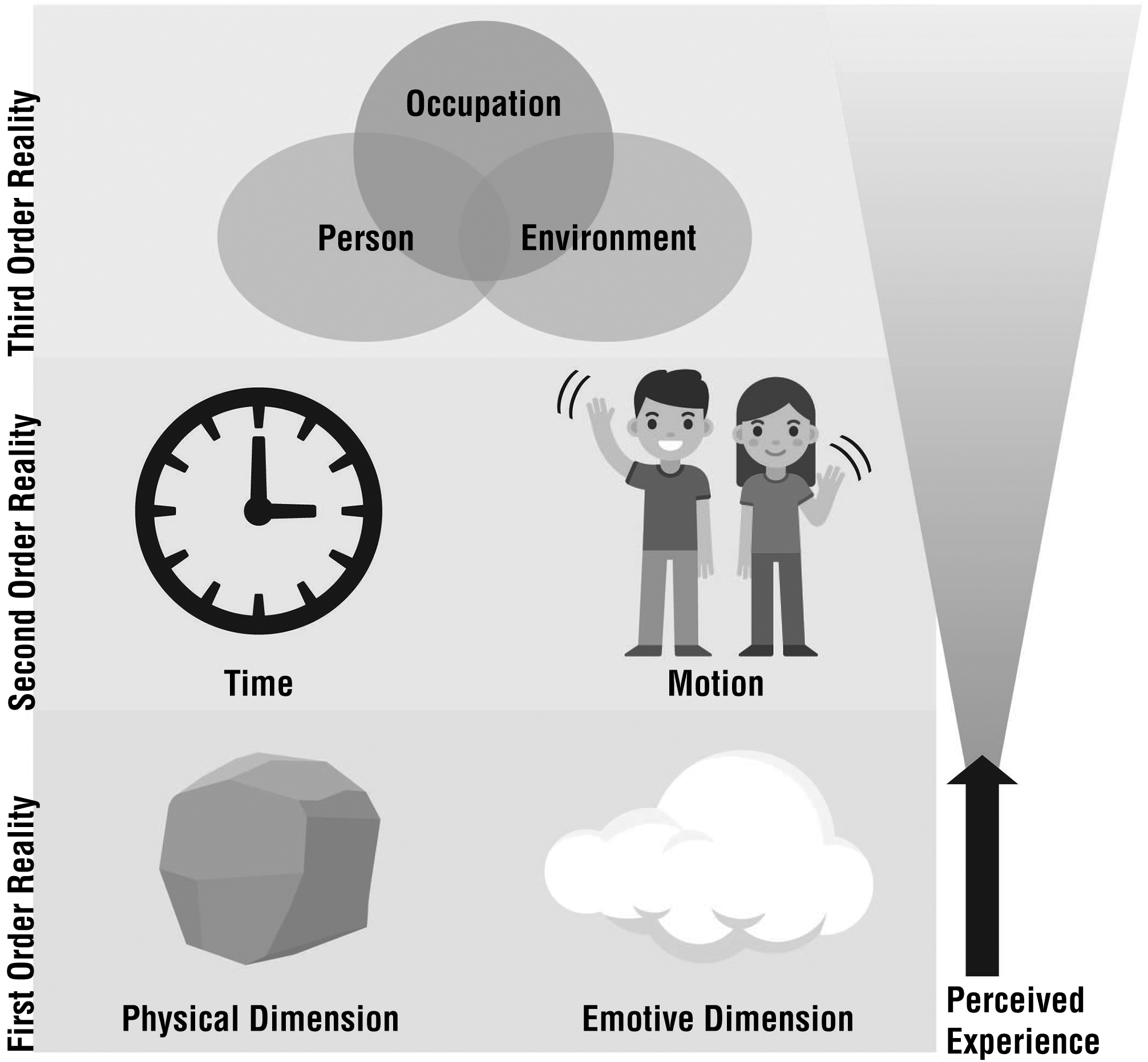
Metaphysical Physical–Emotive Theory of Occupation dimensions, including first-, second-, and third-order realities.
First-Order Reality
So, we have two dimensions, the physical and the emotive dimensions. They exist in parallel, but only when they interact can they be perceived. A physical state of something without change has no timeline, so it cannot be perceived except as a mini-micro-nano-nibble of nothing. And its opposite, pure change agent, cannot be perceived without a physical construct. To experience and perceive these dimensions, they must manifest together. Fortunately, they both exist in our reality, together.
Second-Order Reality
The second order of reality is how the physical and emotive dimensions integrate and become visible. They manifest through the passage of time and movement through space. Time and motion become the perceivable mechanisms for living. We can also manage time and motion, and that leads us to interventions. The Gilbreths thought the only way to survive and nurture 12 children was to structure and manage their time and motion. They created a new science to measure the success of manifesting this order of reality. Time and motion are the second-order metaphysical reality. But these are still without purpose. Movement can occur, but motion is meaningless unless it has a reason for being.
Third-Order Reality
When a motion is given a purpose, it has a goal, a destination. It can be performed and achieved and assessed on its performance. It morphs from a motion, to a task, to a meaningful occupation. The third-order reality has been articulated and published the most widely in our literature because we are practical and deal with occupations daily, as interventions. We also frequently discuss the need and efficiency of the second-order reality of time and motion in the context of occupation. However, discussion of the first-order physical and emotive metaphysical realities has been elusive for our discipline. Ultimately, it is the linkages across these levels that give the metaphysics meaning.
Occupational Therapy Interventions in the Context of This New Theory
Let’s now look at this simple reality using simple physics—a weight balance to depict occupational therapy interventions and the role of technology. Figure 8 depicts a weight balance with our two physical and emotive dimensions balancing over a fulcrum and a person in the middle of the two dimensions. From time to time, one of these dimensions may become heavier than the other and pull the person in that direction. Thus, an intervention is needed to help the person balance.
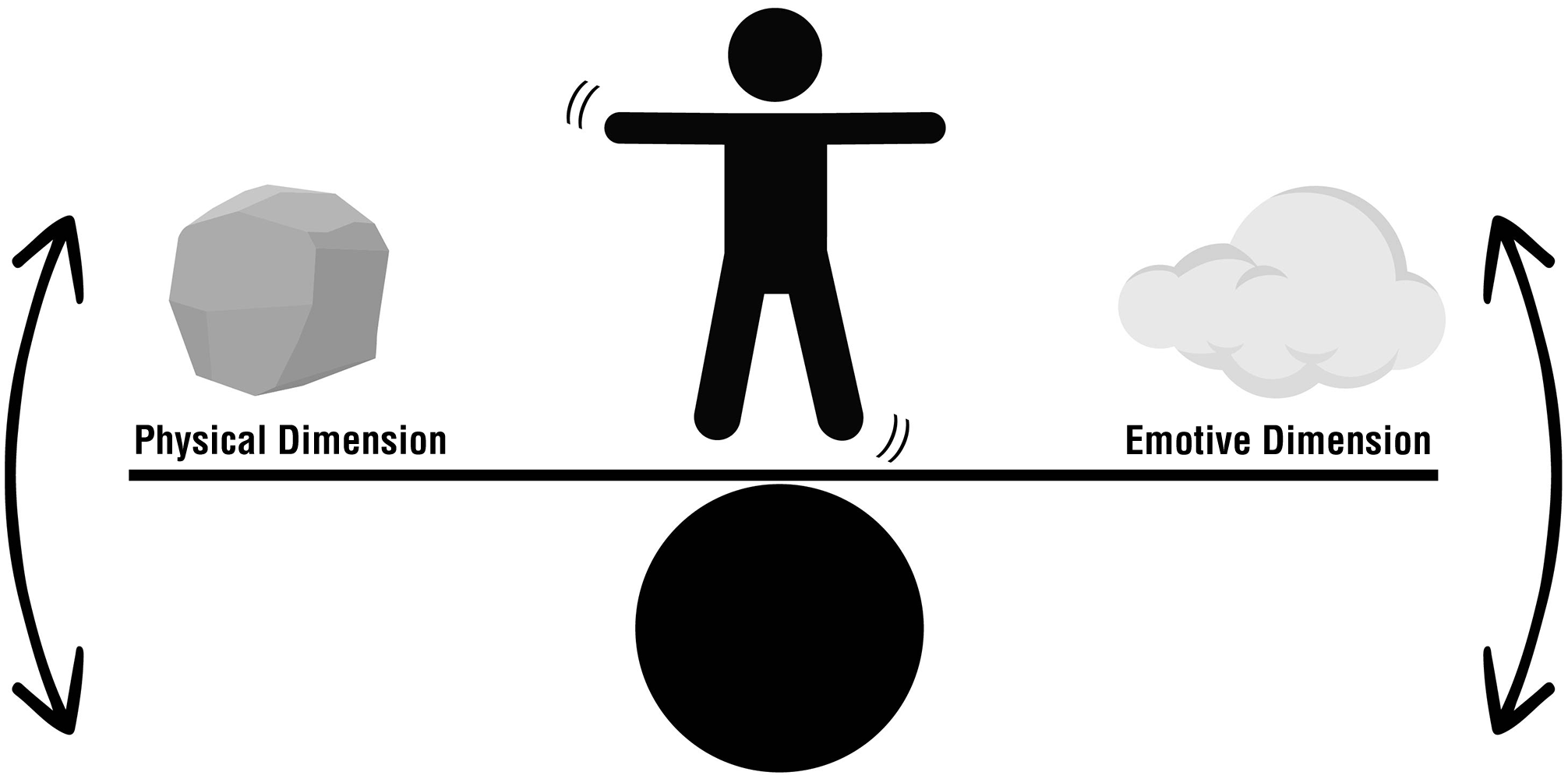
A person trying to balance the physical and emotive dimensions.
Figure 9 portrays our interventions as they are designed to shift the fulcrum underneath and help the person rebalance. Parts of our interventions include the environment, AT, TT, ET, and ORT. Our understanding of this context and its mechanisms guides our use of occupation to help maintain or rebalance the domains to support the person from sliding too far into one domain or the other.
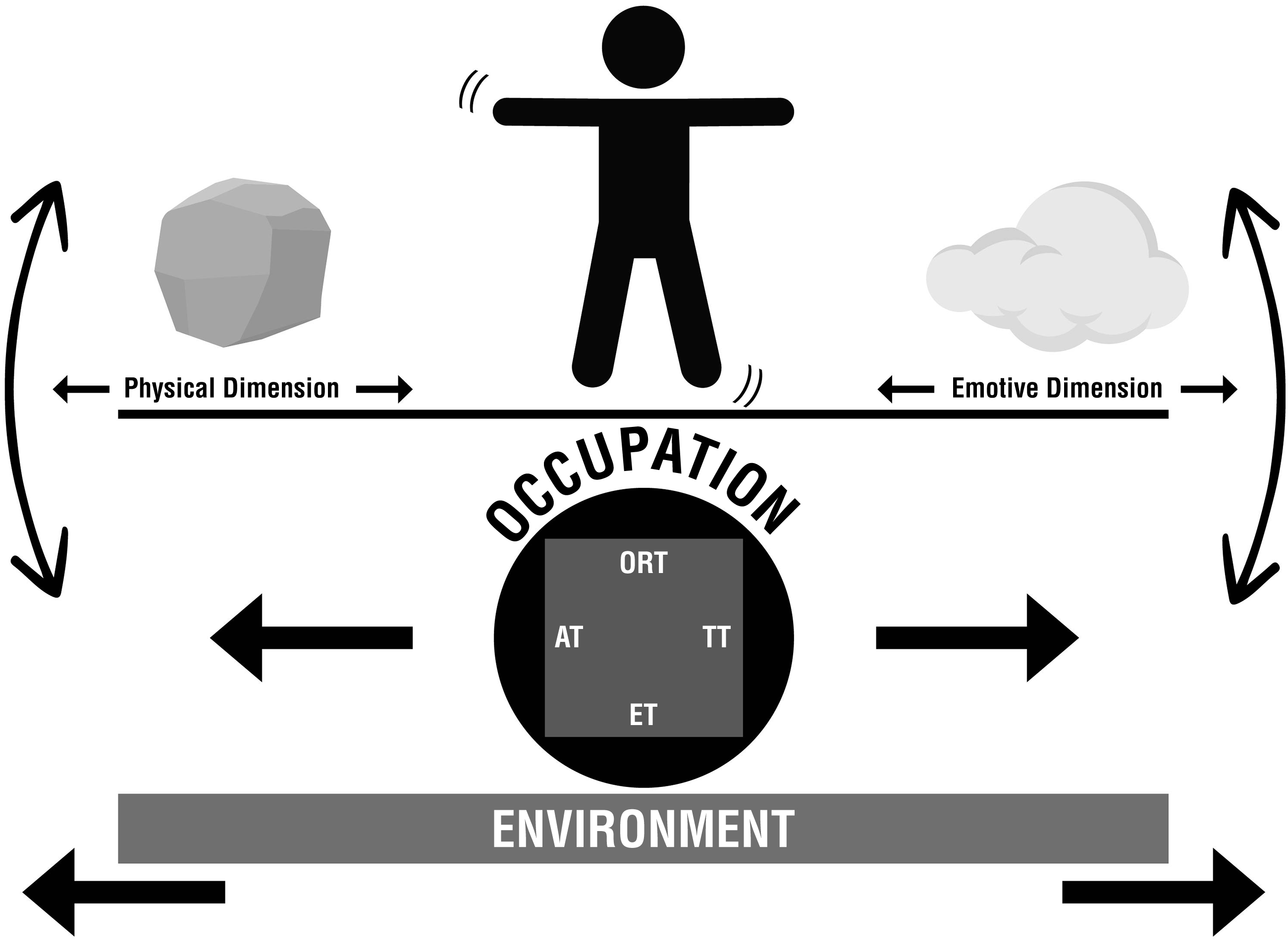
Occupation and technology interventions as they balance physical and emotive dimensions.
Our Course, Our Heading for the Next 100 Years
For the past 100 years, we defined our profession, commenced defining our science, and have been outstanding as we improved our interventions. These interventions include our assistive, therapeutic, and environmental technology and our vigilance with, and incorporation of, occupation-related technology. Our successful use of technology as it has changed over the century has only been positive for our patients, students, clients, and consumers.
For the next 100 years, we need to continue to improve our practice, but we need to think bigger. Our past 100 years has matured our interventions and our thinking. This has prepared us to improve more than our own therapy, but also to contribute new thinking to science for a better understanding of the world. Our disability perspective is rich and encompassing, leading us to understand the human condition broadly and fundamentally. We now can step up to the next level. A video provides a quick review of technology and occupation and portrays the future 100 years in about 100 seconds (Smith, 2017a).
There are many areas of technology that we know will advance rapidly, such as in information and communication technology, robotics, personal transportation, and personalized technology. The World Health Organization (n.d.) is launching global efforts to improve the distribution of AT across nations to level the playing field for all people with disabilities worldwide.
For this Eleanor Clarke Slagle Lecture, I brought my crystal ball. I predict four shifts in the relationship between technology and occupational therapy:
Technology will continue to integrate into all of our lives at an increasingly quick pace. This will require that occupational therapy professionals continue to increase their technology knowledge and skills.
Technology will become more and less technical at the same time. The insides of the technology will require more technical engineering. However, higher level user-friendly technology will enable practitioners to increasingly dive into the design, research and development, and sophisticated application of technology solutions for people with disabilities.
Occupational therapy professionals will become increasingly comfortable applying all four types of technology—assistive, therapeutic, environmental, and occupation related—with people with disabilities to optimize their occupations and quality of life.
Occupational therapy practitioners and occupational scientists will be increasingly better at explaining how occupational therapy is scientifically valid and aligned with the most fundamental theories of metaphysical existence.
Of course, for this future to occur, our field has work to do:
Occupational therapy education must be better grounded in occupational science and technology. This will require more interaction with the technical disciplines, like engineering. Occupational therapy professionals can be comfortable knowing that some engineers, like industrial engineers, almost inherently use similar strategies. This may increase the training mandate for our advanced practitioners.
Occupational science and technology education will blossom, will increasingly define itself as a discipline, and, ironically, will be worthy of granting undergraduate degrees as a legitimate field of study. Agencies like the National Science Foundation will find interest in the transformational discoveries made by occupational science and technology as fundamental and grounded interventions.
Occupational scientists will need to examine the relationships between the metaphysical dimensions and relate them to disability and intervention. Occupational scientists already have a scientific head start with an extraordinary understanding of the key variables outlined in the Occupational Therapy Practice Framework: Domain and Process (3rd ed.; AOTA, 2014), but we need to add a layer of metaphysics.
The profession of occupational therapy and the discipline of occupational science and technology need to mature to the next level. We can no longer be comfortable treating our clientele or doing our research. Occupational science and technology needs to break out and create new theory that fundamentally drives intervention forward to change the lives of all people with disabilities and advance the entire globe along the way.
I leave you with a quick summary of the Metaphysical Physical–Emotive Theory of Occupation: Physical and emotive dimensions of the metaphysical reality integrate so we can perceive them through time and motion. Time and motion are manifested through occupation and technology, where occupation resides as a key to a harmonious reality by negotiating the two major dimensions of reality. The theory is framed and ready for a season of discussion and inquiry to test its suppositions and see how it relates to our other theories and models of practice. Play ball, and bring on the technology!
Footnotes
Acknowledgments
This Eleanor Clarke Slagle Lecture is a production and an article that gathers, integrates, and presents countless data points and broad concepts. I thank a comprehensive team of family, colleagues, and students who made this possible. Specifically, I thank Qussai Obiedat, Maysam Ardehali, Omid Jahanian, the R2D2 Center staff, and NAO who made the technical presentation possible.
1This article is an adaptation of the Eleanor Clarke Slagle Lecture presented at the 2017 AOTA Annual Conference & Centennial Celebration, Philadelphia, PA.