Research article
Select search scope: search across all journals or within the current journal

Superior mesenteric artery (SMA) syndrome is a unique type of small bowel obstruction resulting from the compression of the duodenum by the SMA. This is a case of SMA syndrome in a cachectic 6-year-old boy with AIDS who presented after a 2.3-kg weight loss in the preceding month. Unfamiliarity with this condition coupled with its intermittent, nonspecific symptomatology probably results in underdiagnosis of SMA syndrome. The presentation, predisposing and associated factors, and methods of diagnosis and treatment of SMA syndrome are all discussed.
Persistent infection with parvovirus B19 (B19) is an important treatable cause of anemia in HIV-infected patients. B19 has a tropism for erythroid progenitors and causes pure red cell aplasia (PRCA). The failure to produce neutralizing antibodies to the virus following B19 infection in immunodeficient persons may result in persistent viremia and chronic PRCA (B19-PRCA). The seroprevalence rates for B19 in unselected persons with HIV infection are high, similar to those seen in the general population. Reports of B19-related anemia in HIV infected patients, however, are infrequent. A partial explanation may be that B19-PRCA is predominantly a complication associated with advanced immunodeficiency. The condition is probably underdiagnosed as well. The finding of an unexplained normocytic anemia with absent reticulocytes, in an afebrile HIV-infected patient without renal dysfunction suggests a diagnosis of B19-PRCA. The diagnosis is established when the following criteria are met: (1) bone marrow biopsy showing PRCA, (2) serum or bone marrow positivity for B19 DNA by PCR or dot-blot hybridization, and (C) no alternate explanation for the PRCA. Serological methods are unreliable for the diagnosis because these patients often lack IgM and IgG antibodies to B19. Nearly all patients with B19-PRCA respond to treatment with intravenous immunoglobulin (IVIg) with a rise in the hemoglobin to levels appropriate for the clinical condition of the patient. An alternative explanation for the anemia must be sought in patients not responding to IVIg. Most patients with CD4+ T-lymphocyte counts of < =100 cells/mm3 relapse to anemia, usually within 6 months of IVIg therapy. Such patients must be retreated with IVIg 2 g/kg given over 2 to 5 days. The routine use of maintenance IVIg 0.4 g/kg q 4wk may be considered in these patients to prevent relapse.
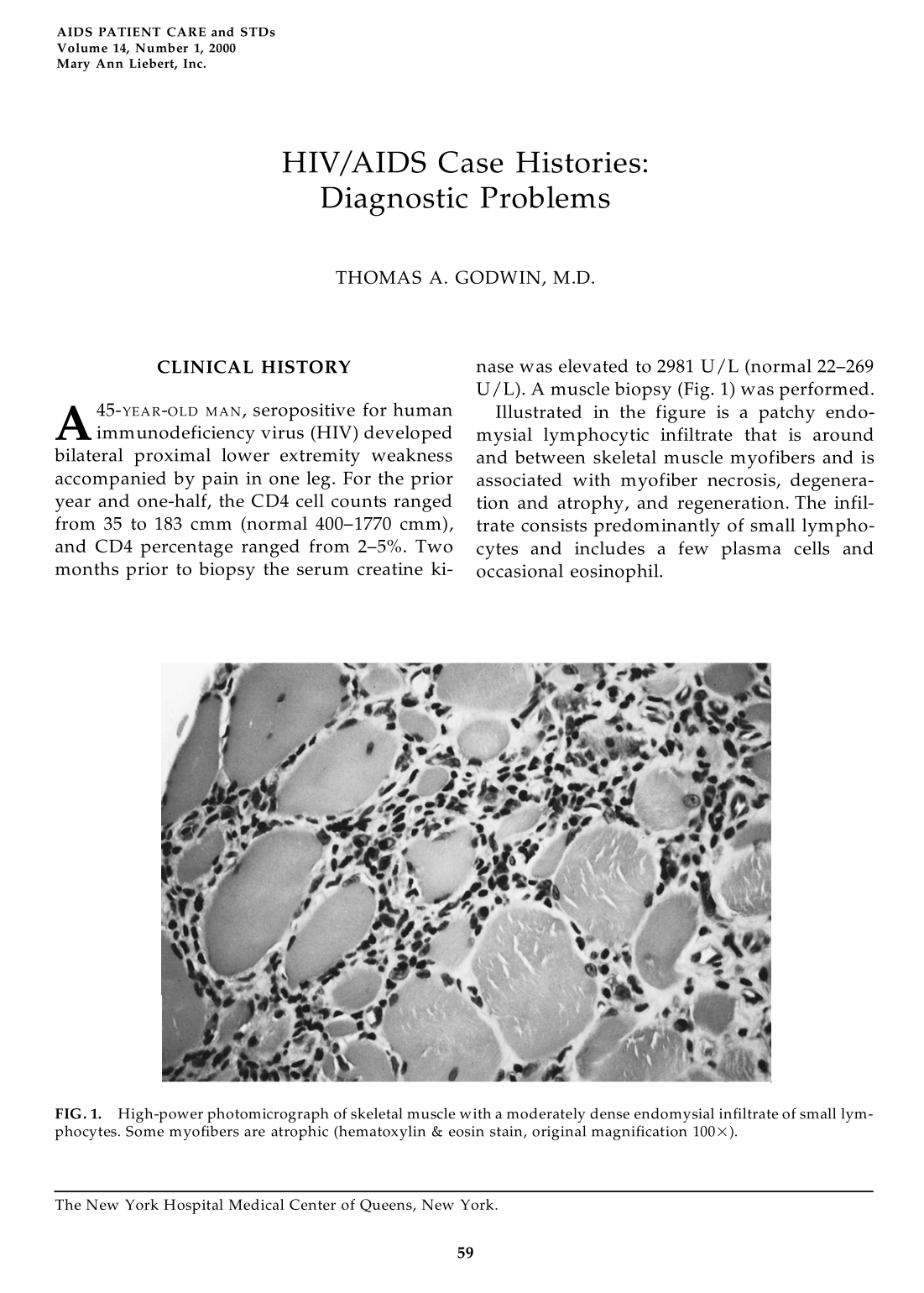
As greater numbers of human immunodeficiency virus (HIV)-infected individuals live to middle-age and beyond, there is growing concern that elevated cholesterol and lipid values will lead to cardiovascular complications in such patients. Furthermore, several of the highly active antiretroviral therapies (HAART) used to reduce levels of circulating HIV and extend acquired immunodeficiency syndrome (AIDS)-related survival are associated with a rise in plasma lipids. Anecdotal reports suggest such rises may be linked to cardiovascular complications. Herein, we review the case of a 74-year-old HIV-infected man with advanced coronary artery disease. He was prescribed simvastatin for control of hyperlipidemia and within 4 weeks developed muscle pain, proximal muscle weakness, myoglobinuria, and a markedly elevated creatinine phosphokinase (CPK). Simvastatin was discontinued, and rhabdomyolysis improved rapidly with conservative care. This report emphasizes this rare, but potentially significant, side effect of statin anticholesterol agents. Medical providers who prescribe statins must remember to check CPK levels when their HIV-infected patients complain of muscle pain. Discontinuing the offending drug will usually result in rapid diminution of muscle pain and inflammation and improve muscle strength.
Chancroid is a sexually transmitted disease caused by the bacterium
Historically, interventions to prevent STD/HIV transmission have been categorized by program methodology rather than defining the content and nature of the intervention. A new taxonomy is needed to help expand the scope of interventions that can be used to prevent STD and HIV transmission. The taxonomy defines two major types of interventions, individual-level and structural level. The former targets risk factors attributable to individuals. Structural interventions target conditions outside the control of the individual. Individual-level interventions focus on counseling, screening, and treatment. They include psychological and biological interventions. Structural-level interventions address accessibility of relevant consumer products (condoms, needles), physical structures (e.g. blighted and abandoned housing, lighting, design of social facilities), social structures (policies that facilitate or constrain behaviors such as supervision of youth, and enforcement of alcohol beverage laws); and media messages(messages and images in the broadcast and print media that portray high-risk behaviors as positive and without serious consequences). A new taxonomy not only clarifies the content of preventive interventions but highlights neglected strategies involving individual biological interventions and structural interventions to prevent STD/HIV transmission.
Success of highly active antiretroviral therapies (HAART) relies on HIV-infected patients being able to adhere to complicated treatment regimens for extremely long periods of time. Four focus groups with patients taking antiretrovirals (