
Other
 Restricted accessOtherFirst published March, 2009pp. 1-2

Select search scope: search across all journals or within the current journal


 Restricted accessOtherFirst published March, 2009pp. 1-2Restricted accessOtherFirst published March, 2009pp. 3-8
Although substantial data have supported the effectiveness of acupuncture for treating knee osteoarthritis (OA), the number of points used has varied. The objective of this study was to compare the effectiveness of six and two acupuncture points in the treatment of knee OA.
A randomised trial of knee OA patients was conducted. Patients were randomly allocated into two groups of 35. The “six point group” received treatment at six acupuncture points, ST35, EX-LE4 (
Acupuncture at both six and two acupuncture points was associated with significant improvement. Mean total WOMAC score at weeks 5 and 13 of patients in both groups showed no significant difference statistically (p = 0.75 and p = 0.51). Moreover, the number of celecoxib capsules taken, global assessment of global change and body weight change of both groups also showed no statistical difference.
This evidence suggests that electroacupuncture to two local points may be sufficient to treat knee OA, but in view of some limitations to this study further research is necessary before this can be stated conclusively.
Restricted accessOtherFirst published March, 2009pp. 9-12Acupuncture has potential value in producing analgesia in the postoperative period, but previous trials have inconsistent results. We aimed to study the effect of electroacupuncture on pain and nausea and the requirement for postoperative analgesia via patient-controlled analgesia.
107 patients who were undergoing abdominal hysterectomy or laparascopic cholecystectomy were randomised to receive either electroacupuncture (n = 56) or no additional treatment (n = 46) during the operative period. We measured the use of patient-controlled analgesia and time in recovery as well as pain, postoperative nausea and vomiting, and sedation. 102 patients were included in the analysis. The majority of patients were female: the laparoscopic cholecystectomy group included 10 males. Adhesive dressings were placed over all acupuncture points in both groups, to ensure blinding of patients and assessors during the recovery period.
The electroacupuncture group had a longer duration of operation but the difference was not statistically significant. There were no significant differences between the groups for the requirement for patient-controlled analgesia or total time in recovery. Pain scores were marginally lower in the acupuncture group, but not significantly, and there were no differences between the groups in nausea or sedation scores.
Electroacupuncture at 10 Hz given under general anaesthetic has no effect on postoperative nausea or analgesic requirement. Future studies should investigate acupuncture given before or after surgery.
Restricted accessOtherFirst published March, 2009pp. 13-15Exacerbation of chronic obstructive pulmonary disease (COPD) is a common reason for hospital admission, and adjunctive non-pharmacological treatments would be welcomed. A pilot study was undertaken to assess the feasibility of conducting a study of acupuncture during an acute exacerbation of COPD. We also examined the credibility of a sham device in this setting and assessed the effect of acupuncture on breathlessness and anxiety.
A prospective, randomised, patient- and assessor-blinded, sham controlled study was conducted on three consecutive days in a district general hospital. Credibility of both acupuncture and the Park sham device were assessed using the Borkovec and Nau questionnaire. Dyspnoea was measured on the modified Borg score and a 10 cm visual analogue scale, while anxiety was measured on a 10 cm visual analogue scale.
11 patients were recruited and nine completed the study. There were no adverse events with either intervention. Acupuncture was well tolerated and credibility scores were similar before and after real and sham acupuncture. Symptoms improved after both treatments, with no significant difference between groups.
In this pilot study acupuncture was well tolerated by subjects experiencing an acute exacerbation of COPD. Acupuncture treatment and the Park sham device were both credible. Although recruitment was slow, a further trial with a larger sample size is feasible and recommended.
Restricted accessOtherFirst published March, 2009pp. 16-20Concerns have been expressed about potential toxicity of the smoke produced by the burning of moxa in traditional Chinese medicine. With the advent of strict anti-smoking legislation in the UK, it was decided to test the volatiles produced by moxibustion and compare them with current agreed safe exposure levels.
Moxa, in the form of cigar shaped moxa “sticks” or “rolls”, was tested under International Organization for Standardization conditions in a tobacco testing laboratory, and the quantities of a number of pre-determined volatiles measured. The smoke tested was “sidestream smoke”, the smoke which arises from the burning tip of the moxa. The test results were then scaled up to reflect normal use and to provide direct comparisons with agreed national safety standards for both short- and long-term exposure levels.
Levels of only two volatiles produced were equivalent or greater than the safe exposure levels, as was the carbon monoxide level reported, both as a consequence of using worst case assumptions for comparison. Under normal operating conditions neither volatile nor carbon monoxide would present a safety hazard. One group of chemicals tested, the aromatic amines, with known carcinogenic properties have no agreed safety levels. Results for these in the study compared favourably with background levels reported in urban environments.
There are no immediate concerns arising from the continued use of moxa as a therapeutic modality in traditional Chinese medicine. Further testing may be required to establish whether current recommendations for ventilation and cleansing of treatment room surfaces may need to be revised. Stronger recommendations may also be necessary on the inadvisability of using moxa on broken skin.
Restricted accessOtherFirst published March, 2009pp. 21-25The Gateway Clinic is a specialist NHS service in South London providing acupuncture and Chinese medicine. The clinic receives a diverse range of referrals from an expanding population of local general practitioners (GPs).
This study explores the referral behaviour of GPs and other primary care users of the Gateway Clinic.
A pragmatic mixed-methods approach was used, combining mapping of GPs’ usage of the Gateway as taken from the clinic's database between the years 2000 and 2005, a questionnaire survey of the referring primary care practitioners in 2005, and data, including a thematic analysis of the interview transcripts from semi-structured interviews of a purposive sample of those GPs who refer.
Doctors in the community refer a wide range of health problems to the Gateway Clinic. The most common referrals were musculoskeletal conditions (38–44%), general and unspecified conditions (11–14%), blood and immune system conditions (6–12%), psychological conditions (8–13%), neurological conditions (6–9%), gynaecological conditions (5–6%) and digestive conditions (5–6%). The health problems referred by local healthcare practitioners correlate strongly with the patient profile seen in private acupuncture practice. Between 2000 and 2005 numbers of healthcare practitioners increased by 218% resulting in a 300% increase in patient referrals made to the clinic; the mean frequency of referral per practitioner increased by 71%. Analysis of the qualitative data suggests that positive clinical experience encourages GPs to increase the range of conditions they refer leading to the development of informal referral guidelines.
The Gateway Clinic has become an increasingly popular referral resource. The influences that drive referral to the clinic are multiple and follow “tacit guidelines”. GPs select patients on the basis of their individual clinical experience, informed by positive patient feedback and often only after more conventional medical treatment options have been exhausted.
Restricted accessOtherFirst published March, 2009pp. 26-30In October 2000 the German Federal Committee of Physicians and Health Insurers recommended that special Model Projects on Acupuncture (“
Overall the results show that acupuncture is effective in practice for a range of chronic conditions, and it seems likely to have acceptable cost utility (at least at a rate of ¢35 per session). Sham acupuncture, in the form of minimal off-point needling in a therapeutic context, also appears to be effective, being no different to prophylactic medication in migraine, and superior to guideline-based standard care in chronic low back pain.
In patients recruited to acupuncture trials, the response to treatment does not differ between those that agree to be randomised and those that do not. This suggests that the results of the pragmatic Acupuncture in Routine Care studies are applicable to patients from the general population who express a preference for acupuncture.
In conclusion, acupuncture appears to be effective in a range of chronic conditions and it seems to have acceptable cost-effectiveness in Western health economic terms. These programmes of research do not confirm the hypothesis that needling at specific points is essential to achieve satisfactory clinical effects of acupuncture. Sham acupuncture, in the form of minimal off-point needling in a therapeutic context, is unlikely to be an inactive placebo.
In April 2006, the German health authorities decided that acupuncture would be included into routine reimbursement by social health insurance funds for chronic low back pain and chronic osteoarthritis of the knee.
Restricted accessOtherFirst published March, 2009pp. 31-32Recommendations for treatment are commonly based on results evaluating variation in systematic effects (group responses) from randomised controlled trials without taking the individual patient's variation into account. In the evaluation of acupuncture-related treatment effects, the trial design and statistical analysis used are a challenge since the assessed variables commonly have subjective properties and are based on the person's own self-report. Thus, the results that are seen are often varied, most likely due to inter-individual variation in rating of the actual variable such that the treatment effects are expressed more (or less) in some individuals than in others. The basis for the individual variation is probably multi-modal and could be related to the individuals’ expectation, gender, genetic polymorphisms and the aetiology of the condition. The assessment methods used should preferably have proven useful in controlled trials, and the methods for statistical analysis should consider the non-metric properties of the variable and the contribution of the individuals’ variation in the results. In order to evaluate the treatment effects more properly and increase the possibility of detecting any effectiveness, it is therefore important to assess the level of perceived dysfunction or symptom, taking into account the individual variation as well as the systematic effects (the effects of the group). In the evaluation of acupuncture effects, both systematic and individual variation should be reported allowing for the detection of subgroup effects and thereby leading to treatment recommendations that are more likely to be based on each individual's specific needs.
Restricted accessOtherFirst published March, 2009pp. 33-35Western medical acupuncture is a therapeutic modality involving the insertion of
fine needles; it is an adaptation of Chinese acupuncture using current knowledge
of anatomy, physiology and pathology, and the principles of evidence based
medicine. While Western medical acupuncture has evolved from Chinese
acupuncture, its practitioners no longer adhere to concepts such as
Restricted accessCase reportFirst published March, 2009pp. 36-38This case report assesses the role acupuncture played in the rehabilitation therapy of an African penguin with bilateral hind limb paresis and paralysis following egg binding and a caesarean section. Egg binding is the failure of the oviduct to pass the egg down into the cloaca. In avian species the sciatic nerve runs through the middle of the kidney. Swelling of the kidney tissue due to the pressure exerted by the retained egg will cause pressure on the sciatic nerve which may lead to hind limb paresis/paralysis.
Acupuncture was used to relieve any muscle, joint or nerve pain and to attempt to stimulate recovery of the sciatic nerve. Acupuncture was incorporated into a fairly intensive physical rehabilitation programme to help the penguin to walk again so that it could be re-introduced back into the sanctuary's captive colony.
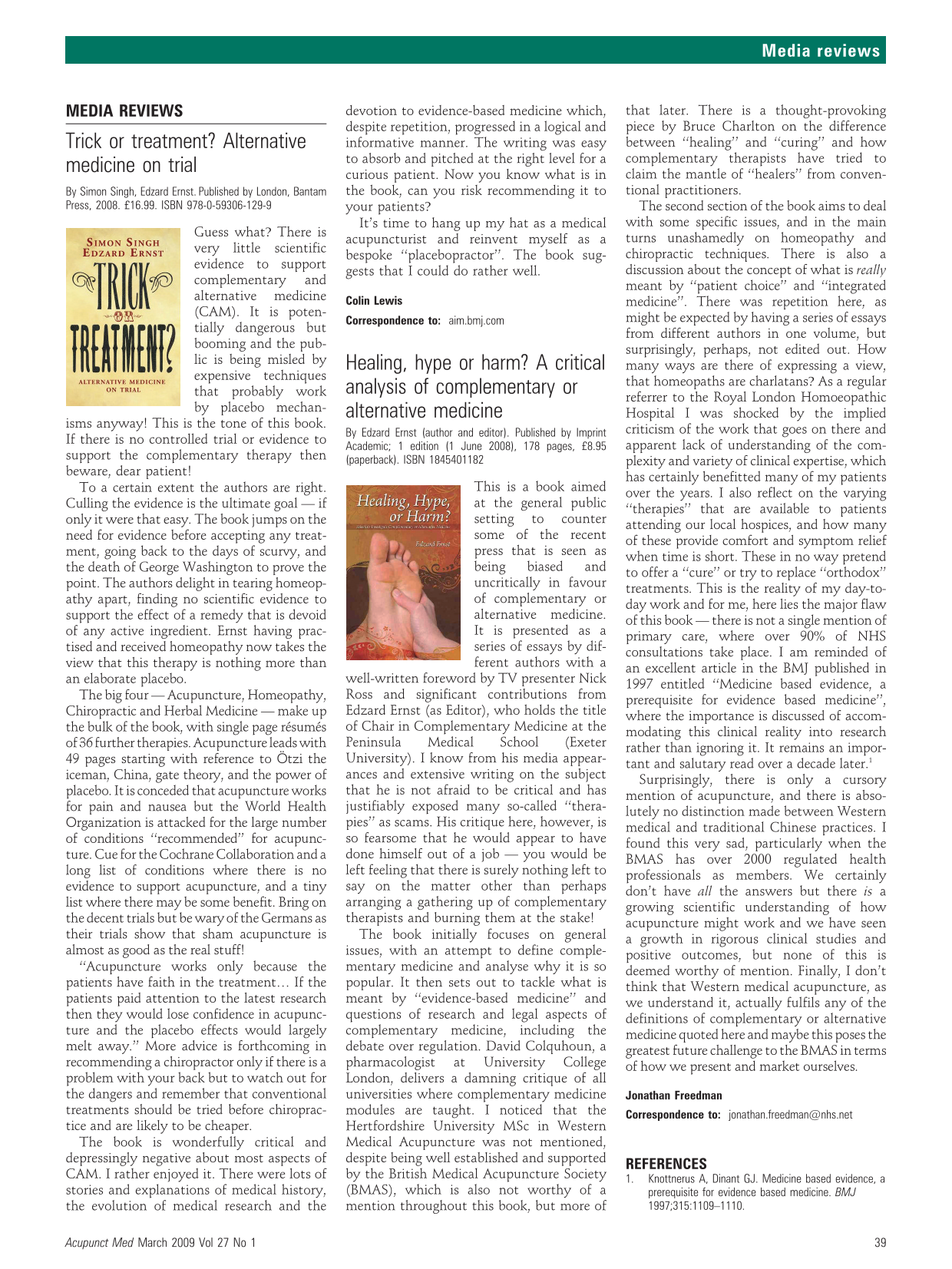
Restricted accessReview articleFirst published March, 2009pp. 39-39 Restricted accessReview articleFirst published March, 2009pp. 39-39
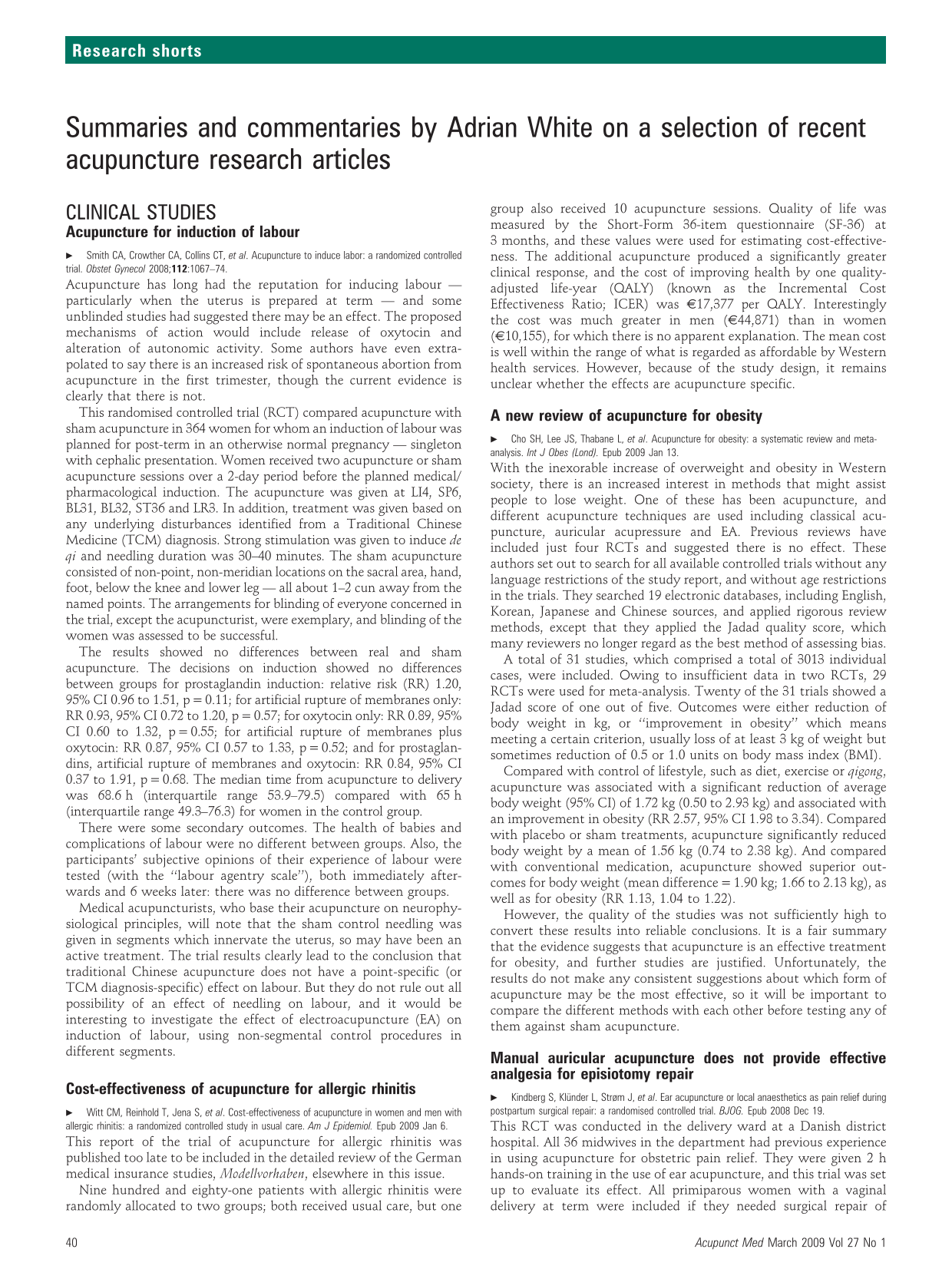
 Restricted accessResearch articleFirst published March, 2009pp. 40-43
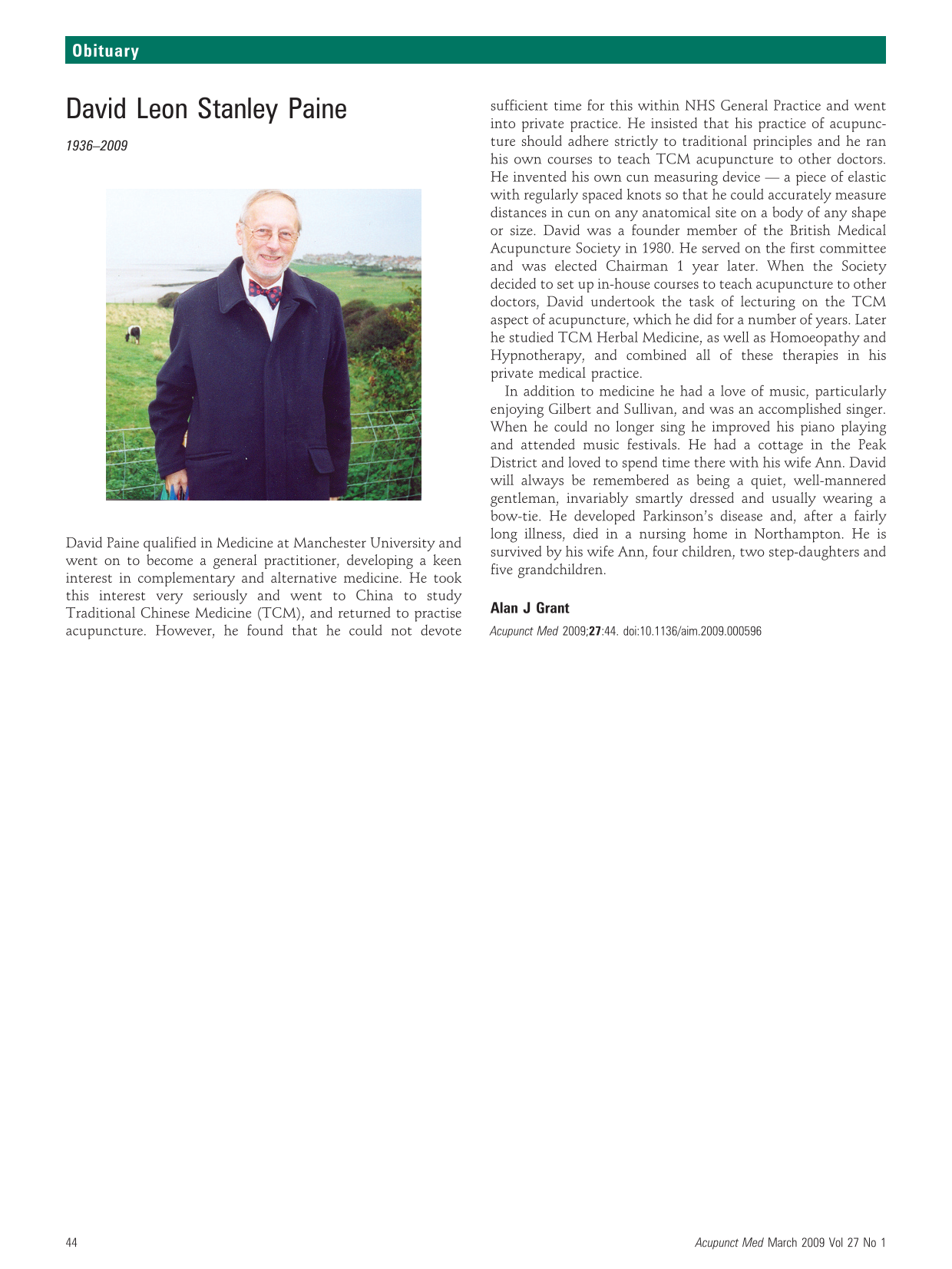
 Restricted accessObituaryFirst published March, 2009pp. 44-44
 Restricted accessMeeting reportFirst published March, 2009pp. 45-45
 Restricted accessMeeting reportFirst published March, 2009pp. 46-46