Abstract
Select search scope: search across all journals or within the current journal


Pre-cART (combined antiretroviral therapy) plasma viral load >500,000 copies/ml has been associated with a lower probability of achieving virological suppression, while few data about its role on maintenance of virological suppression are available. In this study we aimed to clarify whether high levels of pre-cART viraemia are associated with virological rebound (VR) after virological suppression.
HIV-infected individuals who achieved virological suppression after first-line cART were included. VR was defined as the first of two consecutive viraemia >50 copies/ml (VR50) or, in an alternative analysis, >200 copies/ml (VR200). The impact of pre-cART viraemia on the risk of VR was evaluated by survival analyses.
Among 5,766 patients included, 59.2%, 31.4%, 5.2% and 4.2% had pre-cART viraemia ≤100,000, 100,001–500,000, 500,001–1,000,000 and >1,000,000 copies/ml, respectively.
Patients with pre-cART viraemia levels >1,000,000 copies/ml had the highest probability of VR (>1,000,000; 500,000– 1,000,000; 100,000–500,000; <100,000 copies/ml; VR50: 28.4%; 24.3%; 17.6%; 13.8%,
By Cox multivariable analyses, patients with pre-cART viraemia >500,000 and >1,000,000 copies/ml showed a significantly higher risk of VR regardless of the VR end point used. No difference in the risk of VR was found between patients with pre-cART viraemia ranging 500,000–1,000,000 copies/ml and those with pre-cART viraemia >1,000,000 copies/ml, regardless of the VR end point used.
Pre-cART plasma viral load levels >500,000 copies/ml can identify fragile patients with poorer chance of maintaining virological control after an initial response. An effort in defining effective treatment strategies is mandatory for these patients that remain difficult to treat.
Protease inhibitors form the main component of second-line antiretroviral treatment in South Africa. Despite their efficacy, mutations arising within the HIV-1
W1201i showed a small (threefold), but significant (
Collectively, these data suggest that the N37T↑V mutation and insertion increases viral infectivity and decreases drug susceptibility. These variations are classified as secondary mutations, and indirectly impact inhibitor binding, enzyme fitness and enzyme stability. Additionally, polymorphisms arising in Gag can modify the impact of protease with regards to viral replication and susceptibility to protease inhibitors.
Nucleoside (or nucleotide) reverse transcriptase inhibitors (NRTIs) cause side effects in some patients, prompting the use of either partly or fully NRTI-sparing regimens.
We used data from the Swiss HIV Cohort Study to estimate the effectiveness of two new dolutegravir dual regimens relative to the alternative NRTI-sparing dual regimens that our clinicians used previously. We emulated two trials by propensity score matching case patients on the dolutegravir regimen with control patients on an alternative regimen. We analysed the case control sets using a Bayesian Cox model and estimated effectiveness as the percentage still on their trial regimen without virological failure at 48 weeks.
In a comparison of partly NRTI-sparing regimens, 58 cases treated with dolutegravir were matched to 17 controls treated with boosted darunavir (both with lamivudine or emtricitabine). The estimated difference in effectiveness was 15% (95% credible interval [CrI] 2–33) and 12% (95% CrI 0–26) in two sequential analyses 1 year apart. In a comparison of fully NRTI-sparing regimens, 54 cases treated with dolutegravir were matched to 32 controls treated with raltegravir (both with boosted darunavir). The estimated difference in effectiveness was 9% (95% CrI −1–21) and 5% (95% CrI −4–15) in the two sequential analyses.
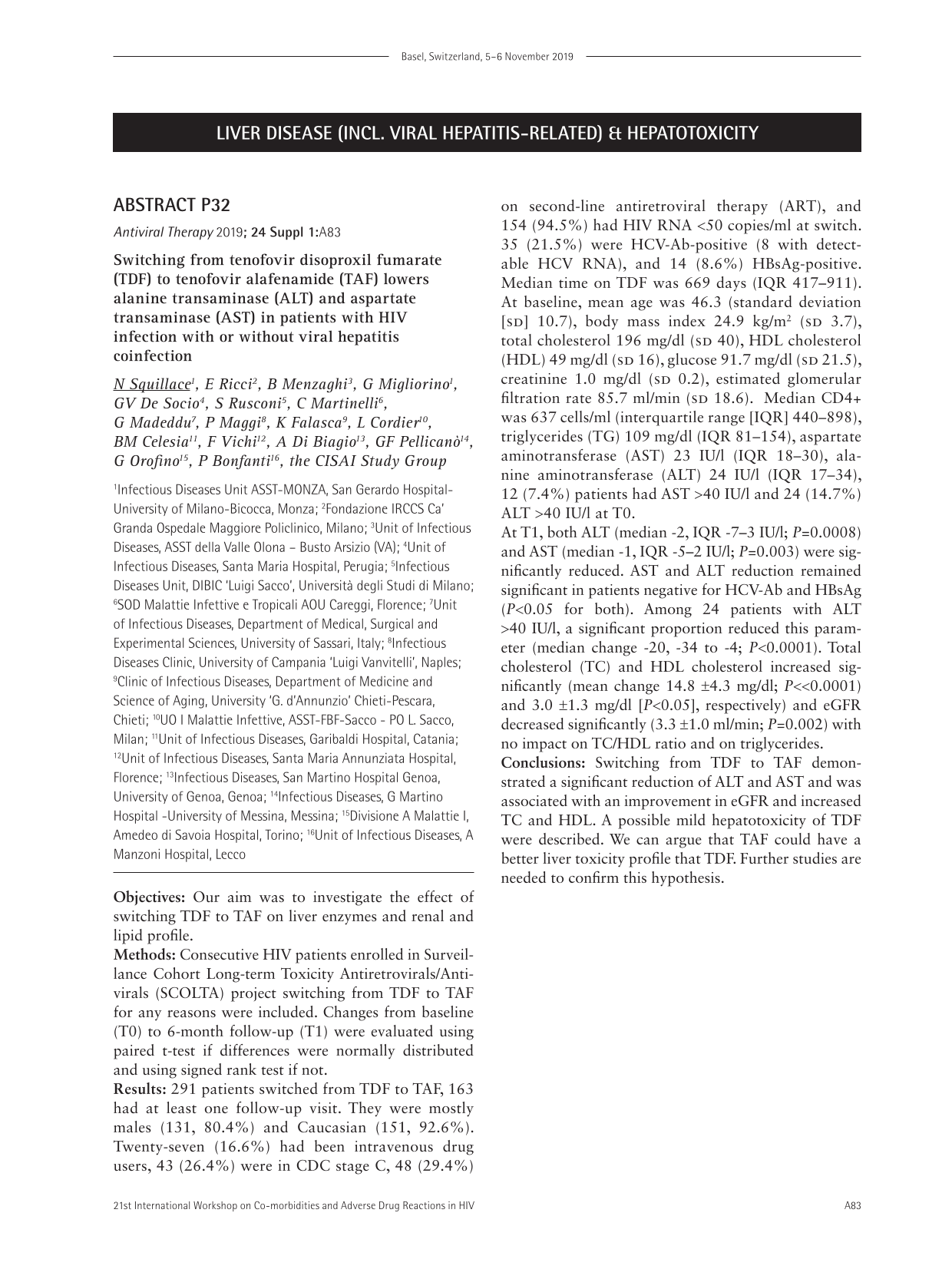
Estimates of relative effectiveness suggest that both dolutegravir regimens are not inferior to these alternative regimens. All four regimens seem suitable for patients needing an NRTI-sparing regimen: there were few virological failures and few treatment changes due to toxicity.
Vitamin D (VitD) and calcium (Ca) supplementation attenuates antiretroviral therapy (ART)-associated bone loss, but it is unclear whether this effect is mediated through immunomodulation.
In this exploratory analysis of A5280, a 48-week, randomized, double-blind, placebo-controlled study of VitD/Ca supplementation with ART initiation, we characterized lymphocyte phenotypes and receptor activator of nuclear factor kappa-B ligand (RANKL) expression by median fluorescence intensity (MFI) at baseline and 48 weeks. Changes were evaluated within and between treatment groups by Wilcoxon signed rank and rank sum tests, respectively. Spearman correlations estimated relationships between cellular phenotypes and bone mineral density (BMD).
Of 165 participants enrolled, 138 had samples for cellular phenotypes (64 VitD/Ca, 74 placebo). Markers of CD4, CD8 activation (CD38+HLA-DR+) declined (all
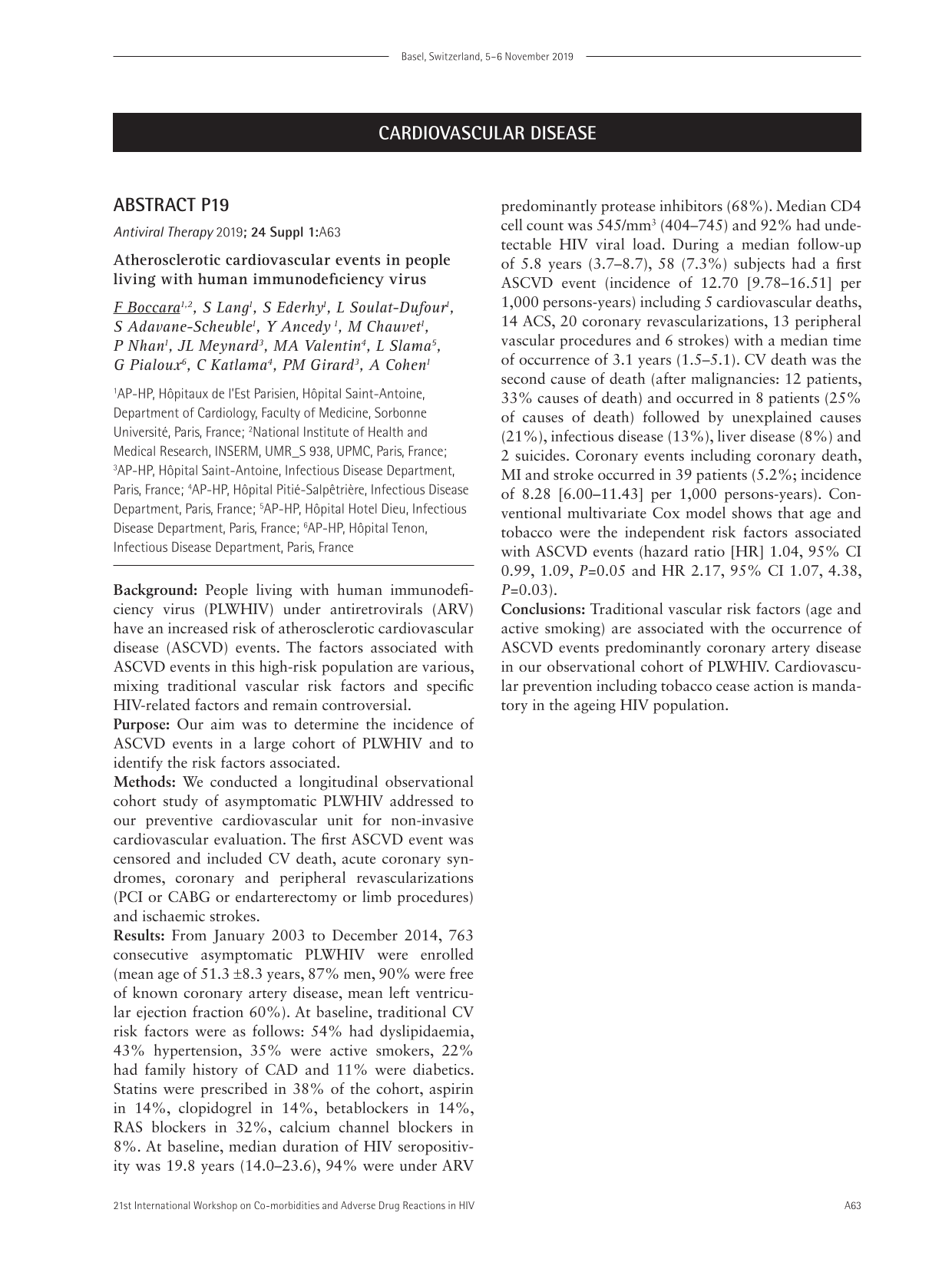
Reductions in T-cell activation are characteristic of ART initiation, but only correlated modestly with bone loss. VitD/Ca supplementation does not appear to mitigate bone loss through modulation of immune activation or expression of RANKL. Trial registration number: NCT01403051.
In 2001, an international beverage company implemented an HIV workplace programme providing free antiretroviral treatment (ART) for employees and dependents in sub-Saharan Africa, at a time when ART, cost assessments of ART programmes and related public funding was hardly available. This study describes the outcomes of this programme with respect to achieving the UNAIDS 90-90-90 targets in five African countries and analyses trends over the past 15 years.
Anonymous human resource data were analysed in three cohorts of participants (those enrolling in 2001– 2005, 2006–2010 and 2011–2015).
Over 15 years, 42,490 unique individuals in five African countries were tested for HIV in this programme and 746 (1.8%) were found to be HIV-infected. Between 2002 and 2015, the proportion of HIV-positive participants on ART increased from 42% to 94% and the proportion of participants on ART who achieved virological suppression increased from 38% to 87%.
This study shows that in one of the earliest HIV treatment programmes in Africa long-term success has been achieved, approaching the current UNAIDS 90-90-90 targets, demonstrating that the treatment of HIV in developing countries is possible with superior results at low costs (45 US dollars/employee). Reasons for this success include continuous access to on-site quality care and ART and the assistance of an independent NGO with experience in HIV treatment. This provides an argument to continue private sector involvement in international efforts to combat HIV/AIDS, particularly in light of increased ART targets, under-capacity in the public sector and stagnating international funding.
Currently approved anti-HCV drugs, the direct-acting antivirals (DAAs), are highly effective and target the viral RNA replication stage of the HCV life cycle. Due to high mutation rate of HCV, drug resistant variants can arise during DAA monotherapy. Thus, a combination of DAAs is necessary to achieve a high response rate. Novel HCV inhibitors targeting the HCV late stage such as assembly and release may further improve combination therapy with the DAAs. Here we characterize one late stage-targeting candidate compound, 6-(4-chloro-3-methylphenoxy)-pyridin-3-amine (MLS000833705). Methods: We treated HCV-infected cells with MLS000833705 and other HCV inhibitors and examined HCV RNA and infectious titres. We evaluated the colocalization of HCV core and lipid droplets by confocal microscopy. We performed HCV core-proteinase K digestion assay and several lipid assays to study the mechanism of MLS000833705.
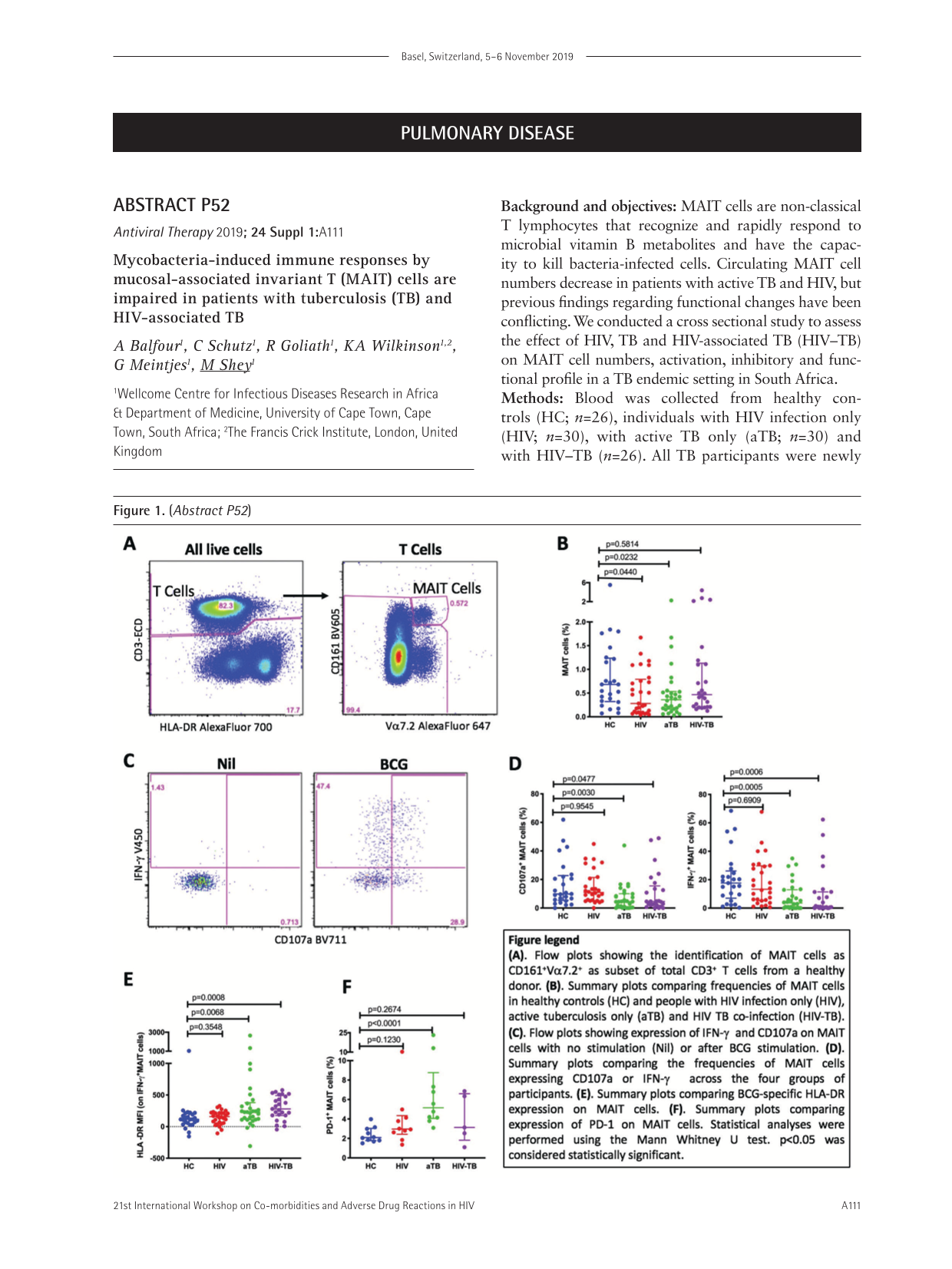
We showed that MLS000833705 decreased extracellular HCV RNA levels more than intracellular HCV RNA levels in HCV infectious cell culture. Similarly, MLS000833705 reduced infectious HCV titres substantially more in the culture supernatant than intracellularly. Confocal microscopy showed that MLS000833705 did not affect the colocalization of HCV core protein with cellular lipid droplets where HCV assembles. HCV core-proteinase K digestion assay showed that MLS000833705 inhibited the envelopment of HCV capsid.
Our study demonstrates that MLS000833705 is a late-stage HCV inhibitor targeting HCV morphogenesis and maturation. Therefore, MLS000833705 can be used as a molecular probe to study HCV maturation and secretion and possibly guide development of a new class of HCV antivirals.
The long-term trajectory of and factors affecting lean mass in people living with HIV (PLWH) are incompletely described.
PLWH in the Modena HIV Metabolic Cohort underwent dual-energy X-ray absorptiometry (DXA) scans every 6–12 months for up to 10 years (median 4.6 scans). Mixed effect regression modelling in combined and sex-stratified models determined annual rates of and clinical factors significantly associated with appendicular lean mass (ALM).
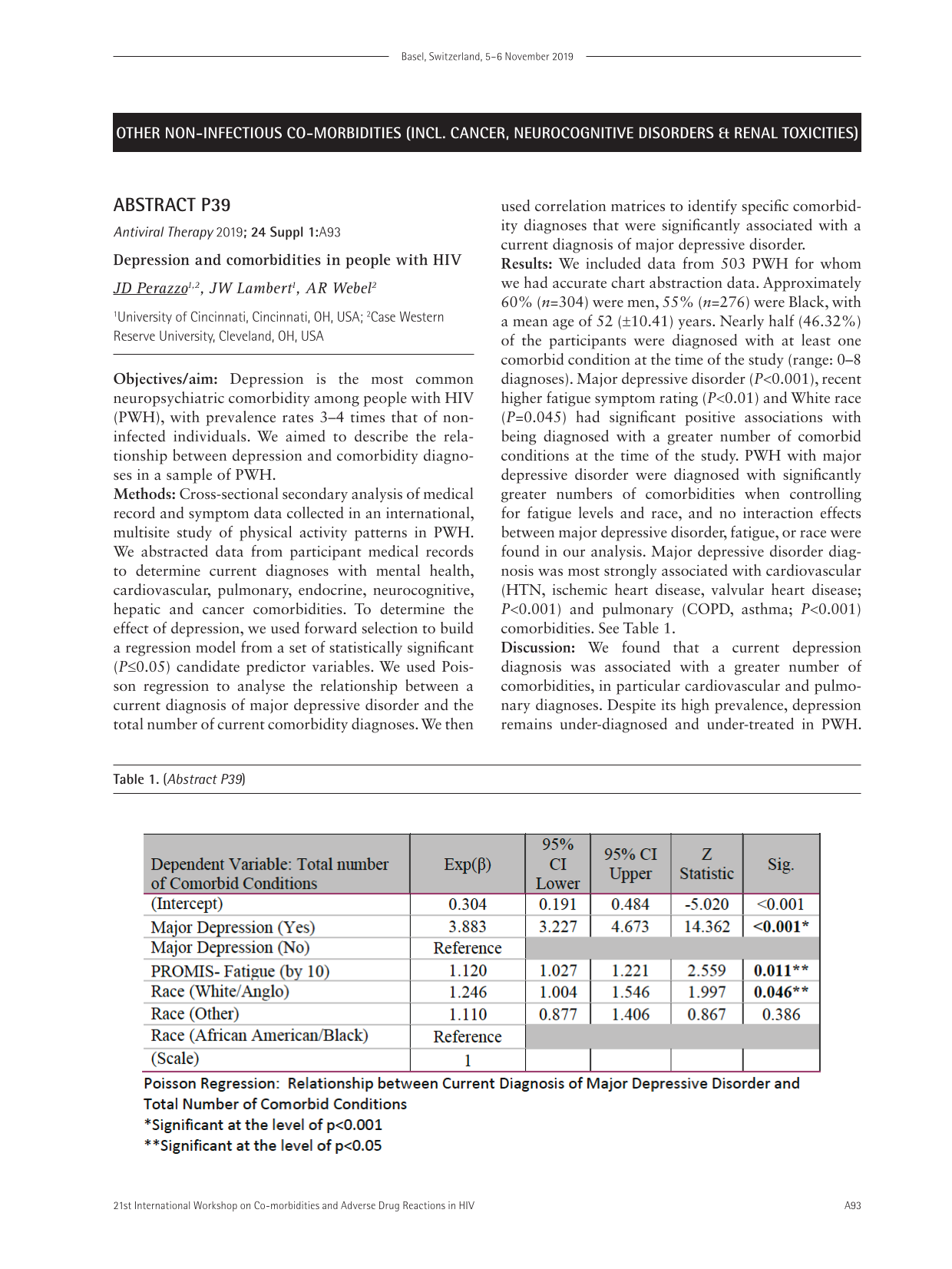
A total of 839 women and 1,759 men contributing ≥2 DXA scans had baseline median age 44 years and 14 years since HIV diagnosis; 76% were virologically suppressed on antiretroviral therapy (ART). Baseline median ALM was 16.9 kg for women and 24.8 kg for men. ALM decreased during the study period, with mean yearly ALM loss of −231 g in women and −322 g in men. Less ALM was associated with female sex, age >50 years, detectable HIV-1 RNA, and tenofovir and integrase inhibitor use. Greater ALM was associated with longer ART duration. In sex-stratified models, relationships between ALM and total ART duration and integrase inhibitor use were not significant for women, but the relationship with tenofovir use persisted. For men, AIDS wasting and CD4+ T-lymphocyte nadir <200 cells/ml were independently associated with lower ALM.
ALM steadily declined over time in this cohort of PLWH on ART that included a large number of women. HIV- and ART-specific risk factors emerged that varied by sex. The observed associations between tenofovir or integrase inhibitor use and lower ALM particularly warrant further study.