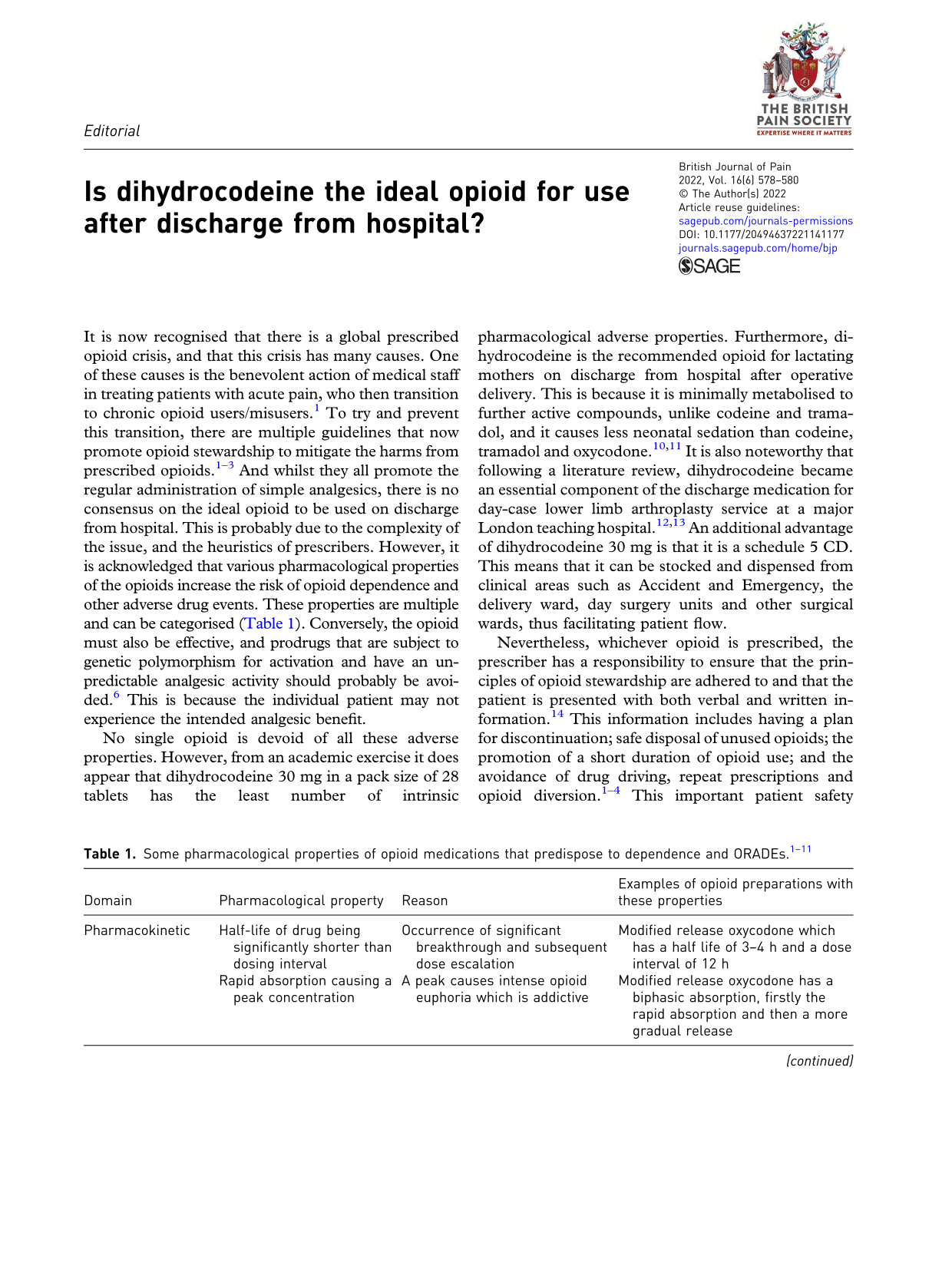
Editorial
Select search scope: search across all journals or within the current journal

Remotely delivered pain management programmes have been offered in place of in-person programmes by many chronic pain services since the onset of the COVID-19 pandemic. There is a lack of evidence regarding the acceptability of these programmes. In this evaluation, we have explored patients’ acceptability of a remotely delivered pain management programme for patients with persistent musculoskeletal pain.
Qualitative data were collected using focus groups with participants who had previously attended the remote pain management programme. Data were analysed using abductive analysis.
Three focus groups were conducted with a total of 13 participants. The programmme was either entirely acceptable, had some acceptable components or was not acceptable to patients. Factors leading to the programme being acceptable include learning to manage pain from home, receiving high quality care from home, enhancing the potential of rehabilitation using technology, enabling attendance on a pain management programme from home, overcoming social distancing requirements of COVID-19 using technology, and virtual peer support. Factors leading to the programme not being acceptable include having an inappropriate home environment for virtual therapy, communication challenges with virtual therapy, technological issues and concerns regarding the quality of care.
There is a spectrum of acceptability with respect to the remote programme. The factors that influence this are dynamic, individual and situational. Hybrid programmes have the potential to enhance access to pain management programmes and improve patient experience and programme outcomes in the future.
Our study aims to assess knowledge and understanding of FM among doctors employed at a tertiary care hospital in Karachi, Pakistan with a focus on its diagnostic criteria, treatment modalities, and general knowledge of symptoms.
Cross-sectional Study.
Our cross-sectional study recruited participants through convenience sampling. A total of 104 participants responded, which included (a) House Officers, (b) Medical Officers, and (c) Residents. A structured questionnaire was used, and an electronic form was generated which was then emailed to the participants to acquire their responses.
The majority (66.3%) of our respondents were female and the median age was 26 years. A majority (93.3%) accepted FM as a separate and distinct clinical identity, and 79.8% were confident in recognizing its general symptoms. Widespread pain (95.2%) and fatigue (80.8%) were correctly identified as most commonly observed symptoms. Moreover, 68.3% of respondents possessed no knowledge of both ACR 1990 and 2010 diagnostic criteria for FM. Of those aware, majority favored using the most recent ACR 2010 criteria (72.7%). Majority of our respondents (75%) preferred using pharmaceutical and non-pharmaceutical interventions simultaneously in the treatment.
Our study indicates that while physicians have satisfactory knowledge of the symptoms and treatment modalities of FM, a knowledge gap concerning its diagnostic criteria exists. Proper treatment can only be successful when physicians successfully diagnose FM, therefore, future training programs should use this fact as a stepping stone for advances in its healthcare.
Low-back pain (LBP) is a major public health problem globally and its direct and indirect healthcare costs are growing rapidly. Virtual reality involving the use of video games or non-game applications are alternatives to conventional face-to-face physical therapy for LBP. The purpose of this study was to assess the cost-effectiveness of Back Extension-Virtual Reality Game (BE-VRG) compared to Clinic-based McKenzie therapy (CBMT) for chronic non-specific LBP in Nigeria.
Patients with chronic non-specific LBP were randomised into either BE-VRG or CBMT group. Patients’ level of disability was assessed using Oswestry Disability Index (ODI) at week 4 and week 8. ODI was mapped to SF-6D to generate quality adjusted life years (QALYs) used for cost-effectiveness analysis. Resource use and costs were assessed based on rehabilitation services from a healthcare perspective. Cost-effectiveness analysis which included direct healthcare costs was conducted. Incremental cost per QALY was also calculated.
Forty-six patients (BE-VRG,
The findings of this study suggest that BE-VRG was cost saving for chronic non-specific LBP compared to CBMT. This evidence could guide policy makers, payers and clinicians in evaluating BE-VRG as a treatment option for people with chronic non-specific LBP.
Despite being a well-described intervention, the optimal anatomical approach to perform a stellate ganglion block (SGB) has been disputed. We compared the subfascial and extrafascial ultrasound-guided (USG) SGB.
A randomised clinical trial was conducted, consisting of 50 patients in two groups. Group I received SGB via the subfascial approach while Group II received an SGB via the extrafascial approach. The primary endpoint was successful sympathetic blockade (as indicated by a measured temperature rise of ≥2°C). Secondary endpoints included analgesic efficiency (extent of early onset of pain relief as indicated by >50% improvement in Visual Analogue Scale (VAS) score at 300’s post-procedure); occurrence of Horner’s syndrome; extent of local anaesthetic distribution; and adverse events.
The mean increase in sympathetic blockade was significantly higher in the subfascial group (2.6 ± 0.6°C;
The degree of temperature rise, pain relief and occurrence of Horner's syndrome were higher in the subfascial than the extrafascial group. The subfascial approach to SGB, with a limited volume of local anaesthetic agent, is a more reliable technique when compared to the extrafascial approach.
Although several studies and reports have shown the potential analgesic use of serotonergic psychedelics in cancer pain, phantom limb pain and cluster headache, evidence supporting their use for chronic pain is still limited. The past years have seen a considerable renewal of interest toward the therapeutic use of these compounds for mood disorders, resulting in a marked increase in the number of people turning to psychedelics in an attempt to self-medicate a health condition or improve their wellbeing. In western countries particularly, this population of users overlaps substantially with chronic pain sufferers, representing a unique opportunity to evaluate the effects these compounds have on pain and wellbeing. Here, we report results from an online survey conducted between August 2020 and July 2021 in a population of 250 chronic pain sufferers who had experience with psychedelics, either in microdoses (small sub-hallucinogenic doses), macrodoses (hallucinogenic doses), or both. Macrodoses, while less often used for analgesic purposes than microdoses, were reported to induce a higher level of pain relief than both microdoses and conventional pain medications (including opioids and cannabis). Although the effects were weaker and potentially more prone to expectation bias than with macrodoses, our results also suggested some benefits of psychedelics in microdoses for pain management. The reported analgesic effect appeared unrelated to mood improvements associated with psychedelic use, or the advocacy of psychedelic use. Taken together, our findings indicate interesting potential analgesic applications for psychedelics that warrant further clinical research.
Single-shot spinal diamorphine is becoming common practice in urological surgery to aid post-operative pain; however, its safety and efficacy require investigation. This study is a retrospective analysis of 113 laparoscopic or robotic-assisted nephrectomies over 4 years under one consultant urologist. Data were collected on demographic, pre-operative scores, anaesthesia, surgical information, post-operative outcomes and opioid consumption. Two main groups were established: no spinal diamorphine (NSD) and spinal diamorphine (SD). Four subgroups were then created, separating those who received patient-controlled anaesthesia (PCA) or not: Group 1 [general anaesthetic (GA)]; Group 2 [GA and PCA]; Group 3 [GA and spinal diamorphine] and Group 4 [GA, spinal diamorphine and PCA]. Ninety-eight eligible patients were identified. At 6 hours, pain scores were significantly higher for all non-spinal groups (