Editorial
Select search scope: search across all journals or within the current journal

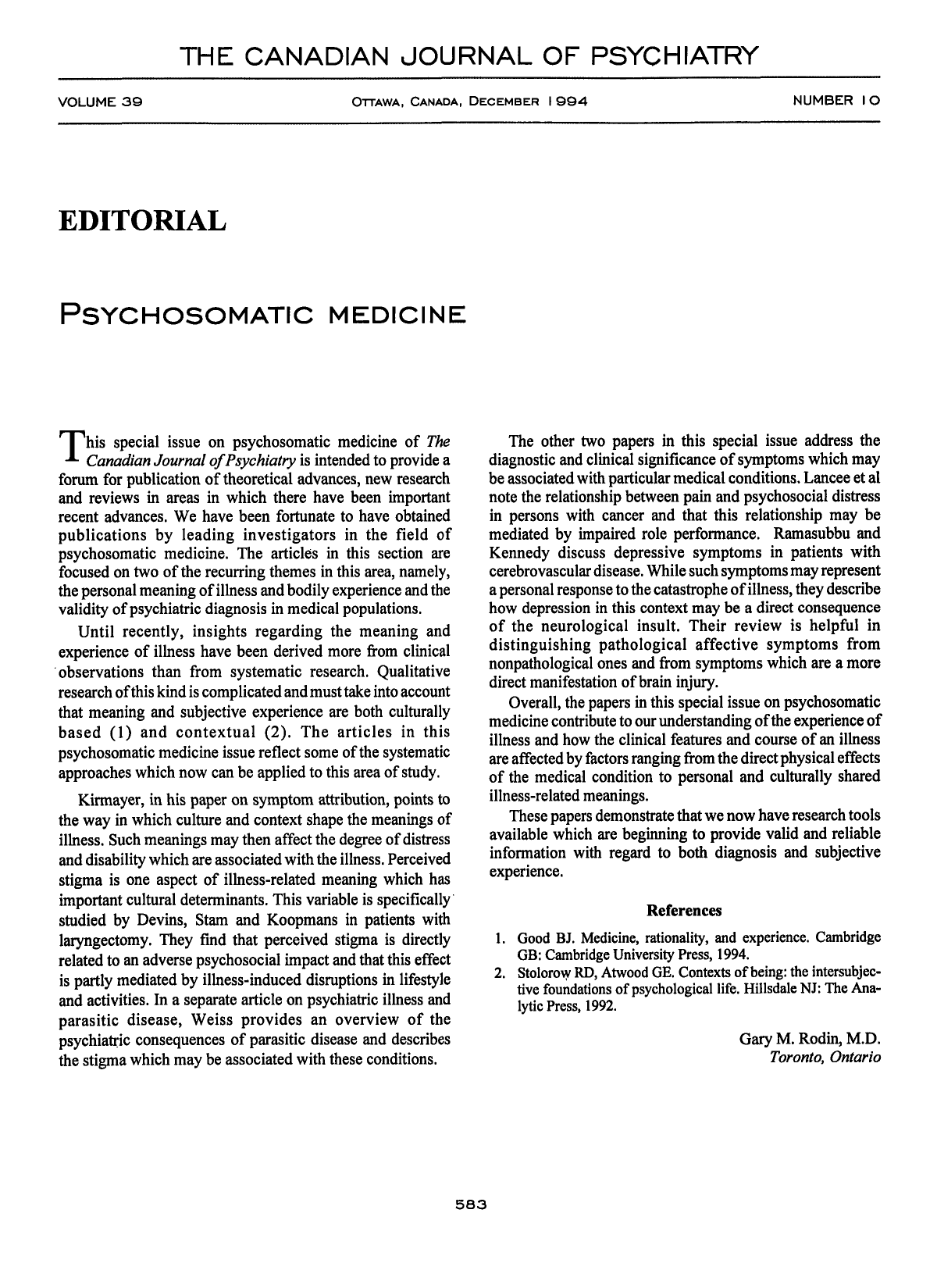
The explanatory model perspective of medical anthropology emphasizes the cultural shaping of individuals' efforts to make sense of their symptoms and suffering. Causal attribution is a pivotal cognitive process in this personal and social construction of meaning. Cultural variations in symptom attribution affect the pathogenesis, course, clinical presentation and outcome of psychiatric disorders. Research suggests that styles of attribution for common somatic symptoms may influence patients' tendency to somatize or psychologize psychiatric disorders in primary care. At the same time, symptom attributions are used to negotiate the sociomoral implications of illness. Recent work in social psychology and medical anthropology emphasizes the roots of attributional processes in bodily and social processes that are highly context-dependent, and hence, must be understood as part of the construction of a local world of meaning. Symptom attributions then may be understood as forms of positioning with both cognitive and social consequences relevant to psychiatric assessment and intervention.
Depression is frequently associated with cerebrovascular disease. Early detection and intervention in depression may enhance rehabilitation potential. Difficulties encountered by clinicians in identifying depression in patients with cerebrovascular disease are numerous. This two part review focuses on issues related to the diagnosis of depression with emphasis on recognition of depressive symptoms and their relevance to the diagnosis of depressive syndromes in the presence of vascular lesions and associated neurological deficits. Furthermore, the value of diagnostic instruments and biological markers in identifying depression following stroke has been critically evaluated. In this first part of this two part paper, phenomenological and nosological aspects are considered with an emphasis on symptom profile, significance of vegetative symptoms and other related emotional responses such as catastrophic reaction, emotionalism and apathy in the diagnosis of depression following stroke. The applicability of diagnostic subcategories to define depressive syndromes associated with cerebrovascular disease and its clinical relevance is also discussed. The authors stress that knowledge on phenomenology of depression and other emotional responses related to cerebrovascular disease will facilitate better understanding of its clinical presentation and may improve diagnostic acumen.
Neurological deficits associated with cerebrovascular disease such as aphasia, dementia, anosognosia and aprosodia may impair the ability to express or experience depressive symptoms. Identification of depression in the absence of verbal report on subjective mood state is a difficult task. The value of various diagnostic methods including depressive rating scales, standard psychiatric interviews and biological variables in the diagnosis of depression in cerebrovascular disease is considered. This review concludes by focusing on the deficiencies of existing approaches in the diagnostic assessment of depression in patients with severe communication and comprehension deficits and emphasizes the importance of devising a standard diagnostic method with less reliance on verbal responses.
In addition to prolonging life, successful treatment by laryngectomy also results in functional disability (loss of speech) and physical disfigurement (stoma). It was hypothesized that these after-effects contribute to perceived stigma which, in turn, compromises quality of life. The hypothesis that the psychosocial impact of perceived stigma operates through illness intrusiveness — ilthess-induced disruptions that interfere with continued involvements in valued activities and interests — was tested. Data were collected from 51 laryngectomy recipients via standardized interviews. As hypothesized, results indicated that: 1. both perceived stigma and illness intrusiveness are related to psychosocial well-being and emotional distress; 2. illness intrusiveness mediates the relation between perceived stigma and psychosocial outcomes; 3. the psychosocial impact of illness intrusiveness is most devastating in the context of highly stigmatized self-perception; and 4. unique profiles of illness intrusiveness across individual life domains may be associated with specific psychosocial outcomes. Findings are discussed in relation to the hypothesis that illness intrusiveness is a common underlying determinant of the psychosocial impact of chronic illness.
The observed upward trend in the incidence of many cancers is expected to continue for the next 20 years despite monumental basic research efforts. There are interpersonal and intrapsychic complications associated with cancer and its treatment leading to considerable distress which, in extreme cases, becomes clinical depression and anxiety. Pain and impaired role performance have been cited as being important sources of distress in people with cancer. This paper presents data from a community sample of 1,309 people living with cancer in Prince Edward Island, Manitoba and Quebec and examines risk factors for cancer-related distress. In the model tested in this paper, pain and other symptoms and treatment side-effects as well as cancer-related fears were seen to have direct and indirect effects on psychological symptoms of distress. Impaired role performance was a central mediator for the indirect effects. The model explained 34% of the variance in distress scores (General Health Questionnaire) and was equally applicable to all three study sites, both male and female subjects, rural and urban settings, and to all stages of illness. Pain was the single most important explanatory variable. Impaired role performance had a negative effect on distress over and above the effect of pain. The results suggest that interventions directed at reducing distress in cancer should also address interpersonal issues such as the impact of the illness on family, social network and work.
Distinguishing parasitic diseases from other infections and tropical medical disorders based on microbiological classification is a matter of convenience. Organic brain syndromes are associated with both protozoan and helminthic infections; side-effects of drugs commonly used to treat parasitoses may impair mood and cause anxiety, agitation or psychosis. Emotional states may in turn affect the experience of medical illness. Psychiatrically significant features of medical illness are determined both by pathophysiology and by the personal and social context in which they occur. Many factors affect mental health in the tropics where the synergy of infection, emotional strengths, vulnerabilities, social supports and stressors is critical. This review discusses parasitic diseases of psychiatric interest by virtue of their effects on thinking, mood and behaviour; and it distinguishes issues that apply mainly to indigenous populations and visitors to endemic areas. In some paradoxical instances the psychiatric influence of parasitic diseases does not require infection; the review concludes by considering the prime example, delusions of parasitosis, which is a primary psychiatric disorder.