Editorial
 Free accessEditorialFirst published July, 2005pp. 433-434

Select search scope: search across all journals or within the current journal


 Free accessEditorialFirst published July, 2005pp. 433-434Free accessReview articleFirst published July, 2005pp. 435-441
To examine recent research on the treatment of borderline personality disorder (BPD).
A narrative review of all recent controlled trials of therapy for patients with BPD.
Various psychotherapeutic and psychopharmacological methods can be used to reduce impulsivity and dysphoric mood in this disorder.
There is strong support for well-structured forms of psychotherapy, but evidence for pharmacotherapy in BPD is mixed. Treatment can usually be carried out in an outpatient setting.
Free accessReview articleFirst published July, 2005pp. 442-450This paper proposes a systematic framework for treating personality disorder, based on research on the nature and origins of the disorder and treatment outcome. It adopts an eclectic approach that combines interventions from different therapeutic models and delivers them in an integrated and systematic manner. Coordination of multiple interventions is achieved by emphasizing the nonspecific component of therapy, especially the treatment frame and generic interventions. Specific interventions drawn from different treatment models, including medication, are built onto this foundation as needed to tailor treatment to the individual. Coordination and integration are also achieved by conceptualizing treatment as progressing through a series of phases, each addressing different problems with different specific interventions. Five phases are described: safety, containment, regulation and control, exploration and change, and integration and synthesis. During the earlier phases, structured behavioural and cognitive interventions and medication predominate. Later in treatment, these interventions are supplemented with less structured psychodynamic, interpersonal, and constructionist strategies to explore and change maladaptive interpersonal patterns, cognitions, and traits and to forge a more integrated and adaptive self-structure or identity.
Free accessResearch articleFirst published July, 2005pp. 451-456To assess gambling behaviours and the problems associated with pathological gambling among the adult population of Quebec in 2002.
In Phase 1 of this 2-phase study, a total sample of 8842 adults was assessed. We used the South Oaks Gambling Screen (SOGS), adapted for telephone interview, to assess one-half of the sample; the other one-half was evaluated with the Canadian Problem Gambling Index (CPGI). In the study's second phase, we compared the classifications obtained from these screening instruments with classifications obtained by a psychologist using a semistructured clinical telephone interview.
The results indicate that the prevalence of pathological gambling in 2002 (at which time 0.8% of the adult population were classified as probable pathological gamblers) did not differ from the proportion obtained in 1996 (1.0%), despite the significant decrease in gambling participation in 2002 (81% vs 90% in 1996). The most popular gambling activities were buying lottery tickets (68%), participating in fundraising draws (40%), gambling in casinos (18%), playing cards with family or with friends (10%), playing bingo (9%), and playing video lotteries (8%). The findings obtained from the SOGS and the CPGI revealed that the 2 instruments perform similarly when identifying pathological gambling prevalence. However, the results of the semistructured clinical telephone interviews differed from the results obtained with the screening instruments: 82% of the gamblers initially identified as probable pathological gamblers by the SOGS or the CPGI were not confirmed by a clinical interview.
The discrepancy between the results of the screening questionnaires and the clinical evaluation is significant, and this difference needs to be addressed before further cross-sectional or longitudinal studies are conducted.
Free accessResearch articleFirst published July, 2005pp. 457-461Methylphenidate (MPH) is a prescription stimulant drug with known abuse potential; however, little is known about its patterns of misuse or the characteristics of its abusers.
A sample of 50 university students reporting MPH misuse and 50 control subjects matched for age, sex, and ethnicity completed structured face-to-face interviews about their MPH and other drug use. For each substance ever used, they provided information regarding routes of administration and other substances ever coadministered, as well as details about the most recent administration. MPH users provided additional information about their reasons for use and, in 36 cases, about how they obtained the drug.
Relative to control subjects, those who misused MPH were more likely to have used various other prescription and nonprescription stimulant drugs over their lifetime, and most MPH users reported mixing the drug with other psychoactive substances. Of the MPH sample, 70% reported recreational use of the drug, while 30% reported that MPH was used exclusively for study purposes. Relative to those using it exclusively for study, recreational users were more likely to report using MPH intranasally, as well as coadministering MPH with other substances. Most of those who reported their source of MPH obtained it from an acquaintance with a prescription.
Those who misuse MPH are more likely than their peers to misuse various other substances, and MPH misuse frequently occurs in the context of simultaneous polydrug use. Because the primary supply of inappropriately used MPH appears to be prescribed users, efforts should be directed toward preventing its diversion.
Free accessResearch articleFirst published July, 2005pp. 462-469Response to typical antipsychotic medication has been associated with achieving a level of striatal dopamine D2 receptor occupancy in the range of 65% to 70%. We undertook this study to determine whether response to the atypical antipsychotic olanzapine occurs at lower levels of D2 receptor occupancy.
Eighteen patients who presented with a first episode of psychosis were randomized to receive olanzapine 5 mg daily or haloperidol 2 mg daily in a double-blind design. We acquired positron emission tomography (PET) scans using the D2 ligand [11C]raclopride within the first 15 days of treatment to determine the percentage of D2 receptors occupied by the medication. According to response, dosage was then adjusted to a maximum dosage of 20 mg daily of either drug. PET scans were repeated after 10 to 12 weeks of treatment.
At the first PET scan, the 8 olanzapine-treated patients had significantly lower D2 receptor occupancies (mean 63.4%, SD 7.3) than those observed in the 10 patients treated with haloperidol (mean 73.0%, SD 6.1). When patients were rescanned following dosage adjustment, mean D2 receptor occupancies were greater than 70% in both groups. D2 receptor occupancies did not differ significantly between the olanzapine-treated group (mean 72.0%, SD 5.7) and the haloperidol-treated group (mean 78.7%, SD 7.6).
These results suggest that, in patients being treated for a first episode of psychosis, olanzapine has its antipsychotic effect at approximately the same levels of D2 receptor occupancy as are achieved with low dosages of haloperidol.
Free accessResearch articleFirst published July, 2005pp. 470-478To study the beliefs of Asian Americans with depression about stigma associated with depression treatment among friends, employers, and family.
Participants completed the Center for Epidemiologic Studies-Depression Scale (CES-D) anonymously on the Internet. In this cross-sectional design, those who screened positive for depression were asked questions regarding stigma (
Asian Americans overall had greater stigma beliefs than did whites for all 3 stigma outcomes (
The pattern of Asian Americans having greater stigma levels than whites may be changing among younger Asian Americans because of acculturation. Also, among Asian Americans, unlike previous research showing no sex differences for stigma, we show that male participants had greater stigma levels than did female participants. Future directions should include measuring stigma after culture-specific interventions.
Free accessResearch articleFirst published July, 2005pp. 479-489To investigate sex and informant effects on comorbidity rates for anxiety disorders, depressive disorders, attention-deficit hyperactivity disorder (ADHD), and conduct–oppositional disorder (CD–ODD) in an adolescent community sample.
The Diagnostic Interview Schedule for Children-2.25 (DISC-2.25) was administered to 1201 adolescents and their mothers.
The highest comorbidity risk found was between ADHD and CD–ODD, with odds ratios (ORs) of 17.6 for adolescent reports and 12.0 for mother reports. The second-highest comorbidity risk, with ORs of 13.2 for adolescent reports and 11.0 for mother reports, was between anxiety and depressive disorders. There was not much overlap between internalizing and externalizing disorders. Adolescent girls had higher rates of coexisting anxiety and depressive disorders, whereas adolescent boys had higher rates of coexisting ADHD and CD–ODD. There was partial support for the hypothesis that adolescent-reported comorbidity rates would exceed mother-reported rates.
There is a greater cooccurrence of within-category, compared with between-category, disorders. Adolescent girls are more likely to have coexisting internalizing disorders, while adolescent boys are more likely to have coexisting externalizing disorders. Mothers tend to report more externalizing disorders (that is, ADHD), while adolescents generally report more internalizing disorders.
Free accessReview articleFirst published July, 2005pp. 490-496General hospital psychiatric services are able to provide leadership and coordinate the development of suicide prevention programs for individuals serviced in general hospital settings. We completed this literature review to suggest priorities for programming.
Our procedure was to update the review by Gunnell and Frankel that guided priorities for Health of the Nation, the national suicide prevention strategy in the UK. We completed a search, using the terms suicide prevention and control, of all English-language research and clinical trials conducted between January 1, 1994, and May 1, 2004.
We identified 82 papers. Of these, 48 were excluded and the remaining 34 were grouped by secondary care setting categories. We found no articles on screening tools for predicting risk of suicide, 16 articles on interventions for individuals with suicidal behaviour, 14 articles on the treatment of major psychiatric disorders, 1 article and 1 published abstract ondischarge from hospital, and 2 articles on reducing access to means.
Based on a review of each category, we make several program and policy recommendations, including regularly updating clinical assessment skills, using guidelines for assessment of patients following a suicide attempt, assessing the risk of suicide 24 to 48 hours before discharge from hospital, and incorporating education about reducing access to means into routine psychiatric care.
Free accessReview articleFirst published July, 2005pp. 497-504Child neglect is the most common type of child maltreatment. Our objective was to systematically evaluate the available evidence regarding the effectiveness of child neglect treatment programs, including those focused on victims of childhood neglect and (or) their caregivers.
We comprehensively searched the Medline, Psycinfo, and Eric databases from January 1980 to May 2003. Two authors independently reviewed 54 studies that met inclusion criteria. Fourteen articles met our design criterion and were assessed for their methodological quality according to guidelines developed by the US Preventive Services Task Force.
Of the 14 studies included in the review, 2 were rated as good, and 3 were rated as fair. We found evidence that 2 specific types of play therapy and a therapeutic day treatment program had beneficial effects for children. Further, parents and children in families where neglect had occurred showed improvement with multisystemic therapy.
Rigorous studies of treatments for neglected children and their families are lacking. Well-designed and well-conducted evaluations are urgently required to identify effective treatments, which should then be made available to children and their caregivers.
Free accessBook reviewFirst published July, 2005pp. 505-505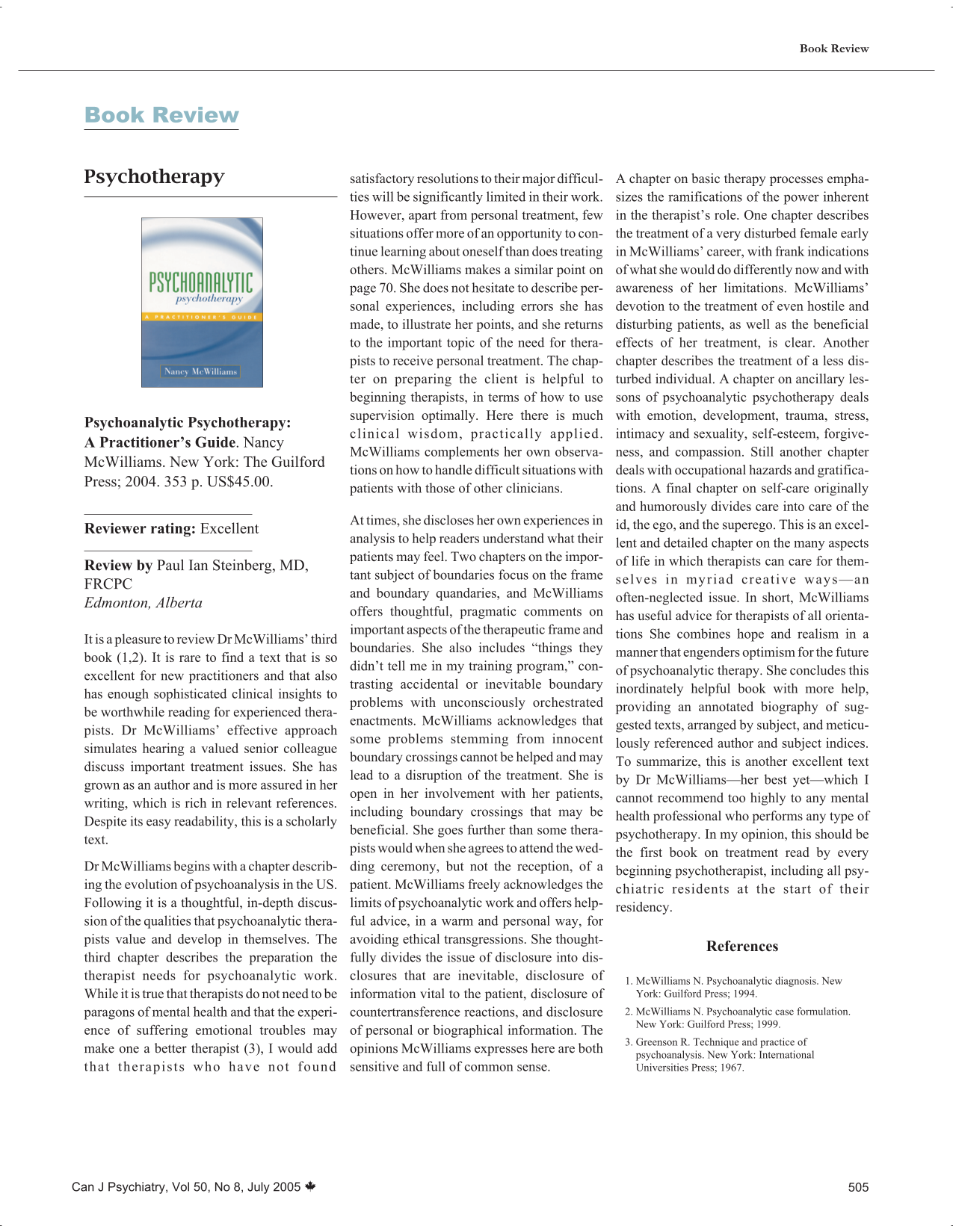 Free accessLetterFirst published July, 2005pp. 506-506
 Free accessLetterFirst published July, 2005pp. 506-506