Research article
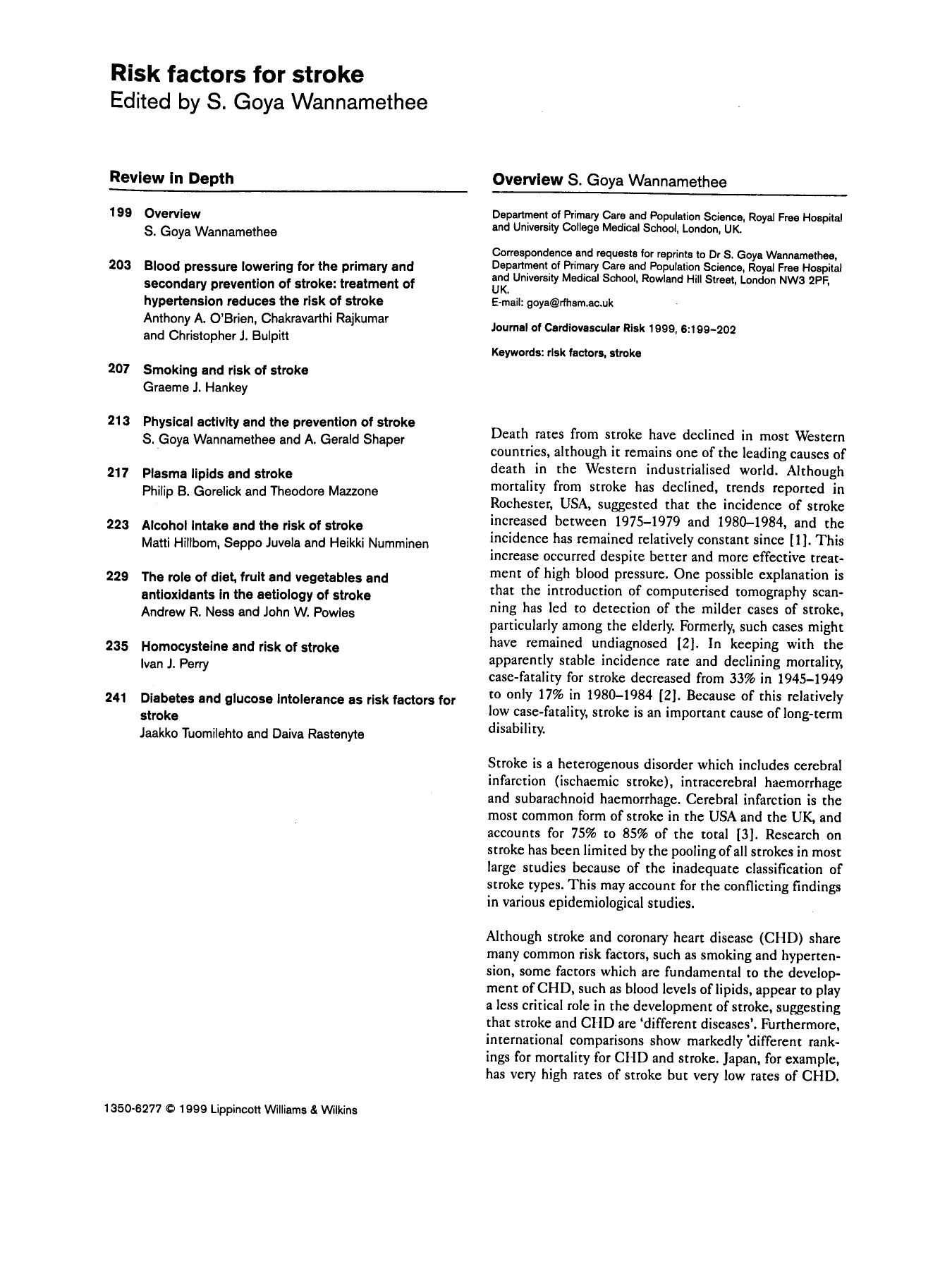
 Restricted accessResearch articleFirst published August, 1999pp. 199-200

Select search scope: search across all journals or within the current journal


 Restricted accessResearch articleFirst published August, 1999pp. 199-200Restricted accessResearch articleFirst published August, 1999pp. 203-205
Hypertension is the most important risk factor in the development of stroke. It is also the risk factor most amenable to treatment. The results from 18 controlled trials show a reduction in relative risk of stroke of 25–47% among treated hypertensive patients. This reduction applies both to the elderly and to younger patients, but the absolute reductions are greater among the elderly and the number of patients with hypertension that need to be treated to prevent a stroke is lower in the elderly because they have a higher risk of stroke. The reductions in relative but not absolute risk appear to be similar for both isolated systolic hypertension and combined systolic and diastolic hypertension in the elderly. The case for antihypertensive treatment in the secondary prevention of stroke is less clear but the results of four clinical trials of antihypertensive treatment among patients with and without hypertension and a history of cerebrovascular disease point to a probable benefit The results of the PROGRESS trial will elucidate this further.
Restricted accessResearch articleFirst published August, 1999pp. 207-211Up to one quarter of all strokes are directly attributable to cigarette smoking, which independently increases the relative risk of stroke about three-fold. The risk is dependent upon the amount of cigarettes smoked, is consistent for all subtypes of stroke, and is strongest for subarachnoid haemorrhage and cortical ischaemic stroke caused by arterial atherothromboembolism. The relative risk of stroke is equally high among male and female smokers, and is maximal (compared with non-smokers) in middle age, declining with advancing years. Evidence is also accumulating to implicate pipe and cigar smoking as a risk factor for stroke, and passive exposure to environmental smoke as a risk factor for atherogenesis. The risk of stroke declines considerably and rapidly after stopping smoking, thus supporting a causal relationship, even though it has proved impossible to perform a satisfactory randomised controlled trial. The mechanisms by which smoking causes stroke remain uncertain, but are probably multifactorial and primarily atherogenic.
Restricted accessResearch articleFirst published August, 1999pp. 213-216Most prospective studies have shown physical activity to be associated with a reduced risk of stroke. The results of existing studies suggest that this benefit is seen in both men and women, in younger and older subjects and in subjects with and without pre-existing coronary heart disease. Sporting (vigorous) activity does not appear to be essential to achieve this benefit. Moderate levels of physical activity may be sufficient to achieve a significant reduction in stroke risk and overall cardiovascular risk.
Restricted accessResearch articleFirst published August, 1999pp. 217-221High plasma levels of lipids are an important modifiable risk factor for coronary heart disease, but are not established as a risk factor for stroke. Pathophysiologic evidence that links lipids to major systemic artery disease, and the results of clinical trials of coronary heart disease prevention in relation to lipid-lowering suggest that lipids may play an important role in the causation of stroke. We discuss the controversy concerning plasma lipids as a risk factor for stroke. A clinical trial targeted at lowering levels of lipids with the aim of primary stroke prevention would be a timely and important contribution. Armed with this information, we could further clarify the plasma lipid–stroke controversy and move into the 21st century with a better understanding of stroke prevention.
Restricted accessResearch articleFirst published August, 1999pp. 223-228Alcohol consumption has been reported to have both beneficial and harmful effects on the incidence of stroke. Different drinking habits may explain the diversity of the observations, but this is still unclear. We reviewed recent clinical and epidemiological studies to find out whether alcohol intake could increase or decrease the risk for stroke. By a systematic survey of literature published from 1989 to 1997, we identified 14 case–control studies addressing alcohol as a risk factor for haemorrhagic and ischaemic stroke morbidity and fulfilling the following criteria: the type of stroke was determined by a head computerised tomography scan on admission or at autopsy; and alcohol consumption was verified using structured questionnaires or by personal interviews. In some studies, adjustment for hypertension abolished the independent role of alcohol as a risk factor. On the other hand, the studies covering even recent alcohol intake showed in many cases that heavy drinking is an independent risk factor for most stroke subtypes, and that the risk may decrease relatively rapidly after the cessation of alcohol abuse. In some studies, regular light to moderate drinking seemed to be associated with a decreased risk for ischaemic stroke of atherothrombotic origin. In conclusion, recent heavy alcohol intake seems to be an independent risk factor for all major subtypes of stroke. The ultimate mechanisms leading to the increased risk are unclear. The significance of alcohol as a risk factor has been demonstrated in young subjects because they are more often heavy drinkers than the elderly. Several factors to explain the beneficial effect of light to moderate drinking have been proposed.
Restricted accessResearch articleFirst published August, 1999pp. 229-234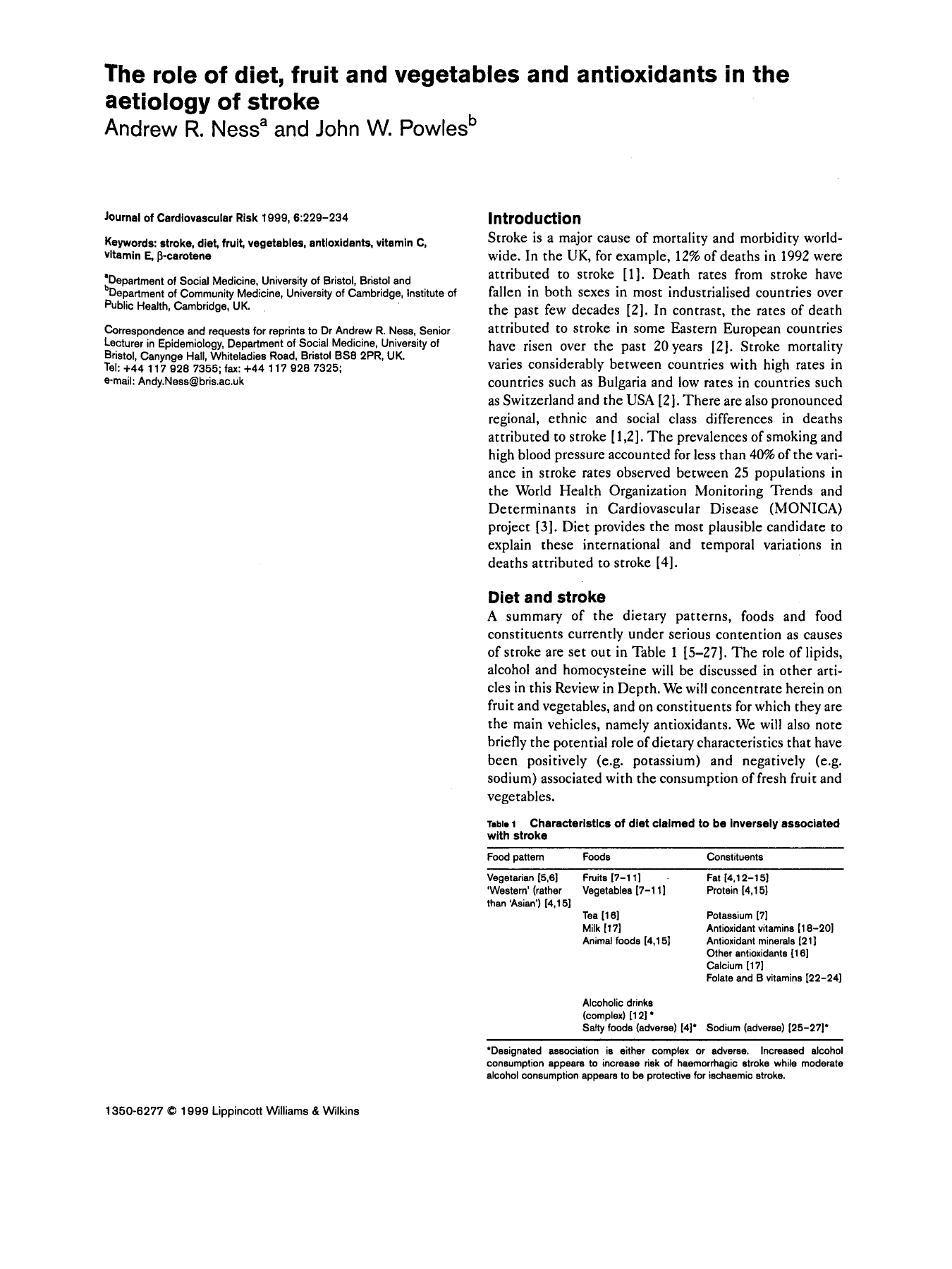 Restricted accessResearch articleFirst published August, 1999pp. 235-240
The balance of evidence from observational studies suggests that elevated levels of homocysteine are associated with increased risk of carotid artery disease and stroke. There is, however, a paucity of prospective studies. There are also concerns regarding confounding caused by factors associated with hyperhomocysteinaemia, including renal impairment, an atherogenic diet and cigarette smoking. Homozygosity for a defective thermolabile variant of methylene-tetrahydrofolate reductase, a common genetic polymorphism which results in hyperhomocysteinaemia, has not been consistently linked with stroke or other vascular diseases. Additional prospective studies are required, with sufficient power to characterise the form of the association between homocysteine concentrations and stroke risk, whether linear or threshold, and to study interactions between homocysteine, other dietary markers and established stroke risk factors such as smoking and hypertension. Ultimately, the case for a causal role for elevated levels of homocysteine in vascular disease, including stroke, will depend on data from randomised controlled trials of homocysteine-lowering interventions. Given the high prevalence of hyperhomocysteinaemia in apparently well-nourished populations and the tendency for homocysteine concentrations to increase with age, modest effects of homocysteine on stroke risk will have profound implications for public health.
Restricted accessResearch articleFirst published August, 1999pp. 241-249 Restricted accessResearch articleFirst published August, 1999pp. 251-255
Renal transplant candidates are at high risk of fatal and nonfatal cardiac events.
This study evaluated five clinical risk factors – age at least 50 years, insulin-requiring diabetes mellitus, angina, congestive heart failure and an abnormal electrocardiogram (ECG) (excluding left ventricular hypertrophy) – that had been used in the first tier of a two-tiered prospectively applied risk stratification algorithm.
Using multiple logistic regression analysis, age at least 50 years, abnormal ECG, and diabetes mellitus were independently predictive of cardiac death. Of the two remaining clinical risk factors, the presence of angina had independent predictive value for nonfatal cardiac events (myocardial infarction, coronary angioplasty, bypass surgery, and unstable angina). The independent predictive value of congestive heart failure approached statistical significance.
Clinical risk-factor analysis is helpful in identifying renal transplant candidates at high risk for fatal or nonfatal cardiac events.
Restricted accessResearch articleFirst published August, 1999pp. 257-261Previous studies have shown that people who rate their health as poor have reduced life expectancy. The purpose of the present study was to determine to what extent self-rated perception of health modifies the survival rates in men at risk from tobacco smoking or hypertension.
A prospective population-based study.
The baseline examination took place in 1969 and study participants were followed until 1993. The study cohort comprised 632 men born in 1914 and residing in Malmö, Sweden. Self-rated health (good, average or poor) was assessed in a structured interview in 1969. Mortality data were obtained from the Swedish National Bureau of Statistics. Subjects were stratified for smoking and hypertension.
After adjustments for a number of medical risk factors and physical activity, health self-rated as good was significantly associated with reduced mortality in smoking (adjusted relative risk 0.63, confidence interval (CI) 0.47 to 0.84), hypertensive (adjusted relative risk 0.56, CI 0.34 to 0.91) and normotensive (adjusted relative risk 0.66, CI 0.49 to 0.91) men.
We conclude that subjective well-being modifies the survival rates in hypertensive or smoking men.
Restricted accessResearch articleFirst published August, 1999pp. 263-267It is well established that, in patients with increased cholesterol concentrations and vascular disease, decreasing the cholesterol concentration significantly reduces the risk of coronary events. After coronary artery bypass graft surgery (CABG), the risk of further coronary events is likely to be reduced if there is effective control of cholesterol concentrations. The aim of the survey was to review awareness among general practitioners and patients of the need for maintenance of serum cholesterol values, frequency of serum cholesterol checks, dietary advice and lipid-decreasing medication in patients after CABG.
Hospital notes of 200 patients who underwent primary, coronary artery bypass surgery from January 1994 to 1996 were examined and postal questionnaires sent to patients and their general practitioners inquiring whether they had had their serum cholesterol tested in the past 3 years; whether dietary advice had been given if cholesterol concentrations were increased to more than 5.2 mmol/l; whether a repeat serum cholesterol test was performed 3 months later if values were greater than 5.2 mmol/l; and (for those with serum cholesterol values greater than 5.2 mmol/l), whether they were on lipid-decreasing medication.
We considered 146 (76%) replies to be complete. Hospital and general practitioner records of these patients showed, that in the previous 3 years, after CABG, only 63% (n = 92) had their serum lipid profile checked and, of these, 74% (n = 68) had increased serum cholesterol concentrations of more than 5.2 mmol/l. Only 46% (n = 31) received dietary advice alone. After dietary advice had been given, serum cholesterol was rechecked in 26% (n = 8) of patients and only 3% (n = 1) had a decrease in serum cholesterol to less than 5.2 mmol/l. Among the patients with increased serum cholesterol, 50% (n = 34) received lipid-decreasing medication, but serum cholesterol was rechecked in only 52% (n = 17) of patients. In 9% (n = 3) of these, serum cholesterol concentrations had decreased to less than 5.2 mmol/l. Among the 146 complete replies from patients, 95% (n = 139) indicated that control of serum cholesterol was important, 82% (n = 120) had received dietary advice and 39% (n = 57) were on lipid-decreasing medication.
General practitioners and patients were generally aware of cholesterol control after CABG. However, a relatively low proportion of patients underwent serum cholesterol checks and received documented dietary advice, lipid-decreasing medication, or both. Dietary advice alone may be inadequate in controlling lipid concentrations and, in many cases, needed to be supplemented with adequate lipid-decreasing therapy.
Restricted accessResearch articleFirst published August, 1999pp. 269-272In contrast to those for coronary restenosis, the data regarding the risk factors for renal restenosis are limited.
To evaluate potential humoral risk factors for restenosis after percutaneous transluminal renal angioplasty (PTRA).
We studied 27 patients aged 54 ± 10 years with atherosclerotic renal artery stenosis in a 1-year prospective follow-up. Restenosis (confirmed by angiography) occurred in eight patients 1–6 months after PTRA. We detected no Doppler ultrasound evidence of restenosis in 19 patients throughout 1 year. Blood studies were done before PTRA for all patients, at the time of diagnosis of restenosis and, for those without restenosis, after 1 year, including determinations of fibrinogen, lipids, platelets and leukocytes.
The mean level of fibrinogen in patients who experienced restenosis was higher than that in those who did not (450 ± 150 mg% versus 337 ± 57 mg%,
Restenosis was associated with higher than normal levels of fibrinogen before PTRA. A high plasma fibrinogen level might play a role in the development of restenosis after PTRA.
Restricted accessResearch articleFirst published August, 1999pp. 273-278In epidemiological studies, the electrocardiogram has often been interpreted by means of a categorical classification. Computerized recording offers the possibility of analysing electrocardiographic measurements as continuous variables.
To test the hypothesis that duration of QRS complex and T-wave inversion would be independent predictors of myocardial infarction.
In a population-based study, we prospectively investigated the risk of developing myocardial infarction according to duration of QRS complex and peak-to-peak T-wave amplitude measured from lead I of the 12-lead electrocardiogram by computerized electrocardiography. In total 6628 men aged 25–61 years who had not previously suffered a myocardial infarction were followed up for 3.9 years.
Eighty-two first myocardial infarctions (55 non-fatal and 24 fatal myocardial infarctions and three sudden deaths) were identified. The risk of myocardial infarction increased with duration of QRS complex and with decreasing T-wave amplitude. A proportional hazards model with adjustment for possible confounders yielded a relative risk of myocardial infarction of 3.74 (
Peak-to-peak T-wave amplitude from lead I is an independent predictor of myocardial infarction in men who have not previously suffered a myocardial infarction. Greater duration of QRS complex clearly indicates a higher risk of myocardial infarction. However, when T-wave amplitude is included as a covariate, the predictive power of duration of QRS complex does not remain significant Single-lead electrocardiography is a feasible method for improving the assessment of the relative risk of myocardial infarction.
Restricted accessOtherFirst published August, 1999pp. 279-284