In the isolation of nitrifying bacteria, soil is inoculated into a synthetic solution containing (NH4)2 SO4 as a source of nitrogen for the “nitrite” bacteria and into one containing NaNO2 for the “nitrate” bacteria. The solutions are incubated and when a test for nitrites is found in one case or a test for nitrates in the other, a small amount of the liquid is transferred to a new synthetic solution. This transferring is continued for some time. Then the material is plated out on silica jelly containing suitable inorganic salts. From the colonies developing, inoculations are made into synthetic solution and if nitrites are formed in the one containing (NH4)2 SO4 a “nitrite”bacteria has been isolated or if nitrates are formed where NaNO2 is the source of nitrogen a“nitrate”bacteria has been isolated.
Great difficulty was experienced in isolating cultures by the above procedure. At the beginning, in no case where inoculations from the colonies on silica jelly were made into the synthetic solution, were positive tests subsequently obtained. If, however, a solution giving a positive test were centrifuged and the sediment inoculated on silica jelly by means of a loop and from the colonies that developed, inoculations were made into synthetic solutions, positive tests would be obtained. This applied to both the“nitrite”and the“nitrate”organisms. Now if these positive cultures were inoculated on nutrient agar, growth would appear. This growth would not cause nitrification, showing the cultures in question were not pure. In one experiment the synthetic solution for nitrate bacteria which gave a positive test was centrifuged and inoculated on a gypsum block partly immersed in the synthetic solution. From the growth later obtained, dilutions were made and plated on silica jelly.
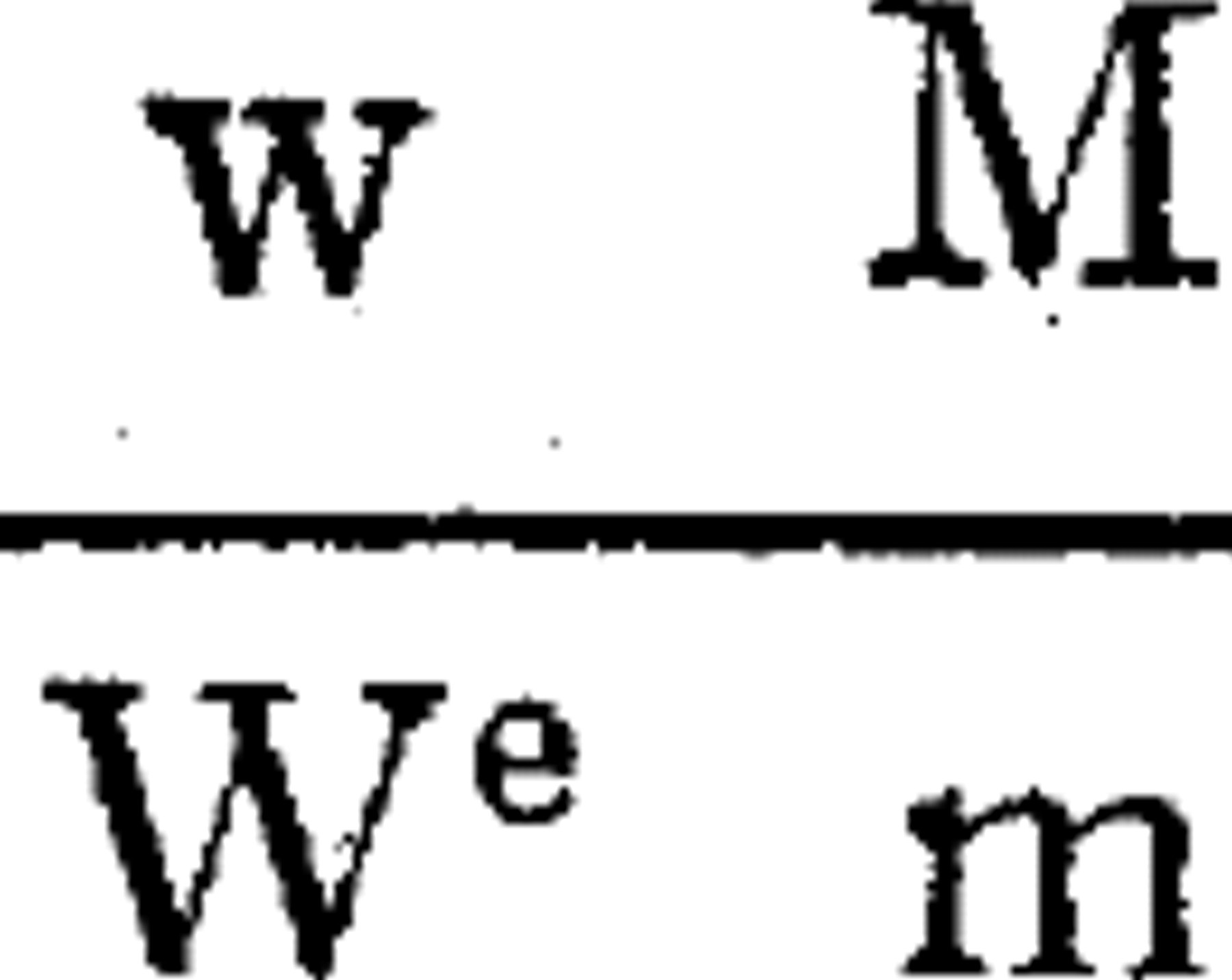 , indicating that one of the × chromosomes carries the determiners for white eye-color (w) and long wings (M) while the other carries the determiners for eosin eye-color (We) and miniature wings (m). If such a heterozygous female is bred she will have four kinds of regular sons irrespective of the male with which she is crossed, since the regular sons obtain their × chromosomes from their mother only. In two of the kinds of sons the characters will appear as they entered in the original cross,
  . Addition of sodium bicarbonate to the solution pushes the reaction to the left increasing both the dissolved CO2 and the undissociated H2CO3. If we accept the view that the dissolved CO2, and the undissociated H2CO3, diffuse freely into cells while the ions as such do not penetrate to any appreciable extent it is apparent that the injection of sodium bicarbonate increases the freely diffusable forms of carbon dioxide at the expense of the poorly diffusible ions and in that way increases the acid effects of the blood, at least on the interior of the cells (and possibly in the lymph bathing the cells as will be discussed in a later paper) even though the actual sum total of the original dissolved carbon dioxide in its various forms is not increased and the hydrogen ion concentrate of the blood is actually decreased.