
Editorial
 Restricted accessEditorialFirst published August, 2025pp. 811-812
Making PROMs Work for Patients—and for Us
View All


Select search scope: search across all journals or within the current journal

 Restricted accessEditorialFirst published August, 2025pp. 811-812Restricted accessResearch articleFirst published August, 2025pp. 813-815
 Restricted accessResearch articleFirst published August, 2025pp. 816-826
 , Stephanie Chen , [...]
Total ankle arthroplasty (TAA) is a common method of treatment for end-stage ankle arthritis (ESAA). The utilization of Patient-Reported Outcomes Measurement Information System (PROMIS) allows for standardized assessment of patient-driven outcomes, but few studies have been published on outcomes of TAA using PROMIS. The purpose of this study was to describe the recovery trajectory of patients undergoing TAA for ESAA for up to 1 year after surgery using PROMIS scores for physical function (PF), pain interference (PI), and depression (DP).
A retrospective review of patients undergoing TAA for ESAA over a 5-year period (January 2018–October 2023) was performed. Preoperative and postoperative PROMIS scores were collected and compared at multiple time points leading up to 1 year after surgery. Demographic variables were compared. All patients included in this study underwent primary TAA. Patients were excluded from this study if they had contralateral TAA within 1 year of the previous TAA, and/or they did not have 1 preoperative or at least 2 postoperative PROMIS scores.
In total, 109 patients met inclusion criteria with a mean age of 65.3 (SD 9.2) years. No patients undergoing TAA had Medicaid and 50% had Medicare. The mean PROMIS PF scores at 1, 3, 6 months and 1 year were 28.2, 38.5, 41.8, and 43.1, respectively. The mean PROMIS PI scores at 1, 3, 6 months and 1 year were 57.1, 59.2, 56.2, and 55.8, respectively. Most of the improvement for both PF and PI scores from preoperative occurred within the first 6 months of recovery, with average improvements of 5.0 points for PF and −8.4 points for PI. Patients had statistically and clinically significant improvements in PROMIS scores at multiple postoperative time points. Patients had statistically significant improvement in PROMIS scores through various time points in their recovery.
This study demonstrates that patients who underwent primary TAA have improvements in PROMIS scores at several different time points up to 1 year after surgery. Patients can expect an improvement in pain and function from baseline within 3 months from surgery. Most improvements occur within the first 6 months. More than half of the patients will achieve a PF and PI score within 1 SD of the national average by 6 months, but it can take up to a year for most patients to reach this. Understanding the trajectory of patient recovery at different time points after primary TAA can help set patient expectations and guide intervention.
This is a visual representation of the abstract.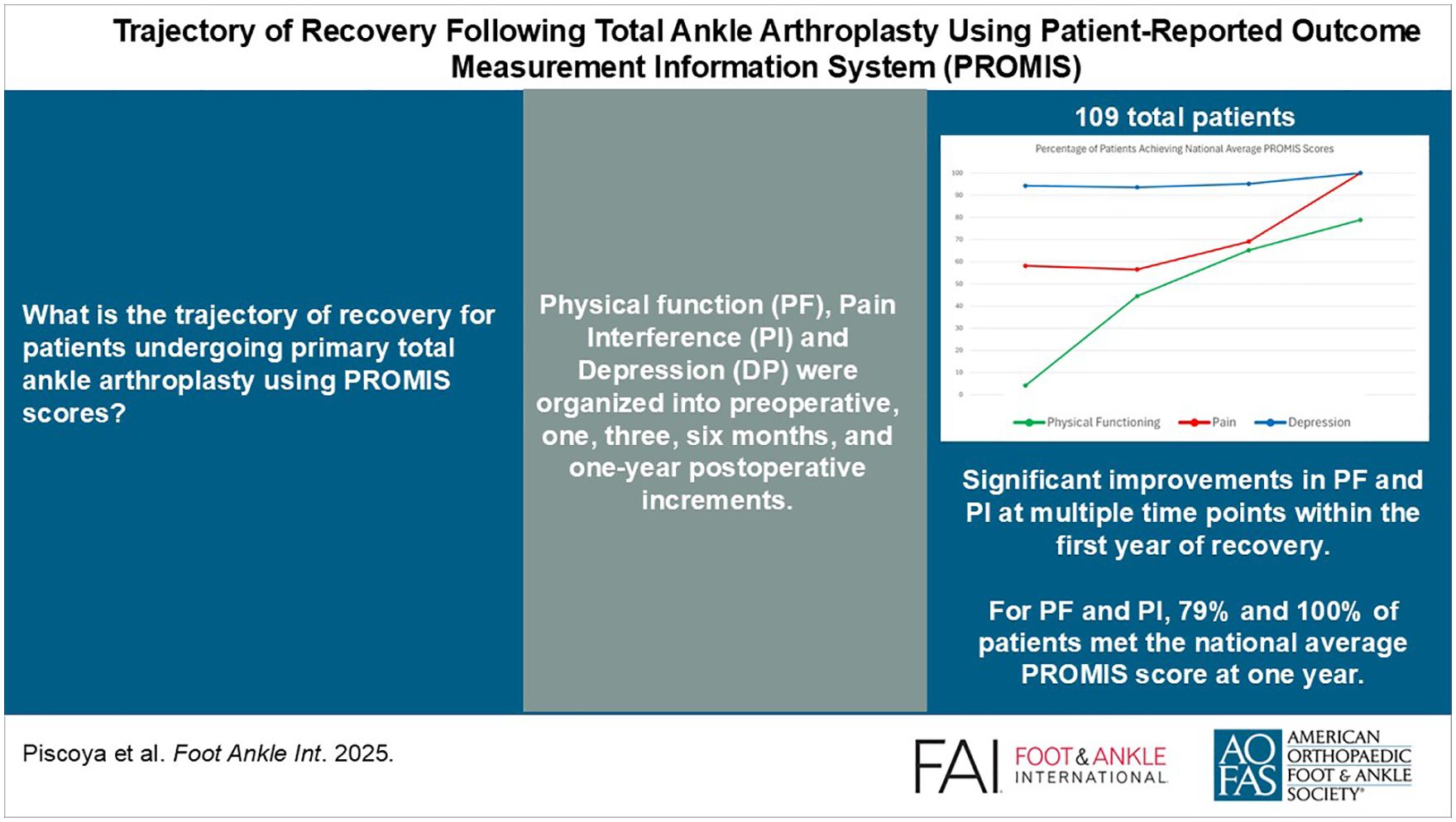
Restricted accessResearch articleFirst published August, 2025pp. 827-835, Tyler J. Thorne, Aaron Olsen , [...]The development of posttraumatic osteoarthritis after intra-articular fracture (IAF) of the tibial plafond is multifactorial and complex. The purpose of this study was to evaluate chondrocyte cell death at various areas of the ankle plafond in a high-energy and low-energy porcine pilon fracture model.
Fifteen pilon ankle fractures were created in porcine hindlimbs using a validated large-animal IAF model. Three groups were tested: control pigs (CP), low-energy fracture pigs (LEP), and high-energy fracture pigs (HEP). Chondral samples were taken from the plafond adjacent to fracture (Tib-F), plafond at 5 mm away from the fracture (Tib-C), talus near the fracture (Tal-F), and talus 5 mm away from the fracture (Tal-C). At 48 hours, the samples were stained for live and dead cell labeling and confocal microscopy–evaluated cell death.
Cell death was significantly greater for the HEP when compared to the LEP. HEP Tib-F fractional cell death was 41.92% (SD 3.5) compared with LEP Tib-F 28.8% (SD 4.32) (
Chondrocyte cell death was greatest at the fracture margin and in high-energy fractures. Interestingly, across both high- and low-energy IAF models, the chondrocyte cell injury rate was similar for both the talar dome and tibial plafond. Future research should focus on mitigating chondrocyte demise after injury.
The rate of posttraumatic osteoarthritis after tibial plafond injuries in humans is exceedingly high despite advances in operative treatment. This study uses a clinically relevant, large-animal pilon fracture model to evaluate rates of chondrocyte cell death after 48 hours. This study confirms that cartilage cell death is associated with proximity to the fracture lines, higher-energy injury, and that pilon injuries impact cartilage on both the tibia and talus.
Restricted accessArticle commentaryFirst published August, 2025pp. 836-837 Restricted accessResearch articleFirst published August, 2025pp. 838-844
As total ankle arthroplasty (TAA) rises in popularity nationwide, the incidence of revision TAA continues to increase. This study evaluates patient demographics, surgical techniques, complications, and implant survivorship following revision TAA.
This was a single-center, retrospective review of revision TAAs performed between September 2007 and September 2022. Patients with a follow-up period of less than 1 year were excluded from the study. Demographic, surgical, and implant data were analyzed. Primary outcomes were prevalence of complications and implant failure.
Seventy-eight patients underwent a revision TAA. The mean age at revision was 64.2 years, with a follow-up of 4.5 years. Loosening (65.5%) was the primary indication, and both components were removed in 89.7% of cases. The most common implants for revision TAA were Inbone II (71.8%) and Inbone I (16.7%). Reoperation and rerevision rates were 37.2% and 21.8%, respectively, with infection being the leading cause. The 1- and 3-year implant survivorship rates were 94% and 88%, respectively.
Revision TAA remains a viable salvage procedure but carries a moderate complication rate, highlighting the importance of careful patient selection, surgical planning, and long-term monitoring.
Restricted accessResearch articleFirst published August, 2025pp. 845-854Hindfoot (subtalar, talonavicular, and/or calcaneocuboid) fusion is commonly used to treat arthritis and/or deformity. Some patients undergoing total ankle replacement (TAR) have a history of hindfoot fusion or undergo it concomitantly. This study aims to evaluate Patient-Reported Outcomes Measurement Information System (PROMIS)-based clinical outcomes, revision rates, and radiographic findings of primary TAR with ipsilateral hindfoot fusion at a minimum 2-year follow-up from primary TAR. We hypothesized that TAR patients with ipsilateral hindfoot fusion would have worse patient-reported outcomes and clinical outcomes than TAR-only patients.
A retrospective review of 400 primary TAR patients with or without prior/concomitant ipsilateral hindfoot fusion was conducted. PROMIS domains, radiographs, complications, and revisions were analyzed. Multivariate linear regression models were used to evaluate the associations between hindfoot fusion and 2-year postoperative PROMIS scores. We compared proportions meeting minimal clinically important difference (MCID) and patient-acceptable symptom state (PASS) thresholds.
Of 400 ankles, 49 (12.3%) had ipsilateral hindfoot fusion. On multivariate analysis, hindfoot fusion was associated with worse 2-year PROMIS scores in most domains, including Physical Function, Pain Interference, and Global Mental Health. However, rates of achieving MCID and PASS were largely similar between groups. At 2 years, hindfoot fusion patients were equally likely to achieve MCID in Physical Function, Pain Interference, and Depression, and to meet PASS thresholds for Pain Interference, Pain Intensity, and Physical Function. They were significantly less likely to achieve MCID for Pain Intensity (
Although patients undergoing TAR with ipsilateral hindfoot fusion report lower absolute PROMIS scores in several domains, they appear equally likely to perceive meaningful clinical improvement and reach acceptable postoperative states in pain and function. These patients may still experience more persistent mental health burden and slightly less improvement in pain intensity.
Restricted accessResearch articleFirst published August, 2025pp. 855-861, Milos Kostusiak, Michael Dean , [...]The Infinity Total Ankle System is the total ankle replacement (TAR) with market leading share in the United Kingdom and has been implanted in patients since 2014. We report the longest prospective series of Infinity TAR, with mean 8-year survivorship data from 2 nondesigner centers in the United Kingdom. This is a dual-center, prospective, observational study. The primary aims were to assess survivorship and complications of the Infinity TAR. The secondary aims were to assess functional and radiologic outcomes.
A total of 102 patients, comprising 106 primary TARs, were recruited into the study. Revision TAR and conversion from ankle arthrodesis were excluded from the study. Survivorship, complication, and patient-reported outcome measure score data were collected prospectively, during preoperative and annual, postoperative appointments. Plain weightbearing radiographs were assessed by 2 nonmasked authors for Canadian Orthopaedic Foot and Ankle Society (COFAS) grade, coronal and sagittal deformity, and formation of periimplant lucencies.
Mean follow-up time was 98 months (range 83-113). Four patients were lost to follow-up, and 12 patients died. Twelve patients underwent secondary surgeries: 8 revision TAR and 4 nonrevision reoperations. The current survivorship of the remaining 90 patients is 91.1% (95% CI, 83.0%-95.4%). Fifteen patients (14%) had complications of surgery. The most common reason for revision surgery was unexplained pain (5 of 8 patients). Manchester-Oxford Foot Questionnaire scores improved from 60 to 22 (
This prospective series of 106 modern fixed-bearing TAR shows an 8-year survivorship of 91%. The fixed-bearing Infinity TAR appears to be a safe, effective intervention in the treatment of end-stage ankle osteoarthritis and gives significant improvement in disease-specific and general health status outcomes.
Restricted accessResearch articleFirst published August, 2025pp. 862-872The objective of this study is to detail the terminal distribution of the peroneal artery, which may be at risk in a number of surgical procedures. Five per cent of the population presents with a dominant peroneal artery (arteria peronea magna), which is responsible for the entire foot vascularization.
Anatomic dissection of 54 specimens from 44 cadaveric donors was performed. Twenty belonged to women and 24 to men, whereas 10 lacked traceability data. Mean age of the donors was 75.01 ± 16.14 (range 38-101) years. Ten donors had bilateral extremities.
Six types on the terminal distribution of the peroneal artery were identified: type 1 (40.7%), terminal division into anterior perforating branch and posterior peroneal artery (bifurcation); type 2 (14.8%), proximal anterior perforating branch, distal bifurcation; type 3A (18.5%), terminal trifurcation into anastomosis, anterior perforating branch and posterior peroneal artery; type 3B (5.6%), terminal trifurcation where the anastomotic branch bows to join both posterior peroneal and posterior tibial arteries; type 3C (13%), proximal anterior perforating branch, distal trifurcation; type 3D (3.7%), proximal anterior perforating and anastomotic branches, distal trifurcation. Two specimens (3.7%) were nonclassifiable. The mean distance to the most distal anterior perforating branch was 69.37 ± 22.09 mm (from 35.69 to 146.40), whereas the mean diameter was 2.35 ± 0.71 mm (range 0.91-4.24). The most distal anastomosis branched off at 64.80 ± 21.49 mm (from 49.52 to 99.93). Horizontal distances from the fibula to the peroneal artery were, at 5 cm, 0.83 ± 1.21 mm (0-5.76); at 10 cm, 1.24 ± 1.16 mm (range 0-4.96); and at 15 cm, 1.63 ± 1.34 mm (0-5.2). No differences were found for side or gender. Three dominant peroneal arteries were found (5.56%), with a mean diameter of 3.78 ± 0.88 mm. These findings provide the most detailed classification to date and support incorporating peroneal artery mapping into preoperative planning for high-risk procedures.
Narrow proximity to the fibula, variation in branching, and dominance patterns suggest that identifying the peroneal vascular bundle intraoperatively is critical to avoid vascular complications. When performing posterior approaches to the ankle, it may be helpful to identify the peroneal vascular bundle and perform the necessary dissections and implant placement as distal as possible to avoid its injury.
Understanding the anatomy of the peroneal artery, its branches and anatomical variations, with special mention of the dominant peroneal artery (arteria peronea magna), may help to avoid iatrogenic injury to the peroneal vascular bundle during the varied and increasing number of foot and ankle surgical procedures performed, such as posterior open reduction internal fixation of ankle fractures, ankle arthrodesis, or ankle arthroscopy.
This is a visual representation of the abstract.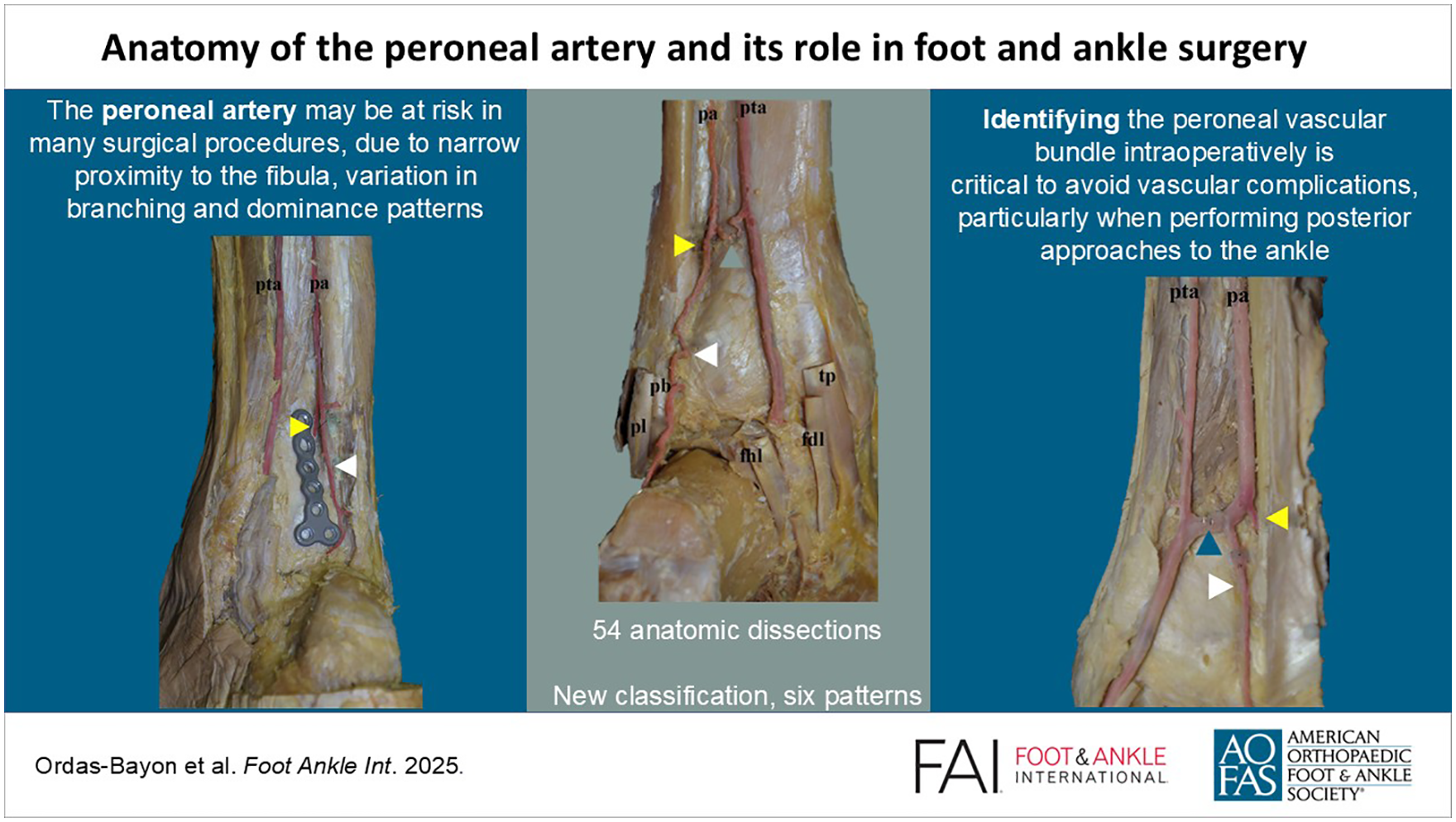
Restricted accessResearch articleFirst published August, 2025pp. 873-879Plantar vein thrombosis (PVT) is a rare cause of unilateral plantar foot pain not commonly assessed during sonographic scans for venous thromboembolic evaluation. The present study aims to increase awareness of PVT when evaluating musculoskeletal conditions and to discuss the utility and characteristic imaging findings of PVT on magnetic resonance imaging (MRI).
This is a retrospective chart review identifying patients with suspected PVT via search of a single institution’s radiology reports. Twelve patients had an available lower extremity MRI. These 12 MRIs were independently reviewed by 2 fellowship-trained musculoskeletal radiologists for common imaging characteristics. Of note, only 7 of the 12 available imaging studies contained MRI findings consistent with PVT as determined by the radiology reviewers. For these 7 patients, clinical characteristics were also recorded.
Between both radiology reviewers, there was 100% agreement confirming, localizing, and describing the findings of PVT. Of the 7 cases of MRI-confirmed PVT, 6 of 7 studies were performed without contrast and 1 of 7 was performed with and without contrast. The lateral plantar vein was the predominant vein involved in 85.7% (6/7). All 7 cases showed signs of intraluminal signal change, venous enlargement, and muscle edema. Two cases (28.6%, 2/7) displayed collateralization and/or enlargement of surrounding veins. In the only MRI performed with contrast, perivascular enhancement and a filling defect were noted.
In the evaluation of a painful foot, an MRI can be used to diagnose PVT reliably and may have several advantages over compression ultrasonography (US) because of its ability to identify other unsuspected etiologies of a painful foot and elimination of technical limitations of compression US in the plantar foot region.
This is a visual representation of the abstract.
Restricted accessResearch articleFirst published August, 2025pp. 880-886Minimally invasive surgery (MIS) for hallux valgus (HV) deformity have gained popularity over traditional open techniques in recent years. However, MIS techniques pose concerns about increased fluoroscopy use and potential radiation exposure. This study seeks to compare the radiation exposure between percutaneous HV correction and a hybrid technique using a mini C-arm.
In this prospective study, 68 patients underwent HV correction surgery between February 2022 and July 2023. Group 1 consisted of 37 patients who underwent percutaneous chevron and Akin osteotomy whereas group 2 consisted of 31 patients who underwent mini-open metatarsal distal chevron osteotomy + Akin percutaneous osteotomy (hybrid) technique. The patients were nonrandomized and allocated to each group according to their surgeons’ preference. Radiation exposure was measured using dose-area product (DAP), exposure duration, and passive dosimeters for the surgeon’s extremity, lens, and chest, as well as active dosimeters for the surgical team and patients.
Group 1 exhibited higher mean DAP (3.02 ± 1.91 cGy/cm2) compared with group 2 (1.56 ± 1.57 cGy/cm2,
Although percutaneous HV correction is associated with greater intraoperative fluoroscopy use, cumulative radiation exposure to patients and surgical teams remains well within ICRP-recommended safety limits when mini C-arm fluoroscopy is used. These findings support the continued use of percutaneous techniques in appropriately selected patients and settings.
 Open accessResearch articleFirst published August, 2025pp. 887-894
The percutaneous dorsal closing wedge calcaneal Zadek osteotomy (ZO) is an effective treatment for patients with insertional Achilles tendinopathy (IAT), although consensus is lacking on ideal patient selection. Tourné et al proposed that a preoperative calcaneal X/Y ratio <2.5 defines surgical candidacy, but this criterion remains controversial. This study evaluated whether patients with IAT benefit from percutaneous ZO regardless of preoperative X/Y ratio.
A retrospective comparative study of 27 patients undergoing percutaneous ZO was performed. Patients were stratified into 2 cohorts based on preoperative X/Y ratio (<2.5 vs ≥2.5). Primary outcomes were PROMIS scores for pain, function, and mobility at 3, 6, and 12 months. Secondary outcomes included complication rates and radiographic parameters. Minimal clinically important differences were used to assess clinical significance.
Between May 2022 and May 2024, 27 cases were included in the current analyses. Seventeen cases had an X/Y <2.5; 10 had an X/Y ≥2.5. Both cohorts demonstrated significant improvement in PROMIS pain, function, mobility scores (
Percutaneous ZO demonstrated meaningful improvement in patients’ function, pain, and mobility regardless of preoperative X/Y ratio. These findings challenge the use of the <2.5 X/Y threshold as a strict selection criterion. Percutaneous ZO may be a viable option for a broader population of IAT patients than previously considered.
This is a visual representation of the abstract.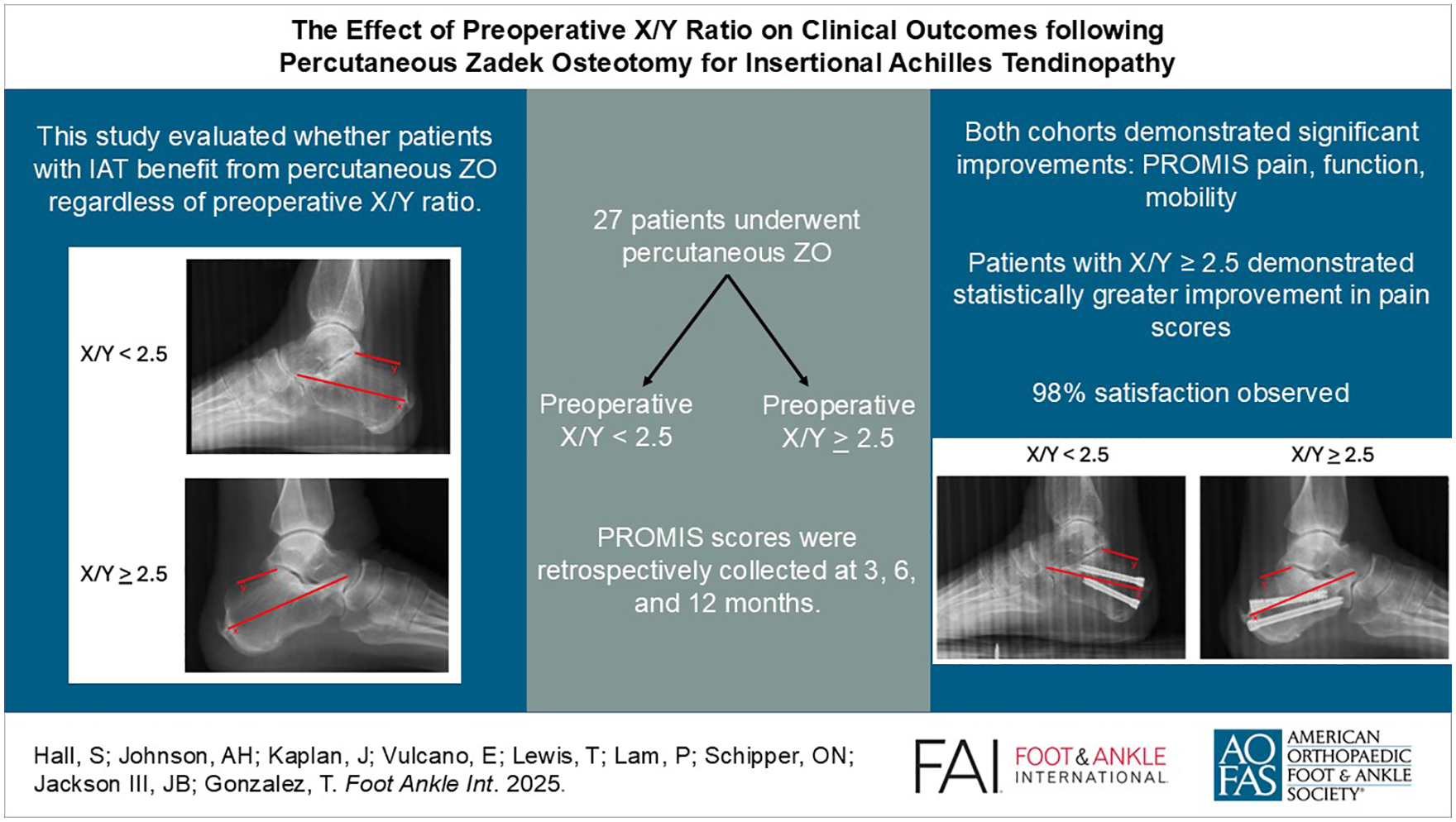
Restricted accessResearch articleFirst published August, 2025pp. 895-902 , [...]Metatarsophalangeal (MTP) arthrodesis is the gold standard for treatment of end-stage degeneration or severe hallux valgus deformities. Traditional fixation uses stainless steel or titanium plates, often with a crossing screw. Nitinol, a superelastic nickel-titanium alloy, offers dynamic compression. Nevertheless, it is unknown how nitinol implantation in the context of first-MTP arthrodesis performs biomechanically. We hypothesized that nitinol constructs would demonstrate biomechanical performance comparable or superior to a traditional plate-and-screw construct.
Twelve pairs of cadaveric metatarsophalangeal joints were organized into 3 groups according to a balanced incomplete block design: (1) a traditional titanium plate and cross-screw (PS) construct, (2) a nitinol staple and cross screw (NSS) construct, and (3) a proprietary nitinol hybrid screw (NHS) construct. The PS construct consisted of a plate with a compression cross screw; the NSS construct consisted of a nitinol staple with a compression cross screw; and the NHS construct consisted of a hybrid nitinol staple with a compression cross screw. Each specimen was cyclically loaded over 100 cycles at 1 Hz from 20 to 90 N followed by failure testing. A high-definition camera recorded gapping. Failure load, deflection, and stiffness were recorded.
Compared with the PS construct, both nitinol constructs (NSS and NHS) demonstrated significantly higher failure loads (NSS: 196 ± 101 N,
Nitinol constructs for MTP arthrodesis demonstrated superior mechanical performance compared with a traditional plate-and-screw construct, with higher failure load and stiffness.
These results support the growing use of nitinol for joint fusion, highlighting its potential to improve load to failure and reduce displacement under cyclic loading.
Restricted accessResearch articleFirst published August, 2025pp. 903-913, Yining Wang, Chujiang Xu , [...]Plantar displacement during chevron osteotomy may improve load distribution in hallux valgus, but biomechanical evidence is limited. This study evaluates how lateral and plantar displacement affect contact properties in the first metatarsophalangeal (MTP-1) and the first tarsometatarsal (TMT-1) joints under standing load.
Twelve cadaveric feet with hallux valgus and 4 normal specimens were tested under simulated standing load. Biplane osteotomy was performed with lateral displacement (2, 4, 6 mm) and plantar displacement (0, 2, 4 mm). Joint contact metrics were measured using Tekscan sensors.
Lateral displacement significantly affected contact force and peak pressure at both joints (
Lateral displacement of 4 mm with 2-4 mm plantar shift optimizes contact pressure restoration in cadaveric hallux valgus feet. These findings offer biomechanical guidance but require clinical validation.
Understanding how lateral and plantar displacement affect joint biomechanics provides a foundational framework for refining surgical planning in biplane chevron osteotomy. By identifying displacement combinations that approximate normal joint pressures, this study offers biomechanical guidance to help reduce postoperative complications such as transfer metatarsalgia. However, clinical studies are needed to determine whether these biomechanical findings translate into improved outcomes in patients with hallux valgus.
This is a visual representation of the abstract.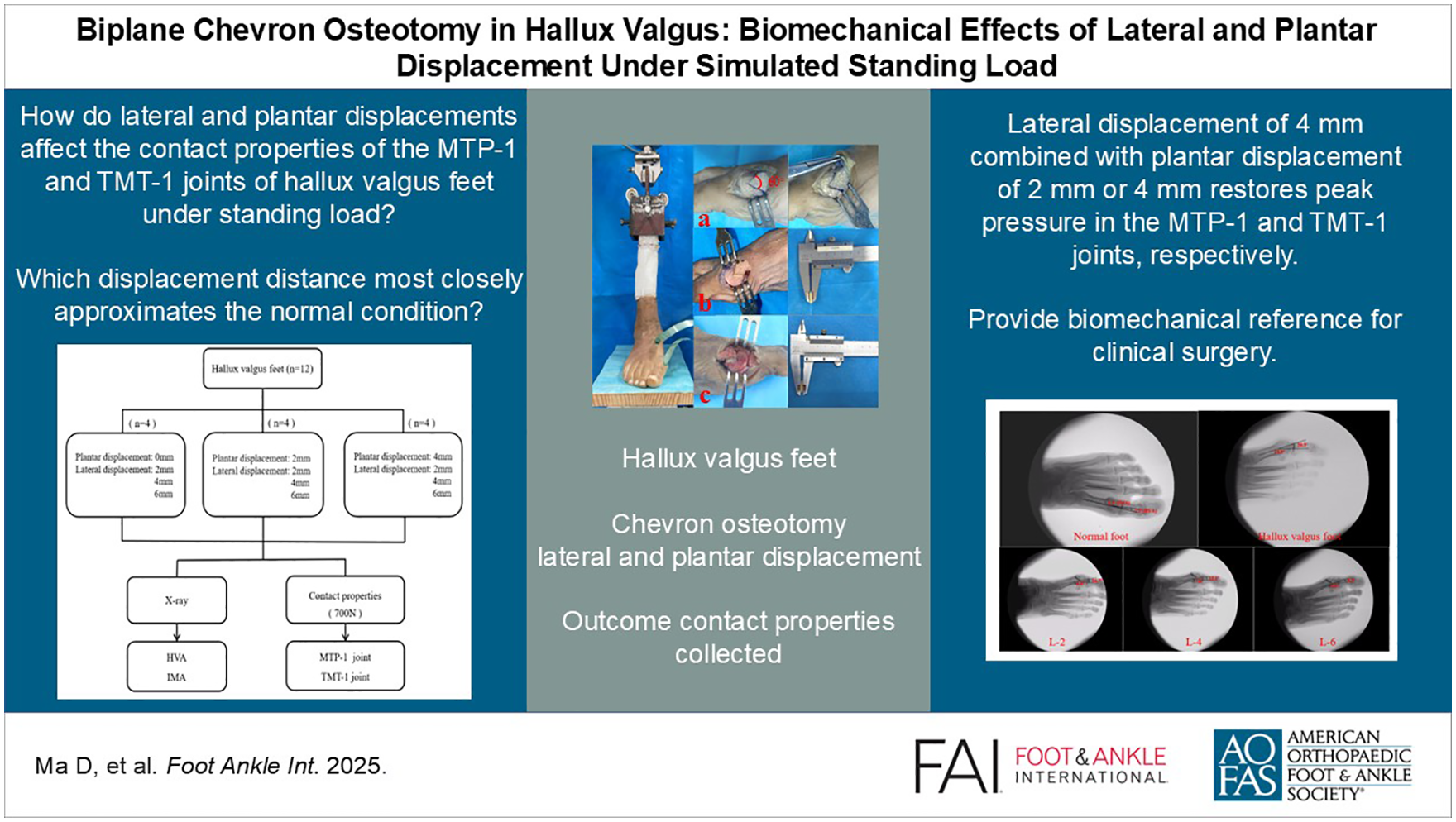
Open accessResearch articleFirst published August, 2025pp. 914-924Ischemic foot ulcers are a debilitating but common finding from many different conditions and can result in severe and life-threatening complications such as amputation and death. In recent years, tibial cortex transverse transport (TTT) has been used to treat ischemic ulcers with the aim to improve revascularization and wound healing. Our aim with this systematic review is to analyze the current literature to study the effects this surgery has on the treatment of ischemic ulcers of the lower limb.
A search was conducted using the 3 databases Web of Science, PubMed, and Scopus to collate all articles associated with the use of TTT in the treatment of lower limb ischemic ulcers. Duplicate articles were removed, and the remaining articles were filtered and screened using set inclusion criteria such as patients with a diagnosed foot ulcer of ischemic origin, patients treated with TTT alone or combined with other techniques on the affected leg, unilateral or bilateral ischemic ulcers, studies that had evidence of treatment outcomes related to ulcer such as visual analog scale (VAS), ankle-brachial index (ABI) measurements, ulcer healing rate and time, recurrence rate, and complications. The exclusion criteria consisted of duplicated studies, overlapping data in studies, TTT used to treat nonulcerous conditions, other systematic reviews, articles with publication language other than English, no access to full text of article, and case reports.
A total of 13 articles were included in the final selection, involving 924 patients, with 724 treated with TTT, in which 701 were diabetic patients. The results extracted demonstrated improvements in healing rates and times, vascular endothelial growth factor, ABI scores, VAS scores, and limb salvage. With regard to the complications and risks, pin-site infections and tibial fractures were infrequent and treated quickly.
Overall, the use of TTT has been associated with unusual success in improving revascularization and healing times in treating ischemic ulcers of the lower limb resulting in better outcomes for the patient and may provide a potential alternative treatment to the more conventional, widespread treatments currently used in clinical practice. Tibial fractures and pin-site infections are relatively rare complications that have been reported with use of this treatment.
This is a visual representation of the abstract.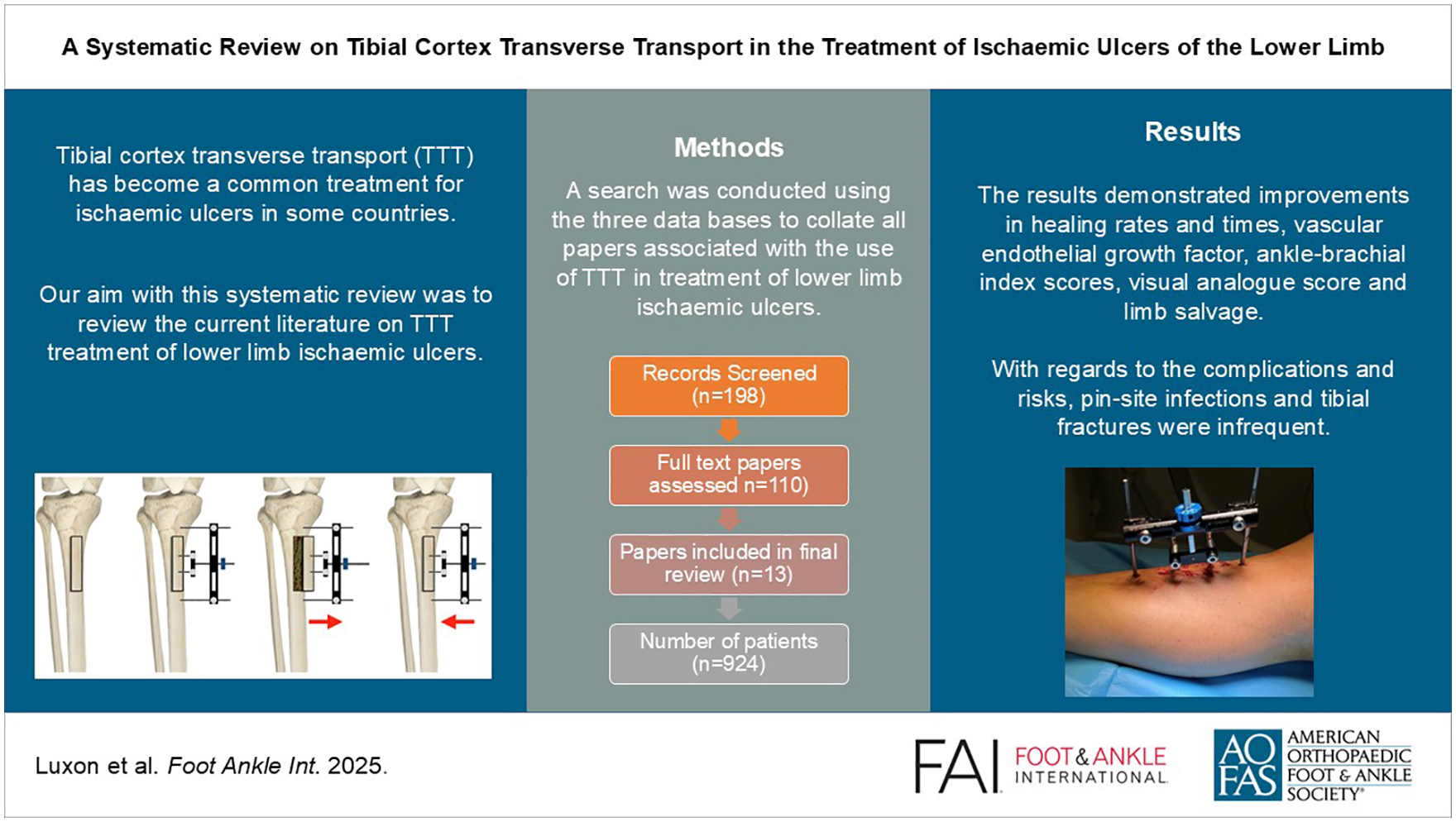
Restricted accessResearch articleFirst published August, 2025pp. 925-940Strength assessment is crucial for enhancing physical fitness, health, and injury prevention, particularly for the ankle joint, which is frequently injured in athletic activities. Despite technological advances, the reliability of dynamometric measurements for ankle strength varies because of differences in test procedures, equipment, and methodologies. This systematic review aimed to (1) examine the reliability of dynamometric strength measurements for ankle muscles in healthy individuals and athletes, (2) identify the most valid and reliable positions for strength measurement, and (3) determine the most reliable velocities for assessing ankle muscle strength.
A comprehensive search of 4 electronic databases (Web of Science, SCOPUS, EBSCO, and PubMed) identified 556 studies, of which 13 met the inclusion criteria for this meta-analysis. The reliability of the measurements was assessed using intraclass correlation coefficients (ICCs). Data extraction and analysis followed PRISMA guidelines, with methodologic quality evaluated using the Critical Appraisal Tool and the Quality Appraisal tool for Reliability Studies.
Most studies assessed ankle movements in a seated position, reporting ICC values between 0.42 and 0.97, with the majority showing good to excellent reliability (0.78-0.99). Dorsiflexion and plantarflexion movements demonstrated high reliability, whereas inversion and eversion showed greater variability (ICC 0.47-0.96). The most reliable velocities for isokinetic assessments were between 40 and 90 degrees/second. Eccentric and concentric strength measurements also exhibited good to excellent reliability.
Dynamometric measurements of ankle strength are generally reliable, especially in seated positions and at specific velocities (40-90 degrees/second). Standardizing assessment protocols can improve measurement consistency and accuracy, enhancing their utility in injury prevention and rehabilitation programs.
This is a visual representation of the abstract.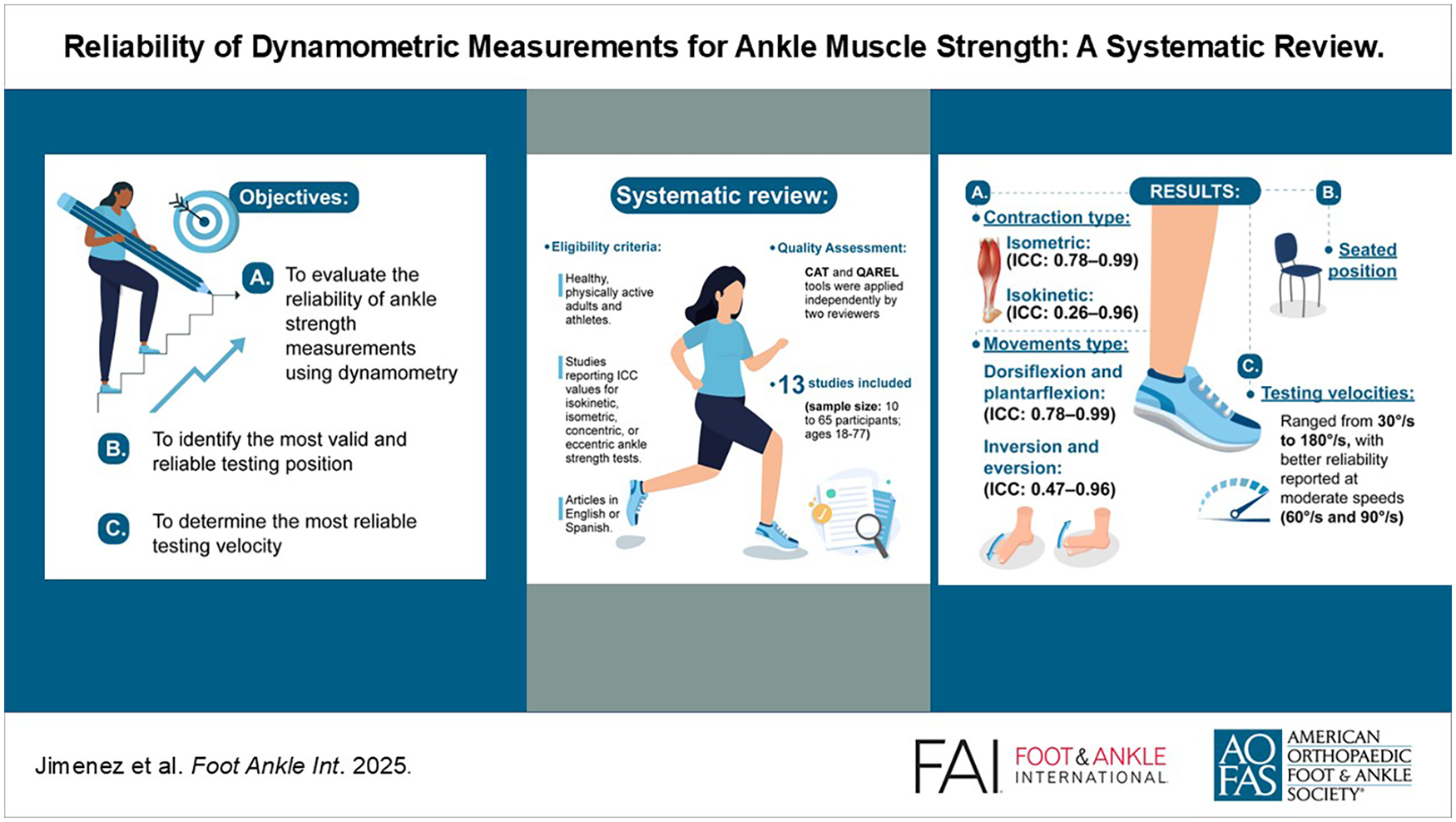
Restricted accessOtherFirst published August, 2025pp. 941-941