Editorial
 Available accessEditorialFirst published November, 2022pp. 1303-1306
The tip of the iceberg? Climate change,detention settings and mental health
Alexander SmithORCID


Select search scope: search across all journals or within the current journal


 Available accessEditorialFirst published November, 2022pp. 1303-1306
 , Adegboyega Ogunwale, Michael LiebrenzAvailable accessReview articleFirst published November, 2022pp. 1307-1314
As has been evaluated in a previous paper, Thomas S. Szasz redoubled his attacks against R. D. Laing in a series of articles which were published in
The main purpose of this paper is to shed light on the motives which led to Laing to decline to take part in TNR debate. Secondly, I evaluate the impact this had on the writing of Szasz in his widely read book,
In order to gain a balanced perspective of the issues involved, I review all oral and written sources which I have been able to locate, including correspondence with mental health professionals who met Laing and Szasz in person.
My conclusion is that Laing and members of PA would have preferred for Szasz to meet Laing in person to discuss antipsychiatry. However, Szasz opted not to see Laing personally when he traveled to London, whilst Laing decided not to reply to Szasz’s harsh criticisms either in public or in print. As a result, the debate on antipsychiatry was brought to an unsatisfactory close, only to be reopened by Szasz in his book on antipsychiatry, published long after Laing’s death (1989), and hence requiring others to respond in his memory.
 Open accessReview articleFirst published November, 2022pp. 1315-1323
While employment programs were not created with the intent to improve common mental disorders (CMDs), they may have a positive impact on the prevalence, incidence, and severity of CMD by reducing poverty and increasing access to economic mobility.
To examine and synthesize the available quantitative evidence of the impact of employment programs on outcomes of CMD.
Embase, Econlit, Global Health, MEDLINE, APA PsychINFO, and Social Policy and Practice were searched for experimental and quasi-experimental studies which investigated the impact of employment programs on primary and secondary outcomes of a CMD. A narrative synthesis according to Popay was conducted. The methodological quality of studies was assessed with the Cochrane Risk of Bias tool and the Newcastle-Ottawa Assessment Scale.
Of the 1,327 studies retrieved, two randomized controlled trials, one retrospective cohort, one pilot study with a non-randomized experimental design, and one randomized field experiment were included in the final review. Employment programs generally included multiple components such as skills-based training, and hands-on placements. Depression and anxiety were the CMDs measured as primary or secondary outcomes within included studies. Findings regarding the impact of employment programs on CMD were mixed with two studies reporting significantly positive effects, two reporting no effects, and one reporting mixed effects. The quality among included studies was good overall with some concerns regarding internal validity.
Employment programs may support a decrease in the prevalence, incidence, and severity of CMDs. However, there is high heterogeneity among study effects, designs, and contexts. More research is needed to gain further insight into the nature of this association and the mechanisms of impact. This review highlights the potential for employment programs and other poverty-reduction interventions to be utilized and integrated into the wider care, prevention, and treatment of common-mental disorders.
Available accessResearch articleFirst published November, 2022pp. 1324-1335, María Ángeles Pérez-San-Gregorio, Agustín Martín-Rodríguez , [...]In recent years, several variables in the course of schizophrenia and related psychotic disorders have been studied. However, an instrumental analysis of the evolution of social functioning and behaviour problems has scarcely been explored.
To analyse the evolution of social functioning and behaviour problems and find any diagnosis or gender differences.
The Social Functioning Scale (SFS) and the Behaviour Problems Inventory (BPI) were administered in Stages I (2003–2007) and II (2014–2017) to 100 close relatives of patients under treatment at a Community Mental Health Unit. A related samples t-test, analysis of variance and multivariate analysis of variance were performed to study the evolution and differences in social functioning and behaviour problems. Then a stepwise multiple linear regression analysis was done to predict the evolution of social functioning.
No deterioration in the evolution of social functioning or behaviour problems was observed, and schizophrenia patient scores were lower. Women scored higher in withdrawal/social engagement, interpersonal behaviour, independence-performance, independence-competence and total social functioning, with no significant differences in behaviour problems. Previous social functioning, underactivity/social withdrawal and education are predictive factors in the evolution of social functioning. Conclusion: The results show the need for implementing psychosocial intervention programs that promote functional recovery and keep problems from becoming chronic.
Available accessResearch articleFirst published November, 2022pp. 1336-1340, Yassen T. SarhanThe exposure to stressful events during childhood may have prolonged effects and is associated with a higher risk of psychopathology during adulthood.
To assess the relationship between exposure to childhood maltreatment and the occurrence of deviant behaviours among Iraqi young adults.
A cross-sectional study was done from October 2018 to April 2019. A non -random convenient sample that consisted of young adults of age between 18 and 20 years. The childhood maltreatment was measured by Adverse Childhood Experiences Questionnaire, while the deviant behaviours were assessed by Deviant Behaviour Variety Scale.
The participants were 401. There was a positive correlation between ACE score and deviant behaviours score. The male subjects had higher mean of deviant behaviour variety score compare to that of the female subjects. The linear regression model showed that exposure to physical abuse (β = 0.180,
Childhood maltreatment was associated with high risk for deviant behaviours among young Iraqi adults. The physical abuse was the main predictor for deviant behaviours in adulthood.
Available accessResearch articleFirst published November, 2022pp. 1341-1350, Arjan W Braam, Christa Anbeek , [...]Patient satisfaction with religious/spiritual (R/S) care during mental health treatment has been associated with a better treatment alliance.
To investigate the longitudinal relations between (un)met R/S care needs and treatment alliance/compliance over a 6-month period.
201 patients in a Christian (CC) and a secular mental health clinic completed a questionnaire (T0) containing an R/S care needs questionnaire, the Working Alliance Inventory (WAI) and the Service Engagement Scale (SES). After 6 months 136 of them took part in a follow-up (T1). Associations were analysed using hybrid linear mixed models and structural equation modelling.
R/S care needs decreased over time, but a similar percentage remained unanswered (e.g. 67% of the needs on R/S conversations in a secular setting). Over a 6-month period,
Satisfaction with R/S care among mental health patients is related to a better treatment alliance. When unmet R/S care needs persist, they precede a decrease in treatment compliance. Mental health professionals are recommended to assess the presence of R/S care needs and consider possibilities of R/S care especially in the first weeks of treatment.
Available accessResearch articleFirst published November, 2022pp. 1351-1362The mass media are relevant in shaping the population’s attitudes towards mental disorders. In low- and middle-income countries there is little information about the portrayal of people with mental disorders in the mass media.
The general objective of the study was to assess the tone and content of Chilean newspaper articles about mental disorder from 2000 to 2019.
The digital editions of four national circulation Chilean newspapers were intentionally selected. The search engine Google News was used to identify and retrieve the news. To evaluate the news, a standardised codebook was administered. A total of 385 news were evaluated.
The results show that a large proportion of the news items has an overall positive/optimistic tone 43.5% and 57.5% does not stigmatise; however, only 18.4% emphasises recovery as part of the content. The highest percentages of news stigmatising in tone and content are observed for bipolar disorder and schizophrenia. Furthermore, the experts are quoted much more frequently than people diagnosed with mental disorders or their families and/or friends. When comparing by years there is a trend towards general decrease in stigmatisation, moving towards a more positive or optimistic view of mental health,
In general, low stigmatisation towards mental disorders was found in the news and this was reduced steadily over time. Although there are aspects to improve in some particular areas, suggesting that manifest stigma has diminished, but more subtle forms still remain.
Available accessResearch articleFirst published November, 2022pp. 1363-1372, Maynard Hearns, Pritha Agarwal , [...]Applying the narrative transportation theory, we sought to test the role of a male-sensitive digital storytelling video as a source to persuade men to develop greater intentions to seek counselling based on their empathic reactions to the storyteller.
Using a post-test only design, a total of 247 diverse adult men (
For men who viewed the brochure, greater persuasiveness was linked to lower intentions to seek counselling at all levels of empathy; although, at high empathy, the relationship was not significant. A similar trend was observed for men who viewed the video at low and mean empathy levels. However, for men who reported high empathy after viewing the video, greater persuasiveness was significantly linked to greater intentions to seek counselling.
Empathy may play a viable role in promoting intentions to seek counselling among men who view persuasive digital storytelling content on depression. However, more research needs to be conducted on the conditions that make it favourable for men to have empathic reactions to the contents. Implications for research and the potential for intervention are discussed.
Available accessResearch articleFirst published November, 2022pp. 1373-1381Somatic symptom disorder (SSD) is common in medical settings but has been underdiagnosed. Stigma related to psychiatric illness was one of the barriers to making the diagnosis. More and more SSD patients who visited psychiatric clinics with physical complaints identify themselves as having ‘autonomic dysregulation’ in Taiwan.
This study aimed to investigate the characteristics of patients with a subjective diagnosis of ‘autonomic dysregulation’.
We assessed the sociodemographic profile, medical/psychiatric diagnoses, subjective psychiatric diagnoses, perceived psychiatric stigma, help-seeking attitude, and healthcare utilization of 122 participants with SSD. Participants who identified themselves as having ‘autonomic dysregulation’ (
Participants with a subjective diagnosis of ‘autonomic dysregulation’ were younger and had a higher education level than those who did not have such a subjective diagnosis. They also had higher scores on the Patient Health Questionnaire-15 (PHQ-15) and Health Anxiety Questionnaire (HAQ), whereas comorbid psychiatric diagnoses were similar in the two groups. Participants with and without a subjective diagnosis of ‘autonomic dysregulation’ did not have a significant difference in perceived psychiatric stigma and help-seeking attitude/behaviors. In a multiple logistic regression model, only age was associated with having a subjective diagnosis of ‘autonomic dysregulation’.
Among SSD patients, those who identify themselves as having ‘autonomic dysregulation’ tend to have higher somatic distress and health anxiety than those who do not. ‘Autonomic dysregulation’ is not associated with perceived psychiatric stigma.
Open accessResearch articleFirst published November, 2022pp. 1382-1393, Marciana Popescu, Pinar Zubaroglu-IoannidesOn March 5th, Guatemala declared a ‘State of Calamity’ in response to the COVID-19 pandemic and strict lockdown measures were initiated. The psychological consequences of these measures are yet to be fully understood. There is limited research on the psychological impact of the virus in the general population, and even less focused on Latin America and high-risk communities characterized by poverty, limited mental health resources, and high rates of stigma around mental illness. The goal of this study is to examine the psychological impact of COVID-19 across several highly vulnerable districts in Guatemala.
A semi-structured phone interview was conducted of 295 individuals in multiple districts in Guatemala City to assess self-perceived mental health consequences related to the pandemic. Sociodemographic, medical, and mental health data were collected. Chisquares and
The results indicate high levels of anxiety and stress in all target communities. Significant differences based on gender, age, and the number of children in the household were identified: women and older adults experience higher rates of stress and anxiety associated with the pandemic; while families with greater number of children experience higher levels of burnout.
Contextualizing the current pandemic as a complex emergency can help inform further studies focusing on socioeconomic challenges and higher vulnerabilities as preconditions affecting the impact of the pandemic on mental health. Given the limited available resources for mental health care in Guatemala, informal networks of care may play an important role in meeting the needs of those individuals experiencing increased psychological distress resulting from the pandemic.
Available accessResearch articleFirst published November, 2022pp. 1394-1402 , [...]Common mental disorders (CMD) cause a range of health, social and economic burden, and disorders like depression and anxiety are more prevalent among women. Prevalence and factors contributing to increased vulnerability for CMDs have regional variation. Identification of factors contributing to the vulnerability is essential to both psychiatric epidemiology and in addressing mental health challenges in the community.
This cross-sectional study aimed at understanding the burden of CMD and its association with social determinants of mental health. Women hailing from urban slum attending the outpatient family care facility for their medical problems constituted the sample. Data was collected using a clinical research form with variables such as sociodemographic profile, health profile, and psychosocial profile. The questionnaire had specific questions on indicators of poverty, certain stressors, and support system. Presence of CMD was assessed using Clinical Interview Schedule-Revised (CIS-R), a standard tool for CMD research in primary care settings. A cut off score of 12 and above was considered for detecting CMD. Research ethical principles were adhered to and data was analyzed using SPSS 21.0.
Among 172 women, 77 (44.8%) were diagnosed to have CMDs. Univariate analysis revealed a significant association between age, marital status, living arrangement, educational level, difficulty with buying food, presence of debt, chronic medical illness, husband’s alcohol use, marital satisfaction, experiencing abuse, family support, religious participation, and a diagnosis of CMD. Multivariate analysis showed high burden with nuclear family arrangement, difficulty to buy food, experiencing abuse and, low burden with higher educational level, family support, and religious participation.
Considering the high prevalence and the treatment gap of CMDs in primary setting, family-physician should be sensitized for detection and management of CMDs. Social interventions targeting poverty, women’s education and empowerment, and support system are likely to decrease the burden of CMDs in this population.
Available accessResearch articleFirst published November, 2022pp. 1403-1410Each year, around 800,000 people die by suicide. The prevalence of suicidal behaviors is much higher when suicidal attempts and persistent self-injurious ideation are included. Therefore, suicide is a public health concern. Research has been sensitive to this problem, deepening the study of risk factors and the development of theoretical frameworks of suicidal behavior, with the aim of generating effective suicide prevention policies around the biopsychosocial model.
We aimed to explore the role of relational, community, and social factors in current suicide prevention strategies.
Studies of risk and protective factors for suicidal behavior and the consequent development of theoretical frameworks were reviewed to verify if this knowledge was really used in suicide prevention policies.
Studies of risk and protective factors focus mainly on the individual, while theoretical frameworks emphasize the role of the relational, community, and social. Suicide prevention strategies more closely follow individual models derived from studies of risk factors.
Suicide prevention strategies should broaden their individual narrative to include relational, community, and social interventions as anti-suicide measures.
Available accessResearch articleFirst published November, 2022pp. 1411-1417, Sana Ahmed, Ramakrishna Prasad , [...]Despite the notion of stigma as a socio-cultural process with the concept rooted in social space rather than in individual space, global studies examining impact of cultural differences on stigma toward substance use disorders are lacking.
In this study, we aim to study the influence of national culture differences on stigma toward alcohol and substance use disorders.
We analyzed individual-level data from 68,041 respondents from 49 countries on stigma toward alcohol and substance use disorders. We examined the effect of the national culture dimensions and national alcohol and substance consumption rates on stigma toward alcohol and substance use disorders using hierarchical linear modeling.
Our hierarchical linear modeling results indicate that cultural dimensions and consumption rates significantly influence stigma. We found significant positive associations between stigma toward AUD and institutional collectivism and assertiveness, but a negative association with future orientation dimension. Like AUD, stigma toward SUD was also positively associated with institutional collectivism and assertiveness, but negatively associated with power distance.
The study findings have immense implications for national interventions to decrease stigma and influence policy making.
Available accessResearch articleFirst published November, 2022pp. 1418-1427, Laura Helena Andrade, Patrícia Lin Ang , [...]Immigrants and refugees have specific mental health needs. Studies of immigrant/refugee psychiatric patients in Latin America are scarce.
Present the profile of patients from an outpatient psychiatric service in Sao Paulo (Brazil) to better inform mental health service planning for immigrants and refugees in the Global South.
Exploratory study to characterize the sociodemographic and mental health profile of refugees and immigrants attending outpatient psychiatric service from 2003 to 2018. Chi-square tests and logistic regressions were used to examine the association of demographic variables, exposure to violence, and immigrant status with psychiatric diagnosis. Cluster analysis was used to identify subgroups within the sample.
A total of 162 immigrants and refugees referred to the service obtained treatment. Of these patients, 57.4% were men, 59.8% were refugees/asylum seekers, 51.9% were Black, 48.8% were single, 64.2% had 10 years of education, and 57.4% were unemployed; the mean age of the sample was 35.9. Half of the sample (52.5%) was exposed to violence. The most common diagnosis was depression (54.2%), followed by PTSD (16.6%). Approximately 34% of the participants sought psychiatric care within 6 months of arrival. Logistic regressions showed that men had lower odds of presenting with depression (OR = 0.34). Patients with PTSD were more likely to be refugees (OR = 3.9) and not have a university degree (OR = 3.1).
In the cluster analysis, a cluster of patients with PTSD included almost all Black refugee men exposed to violence. Most patients diagnosed with psychotic disorders were also Black refugee men.
Immigrants and refugees represent a vulnerable group. The majority of the sample was Black, refugee men, who were also more likely to present with PTSD. Future studies are needed to better understand issues in treatment adherence in relation to socioeconomic characteristics.
Available accessResearch articleFirst published November, 2022pp. 1428-1434Self-efficacy – positive beliefs about one’s own competencies and mastery – is associated with better recovery outcomes for people using mental health services.
To translate the Self-Efficacy for Personal Recovery Scale (SEPRS) into Arabic and evaluate the psychometric properties of the Arabic version.
An established translation methodology was employed, involving back-translation, comparison, forward-translation, comparison, and piloting. The pre-final version of the Arabic translated scale was tested for clarity with young people with a primary diagnosis of mental health problem. The final Arabic version and standardized measures of hope and loneliness were administered to 119 young people in two rounds.
Internal consistency was adequate (Cronbach’s alpha = 0.87 in round 1, 0.91 in round 2). Consistent with the English version, a one-factor solution best fitted the data. The correlation between SEPRS and hope was
The use of the Arabic SEPRS with Arabic-speaking samples is supported. Further research to investigate divergent validity is warranted.
Open accessResearch articleFirst published November, 2022pp. 1435-1444, Marciana PopescuThe mental health impact of Covid-19 from the perspective of individuals experiencing psychological distress during lockdown period in marginalized, high-risk communities remains underinvestigated.
This study aims to identify key factors related to psychological distress resulting from the Covid-19 pandemic across highly vulnerable districts in Guatemala.
The Covid Care Calls (CCC) survey was administered to households in 11 districts in Guatemala to gather information about medical, mental health, and psychosocial status during the lockdown period; provide referral for care; and disseminate information on evidence-based protective measures to stem the spread of the virus. The 330 individuals participated the survey. Conventional content analysis was used to analyze survey data.
Most commonly reported mental health issues since the start of the pandemic were anxiety (46%), stress (36%), and exacerbation of pre-Covid-19 mental health conditions (19%). Depression and burnout were equally reported by 12% of participants. Only 2% reported issues with safety in the home. Concerns about catching the virus and economic worries were the most commonly reported sources of psychological distress.
Results of this study indicate a high prevalence of anxiety, stress, and increased prior mental health symptoms resulting from the onset of the Covid-19 pandemic in low-income, high-risk communities across Guatemala. Efforts focused on enhancing coping strategies as well as psychoeducation to address stigma and increase help-seeking for depression are particularly important.
Open accessResearch articleFirst published November, 2022pp. 1445-1453Economic hardship is an established suicidogenic factor. However, very little is known about whether financial difficulties in terms of debt problems, specifically, is related to suicide. This would seem to be an important research gap, not least at a time when the repercussions of the global financial crisis are still being felt by many people.
This study sets out to examine whether experiencing financial indebtedness is related to suicide.
For this purpose, people aged between 18 and 64 with a registration date for a debt in the Swedish Enforcement Authority register between 2015 and 2017 (
Those who had experienced financial indebtedness were two and a half times more likely to commit suicide than those who had not lived through this experience (OR = 2.50), controlling for several demographic, socio-economic, and mental health conditions prior to the date of the registration at the Enforcement Authority.
Debt repayment problems have a significant and detrimental impact on individuals’ risk of committing suicide, even when several other socioeconomic risk factors are controlled for. The results reinforce the importance of ongoing attempts to remove the issue of debt problem from its status as a rather hidden suicidogenic risk factor.
Available accessResearch articleFirst published November, 2022pp. 1454-1461, Simmy GroverThis study explored the relationship between belief in conspiracy theories and the personality disorders. A sample of 475 British adults, aged around 30 years, completed measures of Belief in Conspiracy Theories (CTs) and the Personality Disorders (PDs), as well as the SAPAS, a short intelligence test and two self-evaluations. Belief in CTs was correlated with nearly all PDs, as well as the three established higher order clusters (A: odd and eccentric; B: dramatic and emotional; C: anxious). A series of stepwise multiple regressions were computed. A final regression showed five of the variables (education, intelligence, Cluster A, B, and C) were significant, which indicated that less well-educated and less intelligent participants, scoring higher on two PD clusters (Cluster A and B) but lower on Cluster C, believed more in the CTs. Implications of the study for understanding the origin of CTs is discussed. Limitations of the study, particularly the sample and measures used, are acknowledged.
Available accessResearch articleFirst published November, 2022pp. 1462-1469, Meghana A Gadgil, Weihui Zhang , [...]Emerging research has elucidated pathophysiological relationships among diabetes, disability, cognitive impairment, and incident dementia. However, the relationships between diabetes, disability, and dementia have been largely underexamined in Latino populations, which have a disproportionate prevalence of diabetes and its complications.
This study examines diabetes as a risk factor for subsequent disability and dementia risk in a Mexican-origin older adult sample.
The data are drawn from eight waves (1993–2013) of the Hispanic Established Populations for the Epidemiologic Study of the Elderly (HEPESE;
At baseline, diabetes prevalence was 28.1%, and 37.7% had IADL disability. Diabetes was associated with a higher risk of developing dementia (Hazard Ratio (HR) = 1.22,
Our results highlight the importance of better characterizing the role of diabetes and nativity in the co-occurrence of disability and dementia risk.
Available accessResearch articleFirst published November, 2022pp. 1470-1485, Abdul Fattah Najm, Emily B Allan , [...]Stigma is a barrier to mental healthcare. Understanding context-specific stigma is important in designing mental health interventions.
This study explored the nature and patterns of mental health stigma among community members in Afghanistan.
Using cross-sectional data (
In descriptive analyses, stigma toward depression and psychosis, especially regarding work and marriage, was found. The label of ‘mental illness’ was especially stigmatising. Most respondents would disclose a mental health problem to family only. Findings of inferential analyses included: stigma was positively associated with higher socioeconomic status, depression and belief in dangerousness; and negatively associated with urban location, female gender, familiarity and belief in a positive prognosis.
This study provides new insights on stigma, to inform action in Afghanistan, an under-researched context. Further research and actions must prioritise supportiveness at the family level, especially in remote regions and address cultural issues of the social cost of associating with mental illness. More culturally appropriate, non-stigmatising language surrounding mental illness should be developed.
Available accessResearch articleFirst published November, 2022pp. 1486-1493There has been a noticeable increase in the number of studies concerned with mental health literacy (MHL), specifically among students. Still, very few studies have examined MHL among students of non-Western minority groups.
This study examined MHL among Arab students in Israel based on Jorm’s conceptual framework.
Twenty-eight Arab students in Israel took part in semi-structured, in-depth interviews. Most were single and Muslim, in their second year of studies, and most reported low socioeconomic status. The data were analyzed thematically, guided by the Jorm’s six MHL dimensions.
Different levels of literacy were found in the various MHL dimensions. The participants identified severe mental disorders more easily than mood disorders; reported a variety of possible causes of mental disorders; were well aware of available professional help (apart for rehabilitative services); identified significant barriers to mental health help seeking, as Arabs; and reported the internet as a major source of information about mental health problems and their treatment
The participants’ MHL appeared to be associated with their unique sociocultural characteristics. This study stresses the need to raise MHL among Arab students in Israel, and in particular to promote positive attitudes to seeking professional help. It also highlights the need to develop culturally adapted mental health interventions for the Arab population in Israel.
Open accessResearch articleFirst published November, 2022pp. 1494-1506, Alex Ruck Keene, Anthony S David , [...]Insight into illness is often used in clinical and legal contexts, for example, as evidence of decision-making capacity. However, it is unclear whether this disadvantages certain groups protected under equality legislation. To our knowledge, this question has yet to be addressed systematically. Therefore, the present study reviews empirical studies that look at the relationship between insight and sociodemographic variables.
A systematic search of six bibliographic databases (CENTRAL, CINAHL, Cochrane Library of Systematic Reviews, EMBASE, MEDLINE and PsycINFO) was conducted, which yielded 6,192 results. Study characteristics and outcomes (associations between insight and socio-demographic variables) were then extracted from 207 eligible studies. This included protected characteristics under the Equality Act (2010): age, sex, ethnicity, marital status and religion. Weighted confidence estimates were calculated and relevant moderators included in a random effects meta-analysis. A study protocol was registered prospectively on PROSPERO, ID: CRD42019120117.
Insight was not strongly associated with any sociodemographic variable. Better insight was weakly but significantly associated with white ethnicity, being employed, younger age and more years of education. The age associations were mostly explained by relevant moderating variables. For people with schizophrenia, the associations between sociodemographic variables and insight were comparable to associations with decision making capacity.
Our results suggest that insight is not strongly associated with any sociodemographic variables. Further research is needed to clarify potential associations, particularly with non-white ethnicity and proxies for social support.
Available accessResearch articleFirst published November, 2022pp. 1507-1515, Satish C GirimajiDissociative/conversion disorders affect almost 31% of children and adolescents in a clinical setting. These children experience significant impairments in their academics, and daily functioning, with high chances of developing other psychiatric comorbidities such as anxiety and depression. However, there are no studies that explore the experiences of suffering from dissociative/conversion disorders from perspective of the sufferer. Therefore, the paper has aimed at exploring the subjective experiences of dissociative and conversion disorders among adolescents in the Indian context by examining their understanding about the illness and the reason they ascribe to the cause of their illness. The study used a qualitative semi-structured interview to understand their illness. In total, 10 adolescents of age group between 12 and 16 years participated. Eight out of the 10 participants were female and the mean age was 12 years. All of them were in-patients in the department of Child and Adolescent Psychiatry, NIMHANS, which is the tertiary mental health care Institute India and pioneer Institute of mental health in Asia. All participants have had at least one or more consultation history either with a traditional healer or/and physician. Thematic analysis identified vital themes such as (1) Adolescents’ attributing factors of the illness, (2) Cognitive and emotional appraisal of stressful situation/s, (3) Adolescents’ appraisal of different explanatory model, (4) Living with the Impact of the illness. This analysis about dissociative/conversion disorders from adolescents’ perspective has a major contribution in enhancing the clinical knowledge and practice in planning and managing children/adolescents diagnosed with dissociative/conversion disorders.
Available accessResearch articleFirst published November, 2022pp. 1516-1524The use community psychiatric rehabilitation (CPR) service could facilitate community tenure, autonomy, and recovery among persons with psychiatric disabilities. Nevertheless, based on existing scientific evidence, the conformance rate with the treatment recommendations was modest and the existing services are underutilized in Taiwan.
This study examined the correlates of CPR service utilization based on the Behavioral Model of Health Service Utilization. Especially, the effects of enabling factors were explored.
Five hundred and ninety-two participants from 32 community psychiatric rehabilitation centers in Taiwan completed the questionnaire. There were three groups of independent variables: predisposing, enabling, and need factors. Multiple regression analysis with a hierarchical method of entry was performed.
The hypothesized model was significant. Eight independent variables in the model explained 29.3% of the variances in the service utilization. Three enabling factors were significant after controlling for the effects of other factors. The most important correlate was professional relationships followed by family support and welfare subsidy.
The findings support that factors associated with CPR service utilization need to be examined separately from general mental health service. CPR program design and service delivery should consider the three most important enabling factors and the extent of service utilization could be enhanced.
Available accessLetterFirst published November, 2022pp. 1525-1526, Diogo Fernando Teixeira Barbosa, Eva Sofia Lima Osório Available accessLetterFirst published November, 2022pp. 1527-1528
 Available accessLetterFirst published November, 2022pp. 1529-1531, Aditi Agrawal , [...]
 Available accessRetractionFirst published November, 2022pp. 1532-1532
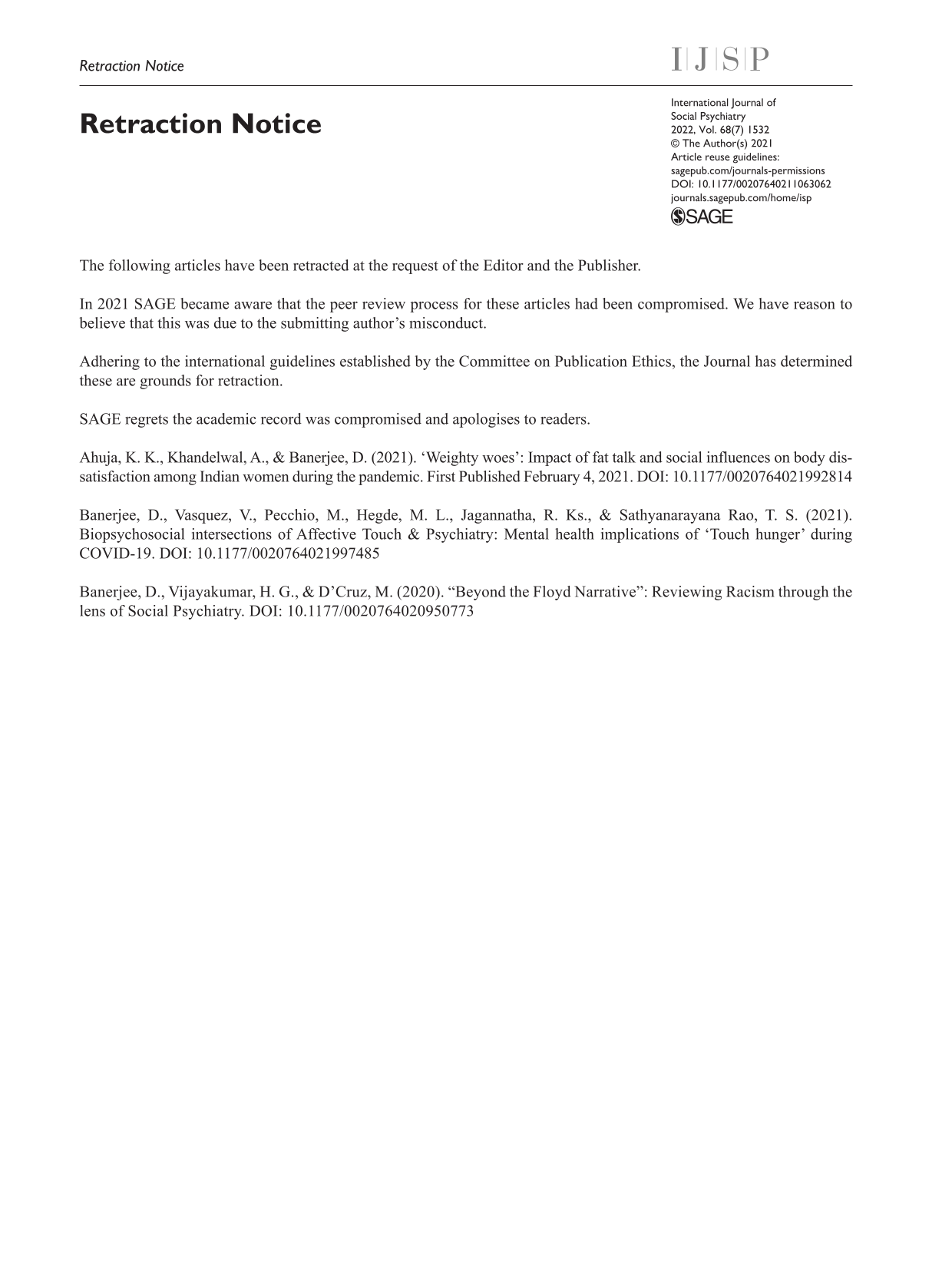 Available accessRetractionFirst published November, 2022pp. 1533-1533