Editorial
 Restricted accessEditorialFirst published May, 2017pp. 248-249

Select search scope: search across all journals or within the current journal


 Restricted accessEditorialFirst published May, 2017pp. 248-249Restricted accessNewsFirst published May, 2017pp. 250-250
 Restricted accessOtherFirst published May, 2017pp. 251-255
 Restricted accessResearch articleFirst published May, 2017pp. 256-266
The American Academy of Pediatrics recommends exclusive breastfeeding to age 6 months. Although breastfeeding rates in the United States have been increasing over time, further improvements are needed to meet Healthy People 2020 targets.
This study examined predictors of breastfeeding initiation and maintenance among a population of insured pregnant women.
Participants were 1,149 pregnant women enrolled in the Pregnancy and Influenza Project in two Kaiser Permanente regions in 2010-2011. Data were collected through interviews at enrollment and 1 month and 6 months postpartum and through participants’ electronic medical records.
Nearly all (99%) women reported initiating breastfeeding. Rates of exclusive breastfeeding were 70% and 54% at 1 month and 6 months, respectively; an additional 22% and 23% of women reported supplementing breastfeeding with formula. Of the women who supplemented, the mean (
Although rates of breastfeeding in this population were higher than national rates, a significant number of women stopped breastfeeding or introduced formula earlier than recommended. Two to 3 months postpartum may be a critical period warranting additional encouragement or intervention by healthcare providers. Mothers’ education attainment, maternal health factors, and gestational age at delivery may predict likelihood of breastfeeding maintenance.
Restricted accessResearch articleFirst published May, 2017pp. 267-277Gastroesophageal reflux in neonates is frequently reported by parents, potentially motivating changes in infant feeding mode and/or addition of solid food.
The authors prospectively analyzed associations between repeated measurement of feeding modes and reflux in infancy.
The Infant Feeding Practices Study II, conducted between 2005 and 2007 (2,841 infants), provides data on reflux and feeding modes at nine time points from months 1 to 12. Feeding modes were defined based on direct breastfeeding, feeding of bottled human milk, formula feeding, their combinations, and use of solid food. Repeated measurements were investigated using 1-month delayed models to estimate risk ratios (RRs) and their 95% confidence intervals (CIs). Risk ratios of different feeding modes were estimated for reflux; addressing a reverse association, RRs for feeding mode were estimated as responses to prior reflux.
Compared to direct breastfeeding, combinations with formula feeding showed a statistically significant risk for reflux (bottled human milk plus formula feeding: RR = 2.19, 95% CI [1.11, 4.33]; formula feeding: RR = 1.95, 95% CI [1.39, 2.74]; and mixed breastfeeding plus formula feeding: RR = 1.59, 95% CI [1.40, 2.42]). Addition of solid food was not protective (RR = 1.21, 95% CI [0.86, 1.70]). Analyses of reverse association (reflux → feeding) showed fewer breastfed infants among those with reflux in the prior month.
Any combination of infant feeding with formula seems to be a risk for reflux. Although breastfeeding was protective, mothers with a child with reflux were more likely to wean their child.
Restricted accessResearch articleFirst published May, 2017pp. 278-284Despite high rates of intention to exclusively breastfeed, rates of exclusive breastfeeding in Canada are low. Supplementation may begin in hospital and is associated with reduced breastfeeding duration.
The aim of this investigation was to explore determinants of in-hospital nonmedically indicated supplementation of infants whose birthing parents intended to exclusively breastfeed.
This study is a cross-sectional one-group nonexperimental design, focused on participants who intended to exclusively breastfeed for 6 months (
Overall, 16.9% (
Elements of the hospital experience, self-efficacy, and attitudes toward infant feeding are determinants of nonmedically indicated supplementation of infants whose birthing parents intended to exclusively breastfeed.
Restricted accessResearch articleFirst published May, 2017pp. 285-295Primiparous women are at risk for early, unintended breastfeeding reduction and cessation. Breastfeeding patterns that contribute to these outcomes require further exploration.
This study aimed to describe early, “real-time” breastfeeding behaviors and perceived problems of primiparous women.
First-time mothers intending to exclusively breastfeed downloaded a commercial infant-feeding app during their postpartum hospitalization. Women logged feedings and their breastfeeding experiences, as they occurred, through 8 weeks postpartum. Additional feeding and background data were collected via electronic medical records and questionnaires administered at enrollment and 2 and 8 weeks postpartum. Summary statistics were compiled to examine weekly breastfeeding behaviors and problems.
In this sample of 61 primarily highly educated, White women committed to breastfeeding, 38% (
Interventions to address suboptimal breastfeeding in primiparous women should consider the pervasiveness of early milk expression and in-hospital formula supplementation in this population, as well as the trajectory of common problems.
Restricted accessResearch articleFirst published May, 2017pp. 296-299Aspirin has antipyretic and anti-inflammatory properties and is frequently used by pregnant and lactating women. However, its transfer in human milk when administered at low dose has not been reported.
This study aimed to evaluate the transfer of acetylsalicylic acid and its metabolite, salicylic acid, into human milk following the use of low dose aspirin.
In this study, milk samples were collected at 0, 1, 2, 4, 8, 12, and 24 hours from seven breastfeeding women after a steady-state daily dose of 81 mg of aspirin. Milk levels of acetylsalicylic acid and salicylic acid were determined by liquid chromatography–tandem mass spectrometry.
Acetylsalicylic acid levels were below the limit of quantification (0.61 ng/ml) in all the milk samples, whereas salicylic acid was detected at very low concentrations. The average concentration of salicylic acid observed was 24 ng/ml and the estimated relative infant dose was 0.4%.
Acetylsalicylic acid transfer into milk is so low that it is undetectable even by highly sophisticated methodology. Salicylic acid does appear in the human milk in comparatively low amounts, which are probably subclinical in infants. Thus, the daily use of an 81-mg dose of aspirin should be considered safe during lactation.
Restricted accessResearch articleFirst published May, 2017pp. 300-308Two studies have demonstrated an analgesic effect of maternal milk odor in preterm neonates, without specifying the method of olfactory stimulation.
This study aimed to assess the analgesic effect of maternal milk odor in preterm neonates by using a standardized method of olfactory stimulation.
This trial was prospective, randomized, controlled, double blinded, and centrally administered. The inclusion criteria for breastfed infants included being born between 30 and 36 weeks + 6 days gestational age and being less than 10 days postnatal age. There were two groups: (a) A maternal milk odor group underwent a venipuncture with a diffuser emitting their own mother’s milk odor and (2) a control group underwent a venipuncture with an odorless diffuser. The primary outcome was the Premature Infant Pain Profile (PIPP) score, with secondary outcomes being the French scale of neonatal pain—Douleur Aiguë du Nouveau-né (DAN) scale—and crying duration. All neonates were given a dummy.
Our study included 16 neonates in the maternal milk odor group and 17 in the control group. Neonates exposed to their own mother’s milk odor had a significantly lower median PIPP score during venipuncture compared with the control group (6.3 [interquartile range (IQR) = 5-10] versus 12.0 [IQR = 7-13],
Maternal milk odor has an analgesic effect on preterm neonates.
Restricted accessResearch articleFirst published May, 2017pp. 309-318Lactational mastitis constitutes a significant cause of premature weaning. However, its etiology, linked to the presence of pathogenic microorganisms, has been scarcely reported.
The aim of this study was to describe the microbial diversity in milk samples from women suffering from lactational mastitis and to identify more accurately a collection of isolates belonging to coagulase-negative staphylococci, streptococci, and coryneform bacteria.
This is a cross-sectional descriptive one-group study. A total of 5,009 isolates from 1,849 mastitis milk samples was identified by culture, biochemical, and/or molecular methods at the species or genus level. A more precise identification of a collection of 211 isolates was carried out by 16S rRNA gene sequencing.
Mean total bacterial count in milk samples was 4.11 log10 colony-forming units/ml, 95% confidence interval [4.08, 4.15].
Many coagulase-negative staphylococci, viridans group streptococci, and corynebacteria, usually dismissed as contaminant bacteria, may play an important role as etiologic agents of mastitis. Proper diagnosis of mastitis should be established after performing microbiological testing of milk based on standardized procedures. A reliable analysis must identify the mastitis-causing pathogen(s) at the species level and its(their) concentration(s).
Restricted accessResearch articleFirst published May, 2017pp. 319-328Long-chain polyunsaturated fatty acids (LC-PUFAs) are important for newborn neurosensory development. Supplementation of breastfeeding mothers’ diets with omega-3 PUFAs, such as alpha-linolenic acid (ALA), may increase their concentration in human milk.
This study aimed to assess human milk composition after 15-day supplementation regimens containing either omega-3 PUFAs or olive oil, which does not provide ALA.
A multicenter factorial randomized trial was conducted with four groups of breastfeeding women, with each group containing 19 to 22 women. After a 15-day ALA washout period, three groups received supplementation with omega-3 precursors for 15 days: an enriched margarine (M), a rapeseed oil (R), and a margarine and rapeseed oil (MR). The fourth was unexposed to omega-3 precursors (olive oil control diet, O). After 15 days, blind determination of human milk fatty acid (FA) composition was assessed by gas chromatography, and the FA composition was compared among groups using variance analyses.
Alpha-linolenic acid content, expressed as the mean (standard deviation) total human milk FA percentage, was significantly higher after diet supplementation with omega-3 PUFAs, with values of 2.2% (0.7%) (MR), 1.3% (0.5%) (R), 1.1% (0.4%) (M), and 0.8% (0.3%) (O at D30) (
In lactating women, omega-3 supplementation via the combination of enriched margarine and rapeseed oil increased the ALA content of human milk and generated the most favorable LA–ALA ratio for LC-PUFA synthesis.
Restricted accessResearch articleFirst published May, 2017pp. 329-340Human milk is the preferred nutrition for neonates and a source of bacteria.
The authors aimed to characterize the molecular epidemiology and genetic content of staphylococci in the human milk of mothers of preterm and term neonates.
Staphylococci were isolated once per week in the 1st month postpartum from the human milk of mothers of 20 healthy term and 49 preterm neonates hospitalized in the neonatal intensive care unit. Multilocus variable-number tandem-repeats analysis and multilocus sequence typing were used. The presence of the
The human milk of mothers of preterm compared with term neonates had higher counts of staphylococci but lower species diversity. The human milk of mothers of preterm compared with term neonates more often contained
Limiting exposure of mothers of preterm neonates to the hospital could prevent human milk colonization with more pathogenic staphylococci.
Restricted accessResearch articleFirst published May, 2017pp. 341-350Very-low-birth-weight infants continue to face significant difficulties with postnatal growth. Human milk is the optimal form of nutrition for infants but may exhibit variation in nutrient content.
This study aimed to perform macronutrient analysis on expressed human milk from mothers whose babies are hospitalized in the neonatal intensive care unit.
Up to five human milk samples per participant were analyzed for protein, carbohydrate, and fat content using reference chemical analyses (Kjeldahl for protein, high pressure liquid chromatography for carbohydrates, and Mojonnier for fat). Calorie content was calculated.
A total of 64 samples from 24 participants was analyzed. Wide variability was found in calorie, protein, carbohydrate, and fat composition. The authors found an average of 17.9 kcal/ounce, with only 34% of samples falling within 10% of the expected caloric density.
The assumption that human milk contains 20 kcal/ounce is no longer supported based on this study. This supports promoting an individualized nutrition strategy as a crucial aspect to optimal nutrition.
Restricted accessResearch articleFirst published May, 2017pp. 351-354Potential donors of human milk are screened for Ebola virus (EBOV) using standard questions, but testing for EBOV and Marburg virus (MARV) is not part of routine serological testing performed by milk banks.
This study tested the hypothesis that EBOV would be inactivated in donor human milk (DHM) by standard pasteurization techniques (Holder) used in all North American nonprofit milk banks.
Milk samples were obtained from a nonprofit milk bank. They were inoculated with EBOV (Zaire strain) and MARV (Angola strain) and processed by standard Holder pasteurization technique. Plaque assays for EBOV and MARV were performed to detect the presence of virus after pasteurization.
Neither EBOV nor MARV was detectable by viral plaque assay in DHM or culture media samples, which were pasteurized by the Holder process.
EBOV and MARV are safely inactivated in human milk by standard Holder pasteurization technique. Screening for EBOV or MARV beyond questionnaire and self-deferral is not needed to ensure safety of DHM for high-risk infants.
Restricted accessOtherFirst published May, 2017pp. 355-358 Restricted accessResearch articleFirst published May, 2017pp. 359-367
Young mothers have the lowest breastfeeding rates in Canada. Young mothers and their infants who access maternity shelters are especially at risk for poor outcomes, some of which breastfeeding may help to mitigate, yet little is known of the breastfeeding practices of this population.
The purpose of this study was to answer the research question, “What factors influence the breastfeeding practices of young mothers who live or have lived in a maternity shelter?”
The study was conducted using interpretive description methodology and inductive content analysis. Data were collected by means of one-on-one interviews, with the participants recruited from a maternity shelter in Ontario, Canada.
Nine young mothers ages 17 to 24 years, who had initiated breastfeeding and resided at a maternity shelter, were interviewed. The five themes that emerged from the data were as follows: (a) choice, (b) special, (c) importance of early postpartum support, (d) being part of the “in crowd,” and (e) importance of ongoing supports. The participants in this study took ownership of their choice to breastfeed. Hospital postpartum nurses and lactation consultants had a critical role in the establishment of early breastfeeding, and ongoing, accessible, and nonjudgmental peer, family, and community support were important to breastfeeding duration.
A combination of emotional and practical supports from multiple trusted sources, including professional and peer supports on an ongoing basis, enabled young mothers to reach their breastfeeding goals.
Restricted accessResearch articleFirst published May, 2017pp. 368-378Positive deviant individuals practice beneficial behaviors in spite of having qualities characterizing them as high risk for unhealthy behaviors.
This study aimed to identify and understand factors distinguishing low-income African American women who breastfeed the longest (positive deviants) from those who breastfeed for a shorter duration or do not breastfeed.
Seven mini-focus groups on infant-feeding attitudes and experiences were conducted with 25 low-income African American women, grouped by infant-feeding practice. Positive deviants, who had breastfed for 4 months or more, were compared with formula-feeding participants who had only formula fed their babies and short-term breastfeeding participants who had breastfed for 3 months or less.
Positive deviant women had more schooling, higher income, breastfeeding intention, positive breastfeeding and unfavorable formula-feeding attitudes, higher self-efficacy, positive hospital and Special Supplemental Nutrition Program for Women, Infants, and Children experiences, more exclusive breastfeeding, and greater comfort breastfeeding in public. Short-term breastfeeding women varied in breastfeeding intention and self-efficacy, seemed to receive insufficient professional breastfeeding support, and supplemented breastfeeding with formula. Some showed ambivalence, concern with unhealthy behaviors, and discomfort with breastfeeding in public. Formula-feeding women intended to formula feed, feared breastfeeding, thought their behaviors were incompatible with breastfeeding, were comfortable with and found formula convenient, and received strong support to formula feed.
Tapping into the strengths of positive deviants; tailoring interventions to levels of general and breastfeeding self-efficacy; increasing social, institutional, and community supports; and removing inappropriate formula promotion may offer promising strategies to increase breastfeeding among low-income African American women.
Restricted accessOtherFirst published May, 2017pp. 379-382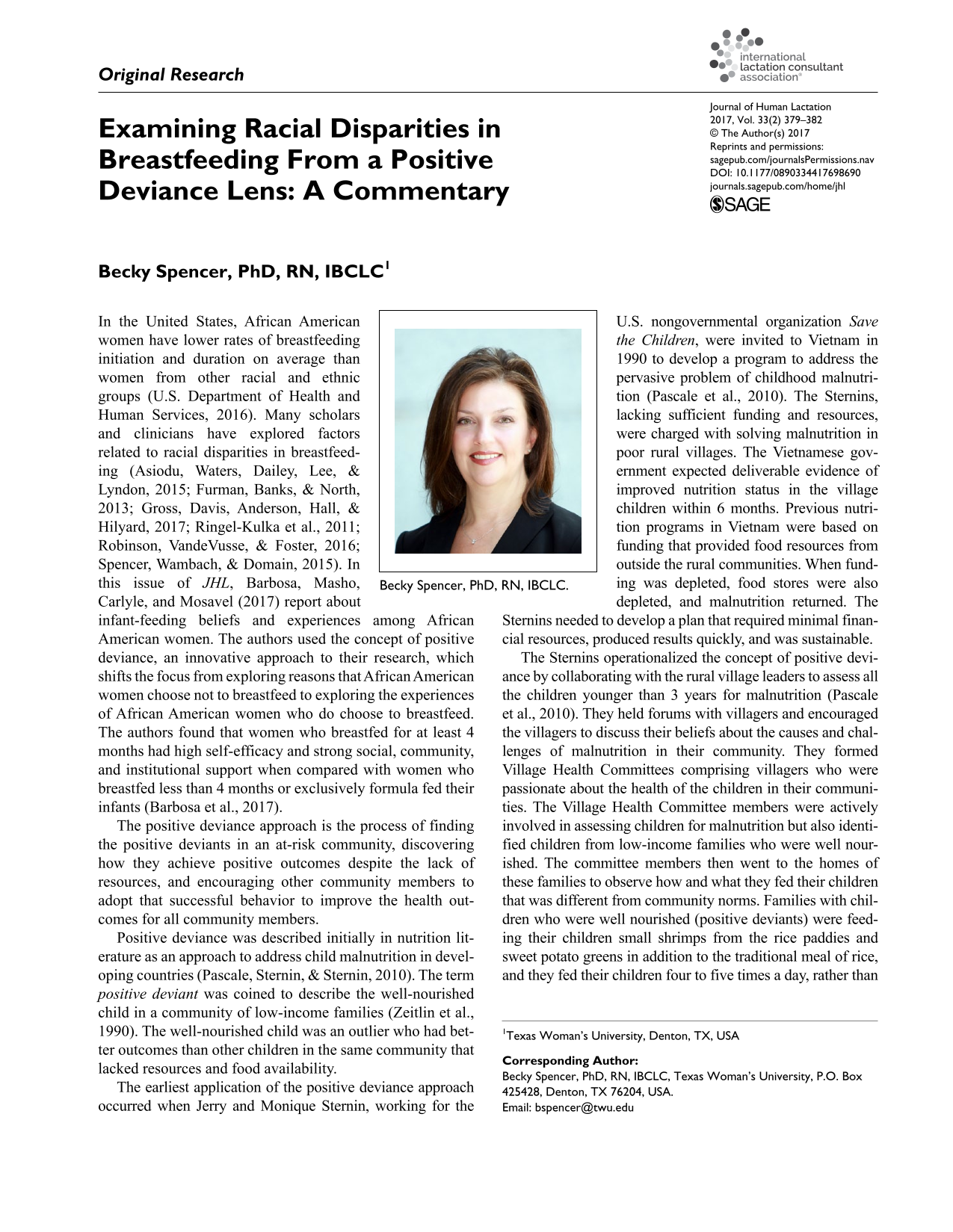 Restricted accessResearch articleFirst published May, 2017pp. 383-389
The Infant Feeding Intentions (IFI) scale was shown to reliably measure maternal intentions to initiate breastfeeding and continue exclusive breastfeeding until 1, 3, or 6 months in English and Spanish but not in Arab contexts.
This study aimed to validate an Arabic version of the IFI scale (IFI-A) and examine its ability to predict exclusive breastfeeding at 1, 3, or 6 months in pregnant Lebanese women.
The internal consistency reliability and construct validity of the IFI-A scale were tested on 50 pregnant women (Group 1), whereas its predictive ability was tested on 196 pregnant women (Group 2), who were surveyed monthly about their infants’ nutrition method until 6 months.
The IFI-A scale’s Cronbach’s alpha internal consistency reliability is .82. Its corrected item-total correlations ranged from .26 for Item 2 (“at least give breastfeeding a try”) to .86 for Item 4 (“will be exclusively breastfeeding at 3 months”). Exploratory factor analysis revealed that it is unidimensional. IFI-A scores correlated significantly with exclusive breastfeeding duration in Group 1 (
The IFI-A scale is a reliable and valid tool to assess maternal feeding intentions and predict exclusive breastfeeding at 3 months in the Arab context. Further studies are needed in other Arab contexts to confirm our findings.
Restricted accessResearch articleFirst published May, 2017pp. 390-400Breastfeeding duration is an important indicator commonly measured in maternal and child health and nutrition research. Maternal short-term recall for both initiation and duration of breastfeeding has been shown to be valid; however, validity of long-term recall is not well understood.
This study aims to assess the validity of maternal recall of breastfeeding duration 6 years after childbirth and its association with sociodemographic factors.
Among 635 mother–child pairs, breastfeeding duration data collected monthly throughout the 1st year after childbirth in the Infant Feeding Practices Study II (IFPS II) were compared to recall data obtained 6 years later during the Year 6 Follow-Up. The intraclass correlation coefficient (ICC) and Bland–Altman plots were examined to study the agreement between the two data sets. Sociodemographic factors associated with accurate recall to within 1 month of the IFPS II breastfeeding duration were assessed using multivariable logistic regression modeling.
Maternal recall of breastfeeding duration was found to be valid 6 years after childbirth with a small median overall bias (1 week) toward overestimation. The overall concordance was high (ICC = 0.84), except for high school graduates (ICC = 0.63) and smokers (ICC = 0.61). Smokers (adjusted odds ratio = 0.52; 95% confidence interval [0.4, 0.8]) and multiparous women (adjusted odds ratio = 0.57; 95% confidence interval [0.4, 0.9]) were also less likely to give an accurate recall of their breastfeeding duration to within 1 month.
Our study found that maternal recall of breastfeeding duration varies by sociodemographic factors but is accurate 6 years after childbirth.
Restricted accessResearch articleFirst published May, 2017pp. 401-408In Ontario, Canada, breastfeeding in public is a protected right, yet even with these laws, attitudes toward breastfeeding in public can serve as a barrier to breastfeeding.
This study assesses public support for breastfeeding in public among adults in Ottawa, Ontario, and examines sociodemographic associations with negative attitudes toward public breastfeeding.
Data from the 2015 Rapid Risk Factor Surveillance System (RRFSS), a population health telephone survey, were obtained for Ottawa. Adults ages 18 years and older were asked whether it was acceptable for a mother to breastfeed her baby in a restaurant and shopping mall (
Overall, 75% of respondents agreed that it was acceptable for a mother to breastfeed her baby in both a restaurant and shopping mall (restaurant: 78%; shopping mall: 81%). Respondents who did not have children at home, were less educated, had a mother tongue language other than French or English and who were retirees were less likely to support breastfeeding in restaurants and shopping malls. In addition, women and immigrants living in Canada for more than 15 years were less likely to support breastfeeding in shopping malls.
Despite a law to support public breastfeeding in Ontario, there is room to improve attitudes toward public breastfeeding. Increased public support for public breastfeeding can support women and children to achieve their feeding goals, particularly for those wanting to exclusively breastfeed.
Restricted accessResearch articleFirst published May, 2017pp. 409-414Breastfeeding is the optimal method for infant feeding. In the United States, 81.1% of mothers initiate breastfeeding; however, only 44.4% and 22.3% of mothers are exclusively breastfeeding at 3 and 6 months, respectively.
The Centers for Disease Control and Prevention provides guidance and funding to state health departments to support strategies to improve breastfeeding policies and practices in the hospital, community, and worksite settings. In 2010, the Hawaii State Department of Health received support from the Centers for Disease Control and Prevention to launch the Baby-Friendly Hawaii Project (BFHP) to increase the number of Hawaii hospitals that provide maternity care consistent with the Ten Steps to Successful Breastfeeding and increase the rate of women who remain exclusively breastfeeding throughout their hospital stay.
For this article, we examined the BFHP’s final evaluation report and Hawaii breastfeeding and maternity care data to identify the role of the BFHP in facilitating improvements in maternity care practices and breastfeeding rates.
Since 2010, 52 hospital site visits, 58 trainings, and ongoing technical assistance were administered, and more than 750 staff and health professionals from BFHP hospitals were trained. Hawaii’s overall quality composite Maternity Practices in Infant Nutrition and Care score increased from 65 (out of 100) in 2009 to 76 in 2011 and 80 in 2013, and Newborn Screening Data showed an increase in statewide exclusive breastfeeding from 59.7% in 2009 to 77.0% in 2014.
Implementation and findings from the BFHP can inform future planning at the state and federal levels on maternity care practices that can improve breastfeeding.
Restricted accessOtherFirst published May, 2017pp. 415-418 Restricted accessCase reportFirst published May, 2017pp. 419-421
Inducing lactation in the absence of pregnancy (nonpuerperal lactation) is not always successful and, in many cases, only partial breastfeeding is achieved. Different protocols have been described, but scientific evidence and research are lacking in this area. The authors describe the case of a woman with a history of a miscarriage, for whom the lactation induction process was so effective that she became a milk donor even before she received her adopted child. She had not previously used hormone treatment. She was given domperidone as a galactogogue for 1 month. The pumping protocol began with a double electric breast pump combined with manual pumping 6 months before her child was delivered, and 3 months later, she was accepted as a donor by our milk bank. This highlights the importance of regular stimulation as a milk production mechanism. This is the first case of human milk donation in an adoptive mother described in the literature.
Restricted accessReview articleFirst published May, 2017pp. 422-434Breastfeeding reduces women’s risk of breast cancer. Since exclusive breastfeeding has a stronger hormonal effect, it could theoretically result in a greater reduction in breast cancer risk than any breastfeeding mode. No meta-analysis has examined breast cancer risk by breastfeeding mode.
The authors conducted a meta-analysis for breast cancer risk in parous women who breastfed exclusively or in any mode versus parous women who formula fed their infants, and they estimated the summary dose–response association by the accumulated duration of any breastfeeding mode.
A systematic review of studies published between 2005 and 2015 analyzing breastfeeding and breast cancer risk in women was conducted in PubMed and EBSCOhost. A meta-analysis (
The summary relative risk (SRR) for breast cancer in parous women who breastfed exclusively was 0.72, 95% confidence interval (CI) [0.58, 0.90], versus parous women who had never breastfed. For parous women who breastfed in any mode, the SRR was lower in both premenopausal women (0.86, 95% CI [0.80, 0.93]) and postmenopausal women (0.89, 95% CI [0.83, 0.95]). There was no heterogeneity or publication bias. There is weak evidence of a difference between exclusive and any breastfeeding mode (
Exclusive breastfeeding among parous women reduces the risk of breast cancer compared with parous women who do not breastfeed exclusively.
Restricted accessReview articleFirst published May, 2017pp. 435-447Human milk has widespread health benefits for infants, mothers, and society. However, not all populations of women, particularly African American women, engage in human milk feeding at high rates.
The purpose of this integrative literature review is twofold: (a) to examine factors that influence low rates of human milk feeding among African American women and (b) to introduce a need for a methodological paradigm shift to develop culturally relevant and effective interventions.
The authors searched four electronic social science databases for peer-reviewed journal articles pertaining to human milk among African American women published from 1990 to 2015. Both coauthors independently assessed these articles using thematic analysis and validation. The database search yielded 47 peer-reviewed articles.
Three main themes emerged explaining the human milk feeding disparity: (a) the social characteristics of women likely not to feed human milk (e.g., low socioeconomic status, single); (b) women’s perceptions of human milk feeding; and (c) the quality of human milk feeding information provided by health care providers (i.e., limited human milk information).
Current literature does include sociohistorical factors that have shaped current norms. Adding sociohistorical frameworks, paying particular attention to the embodied experience of historical trauma, could lead to the development of new evidence-based, culturally sensitive interventions to enhance human milk feeding in the African American community.
Restricted accessResearch articleFirst published May, 2017pp. 448-453 Restricted accessResearch articleFirst published May, 2017pp. 454-457
 Restricted accessNewsFirst published May, 2017pp. 458-460