Editorial
 Restricted accessEditorialFirst published March, 2004pp. 5-5

Select search scope: search across all journals or within the current journal


 Restricted accessEditorialFirst published March, 2004pp. 5-5Restricted accessOtherFirst published March, 2004pp. 7-13
Pharmacological challenge tests of the serotonergic system have extensively been used during the past 20 years and new tests are in development. It is of crucial importance to standardize challenge tests to ascertain that observed variability is due to the state of the challenged system and not caused by variability of the test itself. This is even more important now that challenge tests increasingly are used in complex studies (e.g. in combination with neuroimaging and in large population studies with repeated tests over time). The Guideline for Good Clinical Practice may be of great help in the standardization of these tests. This is a recently developed guideline for pharmaceutical drug-development, which increasingly is used as a reference for all research in humans. To exemplify the possible usefulness of this approach, we apply it to meta-chlorophenylpiperazine, one of the most commonly used drugs in serotonergic challenge tests. We conclude that much can be learned from the development of this particular challenge. In the discussion, we address general issues that emerged from this review and their relevance to the development of future challenge tests.
Restricted accessOtherFirst published March, 2004pp. 14-15 Restricted accessOtherFirst published March, 2004pp. 16-16
 Restricted accessOtherFirst published March, 2004pp. 17-17
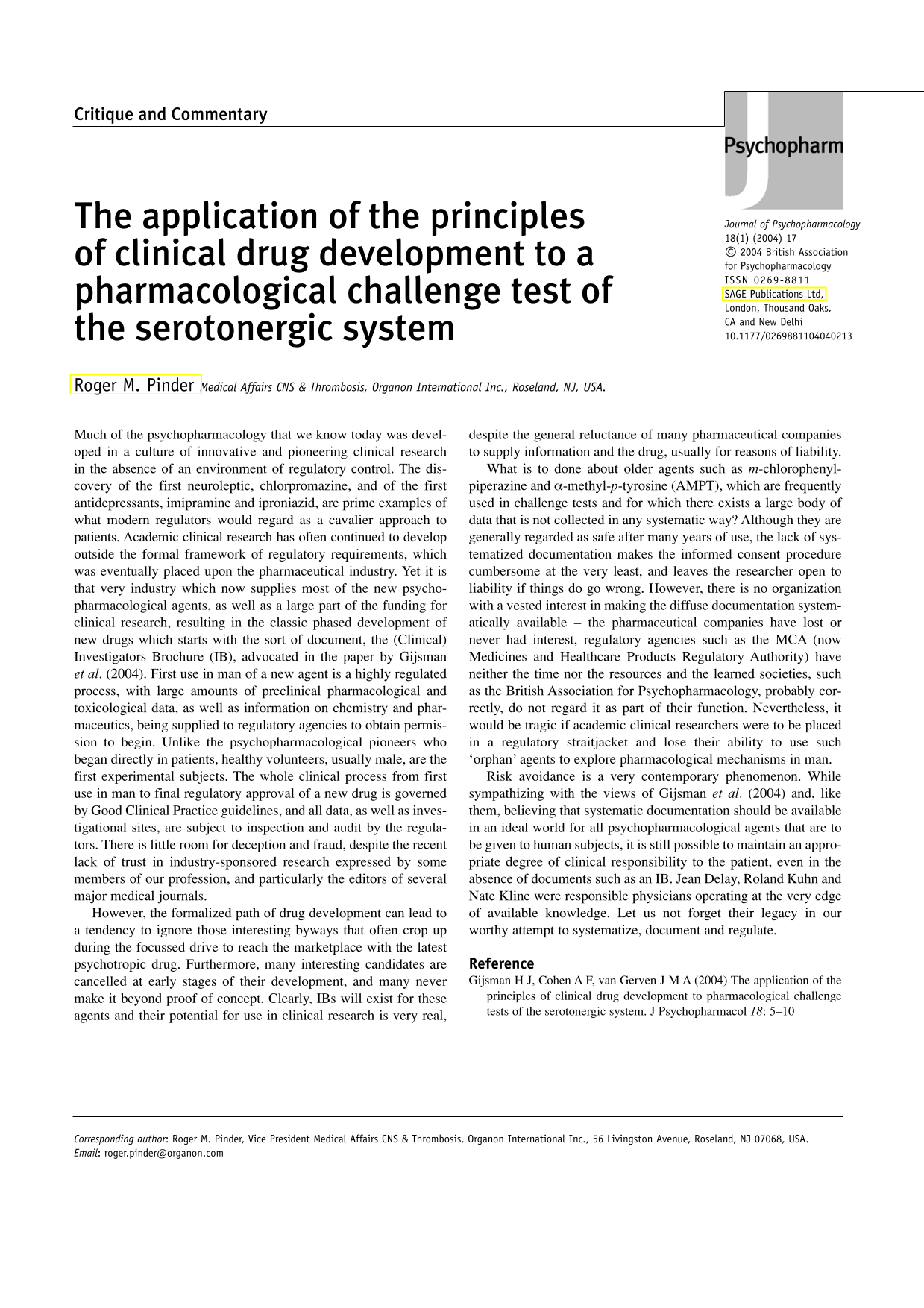 Restricted accessOtherFirst published March, 2004pp. 18-19
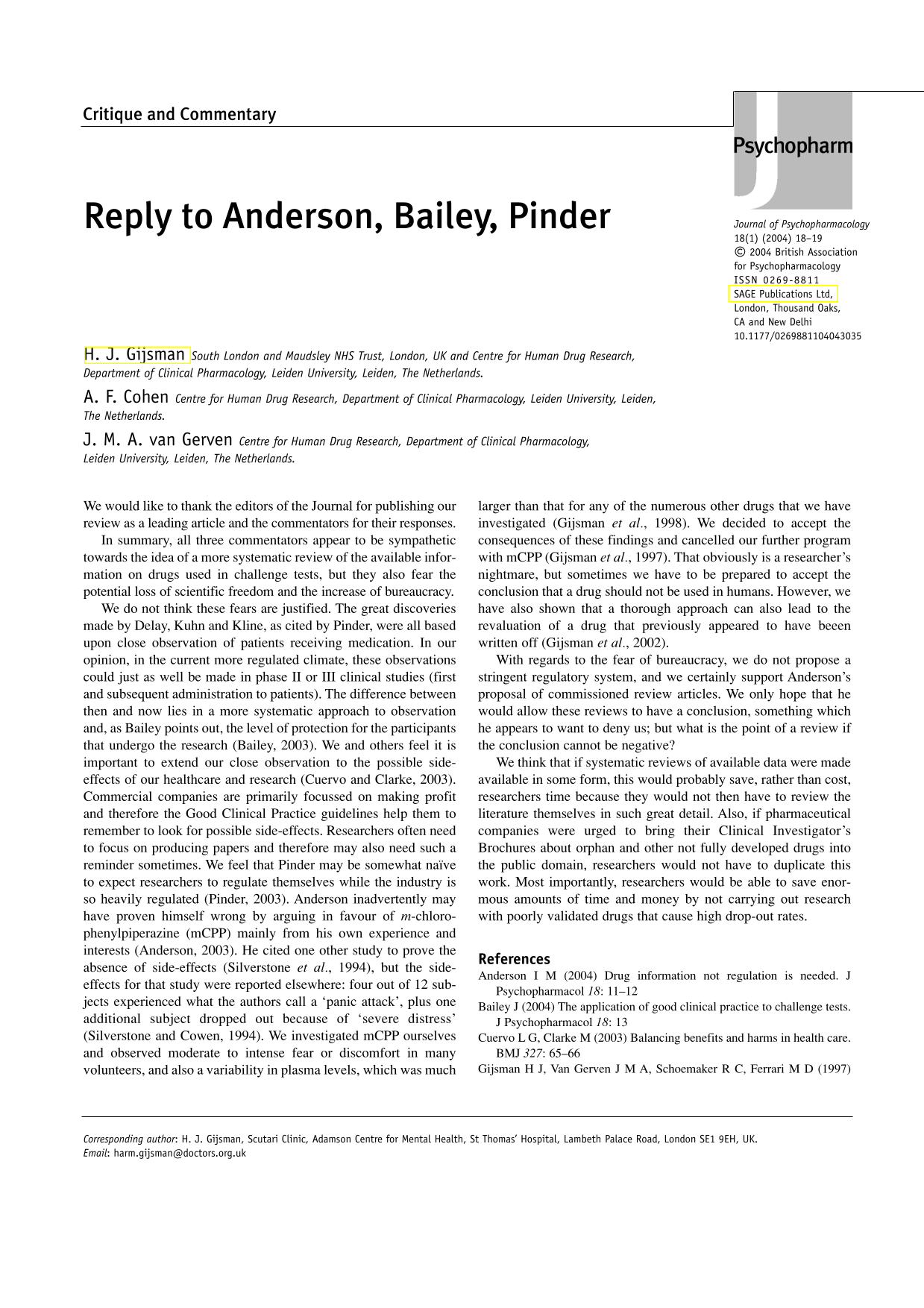 Restricted accessOtherFirst published March, 2004pp. 21-31
Monoamine neurotransmitters, serotonin, noradrenaline and dopamine modulate many important cognitive processes such as attention, learning and memory. While the selective effects of serotonin and catecholamine depletion on such processes have been investigated, the effects of simultaneous depletion of these monoamines on cognition remain unclear. This is of particular interest given that multiple neurotransmitter abnormalities have been implicated in many psychiatric disorders. The aim of the current study was to examine the effects of lowered brain monoamine function on cognitive performance, using the technique of amino acid precursor depletion. The study was a double-blind, placebo-controlled design in which 20 healthy female subjects were tested under a combined monoamine depletion condition (CMD) and a balanced control condition (B). Cognitive testing was conducted at baseline and 5 h post-depletion. The CMD condition relative to the B condition resulted in deficits in digit vigilance (accuracy and reaction time), a measure of sustained attention. There were no effects on measures of learning and memory or psychomotor function. These findings suggest that simultaneously depleting the availability of brain serotonin and catecholamines in healthy female subjects selectively impairs sustained attention, without affecting other cognitive domains.
Restricted accessOtherFirst published March, 2004pp. 32-40There is converging evidence that brain serotonin and dopamine may selectively modulate learning and memory in humans. However, this has not been directly demonstrated. In the current study, we used the method of amino acid precursor depletion to explore the effects of low serotonin and catecholamine function on memory in healthy female volunteers. Participants completed three experimental sessions: (i) tryptophan depletion (TD to lower 5-HT); (ii) tyrosine and phenylalanine depletion (TPD to lower catecholamines); and (iii) a balanced control condition (Bal). All testing was conducted in a double-blind, placebo-controlled, crossover design. Cognitive and mood assessments were performed at baseline and 5 h after ingesting the amino acid mixture. Consistent with previous studies, TD impaired declarative memory consolidation on a structured word-learning task, while TPD, acting to lower brain dopamine availability, impaired spatial working memory. No secondary deficits were observed on measures of attention, short-term memory or subjective mood state. These findings suggest that low brain serotonin versus dopamine selectively impairs memory performance in humans. This may shed light on the role of these neurotransmitters in disorders that are characterized by significant memory impairment.
Restricted accessOtherFirst published March, 2004pp. 41-46We studied 60 patients receiving a 1-year course of interferon (IFN)-αtherapy for chronic viral hepatitis. Patients underwent psychiatric assessment before starting the IFN-αtherapy, and monthly throughout the therapy, using the Structured Clinical Interview for the DSM-III-R, the 17-item Hamilton Depression Rating Scale, the Beck Depression Inventory and the Spielberg State and Trait Anxiety Inventory. Five patients had a baseline diagnosis of major depression and 18 (30%) developed an IFN-α-induced psychiatric adverse effect; 12 of these 23 patients received psychopharmacological treatment (patients and clinicians jointly decided the need for treatment). Two of the five patients with baseline depression started an antidepressant treatment (paroxetine) together with the IFN-α and successfully completed the IFN-αtherapy. Ten patients received treatment for the IFN-α-induced psychiatric adverse effects (depression in five patients, anxiety in two patients, severe irritability in two patients and insomnia in one patient). Depression was treated with paroxetine, amisulpride or levosulpiride; anxiety and insomnia were treated with benzodiazepines; and irritability was treated with thioridazine. Individual response to medications was measured with the Clinical Global Impression scale. Of the patients with IFN-α-induced depression, two received paroxetine (one showed a good response), two received amisulpride (one showed a good response) and one did not respond to levosulpiride but responded to paroxetine. The patients experiencing anxiety or insomnia responded well to benzodiazepines. One patient showed a good response, and one a poor response, to thioridazine for irritability. Only one patient interrupted the therapy because of psychiatric adverse effects. Overall, the 12 patients that received psychopharmacological treatment developed less severe psychopathological symptoms during the IFN-αtherapy compared to the 11 patients who had untreated baseline depression or untreated IFN-α-induced psychiatric adverse effects. Thus, psychopharmacological management can successfully treat psychiatric symptoms in patients who are receiving IFN-α.
Restricted accessOtherFirst published March, 2004pp. 47-53Central noradrenaline regulates the activity of the hypothalamic-pituitary-adrenal (HPA) axis and the neuroendocrine response to stress. α2-adrenoceptors and imidazoline2 (I2) receptors modulate the activity of the central noradrenergic system. The present set of experiments investigated the role of α2-adrenoceptors and I2 receptors in the regulation of HPA axis activity under basal conditions and during exposure to the acute psychological stress of restraint. Three separate experiments were carried out in which rats were given an i.p. injection of either saline vehicle, the combined α2-adrenoceptor antagonist and I2 receptor ligand idazoxan (10 mg/kg), the selective I2 receptor ligand BU224 (2.5 or 10 mg/kg) or the selective α2-adrenoceptor antagonist RX821002 (2.5 mg/kg) with or without restraint stress. Drugs were administered immediately prior to restraint of 60 min duration. Blood was sampled pre-injection, 30, 60 and 240 min post-injection and plasma corticosterone was measured by radioimmunoassay. In experiment 1, idazoxan increased plasma corticosterone levels in naive animals and potentiated the corticosterone response to acute restraint stress. In experiment 2, BU224 administration increased plasma corticosterone levels in a dose-related manner in naive rats. The results of experiment 3 indicated that RX821002 also elevated plasma corticosterone levels in naive rats, however, only BU224 potentiated the corticosterone response to restraint stress. These studies suggest that both α2-adrenoceptors and I2 receptors play a role in modulating basal HPA axis activity and that I2 receptors may play a more important role than α2-adrenoceptors in modulating the HPA axis response to the acute psychological stress of restraint.
Restricted accessOtherFirst published March, 2004pp. 54-58Several studies have demonstrated reciprocal, as well as synergistic interactions between cannabinoid and opioid systems. The aim of this study was to explore the time-related effects of repeated administration of δ9-tetrahydrocannabinol on
Restricted accessOtherFirst published March, 2004pp. 59-65This study aimed to examine the behavioural and neurochemical (cannabinoid CB1 receptor gene expression) changes induced by spontaneous cannabinoid withdrawal in mice. Tolerance was assessed by measuring rectal temperature and motor activity in the open-field test after CP-55, 940 administration. Cannabinoid withdrawal symptoms were determined by measuring motor activity and behavioural signs of abstinence. Cessation of CP-55, 940 treatment in tolerant mice induced a spontaneous time-dependent behavioural withdrawal syndrome consisting of marked increases (140%) in motor activity, number of rearings (170%), decreases in grooming (57%), wet dog shakes (73%) and rubbing behaviours (74%) on day 1, progressively reaching values similar to vehicle-treated mice on day 3. Interestingly, this spontaneous cannabinoid withdrawal resulted in CB1 gene expression upregulation (20–30%) in caudate-putamen, ventromedial hypothalamic nucleus, central amygdaloid nucleus and CA1, whereas in the CA3 field of hippocampus, a significant decrease (15–20%) was detected. Taken together, the results of this study suggest that cessation of CP-55, 940 administration in tolerant mice produces a behavioural cannabinoid withdrawal syndrome and a selective and differential responsiveness in CB1 receptor gene expression in several brain regions of the mice. These findings further suggest a time and regional differential role for cannabinoid receptors in short- and long-term neuroadaptations that occur after exposure to cannabis derivatives.
Restricted accessOtherFirst published March, 2004pp. 66-74P-glycoprotein (P-gp) is a 170-kDa membrane protein and the gene product of the multiple drug resistance (
Restricted accessOtherFirst published March, 2004pp. 75-82There is a large body of work investigating concurrent associations between polysubstance use and psychopathology, but much of this work has either pre-dated or failed to account for the complex and culturally specific patterns of contemporary drug use. In particular, attendees of dance music events report a greater drug history than their peers and engage in a unique lifestyle. To further investigate the consequences of this type of drug use, 100 subjects who regularly attended dance music events were administered a battery of self-report psychiatric symptom scales. This battery contained the Anxiety Sensitivity Index, the Beck Anxiety Inventory (BAI), the Center for Epidemiologic Studies Depression scale (CES-D), the Dissociative Experiences Scale, the Padua Inventory Revised and additional questions about substance use. Our study population included abstainers and drug users with a wide history of use. We demonstrated strong associations between use of many different drugs, suggesting that polydrug use is the norm in this type of population. We found weak, but statistically significant, correlations between use of alcohol (
Restricted accessOtherFirst published March, 2004pp. 83-87Reviews of nicotine gum trials generally confirm the efficacy of this substitute in smoking cessation. However, little research has considered the efficacy of nicotine gum as a method for alleviating acute cravings in situations where smokers are not permitted to smoke. The aim of the present study was to evaluate the efficacy of nicotine gum in alleviating acute cravings for cigarettes using the subjective multi-dimensional Questionnaire of Smoking Urges (QSU) and the objective progressive ratio (PR) measures of craving. Forty-five regular smokers participated in a double-blind placebo-controlled trial. All participants were required to abstain from cigarettes for a period of 4 h. Fifteen of the participants were required to chew nicotine gum, 15 were required to chew placebo gum and 15 received no intervention during this abstinence period. All participants then completed the QSU, PR and mood and anxiety questionnaires. The results revealed that participants who had been in either of the gum conditions reported significantly lower QSU factor 1 and factor 2 craving scores after 4 h abstinence than those who had received no intervention. Although a significant partial correlation between QSU factor 1 and 2 scores and the number of reinforcers earned under the PR procedure was observed, the results revealed no significant difference between groups on measures of PR performance or mood and anxiety. Both nicotine and placebo gum are equally effective at reducing acute cravings for cigarettes.
Restricted accessOtherFirst published March, 2004pp. 88-93The objective of the present study was to determine whether a combined psychotherapeutic–psychopharmacological (with mirtazapine) treatment of collateral anxiety and depressive symptomatology during the post-withdrawal phase of alcoholism facilitates the process of alcohol detoxification, which is a decisive stage in the treatment of alcohol-dependent individuals. For that purpose, the rate of remission of anxiety and depressive symptoms over a 4-week detoxification period was evaluated between two groups: the first group followed a standard detoxification protocol (
Restricted accessOtherFirst published March, 2004pp. 94-101Mood induction procedures (MIPs) have been used extensively as a means of inducing a variety of mood states in laboratory settings. Recently, MIPs have been employed in a repeated measures design in combination with such techniques as functional imaging and psychopharmacological investigations. This study attempted to assess the repeatability of two paradigms designed to induce a depressed/negative affect, a self-referent plus musical MIP and a controllable/uncontrollable stress paradigm, to assess the viability of using such procedures in a repeated design. Healthy volunteers were enrolled in to one of two studies. Study 1 administered a self-referent plus musical MIP on three separate occasions: neutral and depressive mood induction (MI) in a balanced order, followed by a further depressive MI. In study 2, volunteers were subjected to sessions of controllable and uncontrollable noise stress in a balanced order on two different occasions. Subjective ratings of mood were obtained prior to and following the interventions. Depressive MI successfully increased ratings of negative affect, although this effect tended to be greater on the first occasion than on the second. Correlation between mood change on the first and second occasions were low, both for the MIP and stress paradigm. As such, caution should be exercised in using these procedures in a repeated measures design. However, the results may vary depending on the type of MIP employed.
Restricted accessOtherFirst published March, 2004pp. 102-108Participants in early Phase I clinical trials for drugs designed to enhance cognition are typically healthy volunteers. If improvement can be detected with a battery of cognitive tests in healthy volunteers, such a battery could be a pharmacodynamic marker in the future development of the compound for treatment of cognitive disorders. In the present exploratory study, a battery of neuropsychological (NP) tests was used to determine if changes in cognition from a pharmacological intervention could be detected in healthy volunteers. A drug with known cognitive-enhancing effects in Alzheimer’s disease, donepezil, was compared with placebo and no treatment arms. Carry-over effects of repeated test administration were also assessed. In this double-blind study, 27 healthy adults were randomized into one of three arms (eight donepezil, nine placebo and 10 no treatment) and completed 14 days of donepezil (5 mg q.h.s.) or placebo (q.h.s.). A battery of NP tests was administered on days 0, 7, 14 (randomization), 21, 28 (end of treatment) and 42 (washout). There were no differences in performance between the placebo and the no treatment arms. However, on day 21, subjects in the donepezil group performed slightly but significantly worse on some tests of speed, attention and memory (
Restricted accessOtherFirst published March, 2004pp. 109-114This study aimed to evaluate eye blinking as a marker for central dopaminergic activity by investigating the effects of sulpiride (D2-antagonist) and lisuride (D2-agonist) on spontaneous eye blinks. Twelve healthy subjects were included in a randomized, double-blind, placebo-controlled, three-period crossover trial. They received sulpiride 400 mg, lisuride 0.2 mg and placebo on different occasions. Eye blinks, prolactin, finger tapping, eye movements and visual analogue scales were measured at baseline and regularly for 12 h after administration. No effect of sulpiride or lisuride was observed on the number of eye blinks. Sulpiride caused an increase in prolactin (643 U/ml) [confidence interval (CI) 549–737). Lisuride caused a decrease in smooth pursuit eye movements (–4.1%) (CI –7.3 to –0.9) and visual analogue scales for mood (–2.1 mm) (CI –3.7 to –0.4). Spontaneous eye blink rate was not affected by sulpiride and lisuride, which makes eye blinking not suitable as a marker for central D2 activity.
Restricted accessOtherFirst published March, 2004pp. 115-120Little is known about the epidemiology of pharmacotherapy in the treatment of child psychiatric disorder. This study reports on the systematic prospective collection of instances of new prescribing by child and adolescent mental health services serving a population of approximately four million people in North West England. Diagnostic and demographic information regarding new prescribing by child and adolescent mental health services within Greater Manchester and Lancashire was systematically collected prospectively over two 6-month periods between 2000 and 2002. Within the 12 months studied, there were 845 instances of a drug being newly prescribed to a child or adolescent in the treatment of a psychiatric disorder. In total, 48 different drugs were prescribed for 25 different diagnoses. The eight most commonly prescribed drugs were methylphenidate, methylphenidate/placebo trial, paroxetine, fluoxetine, risperidone, imipramine, dexamphetamine and melatonin, accounting for 73% of all prescribing. There was marked variation between services in the amount of prescribing with significant correlation between prescription of stimulants and prescription of selective serotonin reuptake inhibitor antidepressants. Prescription of medications in the treatment of child psychiatric disorder has become a significant part of child and adolescent mental health practice. However, the evidence base underpinning this usage remains limited, and further high quality therapeutic clinical trials are urgently needed.
Restricted accessOtherFirst published March, 2004pp. 121-123A case of heatstroke is reported in a 32-year-old man diagnosed with schizophrenia and on clozapine monotherapy. The importance of the need to avoid misdiagnosing heat stroke as neuroleptic malignant syndrome is reviewed.
Restricted accessOtherFirst published March, 2004pp. 124-127Evidence suggests atypical antipsychotic treatment is associated with a lower incidence of tardive dyskinesia (TD) than typical antipsychotic drugs, and is a potential antidyskinetic treatment. We present the case of a middle-aged woman never previously exposed to antipsychotic treatment who developed TD after 6 months of olanzapine monotherapy. Substitution of quetiapine for olanzapine alleviated her TD symptoms. The case demonstrates that atypical antipsychotic drugs have different effects in relation to TD. Potential psychopharmacological mechanisms explaining these differences are discussed, highlighting the importance of D2 receptor occupancy by atypical antipsychotic drugs for TD.
Restricted accessOtherFirst published March, 2004pp. 128-132In spite of conflicting reports, there is emerging evidence that at least two of the atypical antipsychotics, clozapine and olanzapine, are associated with an increased risk of developing glucose dysregulation or new onset diabetes mellitus. We report on the management of six patients who developed diabetes mellitus following treatment with olanzapine, five of whom had independent risk factors for diabetes. Olanzapine was changed to quetiapine in all patients with improvement in glycaemic control in two patients. In view of the uncertainty of the size and mechanism of the link between olanzapine and diabetes, we discuss issues surrounding routine clinical management and monitoring of patients on antipsychotics and the clinical implications.
Restricted accessOtherFirst published March, 2004pp. 133-135We report on three males with prominent apathy as part of the symptom complex of depression or organic brain disease. Significant clinical responses were observed following treatment with bupropion, an antidepressant with dopamine (DA) reuptake activity. We present clinical evidence in support of the hypothesis that remission in these patients occurred as a consequence of bupropion-induced increases in central DA neurotransmission.
Restricted accessOtherFirst published March, 2004pp. 136-139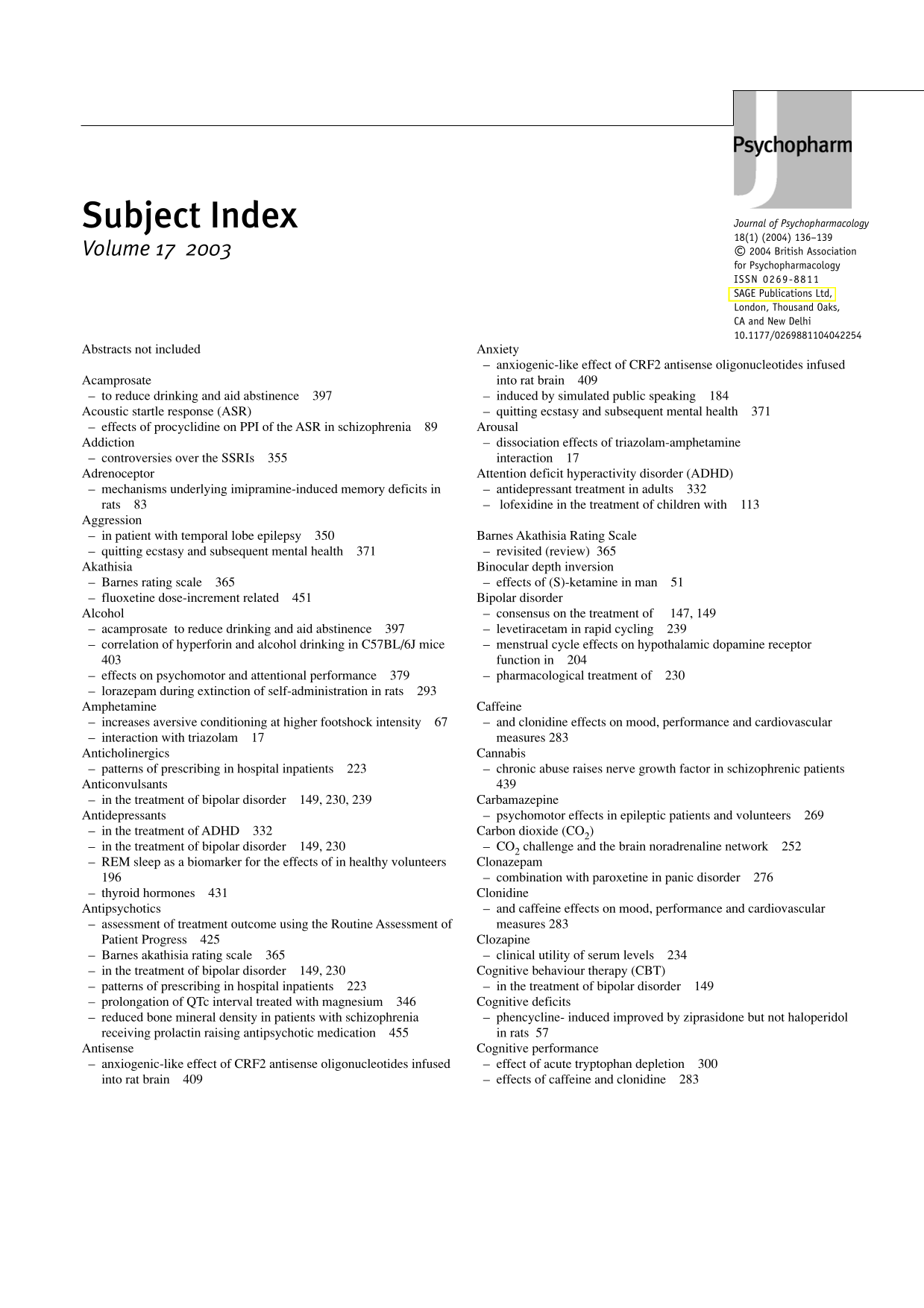 Restricted accessOtherFirst published March, 2004pp. 140-143