Editorial
 Restricted accessEditorialFirst published December, 2025pp. 1335-1337

Select search scope: search across all journals or within the current journal


 Restricted accessEditorialFirst published December, 2025pp. 1335-1337Restricted accessResearch articleFirst published December, 2025pp. 1338-1350
 , Erik Stang , [...]
The last decade represented a period of unprecedented interest in, and development of, traditional psychedelic substances for the treatment of a variety of neuropsychiatric disorders. While early clinical trials of classical psychedelics, several of the major ones being tryptamines, have demonstrated robust efficacy in patients with minimal adverse effects, many of these molecules have properties that may limit their broad utility in clinical practice or require more complex methods of delivery. The functional role and importance of a “psychedelic experience” for therapeutic efficacy remain enigmatic. If the mechanism of action is reduced to mere 5-HT2A receptor activation, this raises the question if whether therapeutic efficacy is achievable without the psychedelic effects. Furthermore, as this class of molecules typically interacts with many other members of the serotonin receptor family, including the 5-HT1A and 5-HT2C receptor subtypes (receptors proven to be relevant to a multitude of neuropsychiatric disorders), as well as non-serotonergic receptors, the polypharmacological aspect of psychedelic tryptamines needs further scrutiny and understanding. In this perspective, the authors will review the limitations of the current classical non-conjugated tryptamines (excludes lysergic acid diethylamide, ibogaine, and similar molecules), highlighting approaches that have been explored to improve the molecules, as well as approaches to develop new generation psychedelic and “non-psychedelic” compounds. Further, the authors will review the latest thoughts within the field on the pharmacology that could be underlying these potentially field changing therapies.
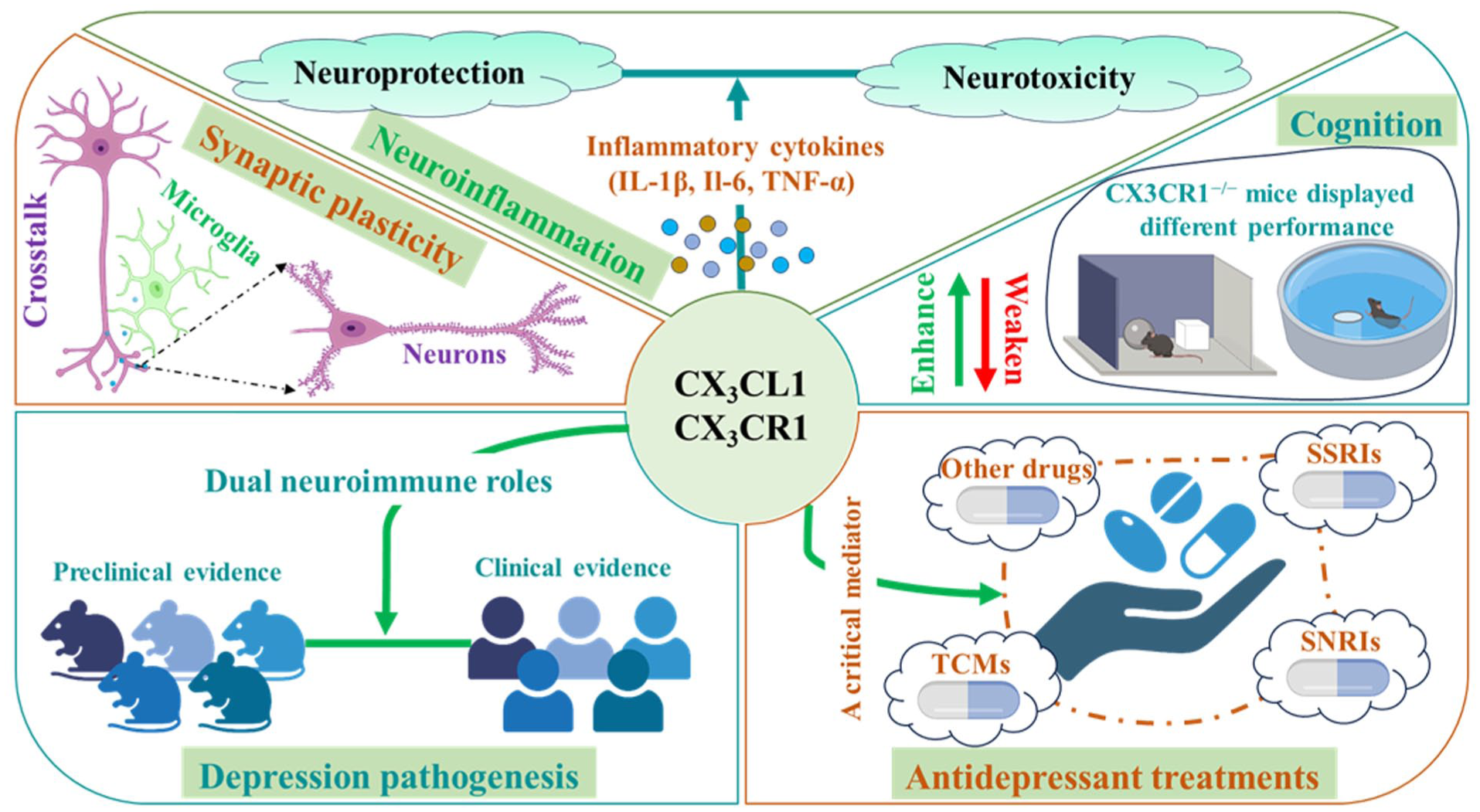
Restricted accessReview articleFirst published December, 2025pp. 1351-1364, Yun-Feng LiDepression is a prevalent and debilitating mental disorder, and the underlying mechanisms of depression remain unclear. Emerging evidence highlights the importance of chemokines, particularly CX3CL1/CX3CR1 signaling, in the pathophysiology of depression. CX3CL1 (Fractalkine, CX3C chemokine ligand 1) is an essential chemokine and exerts its biological effects by binding to its receptor, CX3CR1. This interaction plays a pivotal role in mediating communication between microglia and neurons within the central nervous system. Numerous studies have suggested that CX3CL1/CX3CR1 signaling is a critical regulator of neuroinflammation and synaptic plasticity. Therefore, this narrative review provides a comprehensive overview of the role of CX3CL1/CX3CR1 signaling in neuroinflammation, synaptic plasticity, and cognition. In addition, we discuss the critical role of this signaling pathway in the pathophysiology of depression and antidepressant treatments and highlight its significance in the field of neuropsychopharmacology.
Restricted accessResearch articleFirst published December, 2025pp. 1365-1377, Barath Ramanathan, Reenaa Mohan , [...]Major depressive disorder (MDD) is a globally prevalent condition associated with significant morbidity and cognitive dysfunction. Vortioxetine, a novel antidepressant with multimodal serotonergic activity, has shown potential advantages over conventional antidepressants in both efficacy and tolerability. This meta-analysis evaluates the efficacy, cognitive improvement, and safety profile of vortioxetine in MDD.
A comprehensive search of multiple search engines yielded 16 randomized controlled trials that studied the efficacy of vortioxetine and other antidepressants. About 3127 MDD patients in the vortioxetine group and 3102 in the control group were analyzed. Primary efficacy outcomes were changes in Montgomery-Åsberg Depression Rating Scale, Clinical Global Impression-Improvement, and Clinical Global Impression-Severity scores, and the secondary outcome measure was cognition using the digit symbol substitution test scores. Safety was assessed via reported adverse effects (AEs), including the treatment-induced sexual dysfunction. The sensitivity analysis was done excluding the study with a high impact.
Vortioxetine demonstrated a small but significant reduction in depressive symptoms compared to placebo, but showed similar efficacy to duloxetine and venlafaxine. Excluding the high-impact study did not cause much variation in the findings. There was a small but statistically insignificant improvement in cognition with vortioxetine compared to the control group. Vortioxetine had a favorable safety profile with only mild symptoms reported. The most commonly reported symptom was nausea. Vortioxetine also showed a non-significant trend toward fewer sexual AEs.
Vortioxetine is an effective and well-tolerated antidepressant for the management of MDD. Though the tolerability was comparable to other antidepressants, there was a potentially lower incidence of sexual side effects. A further elaborate exploration in terms of dose-specific efficacy and cognitive improvement will be promising for optimizing individualized treatment strategies.
Restricted accessResearch articleFirst published December, 2025pp. 1378-1386, Ming-Hong Hsieh, Po-Chung Ju , [...]Whether starting antidepressants (ADs) precipitates treatment-emergent mania (TEM) in young people with major depressive disorder (MDD) is still debated. A recent nationwide cohort study found no short-term risk, but its transferability to more diverse settings is unknown.
Using the TriNetX global electronic-health-record network, we emulated a target trial in children and adolescents aged 6–17 years with a first MDD diagnosis (2016–2024). Patients who initiated an AD within 3 months formed the exposed cohort, and those who did not served as controls. After 1:1 propensity-score matching, 105,728 participants (52,864 per group) were followed for 3 months. The primary outcome was a composite of new mania/bipolar diagnosis or lithium initiation.
The exposed group had a significantly higher risk of the primary composite outcome compared to the unexposed group (45 vs. 27 events; Hazard ratio = 1.64, 95% confidence interval, 1.01–2.63,
In a large, multinational real-world cohort, AD initiation was associated with a non-robust increase in short-term TEM risk. The observed association appeared susceptible to unmeasured confounding factors. These results underscore the importance of careful assessment and monitoring rather than indiscriminate AD use or avoidance in this population.
Restricted accessResearch articleFirst published December, 2025pp. 1387-1396Citalopram is widely used for treating major depressive disorder, but exhibits substantial inter-individual variation in clinical response. CYP3A4 is one of the cytochrome P450 enzymes (CYP450) involved in the demethylation metabolism of citalopram. Genetic polymorphisms in CYP3A4 may alter the metabolism of citalopram by affecting the enzymatic activity of CYP3A4.
This study aims to evaluate the metabolic differences of citalopram between wild-type and 21 CYP3A4 variants identified in the Chinese Han population.
An optimized in vitro incubation system was established, consisting of recombinant human CYP3A4 expressed in Spodoptera frugiperda 21 insect cells and citalopram at various concentrations. The incubation was maintained at 37°C for 30 minutes. Citalopram and demethylcitalopram were quantified using high-performance liquid chromatography with fluorescence detection. Michaelis-Menten curves were plotted, and enzyme kinetic parameters were calculated for each CYP3A4 variant.
Our results showed that most CYP3A4 variants significantly altered citalopram metabolism. Specifically, 12 variants (*3, *4, *5, *9, *10, *16, *19, *23, *28, *31, *33, and *34) showed a 30.83% to 96.06% decrease in intrinsic clearance (CLint) compared to wild-type, while five variants (*2, *11, *14, *17, and *18) exhibited a 13.52% to 448.56% increase (
This study provides the first systematic data on the impact of CYP3A4 variants on citalopram metabolism, suggesting that CYP3A4 genetic polymorphism plays a significant role in citalopram metabolism, and highlighting its potential value in individualized therapy.
 Open accessResearch articleFirst published December, 2025pp. 1397-1408, Alissa Haj Yahya, Wolfgang Viechtbauer , [...]
A brief inhalation of 35% CO2 triggers subjective fear and physiological responses occurring during naturally occurring panic attacks (PAs). This CO2 model enables to study effects of pharmacological interventions on experimental panic provocation and examine the biological mechanisms involved in PAs.
To provide a quantification of the effects of pharmacological interventions on the response to CO2 inhalation, which was still lacking despite decades of research and numerous studies having addressed these effects.
A systematic search was performed to identify peer-reviewed papers reporting effects of pharmacological interventions to the 35% CO2 inhalation. Multilevel meta-analyses were performed to quantify the effects of such interventions on self-reported anxiety and PA symptoms.
Thirty-six studies, containing data of 980 participants (both panic disorder patients and healthy individuals), were included. Several studies reported effects of multiple pharmacological interventions, resulting in 48 effect sizes for the meta-analysis of the effects on anxiety and 34 for the effects on PA symptoms. Significant decreases in induced anxiety (−.55 (95% confidence interval (CI): −.81 to −.29),
This meta-analysis supports the notion that specific drugs can reduce the sensitivity to 35% CO2 challenge, supporting a role for this procedure as experimental model to investigate panic pharmacology.
Restricted accessResearch articleFirst published December, 2025pp. 1409-1419This study intended to examine network homogeneity (NH) alterations in drug-naive patients with panic disorder (PD) before and after treatment and whether NH could serve as a potential biomarker.
Fifty-eight patients and 85 healthy controls (HCs) underwent resting-state functional magnetic resonance imaging. Patients were rescanned following a 4-week course of paroxetine monotherapy. NH was computed to evaluate intra-network functional integration across the Yeo 7-Network. Machine learning (ML) was employed to assess the diagnostic and prognostic potential of NH metrics. Transcriptome-neuroimaging association analyses were conducted to explore the molecular correlates of NH alterations.
Compared with HCs, patients showed disrupted intra-network integration in the frontoparietal, default mode, sensorimotor, limbic, and ventral attention networks, with prominent NH alterations in the superior frontal gyrus (SFG), middle temporal gyrus (MTG), superior temporal gyrus (STG), somatosensory cortex, insular, and anterior cingulate cortex. Importantly, the SFG, MTG, and STG demonstrated cross-network abnormalities. After treatment, clinical improvement correlated with normalized NH in the SFG and additional changes in the inferior occipital gyrus and calcarine sulcus within the visual network. ML demonstrated the utility of NH for PD classification and treatment outcome prediction. Transcriptome-neuroimaging analysis identified specific gene profiles related to NH alterations.
NH reflects both pathological features and treatment-related changes in PD, providing a measure of network dysfunction and therapeutic response. Cross-network NH disruptions in hub regions and visual processing may reflect core neuropharmacological mechanisms underlying PD. ML findings support the potential of NH as a neuroimaging biomarker for diagnosis and treatment monitoring in PD.
Open accessResearch articleFirst published December, 2025pp. 1420-1436, Ramon Weishaupt, Philipp K. M. Katumba , [...]Chronic stress is prevalent in most societies, impairing cognition, mood, and social functioning. Research suggests that supplements containing extracts from
To investigate the acute and chronic effects of a
Forty-three participants (35 analysed) aged 18–75 years received the herbal supplement and a placebo for 15 days. Psychological well-being, and sleep were measured after 7 and 15 days of treatment. Cognitive performance was evaluated following a bolus dose of two tablets and after 15 days, with and without an observed multitasking stressor.
The herbal supplement significantly improved performance on a task of attention and working memory (as evidenced by a reduction in serial 3’s subtraction errors) following an acute dose and improved working memory performance (an increase in the number of correct serial 7’s subtraction) during the stressor, irrespective of dose. Cognitive effects were less consistent in the absence of the stressor. Chronic supplementation improved mood and anxiety, reducing total mood disturbance, anger/hostility, and Trait anxiety scores. A higher proportion of subjects experienced ⩾30% gains in social satisfaction scores after 7 days. No serious adverse effects were reported.
The herbal supplement is safe and enhances mood, reduces subjective anxiety, and improves cognition under stress, though cognitive effects are variable without stress exposure.
The study was registered on clinicaltrials.gov (identifier: NCT05757050).
Open accessResearch articleFirst published December, 2025pp. 1437-1448Controlled laboratory studies demonstrate that caffeine acutely impairs sleep quality. However, the impact of daily caffeine intake, which is common in society, on community-derived physiological sleep measures is unknown.
Because good quality sleep is important for general health and well-being, we explored causal effects of habitual caffeine consumption on objective and subjective sleep variables collected at home.
We used dedicated, two-sample Mendelian Randomization (MR) and causal matching methods, including MR-Egger, inverse variance weighting, and weighted median, to analyze large community-based datasets taken from the UK Biobank (
While self-rated sleep quality and morningness–eveningness did not differ, all statistical models revealed that four or more caffeinated beverages per day shorten total sleep time when compared to fewer caffeine containing drinks per day. The estimated reductions in sleep length varied from 11 to 229 minutes. Intriguingly, consistent with the homeostatic facet of sleep-wake regulation, the shorter sleep in high habitual caffeine consumers was characterized by increased non-rapid-eye movement sleep depth as measured by all-night electrical brain activity.
The data show that high habitual caffeine intake alters the characteristics of sleep in the general population, while sparing the major physiological principles of sleep-wake regulation possibly due to adaptation.
Restricted accessResearch articleFirst published December, 2025pp. 1449-1461Risky decision-making is a cardinal feature of bipolar disorder (BD), yet no targeted pharmacotherapies exist for this behavioral deficit. Dopamine transporter knockdown (DAT KD) mice reproduce the DAT hypoexpression profile of BD and demonstrate pharmacologically sensitive, BD-relevant patterns of risky decision-making and hyperexploration in the cross-species translatable Iowa Gambling Task (IGT) and Behavioral Pattern Monitor (BPM), respectively. Agonists of the trace amine-associated receptor 1 (TAAR1), a G protein-coupled receptor that presynaptically modulates dopamine transmission, may normalize these deficits and thereby represent a novel therapeutic avenue for the management of BD.
Assessment of the impact of TAAR1 activation on BD-relevant behaviors in a mouse model of mania.
The effects of the TAAR1 agonist R05256390 (0, 0.3, and 1.0 mg/kg, i.p.; within-subjects) were first determined on unconditioned exploration in male and female DAT KD and wildtype (WT) littermate mice in the BPM and then on risky decision-making in the IGT (1.0 mg/kg).
Consistent with people with BD, DAT KD mice exhibited hyperlocomotion, elevated specific exploration, and more linear movement in the BPM, plus elevated risk preference in the IGT. R05256390 (0.3 and 1 mg/kg) reduced locomotion in DAT KD males and WT females, respectively, as well as specific and diversive exploration across genotypes. TAAR1 activation also reduced risky choice in DAT KD mice while elevating this behavior in WTs.
These findings support the potential for TAAR1 agonists as novel treatments for hyperactivity and risky decision-making in BD, and suggest an inverted
Open accessResearch articleFirst published December, 2025pp. 1462-1475 , [...]Neuropeptide Y1 receptor (NPY1R) heteroreceptor complexes with galanin receptor 2 (GALR2) and Tropomyosin receptor kinase B (TrkB) contribute to neuroplasticity and mood regulation.
To determine whether transient intracerebroventricular (ICV) knockdown of NPY1R is sufficient to alter hippocampal neurogenesis and depressive-like behaviour.
Adult Sprague-Dawley rats received a single ICV injection of Accell Smart-Pool small interfering RNA (siRNA) targeting NPY1R or a scrambled control. NPY1R protein levels, NPY1R-GALR2 and NPY1R-TrkB complexes (in situ proximity ligation), proliferating cell nuclear antigen (PCNA) counts, brain-derived neurotrophic factor (BDNF) expression and forced-swim behaviour were assessed 6, 8 and 10 days post-injection in the ventral hippocampus.
ICV siRNA significantly reduced NPY1R immunoreactivity (peak at day 8; p<0.05) and lowered NPY1R-GALR2 and NPY1R-TrkB heteroreceptor complexes (
Transient ICV knockdown effectively disrupts NPY1R heteroreceptor complexes but fails to impact neurogenesis or depressive-like behaviour, indicating compensatory mechanisms that preserve hippocampal plasticity. Within the time window and conditions tested, transient NPY1R knockdown disrupted GALR2/TrkB heteroreceptor complexes without altering neurogenesis or depressive-like behaviour, delineating receptor-complex-level target engagement and motivating studies using sustained and circuit-specific manipulations to assess therapeutic potential.
Restricted accessResearch articleFirst published December, 2025pp. 1476-1490Anxiety is a normal emotion representing a reaction to potential danger, whereas fear can be defined as a reaction to real, explicit danger. Anxiety-like behavior in animal models has been associated with differences in the serotonergic system.
To understand the roles of the 5-HT1A receptor in zebrafish anxiety-like behavior and sociality.
Adult zebrafish were treated with 8-OH-DPAT and subjected to the phototaxis (light-dark preference) assay, the novel tank test (NTT), or the social preference test. Separate cohorts were treated with increasing doses of 8-OH-DPAT, while 5-HT1A receptors were blocked with a silent dose of WAY 100635.
8-OH-DPAT (0.3 mg/kg) decreased anxiety-like behavior in the NTT, but increased it in the phototaxis (light-dark preference) assay, both considered assays for anxiety-like behavior for this species. The same dose decreased social approach in both the social investigation and social novelty phases of the social preference test. Blocking the 5-HT1A receptor with WAY 100635 (0.01 mg/kg) shifted the dose–response curve (0.03–3 mg/kg) for the NTT rightward.
These effects suggest a participation of the 5-HT1A heteroreceptors in zebrafish anxiety and social preference, modulating anxiety in a test-dependent way and decreasing sociality. Thus, the study of this receptor is important for a better understanding of anxiety-like behavior in zebrafish and its relationship with similar phenomena in vertebrates.
Open accessResearch articleFirst published December, 2025pp. 1491-1497(-)-OSU6162 is an antagonist at dopaminergic D2 receptors which – like other D2 antagonists – dampens spontaneous activity in animals exploring a novel environment. However, unlike other D2 antagonists, (-)-OSU6162 has unexpectedly been found to stimulate locomotor activity in inactive, habituated rodents. To what extent the compound may increase activity also in other situations characterised by reduced locomotion is unknown, and it has also not been clarified whether two other receptors also targeted by (-)-OSU6162 – serotonergic 5-HT2A receptors and sigma-1 receptors – are involved in its unusual behavioural profile. The objective of the present study was to investigate the possible impact of (-)-OSU6162 on the pronounced inactivity in the form of freezing displayed by rats exposed to context-conditioned fear. For comparison, the effect of amphetamine – another dopamine-augmenting and activating compound – was also explored in the same paradigm.
The impact of (-)-OSU6162 and amphetamine on the expression of freezing was assessed in rats exposed to contextual fear conditioning using electrical foot shocks. It was also assessed whether the increase in activity observed in animals treated with (-)-OSU6162 could be countered by pretreatment with a D2/D3 antagonist (raclopride), a 5-HT2A inverse agonist (MDL100907), or a sigma-1 receptor antagonist (BD1063).
While (-)-OSU6162 markedly reduced freezing behaviour, amphetamine abolished it completely. The effect of (-)-OSU6162 was countered by raclopride but neither by MDL100907 nor by BD1063.
(-)-OSU6162 reduces the expression of context-conditioned fear displayed as freezing by a mechanism involving D2 but not 5-HT2A or sigma-1 receptors.